Artwork
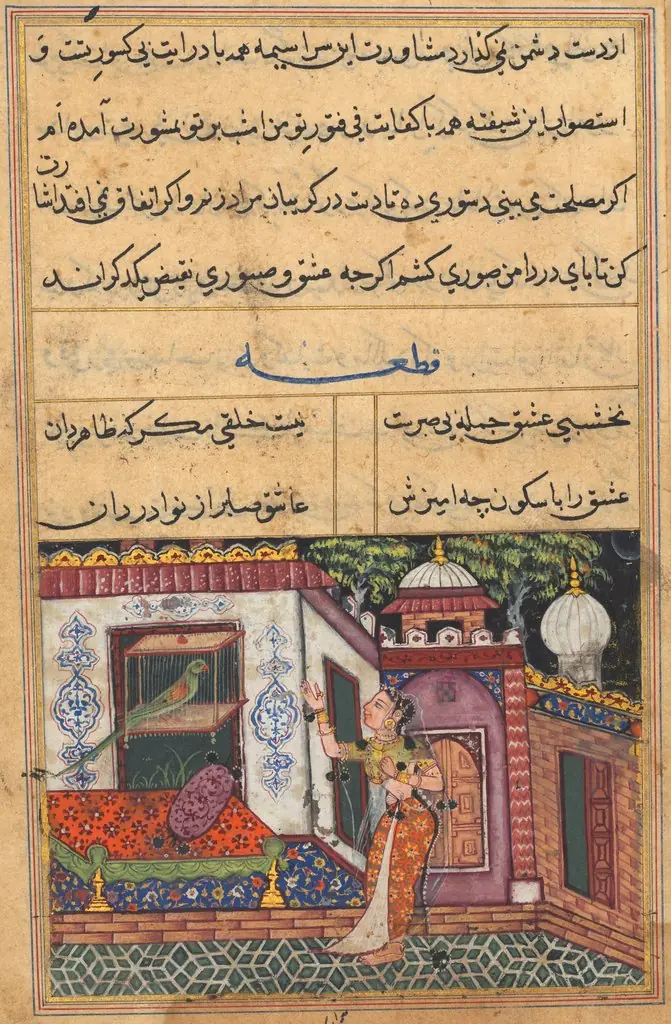
The Parrot Addresses Khujasta at the Beginning of the Twenty-ninth Night, from a Tuti-nama (Tales of a Parrot)
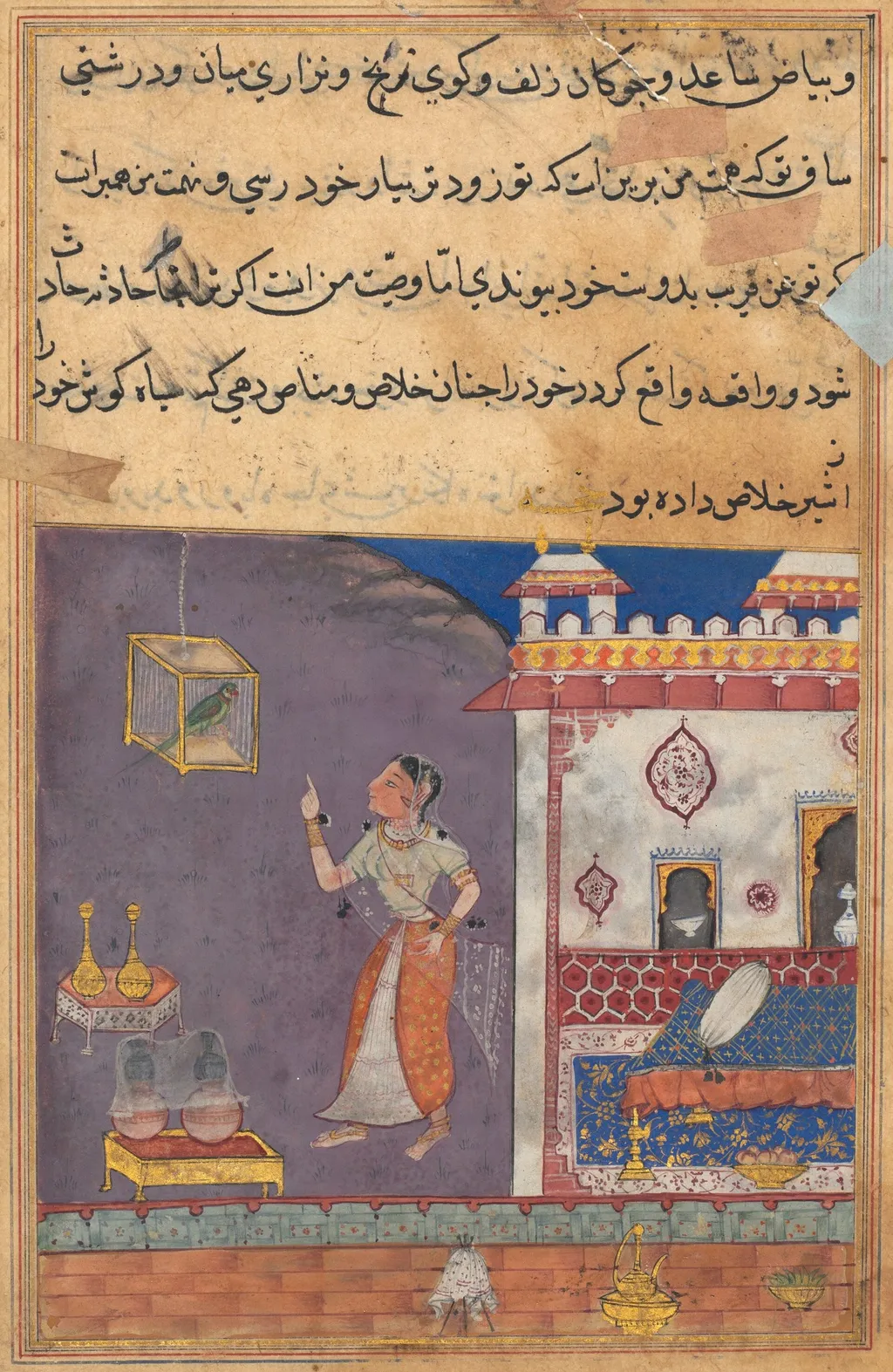
The Parrot Addresses Khujasta at the Beginning of the Twenty-ninth Night, from a Tuti-nama (Tales of a Parrot) is an unspecified painting. It dates from 1560 and is held in the collection of the Cleveland Museum of Art.
About this work
Subject & Meaning
Together, the parrot and the flower serve as visual symbols of storytelling and moral instruction, emphasizing the role of oral tradition within the manuscript.
The painting illustrates a parrot speaking to a woman named Khujasta at the start of the twenty-ninth night, a scene drawn from the tale collection Tuti-nama. The composition includes a flowering motif that marks the narrative setting and reflects Mughal artistic conventions. Together, the parrot and the flower serve as visual symbols of storytelling and moral instruction, emphasizing the role of oral tradition within the manuscript.
The work thus conveys themes of wisdom transmission and the passage of time, anchored in the cultural context of its creation in the Mughal Empire.
The parrot functions as a narrative device, while the flower underscores the poetic atmosphere of the night, linking the visual elements to the story's symbolic meaning.
History & Provenance
Created in 1560 within the Mughal Empire, this painting illustrates a scene from the Tuti-nama (Tales of a Parrot), specifically depicting the parrot addressing Khujasta at the start of the twenty-ninth night. The work was produced by an artist who remains unidentified in historical records. It is currently held in the collection of the Cleveland Museum of Art, where it is cataloged under the accession number 1962.279.192.a.
The painting is classified as a Mughal manuscript illumination from the mid-sixteenth century. While the specific commission details and the original patron are not detailed in the available records, the work's dating aligns with the early period of Mughal miniature painting under Emperor Akbar. The piece has been part of the Cleveland Museum of Art's holdings since its acquisition, serving as a significant example of the illustrated Tuti-nama tradition.
Overview
This painting, titled "The Parrot Addresses Khujasta at the Beginning of the Twenty-ninth Night," illustrates a scene from a Tuti-nama, or "Tales of a Parrot." It depicts a woman, Khujasta, standing within an interior space, engaged with a caged bird suspended above her. The artwork is characterized by its vibrant palette and intricate details, typical of Persian manuscript illumination. A flowing script at the top suggests the narrative context of the depicted scene.
Technique & Style
The artwork demonstrates a sophisticated approach to color and composition. Rich, saturated hues of deep purple, red, and gold dominate the palette, contributing to a sense of opulence and vitality. Details such as patterned carpets and the woman's bright orange attire are rendered with precision.
The arrangement of figures and objects within the architectural setting creates a balanced yet dynamic scene, characteristic of illustrated manuscripts from the period.
Artist & collection

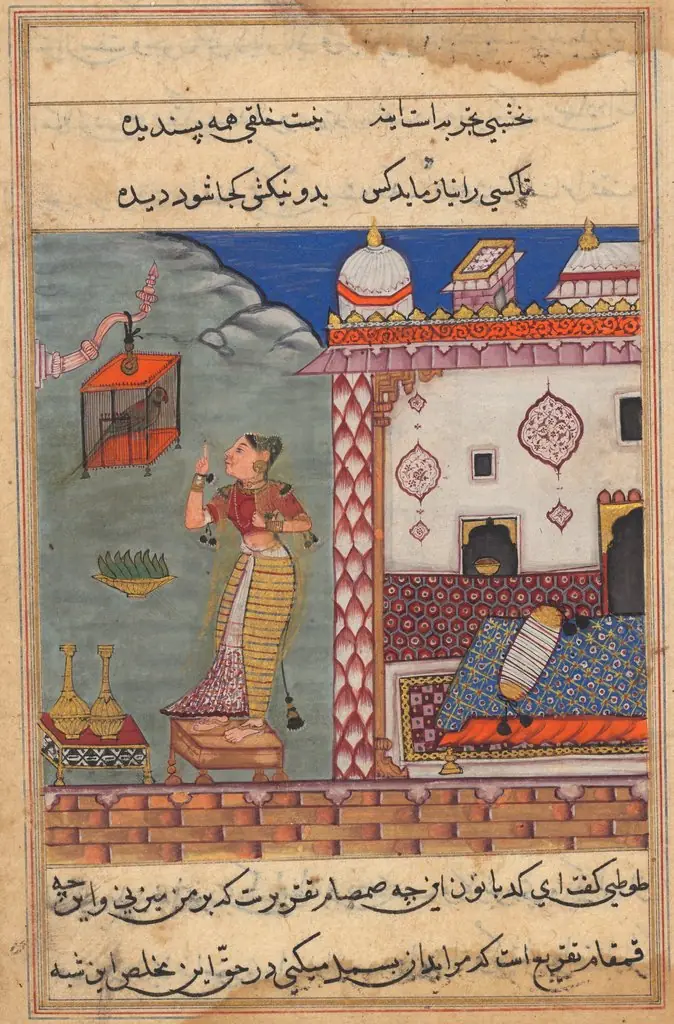
- The Parrot Addresses Khujasta at the Beginning of the Twenty-seventh Night, form a Tuti-nama (Tales of a Parrot)
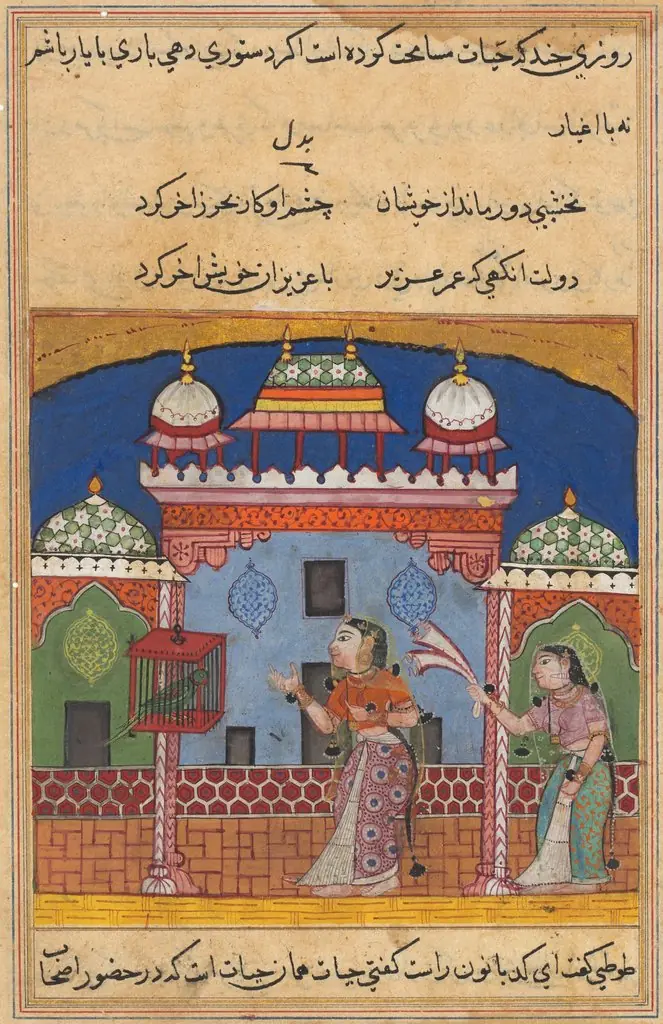 The Parrot Addresses Khujasta at the Beginning of the Twenty-second Night, from a Tuti-nama (Tales of a Parrot)
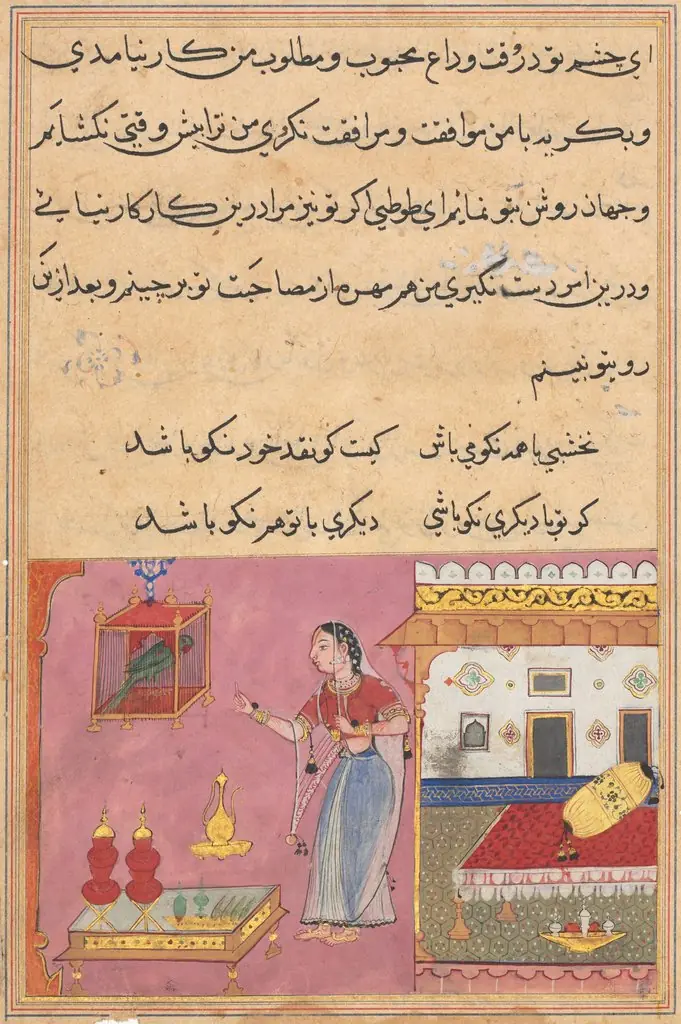 The Parrot Addresses Khujasta at the Beginning of the Twentieth Night, from a Tuti-nama (Tales of a Parrot)
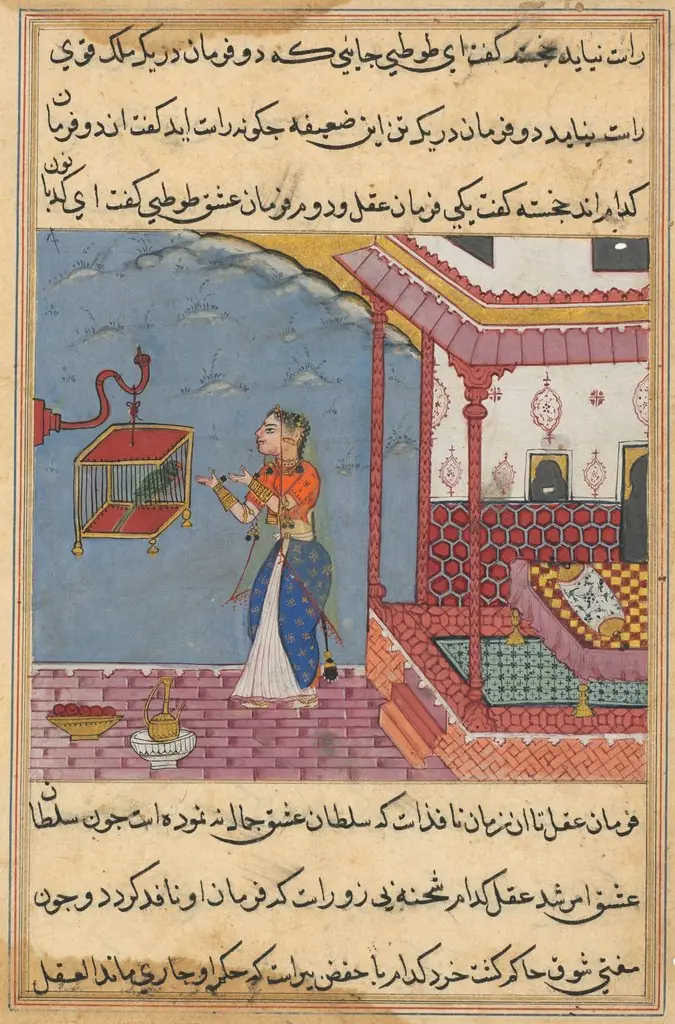 The Parrot Addresses Khujasta at the Beginning of the Twenty-Fourth Night, from a Tuti-nama (Tales of a Parrot)
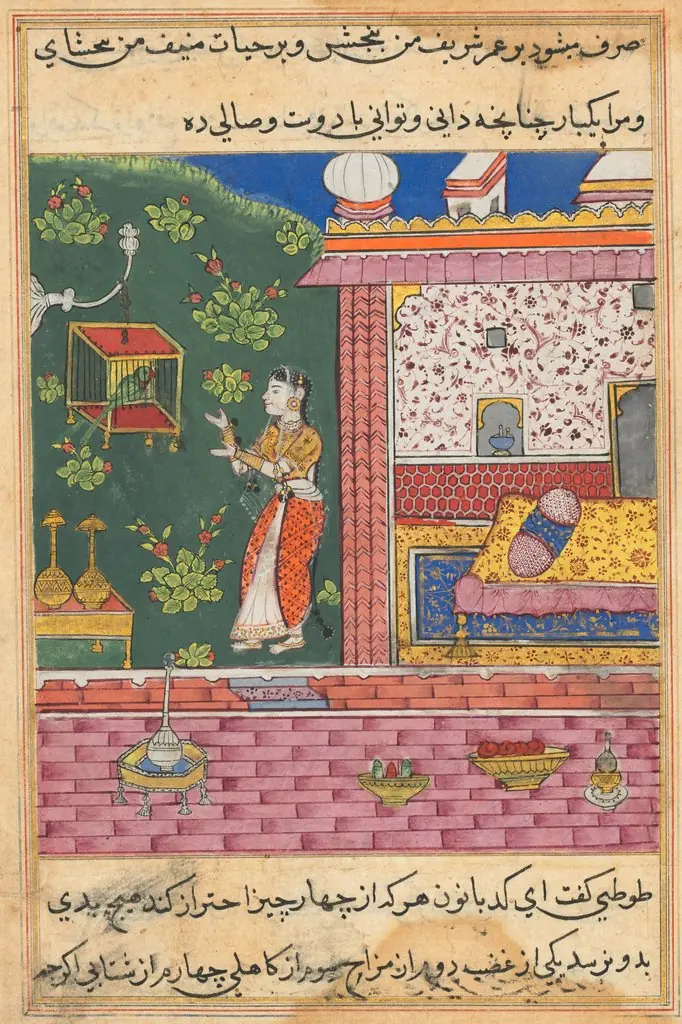 The Parrot Addresses Khujasta at the Beginning of the Thirtieth Night, from a Tuti-nama (Tales of a Parrot)
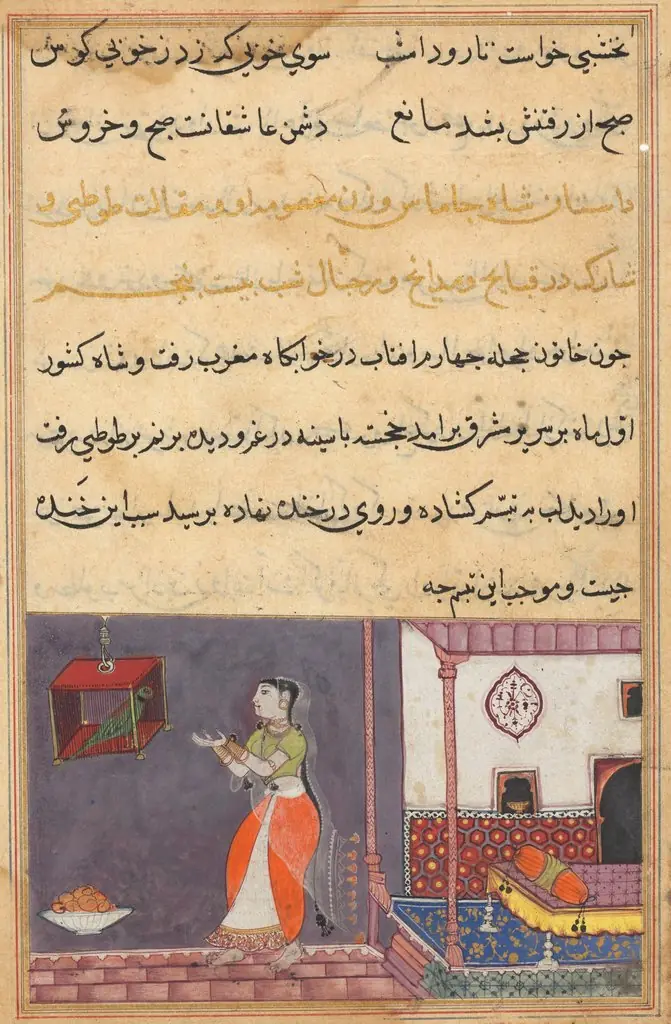 The Parrot Addresses Khujasta at the Beginning of the Twenty-fifth Night, from a Tuti-nama (Tales of a Parrot)
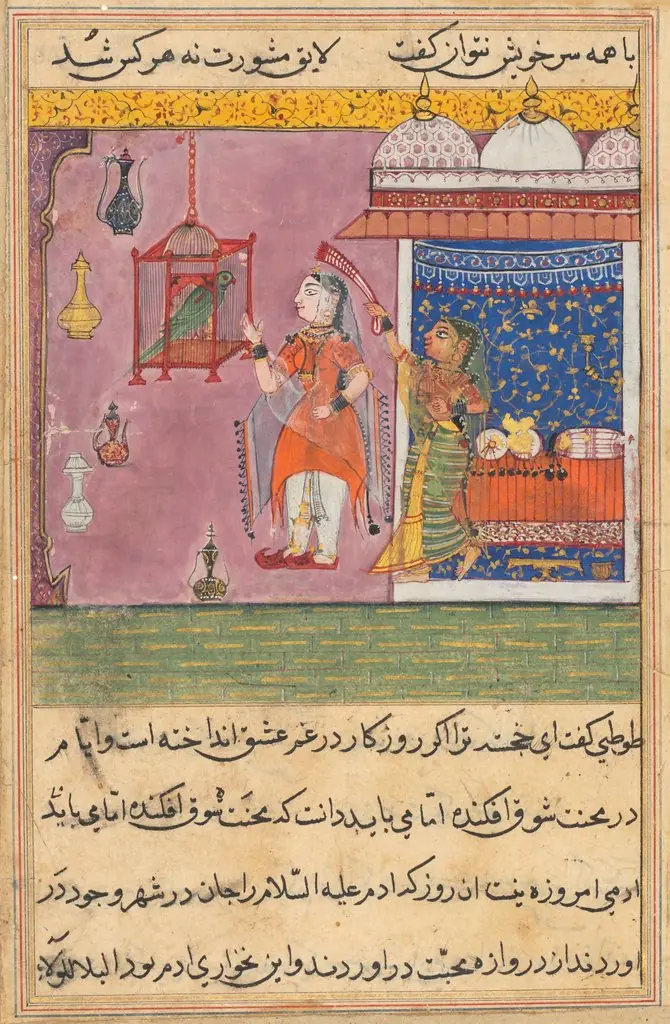 The Parrot Addresses Khujasta at the Beginning of the Nineteenth Night, from a Tuti-nama (Tales of a Parrot)
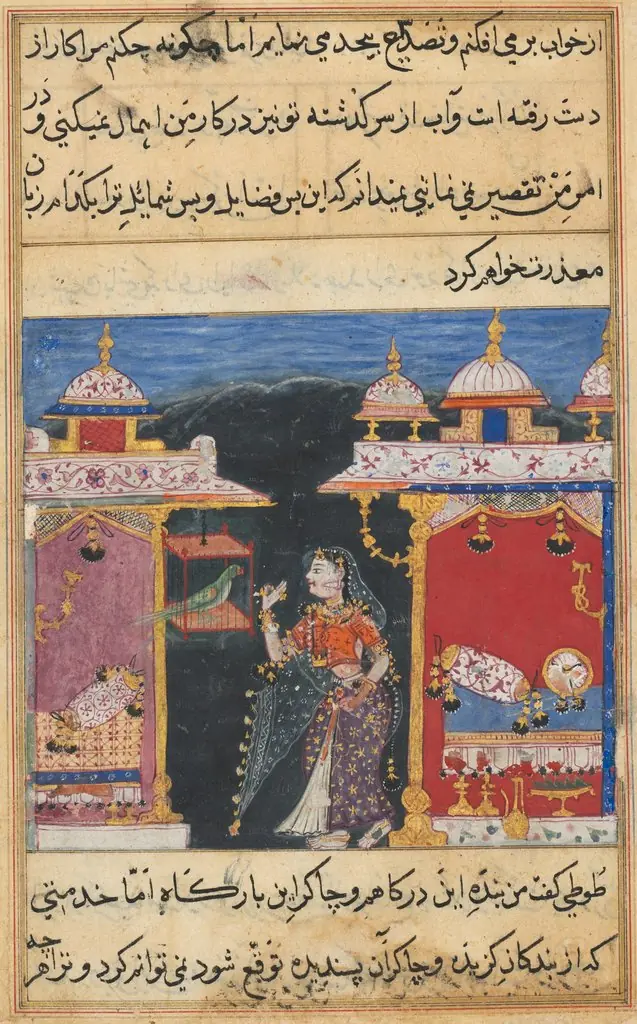 The Parrot Addresses Khujasta at the Beginning of the Seventh Night, from a Tuti-nama (Tales of a Parrot)
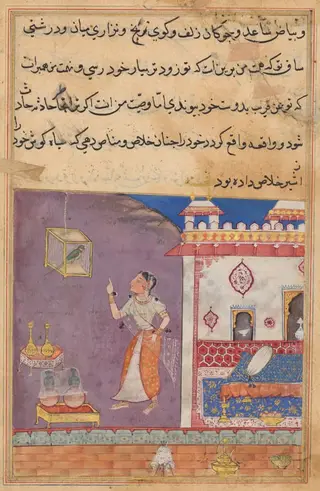 The Parrot Addresses Khujasta at the Beginning of the Twenty-ninth Night, from a Tuti-nama (Tales of a Parrot)
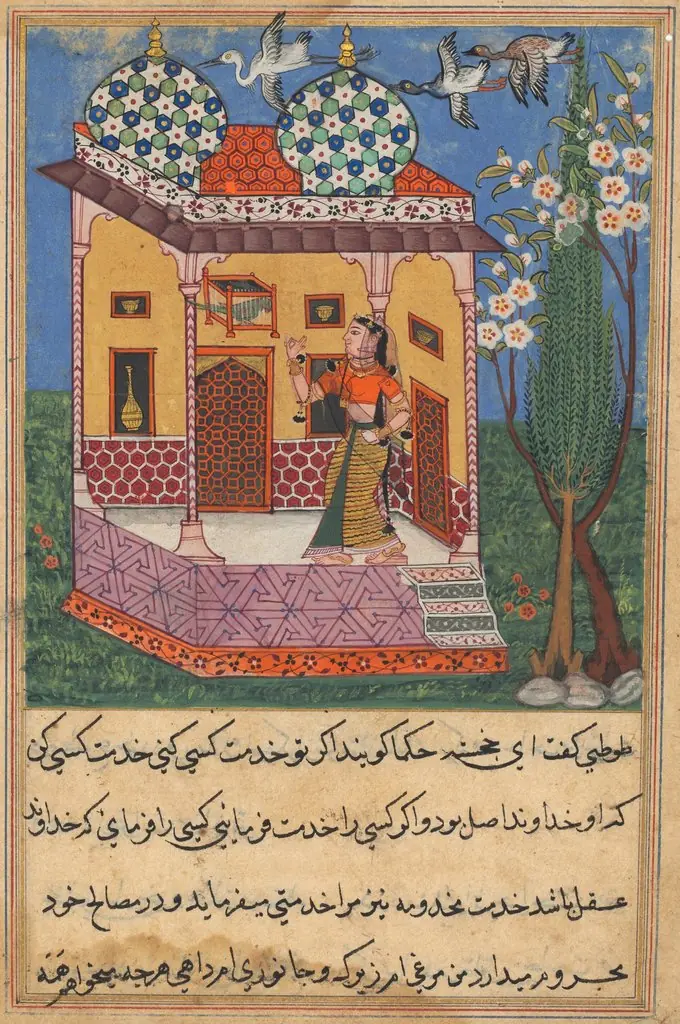 The Parrot Addresses Khujasta at the Beginning of the Twenty-sixth Night, from a Tuti-nama (Tales of a Parrot)
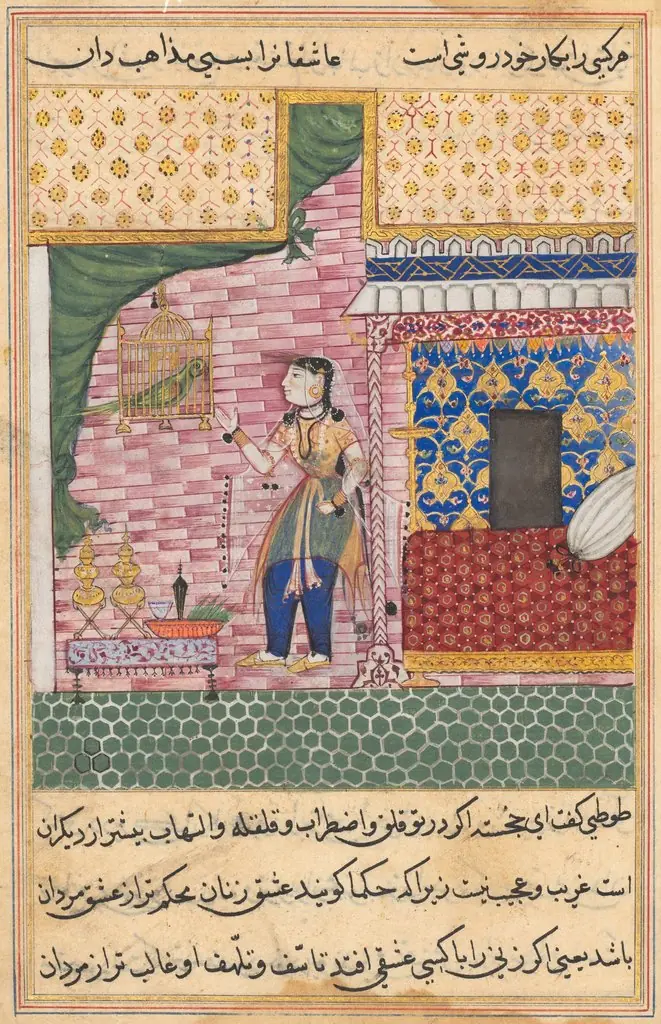 The Parrot Addresses Khujasta at the Beginning of the Seventeenth Night, from a Tuti-nama (Tales of a Parrot)
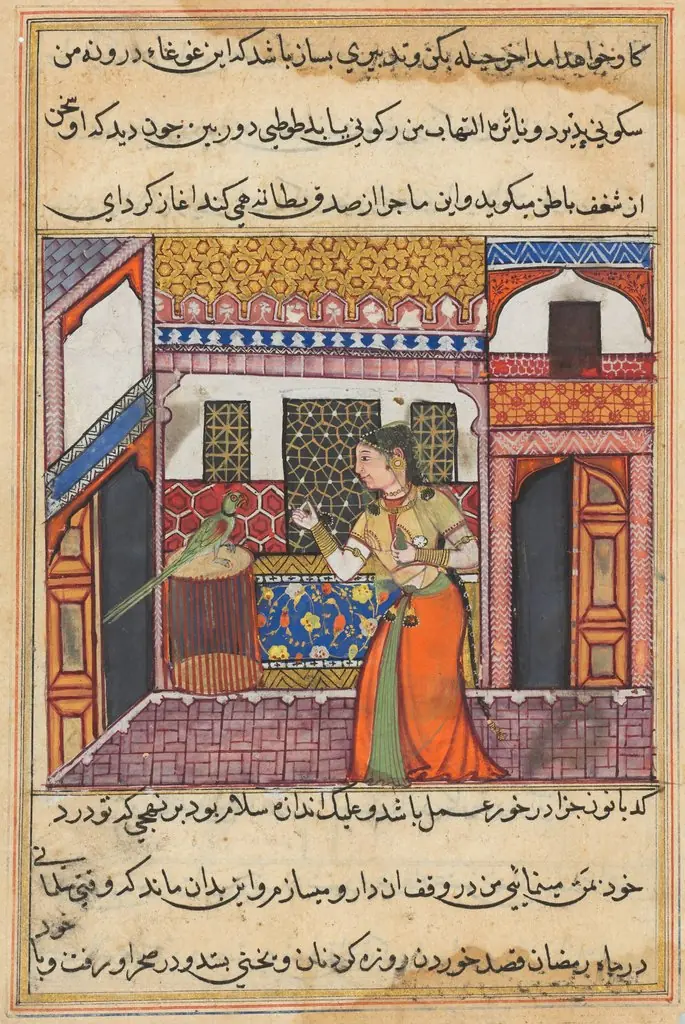 The parrot addresses Khujasta at the beginning of the forty-third night, from a Tuti-nama (Tales of a Parrot)
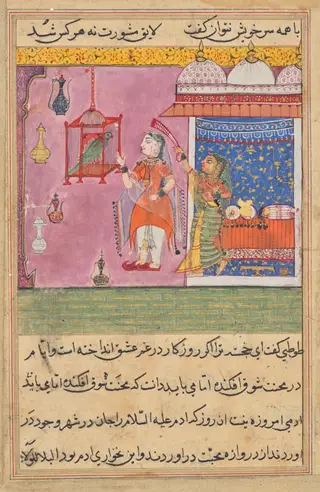 The Parrot Addresses Khujasta at the Beginning of the Nineteenth Night, from a Tuti-nama (Tales of a Parrot)
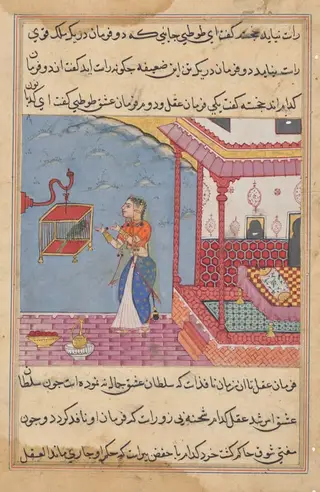 The Parrot Addresses Khujasta at the Beginning of the Twenty-Fourth Night, from a Tuti-nama (Tales of a Parrot)
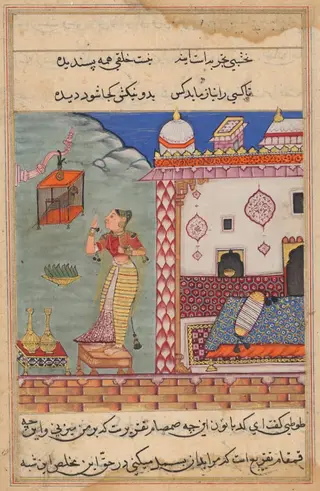 The Parrot Addresses Khujasta at the Beginning of the Twenty-seventh Night, form a Tuti-nama (Tales of a Parrot)
 The Parrot Addresses Khujasta at the Beginning of the Eleventh Night, from a Tuti-nama (Tales of a Parrot)