Artwork
The Parrot Addresses Khujasta at the Beginning of the Twenty-Fourth Night, from a Tuti-nama (Tales of a Parrot)
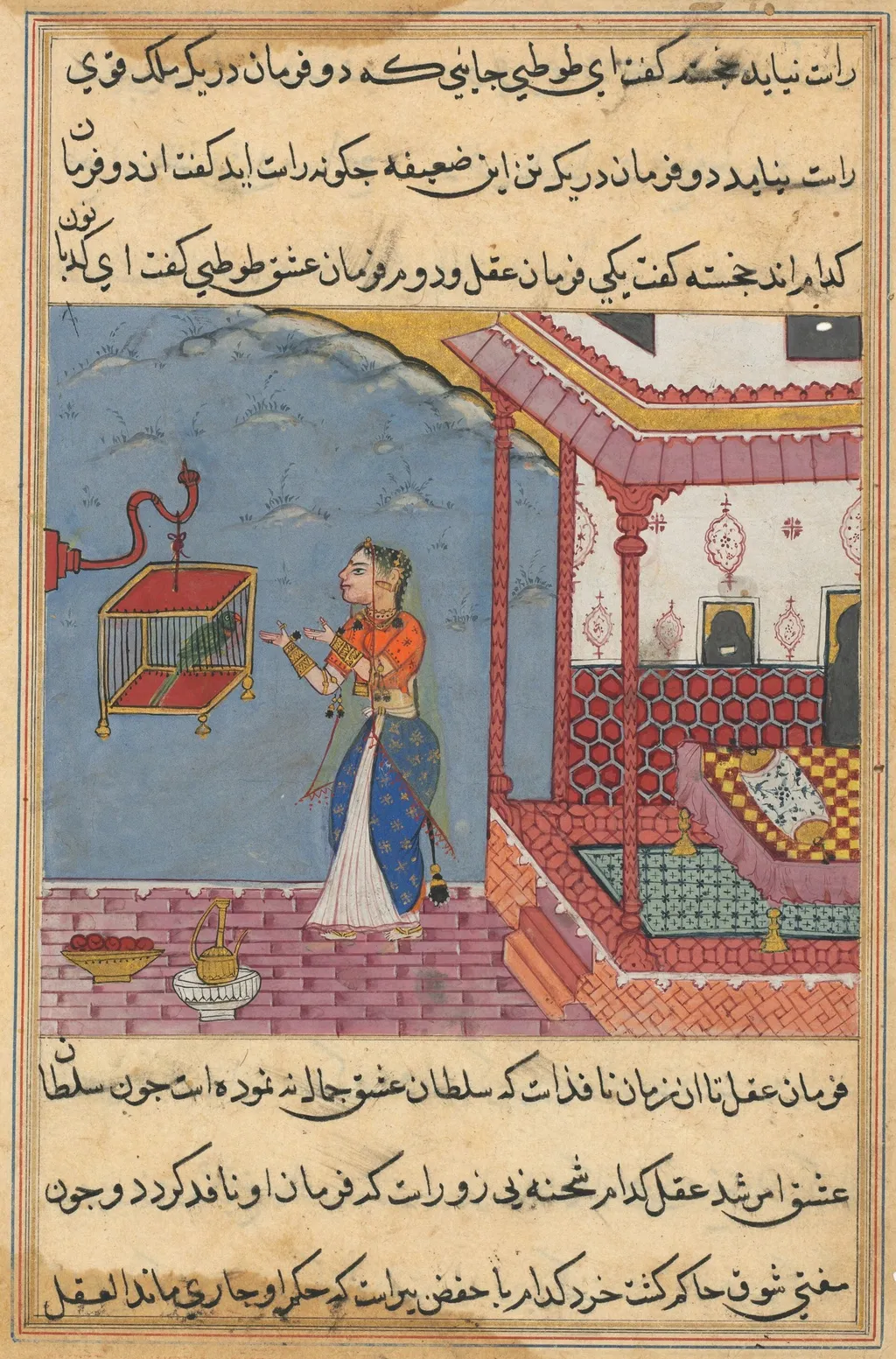
The Parrot Addresses Khujasta at the Beginning of the Twenty-Fourth Night, from a Tuti-nama (Tales of a Parrot) is an unspecified painting. It dates from 1560 and is held in the collection of the Cleveland Museum of Art. The work depicts a woman dressed in vivid red and blue garments, positioned within an interior space of red walls and a patterned floor.
About this work
Subject & Meaning
The parrot functions as a messenger and symbol of divine inspiration, while Khujasta’s presence conveys longing and spiritual yearning.
The painting shows a parrot speaking to Khujasta, a female figure in a garden setting, illustrating a narrative moment from the Persian tale The Parrot’s Address. The parrot functions as a messenger and symbol of divine inspiration, while Khujasta’s presence conveys longing and spiritual yearning. The work belongs to the Mughal artistic tradition of the sixteenth century, reflecting court patronage and the integration of Persian literary themes into Indian painting.
The composition uses traditional symbolic gestures: the bird’s outstretched beak signifies speech, and the garden backdrop underscores themes of love and mysticism. Together the elements convey a layered meaning that blends narrative storytelling with allegorical interpretation of devotion.
The painting was created in 1560 in the Mughal Empire and is housed in the Cleveland Museum of Art.
Technique & Style
The work is executed in tempera and ink on paper, forming a folio of the Tuti-nama manuscript. It is painted in the Mughal style, characterized by flattened perspective, intricate patterning, and delicate line work. The composition depicts the parrot speaking to Khuzista under a night sky, rendered with fine brushstrokes and vivid color contrast. The surface bears minor handling marks consistent with age but remains structurally sound.
History & Provenance
Created in 1560 within the Mughal Empire, this painting is part of a Tuti-nama manuscript and attributed to an unknown artist. The work depicts the scene where the parrot addresses Khujasta at the beginning of the twenty-fourth night. It is currently held in the collection of the Cleveland Museum of Art, where it is cataloged under the accession number 1962.279.165.b.
The painting is held in the Cleveland Museum of Art, where it is catalogued under accession number 1962.279.165.b. It has been displayed in the museum's South Asian art galleries as part of exhibitions focusing on Mughal-era manuscripts and Persian miniature painting.
Context
The work originates from the Mughal imperial workshop circa 1560, situating it within the broader tradition of Persianate manuscript painting that flourished under imperial patronage. Its attribution to an anonymous artist associated with the Cleveland Museum of Art reflects the anonymity often maintained by workshop practitioners, while its stylistic affinities with contemporary Safavid and Deccan manuscript traditions underscore the transregional circulation of artistic motifs. Scholarly discourse situates the piece within the Cleveland Museum of Art's collection of Indian subcontinental paintings, highlighting its significance in tracing the evolution of narrative illustration in pre-modern Persianate art.
Overview
The work depicts a woman dressed in vivid red and blue garments, positioned within an interior space of red walls and a patterned floor. She holds a red cage containing a parrot that appears to be speaking to her. A small table nearby bears fruit and a golden pitcher, while a window reveals a blue sky with clouds. A raised bed with cushions and a framed picture complete the scene.
Legacy
Works of this type contribute to the broader understanding of narrative illustration in Persian art, demonstrating how text and image were interwoven to convey stories. Their preservation offers insight into the material culture, artistic techniques, and literary themes valued in historical Islamic societies.
Artist & collection

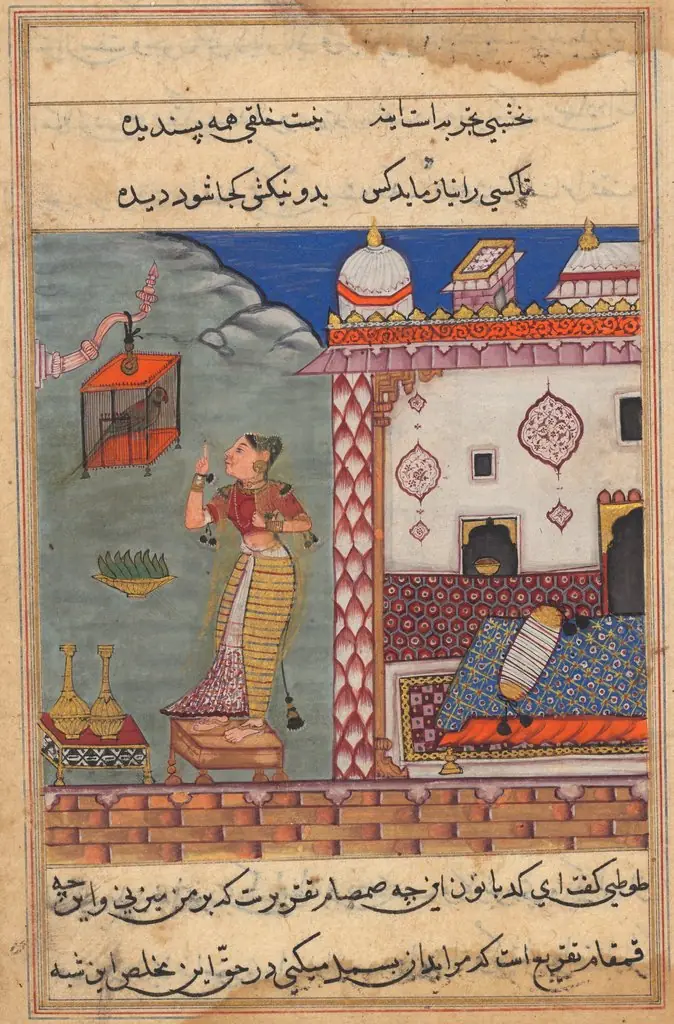
- The Parrot Addresses Khujasta at the Beginning of the Twenty-seventh Night, form a Tuti-nama (Tales of a Parrot)
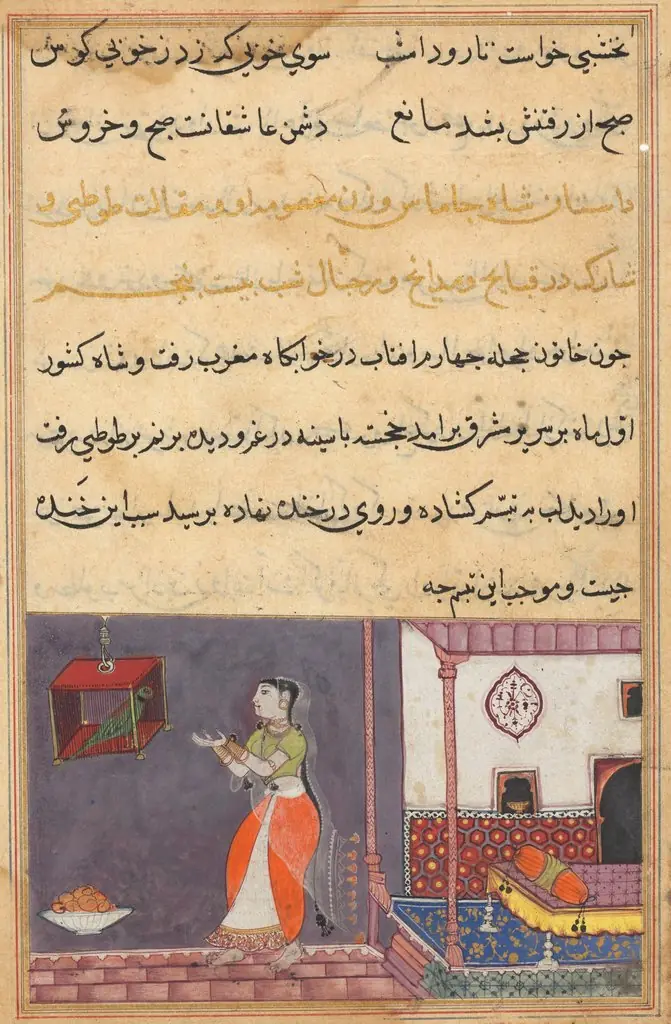 The Parrot Addresses Khujasta at the Beginning of the Twenty-fifth Night, from a Tuti-nama (Tales of a Parrot)
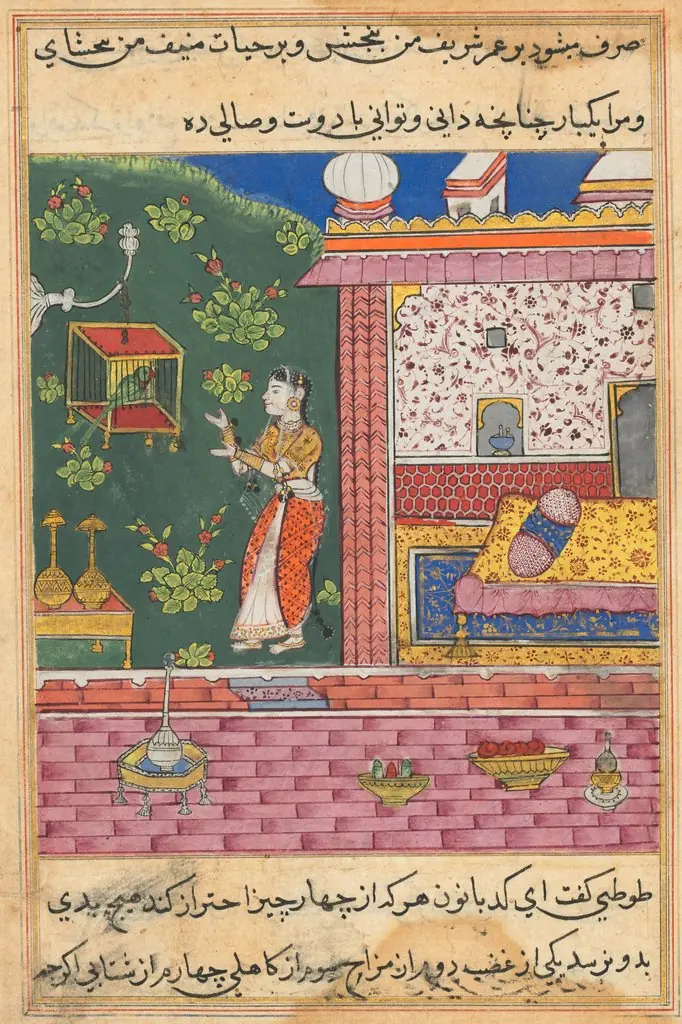 The Parrot Addresses Khujasta at the Beginning of the Thirtieth Night, from a Tuti-nama (Tales of a Parrot)
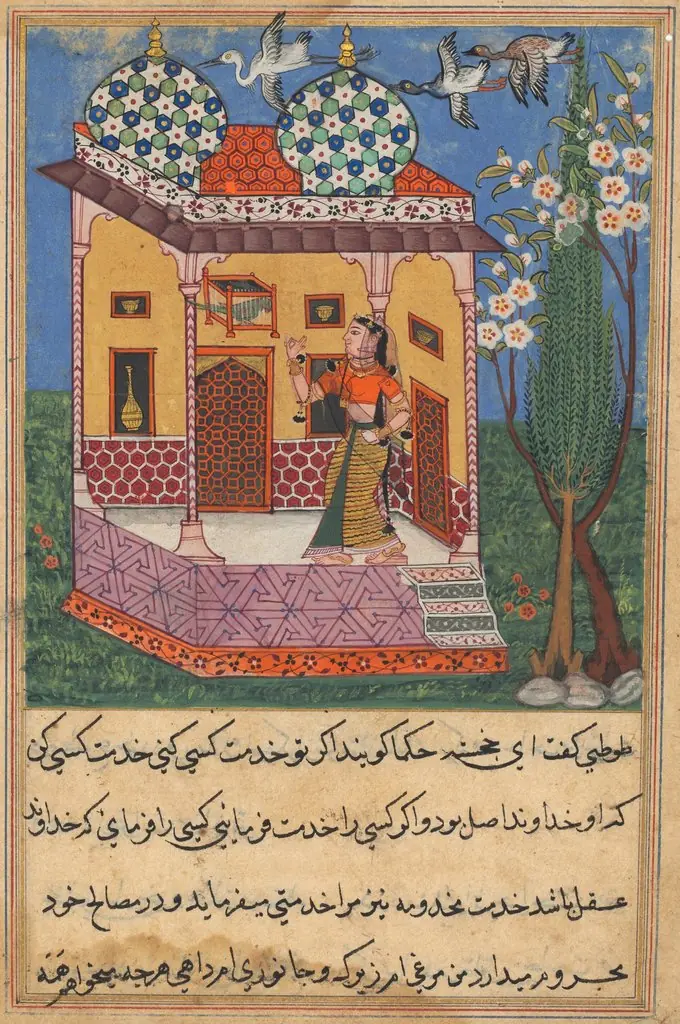 The Parrot Addresses Khujasta at the Beginning of the Twenty-sixth Night, from a Tuti-nama (Tales of a Parrot)
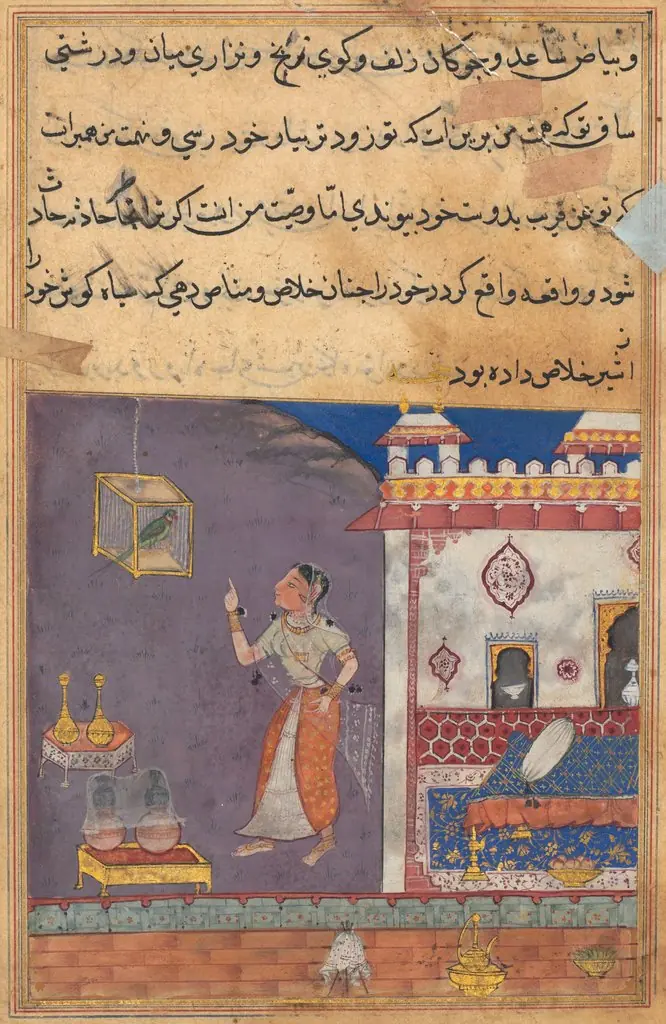 The Parrot Addresses Khujasta at the Beginning of the Twenty-ninth Night, from a Tuti-nama (Tales of a Parrot)
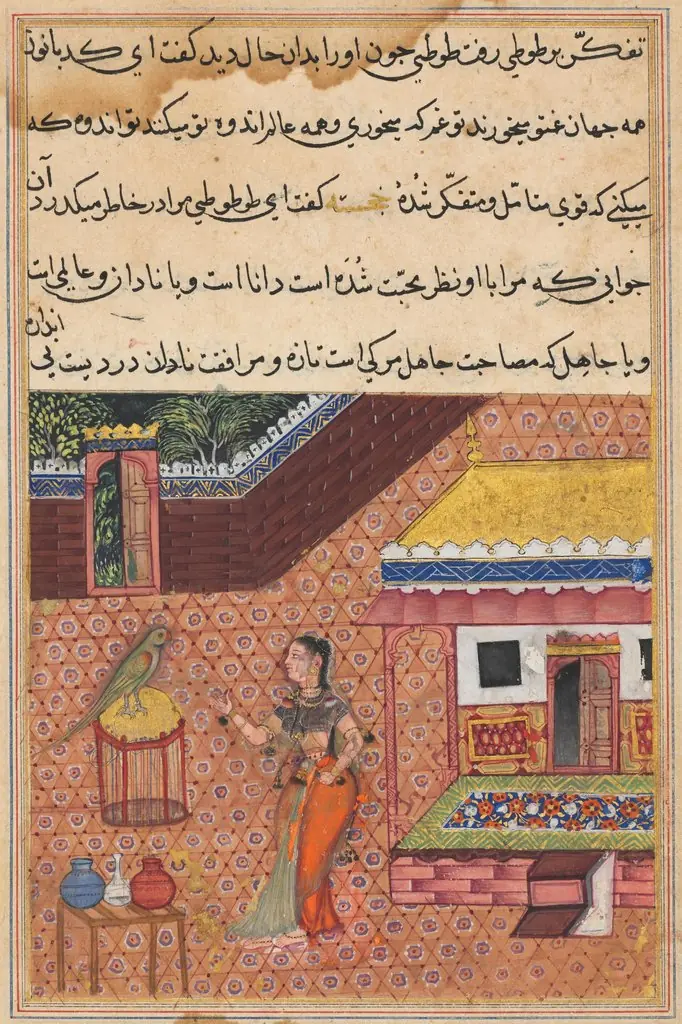 The parrot addresses Khujasta at the beginning of the thirty-fourth night, from a Tuti-nama (Tales of a Parrot)
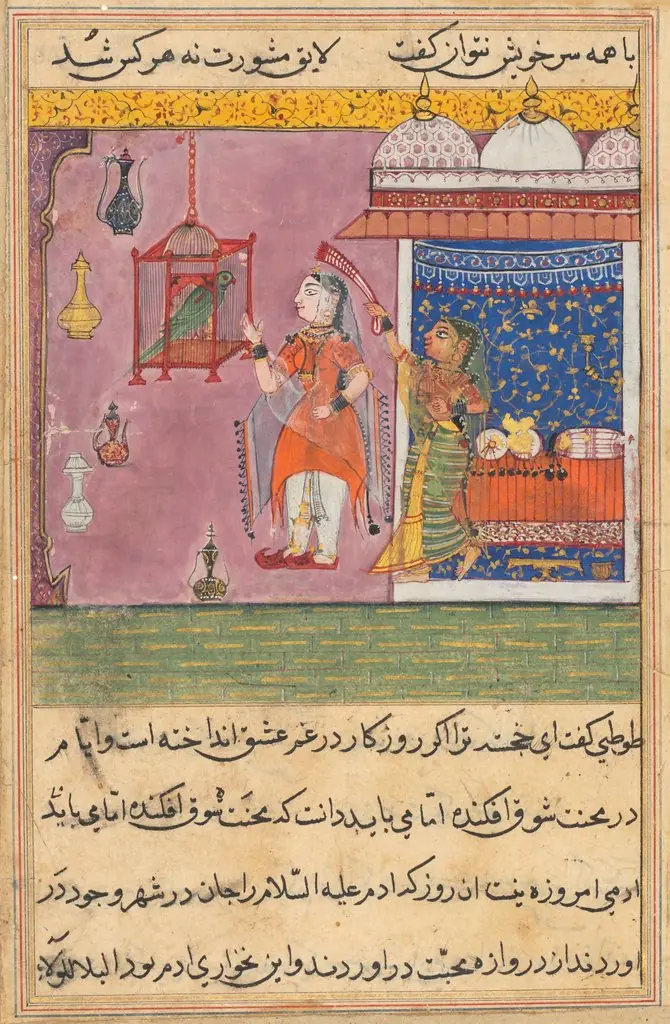 The Parrot Addresses Khujasta at the Beginning of the Nineteenth Night, from a Tuti-nama (Tales of a Parrot)
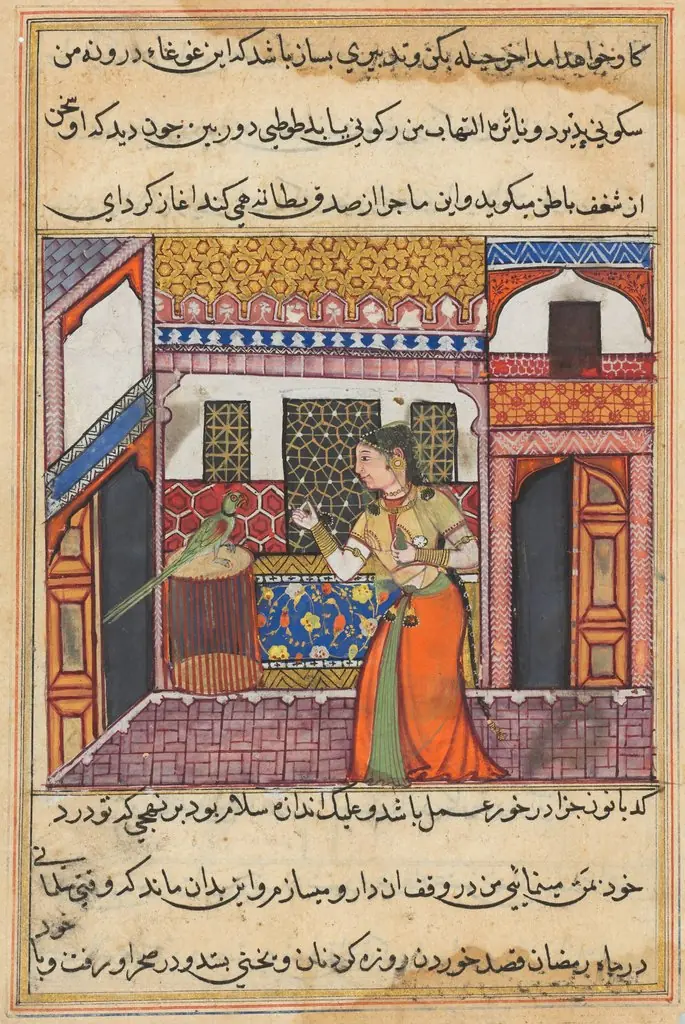 The parrot addresses Khujasta at the beginning of the forty-third night, from a Tuti-nama (Tales of a Parrot)
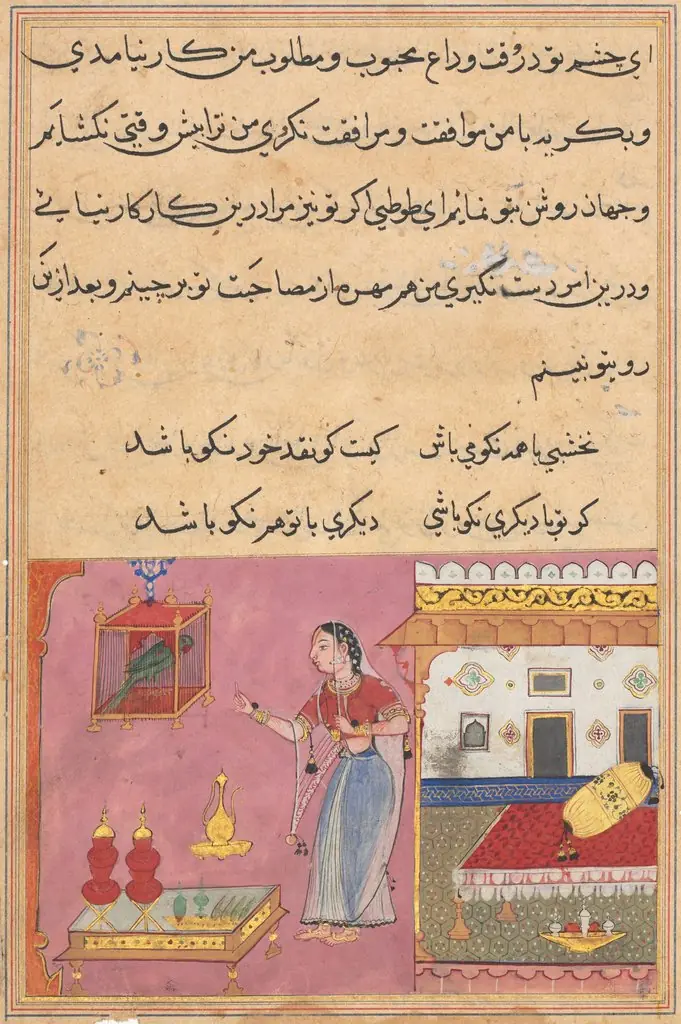 The Parrot Addresses Khujasta at the Beginning of the Twentieth Night, from a Tuti-nama (Tales of a Parrot)
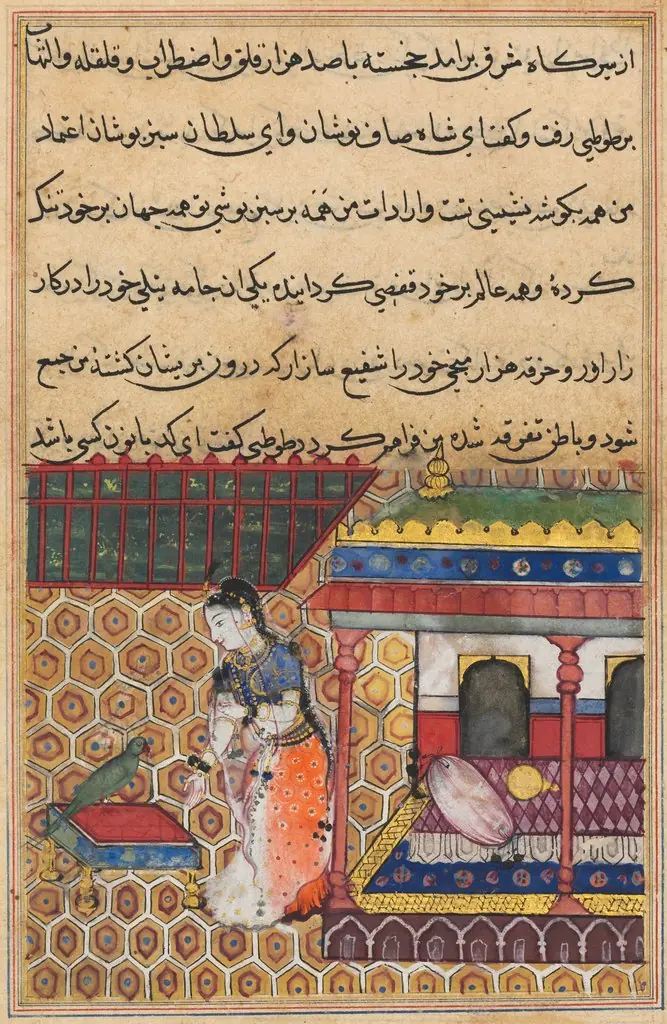 The parrot addresses Khujasta at the beginning of the thirty-eighth night, from a Tuti-nama (Tales of a Parrot)
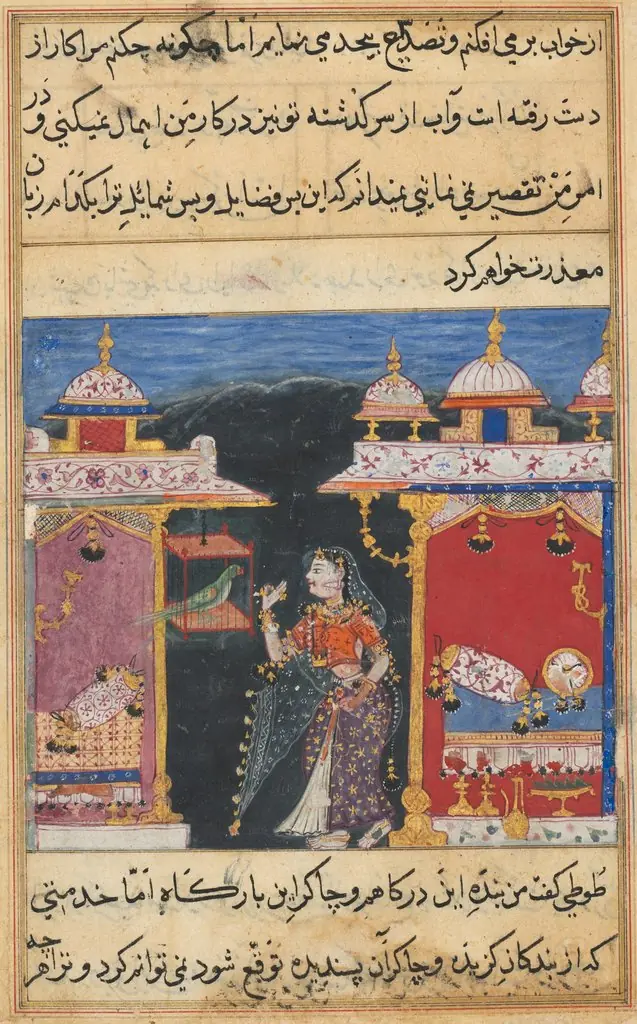 The Parrot Addresses Khujasta at the Beginning of the Seventh Night, from a Tuti-nama (Tales of a Parrot)
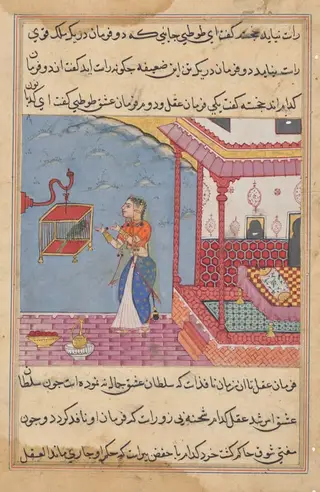 The Parrot Addresses Khujasta at the Beginning of the Twenty-Fourth Night, from a Tuti-nama (Tales of a Parrot)
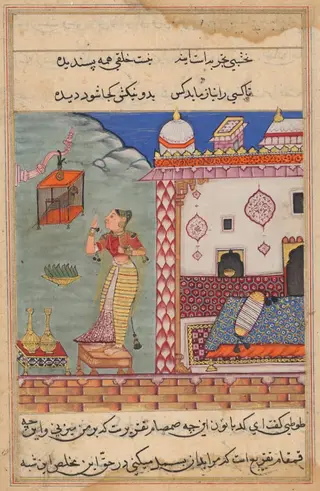 The Parrot Addresses Khujasta at the Beginning of the Twenty-seventh Night, form a Tuti-nama (Tales of a Parrot)
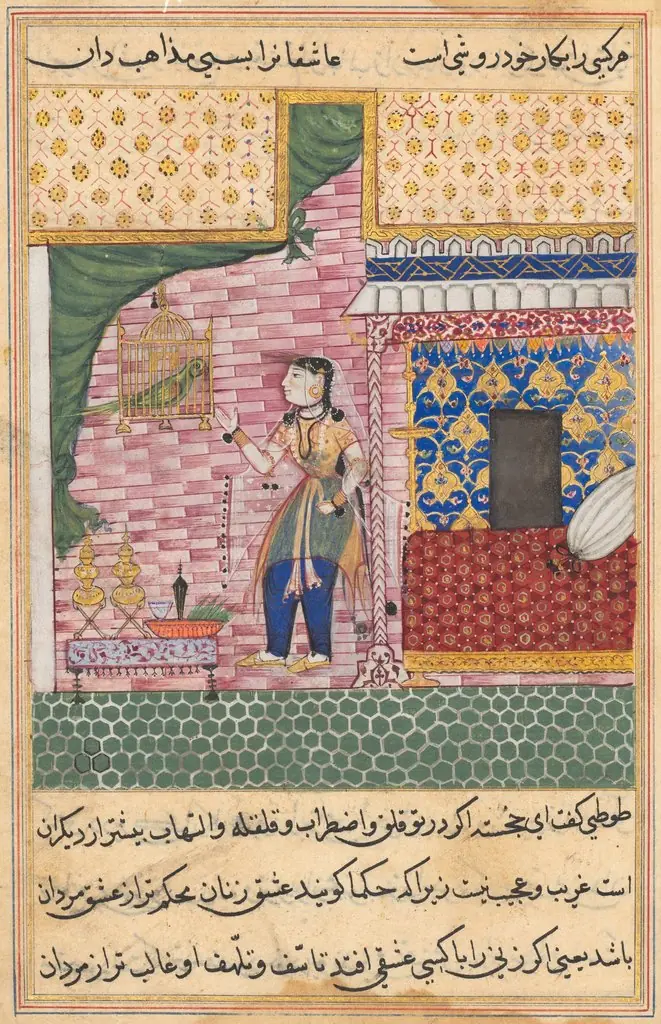 The Parrot Addresses Khujasta at the Beginning of the Seventeenth Night, from a Tuti-nama (Tales of a Parrot)