Artwork
The Parrot Addresses Khujasta at the Beginning of the Seventh Night, from a Tuti-nama (Tales of a Parrot)
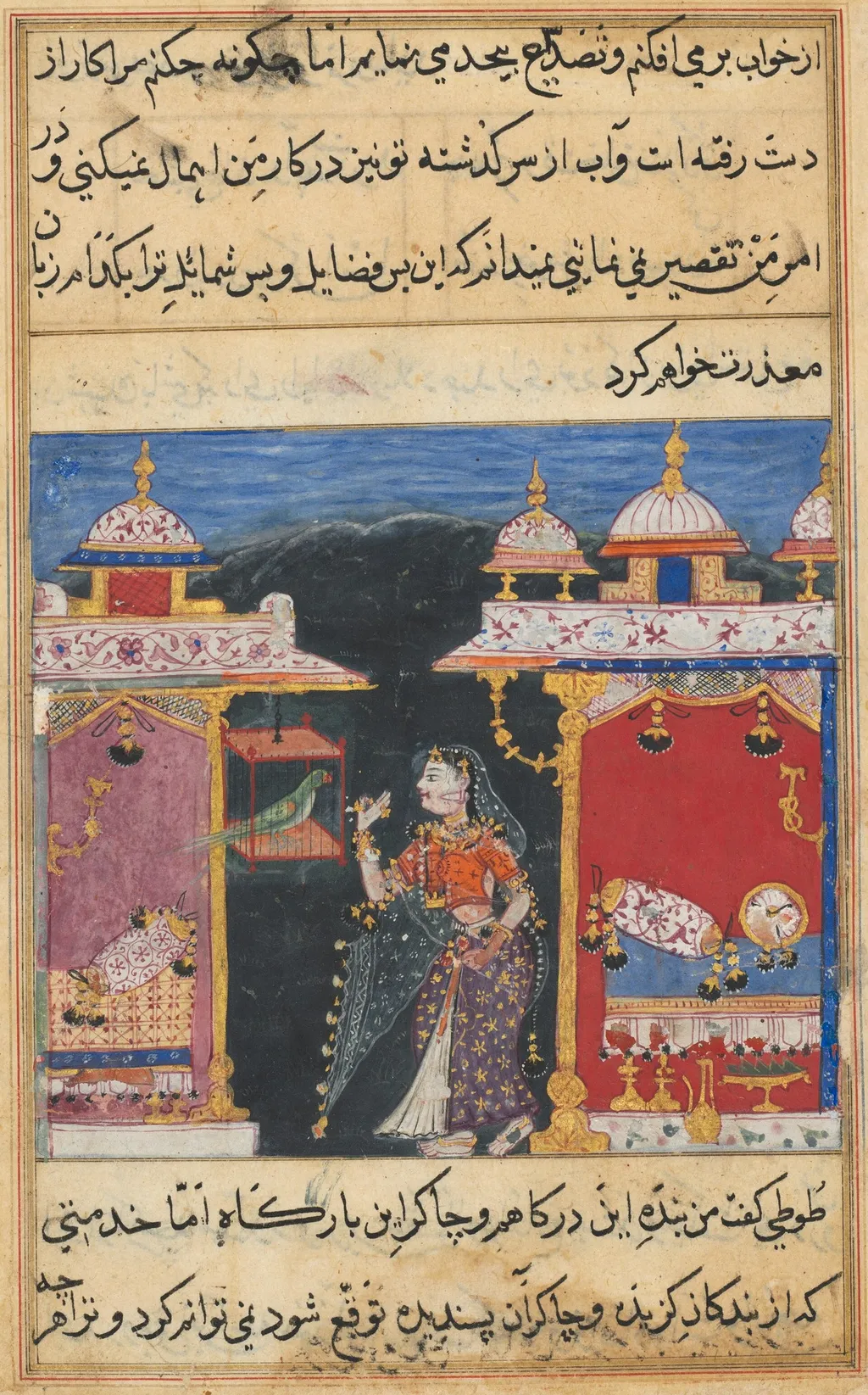
The Parrot Addresses Khujasta at the Beginning of the Seventh Night, from a Tuti-nama (Tales of a Parrot) is an unspecified painting. It dates from 1560 and is held in the collection of the Cleveland Museum of Art.
About this work
Subject & Meaning
Rendered in the Mughal imperial style, the composition combines delicate line work with rich pigments to convey both narrative clarity and spiritual resonance.
The miniature illustrates a parrot speaking to the heroine Khujasta at the start of the seventh night, a pivotal moment in the narrative of the Tuti-nama. The bird functions as a messenger and catalyst, symbolizing divine inspiration and the transmission of secret knowledge within the Sufi allegory. Rendered in the Mughal imperial style, the composition combines delicate line work with rich pigments to convey both narrative clarity and spiritual resonance.
Technique & Style
The painting is executed in tempera and ink on paper, forming part of a Persian miniature tradition from the Mughal period. It belongs to a 16th-century illustrated manuscript known as the Tuti-nama, or Tales of a Parrot, and reflects the stylistic conventions of courtly Persian book art from that era. The work was created in India under Mughal patronage and is presently held in the collection of the Cleveland Museum of Art.
History & Provenance
The painting was created in 1560 within the Mughal Empire, during the early years of that dynasty's artistic production. It was produced as a folio from a Tuti-nama (Tales of a Parrot) manuscript, a series of illustrated narratives to which this work belongs.
The work is now held in the collection of the Cleveland Museum of Art, where it is catalogued under accession number 1962.279.43.a. The sources do not document the intermediate ownership chain between its sixteenth-century Mughal creation and its acquisition by the Cleveland Museum of Art, nor do they record details of any commission or original patron.
The painting is held in the collection of the Cleveland Museum of Art, located in Cleveland. It is cataloged within the museum's holdings under the accession number 1962.279.43.a. The work dates to 1560 and was produced in the Mughal Empire. The provided sources do not contain specific information regarding the exhibition history of this folio.
Overview
The work illustrates a scene from a Persian narrative collection known as a Tuti‑nama, depicting a moment when a parrot addresses a woman named Khujasta on the seventh night of the tale. The composition centers on a brightly dressed female figure within an opulently adorned interior, while a black parrot perched in a cage draws the viewer’s attention as the apparent speaker.
Context
Tuti‑nama manuscripts were popular in the Islamic world from the 15th to 18th centuries, combining prose, poetry, and illustration to entertain elite audiences. The depicted interior, with its domed rooftops and minarets visible through the window, reflects an idealized urban setting typical of such narrative scenes, merging domestic and architectural motifs.
Legacy
Illustrations like this one contributed to the visual vocabulary of Persian storytelling, influencing later manuscript production and informing modern understandings of courtly aesthetics. The work remains a valuable example of how narrative art conveyed literary content through richly detailed, symbolic imagery.
Artist & collection

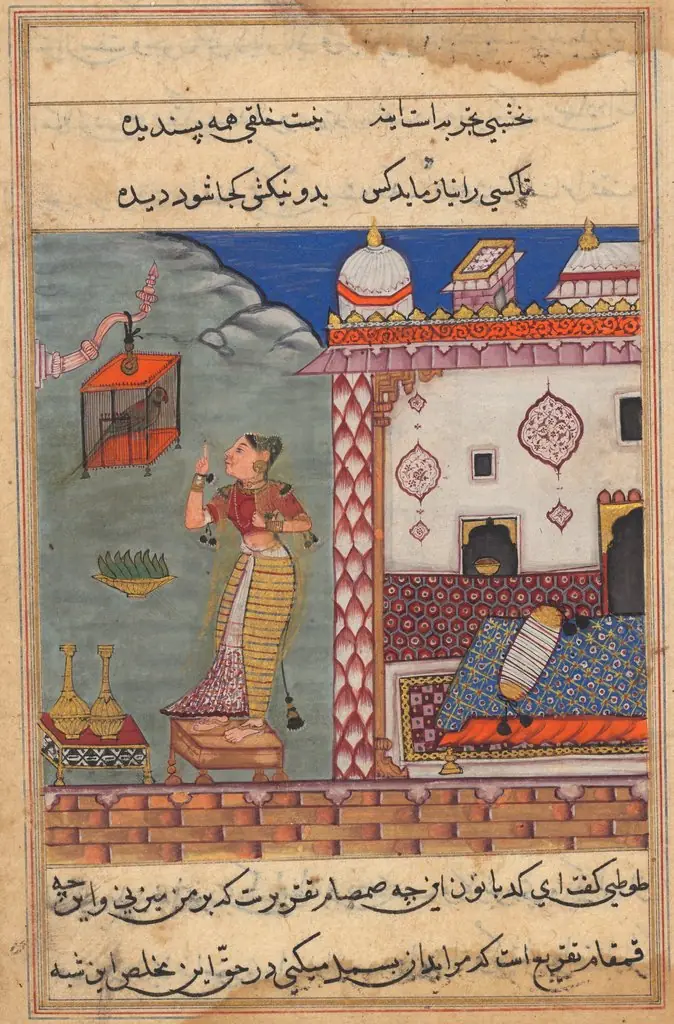
- The Parrot Addresses Khujasta at the Beginning of the Twenty-seventh Night, form a Tuti-nama (Tales of a Parrot)
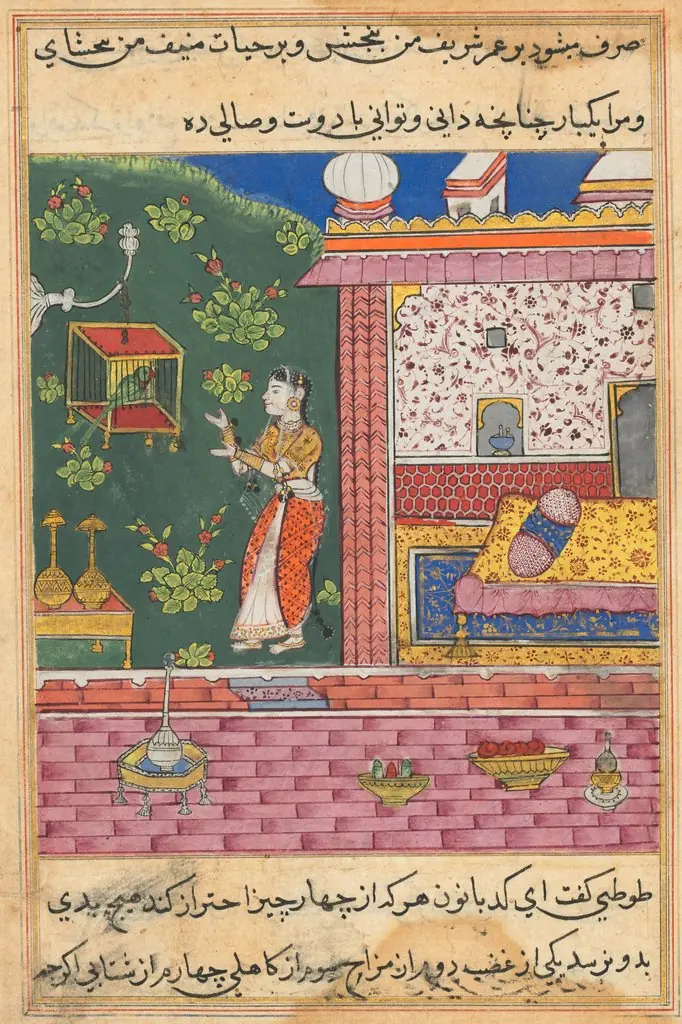 The Parrot Addresses Khujasta at the Beginning of the Thirtieth Night, from a Tuti-nama (Tales of a Parrot)
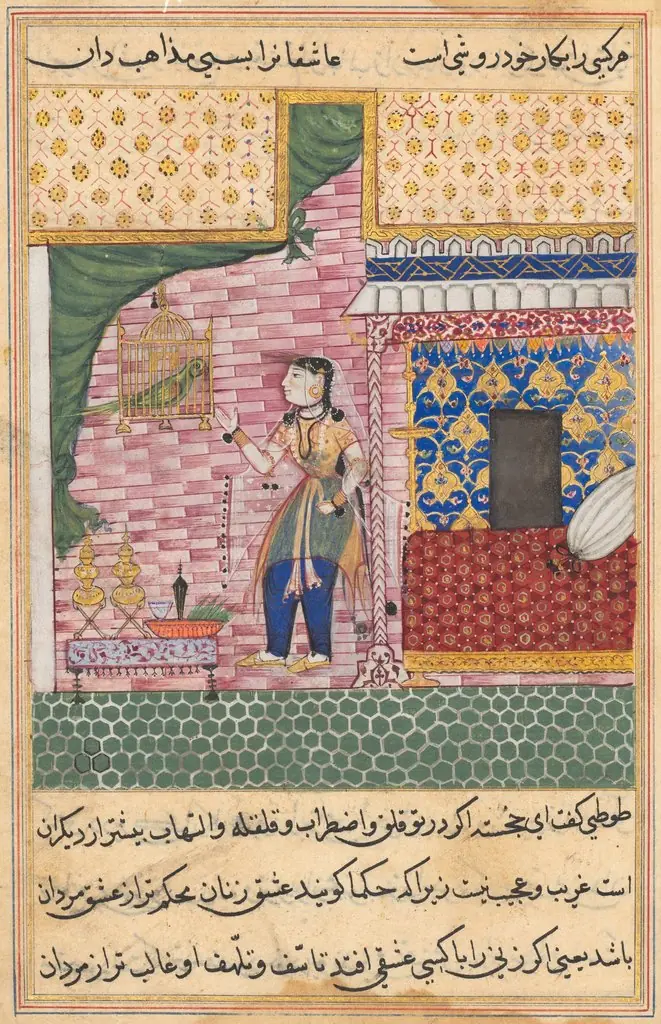 The Parrot Addresses Khujasta at the Beginning of the Seventeenth Night, from a Tuti-nama (Tales of a Parrot)
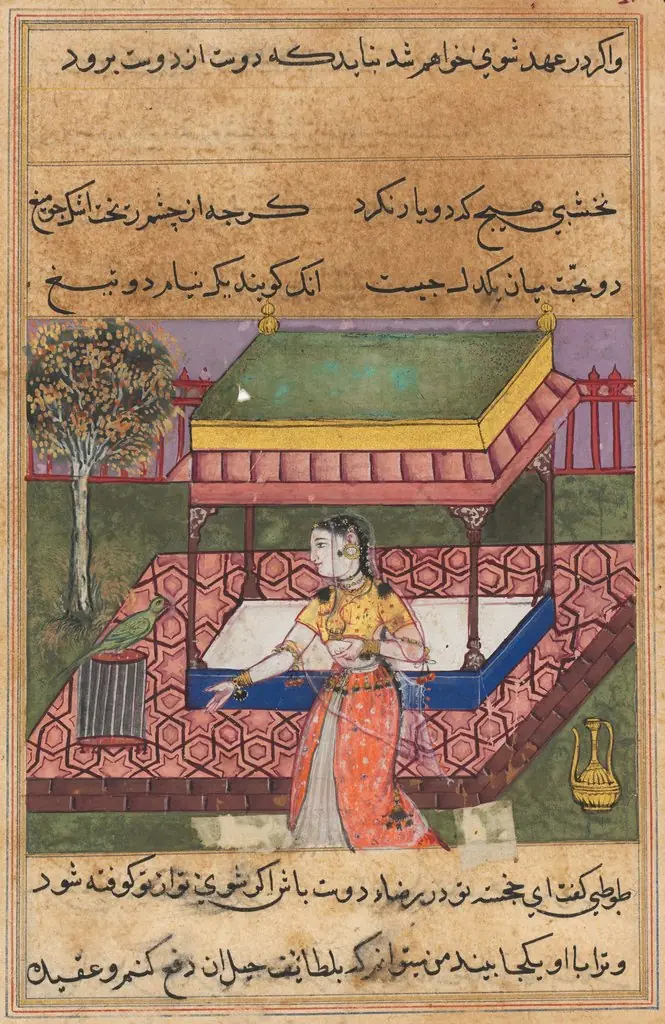 The parrot addresses Khujasta at the beginning of the fortieth night, from a Tuti-nama (Tales of a Parrot)
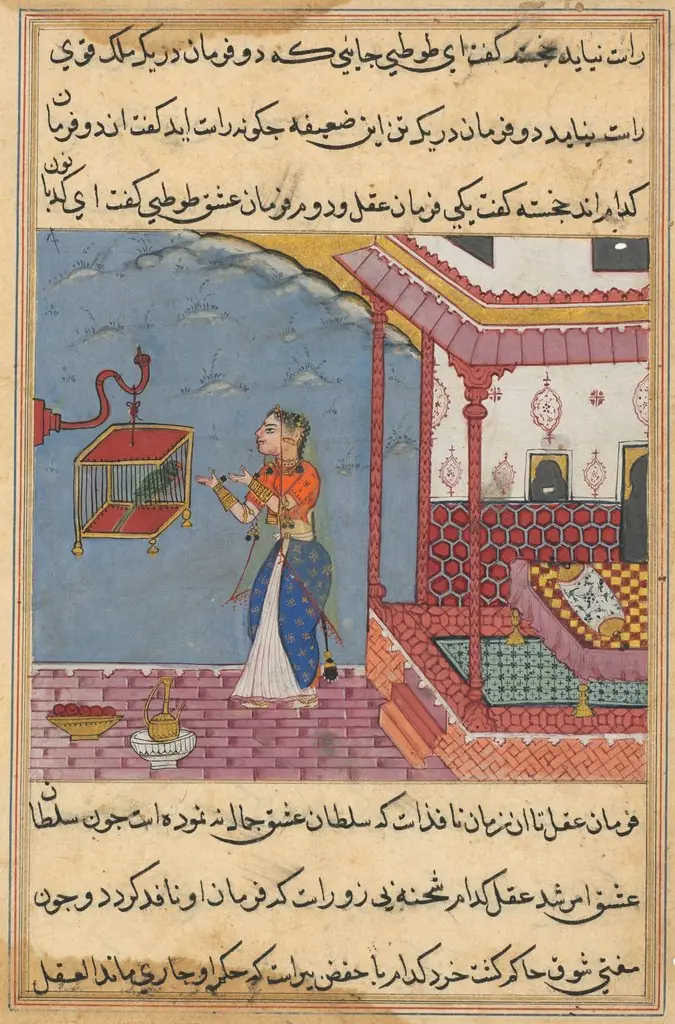 The Parrot Addresses Khujasta at the Beginning of the Twenty-Fourth Night, from a Tuti-nama (Tales of a Parrot)
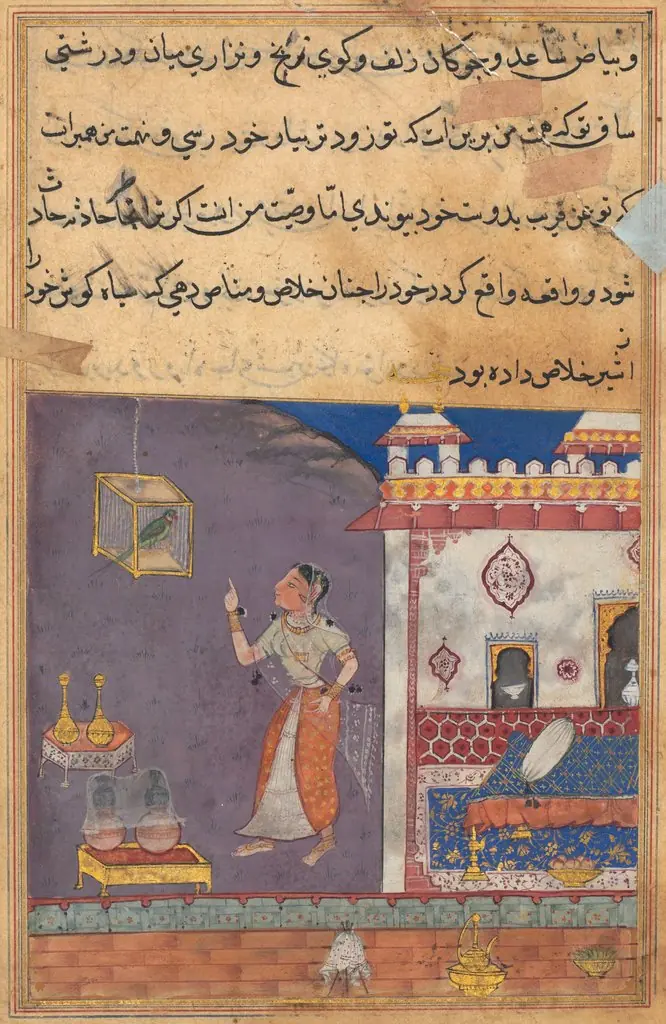 The Parrot Addresses Khujasta at the Beginning of the Twenty-ninth Night, from a Tuti-nama (Tales of a Parrot)
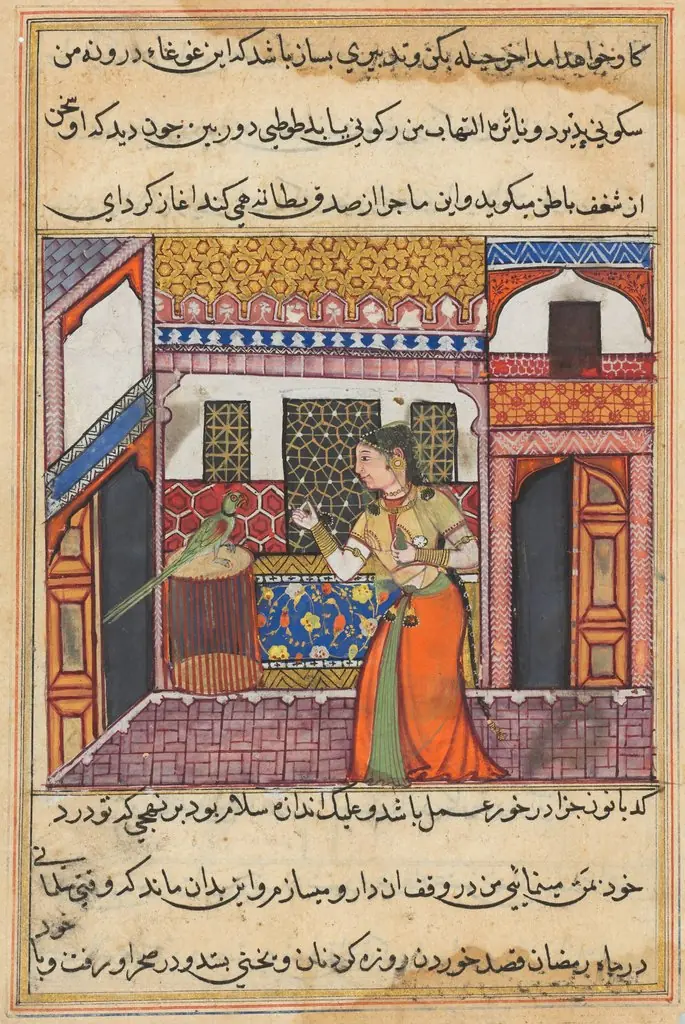 The parrot addresses Khujasta at the beginning of the forty-third night, from a Tuti-nama (Tales of a Parrot)
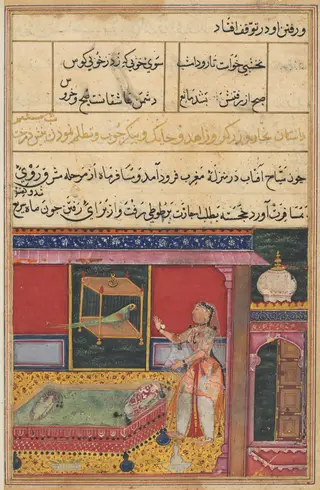 The Parrot Addresses Khujasta at the Beginning of the Sixth Night, from a Tuti-nama (Tales of a Parrot)
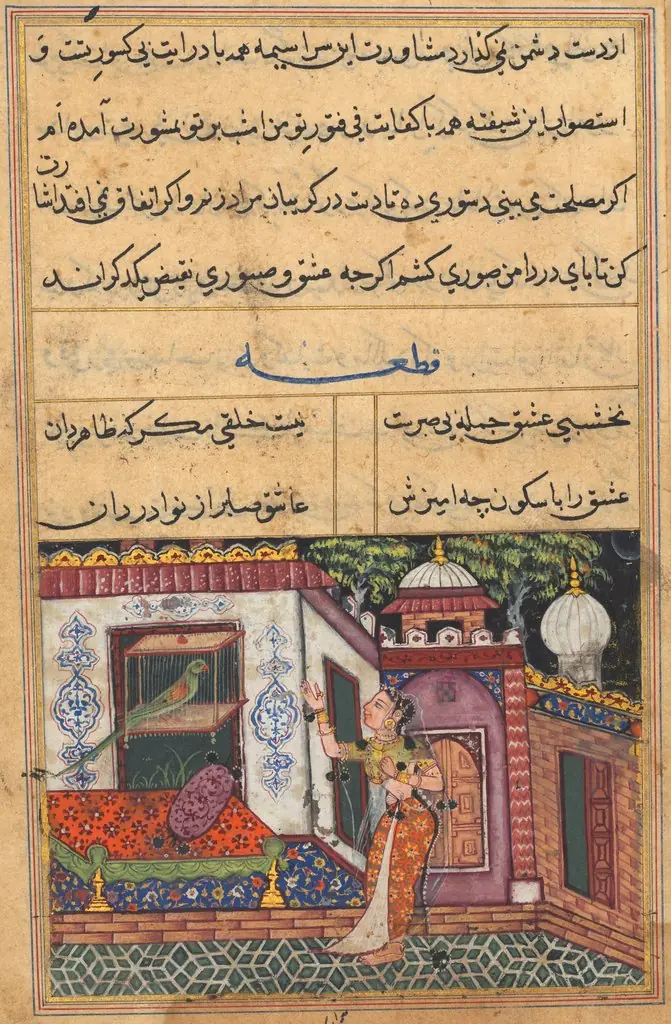 The Parrot Addresses Khujasta at the Beginning of the Eleventh Night, from a Tuti-nama (Tales of a Parrot)
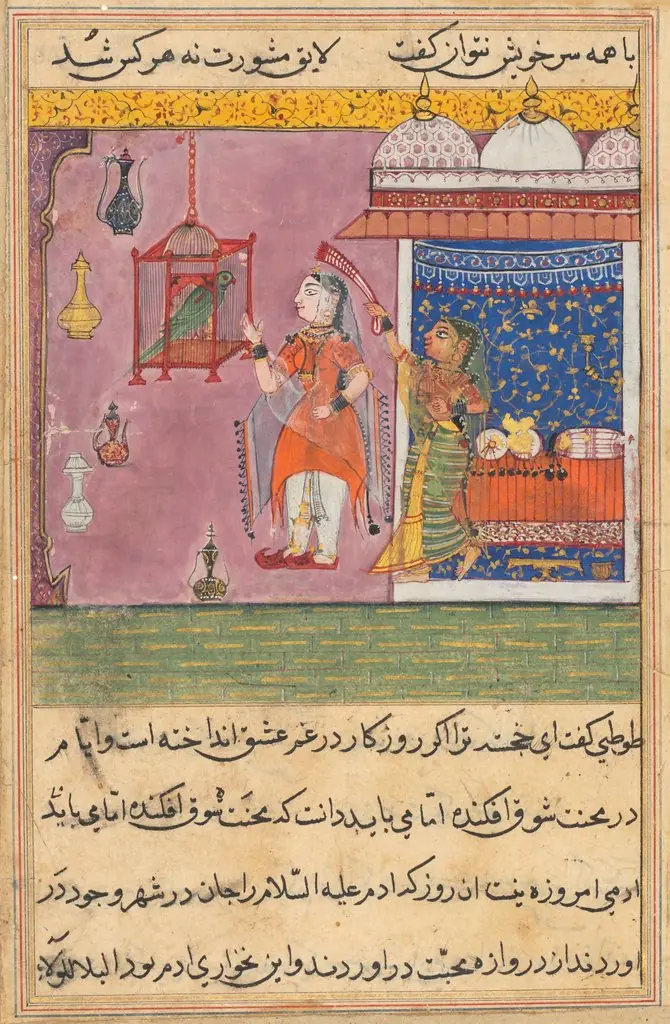 The Parrot Addresses Khujasta at the Beginning of the Nineteenth Night, from a Tuti-nama (Tales of a Parrot)
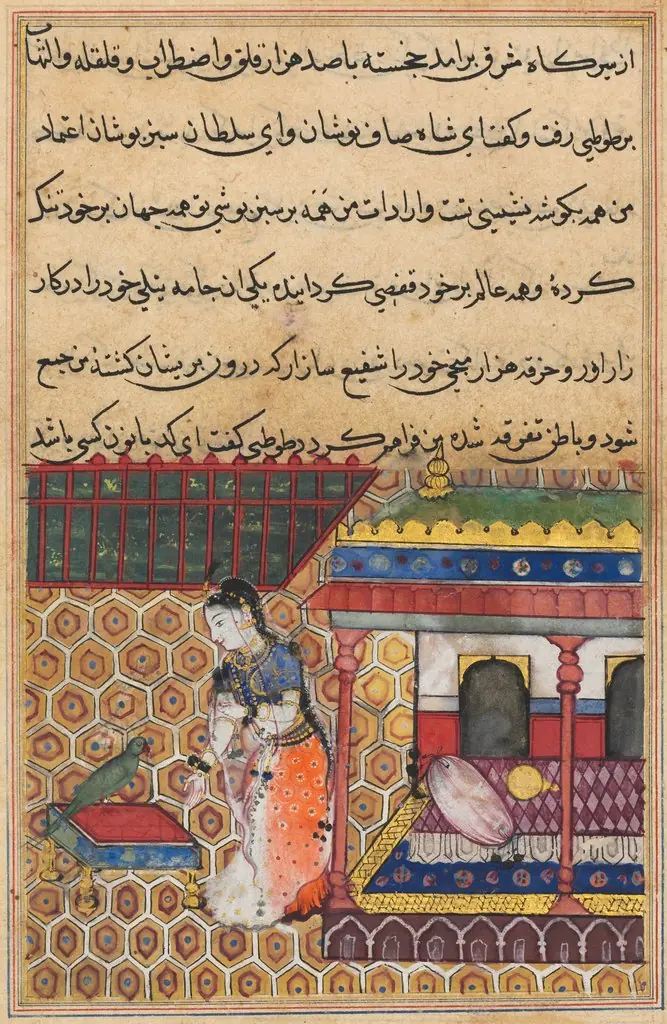 The parrot addresses Khujasta at the beginning of the thirty-eighth night, from a Tuti-nama (Tales of a Parrot)
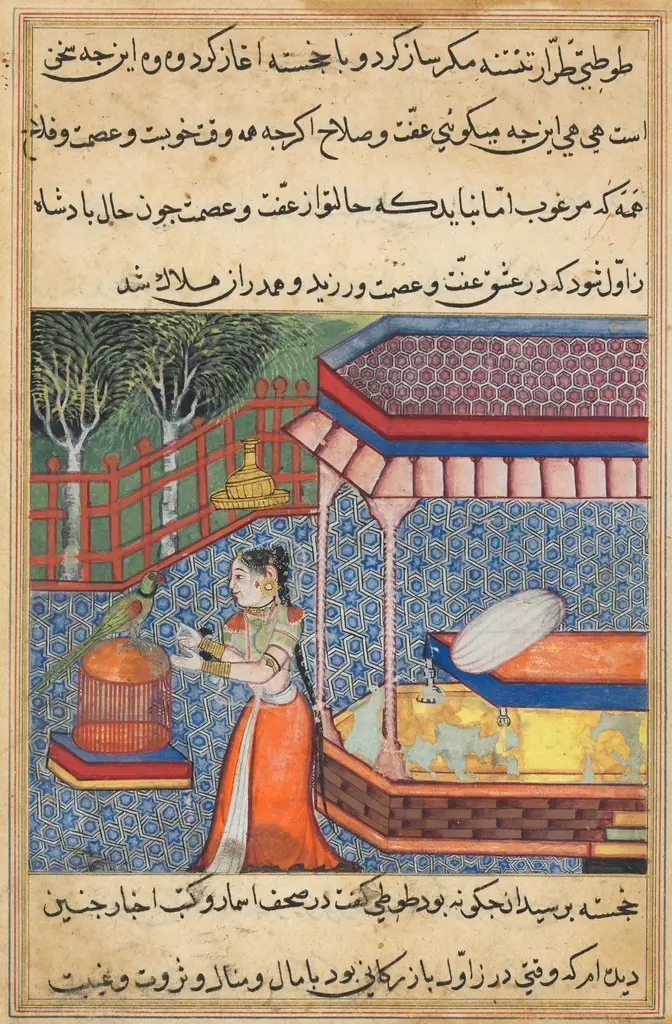 The parrot addresses Khujasta at the beginning of the thirty-sixth night, from a Tuti-nama (Tales of a Parrot)
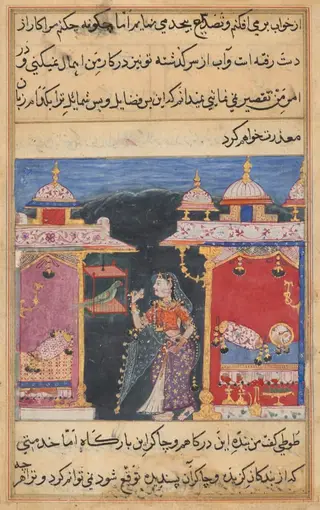 The Parrot Addresses Khujasta at the Beginning of the Seventh Night, from a Tuti-nama (Tales of a Parrot)
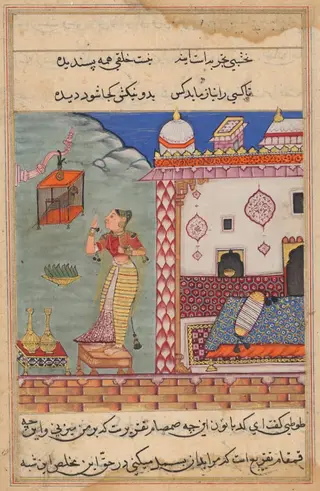 The Parrot Addresses Khujasta at the Beginning of the Twenty-seventh Night, form a Tuti-nama (Tales of a Parrot)
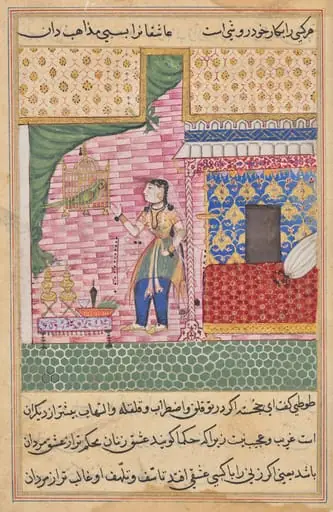 The Parrot Addresses Khujasta at the Beginning of the Seventeenth Night, from a Tuti-nama (Tales of a Parrot)