Artwork
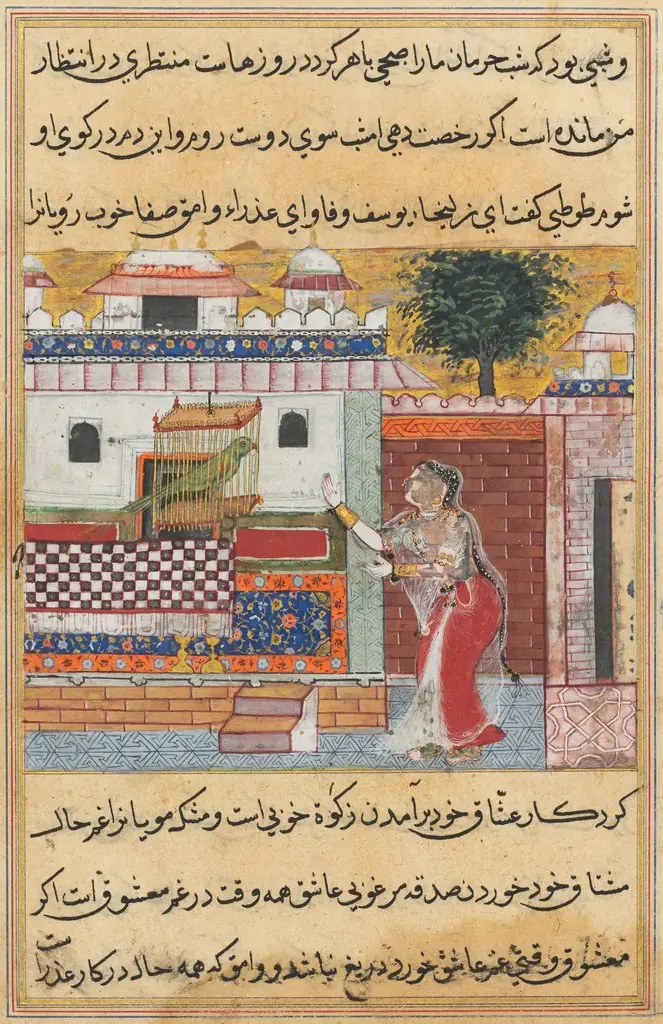
The Parrot Addresses Khujasta at the Beginning of the Tenth Night, from a Tuti-nama (Tales of a Parrot)
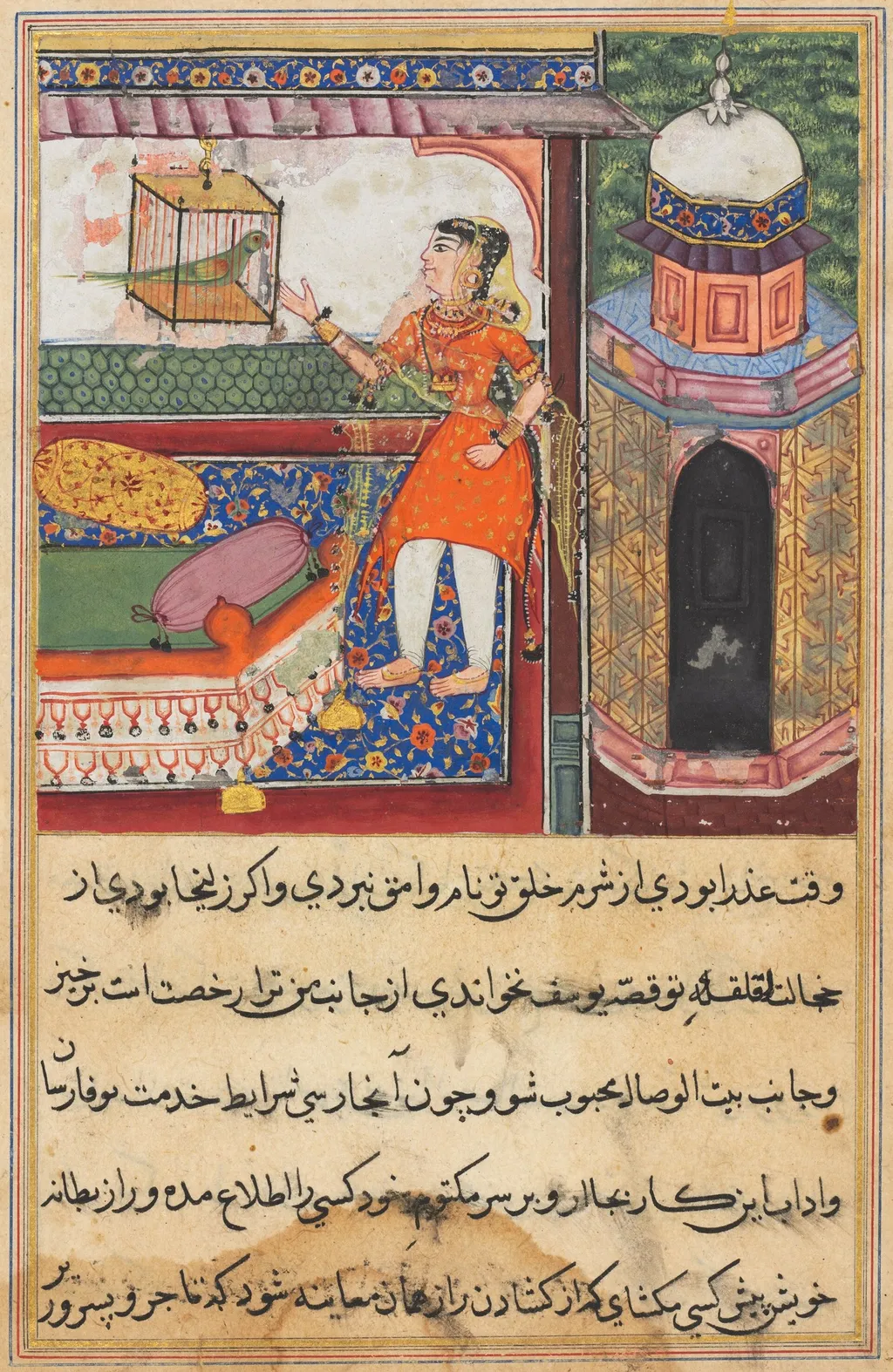
The Parrot Addresses Khujasta at the Beginning of the Tenth Night, from a Tuti-nama (Tales of a Parrot) is an unspecified painting. It dates from 1560 and is held in the collection of the Cleveland Museum of Art.
About this work
History & Provenance
The painting was produced around 1560 during the Mughal Empire period, as indicated by its documented inception date.
It entered the Cleveland Museum of Art as part of a larger group of folios in 1962, accessioned as 1962.279.80.b. The museum's collection record situates the work within the Mughal atelier tradition of manuscript illustration during the mid-sixteenth century.
Context
Its inclusion in the Cleveland Museum of Art collection underscores its recognized significance within the corpus of early Indian painting.
The painting known as The Parrot Addresses Khujasta at the Beginning of the Tenth Night, from a Tuti-nama (Tales of a Parrot), dated 1560, exemplifies Mughal courtly illustration produced in the imperial atelier during the reign of Akbar. Contemporary scholarship identifies it as a product of the Mughal imperial workshop, where narrative cycles such as the Tuti-nama were rendered with meticulous detail and vibrant palette to accompany didactic Persian texts. The work's composition, which captures an intimate moment of avian counsel within a Persian literary frame, reflects the synthesis of Persian miniature tradition and the burgeoning naturalistic sensibility championed by court artists.
Its inclusion in the Cleveland Museum of Art collection underscores its recognized significance within the corpus of early Indian painting.
Overview
The work depicts a seated woman in vivid orange and blue garments, perched on a red carpet while cradling a small cage that holds a green parrot. Behind her a darkened doorway opens onto a structure crowned with a white dome and blue trim. The floor is covered by a patterned rug featuring gold and floral motifs, and a pink pillow rests nearby. The composition relies on bold, flat areas of red, blue and gold, delineated by precise lines.
Subject & Meaning
The scene illustrates a moment from the Persian narrative collection Tuti‑nama (Tales of a Parrot), in which the parrot addresses King Khujasta at the start of the tenth night. The bird’s prominent placement suggests its role as storyteller, while the woman’s attentive posture implies a listening audience within the domestic interior.
Technique & Style
Executed with flat, decorative shapes and a limited palette, the painting employs clear outlines and a lack of chiaroscuro, characteristic of manuscript illustration traditions. The use of vivid primary colors and ornamental patterning on the rug and pillow reflects a stylized, narrative-driven aesthetic rather than naturalistic representation.
Legacy
The painting exemplifies the visual language of Persian narrative art, influencing later manuscript illustration and informing contemporary understandings of storytelling in pre‑modern Islamic societies.
Artist & collection

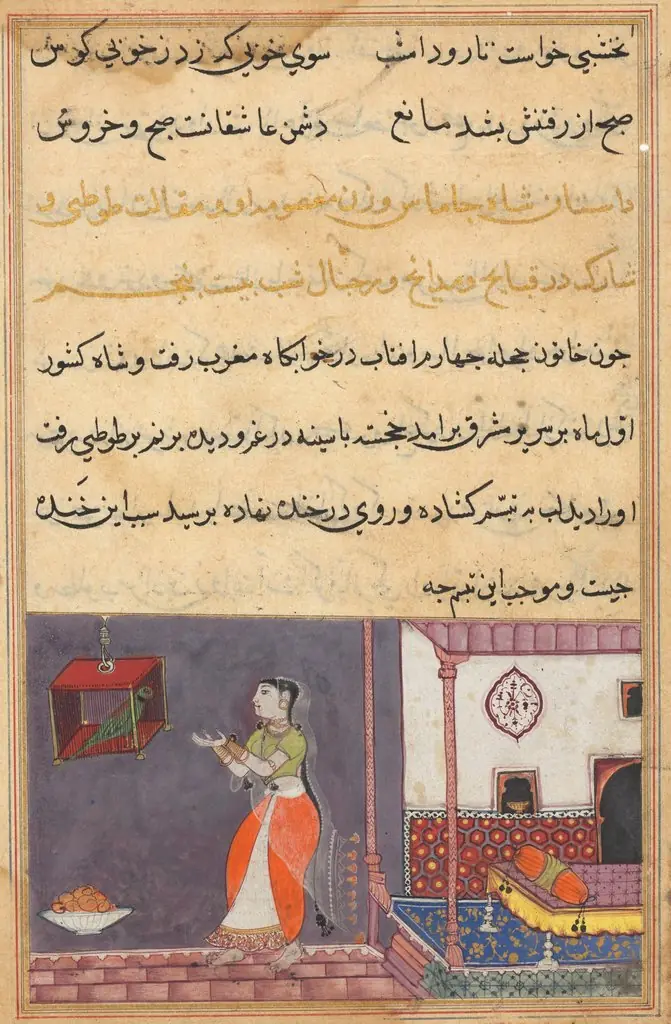
- The Parrot Addresses Khujasta at the Beginning of the Twenty-fifth Night, from a Tuti-nama (Tales of a Parrot)
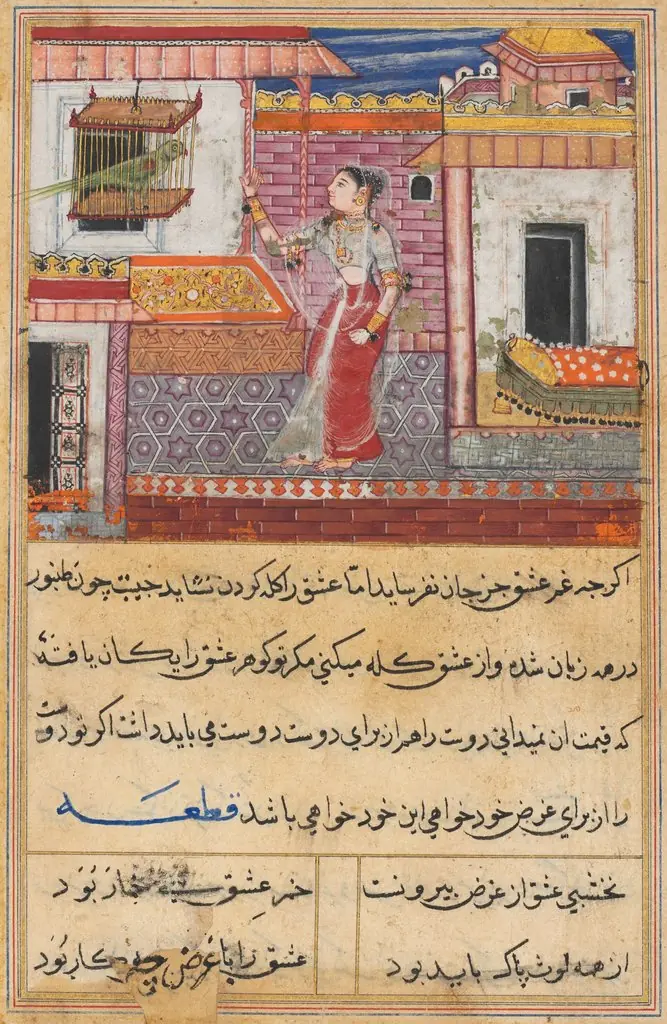 The Parrot Addresses Khujasta at the Beginning of the Thirteenth Night, from a Tuti-nama (Tales of a Parrot)
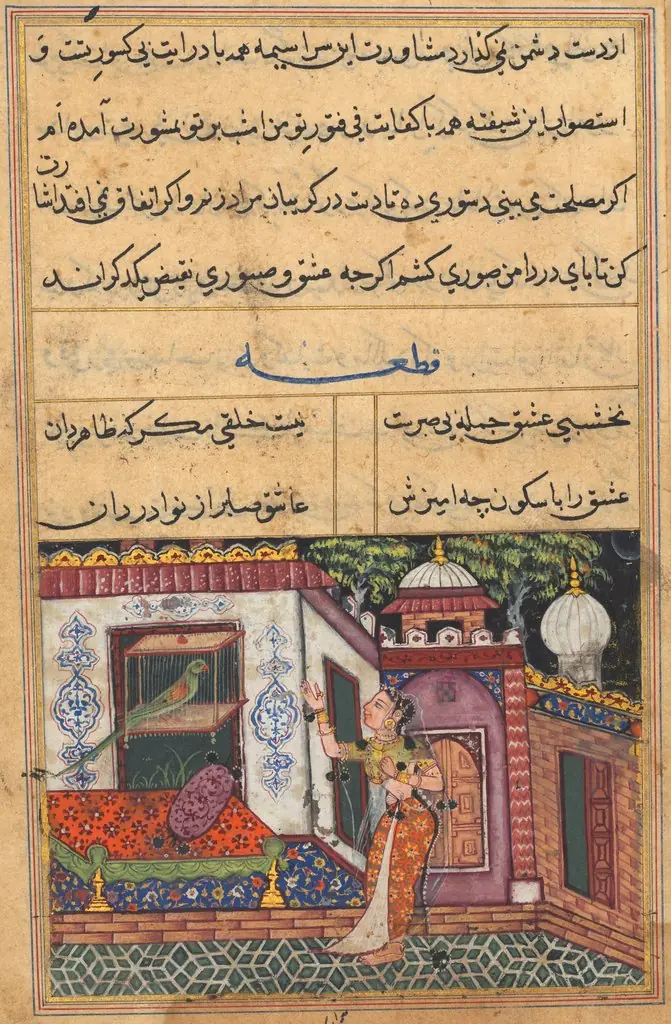 The Parrot Addresses Khujasta at the Beginning of the Eleventh Night, from a Tuti-nama (Tales of a Parrot)
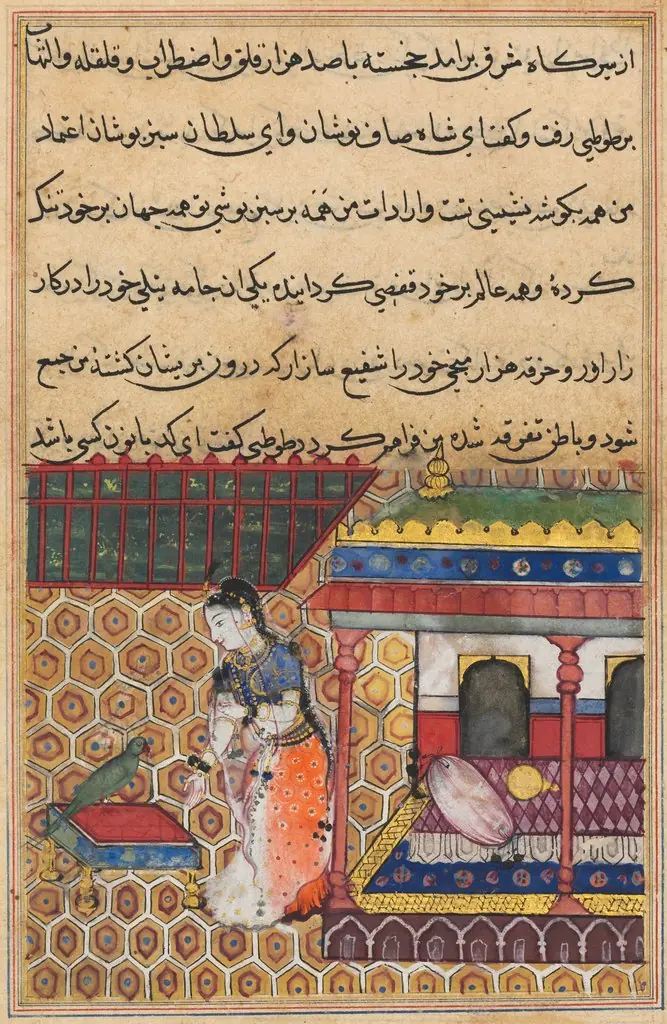 The parrot addresses Khujasta at the beginning of the thirty-eighth night, from a Tuti-nama (Tales of a Parrot)
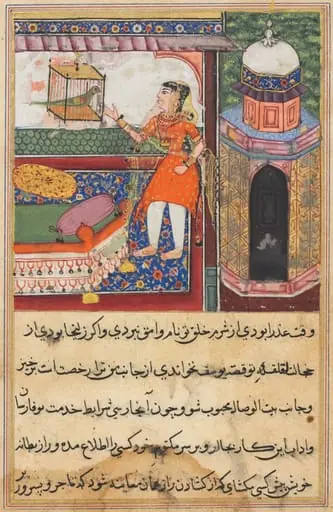 The Parrot Addresses Khujasta at the Beginning of the Tenth Night, from a Tuti-nama (Tales of a Parrot)
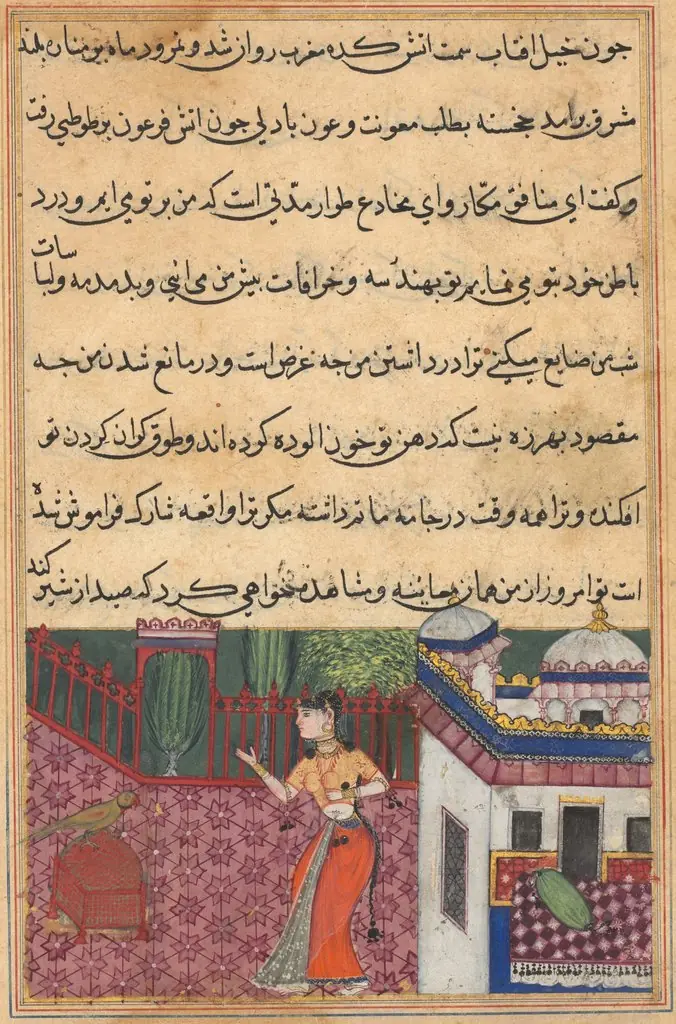 The parrot addresses Khujasta at the beginning of the thirty-third night, from a Tuti-nama (Tales of a Parrot)
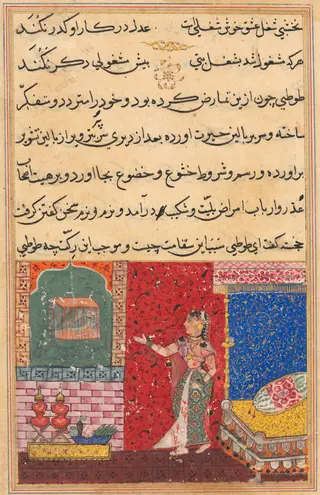 The Parrot Addresses Khujasta at the Beginning of the Fifteenth Night, from a Tuti-nama (Tales of a Parrot)
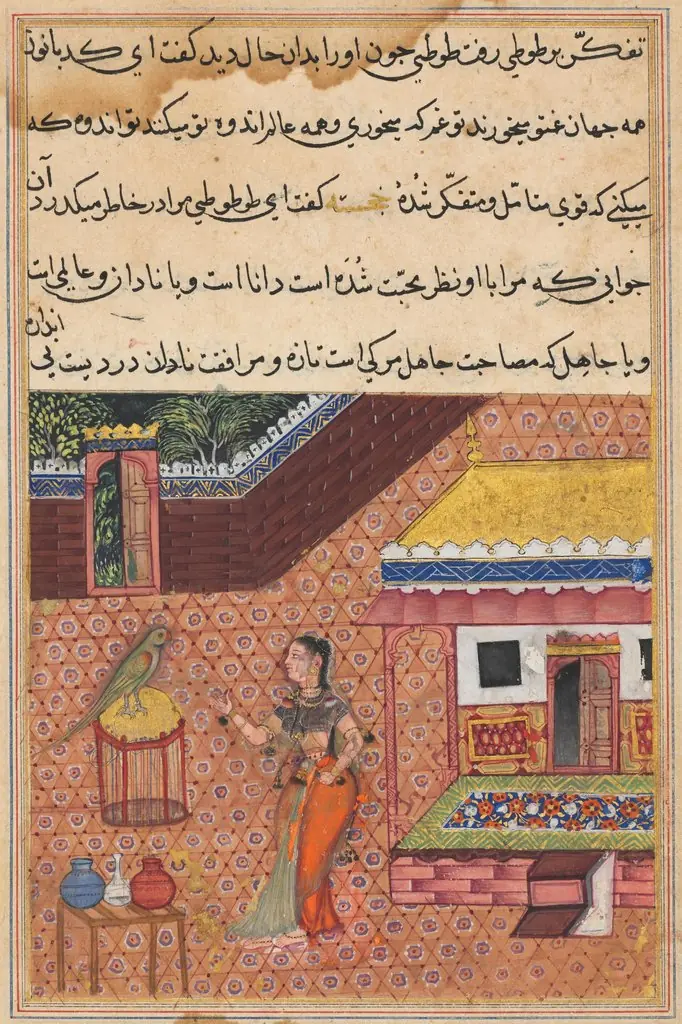 The parrot addresses Khujasta at the beginning of the thirty-fourth night, from a Tuti-nama (Tales of a Parrot)
 The parrot addresses Khujasta at the beginning of the thirty-eighth night, from a Tuti-nama (Tales of a Parrot)
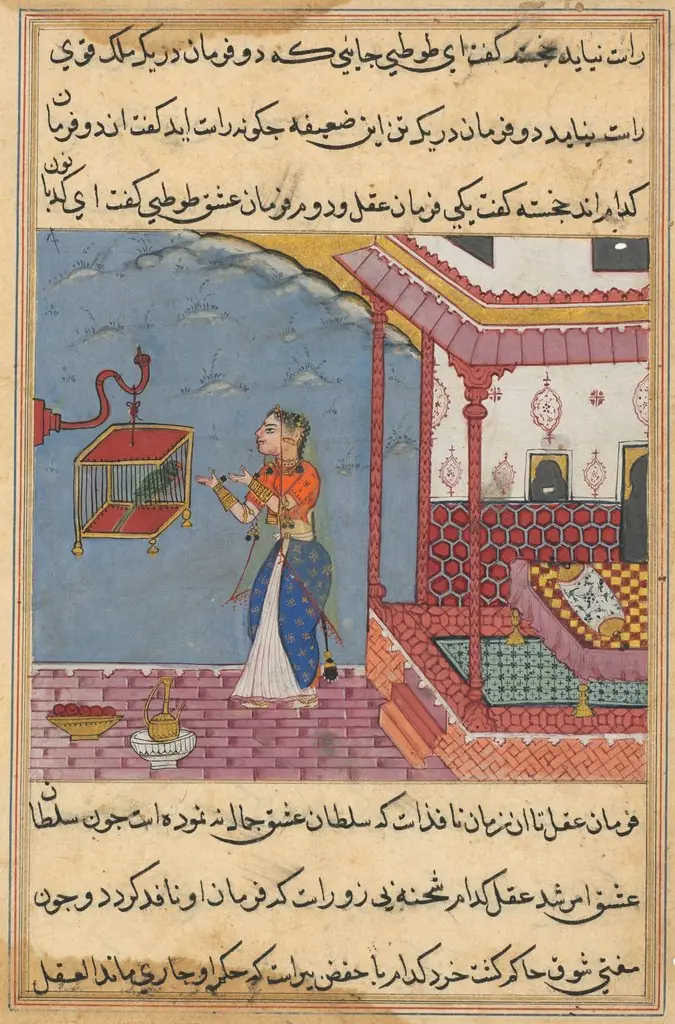 The Parrot Addresses Khujasta at the Beginning of the Twenty-Fourth Night, from a Tuti-nama (Tales of a Parrot)
 The Parrot Addresses Khujasta at the Beginning of the Thirteenth Night, from a Tuti-nama (Tales of a Parrot)
 The Parrot Addresses Khujasta at the Beginning of the Twelfth Night, from a Tuti-nama (Tales of a Parrot)