Artwork
The eldest brother explains the reason for his youthful appearance, from a Tuti-nama (Tales of a Parrot): Forty-ninth Night
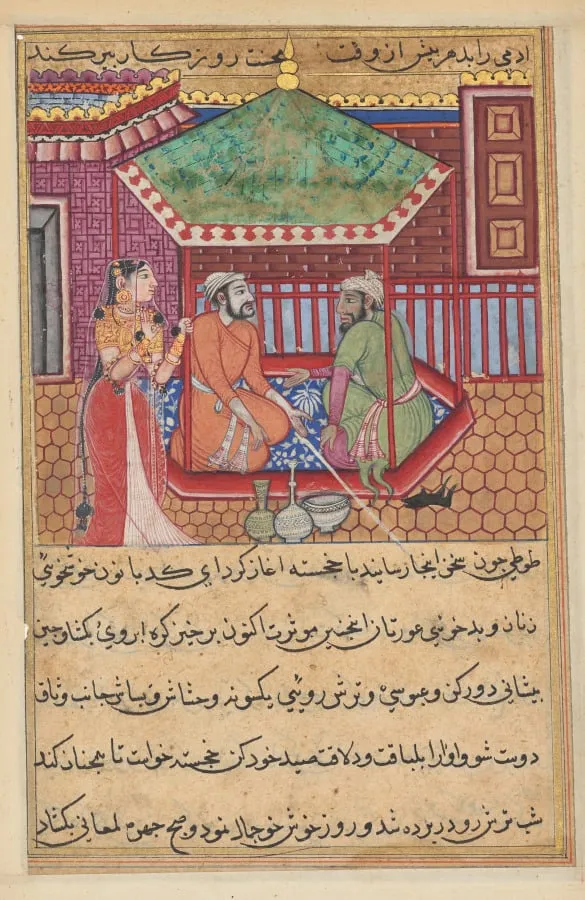
The eldest brother explains the reason for his youthful appearance, from a Tuti-nama (Tales of a Parrot): Forty-ninth Night is an unspecified painting by the Mughal Painting artist Unknown. It dates from 1560 and is held in the collection of the Cleveland Museum of Art. The painting portrays a royal official seated on the floor, engaged in conversation with the eldest of three brothers.
- Accession no.
- 1962.279.315.a
- Credit line
- Gift of Mrs. A. Dean Perry
About this work
The oldest brother says he stays young because his life is calm, good harvests, a happy wife, no worries.
A king’s advisor sits on the floor, talking to the oldest of three brothers. The old man looks younger than his siblings, though his beard is streaked with gray.
The story comes from a book of parrot tales read aloud at the Mughal court. The oldest brother says he stays young because his life is calm, good harvests, a happy wife, no worries. The artist painted every wrinkle and fold in the robes to show the brothers’ ages clearly.
To see more paintings like this, look up Mughal India, court of Akbar (reigned 1556–1605).
Overview
The painting portrays a royal official seated on the floor, engaged in conversation with the eldest of three brothers. Though the man is the oldest, his appearance is notably youthful, with only a few gray strands in his beard distinguishing his age from that of his younger siblings.
Subject & Meaning
In the scene, the elder brother explains that his apparent lack of aging stems from a life free of anxiety: his fields produce plentiful harvests and his wife is content and obedient. The dialogue underscores a moral that tranquility and prosperity can preserve youthful vigor.
Technique & Style
The artist renders the brothers’ ages through meticulous attention to detail, depicting every wrinkle and the folds of their garments. The contrast between the elder’s smooth complexion and the more pronounced signs of age on his siblings highlights the narrative’s emphasis on inner calm versus external circumstance.
Context
The episode is taken from a "Tuti‑nama," a collection of parrot tales recited at the Mughal court during the reign of Akbar (1556–1605). Such illustrated manuscripts were popular in the imperial workshop, reflecting the court’s interest in moral stories and fine miniature painting.
Legacy
The work exemplifies Mughal miniature art’s blend of Persian narrative tradition with Indian courtly themes. It continues to be referenced when studying the visual culture of Akbar’s empire and the ways in which moral instruction was conveyed through painted storytelling.
Artist & collection









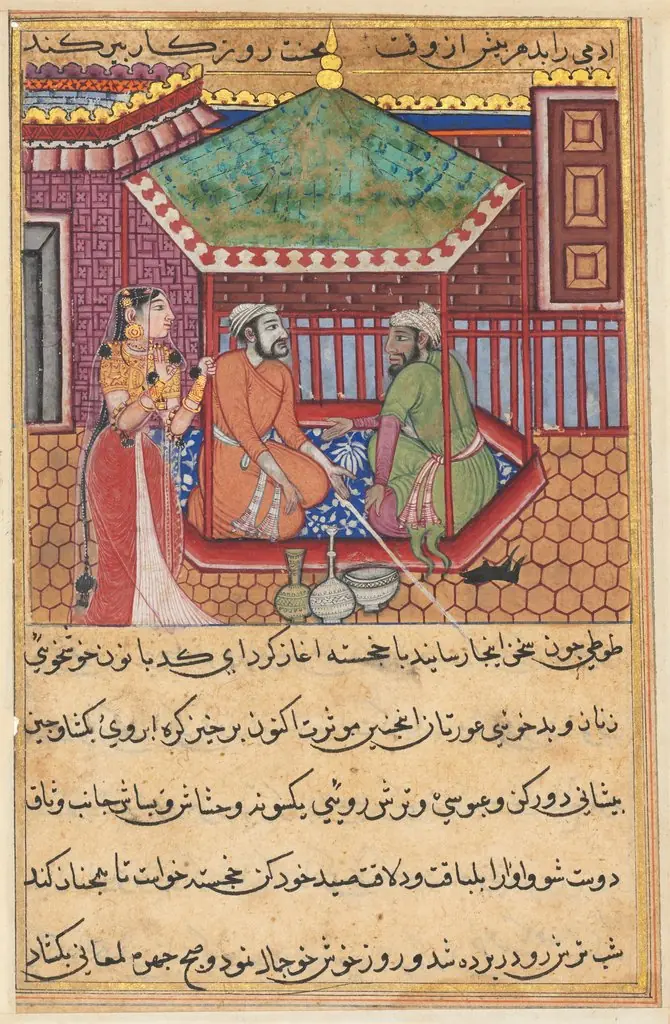
- The eldest brother explains the reason for his youthful appearance, from a Tuti-nama (Tales of a Parrot): Forty-ninth Night
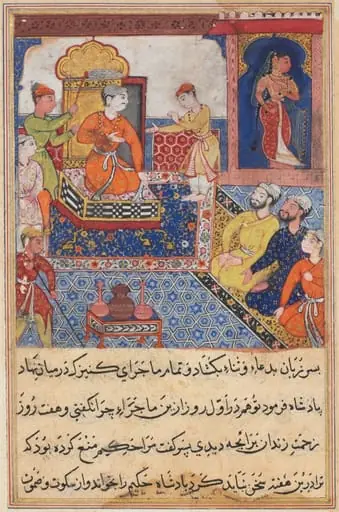 The young prince recounts his experiences to his father, the king, from a Tuti-nama (Tales of a Parrot): Eighth Night
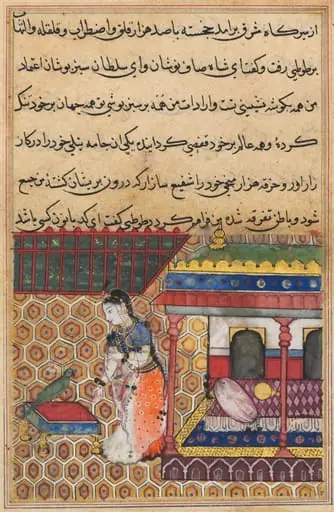 The parrot addresses Khujasta at the beginning of the thirty-eighth night, from a Tuti-nama (Tales of a Parrot)
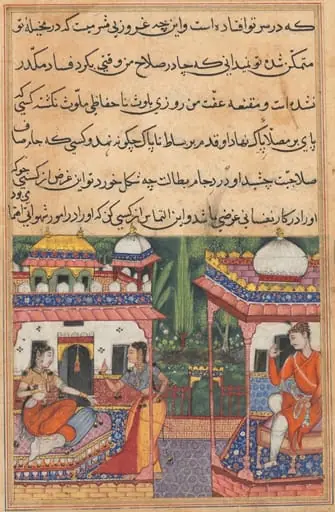 Kaiwan sends a message of love to Khurshid, wife of his brother Utarid who is away on a journey, from a Tuti-nama (Tales of a Parrot): Thirty-second Night
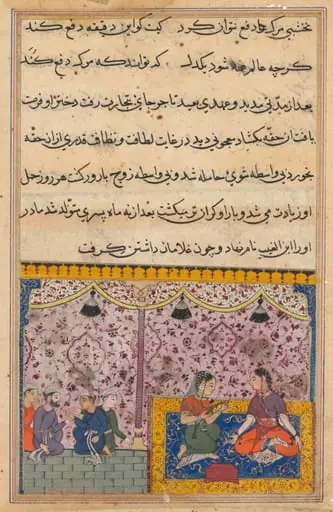 The merchant’s daughter gives birth to a son as a result of eating out of the box. The clever child recognizes the false gems from true, from a Tuti-nama (Tales of a Parrot): Twenty-third Night
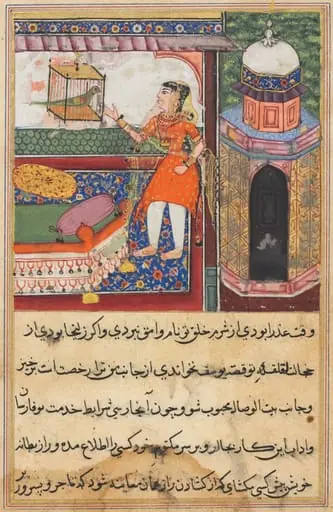 The Parrot Addresses Khujasta at the Beginning of the Tenth Night, from a Tuti-nama (Tales of a Parrot)
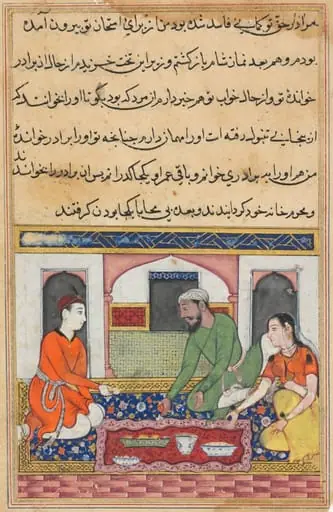 Shahr-Arai and her husband adopt her lover as a brother in the family, from a Tuti-nama (Tales of a Parrot): Fortieth Night
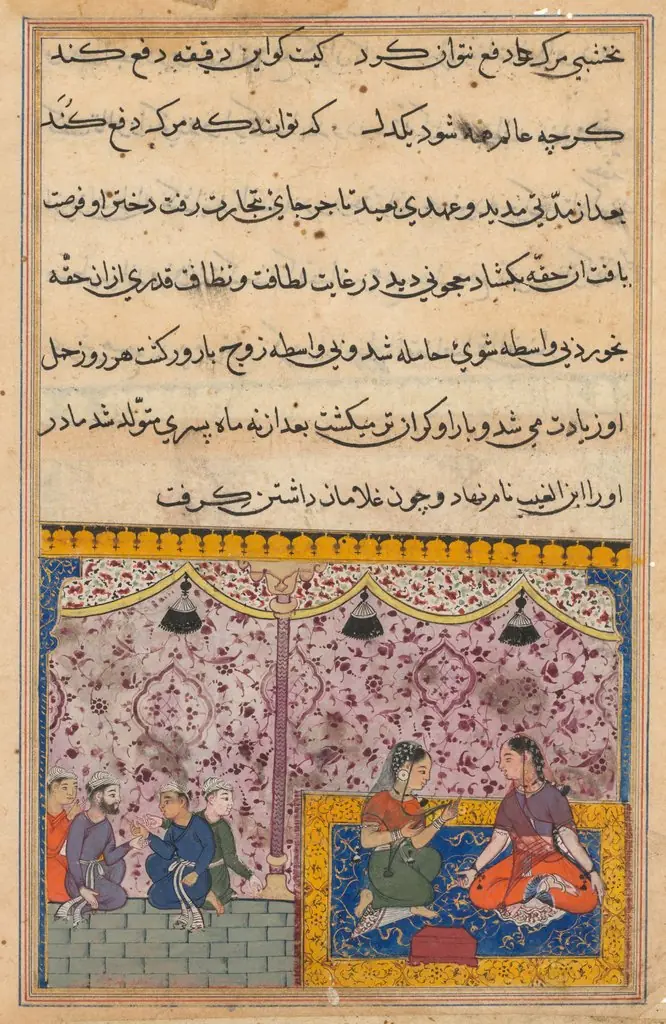 The merchant’s daughter gives birth to a son as a result of eating out of the box. The clever child recognizes the false gems from true, from a Tuti-nama (Tales of a Parrot): Twenty-third Night
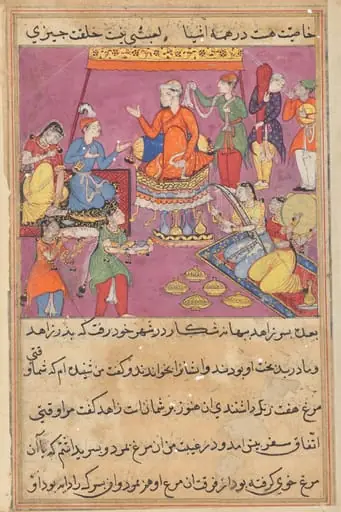 The king gives his daughter in marriage to the pious man’s son, from a Tuti-nama (Tales of a Parrot): Fifty-second Night