Artwork
The prince rejects the amorous advances of the king’s handmaiden, from a Tuti-nama (Tales of a Parrot): Eighth Night
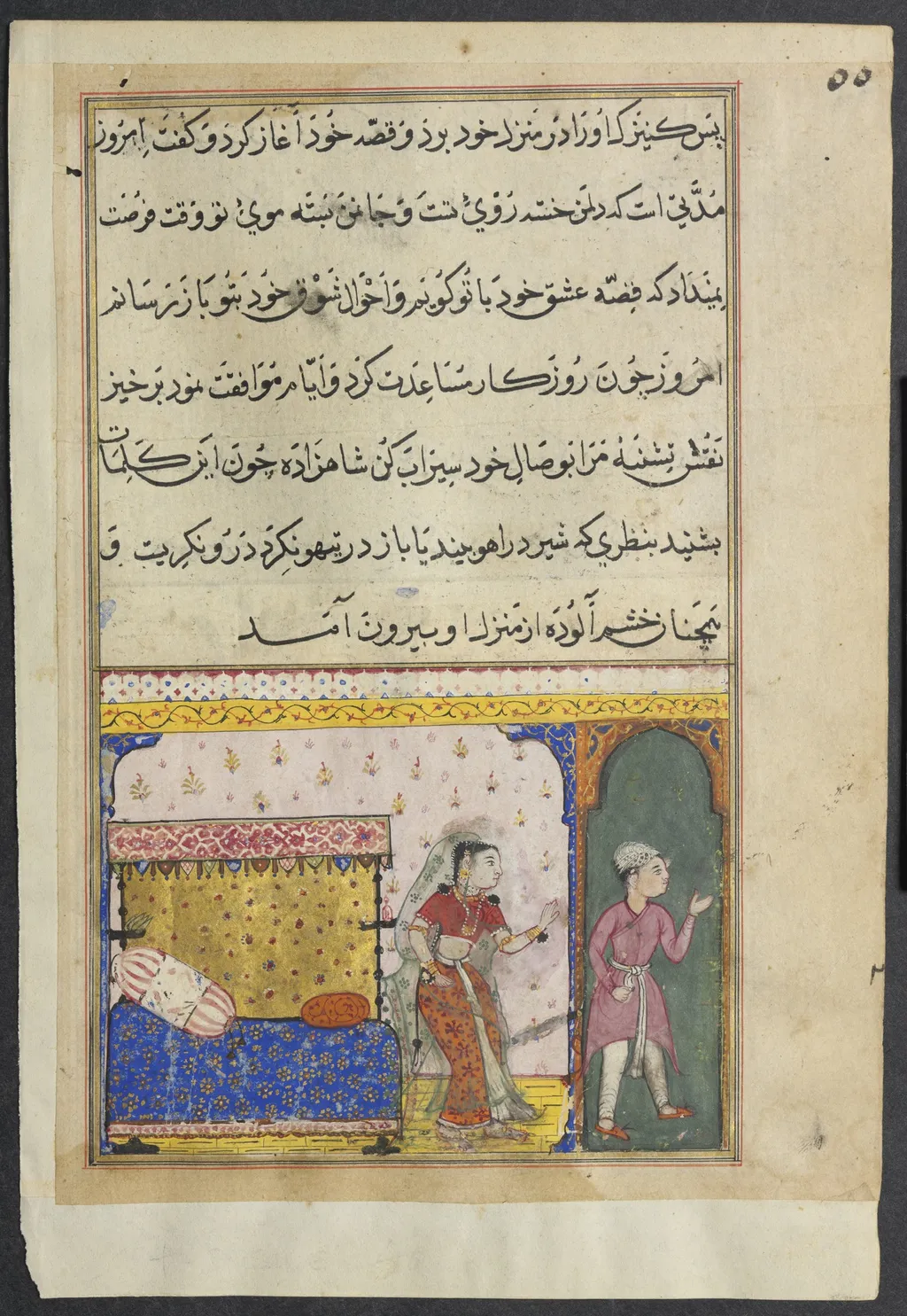
The prince rejects the amorous advances of the king’s handmaiden, from a Tuti-nama (Tales of a Parrot): Eighth Night is an unspecified painting. It dates from 1560 and is held in the collection of the Cleveland Museum of Art.
About this work
History & Provenance
It currently resides in the collection of the Cleveland Museum of Art, where it is cataloged under the accession number 1962.
Created in 1560, this painting is part of the illuminated manuscript known as the Tuti-nama (Tales of a Parrot). The work was produced by an artist whose specific identity remains unrecorded in current documentation. It currently resides in the collection of the Cleveland Museum of Art, where it is cataloged under the accession number 1962.279.55.b. The museum has held the piece since at least 1962, marking its entry into the institution's holdings during that year.
Legacy
The narrative of The prince rejects the amorous advances of the king’s handmaiden, from a Tuti-nama (Tales of a Parrot): Eighth Night has been cited as an early example of moral resistance in Persian miniature storytelling, influencing later manuscript traditions that emphasized virtuous agency among royal figures. Its inclusion in the Cleveland Museum of Art collection has made it accessible for scholarly study and exhibition, reinforcing its reputation as a key visual episode from the Eighth Night of the Tuti-nama cycle. The work is attributed to the mid-sixteenth century, aligning with the period of Safavid artistic production.
Overview
The work portrays an interior scene in which a woman in a red blouse and orange skirt stands centrally, while a man in a pink robe occupies a doorway on the right. The setting includes a blue bed with a yellow canopy and a pink wall patterned with flowers. Details such as the woman's jewelry and the man's turban are rendered with fine brushwork, establishing a visual dialogue between the two figures.
Subject & Meaning
The composition illustrates a moment from the eighth night of a Tuti‑nama, a Persian narrative collection. In this episode, a prince rebuffs the romantic overtures of a royal handmaiden, highlighting themes of courtly restraint and the tension between desire and duty. The spatial separation and contrasting colors underscore the emotional distance between the characters.
Technique & Style
Executed in a miniature painting tradition, the piece employs delicate line work and a vivid palette of pinks, reds, blues, and yellows. The artist applies fine, layered strokes to render textiles, jewelry, and patterned walls, creating a sense of depth within the confined space. Floral motifs on the wall and the intricate turban reflect the decorative conventions of Persian court art.
Context
The painting belongs to the illustrated manuscript genre of the Tuti‑nama, a collection of moral and romantic tales popular in Safavid Persia. Such works were often commissioned for aristocratic patrons and served both as literary entertainment and as exemplars of refined artistic skill. The scene’s focus on a princely figure and a handmaiden reflects the hierarchical relationships explored in the narrative tradition.
Artist & collection

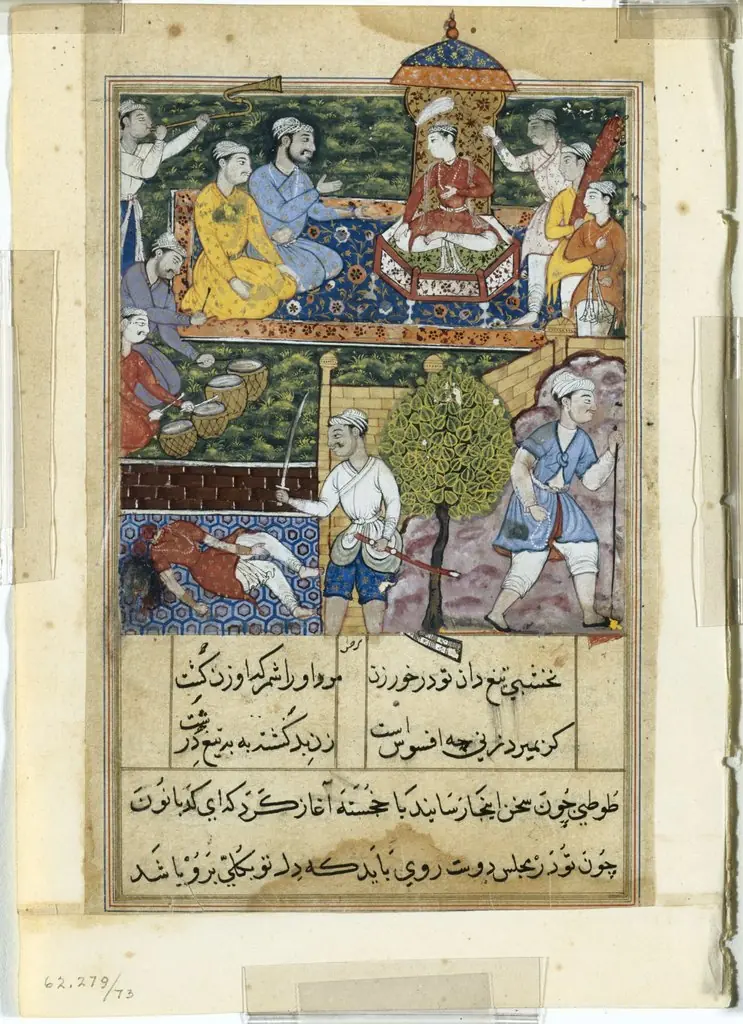
- The young prince is crowned and the wicked handmaiden is executed, from a Tuti-nama (Tales of a Parrot): Eighth Night
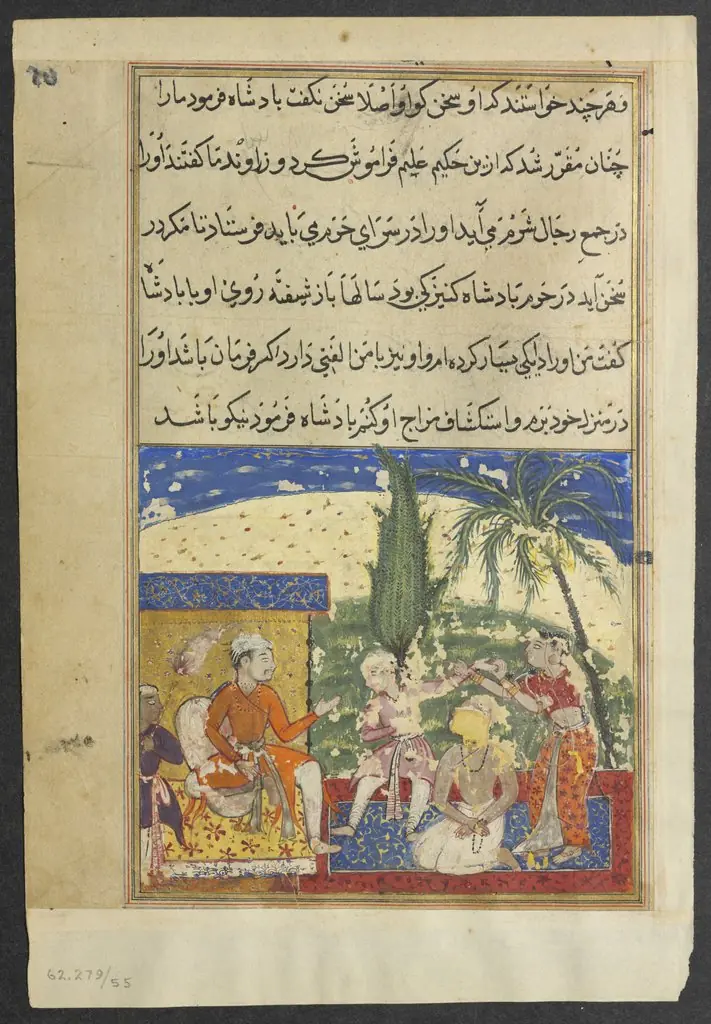 The king’s handmaiden takes the prince away to the harem, from a Tuti-nama (Tales of a Parrot): Eighth Night
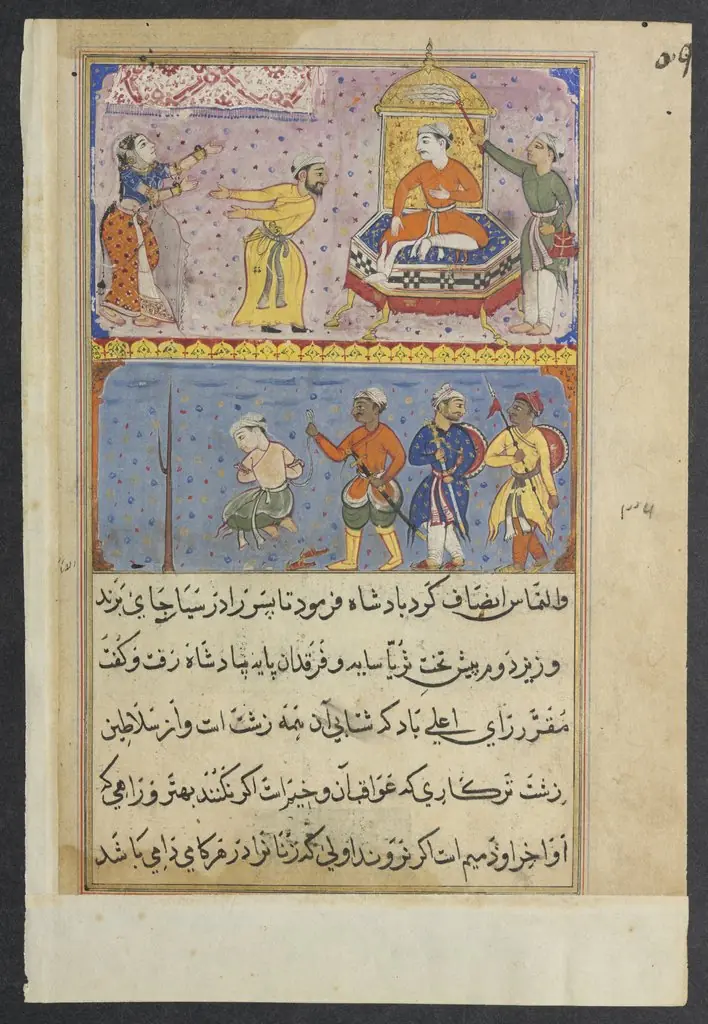 The prince, once reprieved, is returned to the palace of execution a second time on the plea of the king’s handmaiden, from a Tuti-nama (Tales of a Parrot): Eighth Night
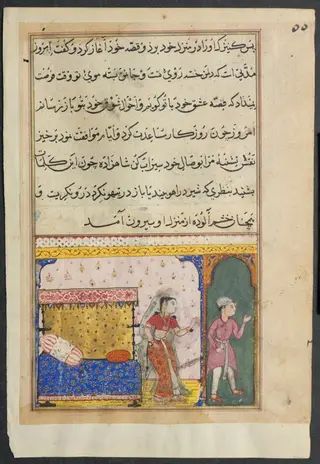 The prince rejects the amorous advances of the king’s handmaiden, from a Tuti-nama (Tales of a Parrot): Eighth Night
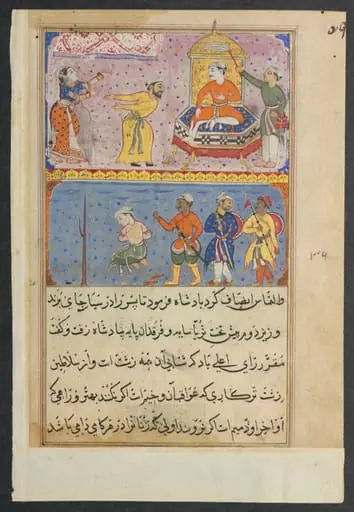 The prince, once reprieved, is returned to the palace of execution a second time on the plea of the king’s handmaiden, from a Tuti-nama (Tales of a Parrot): Eighth Night
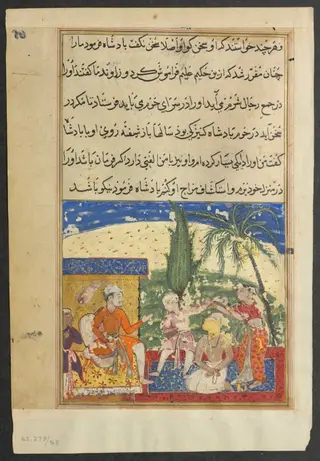 The king’s handmaiden takes the prince away to the harem, from a Tuti-nama (Tales of a Parrot): Eighth Night
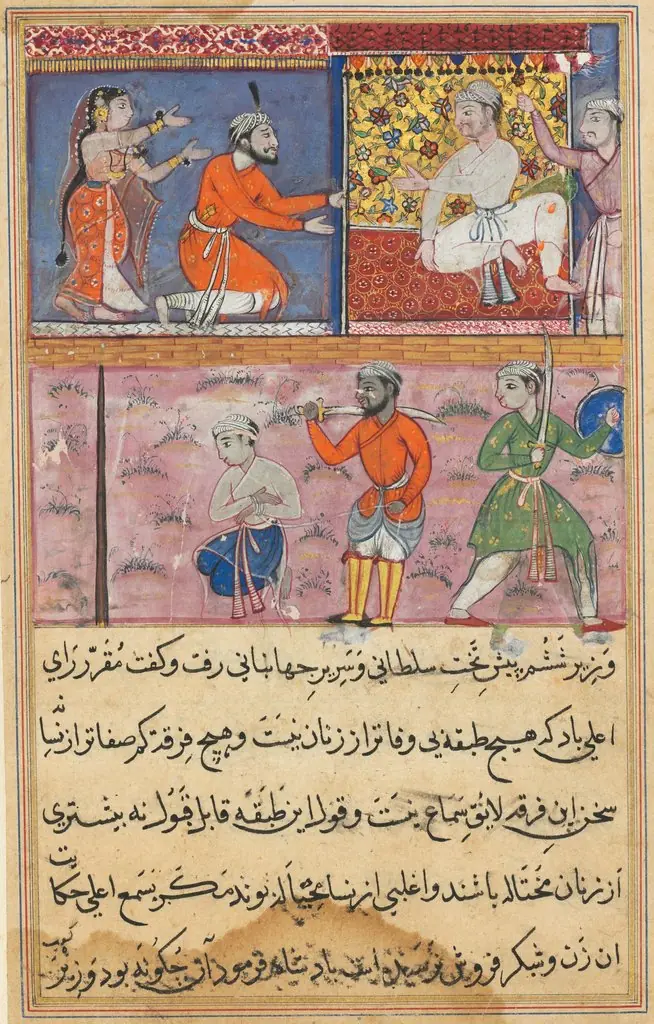 The prince sent back to the place of execution for the sixth time, from a Tuti-nama (Tales of a Parrot): Eighth Night
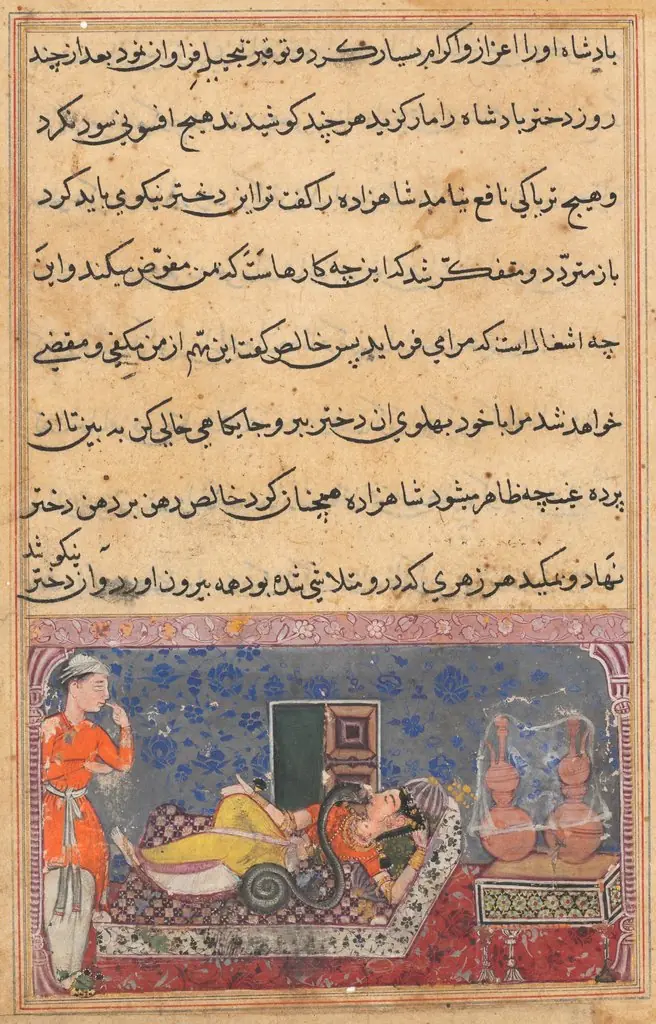 Khalis repays the prince for his kindness by changing into a snake and sucking the poison from the king’s daughter, from a Tuti-nama (Tales of a Parrot): Eighteenth Night
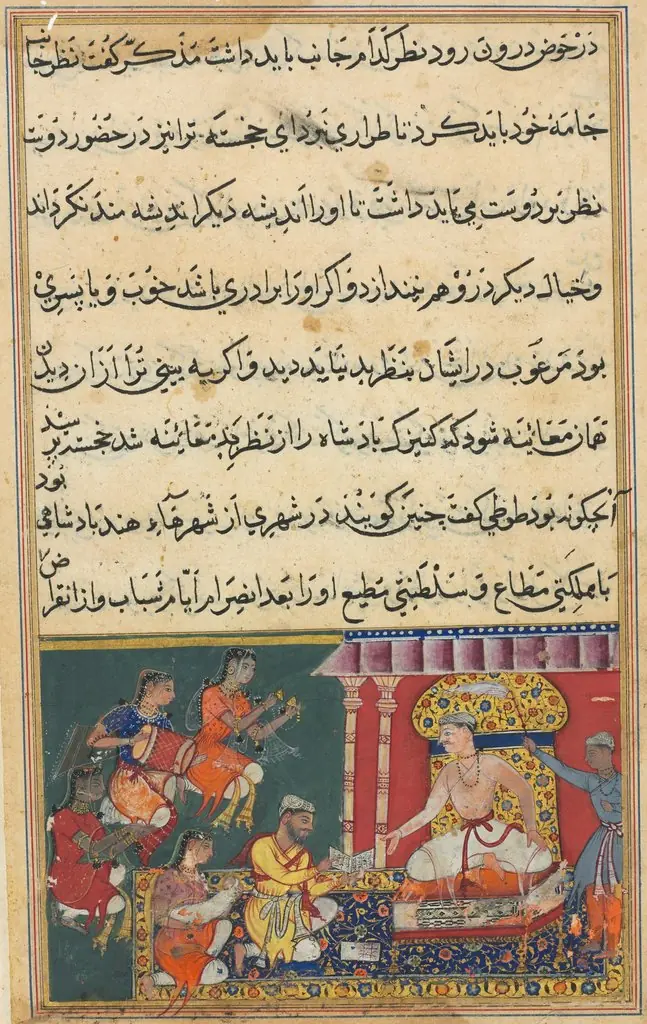 The astrologer predicts a calamity for the newly born prince in his thirteenth year, but one which he would be able to overcome, from a Tuti-nama (Tales of a Parrot): Eighth Night
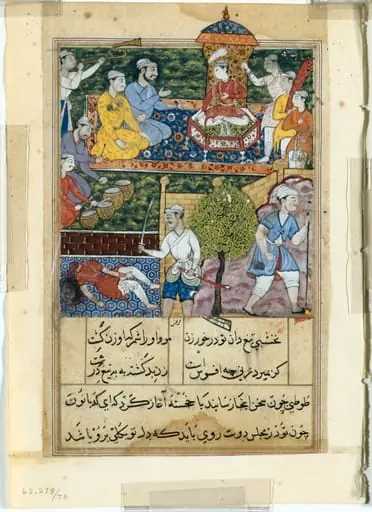 The young prince is crowned and the wicked handmaiden is executed, from a Tuti-nama (Tales of a Parrot): Eighth Night
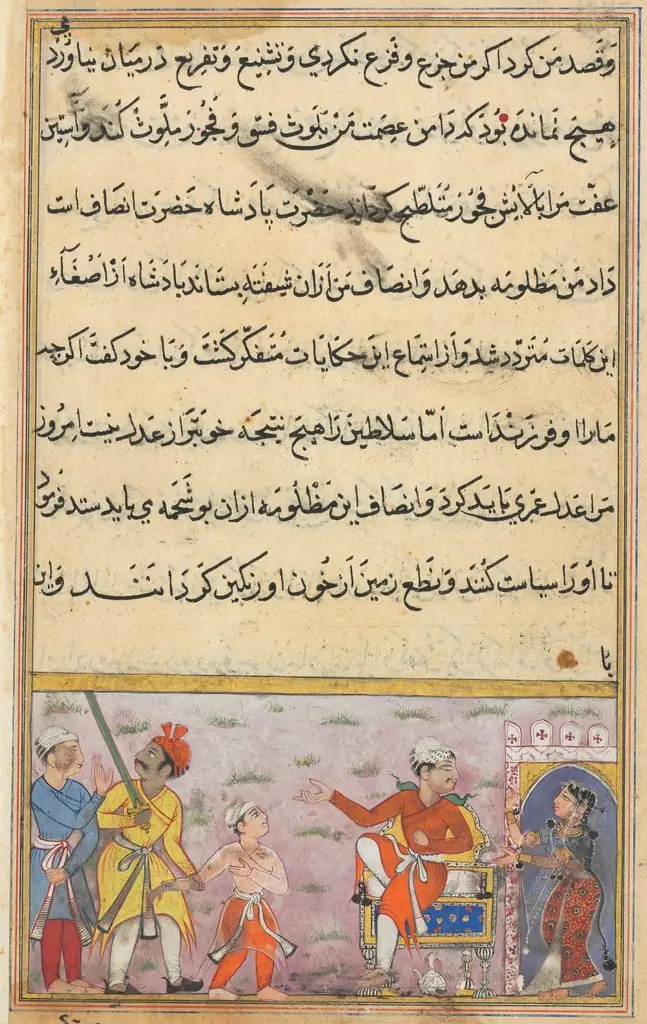 The prince being taken away for execution on the false complaint of the handmaiden, from a Tuti-nama (Tales of a Parrot): Eighth Night
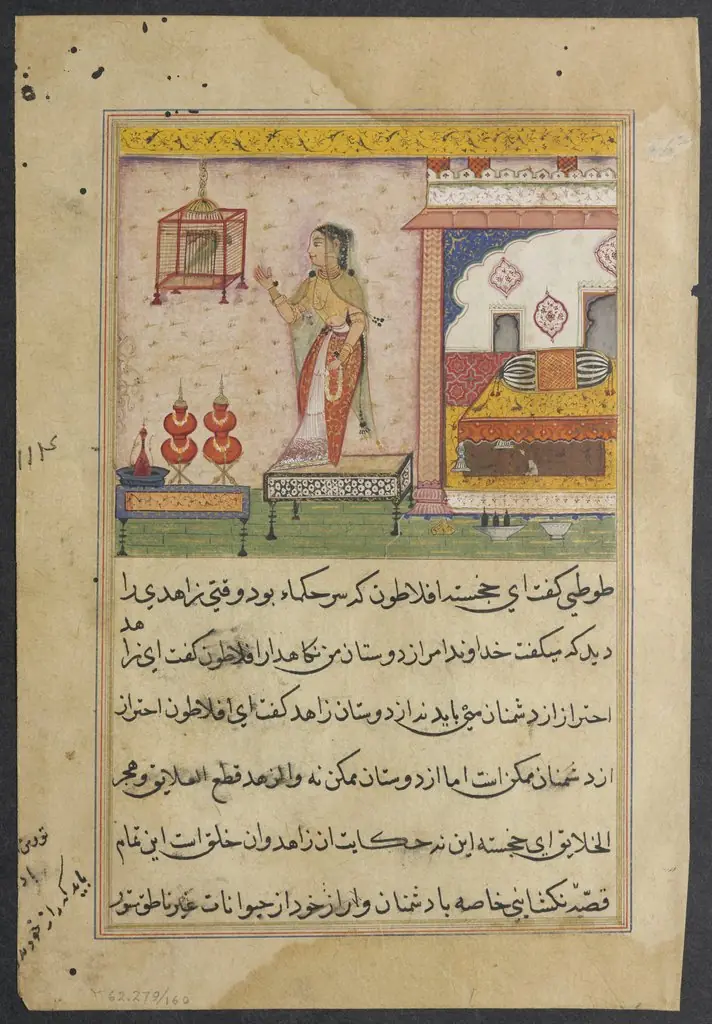 The Parrot Addresses Khujasta at the Beginning of the Twenty-third Night, from a Tuti-nama (Tales of a Parrot)
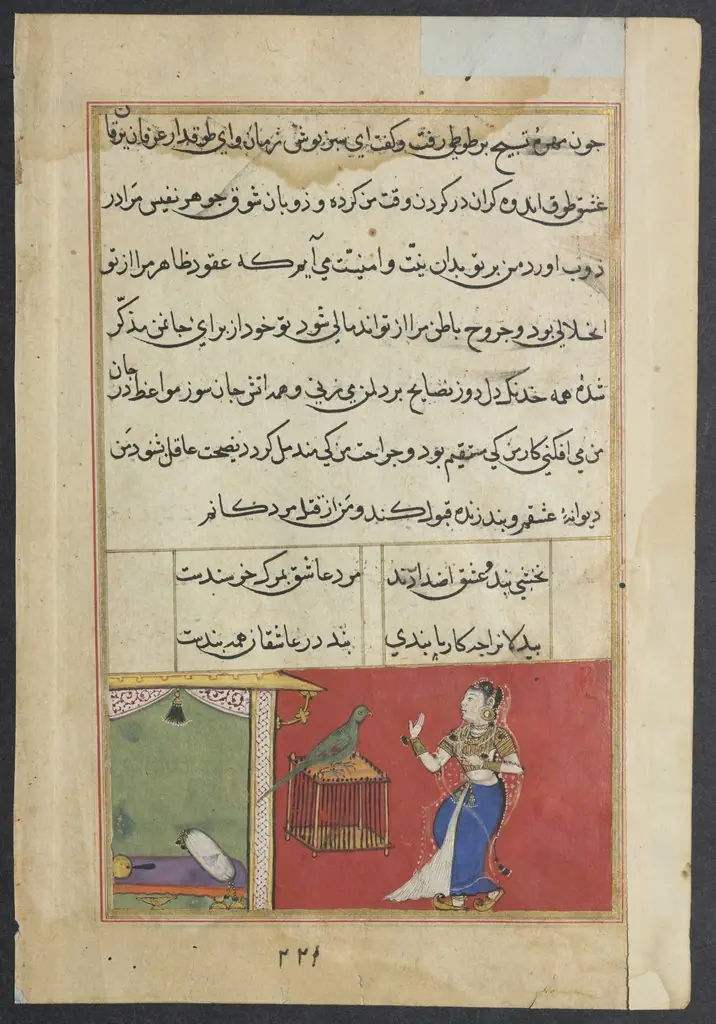 The parrot addresses Khujasta at the beginning of the forty-seventh night, from a Tuti-nama (Tales of a Parrot): Forty-seventh Night
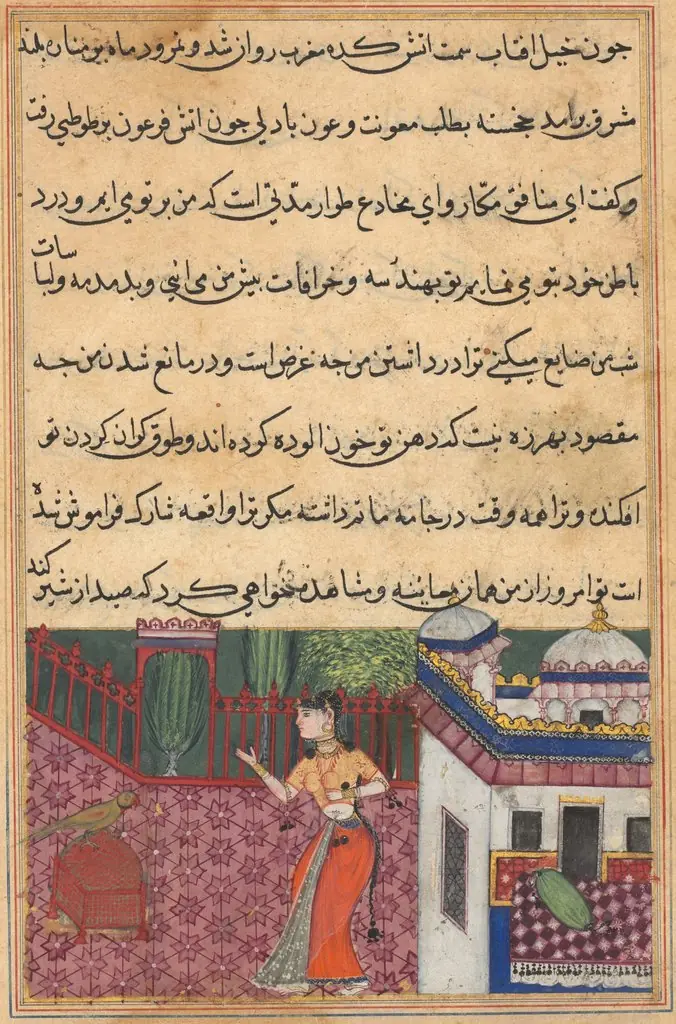 The parrot addresses Khujasta at the beginning of the thirty-third night, from a Tuti-nama (Tales of a Parrot)
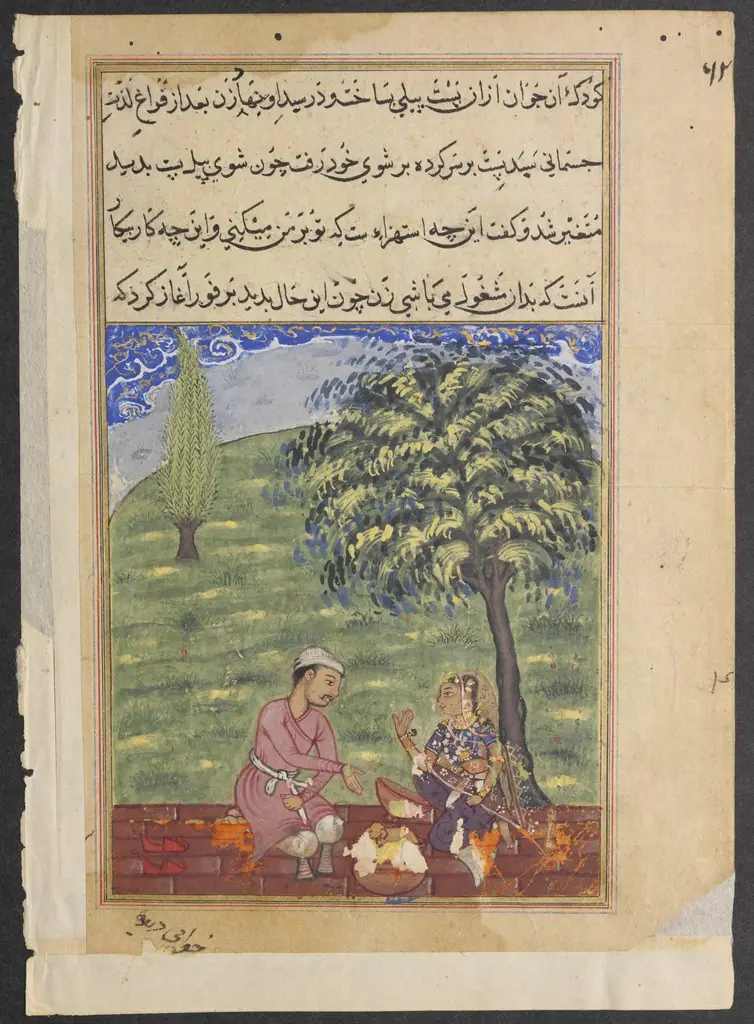 The unfaithful wife explaining away the presence of the dough elephant, from a Tuti-nama (Tales of a Parrot): Eighth Night