Artwork
The Shwehmawdaw Pagoda, Pegu, Burma
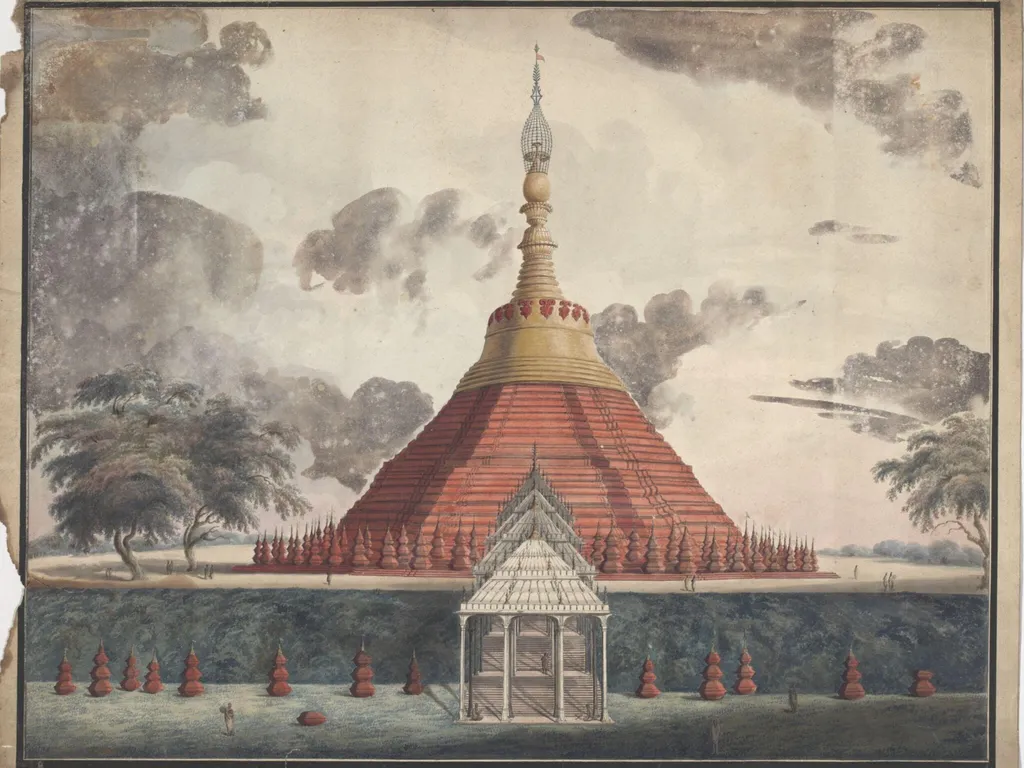
The Shwehmawdaw Pagoda, Pegu, Burma is a paint painting by the Romanticist artist Unknown. It dates from 1795 and is held in the collection of the Victoria and Albert Museum. This watercolor depicts the Shwehmawdaw Pagoda in Pegu, Burma, as part of a bound album titled Views in India.
About this work
Overview
Toon of Leicester Square, the painting was formally cataloged during a 2023 provenance review conducted by the museum’s Asia Department.
This watercolor depicts the Shwehmawdaw Pagoda in Pegu, Burma, as part of a bound album titled Views in India. The album contains 49 similar works, likely produced for British audiences interested in South Asian architecture. Acquired by the museum in 1887 from T. Toon of Leicester Square, the painting was formally cataloged during a 2023 provenance review conducted by the museum’s Asia Department.
Subject & Meaning
The pagoda, a Buddhist religious structure, is shown in quiet isolation amid trees and a low boundary wall. A small white building in the foreground suggests human presence without intrusion. The composition emphasizes stillness and reverence, reflecting the spiritual significance of the site. Birds in the sky and overcast skies reinforce a mood of calm observation rather than narrative action.
Technique & Style
Rendered in transparent watercolor, the painting uses delicate washes to define the pagoda’s red and gold tiers and the soft contours of the landscape. Fine brushwork captures architectural details, while atmospheric perspective creates depth. The muted palette and subdued lighting suggest a restrained, observational approach, typical of topographical watercolors produced during the colonial era for documentary purposes.
History & Provenance
The painting entered the museum’s collection in 1887 through acquisition from T. Toon, a London-based dealer. Its origins as part of a larger album point to a commercial or educational intent, possibly intended for private collectors or institutions in Britain. A 2023 research initiative within the museum’s Asia Department confirmed its provenance and contextual placement within a broader corpus of colonial-era Indian subcontinent imagery.
Context
Created during the 19th century, this work aligns with British colonial efforts to visually document South Asian monuments. Such albums served both as souvenirs and as tools of cultural record-keeping, often produced by amateur or professional artists traveling with administrative or military personnel. The focus on architectural detail, rather than local life, reflects a colonial gaze centered on structure over society.
Legacy
Though unsigned and unattributed, the painting contributes to a larger archive of colonial-era visual records. Its preservation allows for ongoing study of how South Asian religious architecture was represented to Western audiences. It stands as a quiet artifact of cross-cultural observation, offering insight into the aesthetics and priorities of 19th-century British visual documentation in Asia.
Artist & collection









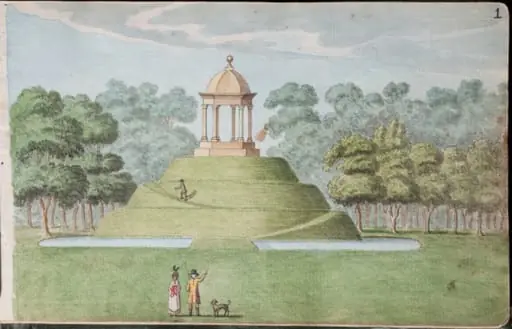
- View at Temple-oge, in the demesne of Domville Esqr., 3 miles from Dublin
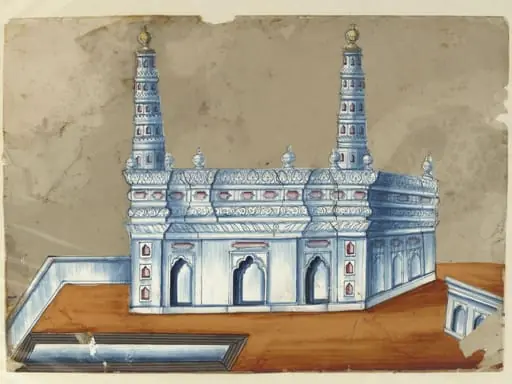 One of seven paintings of unidentified Muslim buildings in South India.
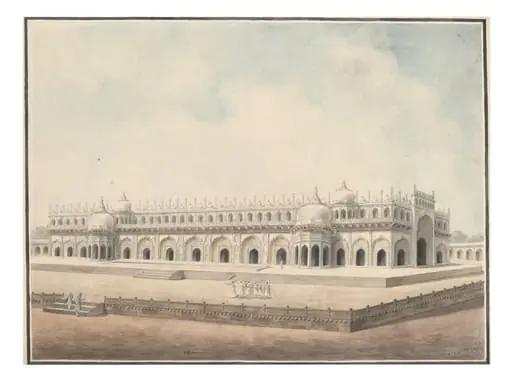 The Imambara, Lucknow
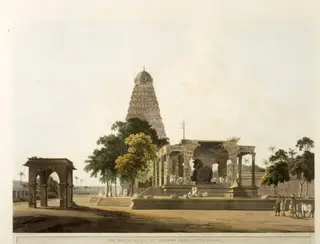 Painting
![View of the tumulus or barrow at Douth [Dowth], Co. of E[ast] Meath, 25 miles from Dublin [...], by Gabriel, ca.1729-1817 Beranger](https://artifactworldgallery.com/img/gabriel-ca-1729-1817-beranger--view-of-the-tumulus-or-barrow-at-douth-dowth-co-of-e-ast-mea--32266a93c2c75aee-w320.webp) View of the tumulus or barrow at Douth [Dowth], Co. of E[ast] Meath, 25 miles from Dublin [...]
View of the tumulus or barrow at Douth [Dowth], Co. of E[ast] Meath, 25 miles from Dublin [...]![Rathgar Castle, 1 1/2 miles from Dublin [...], by Gabriel, ca.1729-1817 Beranger](https://artifactworldgallery.com/img/gabriel-ca-1729-1817-beranger--rathgar-castle-1-1-2-miles-from-dublin--17cfe3f4e70405c2-w320.webp) Rathgar Castle, 1 1/2 miles from Dublin [...]
Rathgar Castle, 1 1/2 miles from Dublin [...]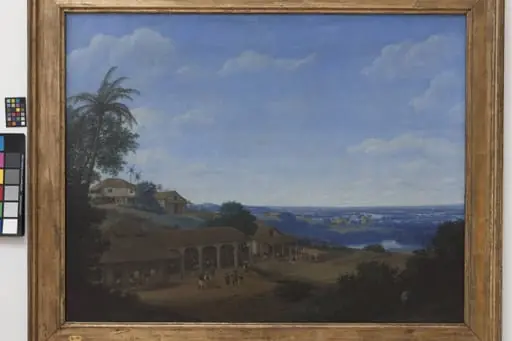 Landscape in Brazil with Sugar Plantation
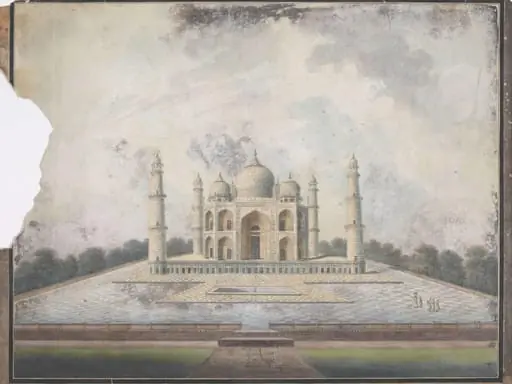 The Taj Mahal, Agra
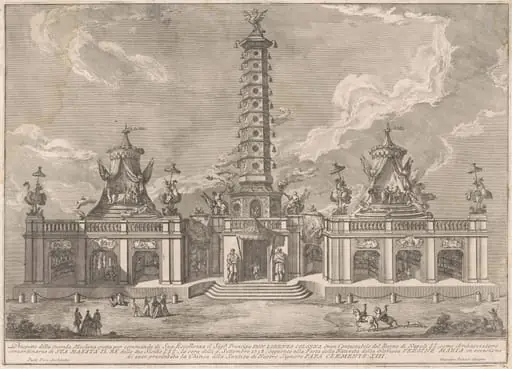 The Seconda Macchina for the Chinea of 1758: The Porcelain Tower of Nanjing
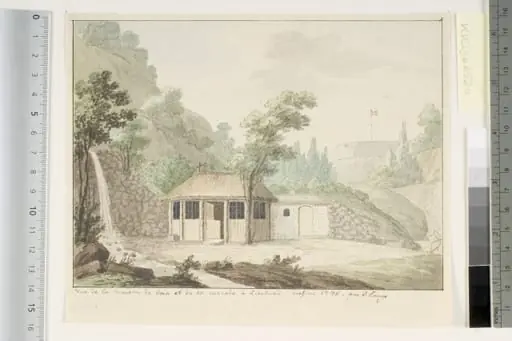 Liselund
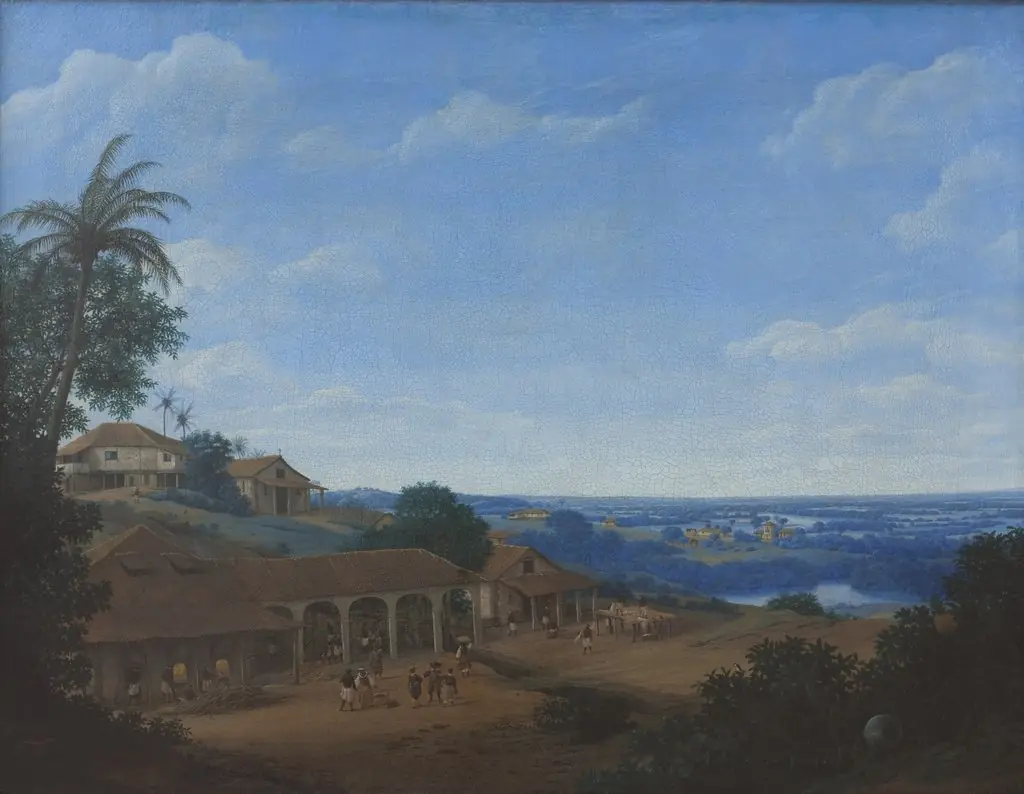 Landscape in Brazil with Sugar Plantation
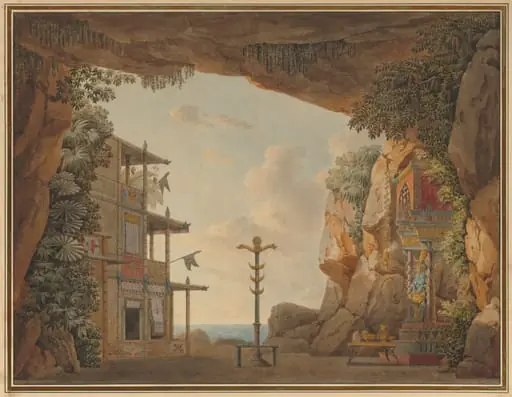 Design for Stage Set for the Second Act of Elisca or L'Habitante de Madagascar