Artwork
Tilly Kettle painting a portrait of Shuja ud-Daula and his ten sons
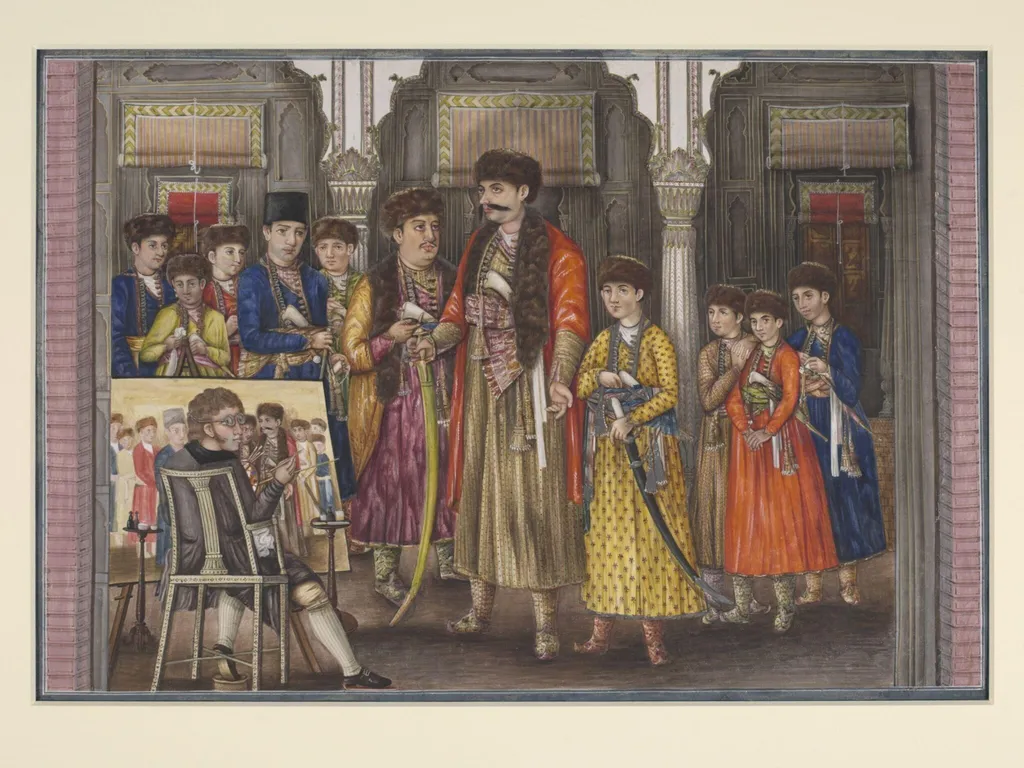
Tilly Kettle painting a portrait of Shuja ud-Daula and his ten sons is a paint painting by the Patna School of Painting artist Unknown. It dates from 1815 and is held in the collection of the Victoria and Albert Museum.
About this work
Overview
This 1815 watercolour on paper depicts a meta-artistic scene where the British artist Tilly Kettle is shown painting a portrait of Shuja ud-Daula, the Nawab of Awadh, accompanied by his ten sons.
Subject & Meaning
The subject highlights Kettle's historical commission in Faizabad (1772-73), illustrating the patronage of the Nawabs of Awadh during a period of significant artistic support. The composition reflects the cultural exchange and royal patronage of the time.
Technique & Style
Executed in watercolour on paper, the work features a detailed, observant style, incorporating a 'painting within a painting' and showcasing a blend of warm and cool color tones against the backdrop of opulent decor, such as fancy wooden panels and red curtains.
History & Provenance
Originally created in 1815, this watercolour reflects a past event (Kettle's 1772-73 work in Faizabad), suggesting it may have been produced for historical or commemorative purposes. Current location: Victoria and Albert Museum.
Context
The painting contextualizes the artistic and cultural interactions between British artists and Indian royalty during the 18th century, specifically underlining the patronage of the Nawabs of Awadh during Kettle's documented residency in Faizabad.
Legacy
As a depiction of a historical artistic encounter, the work provides insight into 18th-century cross-cultural artistic practices and the legacy of British artists working under Indian patronage, preserved for study at the Victoria and Albert Museum.
Artist & collection









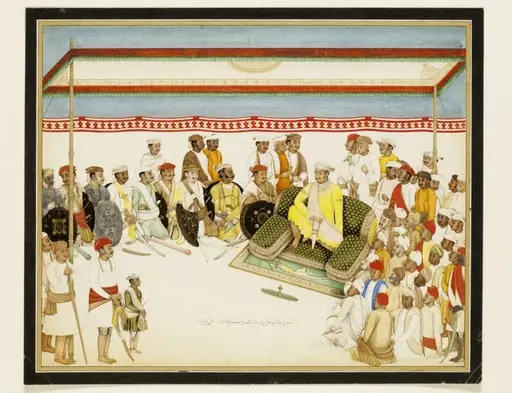
- Portrait of Maharaja Ali Jah Daulat Rao Sindhia of Gwalior
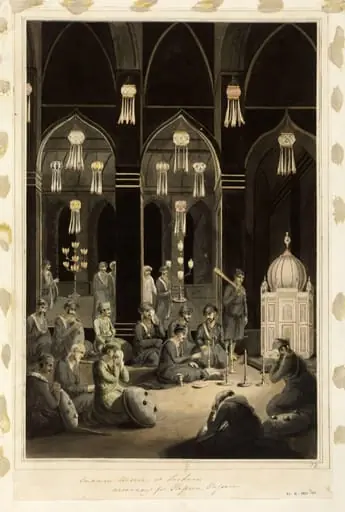 Ceremony of mourning in the Imambara, Lucknow
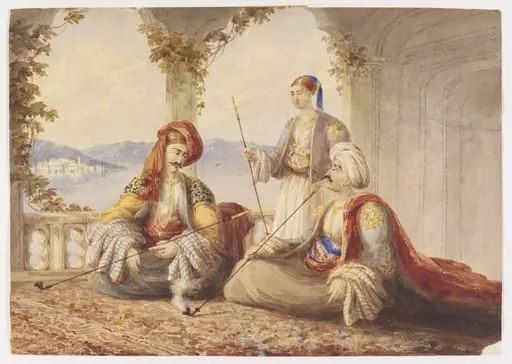 Two Turks, with a Servant, smoking on a Terrace overlooking a Lake or Sea in Turkey or Greece
 Untitled
 Administering the Felek or bastinado in Persia
 A Turkish Coffee-House, Constantinople
 A nautch
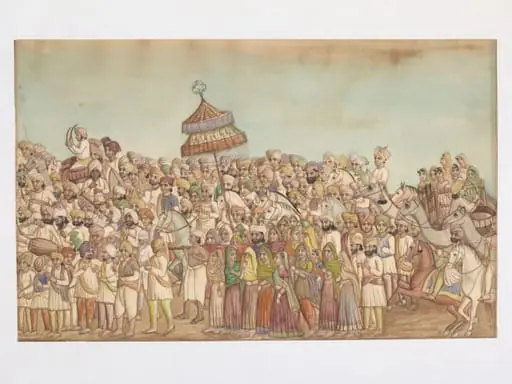 Sikh marriage procession
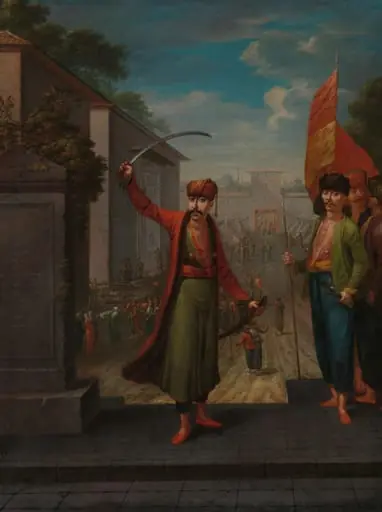 Patrona Halil
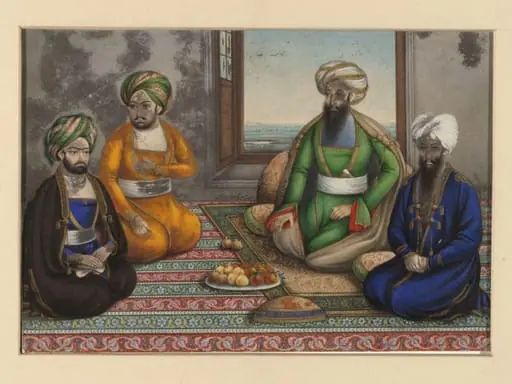 Dost Muhammad (d.1863), Amir of Afghanistan, with his three sons, Muhammad Akram Khan, Haidar Khan and Abdul Ghani Khan, seated on a carpet
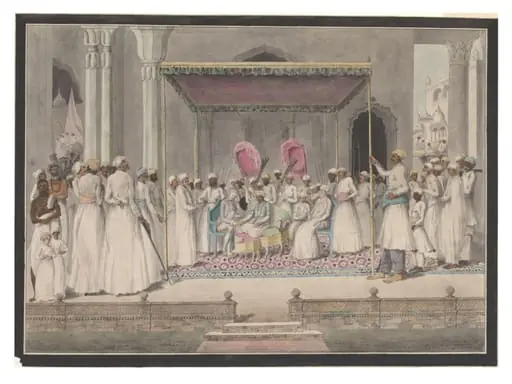 Mubarak ud-Daula, Nawab of Murshidabad, in durbar with the British Resident, Sir John Hadley D'Oyly
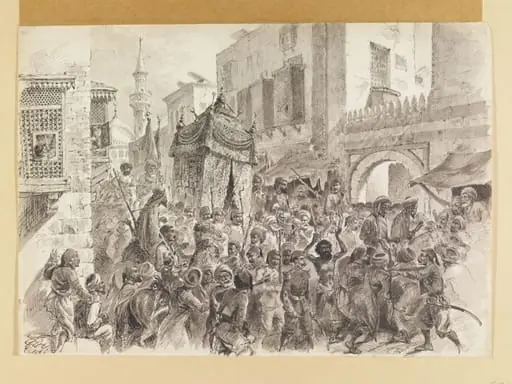 Return of the Mahmal from Mecca