Artwork
Toilette of Radha
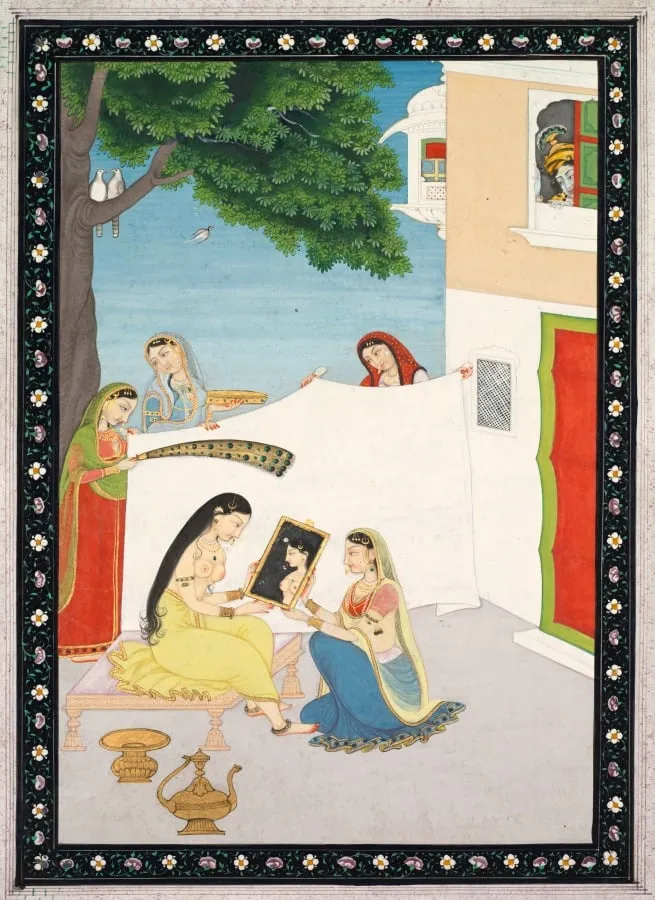
Toilette of Radha is an unspecified painting by the Pahari Painting artist Unknown. It dates from 1815 and is held in the collection of the Cleveland Museum of Art. This painting depicts a quiet, intimate moment from Hindu devotional literature, portraying Radha in the early stages of her daily ritual.
- Accession no.
- 1953.245
- Credit line
- Edward L. Whittemore Fund
About this work
Overview
The scene unfolds in a secluded interior, where she is attended by companions, and the presence of Krishna, though unseen, lends the moment spiritual weight.
This painting depicts a quiet, intimate moment from Hindu devotional literature, portraying Radha in the early stages of her daily ritual. The scene unfolds in a secluded interior, where she is attended by companions, and the presence of Krishna, though unseen, lends the moment spiritual weight. Originating from a Himalayan hill kingdom, the work reflects a tradition of miniature painting that blends personal tenderness with religious symbolism.
Subject & Meaning
Radha, a central figure in Krishna’s devotional lore, is shown in private preparation, unaware that the god she loves observes her. Her attendants hold a mirror, a cloth, and a peacock-feather whisk, tools of adornment that underscore the ritual nature of her routine. The unseen gaze of Krishna transforms an ordinary act into a sacred encounter, suggesting divine presence in the most personal moments of human life.
Technique & Style
Rendered in delicate brushwork and muted pigments, the painting employs fine detail to capture texture and gesture without theatricality. Figures are arranged in a shallow space, their postures calm and contained. The use of soft outlines and subtle color gradations enhances the sense of intimacy, while the absence of overt narrative action invites contemplation rather than spectacle.
History & Provenance
Created in one of the smaller Pahari kingdoms nestled in the Himalayan foothills, this work belongs to a regional school known for its lyrical depictions of Krishna and Radha. These courts fostered artists who translated poetic texts into visual form, often for private devotion or royal collections. The painting’s scale and subject suggest it was intended for intimate viewing, not public display.
Context
The Pahari painting tradition flourished between the 17th and 19th centuries, drawing from Bhakti poetry that emphasized personal devotion over ritual. Scenes of Radha’s daily life were common, reflecting the belief that divine love permeates ordinary existence. This painting aligns with a broader cultural shift toward emotional immediacy in religious art, prioritizing inner experience over grandeur.
Legacy
Works like this helped define the aesthetic of Himalayan miniature painting, influencing later regional styles and preserving devotional narratives through visual means. Though produced for limited audiences, they continue to offer insight into how spirituality was woven into daily life. Their quiet intensity remains a distinctive feature of South Asian artistic heritage.
Artist & collection









 Krishna and Radha
 Krishna and Radha
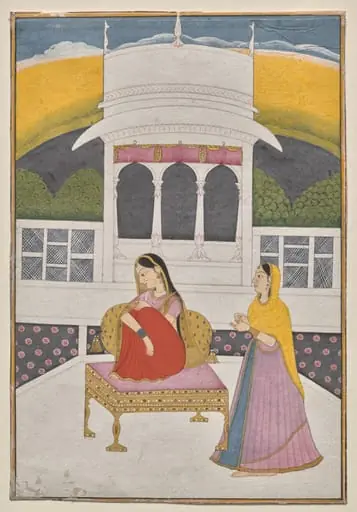 A Nayika, probably Proshitaperyasi Nayika
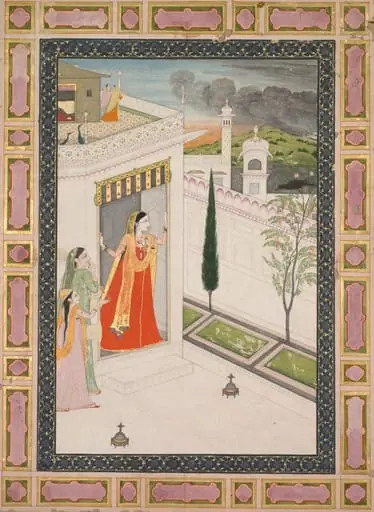 Augury of the crow (Vasakasajja Nayika)
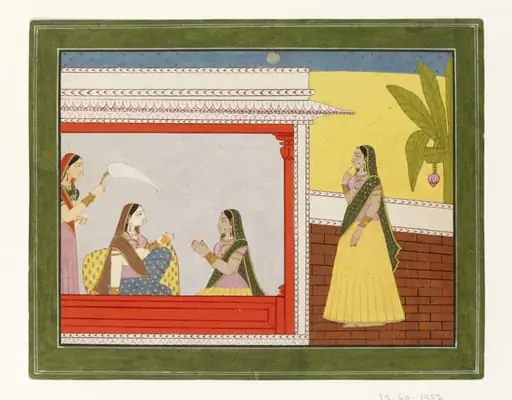 Radha
Radha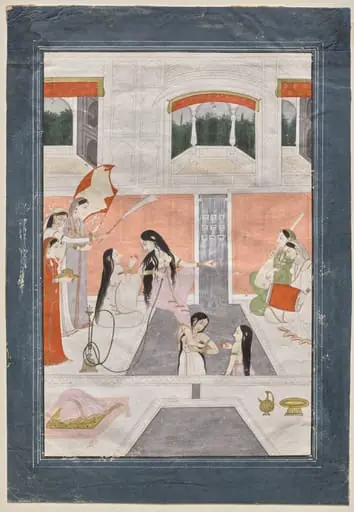 Palace women enjoy music by the side of a cascade
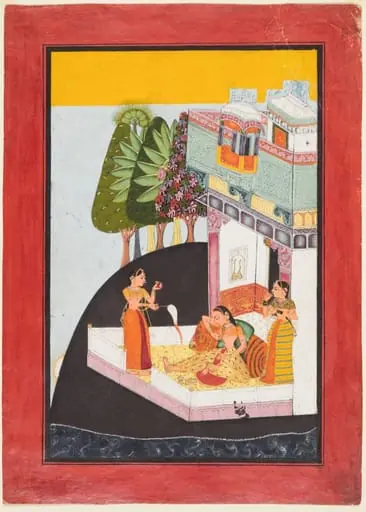 A Disconsolate Lady on a Terrace with Attendants
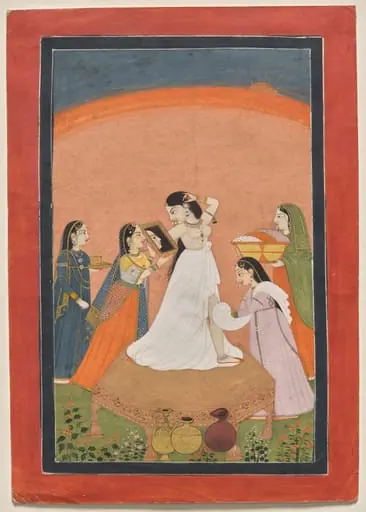 The Morning Toilette
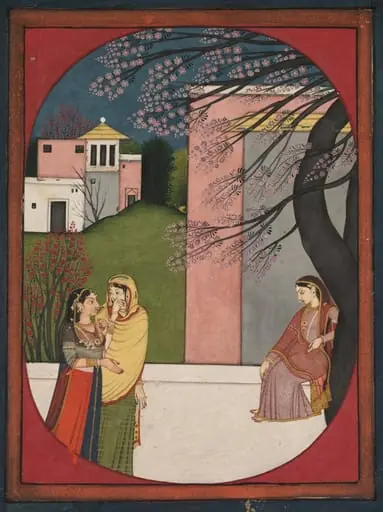 The lovelorn heroine, from a Sat Sai of Bihari
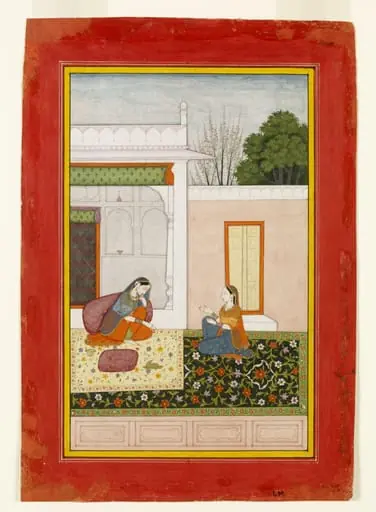 Prositapatika Nayika