Artwork
Tuti-Nama (Tales of a Parrot)
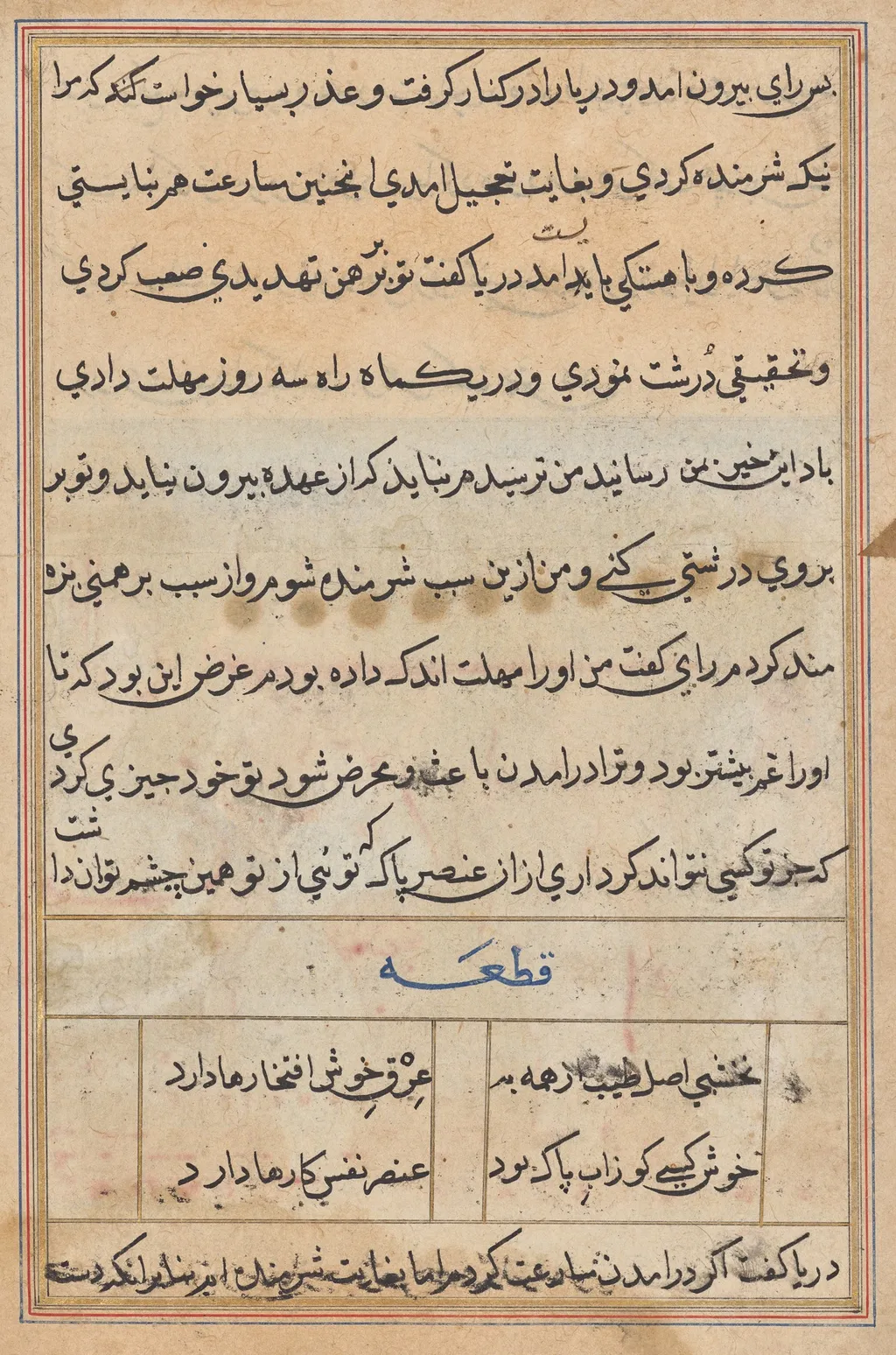
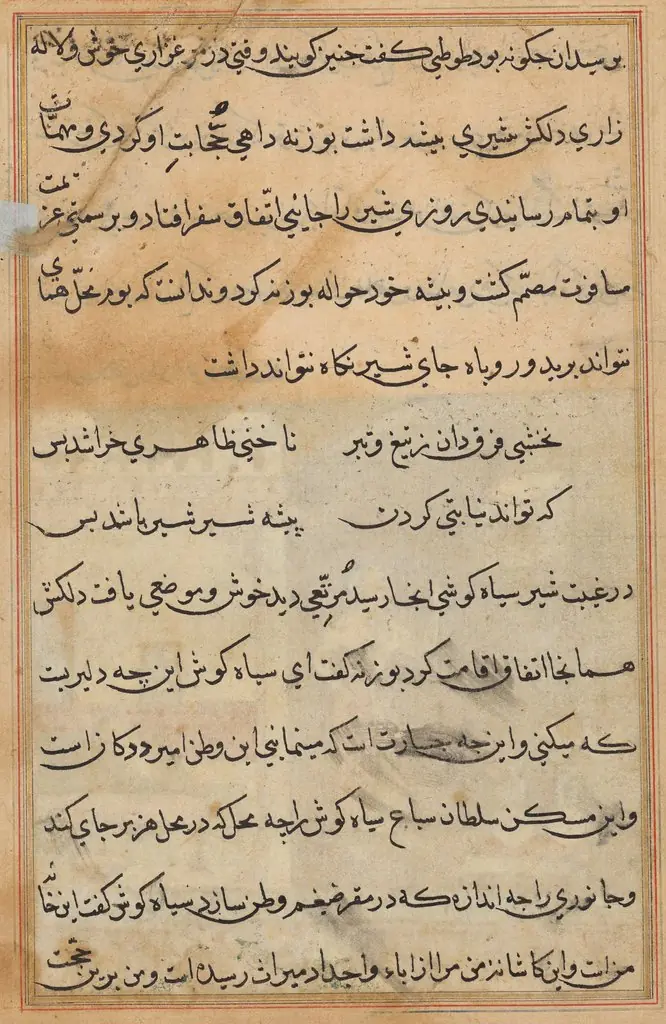
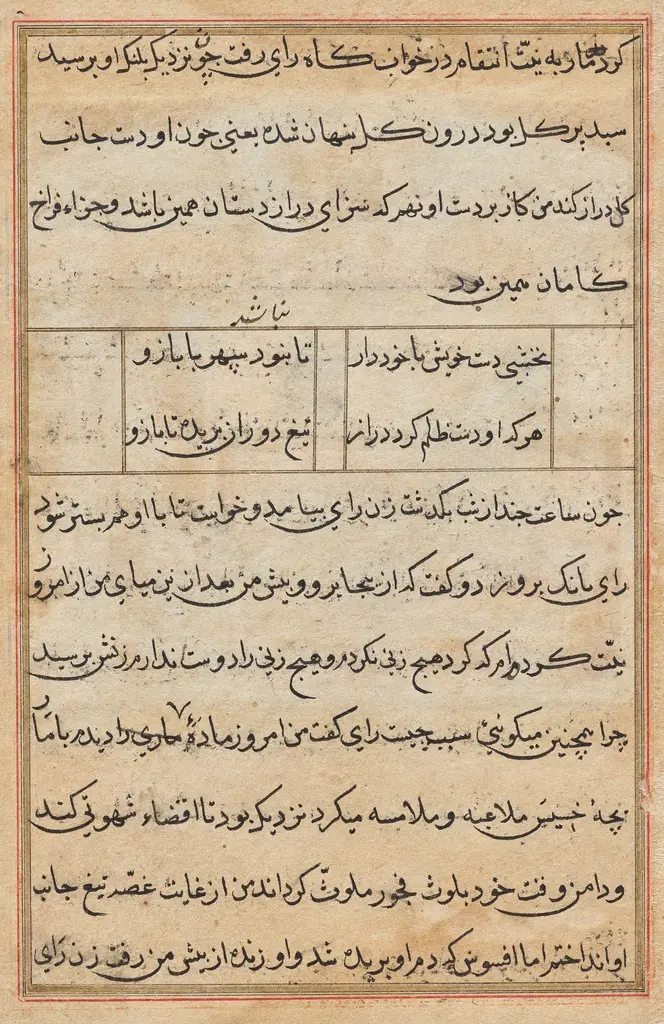
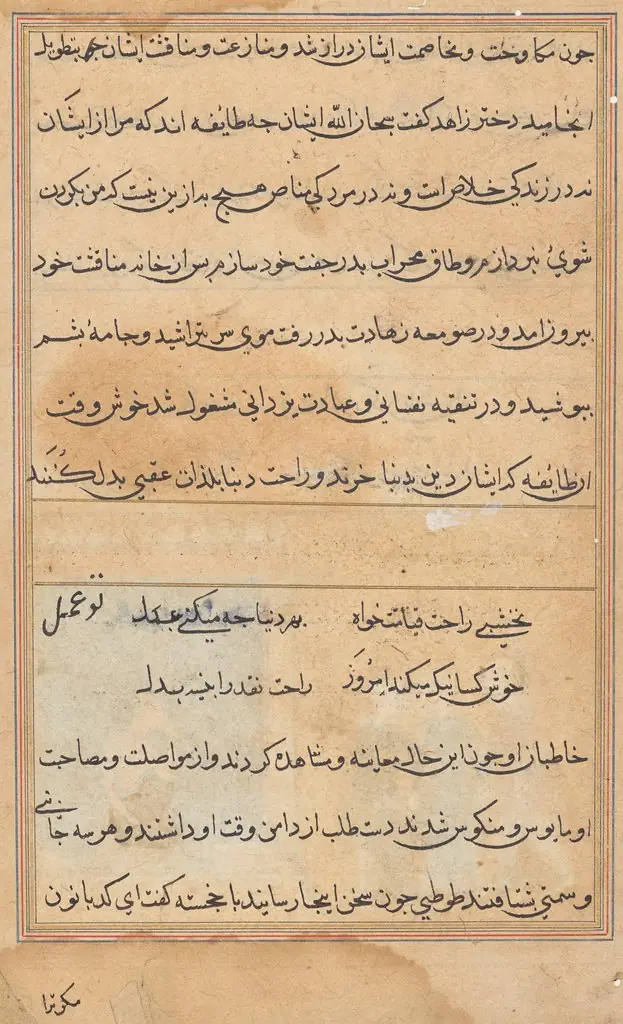
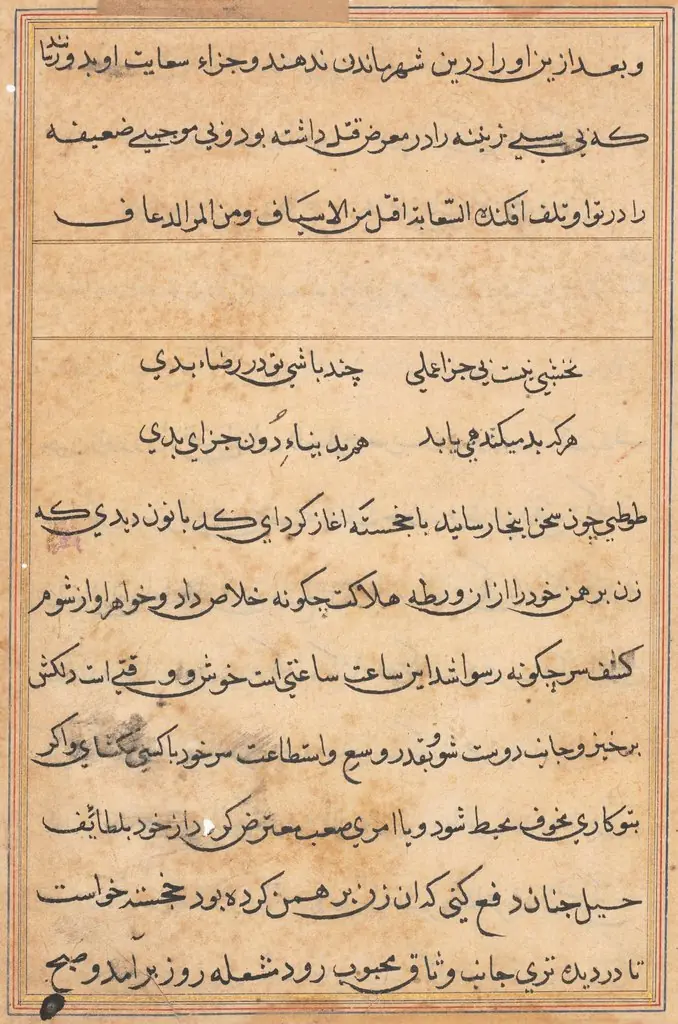
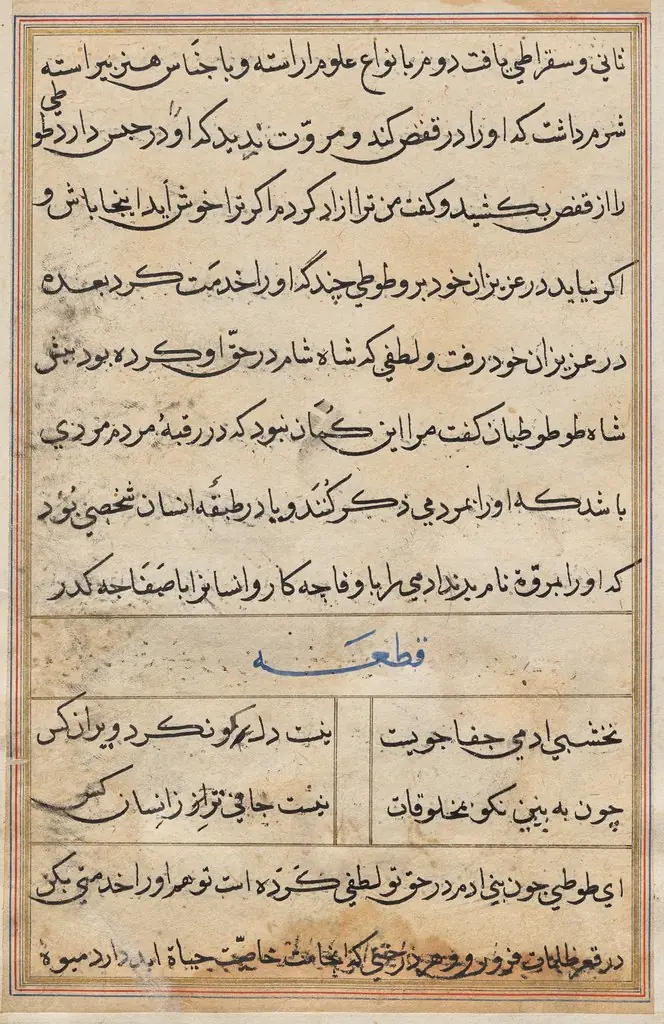
Tuti-Nama (Tales of a Parrot) is an unspecified painting. It dates from 1560 and is held in the collection of the Cleveland Museum of Art. Tuti‑Nama, translated as “Tales of a Parrot,” is a painted page that functions as a visual manuscript.
About this work
History & Provenance
The work was featured in the exhibition "India: Art and Culture 1500–1900," which traveled to the Los Angeles County Museum of Art in 1995.
The Tuti-Nama (Tales of a Parrot) is dated to 1560 and was produced within the Mughal Empire, situating its creation in the early years of that courtly tradition. The work subsequently entered the Cleveland Museum of Art, where it is recorded under inventory designation 1962.279.92.b. No information on the original patron, commissioner, or earlier ownership chain is documented in the available sources, leaving the provenance prior to its museum accession unrecorded.
The miniature titled Tuti-Nama (Tales of a Parrot) resides in the Cleveland Museum of Art, cataloged under accession number 1962.279.92.b and accessioned in 1962. It was painted circa 1560 in the Mughal Empire and has been part of the museum’s collection since 1962. The work was featured in the exhibition "India: Art and Culture 1500–1900," which traveled to the Los Angeles County Museum of Art in 1995.
Context
The Tuti-Nama (Tales of a Parrot) exemplifies Mughal narrative painting from the mid-sixteenth century, blending Persian literary themes with Indian artistic traditions. Its depiction of courtly life and moral parables reflects the syncretic cultural milieu of Mughal India, where Persianate aesthetics merged with local visual idioms. Scholarship highlights its role within the broader corpus of illustrated manuscripts commissioned by imperial workshops, underscoring the transmission of Persianate storytelling into South Asian artistic practice.
The work's compositional strategies and figural style contribute to understanding the evolution of courtly visual culture in early modern South Asia. It is housed in the Cleveland Museum of Art, which contextualizes its significance within global museum collections of South Asian art.
Overview
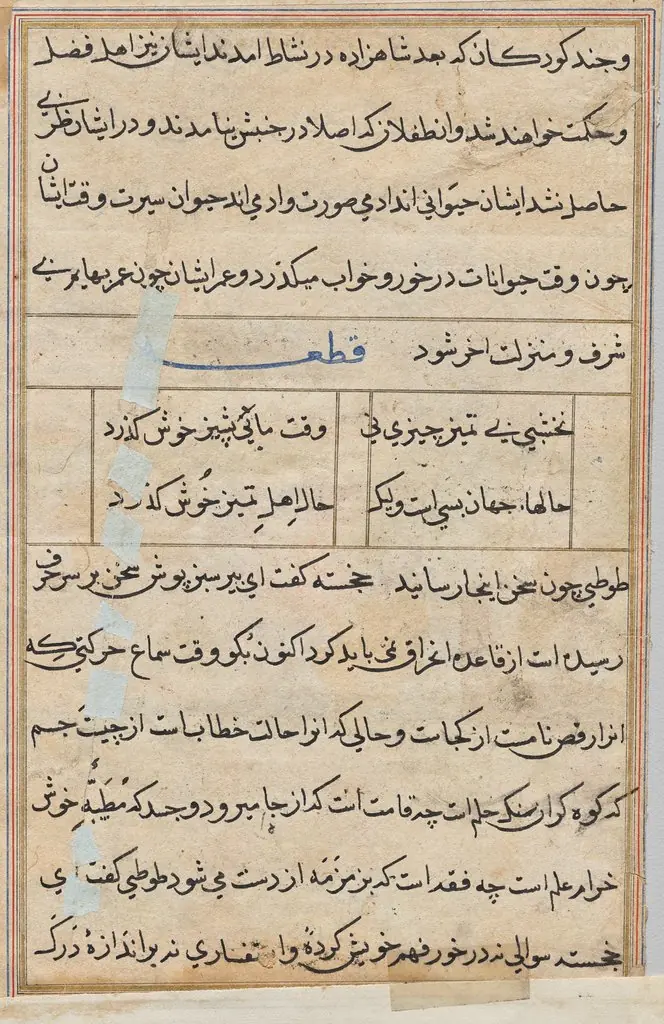
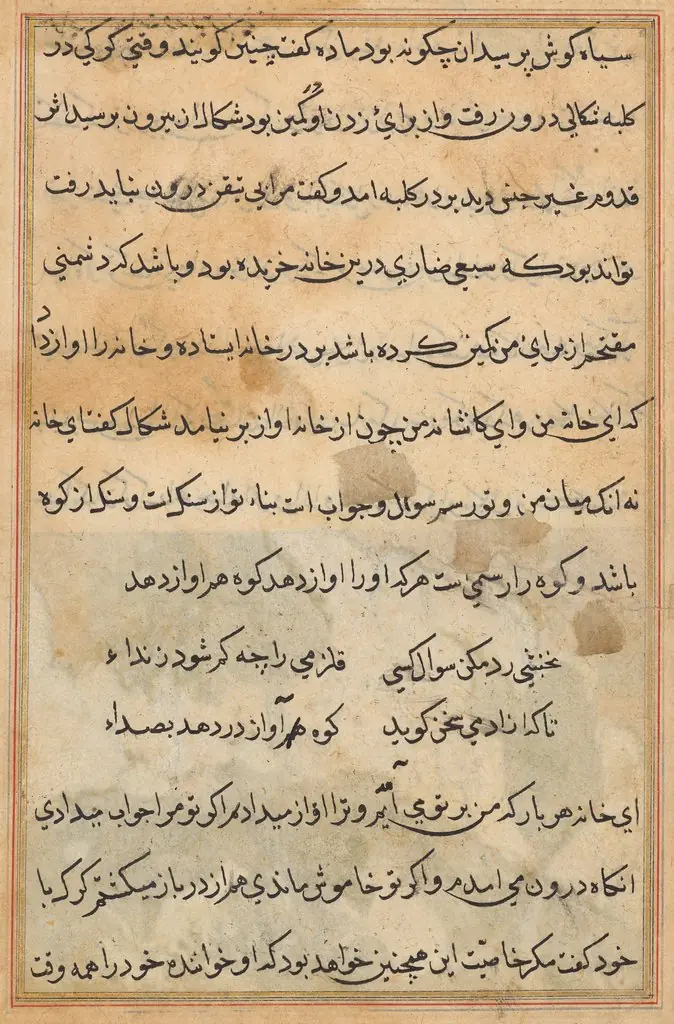
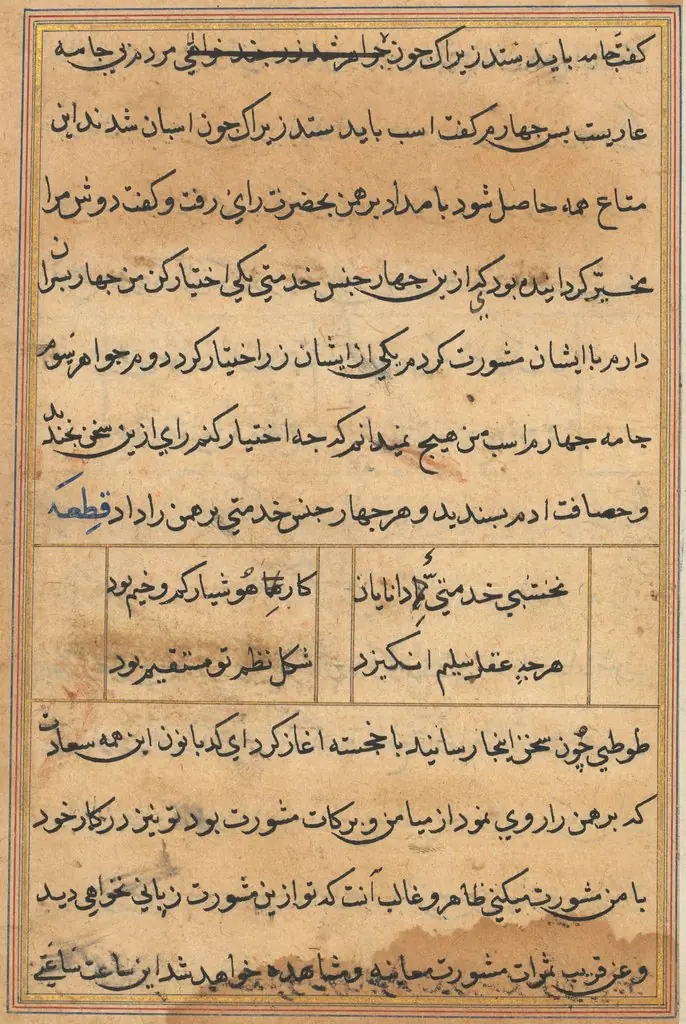
Tuti‑Nama, translated as “Tales of a Parrot,” is a painted page that functions as a visual manuscript. The surface is a light, slightly yellowed paper on which dense black ink script fills the space, bordered by thin red and blue lines. Small red flecks and a solitary blue stripe at the bottom provide modest accentuation, while marginal boxes contain additional handwritten notes.
Subject & Meaning
The page’s title suggests a narrative centered on a parrot, a motif often associated with storytelling and the transmission of knowledge in South Asian visual culture. Though the script itself is not reproduced here, the dense lettering implies a literary or instructional text, likely recounting episodes or moral lessons linked to the bird’s symbolic role.
Technique & Style
Executed in ink, the calligraphy displays a balance of flowing curves and precise angles, indicating a skilled hand familiar with both decorative and legible script. The tight packing of words demonstrates careful composition, while the thin colored borders, red and blue, are applied with fine brushwork, offering subtle visual framing without overwhelming the monochrome text.
Artist & collection

 Page from Tales of a Parrot (Tuti-nama): text page
 Page from Tales of a Parrot (Tuti-nama): text page
 Page from Tales of a Parrot (Tuti-nama): text page
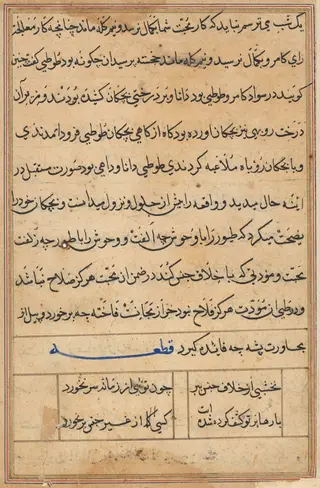 Page from Tales of a Parrot (Tuti-nama): text page
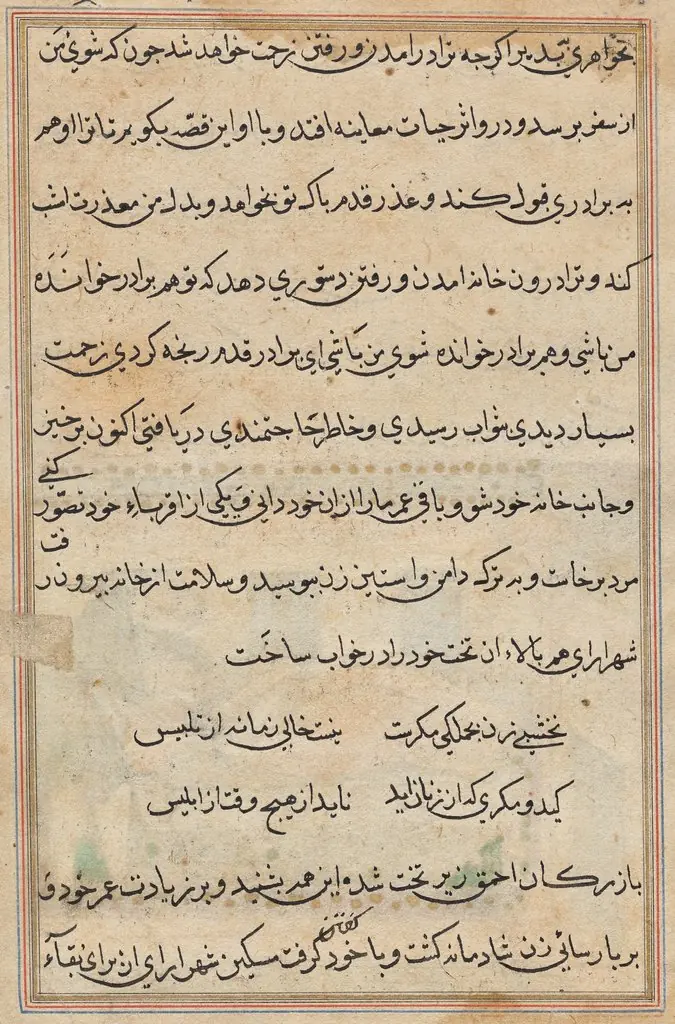 Page from Tales of a Parrot (Tuti-nama): text page
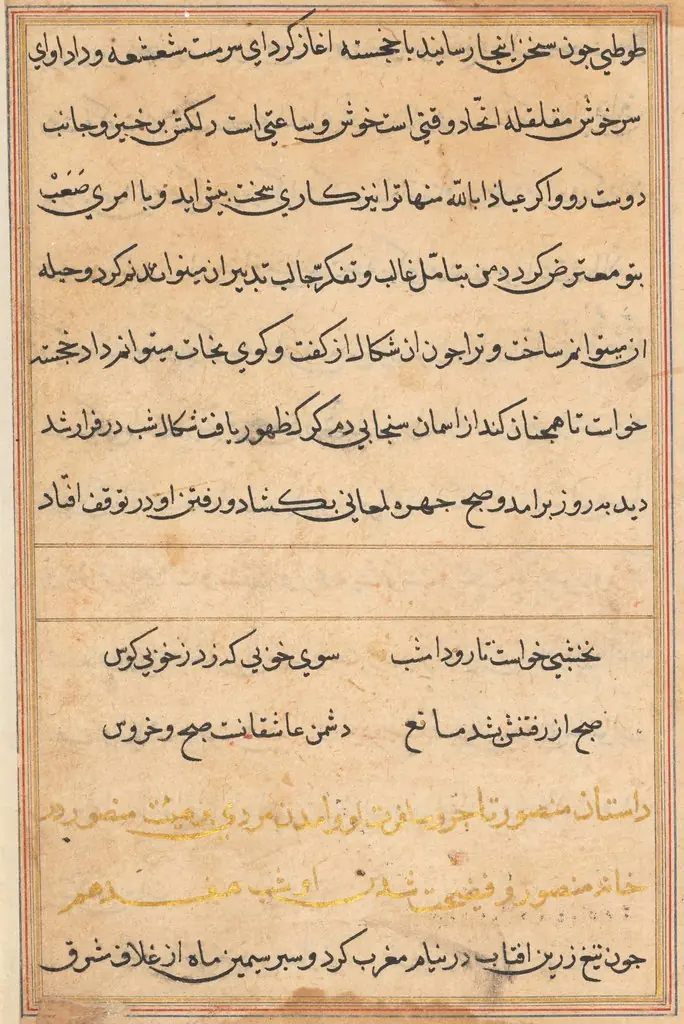 Page from Tales of a Parrot (Tuti-nama): text page
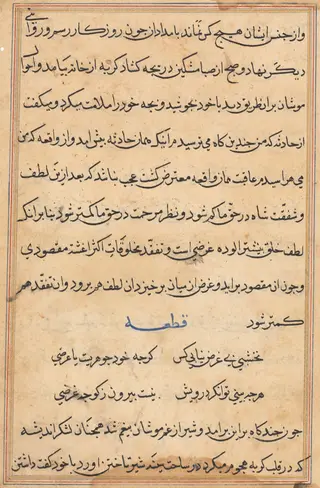 Page from Tales of a Parrot (Tuti-nama): text page
 Page from Tales of a Parrot (Tuti-nama): text page