Artwork
Untitled
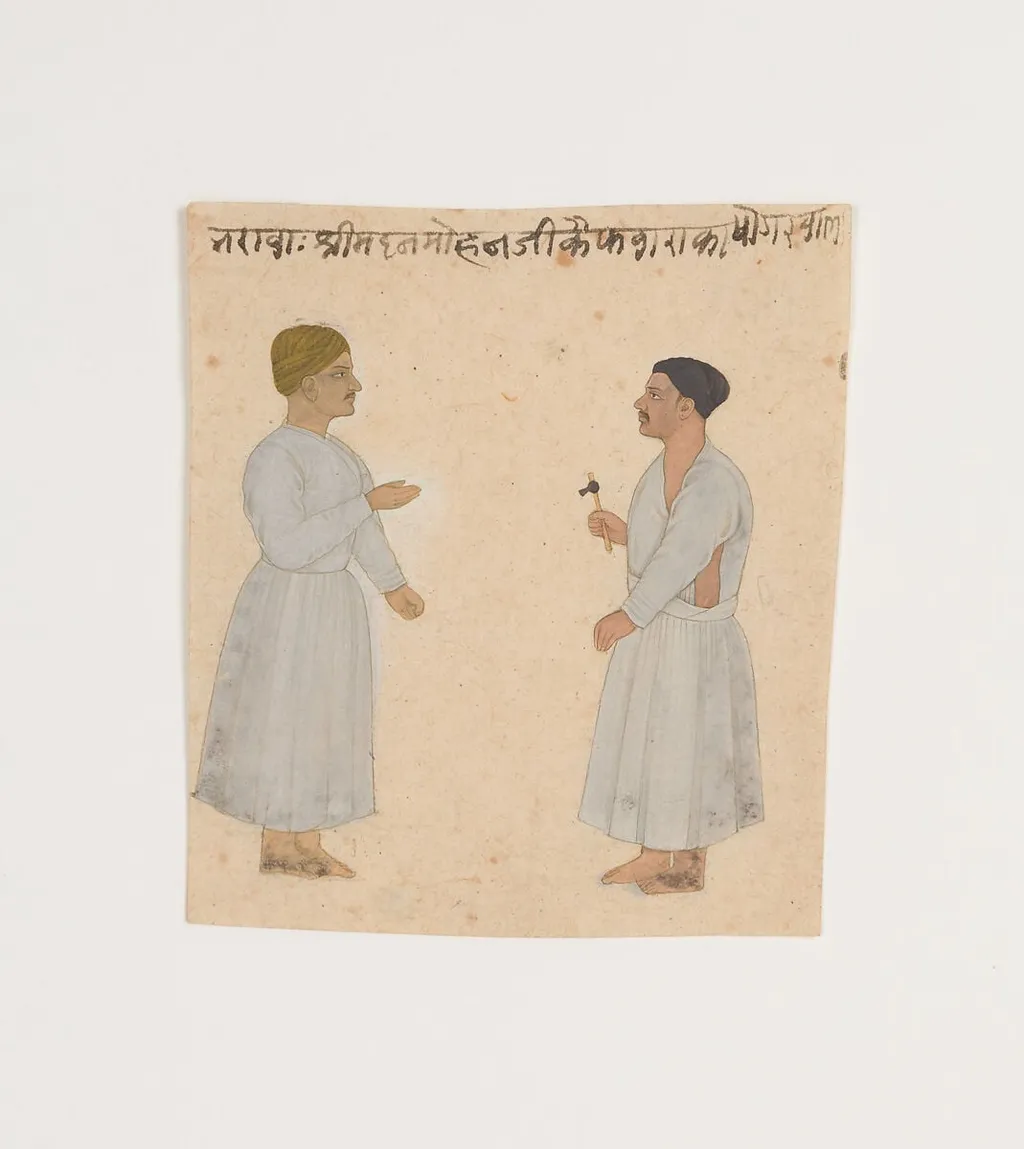
Untitled is a watercolor painting. It dates from 1816 and is held in the collection of the Metropolitan Museum of Art. The work is an ink, wash and opaque watercolor painting on paper, depicting a seated figure wearing a red turban.
- Accession no.
- 2008.359.39
- Credit line
- Gift of Subhash Kapoor, in memory of his parents, Smt Shashi Kanta and Shree Parshotam Ram Kapoor, 2008
About this work
Subject & Meaning
No iconographic elements or broader representational themes beyond the straightforward depiction of the male figure are recorded in the available documentation.
The work depicts a single man, executed in ink, wash, and opaque watercolor on paper. Created in 1816 in India by an anonymous artist, the piece functions as a portrait. The sources identify the subject solely as a man without providing further details regarding his specific identity, social status, or any associated symbolic meaning.
No iconographic elements or broader representational themes beyond the straightforward depiction of the male figure are recorded in the available documentation.
Technique & Style
Untitled is an ink, wash, and opaque watercolor painting on paper, created in 1816 in India. The work portrays a man and is classified as a portrait within the Paintings genre. It is part of the Metropolitan Museum of Art's collection.
History & Provenance
Untitled, painted in India in 1816, is an ink, wash, and opaque watercolor portrait of a man held in the Metropolitan Museum of Art collection. The work is attributed to an anonymous painter and appears in the museum’s holdings as a painting from 1816.
The work titled Untitled (1816) is held in the collection of the Metropolitan Museum of Art. The museum's records identify the piece as a painting by an anonymous artist created in India that year. Specific inventory or accession numbers are not provided in the available documentation. There is no recorded exhibition history for this artwork in the provided sources.
Legacy
The work's legacy stems from its attribution to an anonymous Indian painter and its representation of early cross-cultural artistic exchange, as documented in its inclusion at the Metropolitan Museum of Art. Its depiction of a man in ink, wash, and opaque watercolor has been cited in scholarship on 19th-century portraiture from colonial contexts, reinforcing its significance within the study of untitled works by unnamed artists. The painting's presence in a major Western museum highlights its role in shaping narratives around anonymity and artistic transmission in South Asian art history.
Overview
The work is an ink, wash and opaque watercolor painting on paper, depicting a seated figure wearing a red turban. He rests on a low stool, holding a long staff, his expression tranquil and eyes half‑closed, suggesting introspection. The background consists of minimal pale washes rendered in loose brushstrokes, giving the composition a restrained, almost sketch‑like atmosphere.
Context
Rajasthani painters of the early 1800s frequently employed ink and watercolor on paper, a medium suited to the region’s climate and artistic conventions. The work’s restrained composition aligns with a broader aesthetic that favored subtle narrative content and refined execution, distinguishing it from the more elaborate frescoes and miniatures of neighboring schools.
Artist & collection

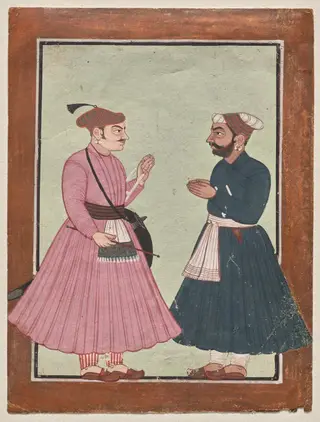
- A Mandi royal family member receives a noble
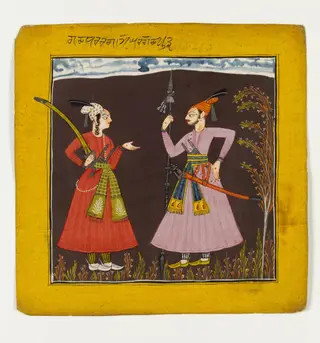 Gadadhara Raga
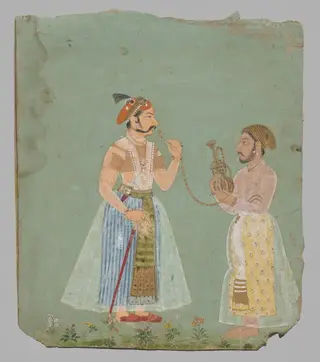 Rana Amar Singh II (reigned 1698–1710) smoking a hookah
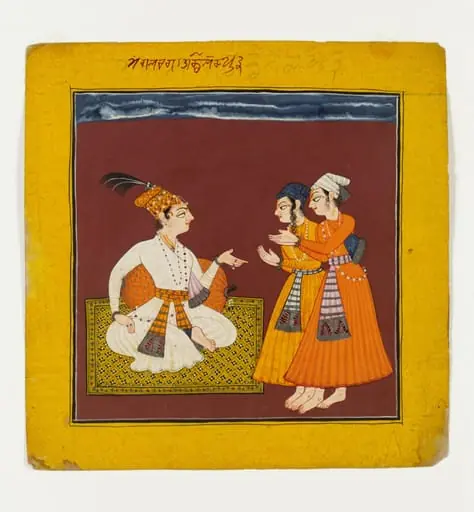 Mangala Raga
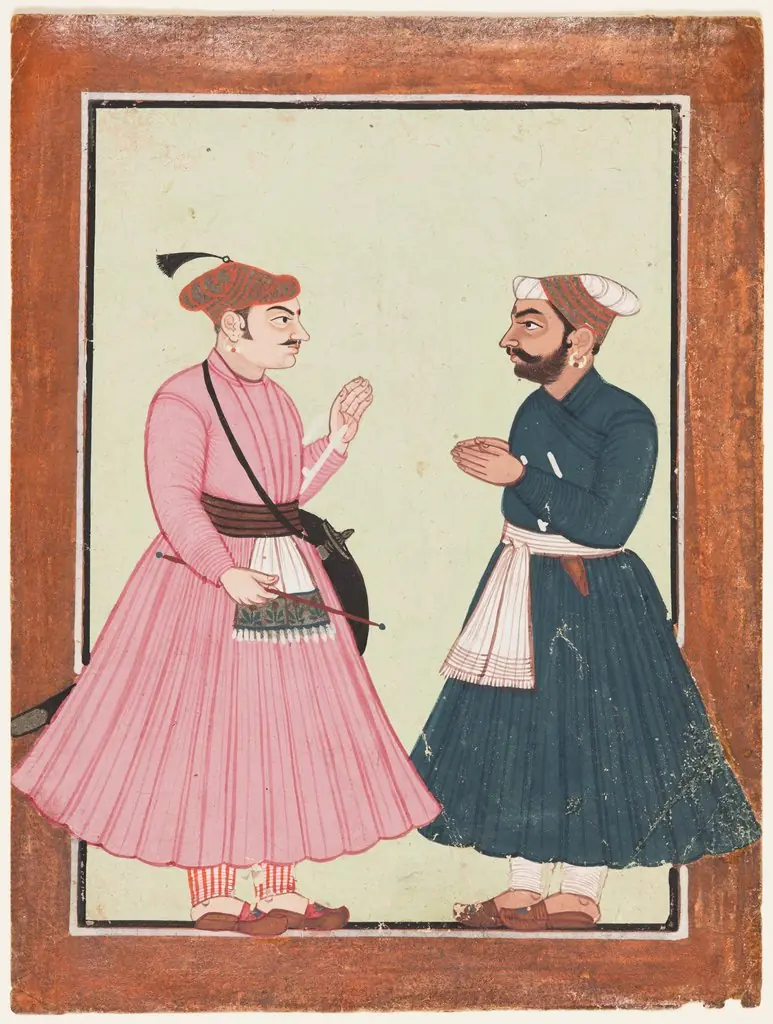 A noble, probably Raja Gaur Sen, receives another noble
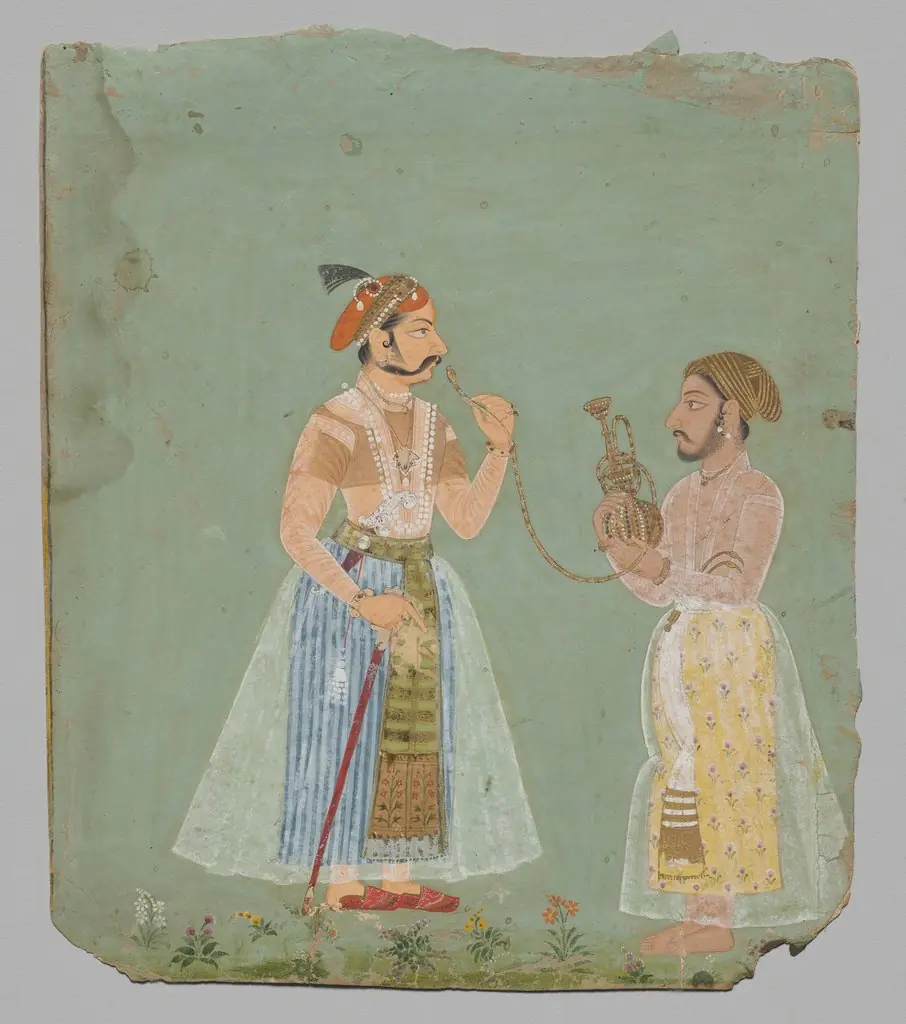 Rana Amar Singh II (reigned 1698–1710) smoking a hookah
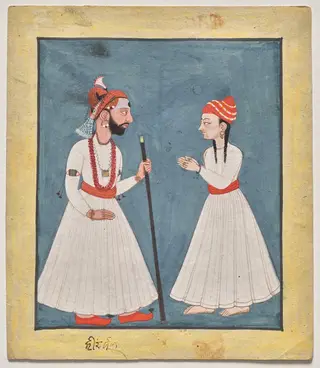 Shamsher Sen of Mandi with a youth
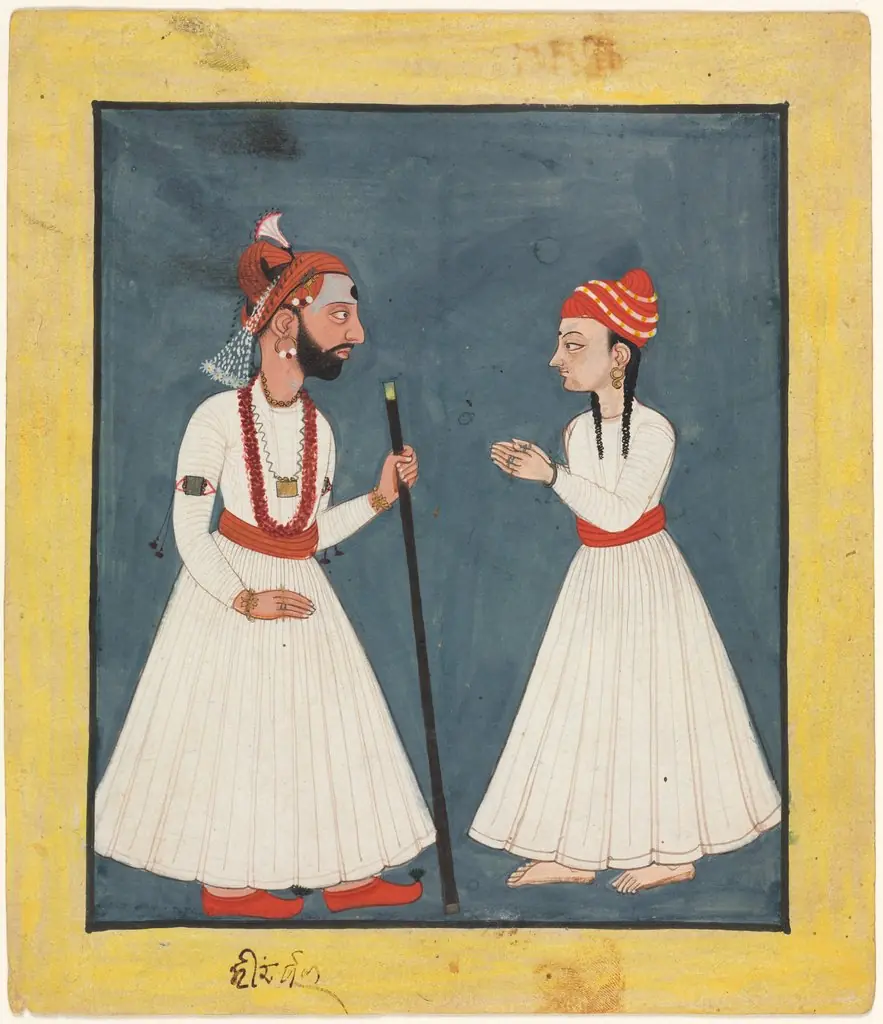 Raja Shamsher Sen with a Youth
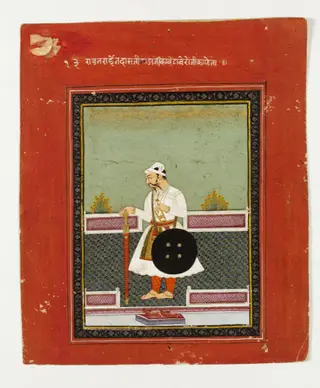 Rao Narain Das
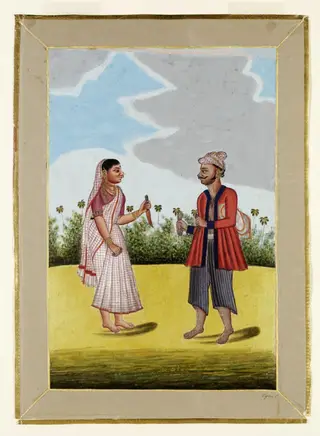 Lascars
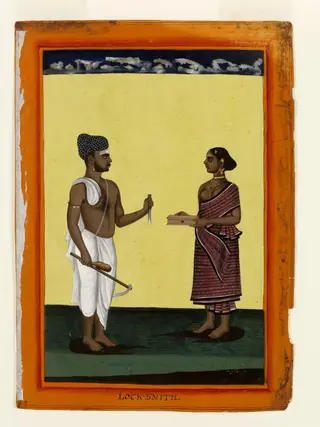 A locksmith and his wife
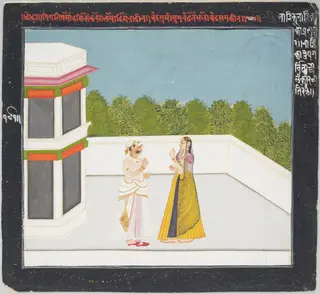 Hero and Heroine Subject: Couple Standing on Terrace