Artwork
Untitled
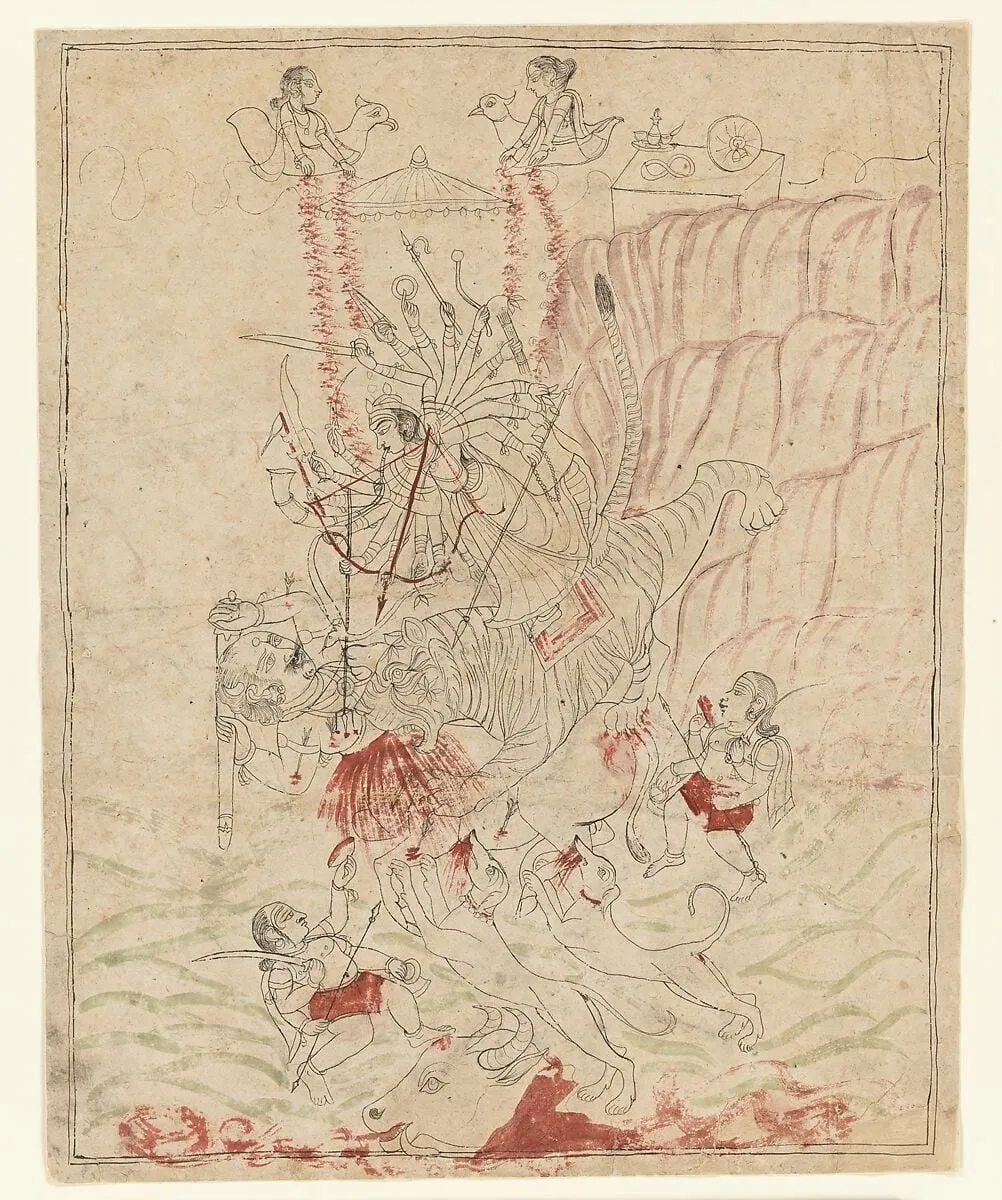
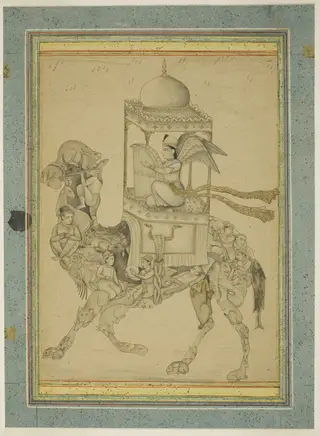
Untitled is a watercolor painting. It dates from 1760 and is held in the collection of the Metropolitan Museum of Art.
- Accession no.
- 2008.359.8
- Credit line
- Gift of Subhash Kapoor, in memory of his parents, Smt Shashi Kanta and Shree Parshotam Ram Kapoor, 2008
About this work
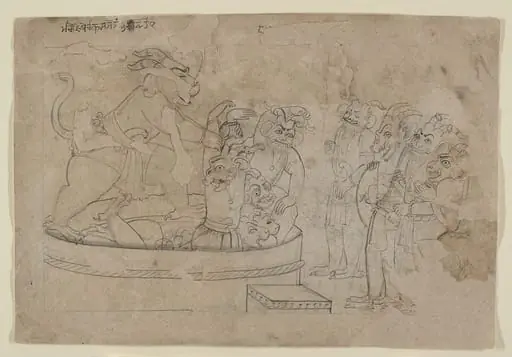
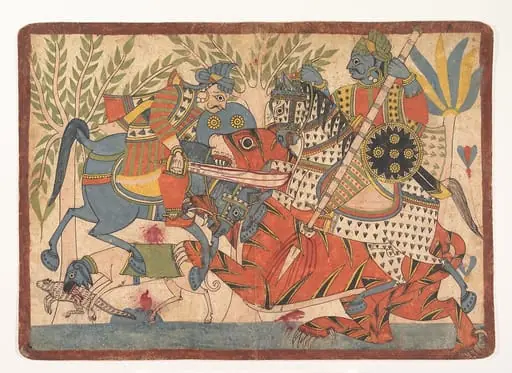
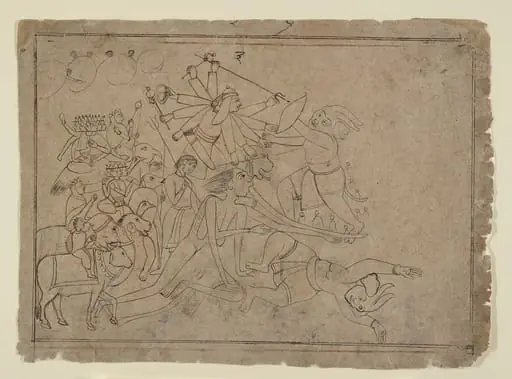
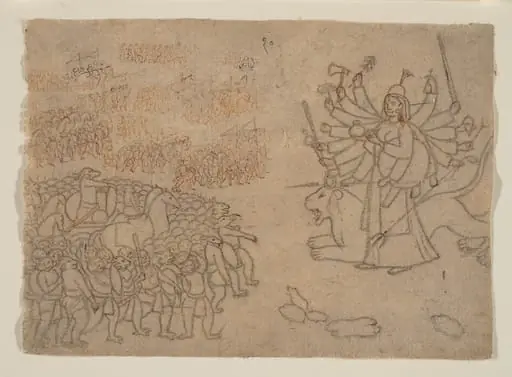
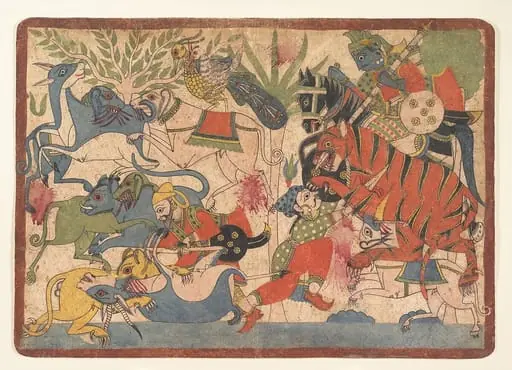
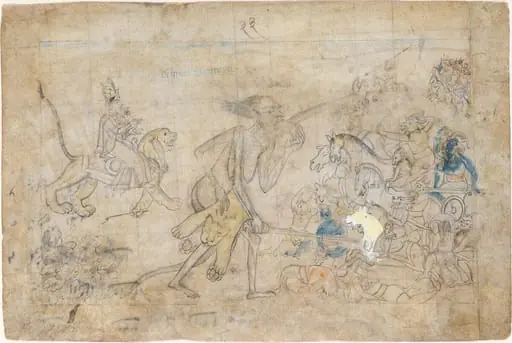
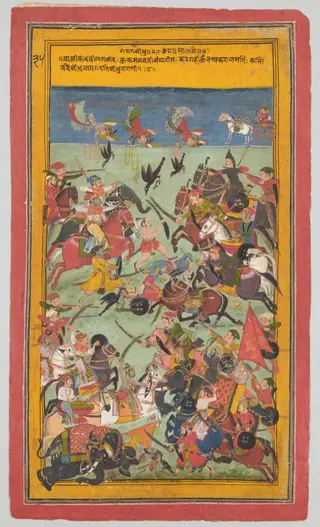
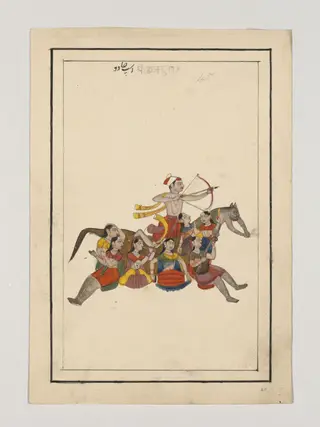
A goddess rides a tiger, surrounded by demons and dogs, weapons in her many hands, her face calm but fierce. Made in India around 1760 by an unknown artist, the painting builds its colors in thin, transparent layers of watercolor, a glazing technique that gives the tiger's stripes and the goddess's skin their smooth finish.
Subject & Meaning
Created in Rajasthan, India, around 1760, this anonymous watercolor and ink work on paper illustrates a scene from Hindu mythology.
Created in Rajasthan, India, around 1760, this anonymous watercolor and ink work on paper illustrates a scene from Hindu mythology. The central figure is the goddess Durga, a major deity within the Hindu pantheon. The composition includes a tiger, which traditionally serves as the goddess's mount, alongside a dog and a demon.
The inclusion of these specific entities suggests a narrative moment involving divine power confronting evil forces, consistent with iconographic traditions surrounding Durga. As a mythological genre piece, the artwork functions as a visual representation of religious stories and deities significant to the region and period of its creation.
Technique & Style
Untitled is executed in ink combined with transparent and opaque watercolor on paper. The support is a sheet of paper, likely prepared for miniature painting, and the artist layers the media to define forms and color. The work depicts a mythological scene featuring the goddess Durga accompanied by a tiger, a dog, and a demon, rendered with delicate line work and varied washes that suggest both detail and atmospheric effect. No specific information about the painting's condition or handling is provided in the sources.
History & Provenance
Created circa 1760 in Rajasthan, India, the work is an anonymous painting executed in ink, transparent and opaque watercolor on paper. Its subject draws from Hindu mythology, portraying the goddess Durga alongside a demon, a dog, and a tiger. The piece entered the collection of the Metropolitan Museum of Art, where it remains on display.
No record indicates a specific commission or patron; the artist is unidentified. Its dimensions are approximately 50.8 × 41.3 cm.
The painting is held in the collection of the Metropolitan Museum of Art in New York. No specific exhibition history for this painting is detailed in the provided sources.
Overview
This untitled painting, created in India around 1760, depicts a powerful goddess. Executed with ink and watercolors on paper, the artwork presents a dynamic scene centered on a divine figure. The composition showcases a blend of transparent and opaque pigments, characteristic of the period's artistic practices.
Its precise origins and creator remain unrecorded, yet it offers insight into the devotional art of 18th-century India.
Artist & collection