Artwork
Untitled
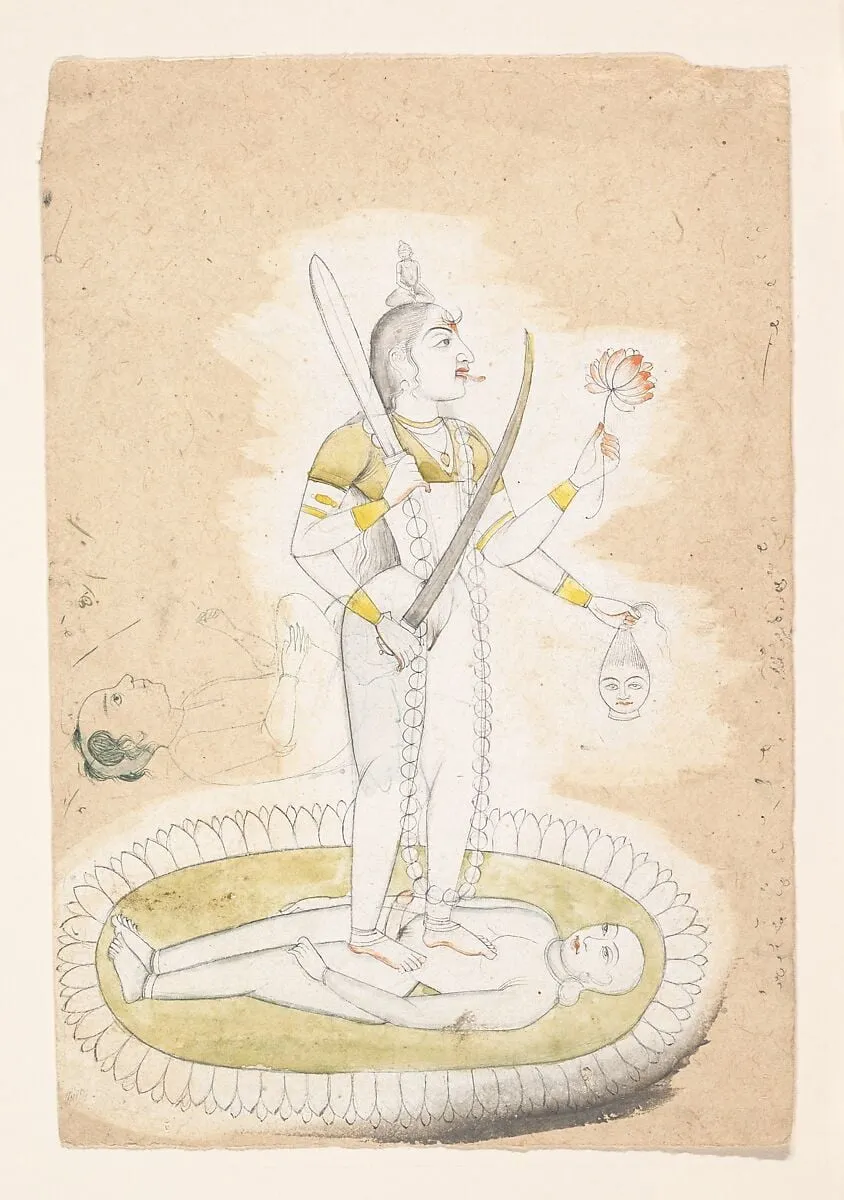
Untitled is an ink painting. It dates from 1800 and is held in the collection of the Metropolitan Museum of Art.
About this work
A boy in a red coat holds two curved swords while a many-armed goddess, probably Durga, floats above him. The small ink drawing comes from the Punjab Hills of northern India around 1800. The artist built shadow and depth from fine cross-hatching.
Subject & Meaning
The juxtaposition of the divine figure with the severed head and weapon implies themes of sacrifice, divine justice, or a legendary triumph.
Created in India around 1800, this ink and color work on paper illustrates a scene from mythology. The composition features a boy and a goddess, accompanied by the distinct presence of a human head and a sword. While the specific narrative remains undefined due to the artist's anonymity, the inclusion of these elements suggests a dramatic or ritualistic event rooted in South Asian mythological traditions.
The juxtaposition of the divine figure with the severed head and weapon implies themes of sacrifice, divine justice, or a legendary triumph. The work serves as a visual representation of these archetypal stories, utilizing standard iconographic markers to convey its subject matter without textual explanation.
Technique & Style
The work is an ink drawing with color highlights on paper, produced in India around 1800;. Its support is thin paper, typical of Indian miniature traditions, and the technique combines fine ink linework with subtle washes of pigment to render a mythological scene. The composition shows a boy, a goddess, a human head, and a sword, reflecting the mythological genre assigned to the piece.
Measured at approximately 20.6 cm in height and 14 cm in width, the small format emphasizes intimate handling. The stylistic qualities include delicate line, restrained coloration, and a narrative arrangement characteristic of early 19th‑century Indian painting.
History & Provenance
The work, an anonymous ink drawing heightened with color on paper, is dated to 1800 and was produced in India. It depicts mythological subjects including a boy, a goddess, a human head, and a sword, consistent with its classification as a mythological painting. No information is available regarding its commission, original patron, or early ownership history.
The work is presently held in the collection of the Metropolitan Museum of Art, where it is documented as part of the institution's holdings. The date of its acquisition by the museum and any intermediate owners between its creation and its arrival at the Metropolitan Museum of Art are not recorded in the available sources.
The work is held in the collection of the Metropolitan Museum of Art, where it is recorded as part of the museum's holdings of paintings on paper. According to the available records, it was created in India and entered the collection as an anonymous mythological painting executed in ink heightened with color. No specific accession number, inventory identifier, or detailed acquisition history is documented in the available sources.
Likewise, no exhibition history, loan records, or prior display venues are recorded for this work. The sources confirm only its current institutional location at the Metropolitan Museum of Art, with no further provenance or exhibition details available.
Overview
This untitled work, executed in ink heightened with color on paper, originates from the Punjab Hills region of northern India, dating to approximately 1800. The small drawing depicts a dynamic scene featuring a young boy in a red coat, armed with two curved swords, positioned beneath a multi-armed goddess who appears to float above him. This piece exemplifies the distinct artistic traditions of the region during this period.
Context
Produced in the Punjab Hills, a region known for its distinctive schools of painting, this artwork reflects the artistic conventions prevalent around 1800. The area fostered a vibrant tradition of miniature painting, often illustrating Hindu epics, devotional poetry, and portraits. This drawing serves as an example of the intricate draftsmanship and narrative focus characteristic of the artistic output from this specific cultural landscape in northern India.
Artist & collection

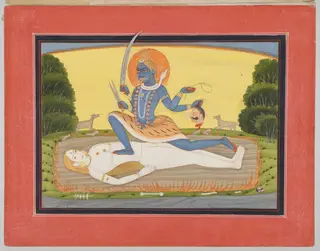
- Tantric Devi on Shiva, from a Mandi Devi Series
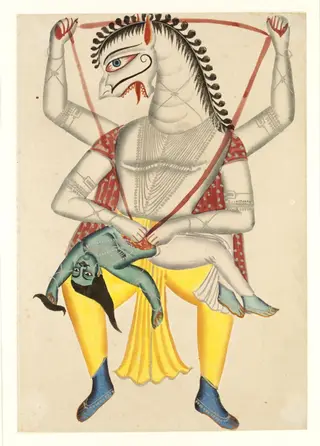 Narasimha
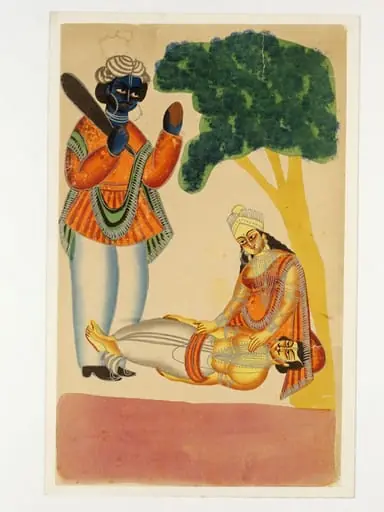 Savitri and Yama
![Rama and Lakshmana Fighting Ravana, from a Dashavatara (Ten Incarnations [of Vishnu]) series](https://artifactworldgallery.com/img/rama-and-lakshmana-fighting-ravana-from-a-dashavatara-ten-in--5e1e27c9fffbe47d-w320.webp) Rama and Lakshmana Fighting Ravana, from a Dashavatara (Ten Incarnations [of Vishnu]) series
Rama and Lakshmana Fighting Ravana, from a Dashavatara (Ten Incarnations [of Vishnu]) series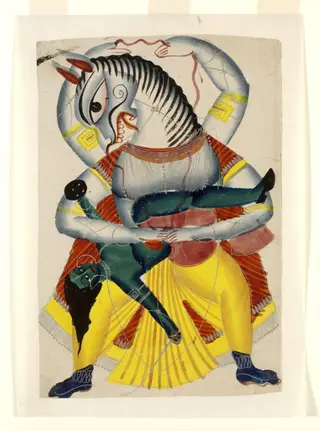 Vishnu as Narasimha
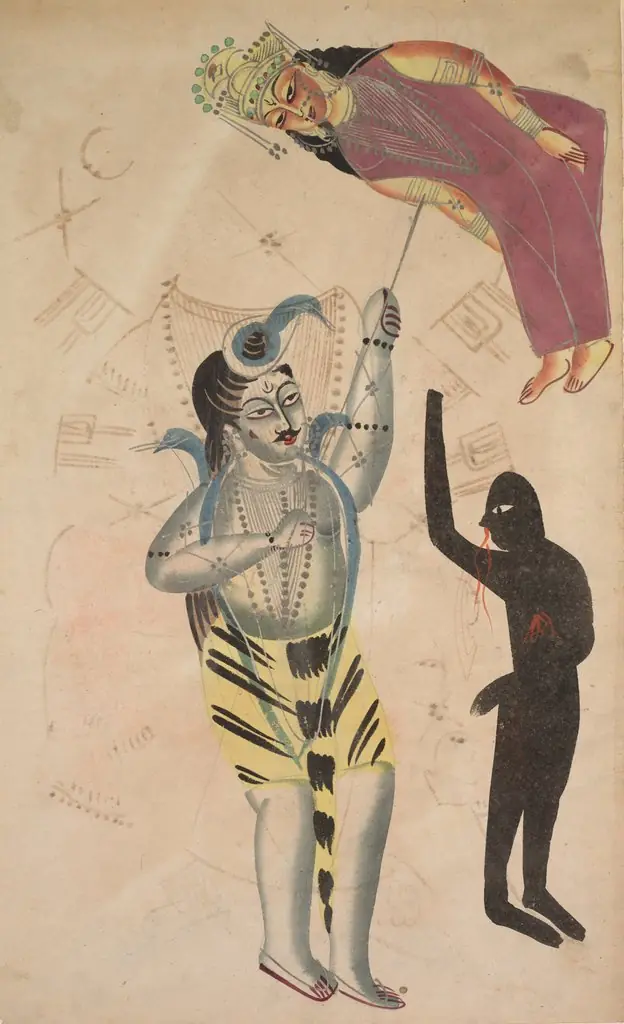 Shiva Bearing Aloft the Body of His Sati
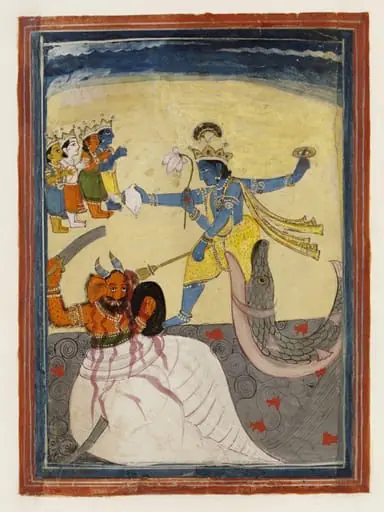 Vishnu as Matsya
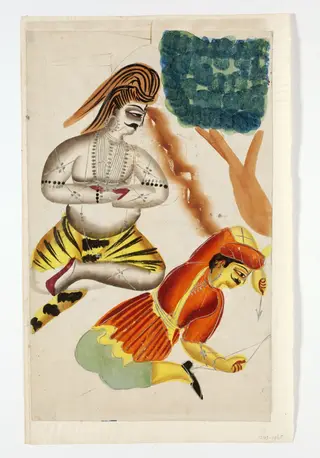 Shiva and Kama
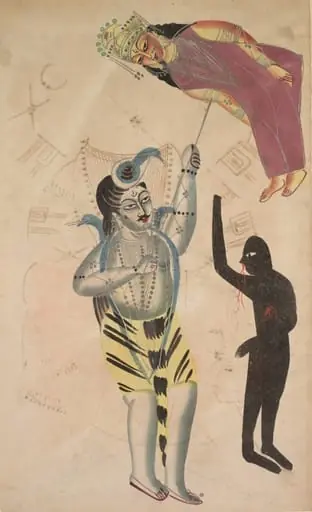 Shiva Bearing Aloft the Body of His Sati
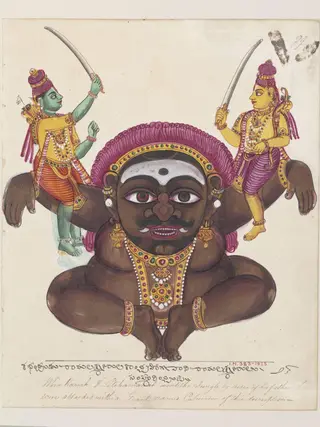 The rakshasa Kabandha supporting Rama and Lakshmana on his arms.
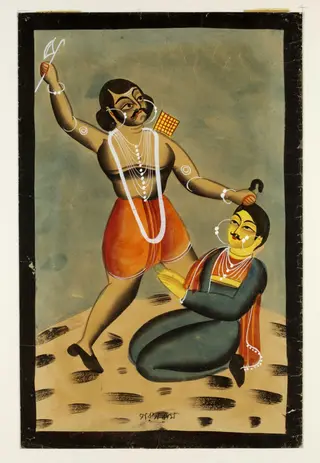 Parasurama
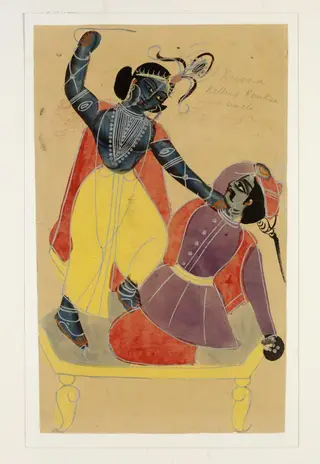 Krishna and Kansa