Artwork
Untitled
Untitled is a watercolor painting. It dates from 1790 and is held in the collection of the Metropolitan Museum of Art.
About this work
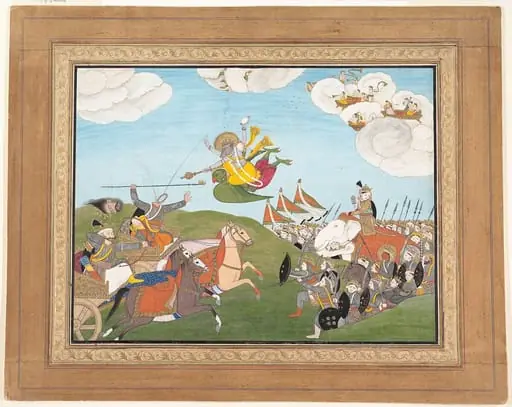
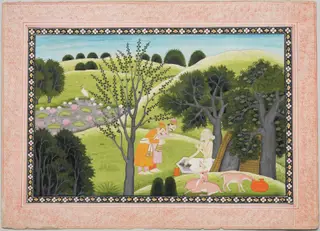
A man in a red coat rides a deer, a sword in one hand and a flower in the other, while two queens on horseback and a group of servants and soldiers gather around. From the Punjab Hills of northern India by an unknown hand, its bright colors and flat shapes give a storybook look. Ink and opaque watercolor on paper, 1790.
Subject & Meaning
Created in India around 1790, this history painting presents a narrative scene featuring three figures: a man, a queen, and a deer.
Created in India around 1790, this history painting presents a narrative scene featuring three figures: a man, a queen, and a deer. The inclusion of these subjects suggests a composition rooted in historical or legendary storytelling, characteristic of the genre classification assigned to the work. While the precise identity of the individuals and the specific event portrayed remain undefined in the available records, owing to the artist's anonymity and the generic title, the visual iconography centers on the interaction between human royalty and the natural world.
The presence of the deer alongside the royal and male figures implies a symbolic relationship or a specific moment of encounter, though the exact allegorical significance is not explicitly detailed in the source material.
Technique & Style
Created in 1790 in India, this anonymous work is executed in ink and opaque watercolor applied to a paper support. The painting measures 21 by 29.2 centimeters and functions as a history painting. Stylistically, the piece employs a figurative approach to depict a man, a queen, and a deer.
The use of opaque watercolor suggests a technique capable of achieving solid, vibrant fields of color typical of the region's painting traditions during this period. The work is currently held in the collection of the Metropolitan Museum of Art.
History & Provenance
The work is dated to 1790 and was produced in India, executed in ink and opaque watercolor on paper. It is classified as a history painting depicting a deer, a man, and a queen, and is held in the collection of the Metropolitan Museum of Art. No information is available regarding its commission, earlier ownership, or chain of custody prior to its accession, the artist remains anonymous, and no accession number or exhibition history is recorded in the available sources.
Overview
This untitled painting, executed in ink and opaque watercolor on paper, originates from the Punjab Hills in northern India. It depicts a vibrant scene featuring a central male figure on a deer, accompanied by two queens on horseback, surrounded by attendants. The work's bright palette and simplified forms evoke a narrative quality, characteristic of the region's artistic traditions.
Context
This artwork is representative of the painting traditions found in the Punjab Hills, particularly aligning with styles seen in areas like Guler. Such works often served to illustrate literary texts, depict courtly life, or portray religious themes. Understanding this regional context helps situate the painting within a broader artistic movement characterized by its distinctive visual language and narrative focus.
Artist & collection

- The Guru Giving Advice
 The Guru Discourses While Noblemen Wait
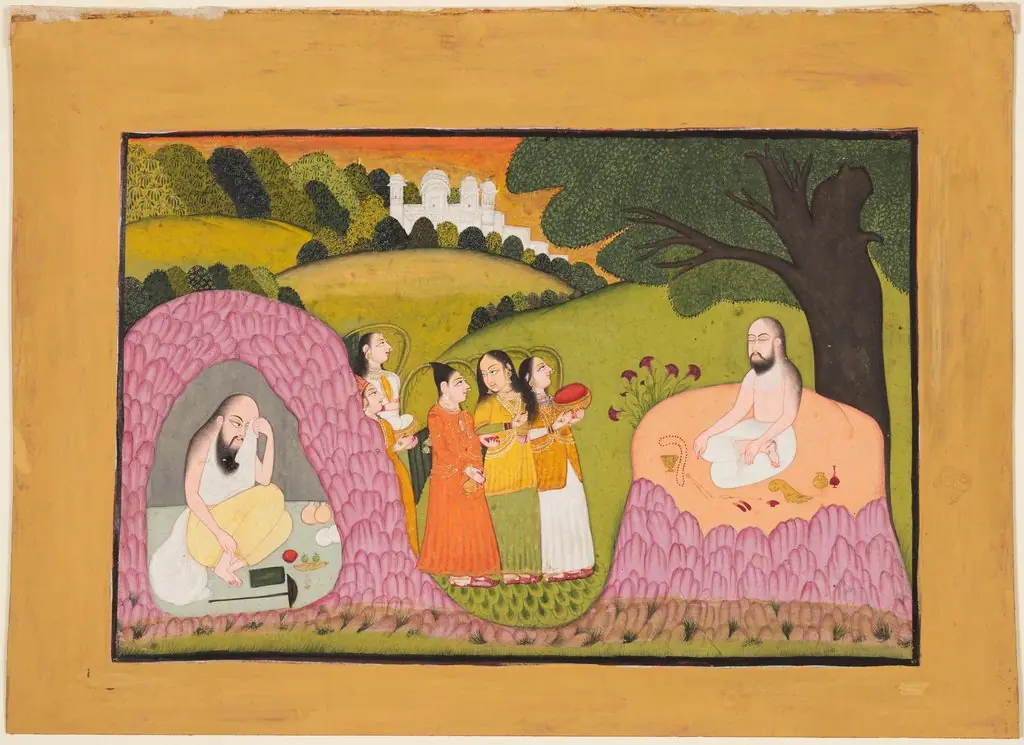 Sultan Ibrahim ibn Adham of Balkh Visited by Angels
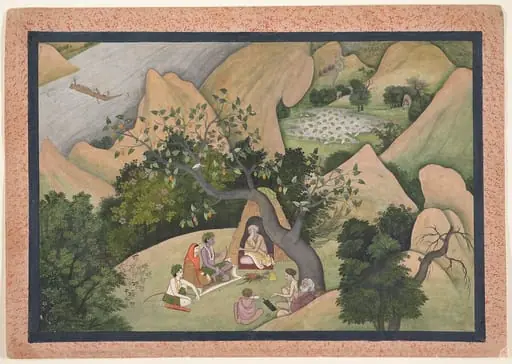 Untitled
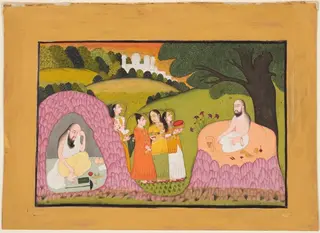 Sultan Ibrahim ibn Adham of Balkh Visited by Angels
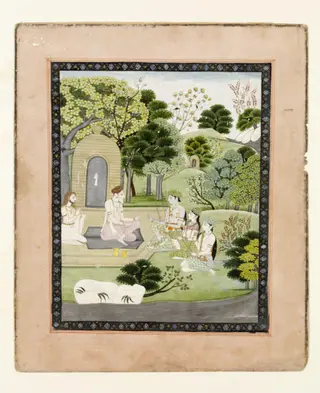 Rama, Sita and Lakhshmana
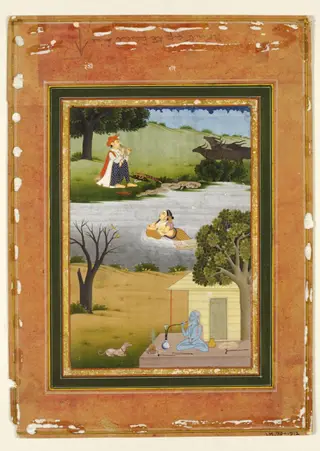 Sohni and Mahinval
 Rama, Sita and Lakshmana
 Lakshmi and Devotees
 Untitled
 Worship of Hindu Deities (1 of 18)
 Noblemen Making Obeisance to the Guru