Artwork
Noblemen Making Obeisance to the Guru
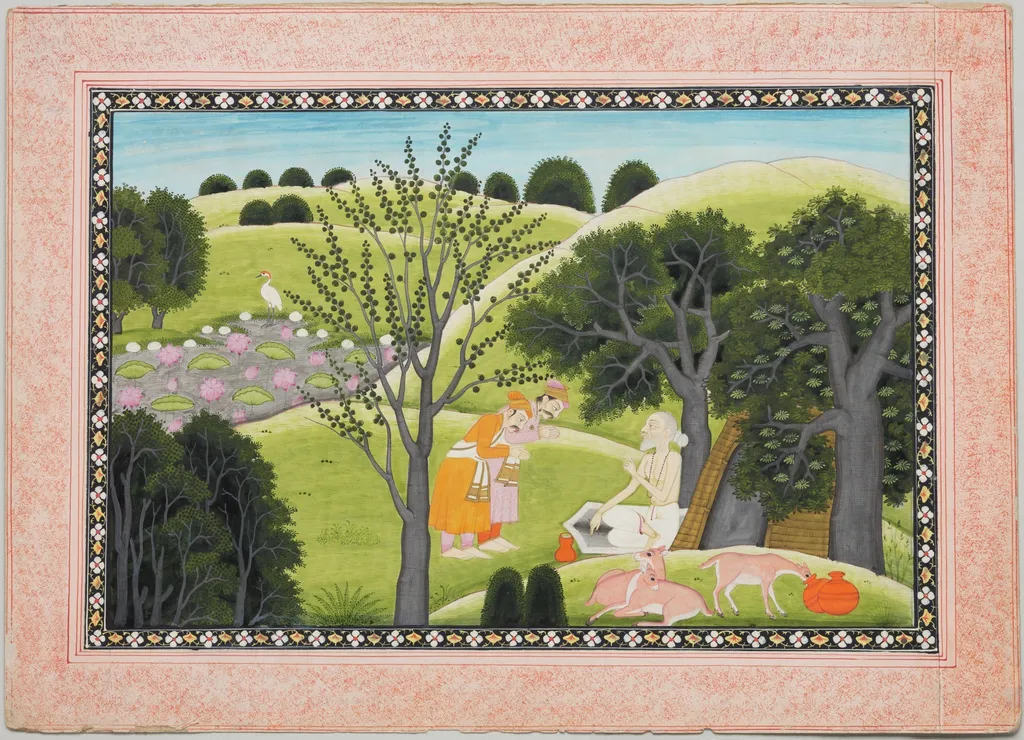
Noblemen Making Obeisance to the Guru is an unspecified painting by the Patna School of Painting artist Unknown. It dates from 1800 and is held in the collection of the Detroit Institute of Arts. This painting captures a quiet moment of spiritual reverence, set against a tranquil natural landscape.
About this work
Overview
A guru, dressed in white and adorned with a necklace, sits calmly on a grassy slope, flanked by trees and rolling hills.
This painting captures a quiet moment of spiritual reverence, set against a tranquil natural landscape. A guru, dressed in white and adorned with a necklace, sits calmly on a grassy slope, flanked by trees and rolling hills. Two noblemen in orange robes approach him, one in a gesture of bowing.
Two deer rest nearby, and an orange pot lies in the foreground, reinforcing the scene’s stillness and symbolic depth.
Subject & Meaning
The scene illustrates the traditional Indian ideal of spiritual authority and devotion. The guru, serene and elevated, represents wisdom and detachment, while the noblemen’s act of obeisance signifies the surrender of worldly status to higher knowledge. The deer, often symbols of peace in Indian art, and the unadorned pot suggest simplicity and harmony with nature, reinforcing the guru’s role as a guide beyond material concerns.
Technique & Style
The artist employs fine brushwork to render textures, delicate leaf patterns, the folds of fabric, and the soft contours of hills. Colors are muted yet deliberate: white for purity, orange for spiritual seeking, and earthy greens for the natural world. Composition is balanced, with the guru centered and the noblemen angled toward him, guiding the viewer’s eye through a rhythm of gesture and form.
History & Provenance
The work originates from a Pahari school tradition, likely from the early 18th century in the hills of northern India. Such paintings were often commissioned by royal patrons or religious communities to depict spiritual encounters. Its preservation suggests it was valued within a devotional or courtly context, possibly linked to a specific guru lineage or regional sect.
Context
This painting reflects the broader cultural practice of depicting spiritual teachers in natural settings, a motif common in Bhakti and Sikh devotional art. The presence of nobles paying homage aligns with historical accounts of rulers seeking guidance from ascetics. The inclusion of animals and domestic objects grounds the sacred in everyday reality, a hallmark of Pahari miniature painting’s humanistic approach.
Legacy
The painting exemplifies the Pahari school’s quiet elegance and its fusion of religious symbolism with naturalistic detail. While not widely known outside regional collections, it contributes to the understanding of how spiritual authority was visually encoded in pre-colonial India, emphasizing humility, harmony, and the quiet power of nonviolent devotion.
Artist & collection









 Consultation with a Hermit Guru
 Krishna's Longing for Radha, from the Gita Govinda of Jayadeva
 Untitled
 Sultan Ibrahim ibn Adham of Balkh Visited by Angels
 Rama, Sita and Lakhshmana
 Nanda and the Elders in Council with the Cowherds, from a Bhagavata Purana
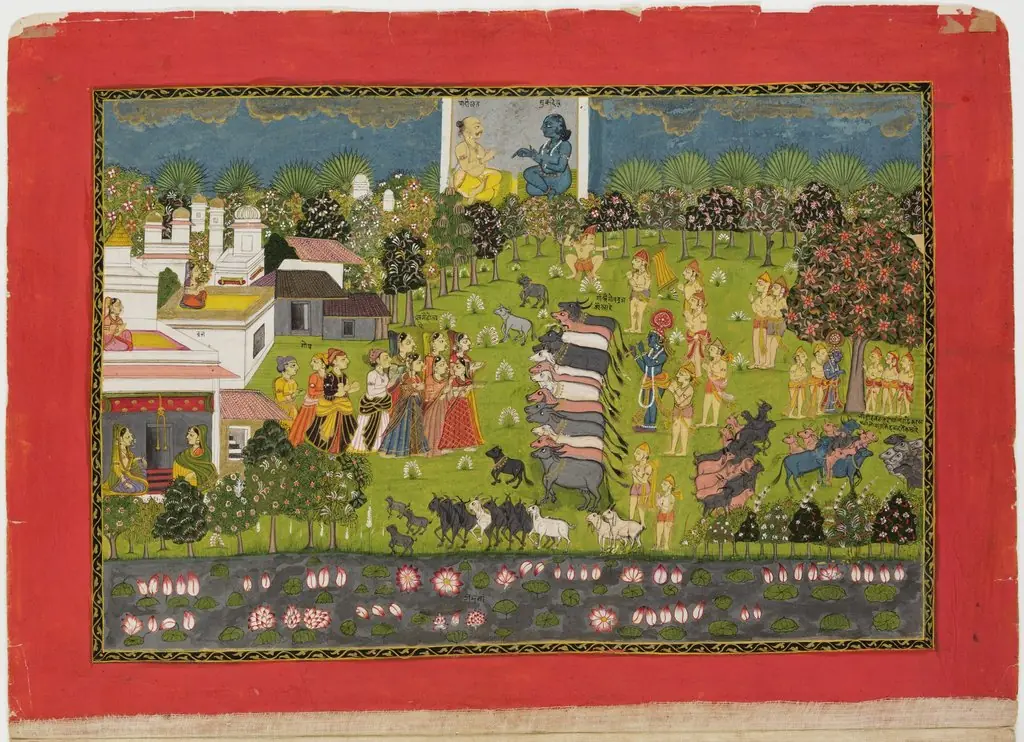 Cow Worship
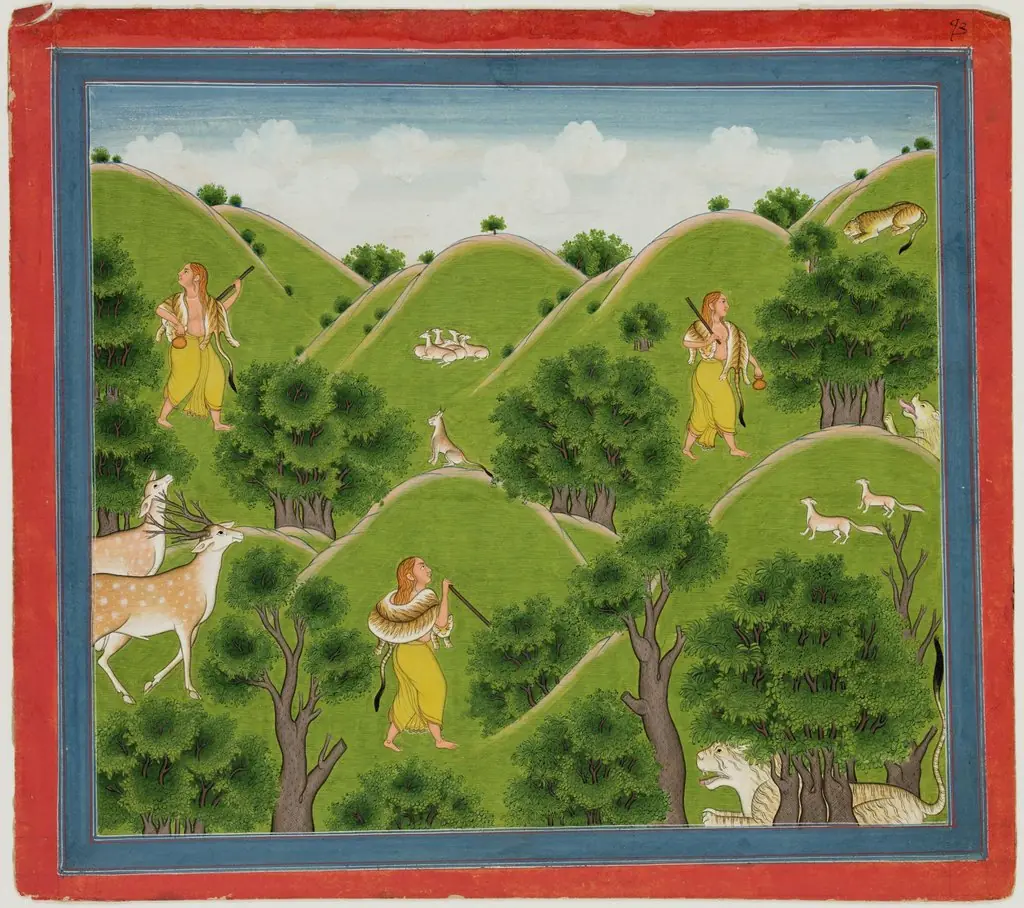 Illustrations to Life of Dhurva Maharaj: #11 Dhurva travels from place to place in Rishi garb