Artwork
Untitled
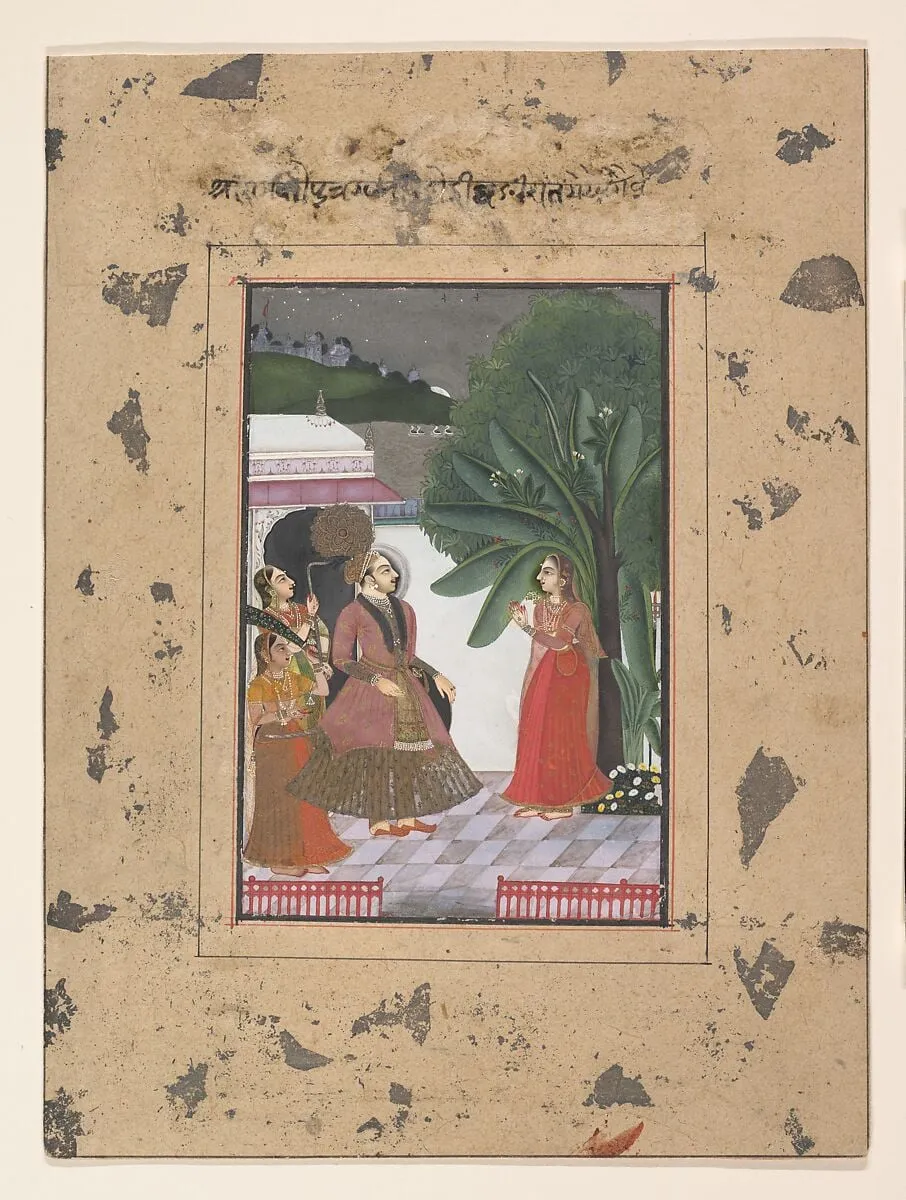
Untitled is a watercolor painting. It dates from 1760 and is held in the collection of the Metropolitan Museum of Art.
About this work
Subject & Meaning
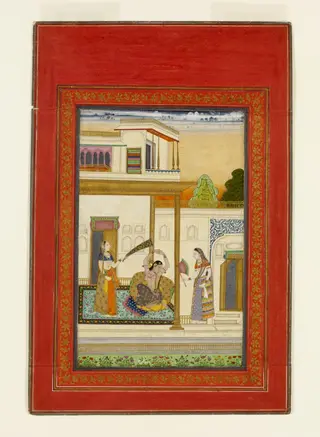
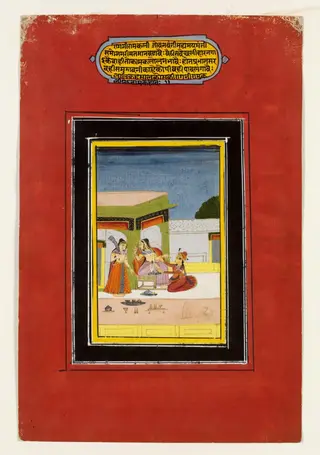
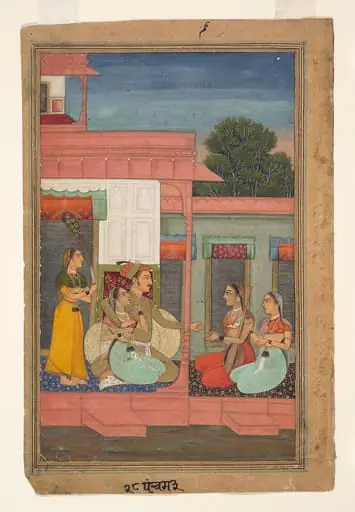
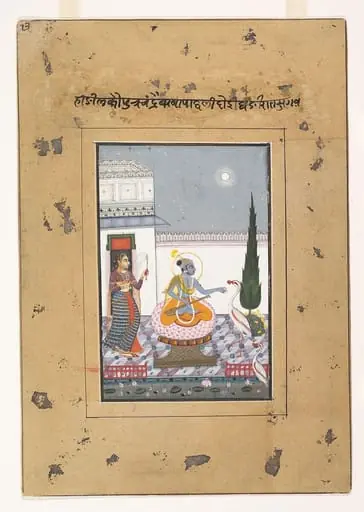
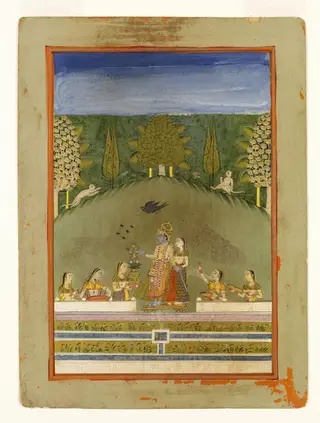
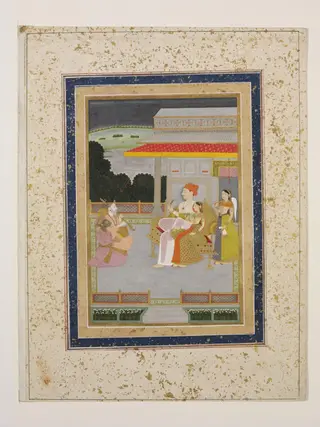
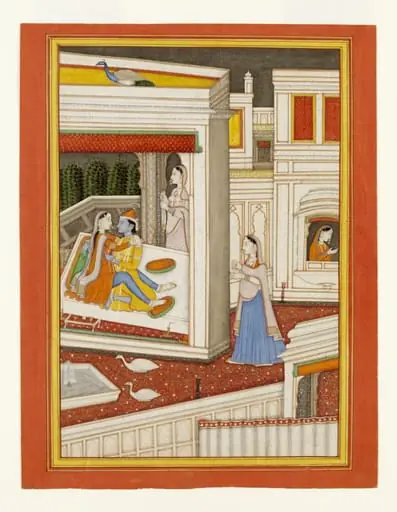
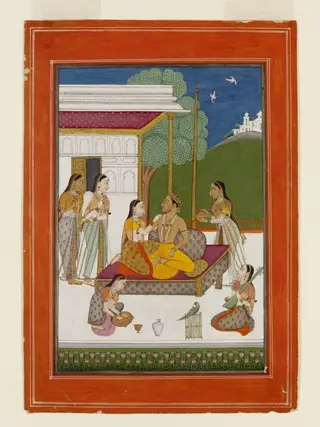
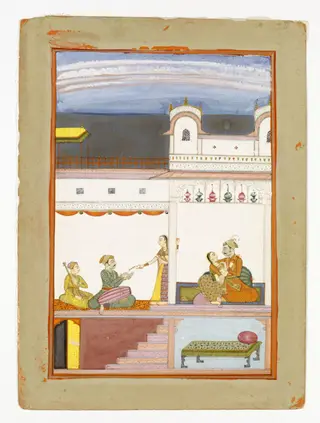
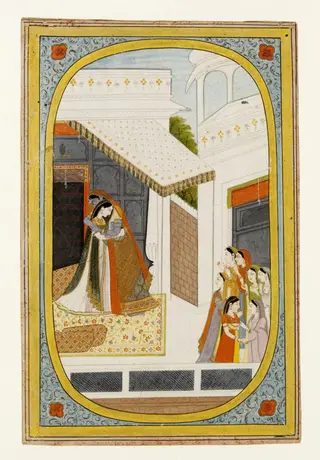
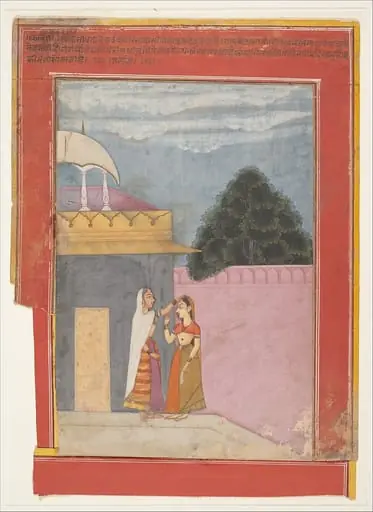
Created in 1760 in India, this anonymous work portrays a genre scene featuring a prince, a man, a domestic worker, and a woman situated near a tree.
Created in 1760 in India, this anonymous work portrays a genre scene featuring a prince, a man, a domestic worker, and a woman situated near a tree. The composition captures a specific moment of social interaction, likely within a courtly or domestic setting, as suggested by the inclusion of the royal figure alongside a servant. While the specific narrative action is not detailed in the available records, the juxtaposition of these figures, a prince, a man, a domestic worker, and a woman, implies a depiction of hierarchical relationships and daily life.
The presence of the tree serves as a natural element framing the human subjects. Executed in ink, opaque watercolor, silver, and gold on paper, the piece uses these materials to distinguish the status of the figures, particularly the prince, within the scene.
Technique & Style
The work is executed in ink, opaque watercolor, silver and gold on paper, employing a layered technique that creates a luminous surface with metallic highlights. The use of precious metals on paper suggests a high-status material approach typical of elite Indian painting practices of the mid-18th century. The composition portrays a domestic worker, a man, a prince, a tree and a woman in a balanced, narrative arrangement characteristic of genre scenes, emphasizing everyday interactions within a princely setting.
The delicate handling of line and color yields a refined, almost miniature-like formal quality, while the paper support contributes to the work's fragility and requires careful conservation.
History & Provenance
The work Untitled is dated to 1760 and was produced in India by an anonymous painter, according to the Metropolitan Museum of Art's record. Its medium is ink, opaque watercolor, silver and gold on paper, and it is classified as a genre scene. The painting depicts a domestic worker, a man, a prince, a tree and a woman. The work is held in the Met's permanent collection.
Context
The work, dated 1760 and executed in ink, opaque watercolor, silver and gold on paper, belongs to the genre of domestic scenes and portrays a man, a prince, a domestic worker, a tree and a woman. Its creation in India and inclusion in the Metropolitan Museum of Art's collection illustrate the circulation of painted imagery between local workshops and Western institutions. The use of precious metals in the medium reflects contemporary aesthetic preferences, while the anonymous authorship underscores the difficulties of attributing individual authorship in 18th-century Indian art.
Overview
This untitled painting from 18th-century India depicts a vibrant courtly scene. Executed with ink, opaque watercolor, silver, and gold on paper, the artwork presents a small, detailed tableau. It features a central figure, likely a prince, reclining beneath a tree, attended by servants, while other women are seated nearby. The piece offers a glimpse into the aesthetic and social conventions of its period.
Artist & collection