Artwork
Virgin and Child enthroned; Annunciation
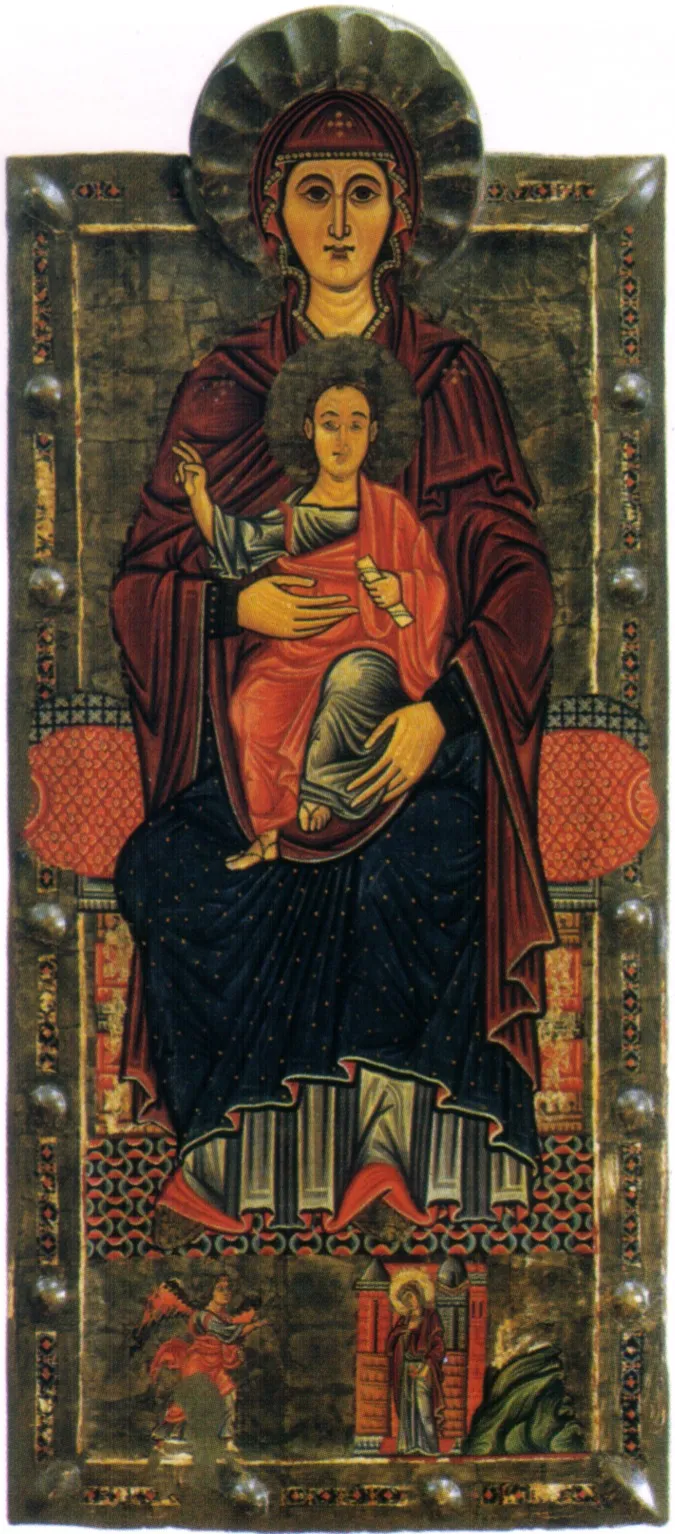
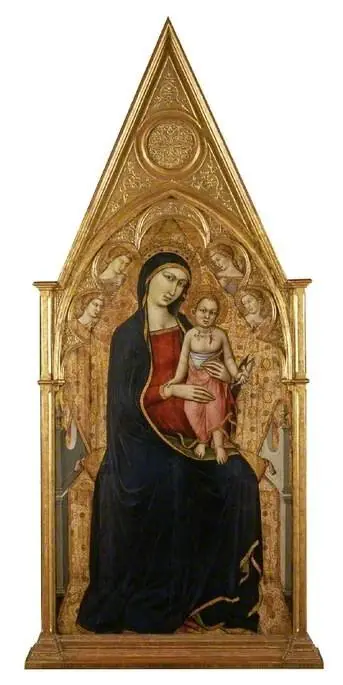
Virgin and Child enthroned; Annunciation is a tempera painting by the Byzantine icon painting artist Unknown. It dates from 1300 and is held in the collection of the Uffizi Gallery. The work depicts a seated Virgin holding the infant Christ on her lap, both framed by a gold‑leafed throne.
About this work
Subject & Meaning
The Virgin's head and halo project beyond the upper edge of the panel, a convention typical of the period, and the frontal pose derives from Byzantine models.
The panel unites two devotional subjects in a single composition. The upper register is devoted to the Madonna and Child, with the Virgin enthroned on a stylized seat composed of a red cushion, a flat bench, and a support, all decorated with fine geometric motifs in red, blue, and gold. She holds the Christ Child, who gives a blessing gesture, and her mantle is embroidered with three stars, an ancient symbol of divine grace bestowed upon Mary and a recollection of the Star of Bethlehem.
The Virgin's head and halo project beyond the upper edge of the panel, a convention typical of the period, and the frontal pose derives from Byzantine models.
The lower register depicts the Annunciation. The Angel advances toward Mary, who is shown humble and accepting against a stylized cityscape, while a jagged rock balances the composition on the right. The original silver ground, of which punched bosses and a projecting halo survive, reinforces the sacred character of the imagery.
Technique & Style
The work is executed in tempera on a wooden panel with a silvered ground, measuring 180 cm in height and 78 cm in width. The surface shows raised decorative elements such as an projecting aureole around Mary and a series of pearls along the frame’s edge. The composition places the Virgin on a flat, stylized throne composed of a red cushion, seat, and backrest adorned with geometric motifs in red, blue, and gold, while the Christ Child is depicted in a benedictory gesture.
The drapery of the Virgin’s mantle is rendered with layered folds that suggest anatomical depth, and three stars embroidered on the mantle symbolize divine grace. Below the central figures, the Annunciation scene shows the angel leaning toward Mary against a stylized city backdrop, balanced by a fractured rock on the right. The overall effect is defined by a shallow geometric depth, a decorative “flourishing” line, and a monochrome contour that compresses the drapery, reflecting Byzantine influence and early Florentine stylization.
History & Provenance
Attributed to the Master of Greve, this tempera panel is dated to the early 13th century, with specific estimates placing its creation between 1210 and 1215. The work derives its common name from the Oratory of Santa Maria del Casale near Greve in Chianti, where it was housed prior to entering the Uffizi Gallery. However, art historical analysis suggests it was originally commissioned for a more significant institution, likely the Vallombrosan Abbey of Montescalari following its 1212 renovation.
The painting underwent significant alterations in the 18th and 19th centuries when artists Ignazio Hugford and Tito Conti repainted the surface, drastically changing the original features. A restoration in 1986 removed these later additions, revealing the intact underlying layer save for minor losses. The panel eventually entered the Uffizi collection as a donation from its last private owner, Countess Ada Cafaro Leone.
The painting, known as the Madonna di Casale, is held in the Uffizi Gallery in Florence, specifically within the 13th-century gallery (Sala 1 "del Duecento"). It carries the inventory number 1890/9494. The work entered the museum's collection as a donation from its last private owner, Countess Ada Cafaro Leone.
Prior to its arrival at the Uffizi, the panel was located in the Oratory of Santa Maria del Casale near Greve in Chianti. Historically, the artwork was also exhibited in the hall of San Pier Scheraggio before being moved to its current location.
Context
The Virgin and Child enthroned with Annunciation, attributed to the Master of Greve, dates to the first half of the thirteenth century, perhaps circa 1210‑1215, and has been housed in the Uffizi’s Room A3 since its transfer from the oratory of Santa Maria del Casale near Greve in Chianti. Scholars such as Boskovits have proposed that it was originally commissioned for a more prominent church, possibly the Vallombrosan abbey of Montescalari. Subsequent overpainting by Ignazio Hugford (18th c.) and Tito Conti (19th c.) obscured the surface until a 1986 restoration revealed the original tempera layer, save for minor losses.
The work’s style links it to the Madonna di Rovezzano, offering insight into early Florentine Duecento painting, and it has been discussed in recent scholarship by Gloria Fossi (2004) and Angelo Tartuferi (2007).
Overview
The work depicts a seated Virgin holding the infant Christ on her lap, both framed by a gold‑leafed throne. The Virgin is clothed in a deep blue mantle topped with a red cloak, while the child wears a red tunic and grasps a small object. Two diminutive figures stand at the foot of the throne, and a patterned floor supports the scene, which is set against a gold background.
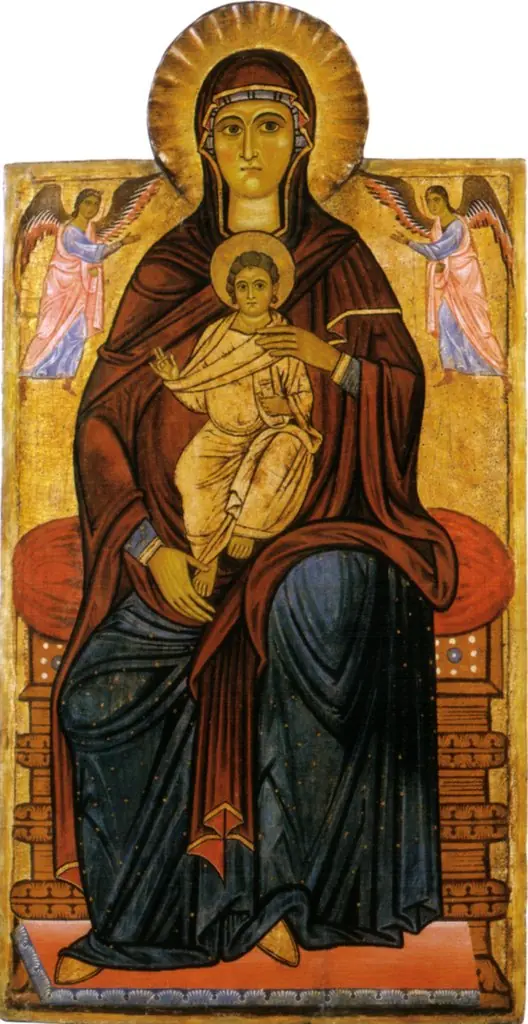
Artist & collection









- Madonna with Child enthroned with two Angels
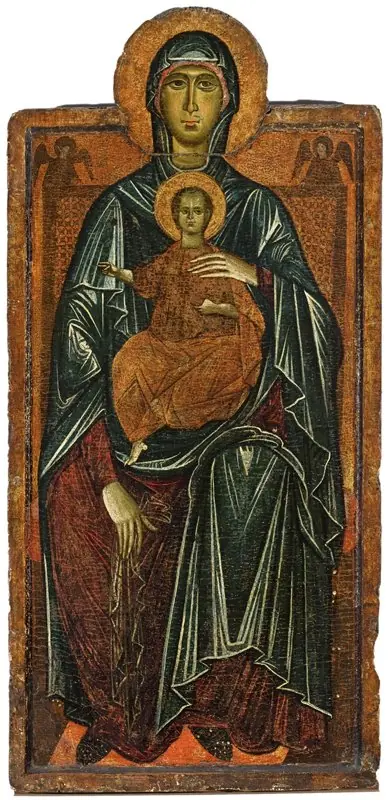 Maestà attributed to the Master of Bigallo
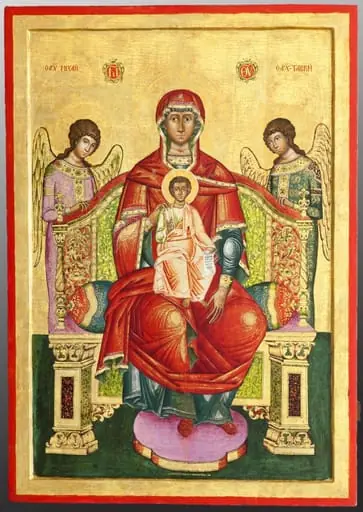 Maica Domnului cu Pruncul - Stăpâna Îngerilor
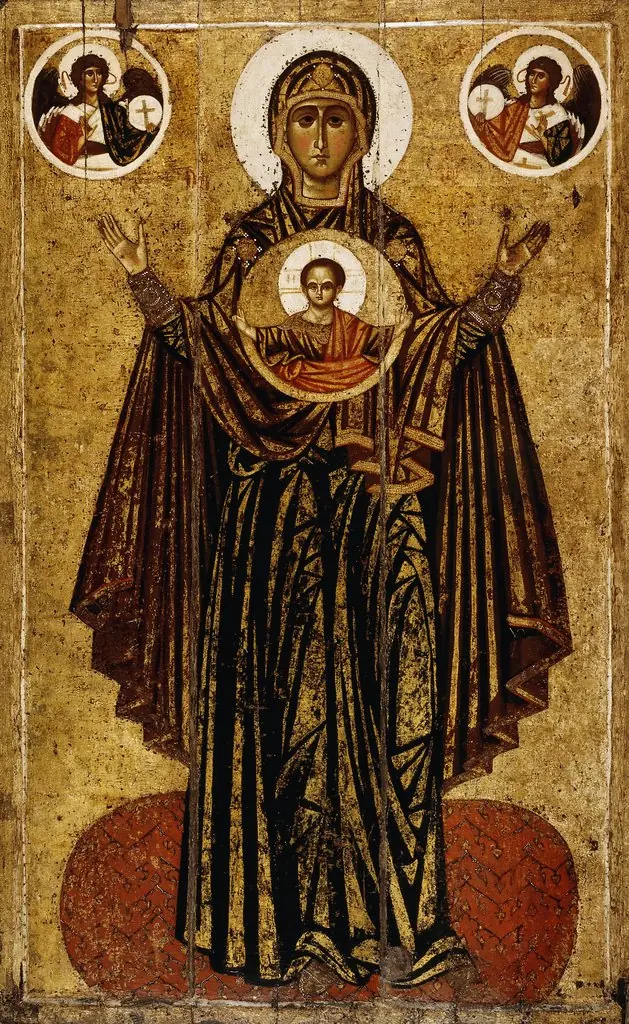 Our Lady of the Great Panagiya
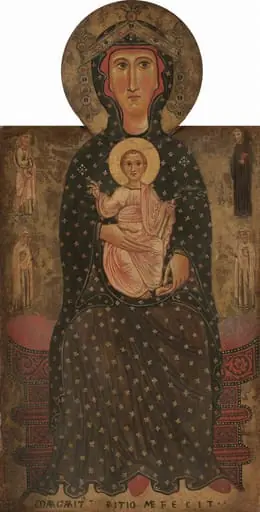 Madonna and Child Enthroned with Four Saints
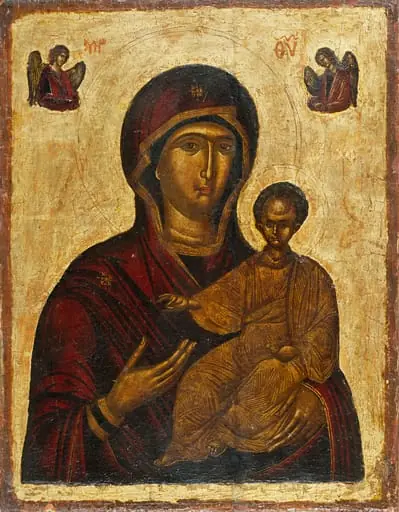 Jumalanäiti, Hodigitria - Tiennäyttäjä, bysanttilainen ikoni
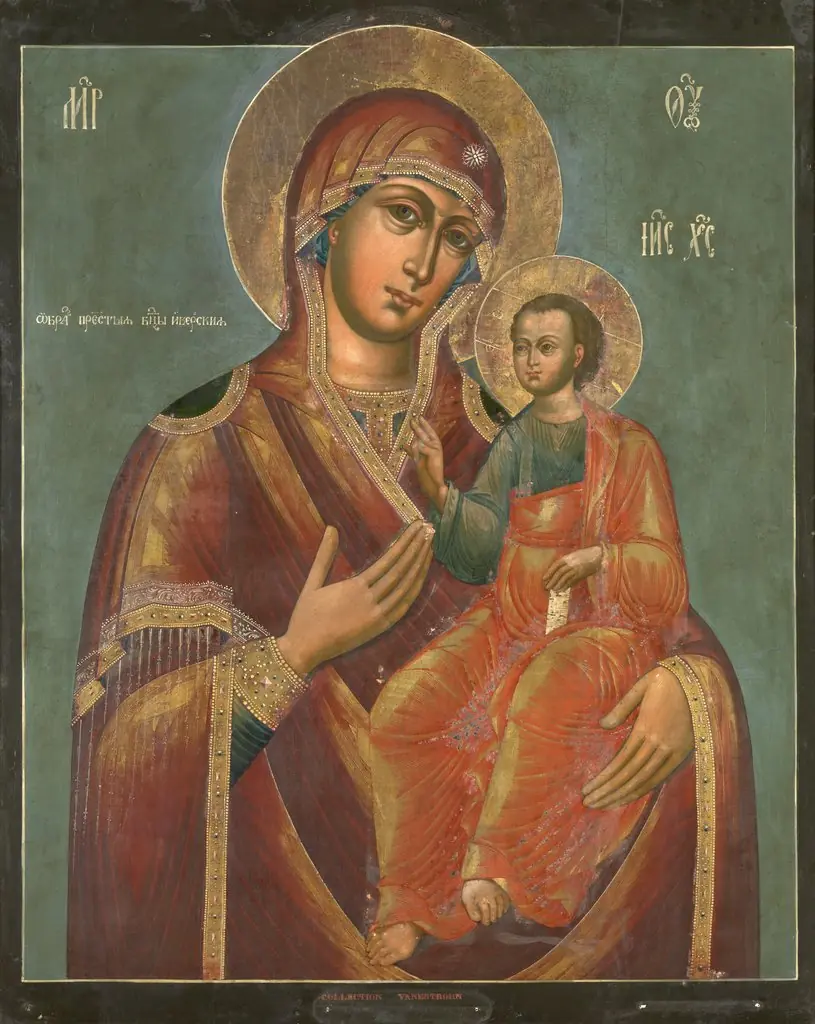 Mother of God from Iviron
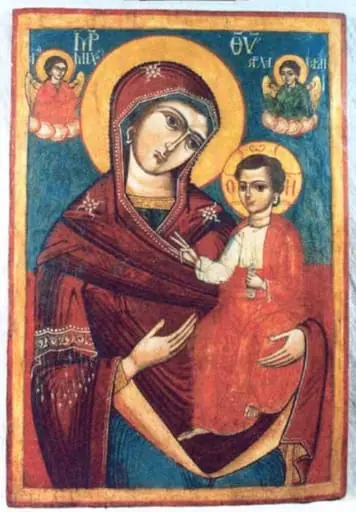 Maica cu Pruncul-Axionița
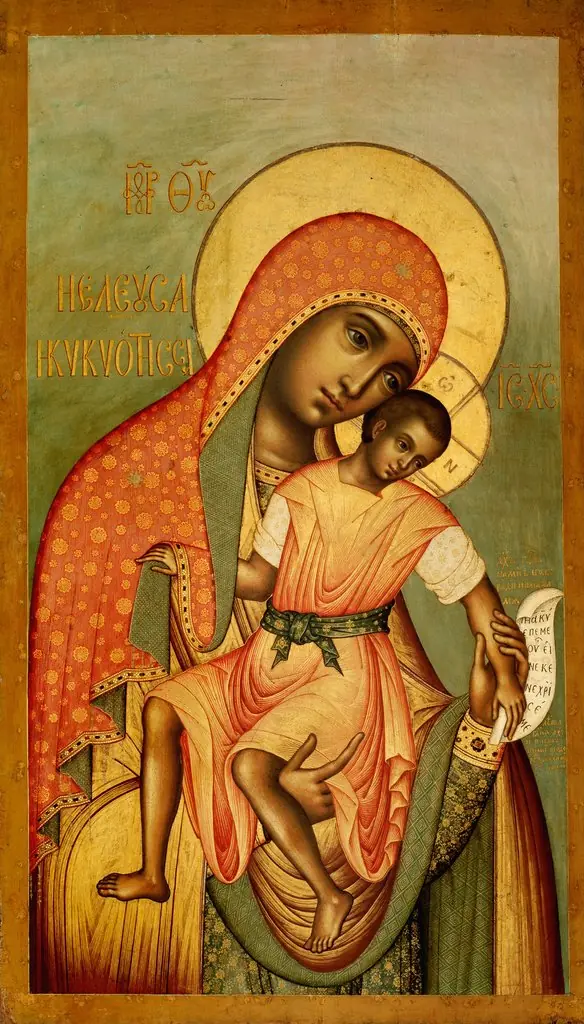 Virgin Eleousa of Kykkos
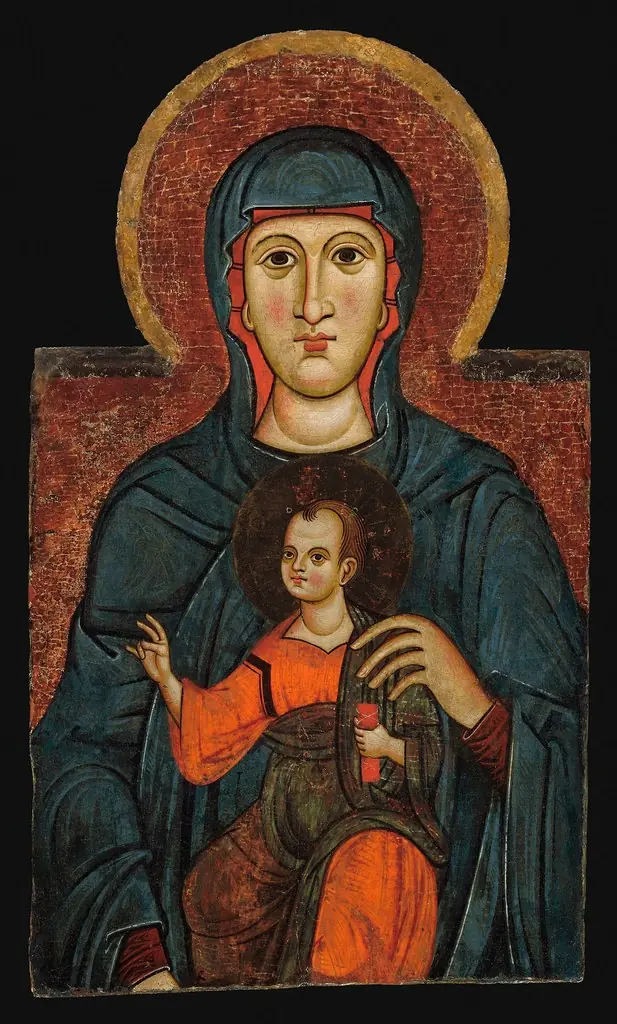 Virgin and Child
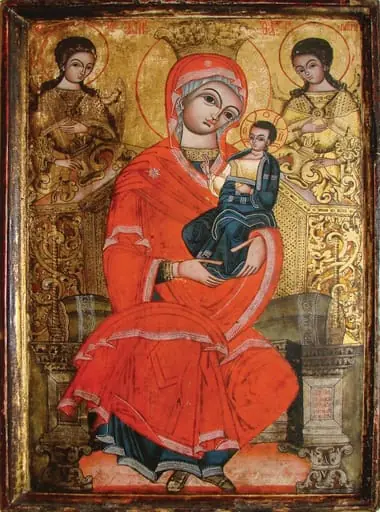 Maica Domnului cu Pruncul
 Virgin and Child enthroned