Artwork
Vishnu and Lakshmi
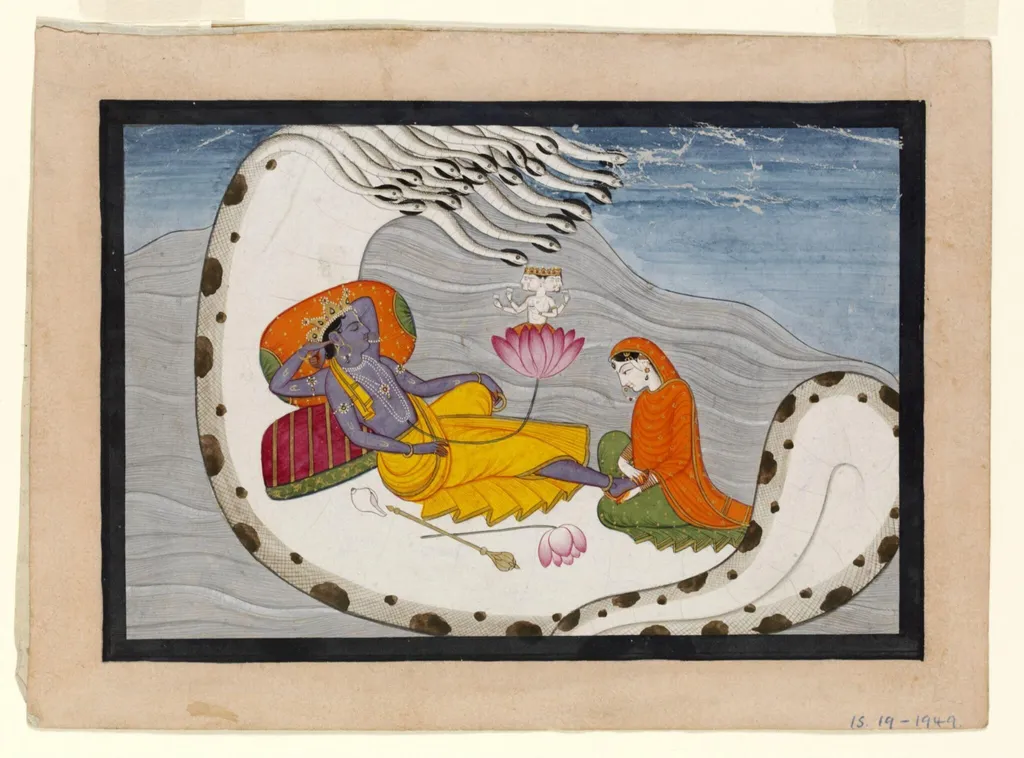
Vishnu and Lakshmi is a paint painting by the Impressionist artist Unknown. It dates from 1870 and is held in the collection of the Victoria and Albert Museum.
About this work
Overview
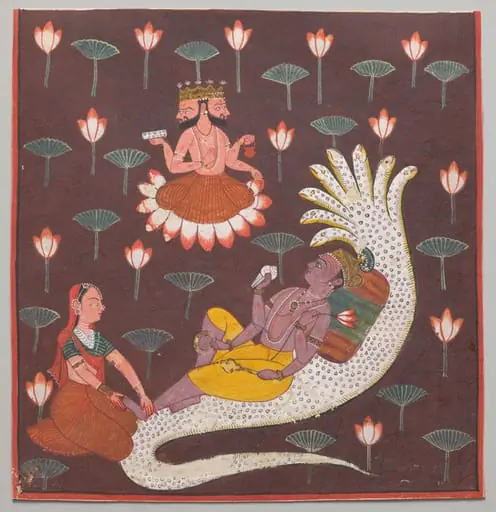
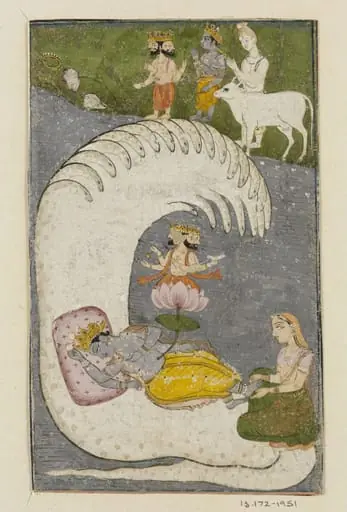
This painting depicts a pivotal moment in Hindu mythology, showcasing the god Vishnu in a state of repose between the destruction and creation of a universe.
Subject & Meaning
Vishnu reclines on the serpent Shesha, afloat on primordial waters, accompanied by his consort Lakshmi. A lotus stalk emerges from his navel, symbolizing the forthcoming rebirth of the universe through Brahma, the creator god.
Technique & Style
The artwork employs chiaroscuro, a technique utilizing contrasts of light and dark to create depth and volume, adding to the serene yet potent atmosphere of the scene.
Context
The painting illustrates a quiet, contemplative moment within a larger cosmological narrative, reflecting the cyclical nature of creation and destruction in Hindu thought.
Artist & collection