Artwork
Kaliya
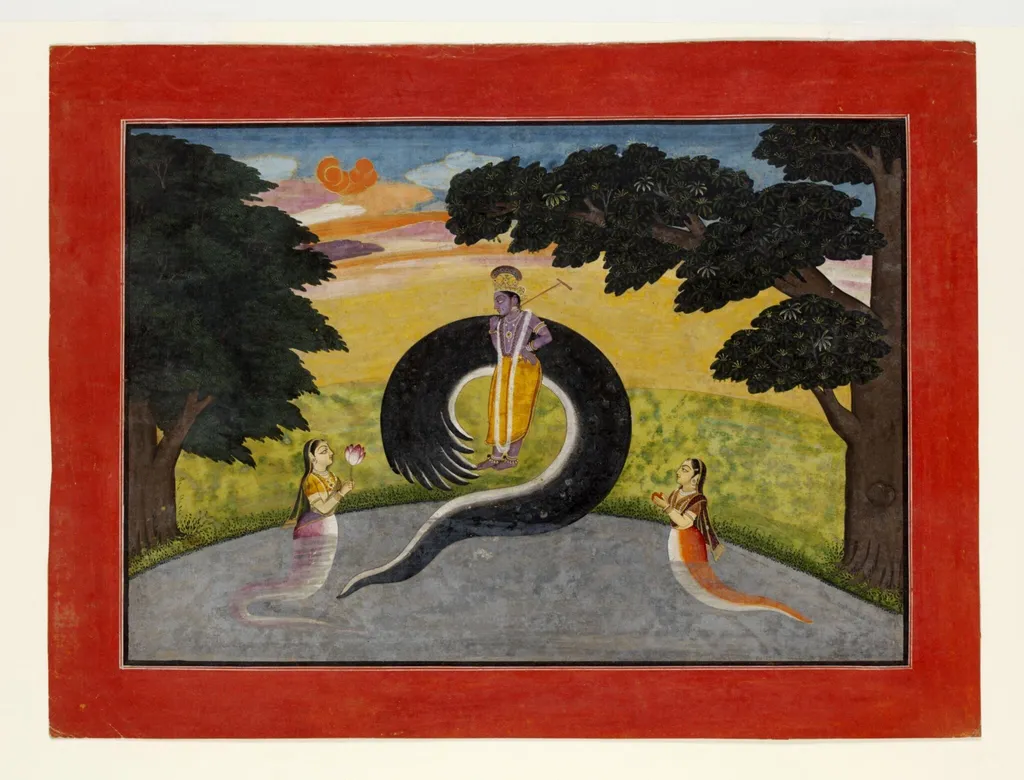
Kaliya is a paint painting by the Rococo painting artist Unknown. It dates from 1760 and is held in the collection of the Victoria and Albert Museum.
About this work
Overview
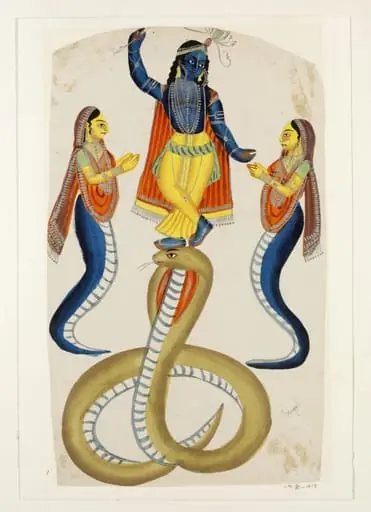
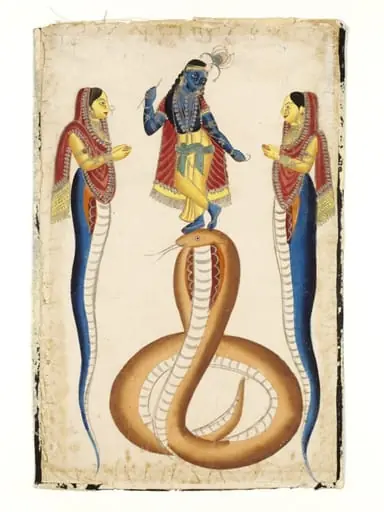
The work forms part of a visual series interpreting the tenth book of the Sanskrit Bhagavata Purana, which recounts the deeds of the deity Krishna. In this scene Krishna is shown standing upon the coiled heads of the multi‑headed serpent Kaliya, whose toxic presence had rendered the river Kalindi lethal to all living beings.
Subject & Meaning
The narrative depicts Krishna’s triumph over Kaliya, a massive serpent whose venom had poisoned the river and its surrounding air. By dancing atop the creature’s heads, Krishna subdues the beast without destroying it, symbolising the taming of destructive forces through divine grace. The serpent’s consorts are rendered in a gesture of reverence, underscoring the restorative balance achieved.
Technique & Style
The artist employs a vivid palette and crisp linear contours to convey kinetic energy. Bright reds accentuate the fluttering drapery behind Krishna’s legs, while the serpents’ tongues are rendered with sharp, flickering strokes. The composition’s dynamic diagonals and overlapping forms create a sense of motion, emphasizing the dramatic confrontation.
History & Provenance
Created as an illustration for the Bhagavata Purana, the painting reflects a tradition of devotional art that visualizes Hindu mythic episodes. Though the specific creator is not recorded, the work aligns with the aesthetic conventions of Indian manuscript illustration, and it has been catalogued alongside comparable Krishna narratives in major collections such as the Victoria and Albert Museum.
Artist & collection









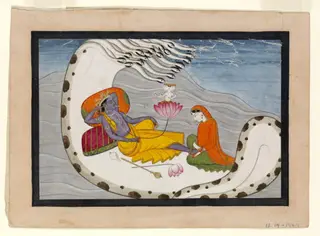
 Vishnu and Lakshmi
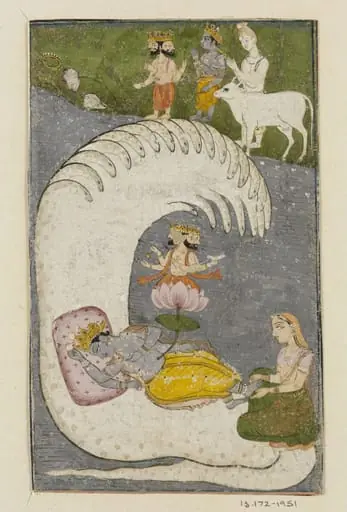
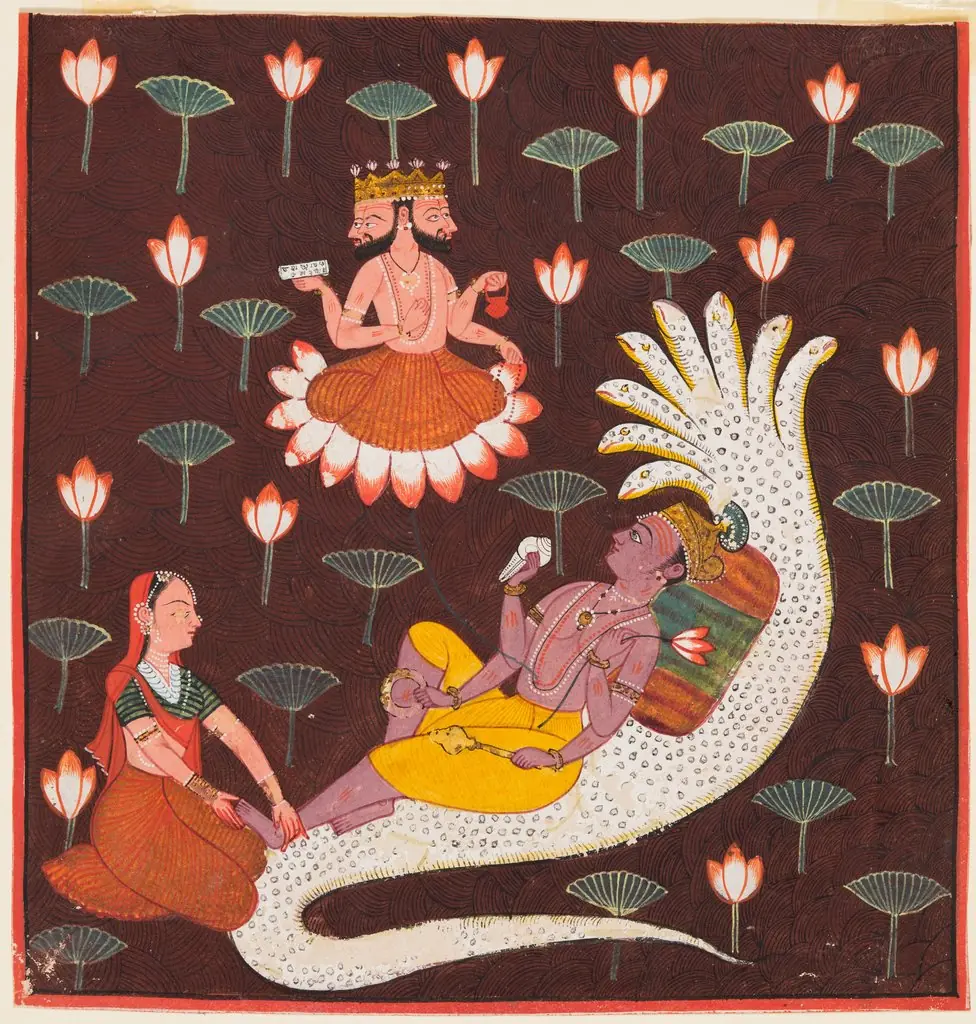 Vishnu on Ananta, the Endless Serpent
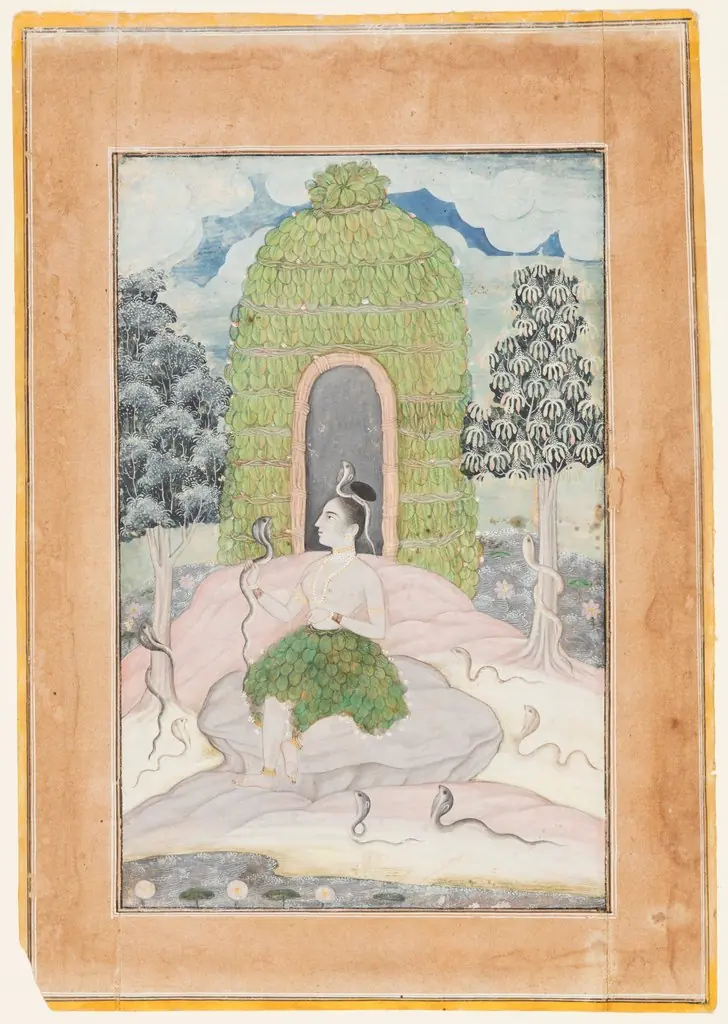 Ascetic Princess with Snakes in a Wilderness: Asavari Ragini, from a Ragamala
 Krishna
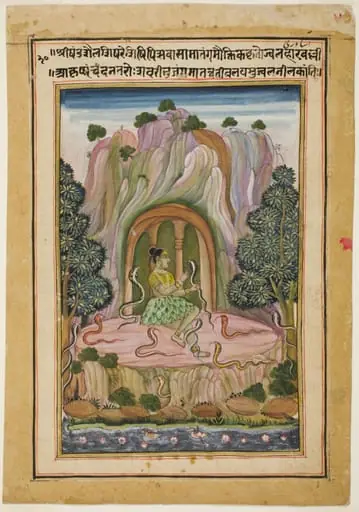 Asavari Ragini, page from a Garland of Musical Ragas (Ragamala) Set
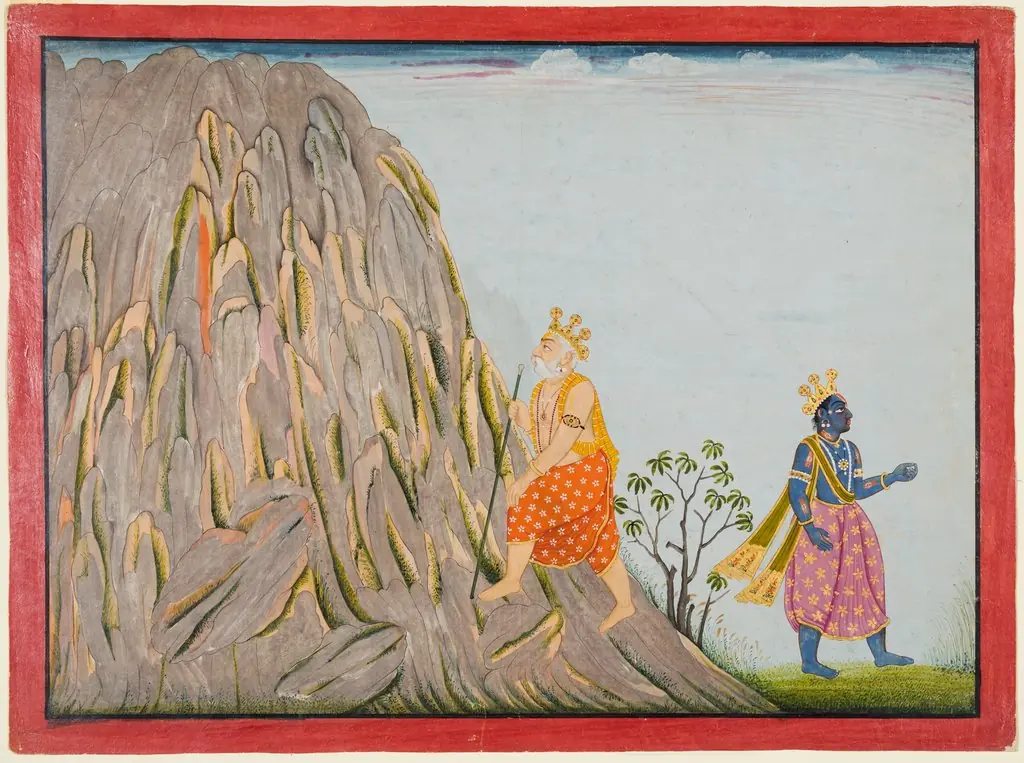 King Muchukunda Enters the Realm of Mount Gandhamadana to Attain Salvation, from the “Fifth Basohli Bhagavata Purana”
 Krishna