Artwork
Wisdom King of Great Awe-inspiring Power (Daiitoku Myōō)
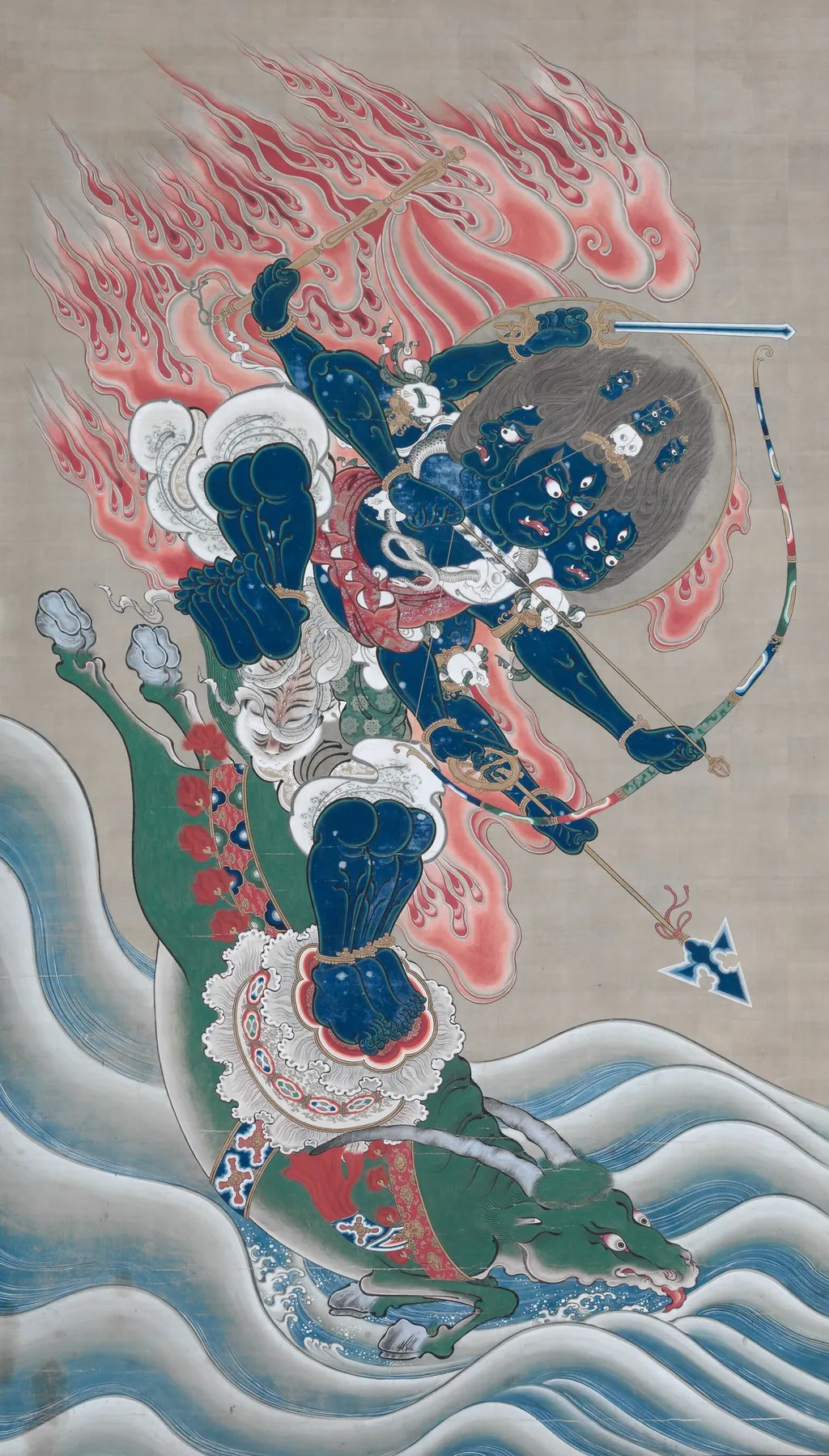
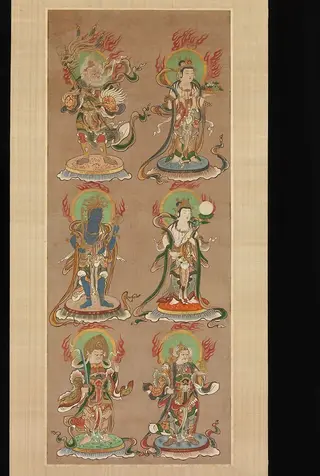
Wisdom King of Great Awe-inspiring Power (Daiitoku Myōō) is an unspecified painting by Unknown. It dates from 1825 and is held in the collection of the Cleveland Museum of Art. The work titled Wisdom King of Great Awe‑inspiring Power (Daiitoku Myōō) is a painted depiction of a mythic deity.
About this work
Overview
The work titled Wisdom King of Great Awe‑inspiring Power (Daiitoku Myōō) is a painted depiction of a mythic deity. The composition centers on a formidable figure with a fierce countenance, multiple arms, and an elaborate, multicolored costume. Surrounding the figure are dynamic clouds and flames that heighten the sense of movement and intensity.
Subject & Meaning
The central character is a Buddhist Wisdom King, a protective deity often shown with numerous arms each bearing symbolic weapons such as a sword and a bow. The multiplicity of limbs and the aggressive posture convey the deity’s role as a fierce guardian who subdues ignorance and evil.
Technique & Style
The painting employs vivid pigments, predominantly reds, greens, and blues, to delineate the layered robes, while the figure’s dark mane provides contrast. Brushwork renders swirling clouds and flickering flames, creating a storm‑like atmosphere that emphasizes the deity’s power. The overall visual language aligns with traditional East Asian iconography for wrathful deities.
History & Provenance
The piece is catalogued as a painting, though specific details about its creation date, artist, or original ownership are not provided in the source material. Its current location is not indicated, but references suggest it may be part of a collection accessible through institutions such as the Cleveland Museum of Art.
Context
In Buddhist art, Wisdom Kings (Myōō) serve as fierce protectors of the Dharma, often depicted in dramatic settings that contrast light and darkness. The inclusion of weaponry and elemental forces reflects doctrinal themes of conquering delusion through forceful compassion.
Legacy
Representations of Daiitoku Myōō continue to inform scholarly understanding of esoteric Buddhist visual culture, illustrating how artists combined narrative symbolism with striking color palettes to convey complex theological ideas.
Artist & collection









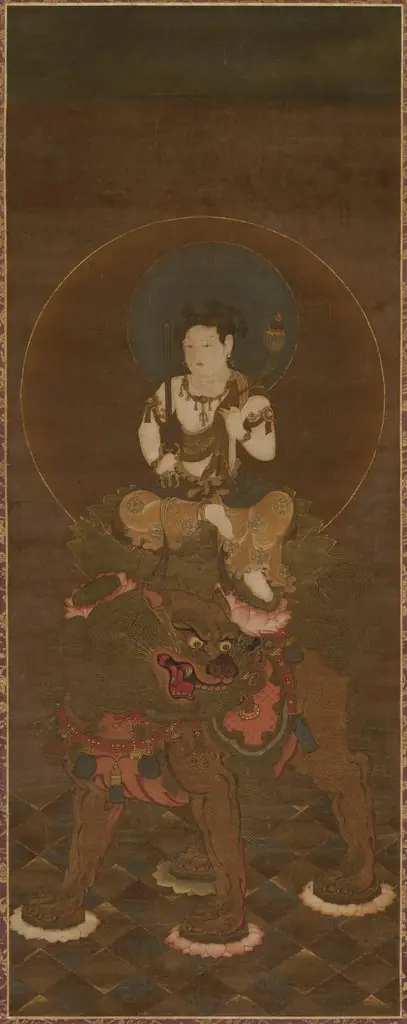 Monju with Five Hair Knots
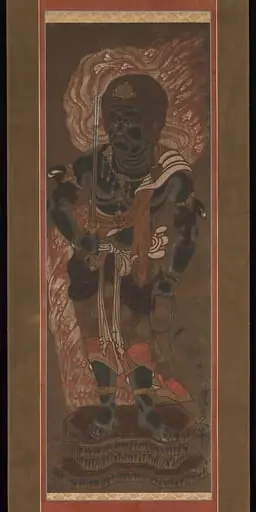 龍湫周沢写 不動明王二童子像|Fudō Myōō and Two Attendants
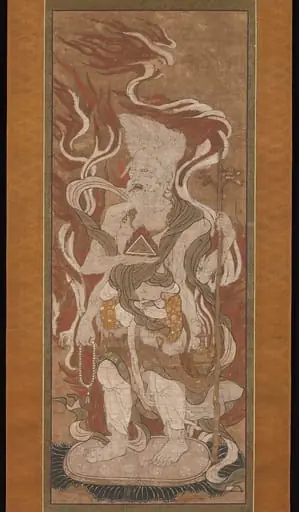 十二天像(火天)|One of the Twelve Devas: Katen
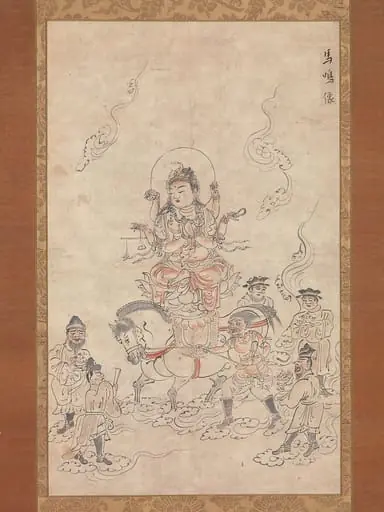 馬鳴菩薩図像|Iconographic Drawing of the Bodhisattva Memyō (Ashvaghosha)
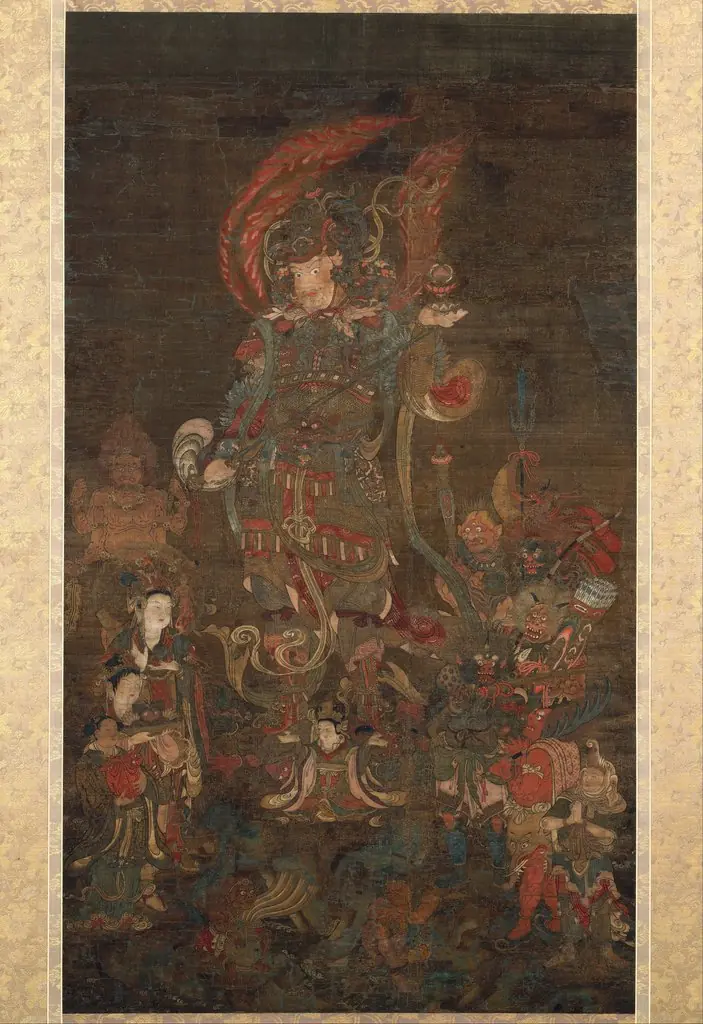 Bishamonten, the Guardian of the North, with his Retinue
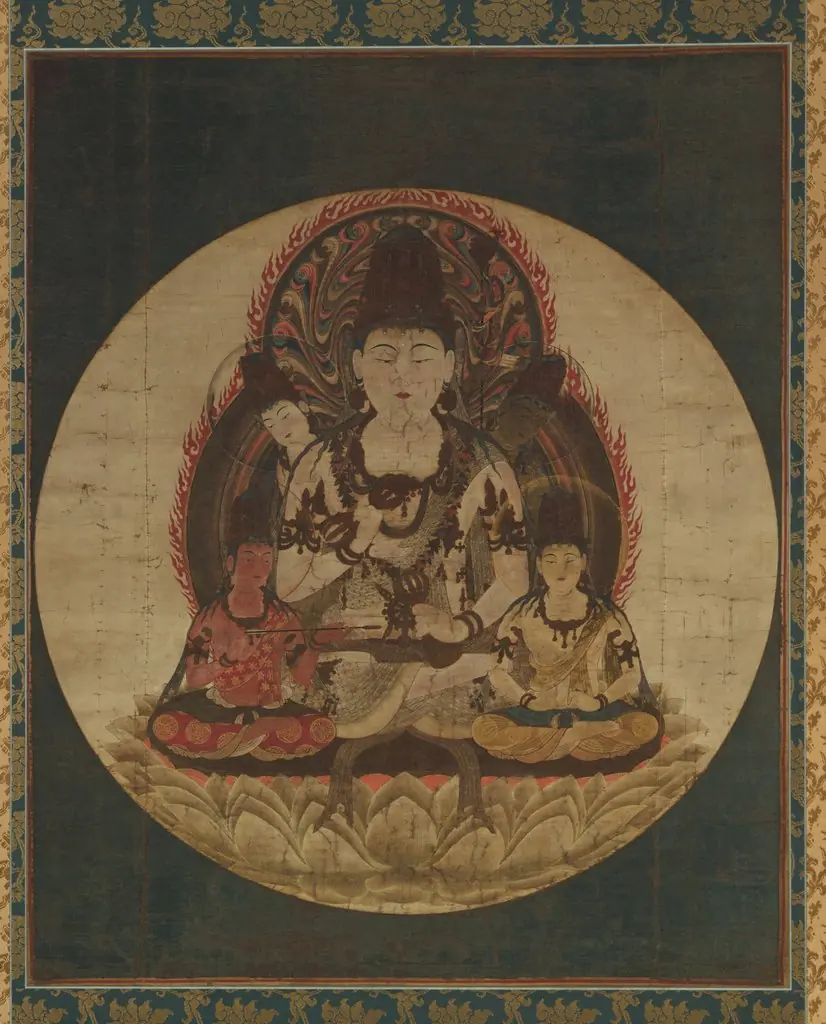 The Secret Five Bodhisattvas (Gohimitsu Bosatsu)
 十二天像|Twelve Deva Kings (Jūniten)