Artwork
十二天像(火天)|One of the Twelve Devas: Katen
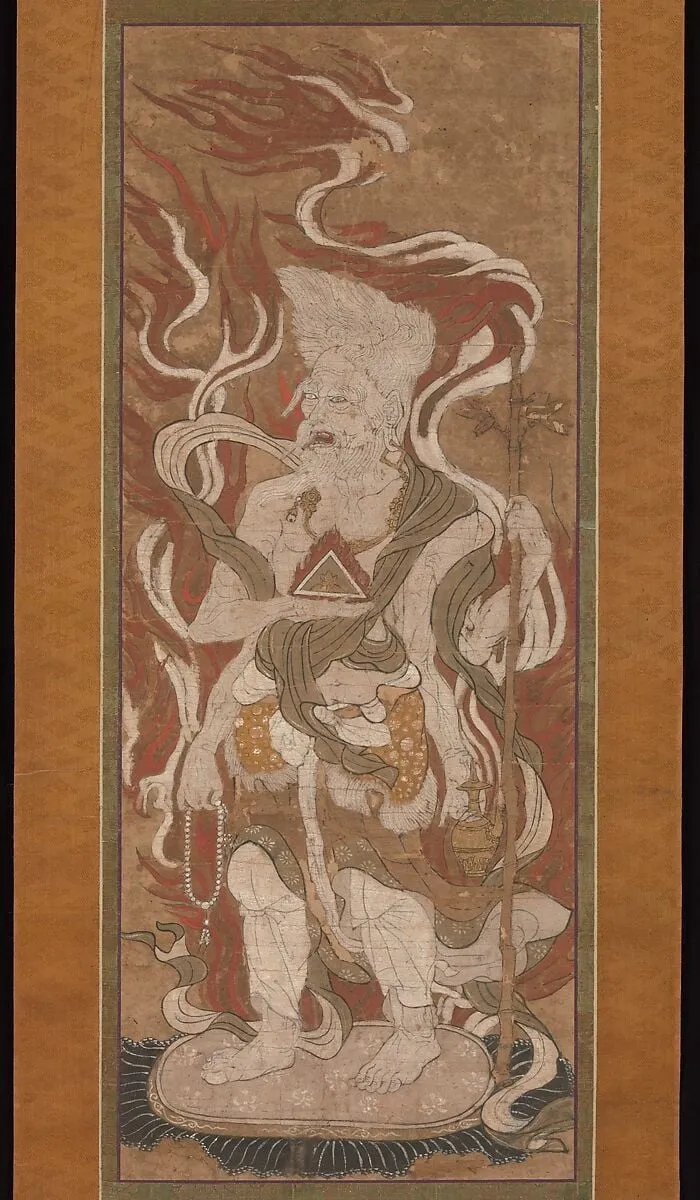
十二天像(火天)|One of the Twelve Devas: Katen is a paint painting. It dates from 1346 and is held in the collection of the Metropolitan Museum of Art. The work is a hand‑colored paper print mounted as a hanging scroll, titled “One of the Twelve Devas: Katen.
About this work
Subject & Meaning
The painting depicts Katen (Fire Deva), one of the Twelve Devas, a group of protective deities often enshrined in Japanese Buddhist contexts.
The painting depicts Katen (Fire Deva), one of the Twelve Devas, a group of protective deities often enshrined in Japanese Buddhist contexts. Katen is typically portrayed in warrior attire, brandishing a flaming sword and a jewel, symbols of authority and wisdom. The fiery nimbus surrounding the figure underscores the association with fire and divine power.
In Esoteric Buddhist iconography, the Twelve Devas function as guardians of the directions and protectors of the Dharma, with each deity linked to a specific element and cosmic function.
The work’s subject reflects the integration of indigenous Shinto kami traditions with Buddhist protective practices, aligning the Deva’s attributes with local religious needs in fourteenth-century Japan.
Technique & Style
Created in 1346, this work is a hanging scroll executed as a hand-colored print on paper. The piece measures 76.5 cm in height and 32.1 cm in width. As a religious painting of Japanese origin, the artist remains anonymous.
The formal presentation relies on the printed medium enhanced with applied color, characteristic of specific devotional imagery from the period.
History & Provenance
Created in Japan in 1346, this hanging scroll depicting Katen (the Fire Deva) was produced by an anonymous artist. The work is executed as a hand-colored print on paper and serves as one of the Twelve Devas within a religious context. While the specific circumstances of its original commission and the identity of the patron remain unrecorded in available documentation, the piece has been preserved as part of the collection at the Metropolitan Museum of Art. The museum currently houses the scroll, which measures 76.5 cm in height and 32.1 cm in width.
The hanging scroll depicting One of the Twelve Devas: Katen is held in the collection of the Metropolitan Museum of Art in New York. It entered the museum's collection in 1943 under accession number 43.151. The work was exhibited in the museum's 1944 exhibition "Japanese Religious Paintings" and again in the 1975 exhibition "Japanese Art of the Edo Period".
Overview
The work is a hand‑colored paper print mounted as a hanging scroll, titled “One of the Twelve Devas: Katen.” It portrays a bearded figure in a brown robe, seated on a circular mat with his right leg crossed over his left, holding a staff in his right hand and a rosary in his left. A triangular motif appears on his chest, and the background is composed of red and white patterned fields.
Context
In Japanese Buddhist visual culture, the twelve devas serve as protectors of the Dharma, each associated with specific virtues and iconographic attributes. Katen’s representation aligns with other contemporary depictions that combine didactic symbolism with aesthetic restraint, intended for contemplation within a domestic or temple setting.
Artist & collection

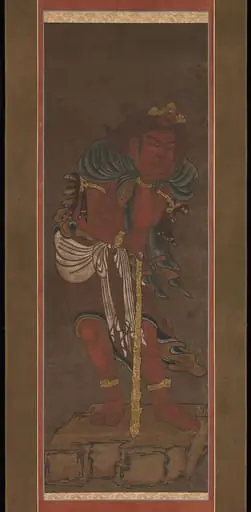 龍湫周沢写 不動明王二童子像|Fudō Myōō and Two Attendants
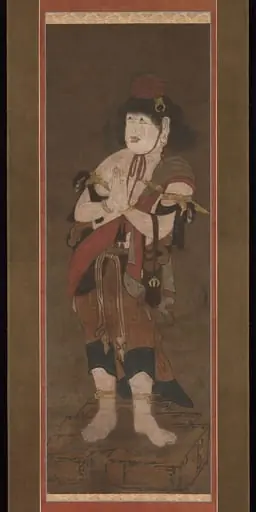 龍湫周沢写 不動明王二童子像|Fudō Myōō and Two Attendants
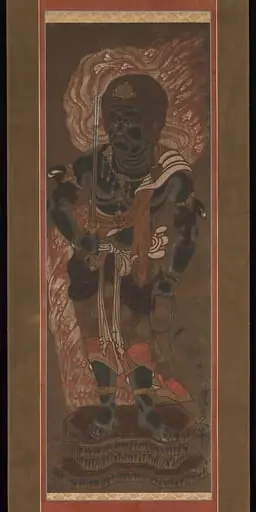 龍湫周沢写 不動明王二童子像|Fudō Myōō and Two Attendants
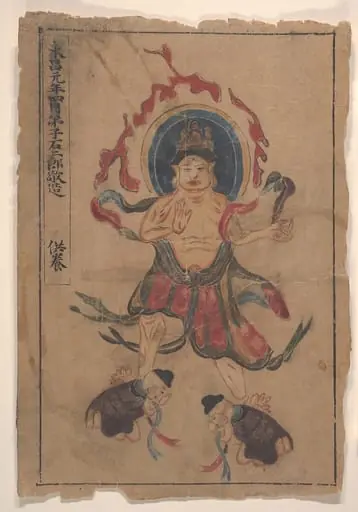 唐(?) 佚名 佛畫八幅 散頁|Eight Buddhist Paintings
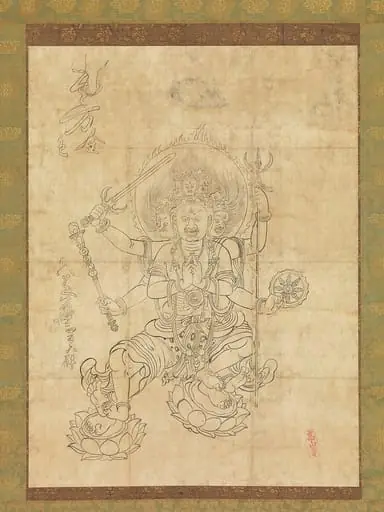 大威徳明王|Daiitoku Myōō
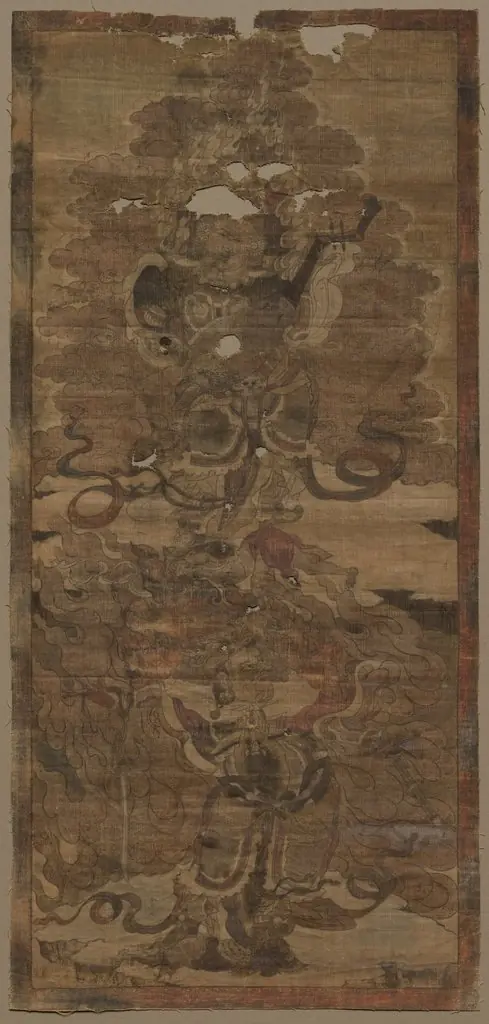 Guardian Kings: Dhrtarastra and Virupaksa
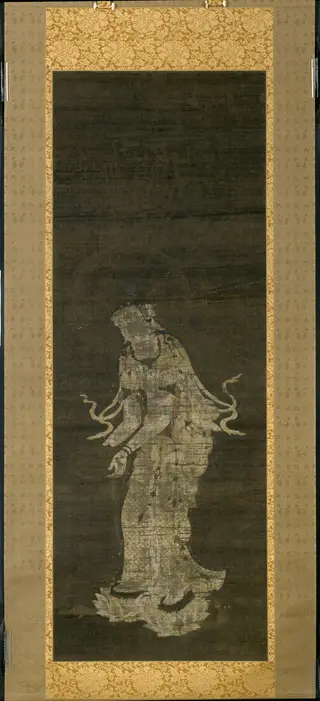 The Bodhisattva Kannon, from the triptych Approach of the Amida Trinity
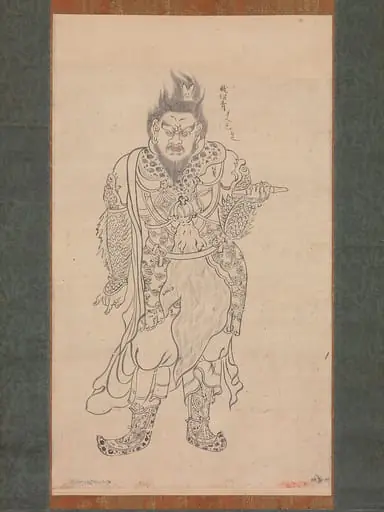 安底羅大将図像(付.裏書)|Anchira-taisho Jochi
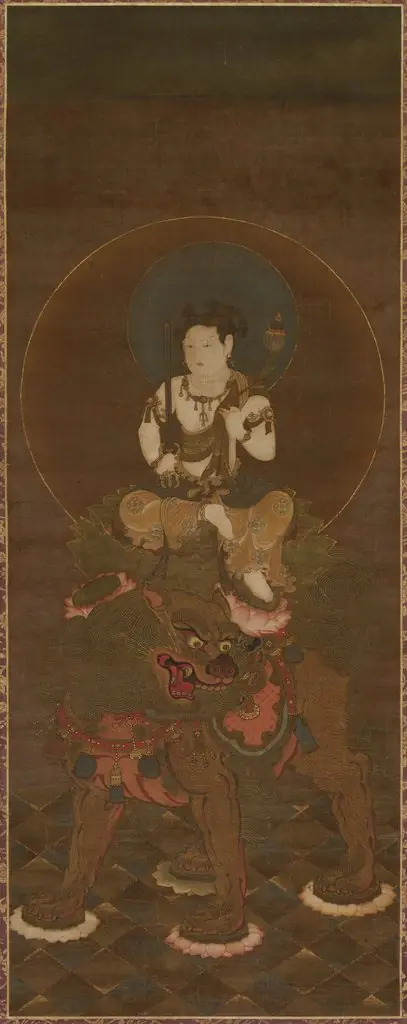 Monju with Five Hair Knots
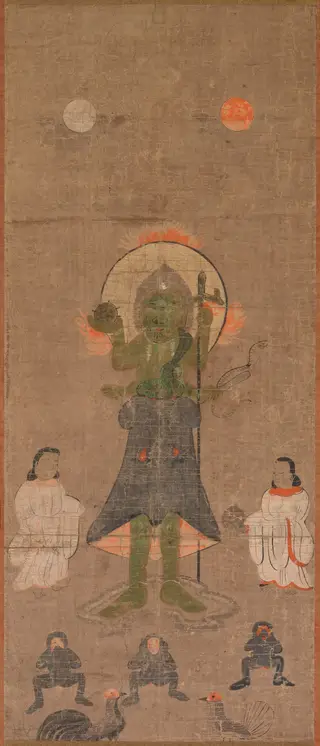 Shomen Kongo: The Blue-Faced Kongo