Artwork
Mars Resting
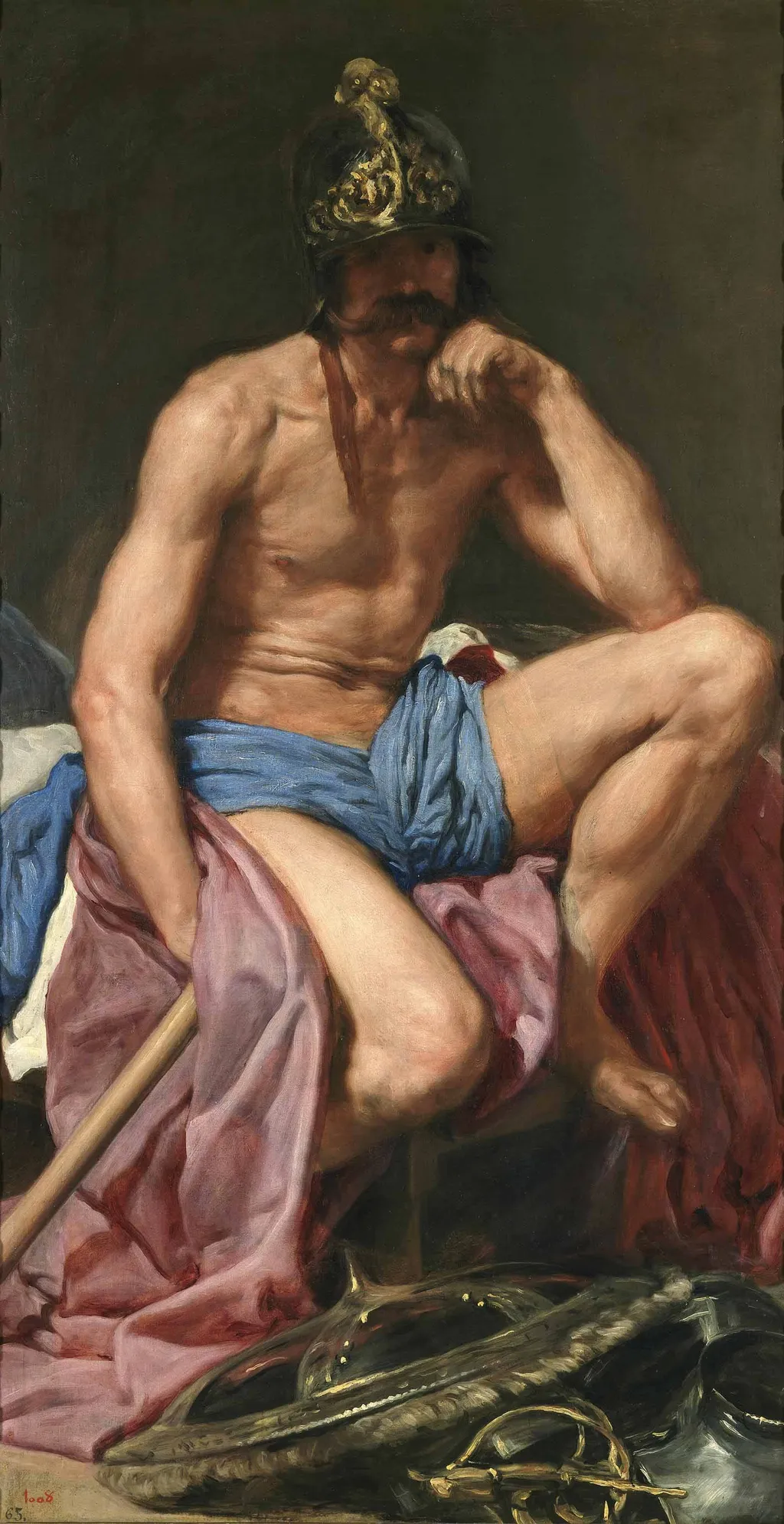
Mars Resting is an oil painting by the Early Baroque Italian artist Diego Velázquez. It dates from 1640 and is held in the collection of the Museo del Prado.
About this work
Subject & Meaning
Velázquez renders the god with sagging skin and a weary expression that conveys melancholy and a vanitas theme, suggesting the decline of martial vigor.
The painting presents Mars as a nude, contemplative deity, his only clothing a blue cloth around his waist and a red mantle, while a helmet, shield, sword and discarded armor lie at his feet. Velázquez renders the god with sagging skin and a weary expression that conveys melancholy and a vanitas theme, suggesting the decline of martial vigor. The composition echoes classical models such as the Ludovisi Ares and Michelangelo’s Il Pensieroso, re‑interpreted satirically to comment on contemporary Spanish military fortunes.
Technique & Style
Mars Resting is an oil painting on canvas, executed by Diego Velázquez around 1639–1640. The work measures approximately 179 by 95 cm, though some sources cite dimensions of 181 by 99 cm. Velázquez employs a fluid technique characterized by a loaded brush and broad, insistent strokes that define the figure's modeling and the morbidity of the flesh without precise linear drawing. This approach creates a vibrating effect and allows for visible changes in the composition, such as the initial larger blue drapery.
The color palette contrasts vivid reds and blues, moderating warm tones with cold ones in a manner influenced by French and Venetian traditions like Veronese and El Greco. The handling of light utilizes chiaroscuro against a dark background to enhance depth, while the hands are left deliberately unfinished to suggest movement or contemplation. The discarded armor and helmet are rendered with rapid brushwork to capture their metallic luster.
History & Provenance
Mars Resting has been held at the Museo del Prado in Madrid since 1827, where it remains in the collection today. The painting was originally produced for the Torre de la Parada, a hunting lodge near El Pardo, where it was installed around 1642. It was subsequently transferred to the Royal Palace of Madrid before 1772 and was housed by the Real Academia de Bellas Artes de San Fernando from 1816 to 1827, before entering the Prado.
Wikidata records the painting as formerly owned by Ferdinand VII of Spain and lists its exhibition history as including "The Golden Century: The Age of Velázquez."
Context
Mars Resting occupies a distinctive place within Diego Velázquez's mythological output of the late 1630s, painted between 1639 and 1640 for the Torre de la Parada alongside Menippus and Aesop, works with which it shares technique and provenance. The painting was commissioned in the context of a decorative program that had filled the hunting lodge between 1635 and 1638 with mythological and hunting scenes by Rubens, Frans Snyders, and Cornelis de Vos.
Scholarly interpretation has long centered on its classical models. The figure derives from the Hellenistic Ludovisi Ares, once attributed to Scopas, and from Michelangelo's Il Pensieroso for the Medici tombs in the Basilica of San Lorenzo, both reinterpreted by Velázquez in a satirical, humanized register. For Charles de Tolnay, the work carries a vanitas motif, presenting Mars in saturnine melancholy meditating on the vanity of his victories.
Other scholars have proposed a contemporary political reading, suggesting the god's reflection alludes to the decline of the Spanish Tercios of Flanders following their defeat at Rocroi, though this interpretation is contested as potentially damaging to Velázquez's own aspirations for ennoblement and his loyalty to Philip IV.
The painting was included in the exhibition The Golden Century: The Age of Velázquez and is now held by the Museo del Prado.
Legacy
Velázquez’s Mars Resting entered the Prado’s holdings in 1827 after passing through the Royal Palace and the Academy of San Fernando, anchoring its place in Spain’s national collection. By the mid-nineteenth century, the work was already noted in catalogues as a singular reinterpretation of classical Mars, distinguished by its satirical tone and humanizing treatment of the war god. Twentieth-century criticism, including Charles de Tolnay’s analysis, emphasized its vanitas resonance and possible commentary on the faltering Spanish army after the Battle of Rocroi, linking the deity’s decrepitude to contemporary military decline.
The painting’s ironic fusion of mythological grandeur with prosaic fatigue has continued to shape its reputation as a masterful example of Baroque irony, cited in surveys of Velázquez’s mythologies and in studies of his technical bravura in handling paint and light.
Overview
Mars Resting, an oil painting by Diego Velázquez, was completed around 1639–1640. This work, now housed in the Prado Museum, depicts the Roman god of war in an unexpected moment of repose. The artist captures a figure of strength in a state of quiet introspection, contrasting his martial identity with a relaxed, pensive demeanor. It is a notable example of Velázquez's ability to imbue mythological subjects with psychological depth.
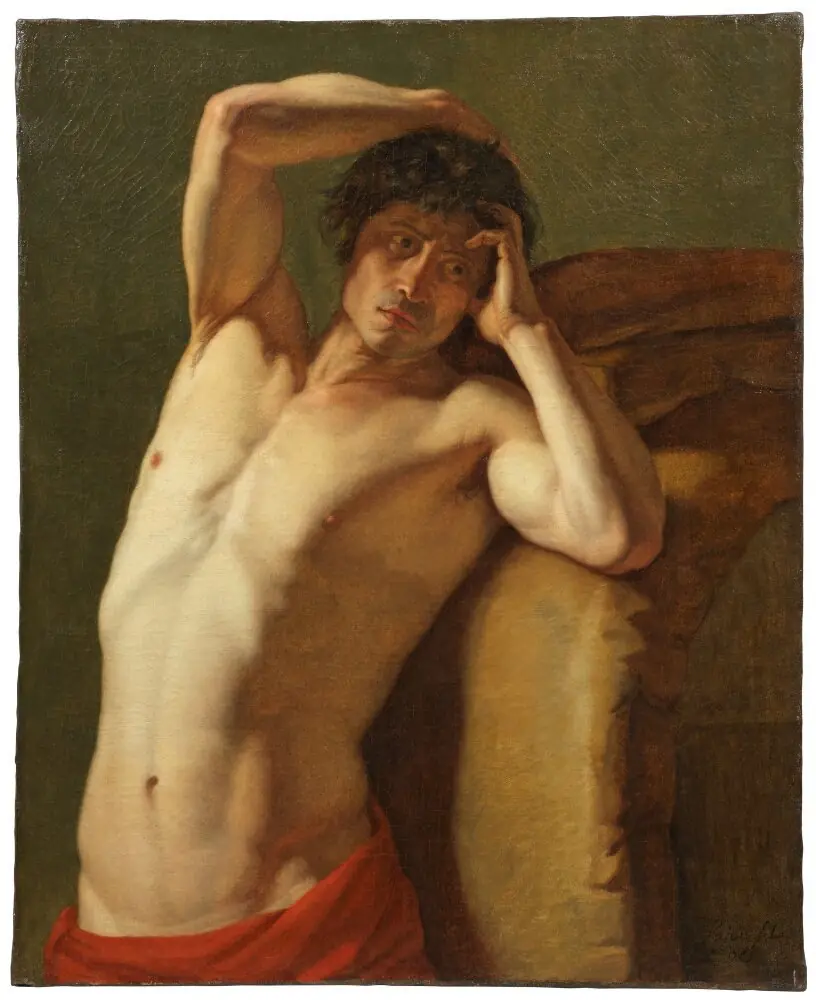
Artist & collection
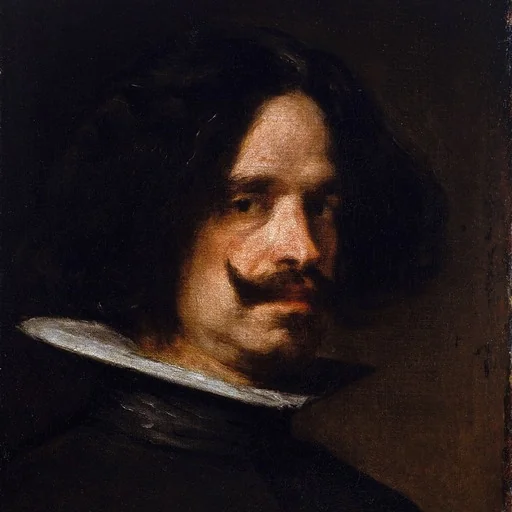
Artist
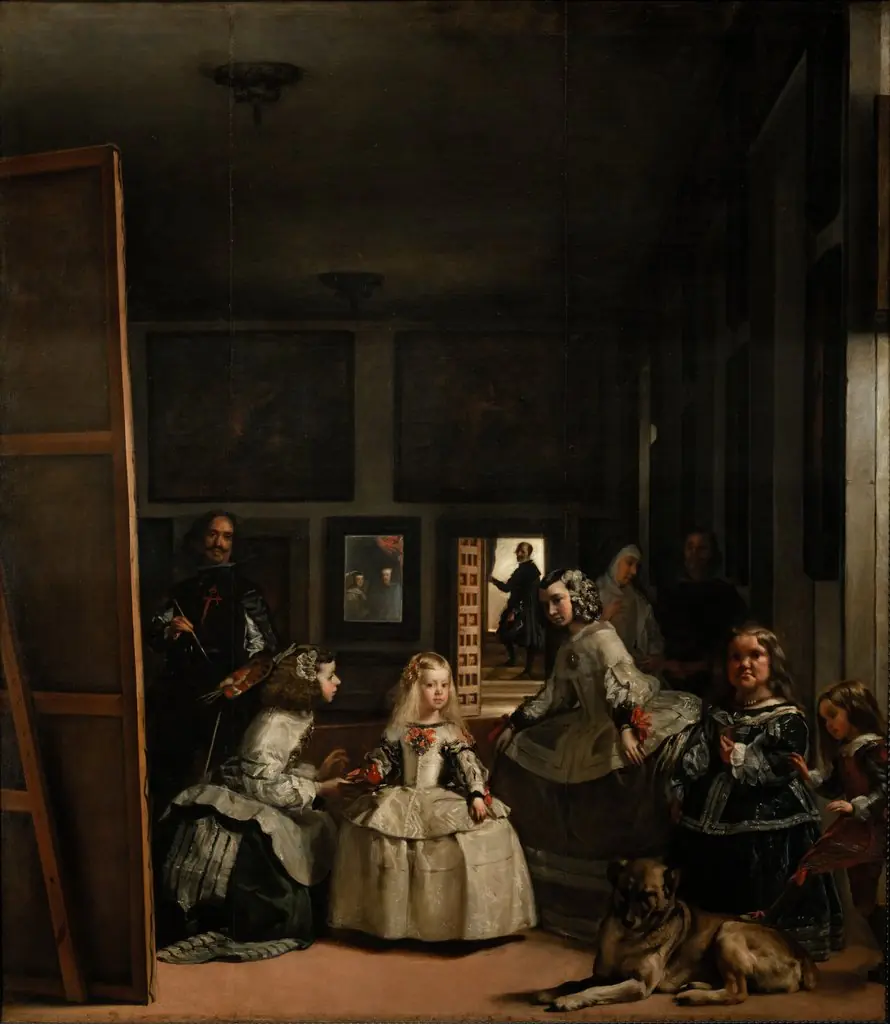
Diego Rodríguez de Silva y Velázquez was a Spanish Baroque painter, the leading artist in the court of King Philip IV of Spain and Portugal, and of the Spanish Golden Age.