Artwork
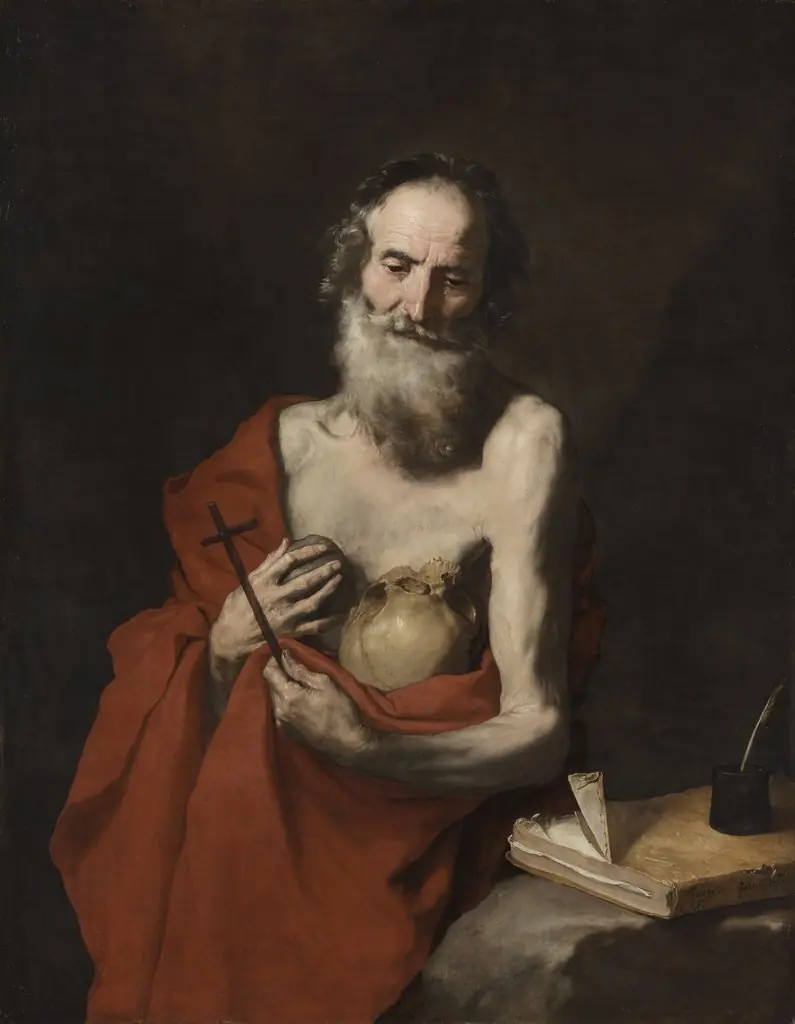
San Jerónimo penitente
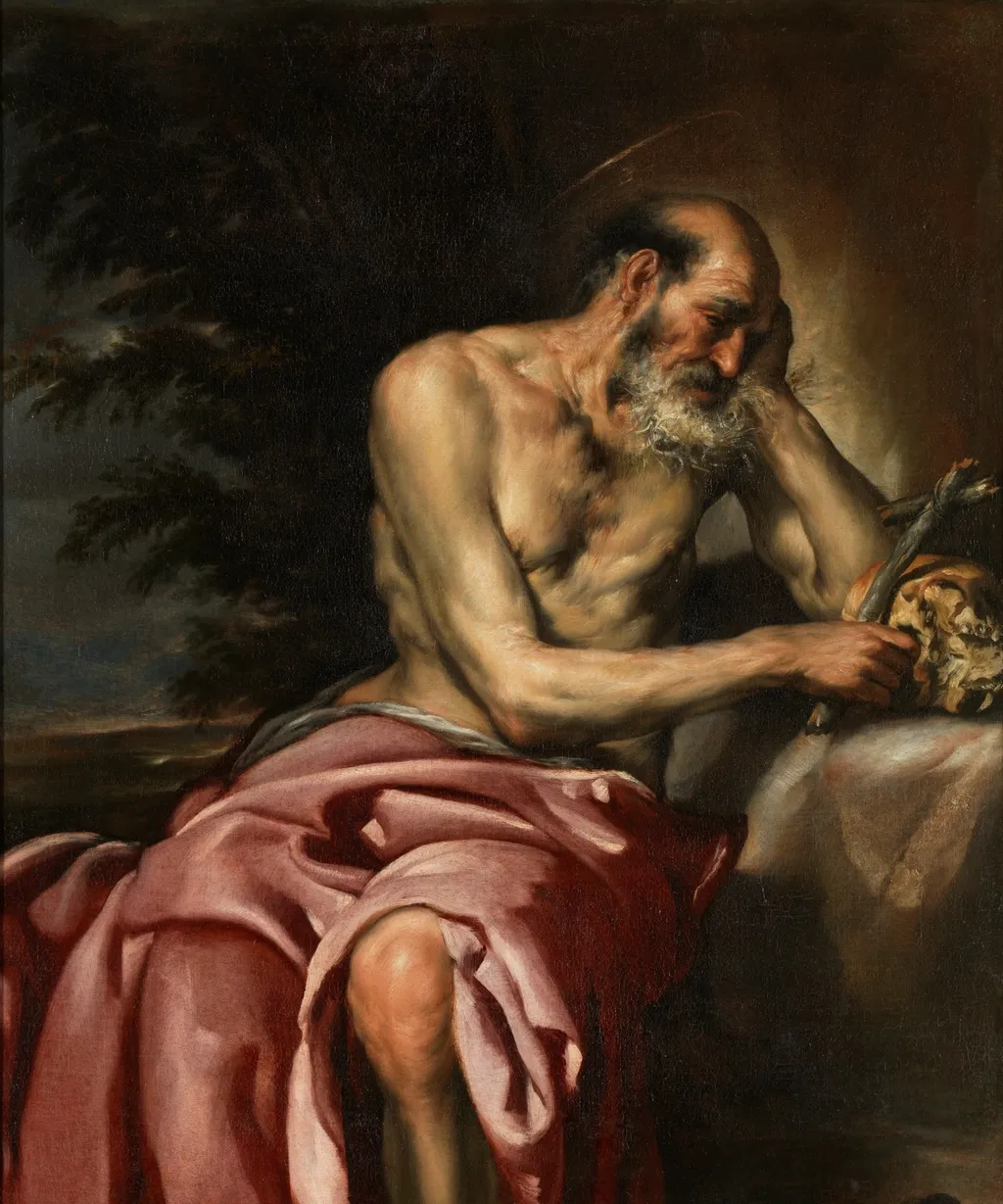
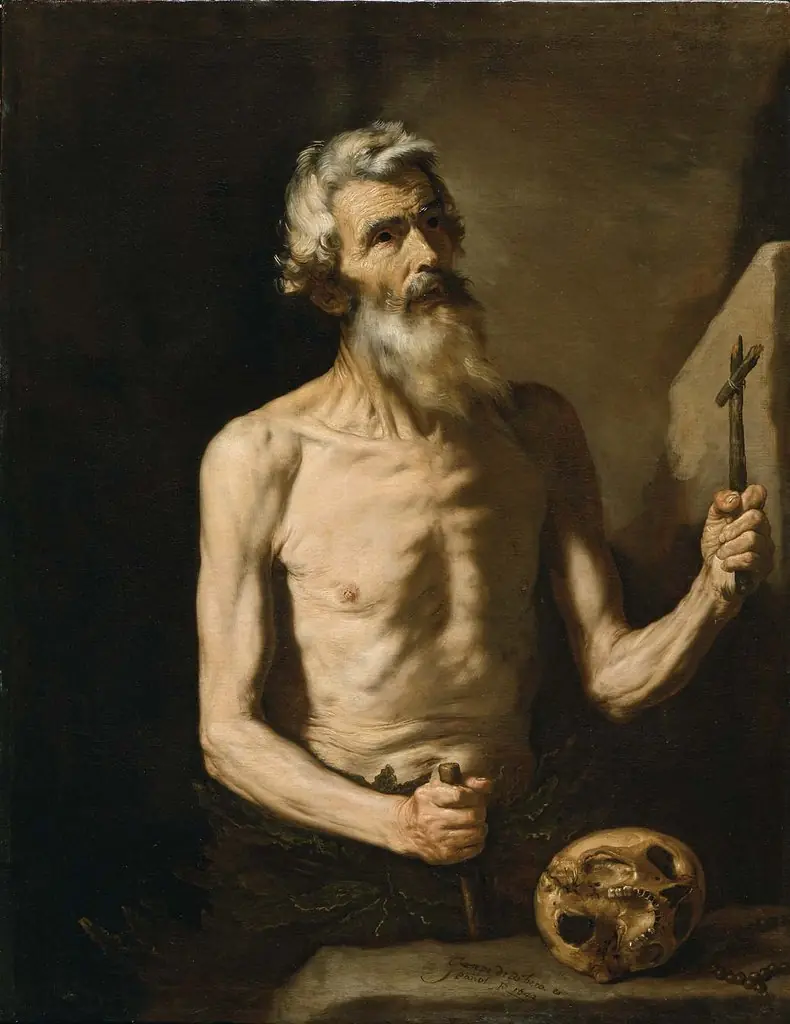
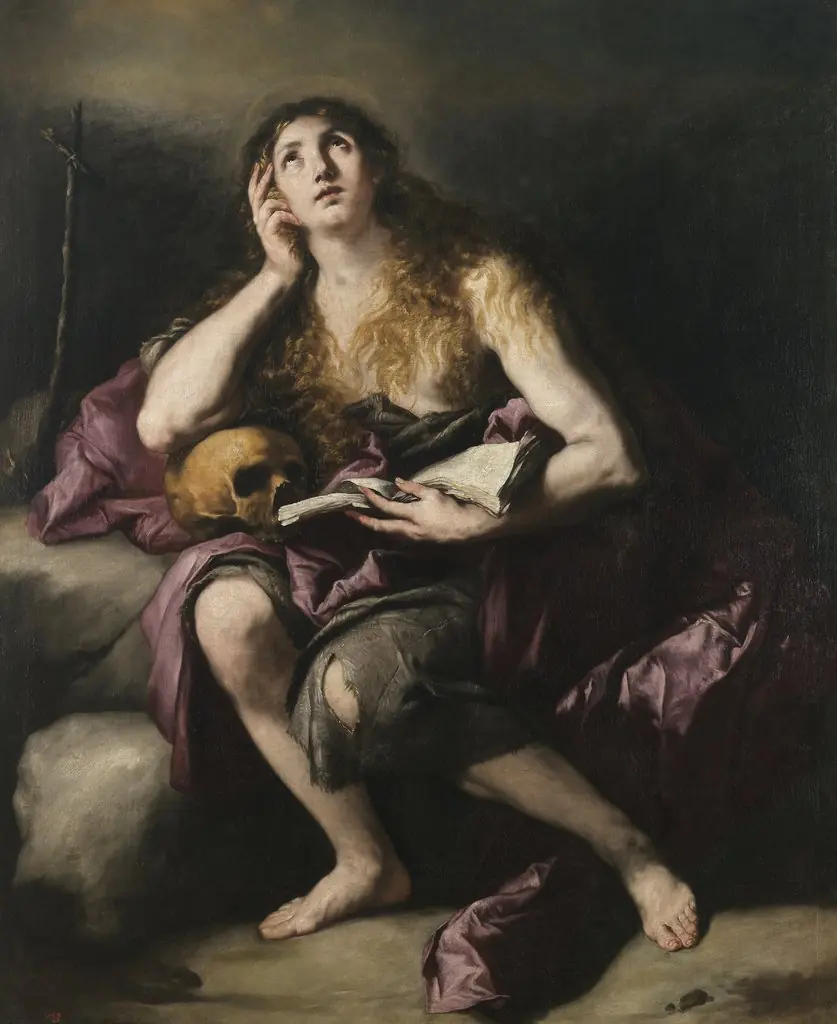
San Jerónimo penitente is an oil painting by the Early Baroque Italian artist Diego Polo the Younger. It dates from 1626 and is held in the collection of the Museo del Prado.
About this work
Subject & Meaning
The cross and the stone together convey Jerome’s spiritual struggle and his lifelong commitment to penitence and biblical scholarship.
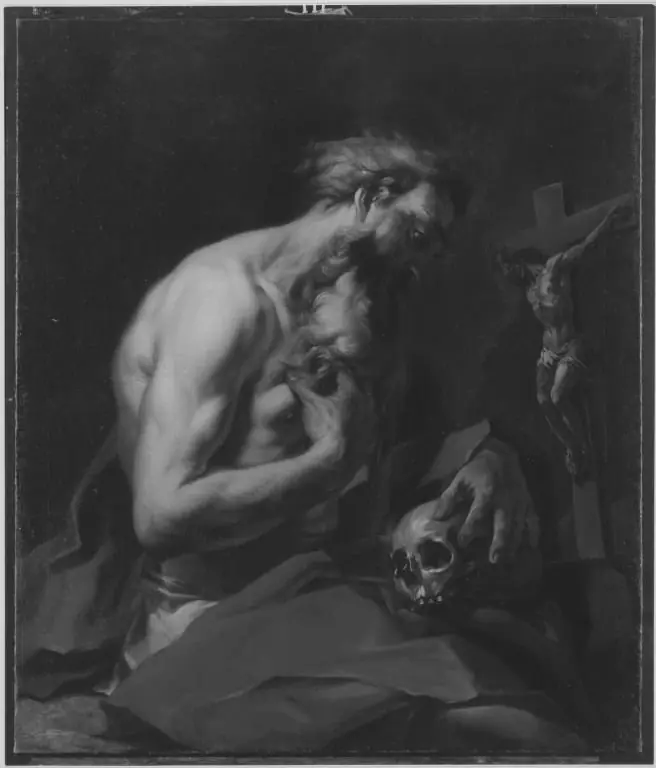
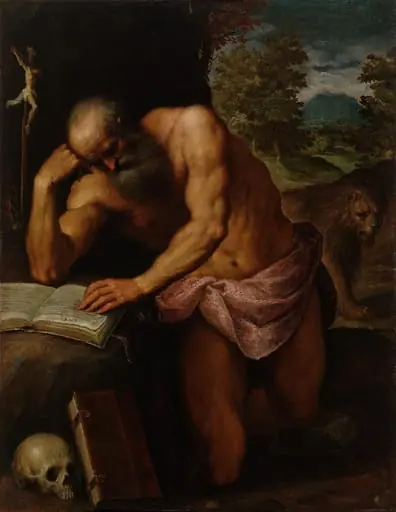
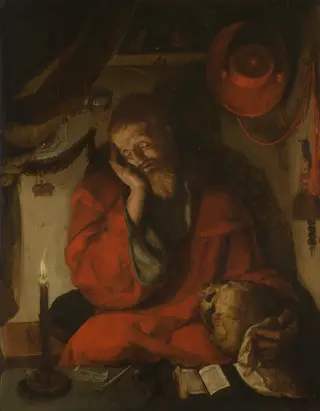
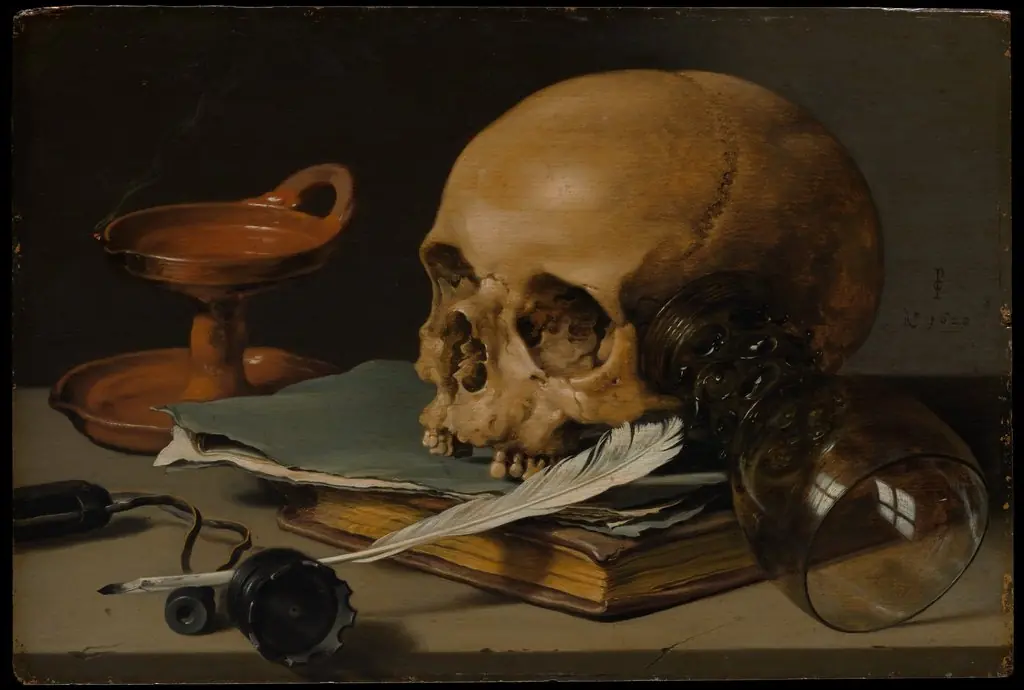
The painting depicts Jerome in the wilderness, a common iconography for the saint as a penitent hermit. He is shown in a state of ascetic devotion, kneeling in prayer before a crucifix while holding a stone with which he strikes his chest, a gesture signifying penance and mortification of the flesh. A skull often appears near him as a memento mori, underscoring the theme of vanitas and the transience of earthly life.
The cross and the stone together convey Jerome’s spiritual struggle and his lifelong commitment to penitence and biblical scholarship.
History & Provenance
The painting San Jerónimo penitente was created by Diego Polo the Younger in 1626. Executed in oil on canvas, the work depicts Saint Jerome in the wilderness accompanied by a skull and a cross. The piece is currently held in the collection of the Museo del Prado.
While the primary creation date is established as 1626, catalog records also note an inception entry dated to the year 1700.
Diego Polo the Younger's oil painting San Jerónimo penitente, created in 1626, is held in the collection of the Museo del Prado in Madrid. The work depicts Saint Jerome in the wilderness accompanied by a skull and a cross. While the source records an inception date of 1700, the canonical creation date for this specific artwork is 1626.
The painting measures 128 cm in height and 110 cm in width. No specific inventory or accession number is provided in the available records, nor is there any documented exhibition history listed for this piece.
Overview
Created in 1626 by the Spanish Baroque artist Diego Polo the Younger, this oil painting portrays a solitary figure in a contemplative pose. The work is part of the Museo del Prado’s collection and exemplifies the religious genre prevalent in early 17th‑century Spanish art.
Technique & Style
Polo employs a pronounced chiaroscuro, using stark contrasts of light and shadow to model the saint’s form and to give the composition a three‑dimensional presence. The illumination falls on the face and hands, while the surrounding darkness deepens the mood of introspection, a hallmark of early Baroque visual language.
Own this work as a print
Artist & collection
Artist
Diego Polo the Younger (1620–1655) was a Spanish painter of the Baroque period. He was the nephew of the elder Diego Polo. He was born in Burgos. He was a scholar of Antonio Lanchares. He painted several pictures for…