Artwork
Pair of Lovers
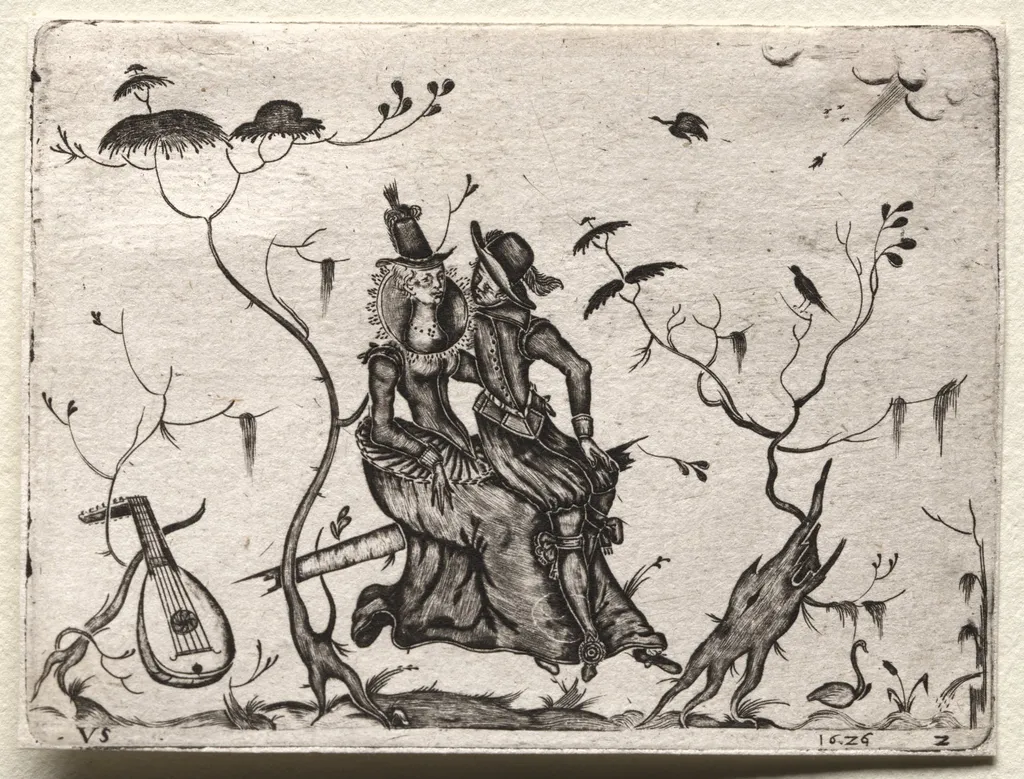
Pair of Lovers is a print by the Baroque artist Valentin Sezenius. It dates from 1626 and is held in the collection of the Cleveland Museum of Art.
- Accession no.
- 1955.162
- Credit line
- John L. Severance Fund
About this work
The woman wears a fancy hat with feathers and a ruffled collar, while the man has a wide-brimmed hat and a belt with a small pouch.
This etching shows two people sitting on a tree branch, holding each other close. The woman wears a fancy hat with feathers and a ruffled collar, while the man has a wide-brimmed hat and a belt with a small pouch. Around them, birds perch on branches, and a lyre leans against the tree trunk. The whole scene looks like a sketchy, dreamy forest.
The year "1626" is stamped in the corner, hinting this is from long ago. The artist used only black lines to create the image, giving it a simple but detailed look.
Next, check out the Baroque movement for more dramatic, expressive art like this.
Overview
Valentin Sezenius’s print Pair of Lovers, dated 1626, is part of the Cleveland Museum of Art’s collection. Executed as an etching, the work presents a solitary, stylised forest scene in which two figures are seated together on a branch, their bodies intertwined. The composition is rendered entirely in black line, giving the image a stark, atmospheric quality.
Subject & Meaning
The central figures, a man and a woman, are shown in an intimate pose, suggesting a private moment of affection within a natural setting. The woman’s elaborate hat with feathers and ruffled collar contrasts with the man’s wide‑brimmed hat and simple belt, hinting at differing social cues while emphasizing their closeness. Birds and a lyre nearby introduce motifs of music and nature, reinforcing a romantic, perhaps allegorical, narrative.
Technique & Style
Sezenius employed the etching process, incising the design onto a metal plate and printing it in monochrome. The work relies on fine, sketch‑like lines to delineate foliage, clothing, and accessories, creating a sense of depth without tonal shading. This linear approach, combined with the dreamlike arrangement of elements, aligns the piece with early Baroque tendencies toward movement and emotional resonance.
History & Provenance
The print bears the date 1626 in the lower corner, confirming its early‑17th‑century origin. It entered the Cleveland Museum of Art’s holdings through acquisition, though specific details of its prior ownership are not recorded in the museum’s public records. Its survival in good condition allows contemporary viewers to assess Sezenius’s early printmaking practice.
Context
Created during the early Baroque period, the work reflects contemporary interests in combining narrative intimacy with naturalistic settings. While not overtly dramatic, the piece’s emphasis on personal connection and its use of symbolic objects such as the lyre echo broader artistic trends that explored love, music, and the pastoral as vehicles for emotional expression.
Own this work as a print
Artist & collection

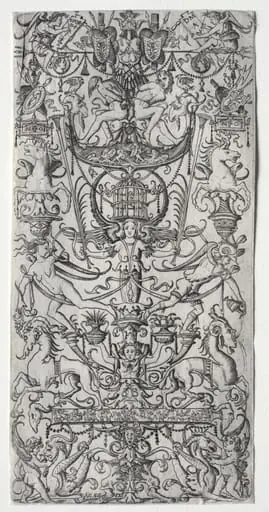
- Ornament Panel with a Bird Cage
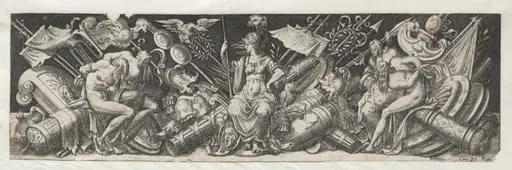 Combats and Triumphs No. 1
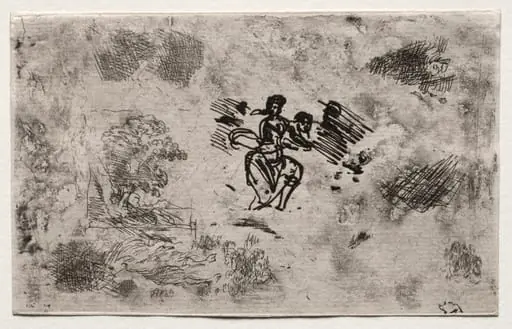 Study of a Seated Woman and other Sketches
 Ornament Panel Inscribed Victoria Augusta
 Night
Night Pendant Embellished with Flowers
 St. John on the Island of Patmos
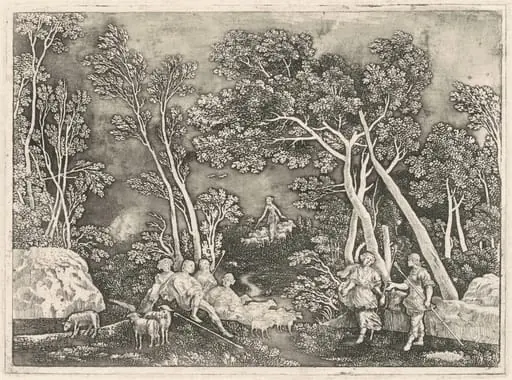 Nymphs in a Landscape
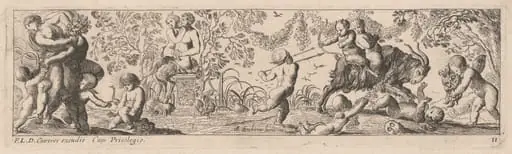 Putti and Satyrs Shooting Arrows
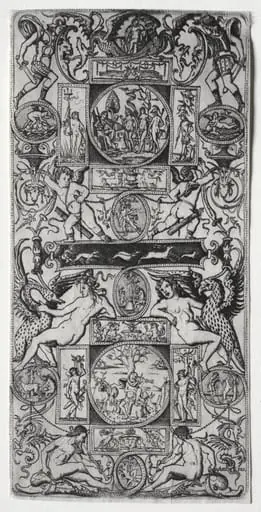 Orpheus and the Judgment of Paris
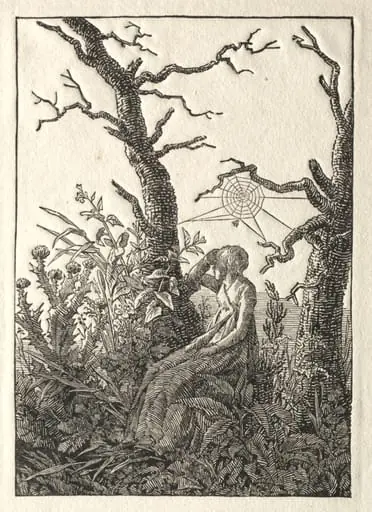 The Woman with the Spider Web between Bare Trees
 Varie figure gobbi di Iacopo Callot (Cripple with a hood)