Artwork
Village Scene
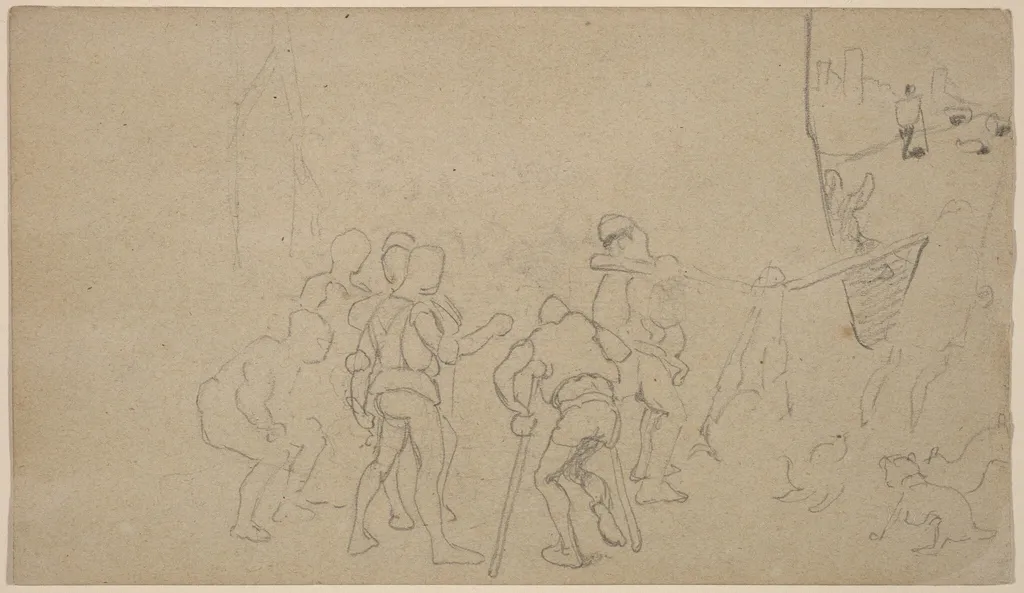
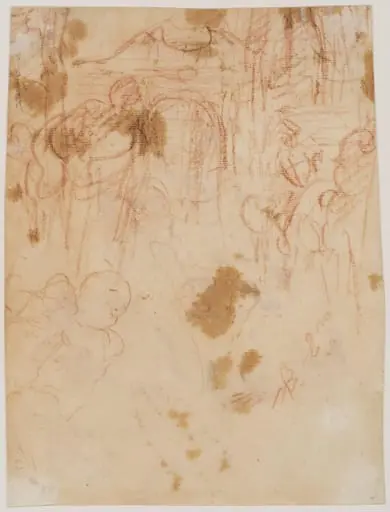
Village Scene is a graphite drawing by the Impressionist artist Elihu Vedder. It dates from 1859 and is held in the collection of the National Gallery of Art.
- Inscription
- Inscribed:lower left verso in graphite by unknown hand: 10; lower right verso in ball point pen by unknown hand: 43.
About this work
Overview
Village Scene is a graphite drawing on wove paper created by American artist Elihu Vedder around 1859. This early work showcases Vedder's attention to narrative and detail, characteristics that would later define his notable illustrations.
Subject & Meaning
The drawing portrays a serene rural scene, focusing on a tranquil moment in village life. The subject matter reflects Vedder's interest in capturing everyday, quiet narratives.
Technique & Style
Executed in graphite on wove paper, the piece demonstrates Vedder's skill in rendering detailed, narrative-driven drawings, foreshadowing his later success as an illustrator.
History & Provenance
Created circa 1859, Village Scene is an early example of Vedder's work, preceding his acclaimed illustrations for Edward FitzGerald’s The Rubaiyat of Omar Khayyam.
Context
Emerging from Vedder's early career, the drawing situates him within the broader 19th-century American artistic landscape, where detailed, narrative art forms were valued.
Legacy
While Village Scene itself may not be as widely recognized as Vedder's later illustrated works, it contributes to the understanding of his developmental period and consistent thematic interests.
Artist & collection
Artist
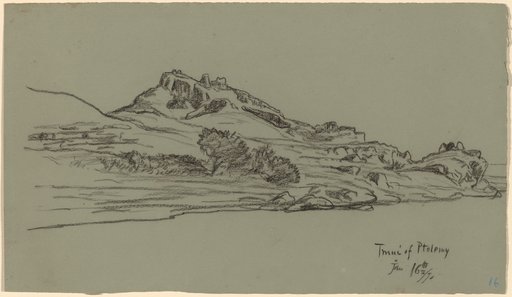
Elihu Vedder (26 February 1836 – 29 January 1923) was an American symbolist painter, book illustrator and poet from New York City.

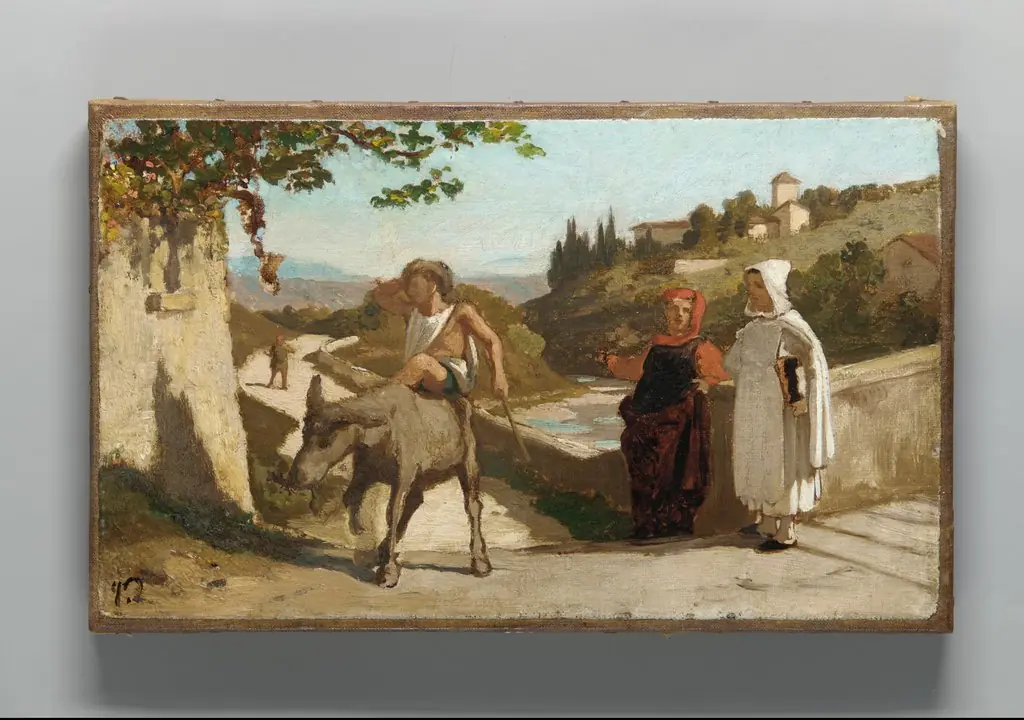 The Fable of the Miller, His Son, and the Donkey
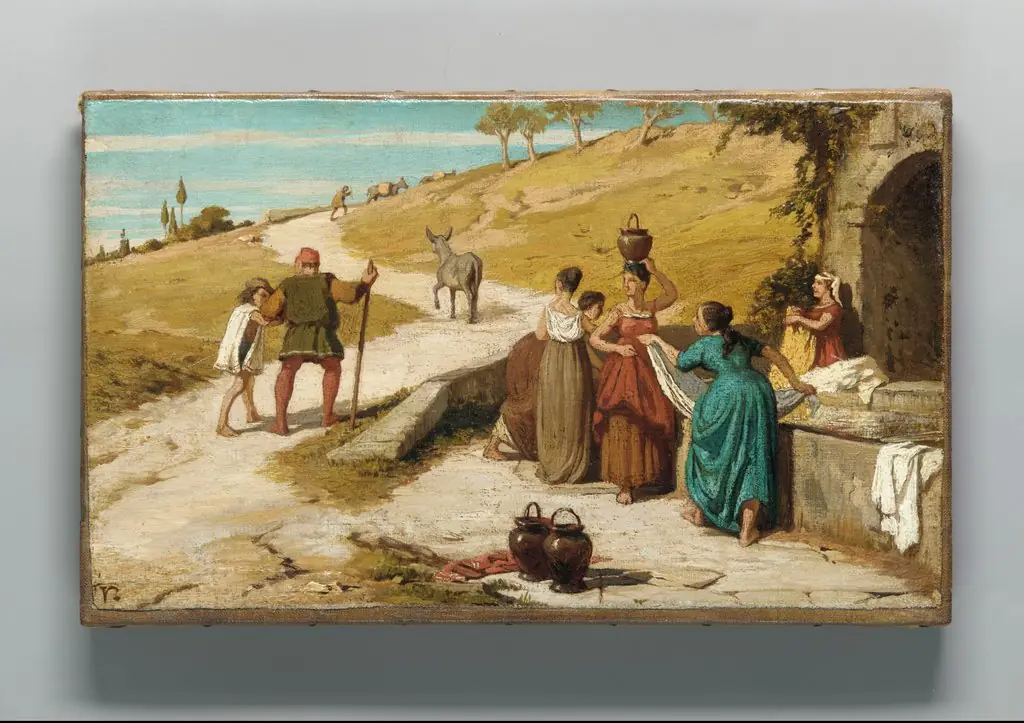 The Fable of the Miller, His Son, and the Donkey
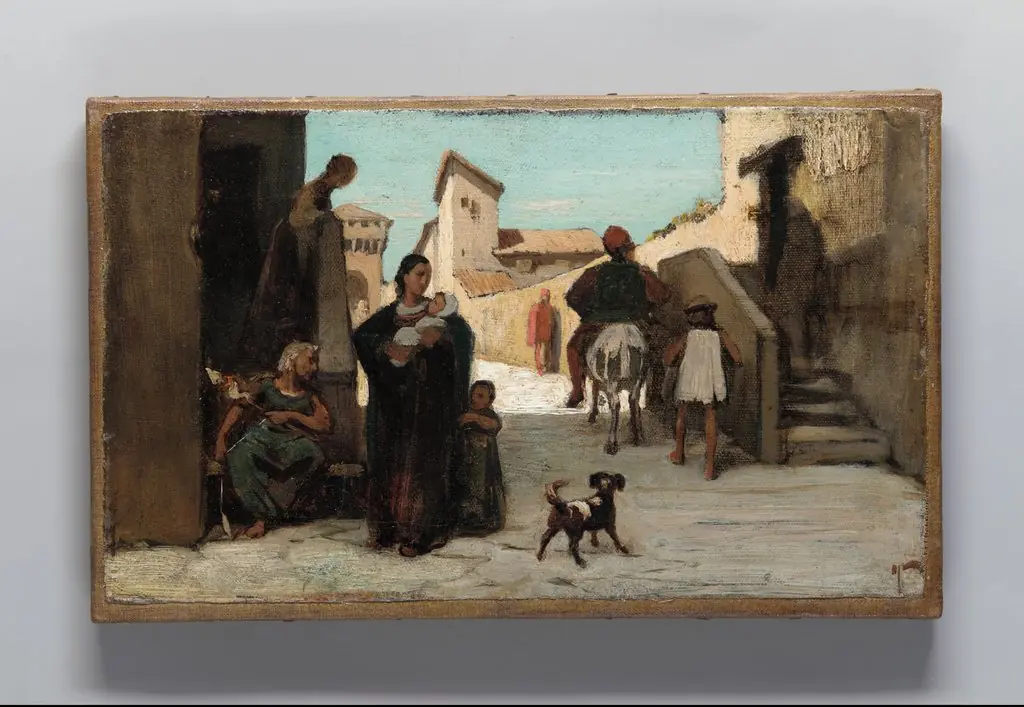 The Fable of the Miller, His Son, and the Donkey
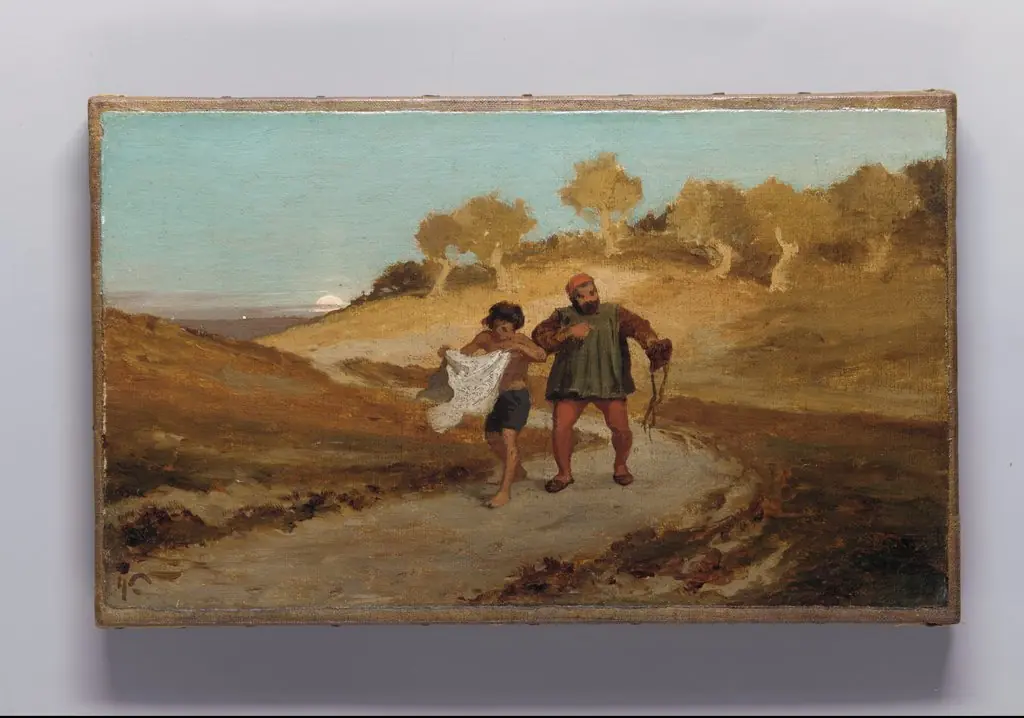 The Fable of the Miller, His Son, and the Donkey
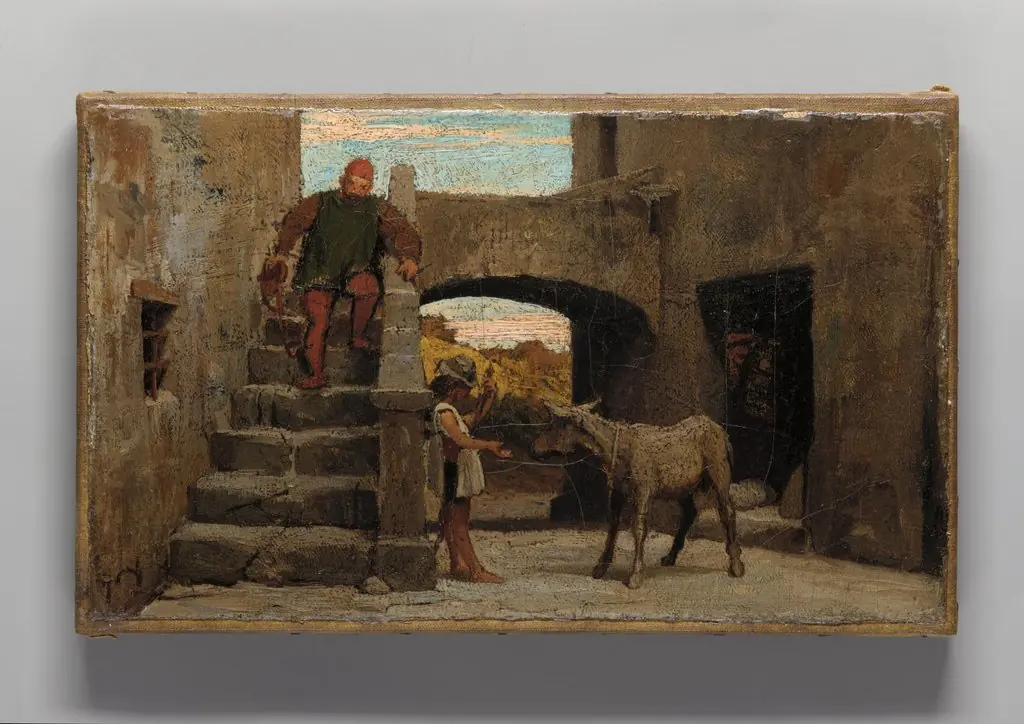 The Fable of the Miller, His Son, and the Donkey
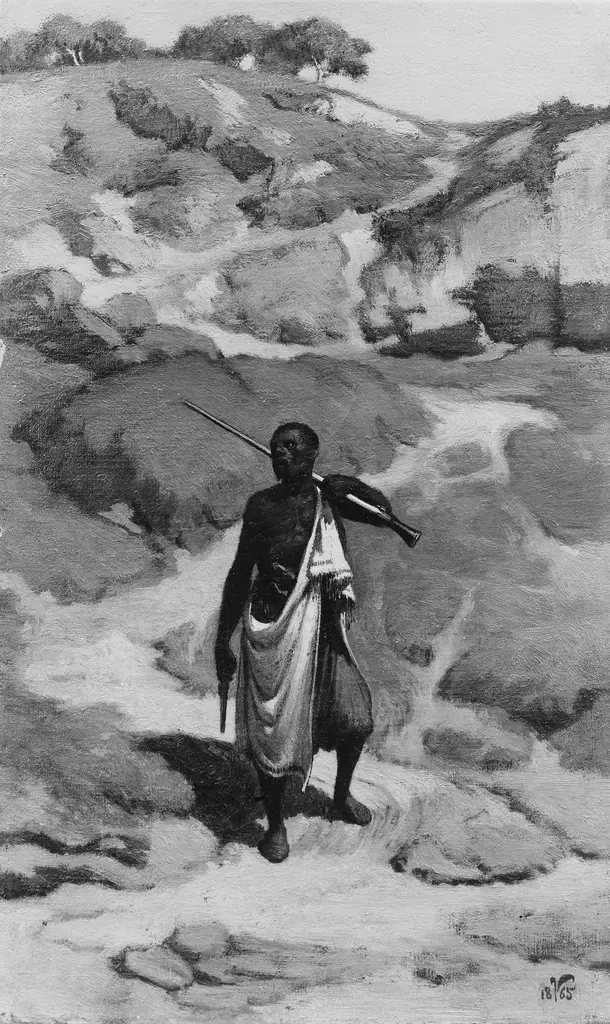 The African Sentinel
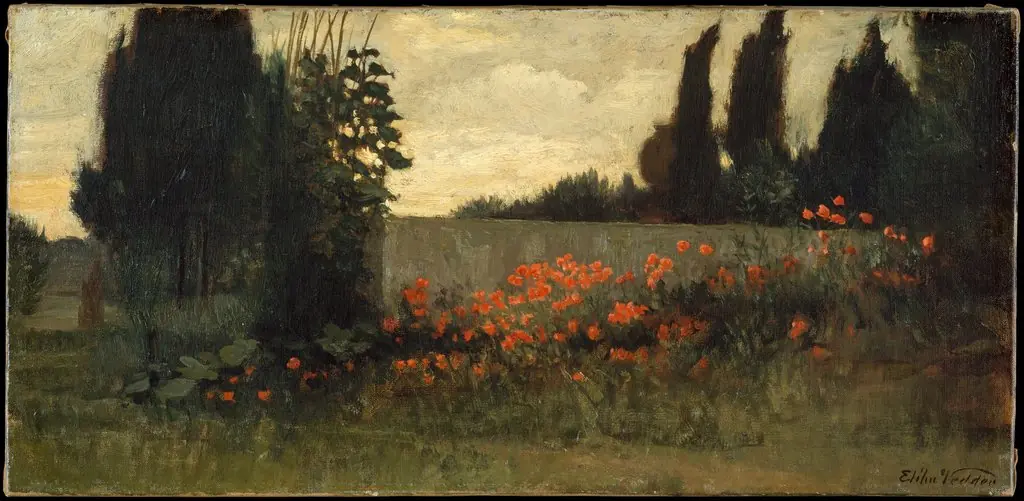 Cypress and Poppies
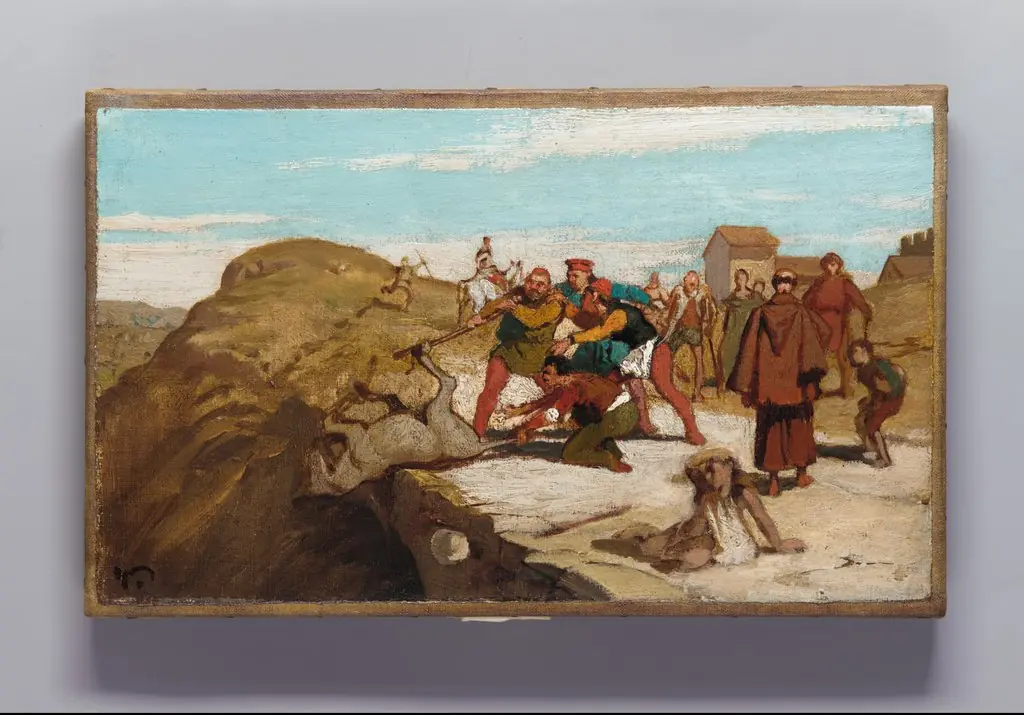 The Fable of the Miller, His Son, and the Donkey
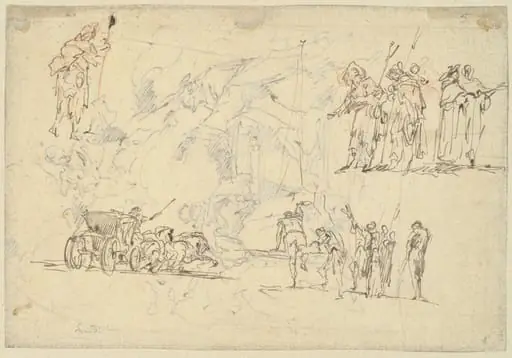 Figure Studies and a Horse-Drawn Carriage (recto)
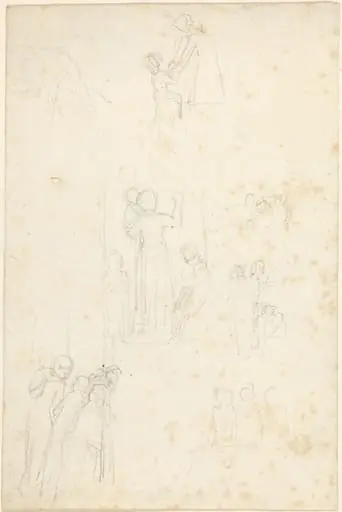 Sheet of Studies
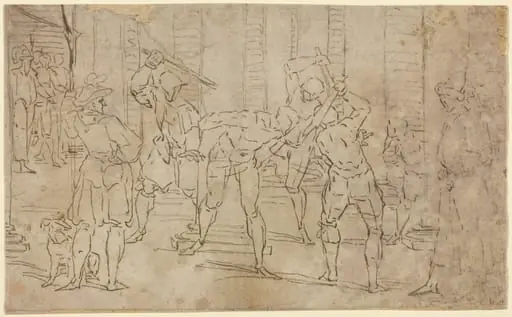 Flagellation of Christ
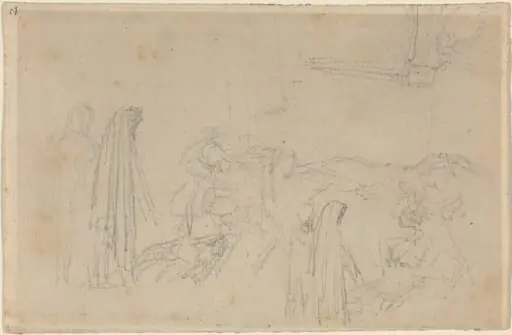 Sketches with a Hooded Figure (Virgil and Beatrice?)
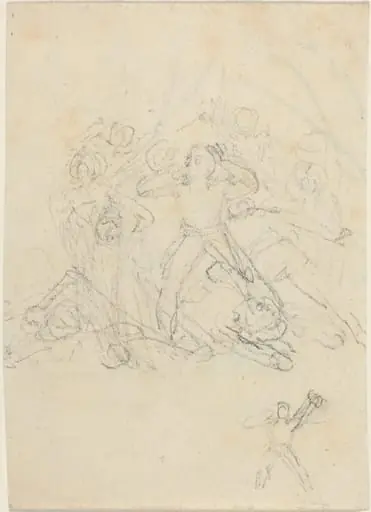 Battle Scene
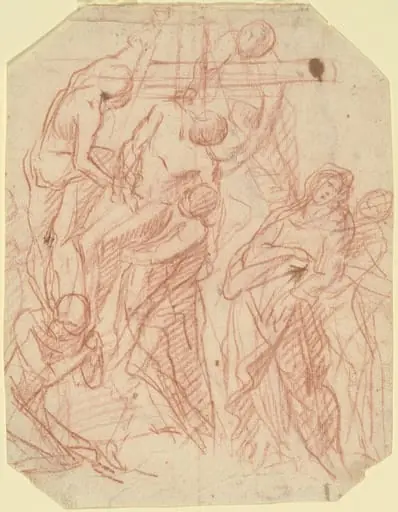 The Descent from the Cross (recto)
![Sheet of Studies [recto and verso], by John Flaxman](https://artifactworldgallery.com/img/john-flaxman--sheet-of-studies-recto-and-verso--6fd1500085ec614c-w320.webp) Sheet of Studies [recto and verso]
Sheet of Studies [recto and verso]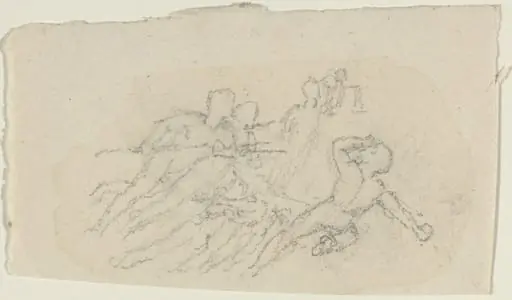 Group of Figures
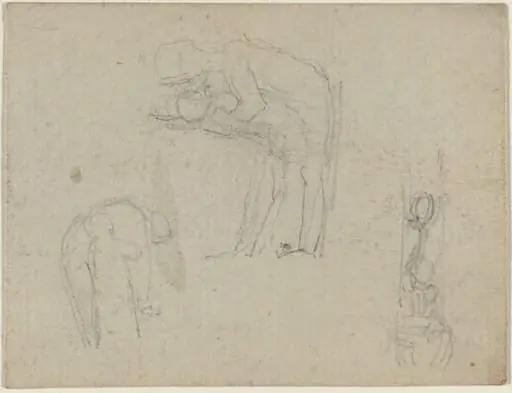 Three Groups of Figures
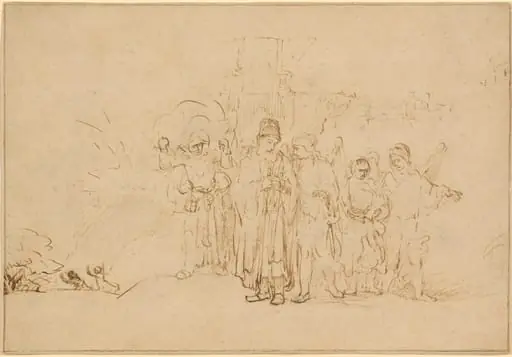 Lot and His Family Leaving Sodom
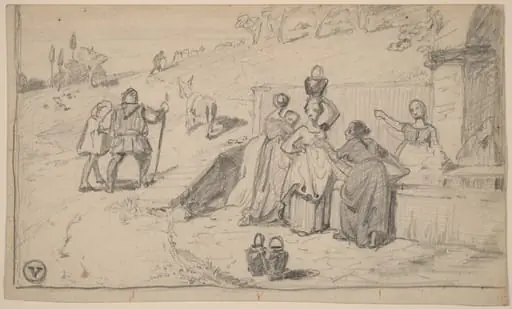 Father and Son
 Recto: Rinaldo and Armida; verso: Study for a gateway