Artwork
Moema
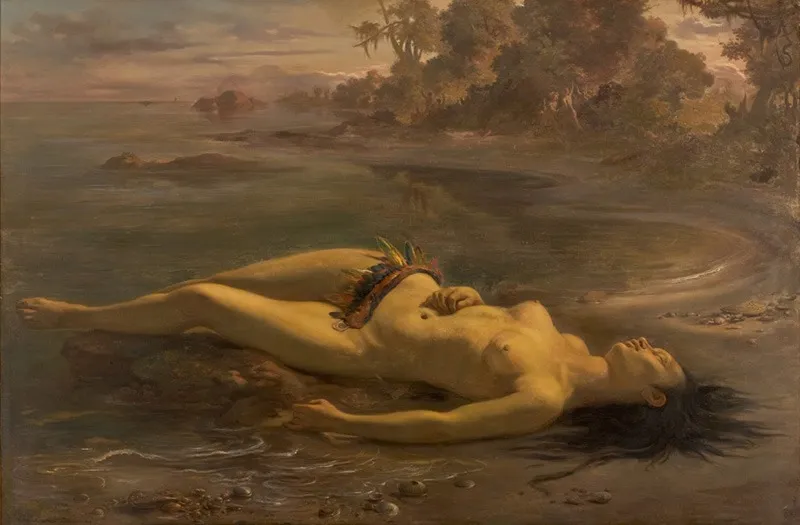
Moema is an oil painting by the Indianist artist Victor Meirelles. It dates from 1866 and is held in the collection of the São Paulo Museum of Art.
About this work
This painting shows Moema, a woman from a famous Brazilian poem. Victor Meirelles painted it in oil around 1866. He chose to show Moema’s sad moment alone by the water.
Her story comes from an epic poem called Caramuru. Meirelles did not copy a scene from the book. He made his own version of her drowning after being left behind.
Look up the artist Victor Meirelles next.
Subject & Meaning
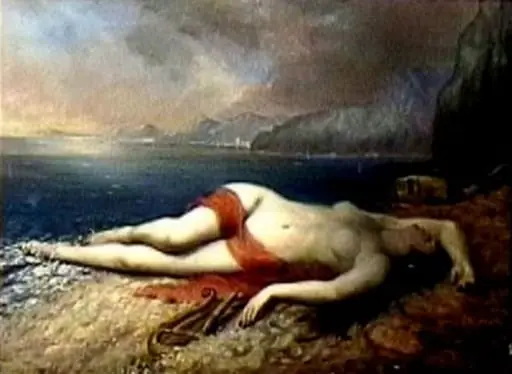
The composition shows Moema lying nearly nude on a beach, submerged in the water or resting on the shore, representing her death by drowning.
Victor Meirelles's painting depicts Moema, a character from Santa Rita Durão's 1781 epic poem Caramuru. Rather than illustrating a specific scene from the text, the work presents the artist's personal interpretation of the indigenous woman's fate following her rejection by the Portuguese explorer Caramuru. The composition shows Moema lying nearly nude on a beach, submerged in the water or resting on the shore, representing her death by drowning.
Despite the tragic subject matter, the figure is rendered with serene facial features and skin lacking the pallor of death, creating an ambiguity where she appears to be sleeping rather than deceased. A broken feather loincloth provides minimal coverage, emphasizing a sensual quality within the natural landscape. In the background, dense vegetation and groups of indigenous people accentuate the drama; one figure points toward the horizon, presumably indicating the departing ship of her beloved, while others display expressions of despair.
Technique & Style
Moema is an oil painting on canvas, executed in 1866 by Victor Meirelles, measuring 129 cm in height by 190 cm in width. The composition centers on the nearly nude figure of the indigenous woman Moema, lying on a shoreline with her face and body turned upward, her right hand resting on her abdomen and her left arm extended on the sand. She is barely covered by a broken feathered loincloth.
The background is filled with dense vegetation and groups of indigenous figures, one of whom points toward the horizon, likely indicating the ship of Caramuru. A preparatory sketch differs from the finished canvas: in the study Moema's torso and face are turned downward with her arms extended toward the sea, and the background natives are more prominent.
Stylistically, the work blends classical and Baroque qualities, with clear colors, evenly distributed light, a soft fusion of earth and landscape tones, and minimal emphasis on line. The figure is rendered with precise drawing and strong illumination, while her serene features and lack of pallor give her the appearance of sleeping rather than dead. The painting is associated with artistic Indianism and Romantic painting.
History & Provenance
Victor Meirelles created the oil painting Moema in 1866 without a specific commission. The work was first exhibited that same year at the Imperial Academy of Fine Arts, where it received critical acclaim for its composition and national subject matter. It subsequently appeared at the Paris Exposition of 1867.
A preparatory sketch reveals that the artist initially conceived the figure in a different position with a more prominent background group of indigenous people before finalizing the composition. The canvas entered the collection of the São Paulo Museum of Art in 1947. During the presidency of Beatriz Pimenta Camargo, the museum secured funding to restore the painting, which is regarded as a cornerstone of its holdings.
Context
Moema (1866) is a history painting by Brazilian artist Victor Meirelles, depicting the titular character from Santa Rita Durão's epic poem Caramuru (1781). The work portrays Moema submerged in water after being rejected by Caramuru, reflecting Meirelles's personal interpretation rather than a literal scene from the poem. It was first exhibited at the Imperial Academy of Fine Arts in 1866 and has been part of the São Paulo Museum of Art collection since 1947, acquired during the museum's expansion under director Beatriz Pimenta Camargo, who oversaw its restoration.
The painting is recognized as a key piece in the museum's collection and exemplifies Romantic-era artistic indianism, blending nationalistic themes with Romantic aesthetics. Its composition features a nude Indigenous woman on a shoreline, surrounded by dense vegetation and subtle indigenous figures in the background, rendered in oil on canvas with dimensions of 129 cm by 190 cm. The work received contemporary acclaim for its technical execution, including praise from Counselor Tomaz Gomes dos Santos and the Baron Homem de Melo for its 'elevated value,' 'irreproachable' drawing, and 'brilliant' colors, with critics highlighting its 'national' subject matter and 'original' composition. Contemporary scholarship, including Alexander Gaiotto Miyoshi's 2010 thesis, situates Moema within broader discussions of Brazilian art history and identity, analyzing its role in the development of national narratives in 19th-century visual culture.
Legacy
Upon its 1866 debut at the Imperial Academy of Fine Arts, Moema drew strong praise from contemporaries. Counselor Tomaz Gomes dos Santos, the academy's director, declared the work to be of elevated value, praising its drawing, colors, aerial transparency, and lighting, and concluding that it sealed Meirelles's reputation. Baron Homem de Melo similarly commended the artist's irreproachable drawing and brilliant yet sober coloring. The painting was subsequently shown at the 1867 Paris Exposition.
Acquired by the São Paulo Museum of Art in 1947, the canvas is regarded as one of the most important and iconic works in the museum's collection. Under the presidency of Beatriz Pimenta Camargo, the institution secured funding for its restoration, underscoring the painting's continued status as a flagship holding of Brazilian Romantic and indianist art.
Overview
Victor Meirelles completed an oil on canvas in 1866 that portrays the figure Moeda, a character drawn from the 18th‑century Brazilian epic Caramuru. Rather than illustrating a specific episode, the painting captures a solitary, melancholic moment as the woman stands beside water, suggesting an impending submersion.
Artist & collection
Artist
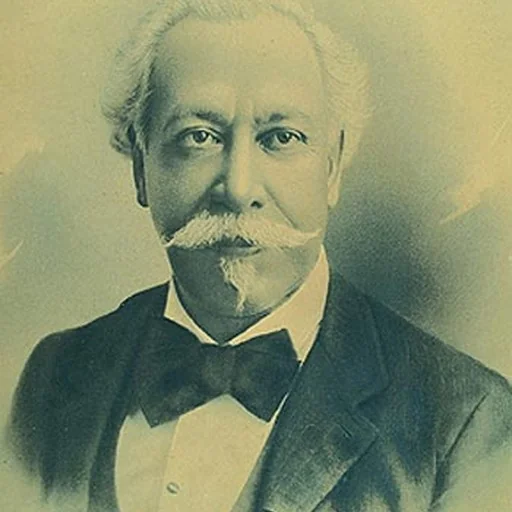
Victor Meirelles de Lima (18 August 1832 – 22 February 1903) was a Brazilian painter and teacher who is best known for his works relating to his nation's culture and history.