Artwork
Santa Catalina
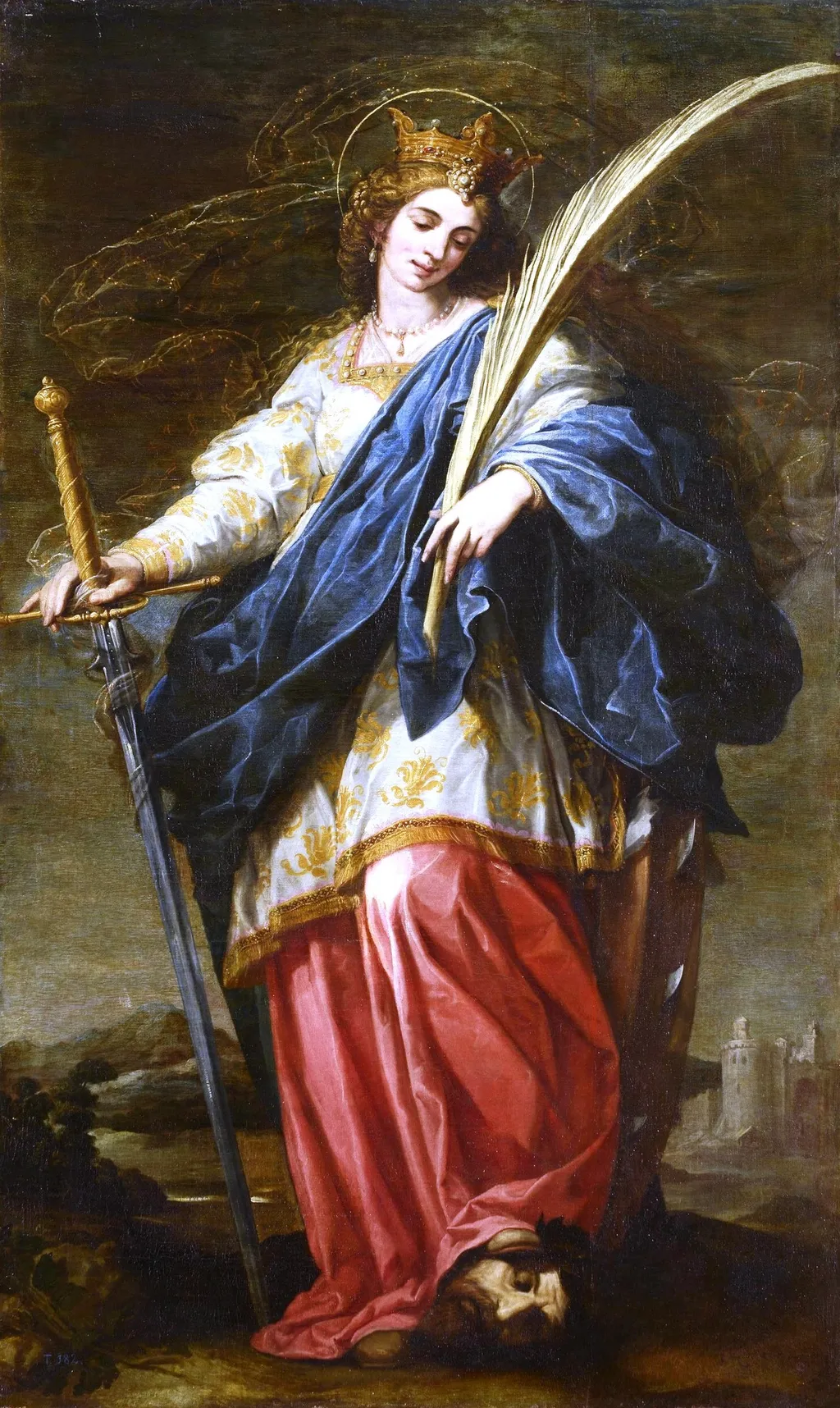
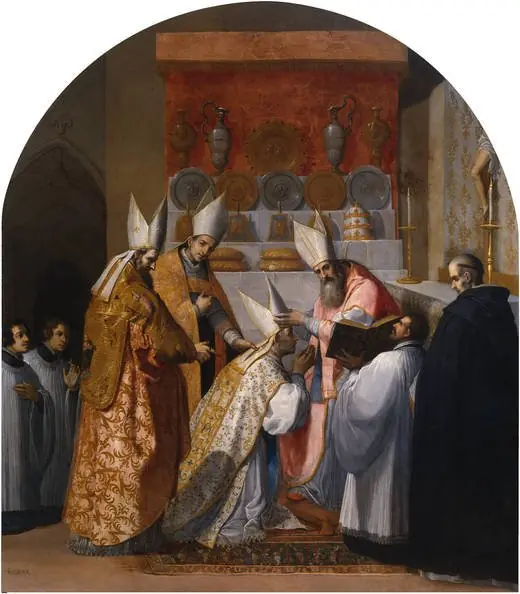
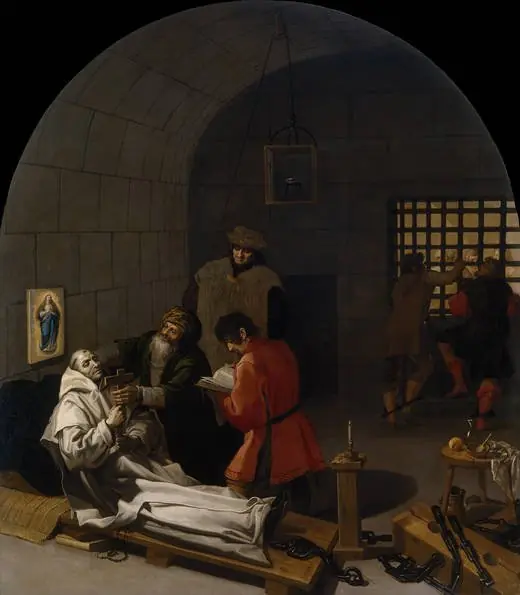
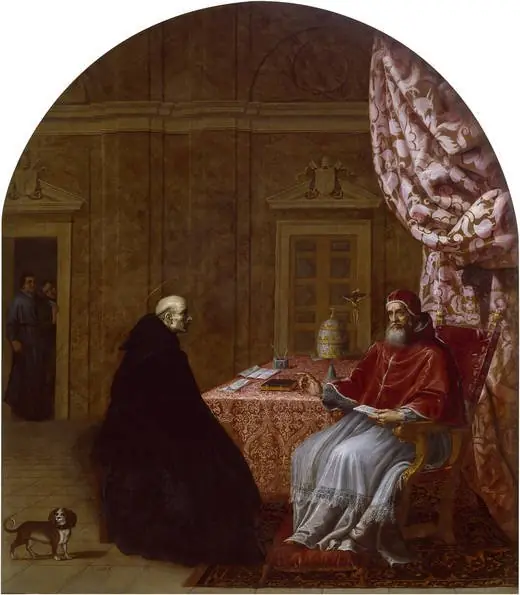
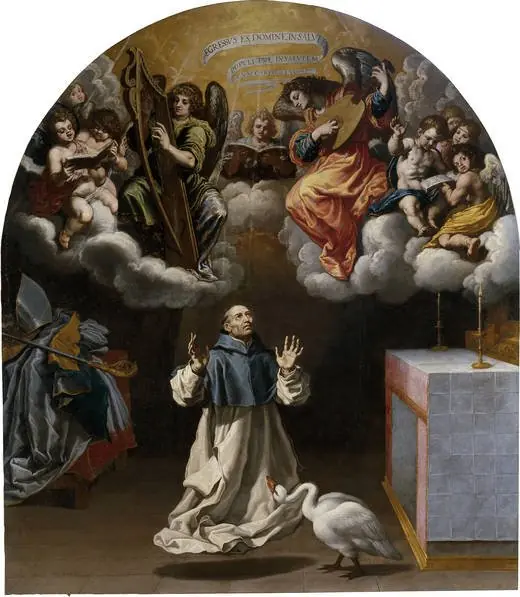
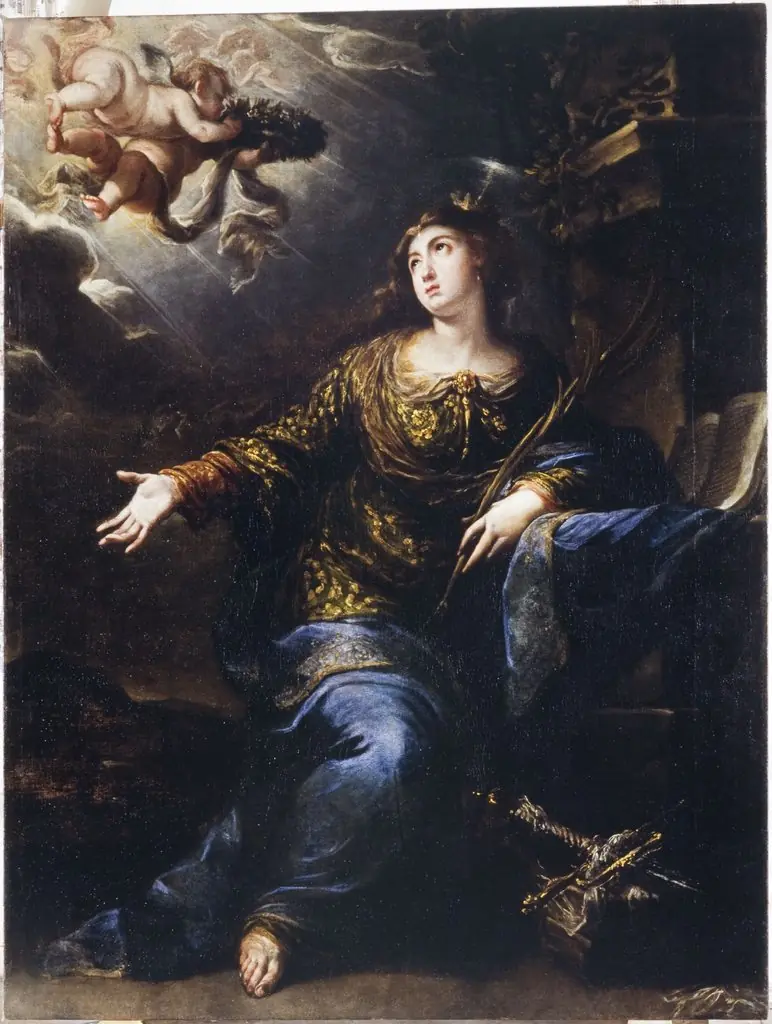
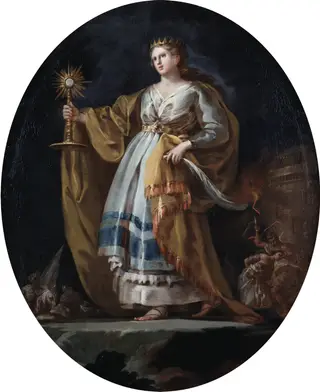
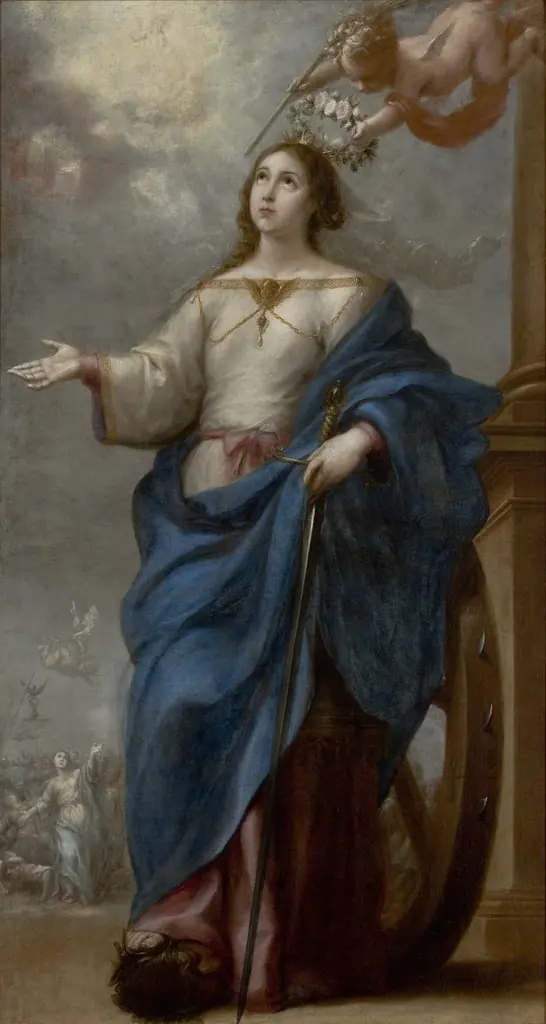
Santa Catalina is an oil painting by the Early Baroque Italian artist Vincenzo Carducci. It dates from 1637 and is held in the collection of the Museo del Prado.
About this work
Subject & Meaning
The composition emphasizes her spiritual authority and divine protection through the iconographic elements of the sword and crown.
The painting depicts Saint Catherine of Alexandria holding a sword and a crown, symbols of her martyrdom and royal wisdom. These attributes identify her as a virgin martyr who was executed for her Christian faith, reflecting the work's religious significance within the Baroque tradition. The composition emphasizes her spiritual authority and divine protection through the iconographic elements of the sword and crown.
Technique & Style
Painted in oil on canvas, this work depicts Saint Catherine of Alexandria holding a sword and crown, reflecting her legendary martyrdom. The composition emphasizes her regal presence through the crown and the dynamic gesture of the sword, while the use of oil paint enables rich color modulation and chiaroscuro typical of early Baroque religious art. The canvas support provides a stable surface that accommodates the detailed rendering of drapery and ornamental elements, contributing to the painting's formal balance and devotional tone.
History & Provenance
Santa Catalina is an oil painting on canvas by Vincenzo Carducci dated 1637, depicting Saint Catherine of Alexandria with her traditional attributes of a sword and crown. The work measures 213 cm in height by 126 cm in width.
The painting was created in 1637, as recorded in both the internal catalogue and the Wikidata entry. It belongs to the collection of the Museo del Prado and was formerly held by the Museo de la Trinidad, indicating a transfer between the two Spanish national collections. No further details of commission, intermediate ownership, or acquisition history are documented in the available sources.
The painting Santa Catalina by Vincenzo Carducci is currently held in the collection of the Museo del Prado in Madrid. Although the work was originally part of the Museo de la Trinidad, it is now located within the Prado. The museum's inventory records the piece as an oil on canvas depicting Catherine of Alexandria with attributes including a sword and a crown.
While the specific accession number is not provided in the available records, the work's provenance traces its movement from the Trinidad collection to its present institutional home.
Overview
Santa Catalina is a 1637 oil painting by Vincenzo Carducci, an Italian artist active in Spain, classified under the early Baroque Italian movement with a religious theme.
Context
As an early Baroque piece, Santa Catalina reflects the period's emphasis on emotional intensity and dramatic lighting, common in religious artworks of the time, particularly those influenced by Italian artists in Spain.
Legacy
While specific influence or notable exhibitions of Santa Catalina are not highlighted in available information, it contributes to the broader understanding of early Baroque religious art and the work of Italian painters in 17th-century Spain.
Artist & collection
Artist
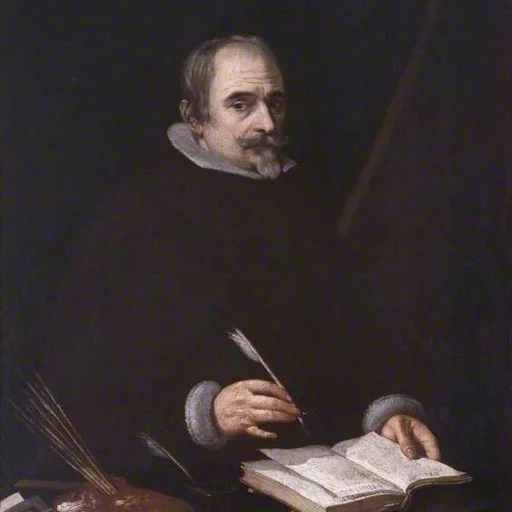
Vincenzio Carduccio (in Spanish, sometimes Vicencio or Vicente Carducho; 1576 or 1578–1638) was an Italian painter who spent his career in Spain.