Artwork
Immaculate Conception of El Escorial
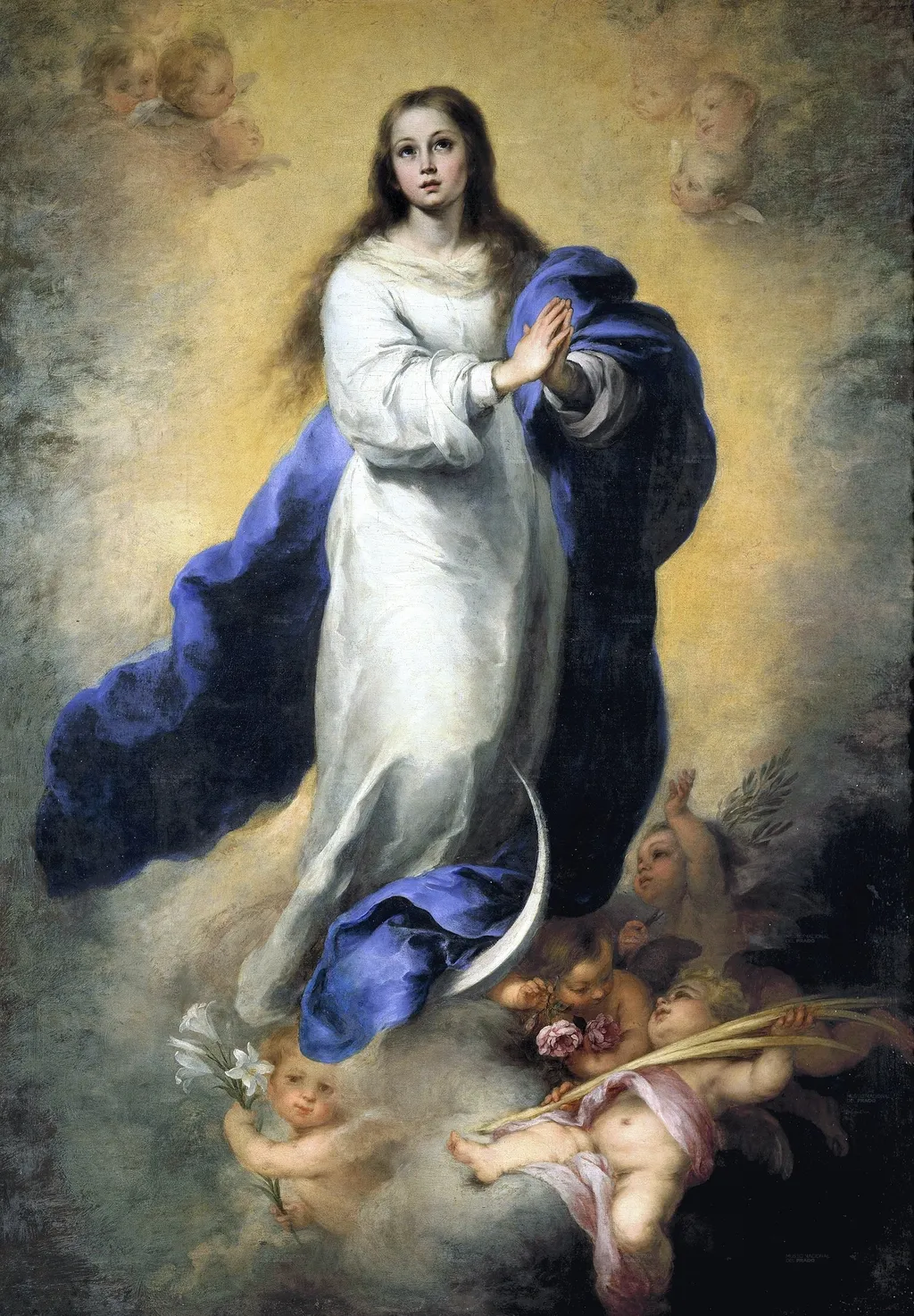
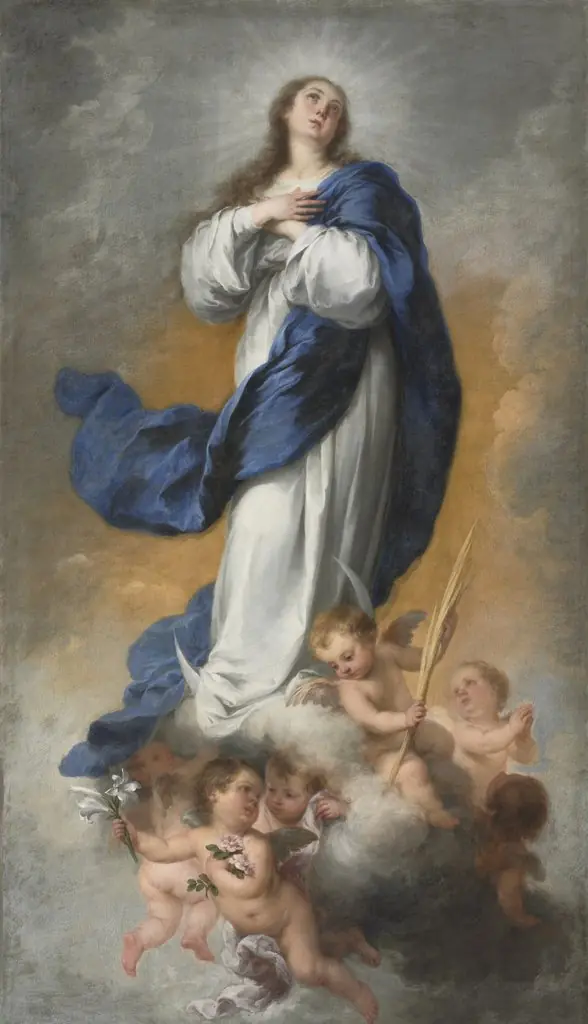
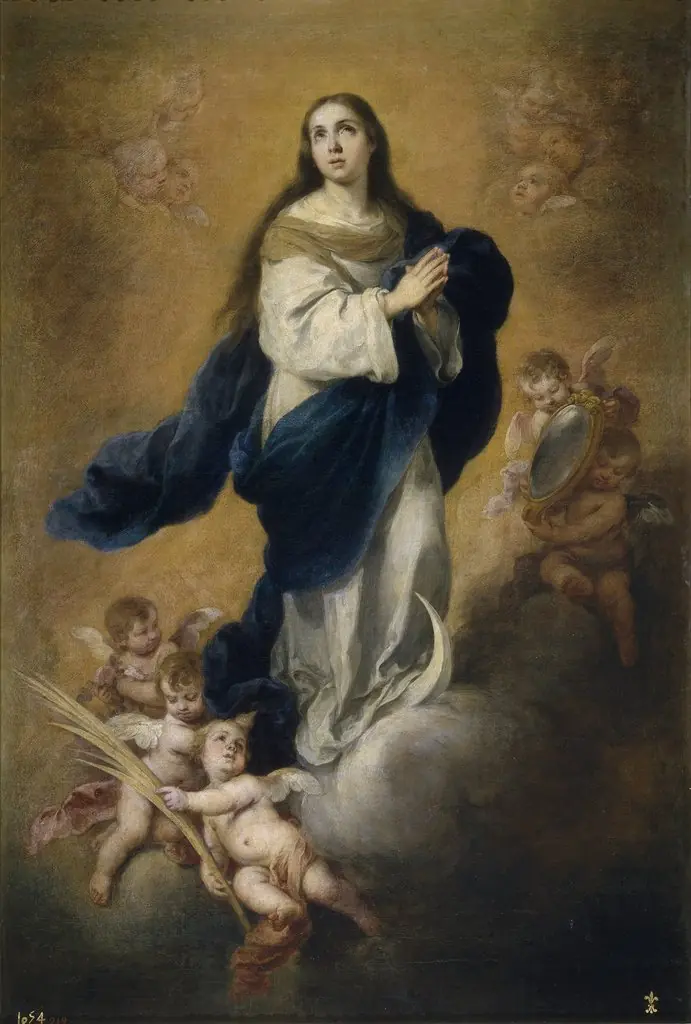
Immaculate Conception of El Escorial is an oil painting by the Early Baroque Italian artist Bartolomé Esteban Murillo. It dates from 1660 and is held in the collection of the Museo del Prado.
About this work
Subject & Meaning
The crescent moon alludes to the apocalyptic Woman of Revelation, clothed with sun and moon, though here Mary is neither crowned nor pregnant.
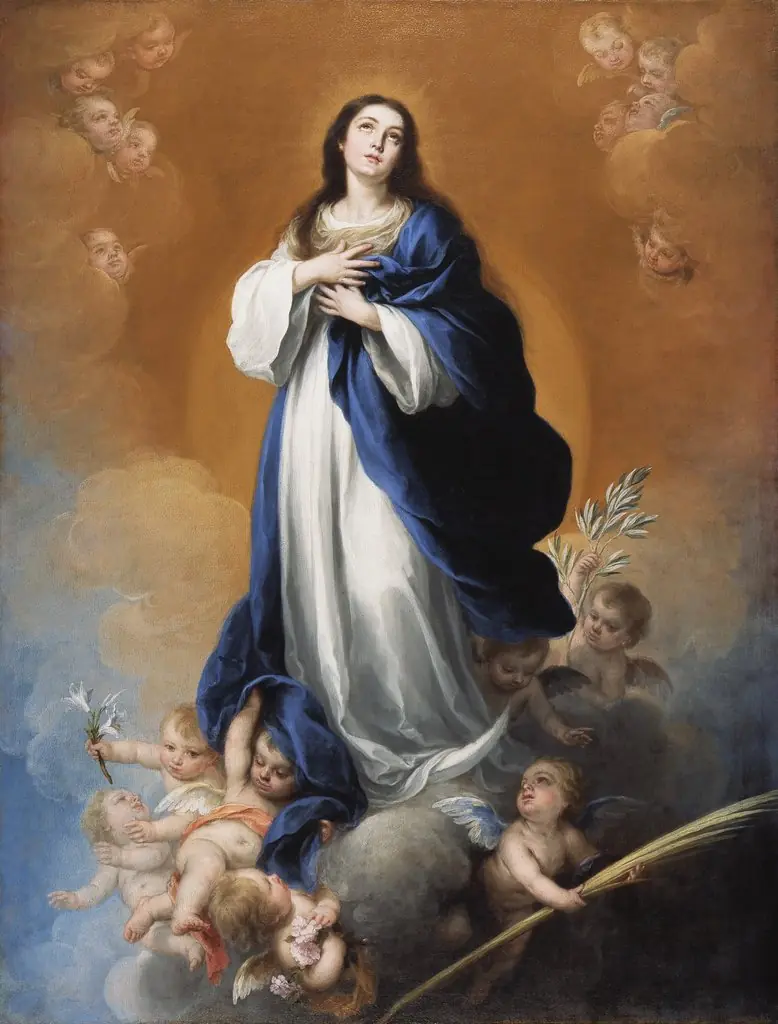
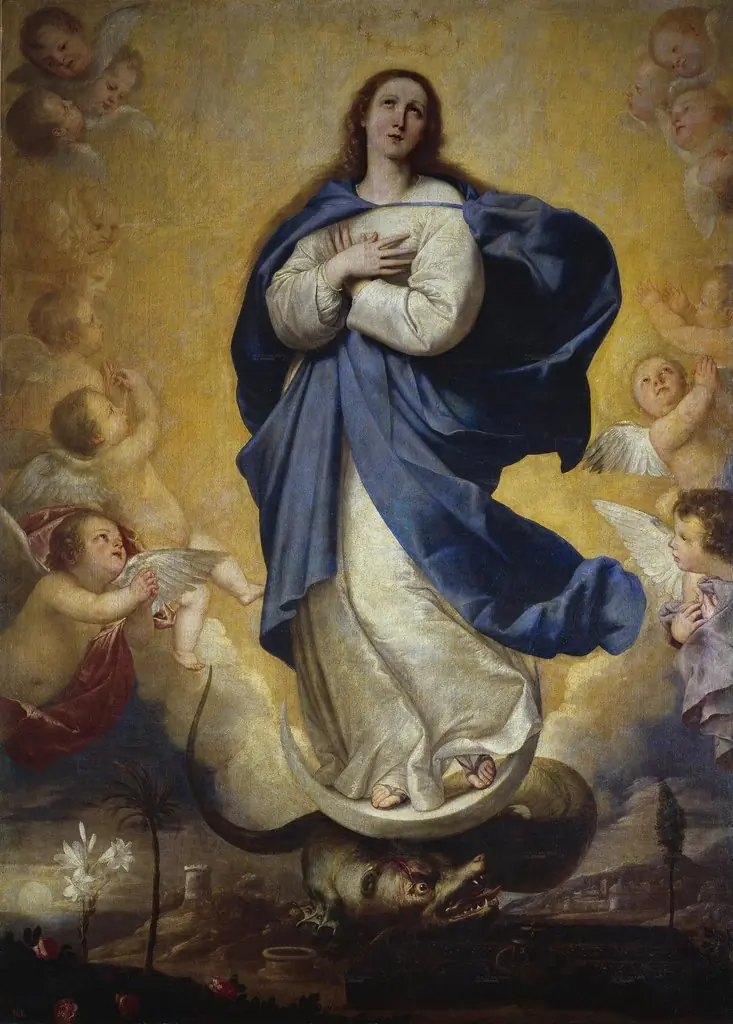
The painting shows the Virgin Mary as a youthful figure in a white dress and blue cloak, hands joined in prayer and eyes lifted upward, standing on a crescent moon borne by cherubs. The cherubs carry roses, lilies, a palm frond and a mirror, traditional emblems of her purity. The crescent moon alludes to the apocalyptic Woman of Revelation, clothed with sun and moon, though here Mary is neither crowned nor pregnant.
The near-absence of the cherubs at the top creates a sense of weightlessness. This iconography reflects the Spanish doctrinal emphasis on Mary's sinless conception, a theme promoted after Pope Alexander VII's 1661 declaration and widely celebrated in Spain.
Technique & Style
The painting is executed in oil on canvas, measuring roughly 206 cm by 144 cm, and is housed in the Museo del Prado. Murillo's technique employs a delicate, airy palette and a composition that reduces the Immaculate Conception to its essential iconography: the Virgin in white and blue, hands clasped, ascending on a crescent moon borne by cherubs who carry symbols of purity. The work's simplified forms and sense of weightlessness reflect Murillo's effort to distill the subject into its most graphic expression, a process guided by contemporary prescriptions that Mary be depicted as a twelve- or thirteen-year-old girl.
Influences from Van Dyck and Rubens are apparent in the subtle coloration, while the near-disappearance of the upper cherubs contributes to the ethereal handling of the scene.
History & Provenance
The Immaculate Conception of El Escorial was painted by Bartolomé Esteban Murillo between 1660 and 1665, a period inferred from stylistic comparison with dated works and a related drawing from 1664 that reuses cherubs from this composition.
Its early commission remains undocumented, and the painting's path into royal ownership is traced through purchases rather than contracts. It entered the Spanish royal collection after acquisition by Charles III in Seville, later passing to Charles IV, whose inventories list it at the Casita del Príncipe in El Escorial, giving rise to its title. The work was previously misattributed as the Immaculate Conception of La Granja due to an earlier misreading of its provenance. The painting is currently held in the Museo del Prado in Madrid.
Context
Scholars regard this work as one of Bartolomé Esteban Murillo's finest achievements; the 2005 text Seventeenth-century Art and Architecture describes it as perhaps the most perfectly resolved of his Immaculate Conception images. The painting reflects Murillo's ongoing effort to distill the subject into its most essential iconographic form, simplifying earlier compositional complexities. Art historical analysis identifies Francisco Pacheco's directive to depict the Virgin as a young girl of twelve or thirteen, and the influence of Anthony van Dyck and Peter Paul Rubens in the delicate coloration.
Murillo's formulation of this theme established him as a leading painter of the Immaculate Conception, exerting considerable influence on subsequent European art. While the dogma was not formally defined until 1854, the 1661 papal declaration of Mary's sinlessness fueled a vibrant Spanish artistic tradition of which Murillo produced multiple variations on the subject.
Legacy
Murillo's Immaculate Conception of El Escorial, painted circa 1660–1665, is widely regarded as one of the artist's finest achievements and a pivotal expression of the Immaculate Conception theme. His formulation of this subject became a major influence on later artists, establishing a model that persisted through subsequent centuries. The work's reputation as a benchmark for Baroque Marian imagery was reinforced by its inclusion in the royal collections of Charles III and Charles IV, and by scholarly descriptions of it as "perhaps the most perfectly resolved" of Murillo's visions. A 2020 restoration attempt on a related copy attracted public attention after the work was severely damaged.
Overview
Bartolomé Esteban Murillo's Immaculate Conception of El Escorial, painted around 1660–1665, is an oil work depicting the Virgin Mary. This Spanish Baroque painting, now housed in the Museo del Prado, Madrid, is considered a prime example of Murillo's approach to this popular religious theme. It showcases his characteristic style and emotional depth, making it a notable piece within his extensive body of work.
Own this work as a print
Artist & collection
Artist
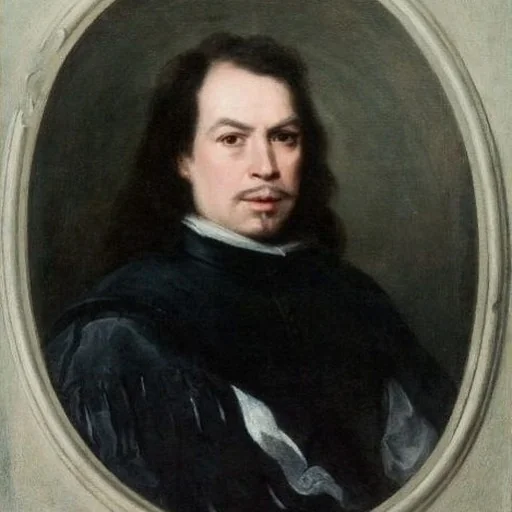
Bartolomé Esteban Murillo ( mure-IL-oh, m(y)uu-REE-oh, Spanish:; late December 1617, baptised 1 January 1618 – 3 April 1682) was a Spanish Baroque painter.