Artwork
The Liberation of Brisach
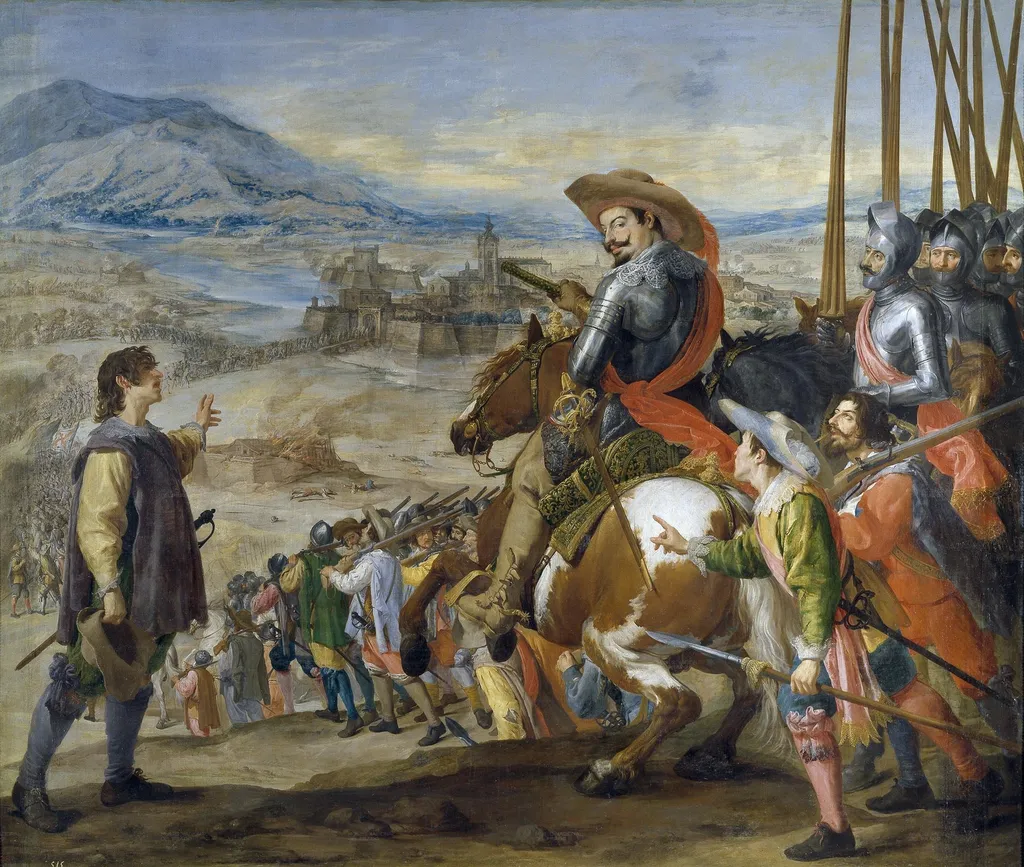
The Liberation of Brisach is an oil painting by the Baroque artist Jusepe Leonardo. It dates from 1634 and is held in the collection of the Museo del Prado.
About this work
Subject & Meaning
The painting portrays the Duke of Feria as the central figure, shown in armor with a red sash, holding a command baton, accompanied by an arcabucero, an alabardero and a young officer who gestures toward the battlefield; these elements of armor, weaponry and heraldic symbols are documented in the work’s description. It commemorates the 1633 Spanish liberation of the strategically vital fortress of Breisach, a key point on the Spanish route from Milan to Brussels, an event recorded in contemporary accounts. The composition thus merges specific martial iconography with the historical narrative of a temporary triumph that underscored Spain’s military ambition during the Thirty Years’ War.
History & Provenance
It formed the twenty‑fourth piece in the series, depicting the liberation of Brisach under the command of the Duke of Feria.
The work was commissioned as part of the twelve‑battle decorative program for the Salón de Reinos, a project initiated in 1633 by the conde‑duque de Olivares to celebrate a perceived annus mirabilis. Jusepe Leonardo painted it between 1634 and 1635, as recorded in the museum catalogue. It formed the twenty‑fourth piece in the series, depicting the liberation of Brisach under the command of the Duke of Feria.
Originally installed in the Salón de Reinos of the Palacio del Buen Retiro, the canvas appears in the 1701 inventory as no. 242. Its ownership passed through the Royal Collection, was listed in the 1794 Buen Retiro catalogue, and was later moved to the Palacio Real before entering the Museo del Prado, where it has been displayed since.
Currently housed in the Museo del Prado in Madrid, this oil painting holds the catalog number P000859. Originally commissioned for the Hall of Realms (Salón de Reinos) at the Royal Palace of Buen Retiro, the work was recorded there in the 1701 inventory as number 242. Subsequent provenance records indicate its presence at the Buen Retiro in 1794 (number 515) and later within the Royal Palace, where it was listed among paintings removed from the tribune alleyway between 1814 and 1818.
While specific public exhibition tours are not detailed in the provided records, its historical display context is firmly established within the royal decorative program of the Buen Retiro before its transfer to the national museum collection.
Context
La Liberación de Brisach (1634) forma parte de la Serie de Batallas encargada para el Salón de Reinos, un programa decorativo impulsado por el conde-duque de Olivares para celebrar los éxitos militares de 1633, año que se pretendía presentar como un annus mirabilis (Fuente 1). La obra, pintada por Jusepe Leonardo, muestra al duque de Feria al frente de la liberación de la ciudad estratégica, un tema que refleja la influencia del estilo barroco y el género de pintura histórica (Fuente 2). Estudios críticos destacan la composición, que recuerda a Carducho, y la influencia de Velázquez en el joven oficial y en la figura ecuestre del duque, subrayando la inserción del autor dentro del contexto artístico de la corte filipina (Fuente 1,3).
Legacy
The painting has been cited as a key example of early Baroque historical narrative, noted for its blend of Carducho’s compositional schemes with Velázquez‑derived realism in the foreground figure. Its display in the Museo del Prado and inclusion in the royal collections of the 18th and 19th centuries cemented its status as a representative work of the Spanish Serie de Batallas, influencing later military painting programs. Scholars reference the composition when analyzing the evolution of Spanish court art, and the work remains a visual touchstone for studies of 17th‑century Spanish propaganda and the portrayal of ducal authority.
Overview
Jusepe Leonardo, a Spanish Baroque painter associated with the Madrid royal court, completed The Liberation of Brisach in 1634. This oil painting is a history piece that portrays a military engagement, centering on the figure of the Duke of Feria. It exemplifies the prevalent interest in martial themes during the period and is currently housed in the collection of the Museo del Prado.
Technique & Style
Executed in oil paint, The Liberation of Brisach showcases characteristics of the Spanish Baroque style. Leonardo employs a palette dominated by earthy tones, such as browns and greens, which are punctuated by more vibrant reds and blues to highlight specific elements. The composition features a detailed foreground with figures in motion, set against a distant landscape, creating a sense of depth and narrative drama typical of history painting.
Own this work as a print
Artist & collection
Artist
José Leonardo, known also as Jusepe Leonardo (1601–1652), was a Spanish painter of the Baroque period, active during his maturity in the royal court in Madrid.

 The Storming of Rheinfelden
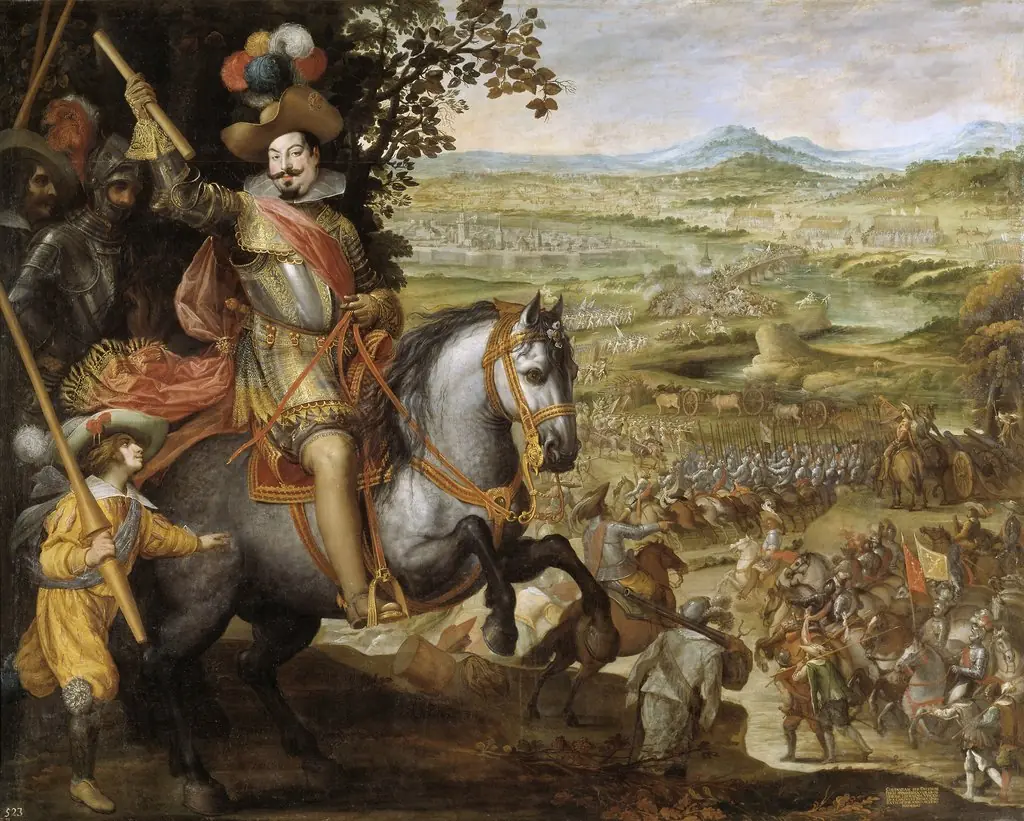 The Relief of Constance
 Cavalry troop
 Battle
 La fundación de Santiago
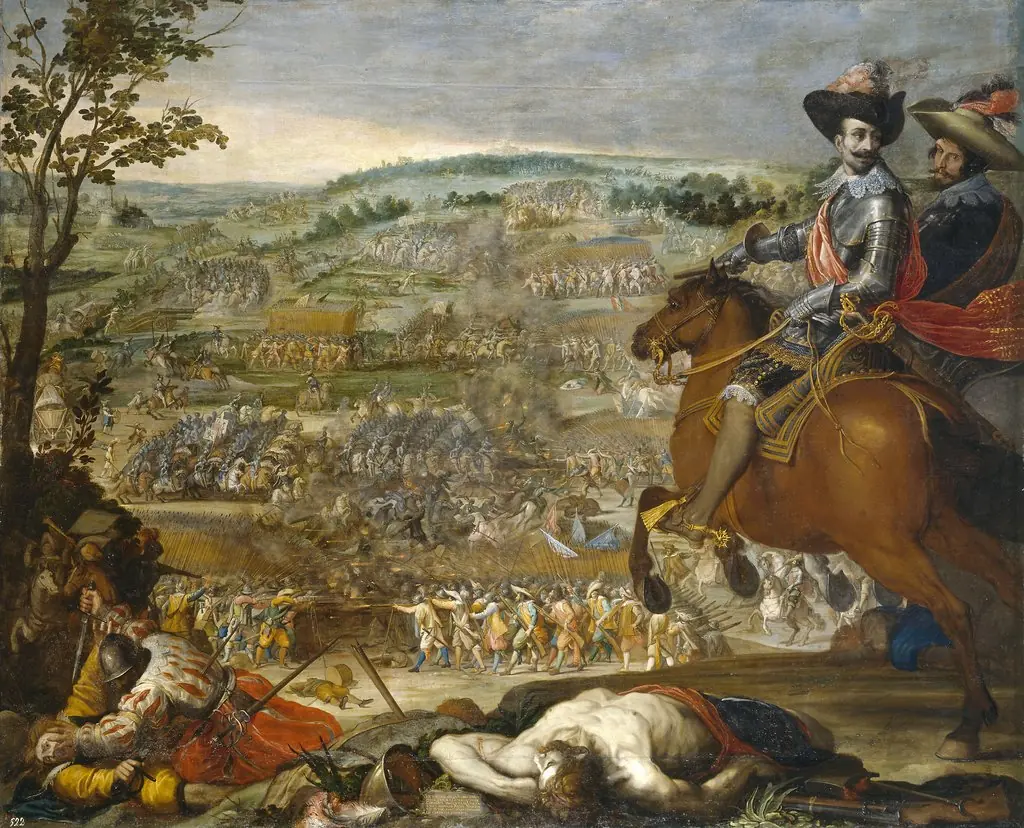 The Victory of Fleurus
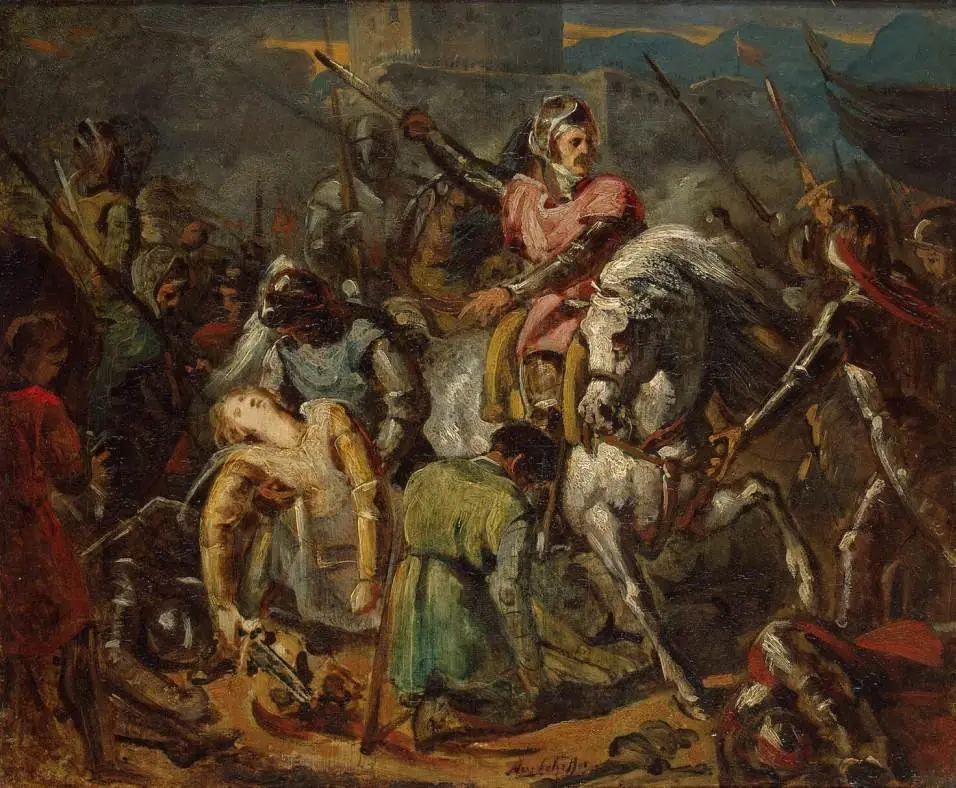 Death of Gaston de Foix in the Battle of Ravenna on 11 April 1512
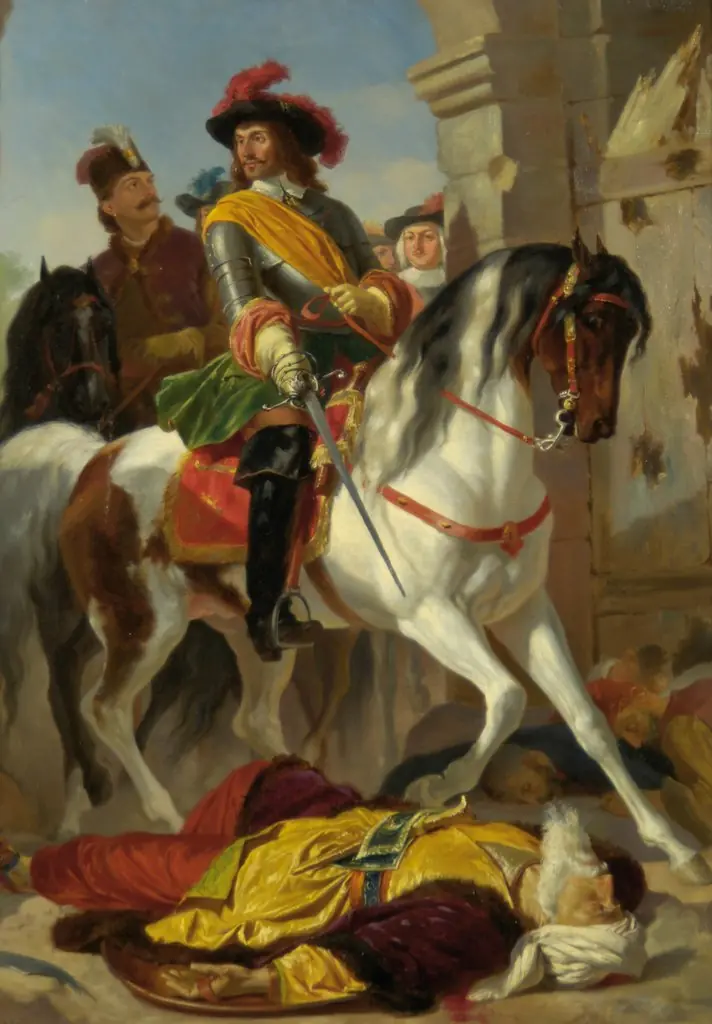 The Storming of Ofen 1686
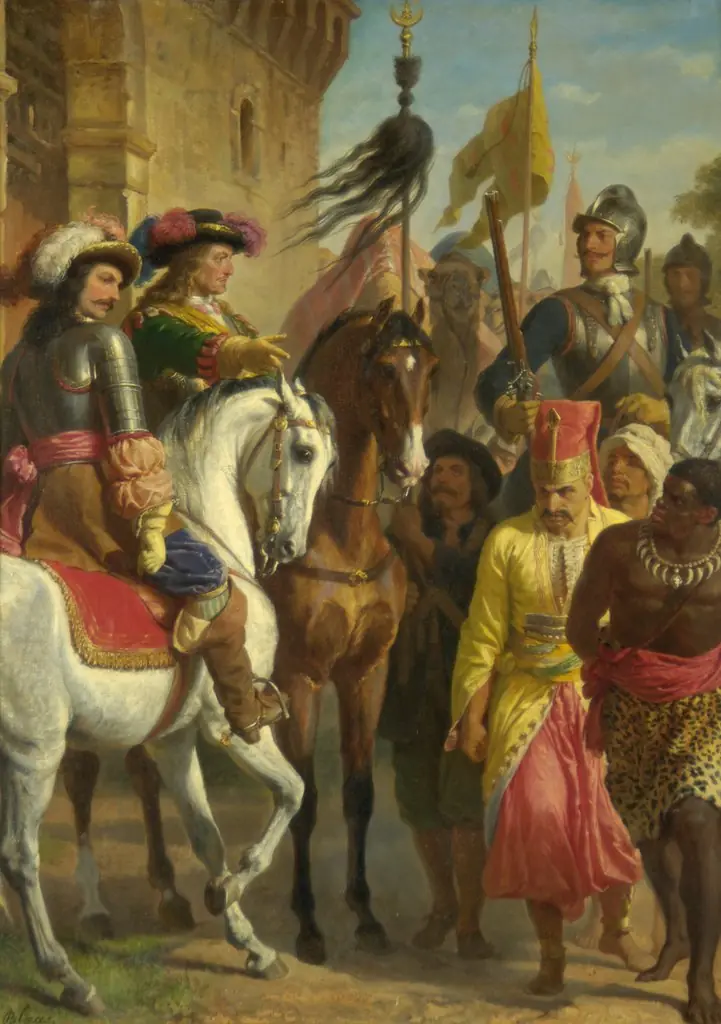 The Battle of Levenc 1664
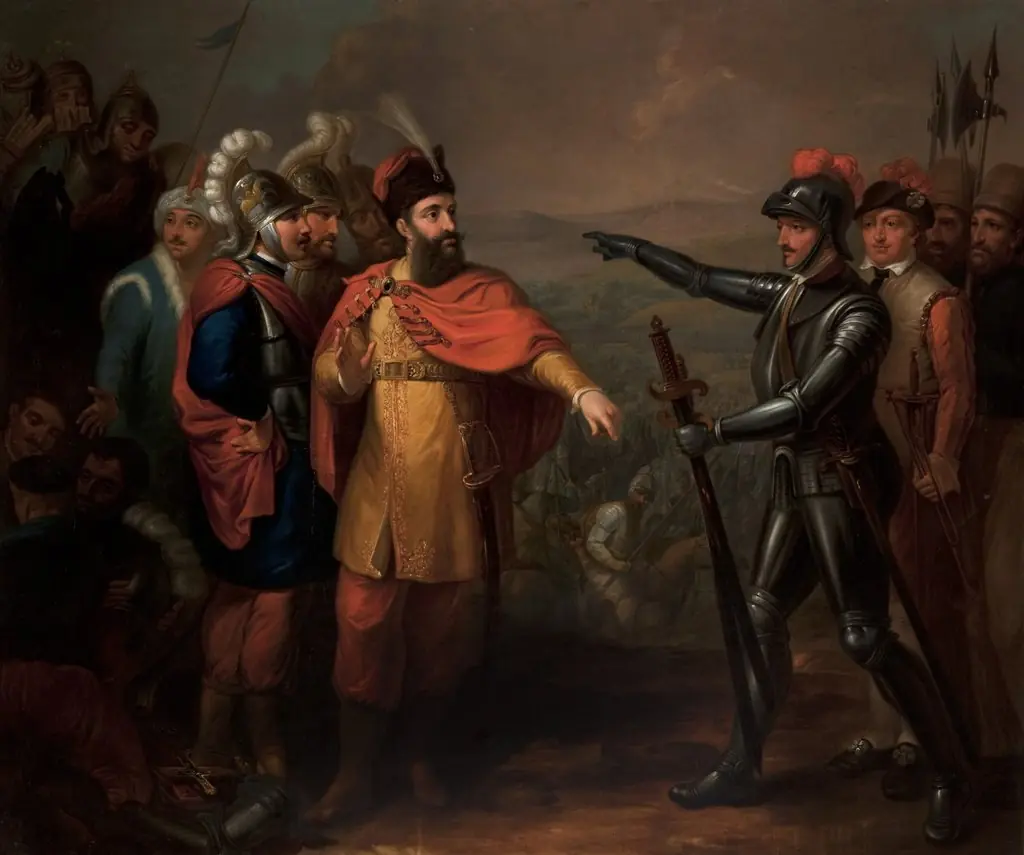 King Jagiełło and the Teutonic Knights
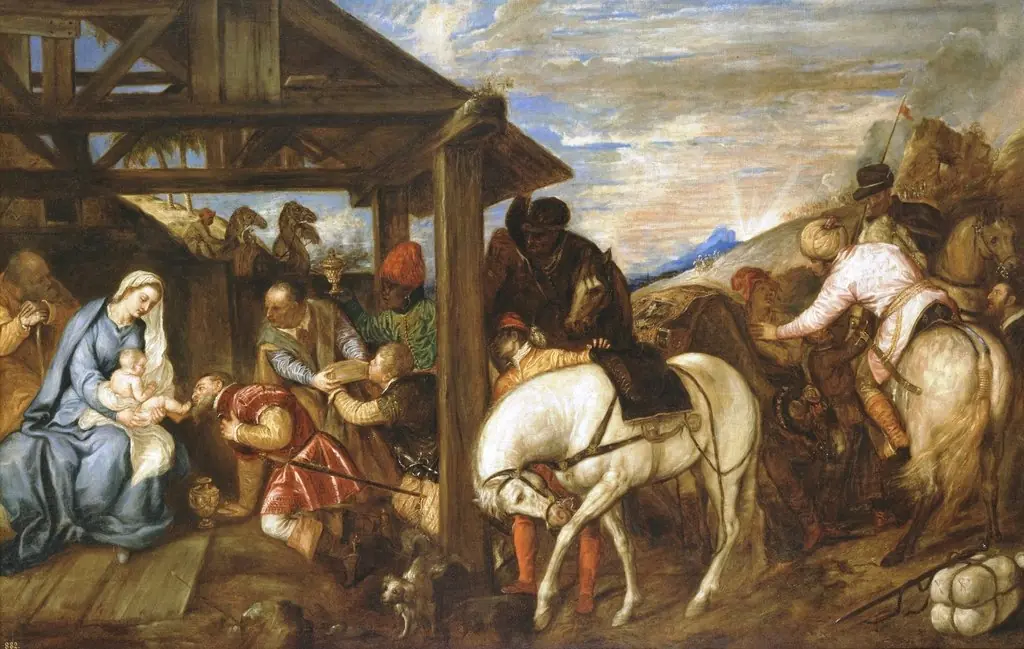 The Adoration of the Magi
- The Surrender of Brea