Artwork
Vision of St Antony of Padua
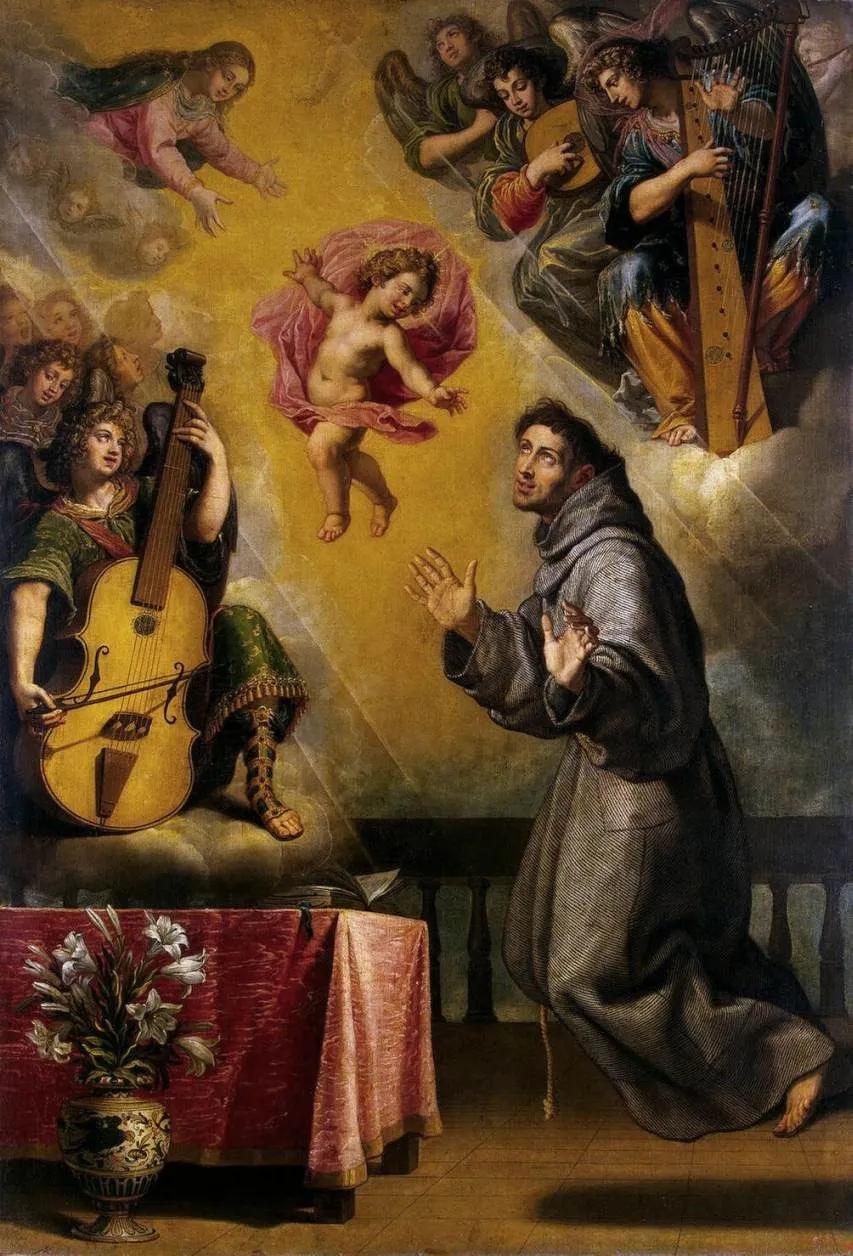
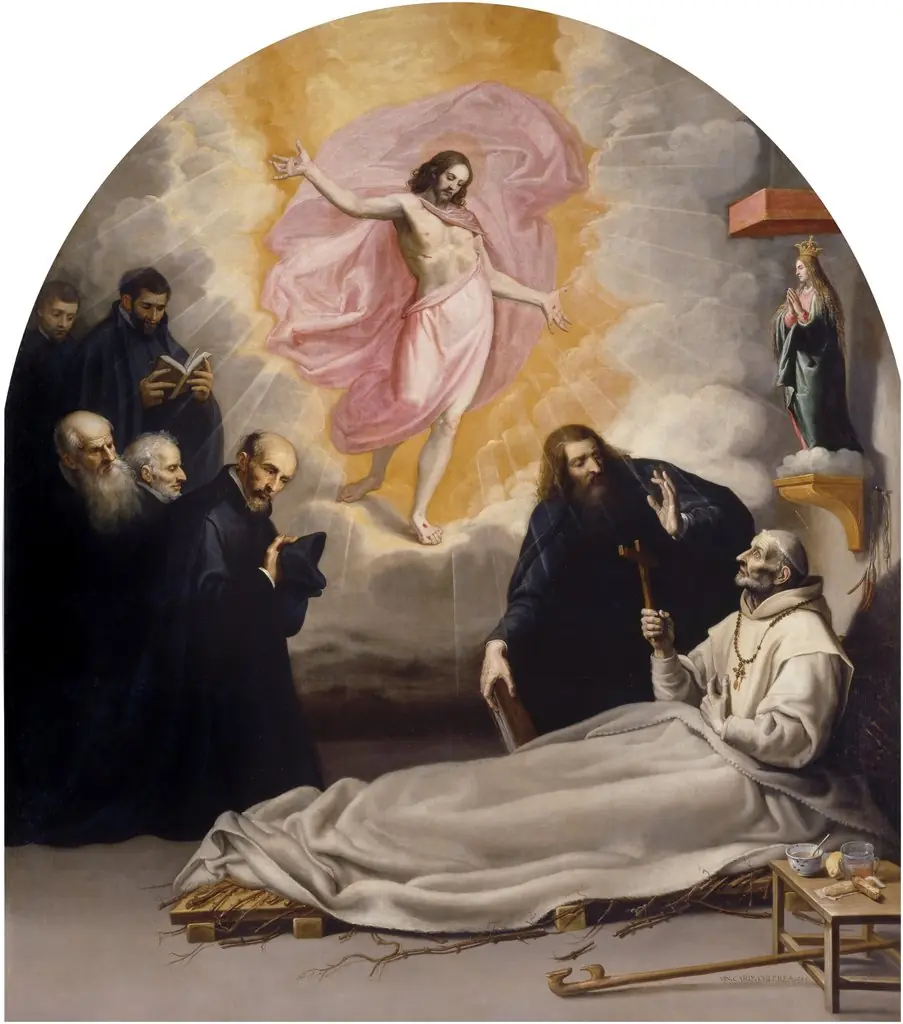
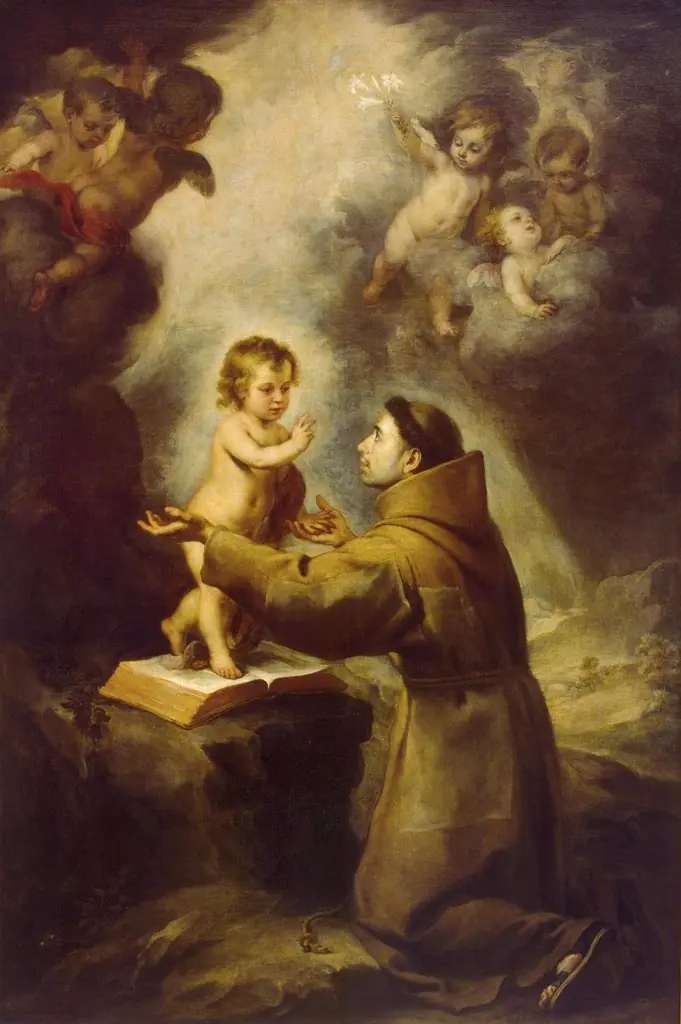
Vision of St Antony of Padua is an oil painting by the Early Baroque Italian artist Vincenzo Carducci. It dates from 1631 and is held in the collection of the Hermitage Museum.
About this work
Overview
The Vision of St Antony of Padua is a large oil-on-canvas painting by the Italian-born Spanish Baroque painter Vincenzo Carducci, dated 1631.
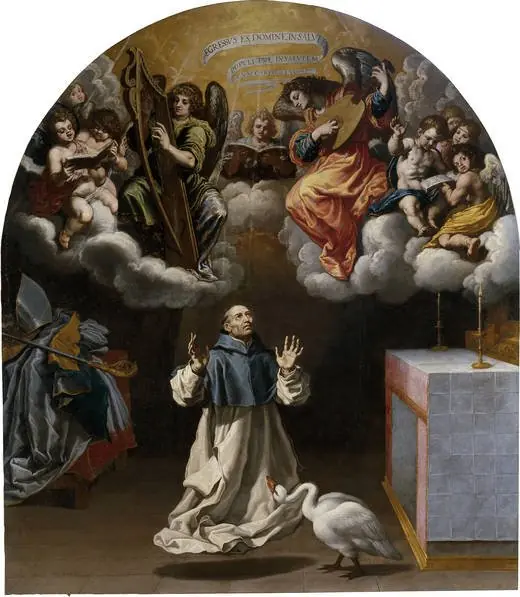
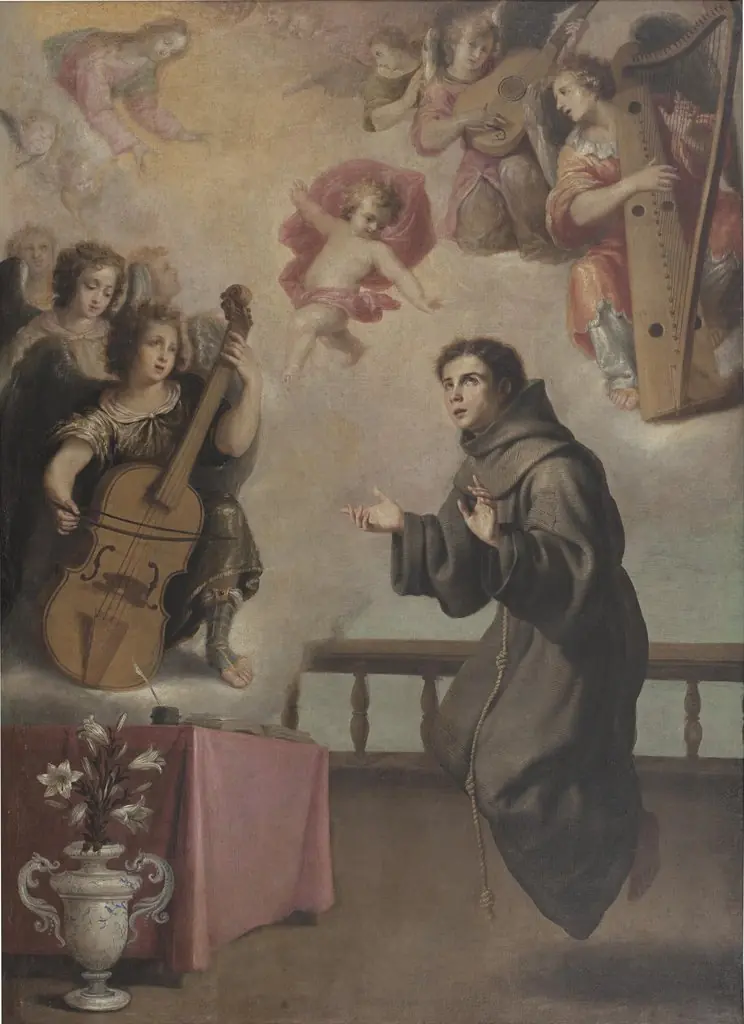
The Vision of St Antony of Padua is a large oil-on-canvas painting by the Italian-born Spanish Baroque painter Vincenzo Carducci, dated 1631. Measuring 277 by 170 centimetres, the work depicts the Franciscan saint's mystical vision of the Christ Child surrounded by a heavenly host of music-making angels. The painting is held in the collection of the Hermitage Museum in Saint Petersburg, Russia, where it is classified as a religious painting. Created in Spain during the mature phase of Carducci's career, the canvas exemplifies the artist's role as a leading religious painter at the court of Philip IV and his contribution to Spanish Baroque art. The work's scale, dramatic lighting, and synthesis of Italian compositional traditions with Spanish devotional intensity mark it as a significant example of seventeenth-century European religious painting.
Subject & Meaning
The painting portrays the vision experienced by Saint Anthony of Padua, the Portuguese-born Franciscan theologian and preacher who died in 1231 and was canonised in 1232. In the lower right, Anthony kneels in his grey-brown Franciscan habit, hands raised upward with palms open in an attitude of receptive prayer. Before him sits a table draped in red cloth bearing a vase of white lilies, traditional attributes associated with the saint's purity and his patronage of finding lost objects. The central visionary element appears above: a nude infant with a pink sash, representing the Christ Child, floats amid golden light with arms extended toward the supplicant saint. Surrounding the Child are angels on clouds, several of whom play musical instruments, including a large viol at the left, a lute, and a harp at the upper right, with additional figures in the upper left. This celestial concert evokes the harmony of divine revelation and the joyous response of heaven to earthly devotion. The composition's vertical orientation reinforces the theological structure of the vision, with the earthly realm below and the celestial vision above, connected by dramatic diagonal beams of light that illuminate the central figures while casting shadows below. The lilies on the table may allude to Anthony's reputed vision of the Christ Child, a subject that became increasingly popular in Counter-Reformation art as an affirmation of Christ's real presence and the efficacy of private devotion.
Technique & Style
The Vision of St Antony of Padua is executed in oil on canvas, the standard medium for large-scale Spanish Baroque religious painting. The brushwork demonstrates smooth modelling on flesh and fabrics, with finer detail reserved for the textural contrasts of the friar's habit and the reflective surface of the red tablecloth. The palette centres on warm golds, deep reds, and muted earth tones, creating a chromatic hierarchy that directs attention toward the radiant celestial zone. Strong diagonal beams of light cut through the scene, a characteristic Baroque device that creates dramatic chiaroscuro and spatial depth. The background is a radiant golden-yellow, with darker clouds at the edges, producing a luminous atmosphere that dissolves the boundary between the material and spiritual worlds. The composition is vertically oriented, with the earthly scene below and the celestial vision above, a structure that derives from Italian Renaissance altarpiece traditions but is here animated by the dynamic energy of the Baroque. The handling of the angelic musicians and their instruments shows attention to material specificity within an otherworldly context, while the overall effect of grandeur and spiritual significance is achieved through scale, colour, and light rather than overt emotionalism.
History & Provenance
The painting was created in 1631 in Spain, during the period when Carducci was working extensively for Philip IV. The exact circumstances of its commission remain unrecorded in the available sources. The work is now in the collection of the Hermitage Museum in Saint Petersburg, though the precise date and circumstances of its acquisition are not specified in the provided documentation. The Hermitage's holding of this canvas is noted in museum listings, which identify it among Carducco's works in Russian collections. No detailed exhibition history or earlier provenance chain is recorded in the available sources. The painting's presence in the Hermitage reflects the broader pattern of Spanish Baroque works entering Russian imperial collections during the eighteenth and nineteenth centuries, though the specific transaction for this canvas is not documented here.
Context
Vincenzo Carducci (1576 or 1578-1638) was an Italian painter who spent his entire career in Spain, where he became known as Vicencio or Vicente Carducho. Born in Florence and trained by his brother Bartolomeo, he arrived in Spain as a boy and was attached to the Spanish court from about 1585, with his presence first documented in 1601. He succeeded his brother as court painter, decorated the Palacio del Pardo, and executed the major cycle of 54 canvases for the Chartreuse of el Paular. His pupils included Juan Rizi, Pedro de Obregón, and Francisco Collantes, making him a significant pedagogical figure in the formation of the Spanish school. Carducci was also a theorist; his treatise De las Excelencias de la Pintura was published in 1633, two years after this painting. In that text, he advocated for painting as an intellectual pursuit and criticised the naturalism of Caravaggio and his followers, including Velázquez, whom he regarded as a dangerous departure from idealised, meditative religious art. The Vision of St Antony of Padua thus emerges from an artistic milieu that valued spiritual intensity, classical composition, and the painter's role as a learned interpreter of sacred narrative. The work's date of 1631 places it in the final years of Carducci's life, when his reputation was well established and his style fully mature.
Legacy
The Vision of St Antony of Padua occupies a place in Carducci's oeuvre as a representative example of his late religious painting, though it has not achieved the same scholarly attention as his major cycles, such as the El Paular series. The largest collection of his works remains in the Museo del Prado, and his critical reputation has been shaped more by his theoretical writings and his role as a teacher than by the individual afterlife of particular canvases. The painting's presence in the Hermitage has ensured its visibility in a major international museum context, and it appears in standard reference works and online databases devoted to the artist. The work's reproduction on art platforms indicates its continued use as an exemplar of Spanish Baroque religious painting and of Carducci's particular synthesis of Italian compositional clarity with Spanish devotional fervour. No specific later influence or cultural afterlife beyond its museum presence and scholarly documentation is recorded in the available sources.
Artist & collection
Artist
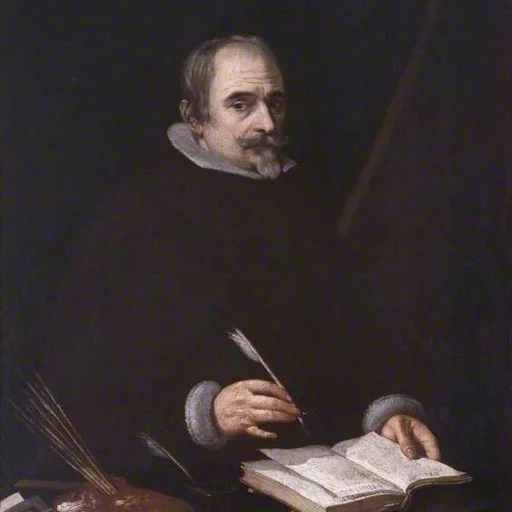
Vincenzio Carduccio (in Spanish, sometimes Vicencio or Vicente Carducho; 1576 or 1578–1638) was an Italian painter who spent his career in Spain.