Artwork
Brownish

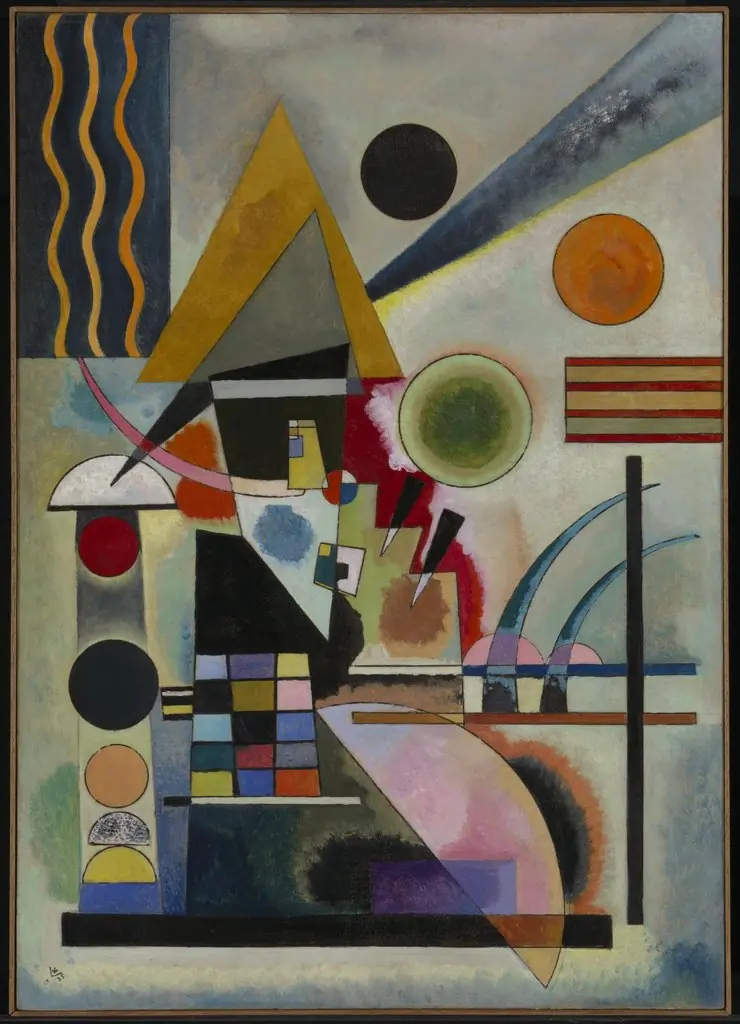
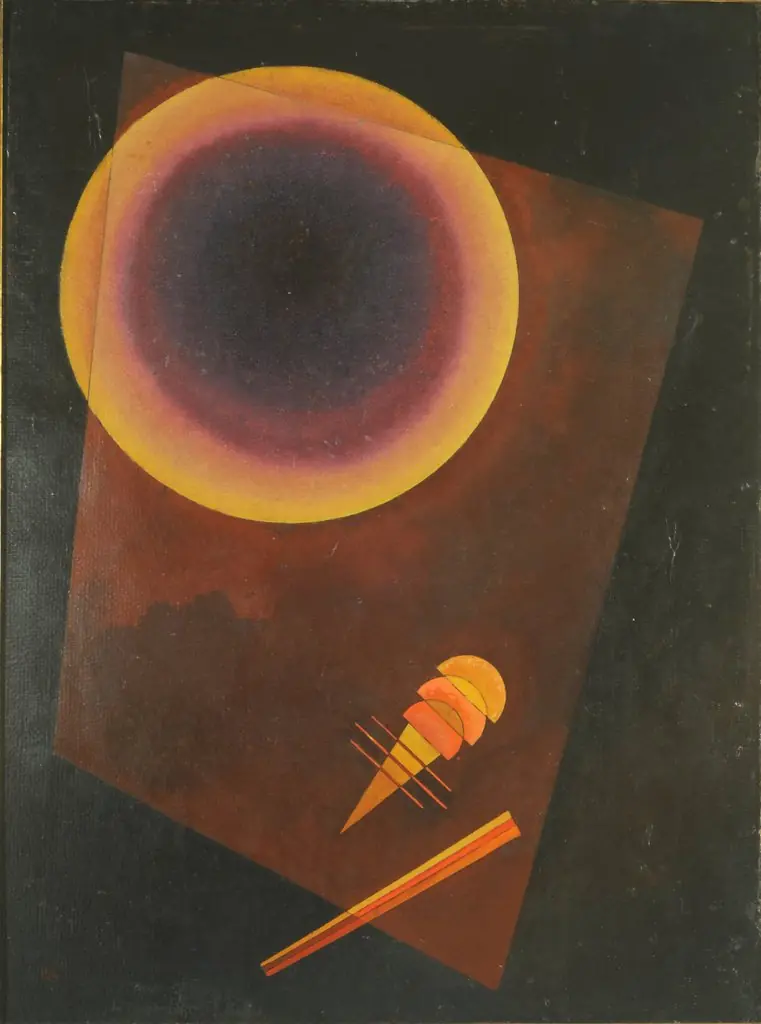
Brownish is an oil painting by the Abstract Expressionist artist Wassily Kandinsky. It dates from 1931 and is held in the collection of the San Francisco Museum of Modern Art.
About this work
Overview
Though not part of the later Abstract Expressionist movement, it aligns with his lifelong commitment to non-representational composition.
Painted in 1931, Brownish is an abstract oil work by Wassily Kandinsky, reflecting his mature exploration of form and color. Though not part of the later Abstract Expressionist movement, it aligns with his lifelong commitment to non-representational composition. The painting resides in the San Francisco Museum of Modern Art’s collection, representing a quiet yet deliberate phase in his career following his time at the Bauhaus.
Subject & Meaning
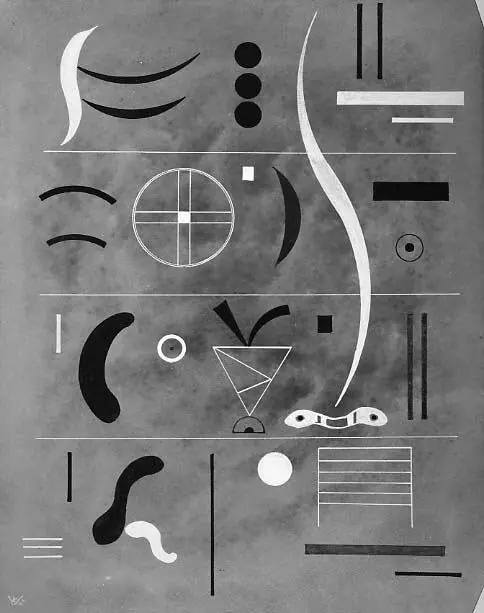
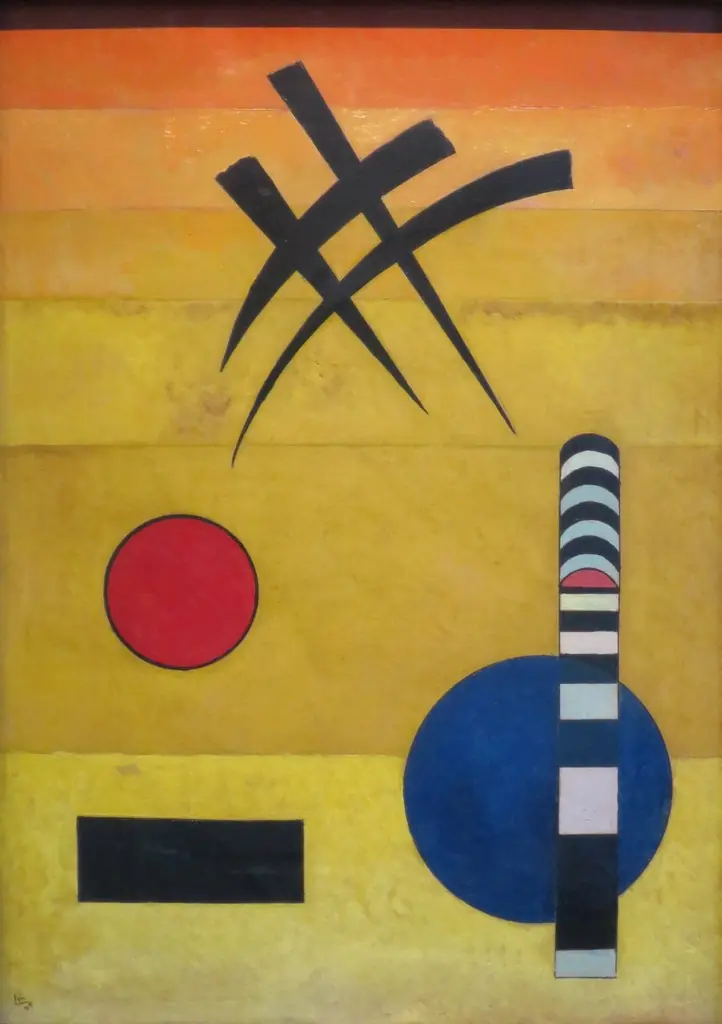
The painting avoids literal narrative, instead suggesting elemental forms: a red circle, a vertical white line, a boat-like shape, and a small dark figure. These elements evoke natural or symbolic references, land, sky, movement, or life, without defining them. Kandinsky intended such shapes to resonate emotionally, inviting viewers to experience inner harmony through simplified visual language rather than depict external reality.
Technique & Style
Kandinsky applied oil paint with restrained brushwork, layering muted browns to create subtle tonal shifts. Bold reds and blacks contrast against the earthy ground, while thin white lines introduce precision. Geometric shapes are deliberately unadorned, emphasizing balance and spatial tension. The use of negative space enhances stillness, reinforcing the painting’s meditative quality without decorative flourish.
History & Provenance
Created during Kandinsky’s years in Germany after leaving Russia, Brownish emerged from a period of intense theoretical reflection and reduced palette. It was likely painted after his tenure at the Bauhaus, when his style had become more restrained. The work entered the San Francisco Museum of Modern Art’s collection in the mid-20th century, where it remains as part of a broader survey of early modern abstraction.
Context
In the early 1930s, Kandinsky was distilling his earlier expressive abstraction into calmer, more structured compositions. This shift coincided with political instability in Europe and his growing focus on spiritual harmony through art. Brownish reflects this inward turn, aligning with contemporaneous works by artists like Mondrian and Malevich who sought order through geometry and limited color.
Legacy
Though less widely exhibited than his earlier works, Brownish exemplifies Kandinsky’s enduring influence on non-objective art. Its minimalism and emotional restraint prefigured later movements such as Color Field painting. The painting stands as a testament to his belief that abstraction could convey inner states without reliance on figurative reference, shaping how subsequent generations approached form and silence in art.
Artist & collection
Artist
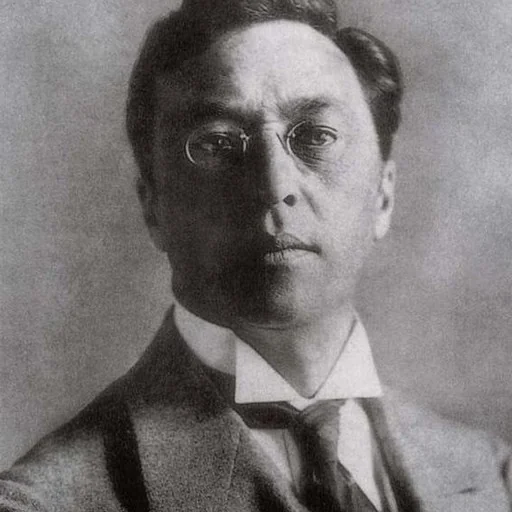
Wassily Wassilyevich Kandinsky (16 December 1866 – 13 December 1944) was a Russian painter and art theorist active in Germany during the late Belle Époque and Interwar eras.