Artwork
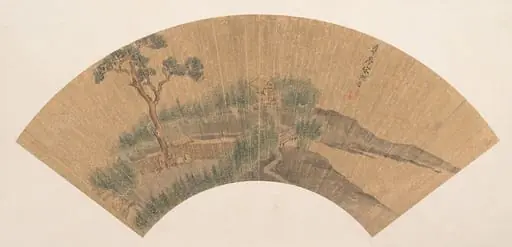
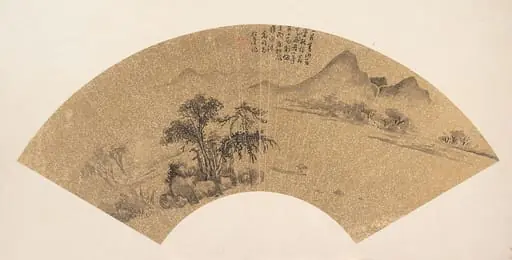
清 佚名 倣文徵明 書法 扇|Pavilion by Lake Shore
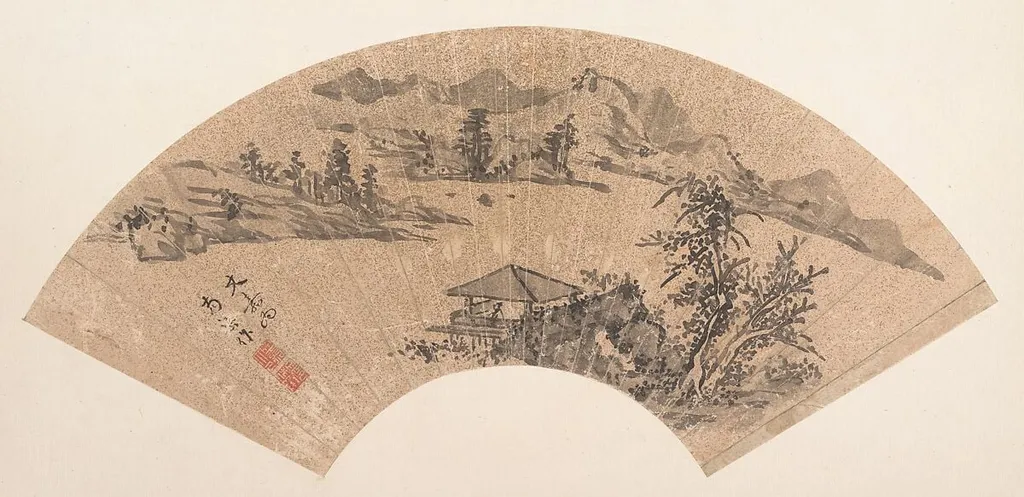
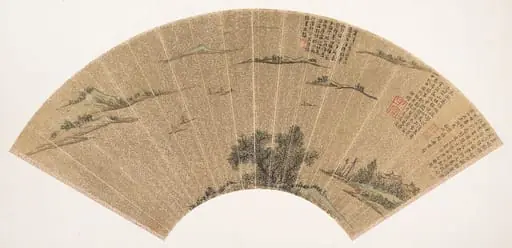
清 佚名 倣文徵明 書法 扇|Pavilion by Lake Shore is an ink painting by the Baroque artist Wen Jia. It is held in the collection of the Metropolitan Museum of Art.
- Accession no.
- 13.100.67
- Credit line
- John Stewart Kennedy Fund, 1913
About this work
Subject & Meaning
As a genre painting created in 1755, the composition centers on these architectural and natural elements, specifically a pavilion and a mountain.
The work presents a landscape scene depicting a pavilion situated near a mountainous backdrop. As a genre painting created in 1755, the composition centers on these architectural and natural elements, specifically a pavilion and a mountain. The title identifies the piece as an imitation of the style of the renowned Ming dynasty artist Wen Zhengming, suggesting the work engages with the tradition of emulating past masters.
While the specific symbolic narrative is not detailed in the available records, the inclusion of a pavilion within a mountain setting typically evokes themes of scholarly retreat and harmony with nature common in Chinese landscape painting. The piece is executed in ink on gold paper, a medium that enhances the visual presence of these depicted forms.
Technique & Style
Created in 1755, this work is executed in ink on gold paper, a support that originated as a folding fan before being remounted as an album leaf. The piece measures 17.5 by 49.5 centimeters and presents a landscape genre scene featuring mountains and a pavilion. Stylistically, the artwork is attributed to an anonymous painter who emulated the calligraphic and pictorial manner of Wen Jia, despite the title suggesting a connection to Wen Zhengming.
The handling of ink against the metallic gold surface highlights the formal qualities of the composition, which depicts a lakeside pavilion setting. The work remains part of the collection at the Metropolitan Museum of Art, preserving the specific material characteristics of Qing dynasty fan painting adapted for album presentation.
History & Provenance
The work, titled Pavilion by Lake Shore, is a landscape painting created in 1755 during the Qing dynasty. Although the title attributes the style to Wen Zhengming, the piece is executed by an anonymous artist, identified in some records as Wen Jia, who imitated the master's calligraphy and landscape approach. The artwork was produced in China on gold paper with ink, originally fashioned as a folding fan before being mounted as an album leaf.
It measures 17.5 cm in height and 49.5 cm in width. The specific commission details and the original owner's identity remain unrecorded in available documentation. The piece later entered the collection of the Metropolitan Museum of Art, where it is currently housed and cataloged as a representative example of mid-18th-century Chinese landscape art.
Overview
This anonymous Qing dynasty painting, titled Pavilion by Lake Shore, is rendered in ink on gold paper and mounted as an album leaf from a folding fan. It presents a serene landscape featuring a small pavilion nestled by a lake, surrounded by misty mountains. The work is understood as a later interpretation of a design originally conceived by the Ming dynasty artist Wen Jia.
Context
This artwork serves as a Qing dynasty reinterpretation of a landscape design by Wen Jia, a prominent painter from the Ming dynasty (1501–1583). Wen Jia was known for his refined landscapes, often following the style of his father, Wen Zhengming. The anonymous copyist's faithful reproduction, coupled with minor stylistic adjustments, reflects the enduring influence of earlier masters and the practice of artistic emulation in later periods.
Artist & collection