Artwork
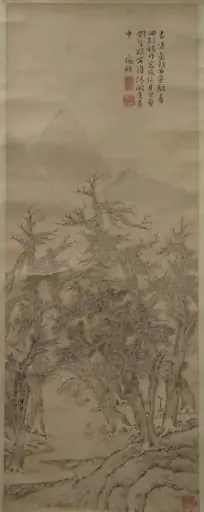
明? 佚名 傳文徵明 古藤樹石圖 軸|Old Wisteria among Trees and Rocks
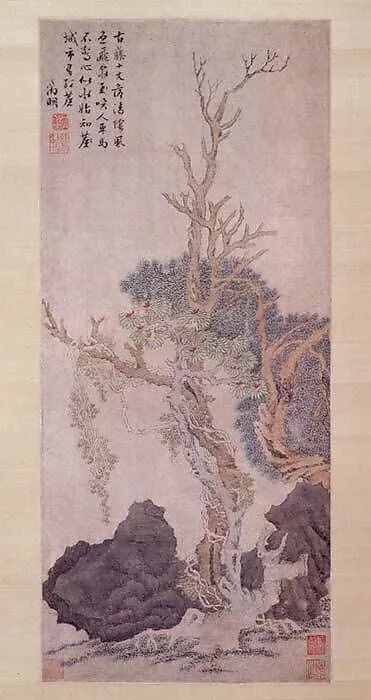
明? 佚名 傳文徵明 古藤樹石圖 軸|Old Wisteria among Trees and Rocks is an ink painting by the Yuan dynasty literati painting artist Wen Zhengming. It is held in the collection of the Metropolitan Museum of Art. Old Wisteria among Trees and Rocks is a hanging scroll painted in 1639 during the late Ming period.
About this work
History & Provenance
The work is dated 1639 by Wen Zhengming, a canonical date recorded in the painting’s inscription and corroborated by the Metropolitan Museum’s record.
The work is dated 1639 by Wen Zhengming, a canonical date recorded in the painting’s inscription and corroborated by the Metropolitan Museum’s record.
It entered the Metropolitan Museum of Art as part of its permanent holdings, where it remains today. The scroll is listed with dimensions of 63.5 cm in height and 29.2 cm in width, consistent with a hanging scroll format typical of Ming-dynasty scholar-painting.
The hanging scroll titled Old Wisteria among Trees and Rocks is held in the collection of the Metropolitan Museum of Art. The work is attributed to an anonymous painter, though traditionally associated with Wen Zhengming, and is dated to 1639. Specific inventory or accession numbers for the piece are not provided in the available records. No exhibition history is documented in the current sources.
Overview
Old Wisteria among Trees and Rocks is a hanging scroll painted in 1639 during the late Ming period. Executed in ink with touches of pale green on paper, the work presents a solitary, twisted wisteria vine climbing a craggy slope, its foliage and blossoms rendered in delicate, flowing strokes.
Subject & Meaning
The composition centers on the aged wisteria, its tangled stems and cascading blossoms suggesting resilience and the passage of time. By placing the vine against a stark rocky backdrop, the artist highlights the contrast between living vegetation and inert stone, a common motif symbolizing the harmony of nature’s opposing forces.
Technique & Style
The artist employs monochrome ink complemented by a faint green wash, relying on fine, overlapping lines to model the vine’s texture. Cross‑hatching creates subtle gradations of tone without heavy shading, allowing the plant to appear to unfurl from the paper’s surface. The brushwork is precise yet fluid, characteristic of literati painting.
Context
Created at a time when Ming literati artists emphasized personal expression over realistic depiction, the work reflects Wen’s interest in integrating poetry, calligraphy, and painting. The solitary wisteria motif aligns with contemporary garden aesthetics that prized aged, twisted trees as symbols of cultivated taste.
Legacy
The scroll continues to be studied for its masterful use of line and restrained palette, illustrating the literati ideal of conveying spirit through minimal means. It informs later Qing and modern Chinese painters who explore the expressive potential of ink brushwork.
Artist & collection

Artist
Wen Zhengming spent most of his life in Suzhou, a city of canals and scholars where art and poetry were daily habits, not hobbies.

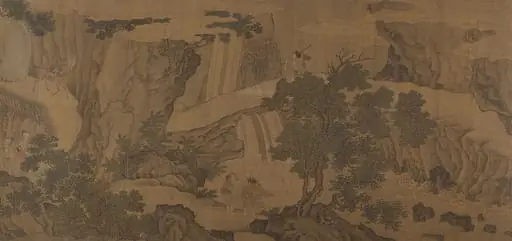 明 佚名 游仙圖 卷|Daoist Immortals in a Landscape
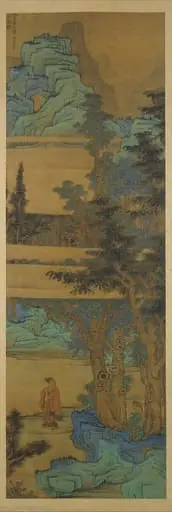 明 陳洪綬 樹下高士圖 軸|Scholar-recluse in blue-green landscape
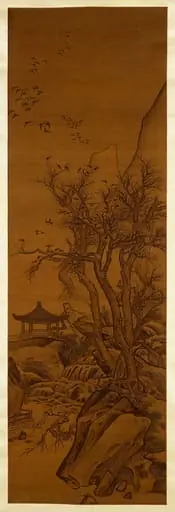 Untitled
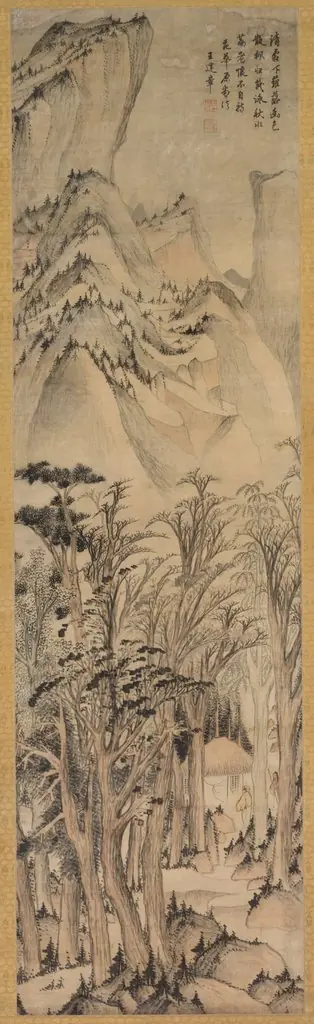 Solitary Colors of the Autumn Woods
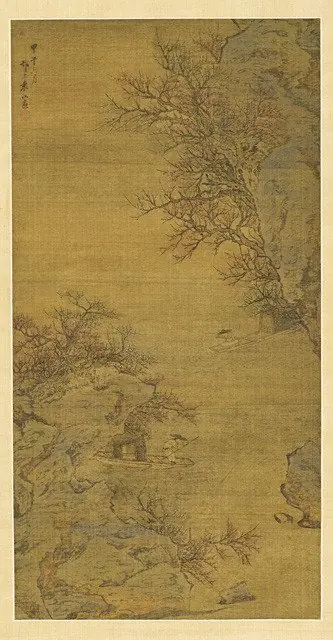 River-Crossing in the Spring
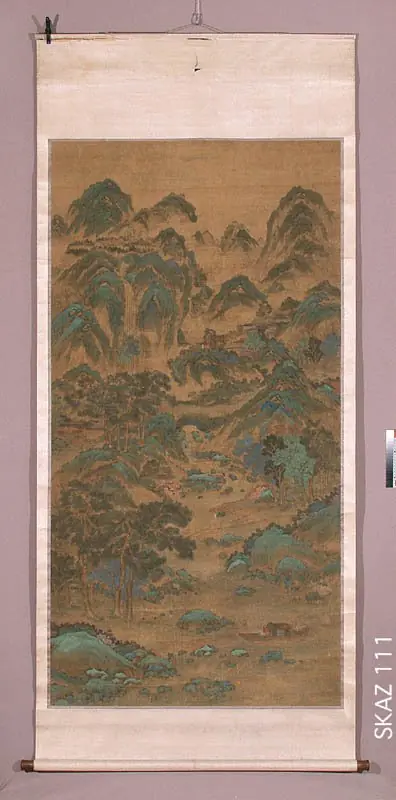 Przeprawa przez górski potok - pejzaż w stylu niebiesko-zielonym
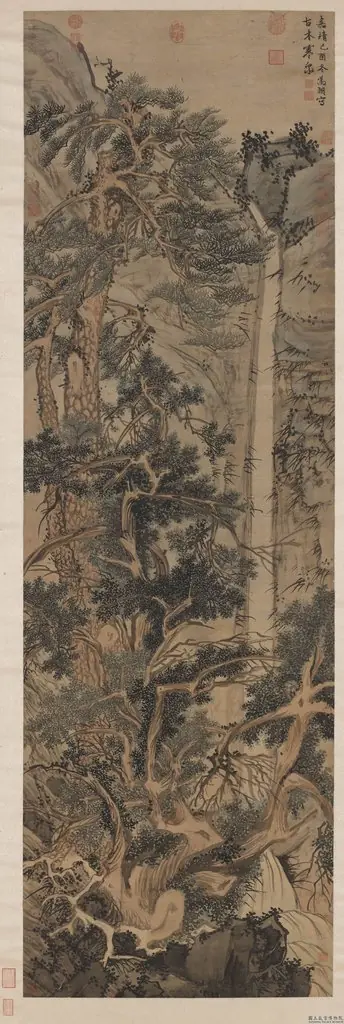 Old Trees by a Cold Waterfall
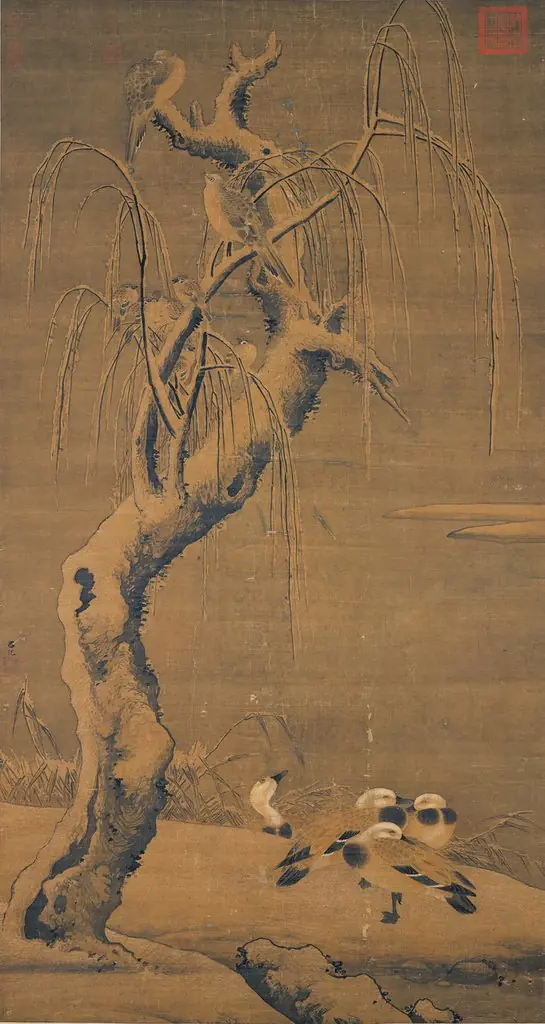 Birds in the Snow
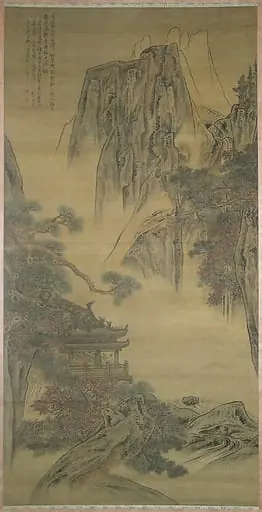 清 李寅 高閣觀瀑圖 軸|Viewing a waterfall from a mountain pavilion
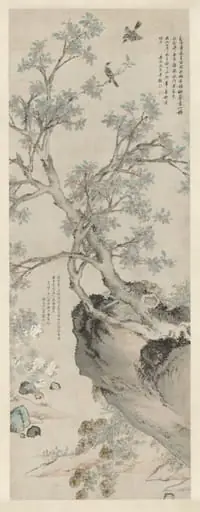 Yellow Chrysanthemums and Red Osmanthus in the Style of Wang Yuan