Artwork
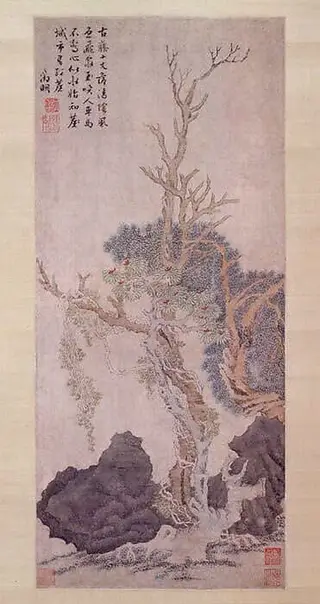
清 佚名 倣文徵明 深林調茗 軸|Scholar Seated in Grove
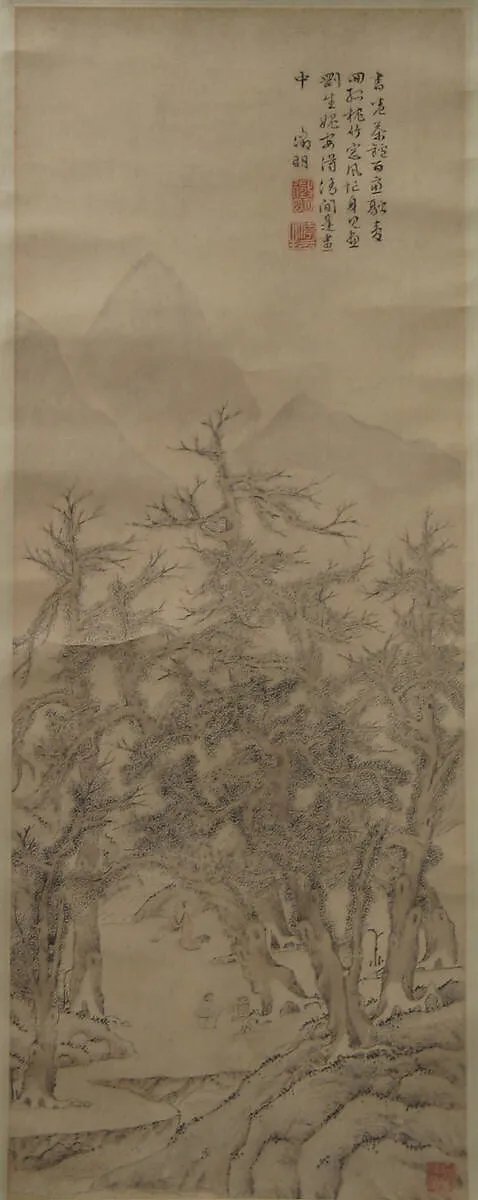
清 佚名 倣文徵明 深林調茗 軸|Scholar Seated in Grove is an ink painting by the Ming dynasty painting artist Wen Zhengming. It dates from 1549 and is held in the collection of the Metropolitan Museum of Art. This hanging scroll, titled Scholar Seated in Grove, is an ink and color painting on paper from the Qing Dynasty.
About this work
Technique & Style
The composition focuses on a landscape genre, specifically depicting a scholar seated within a grove of trees.
Executed in 1549, this hanging scroll employs ink and color on paper as its primary medium and support. Although the work is attributed to an anonymous Qing dynasty painter, it stylistically imitates the manner of Wen Zhengming, a prominent figure of the Ming dynasty. The composition focuses on a landscape genre, specifically depicting a scholar seated within a grove of trees.
The physical dimensions of the piece are recorded as 66.4 cm in height and 25.4 cm in width. While the specific handling of the brush or current condition reports are not detailed in the available records, the formal qualities align with the literati landscape tradition, utilizing a vertical format typical of hanging scrolls intended for display. The work originates from China and is currently held in the collection of the Metropolitan Museum of Art.
History & Provenance
Although the artwork is titled as an imitation of Wen Zhengming and bears the date 1549, it is attributed to an anonymous Qing dynasty painter rather than Wen Zhengming himself. The piece was created in China as a hanging scroll executed in ink and color on paper. Specific details regarding its original commission, early ownership history, or chain of custody prior to its current location are not provided in the available records.
The work is held in the collection of the Metropolitan Museum of Art in New York, where it is classified as a landscape painting. No accession or inventory number is supplied in the sources consulted, nor any record of past exhibitions.
Legacy
The work, dated 1549 and executed as a hanging scroll in ink and color on paper, is classified as a landscape painting that depicts a tree, reflecting the literati aesthetic of the Ming period. Its attribution to the circle of Wen Zhengming and inclusion in the Metropolitan Museum of Art’s collection have positioned it as a key example for the study of Chinese landscape traditions, informing scholarly analyses of the era’s artistic conventions. The painting’s compositional treatment of deep forest spaces and its subtle coloration have been cited in art historical literature as influential for later interpretations of Ming landscape art, establishing a lasting reputation among experts.
Overview
This hanging scroll, titled Scholar Seated in Grove, is an ink and color painting on paper from the Qing Dynasty. It depicts a tranquil landscape scene, characteristic of traditional Chinese art. The work is an anonymous imitation of the style of Wen Zhengming, a prominent artist from the Ming Dynasty, reflecting a common practice among later painters to engage with and learn from historical masters.
Subject & Meaning
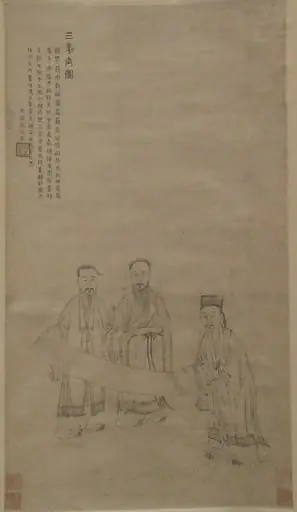
The painting centers on a scholar seated beneath towering bamboo, engaged in the quiet act of sipping tea from a small cup. Surrounding him, trees lean gently, their foliage rendered with delicate, swift brushstrokes. A solitary rock and a flowing stream complete the serene setting, creating an atmosphere of contemplation and harmony with nature, a recurring theme in literati painting.
Context
Created during the Qing Dynasty, this unsigned scroll exemplifies the tradition of later artists emulating the styles of earlier masters. The work specifically draws inspiration from Wen Zhengming, a celebrated painter of the 16th century whose landscapes were known for their elegant simplicity and evocative power. Such imitations served as both homage and a method for artistic training, allowing painters to explore and reinterpret established aesthetic conventions.
Artist & collection

Artist
Wen Zhengming spent most of his life in Suzhou, a city of canals and scholars where art and poetry were daily habits, not hobbies.

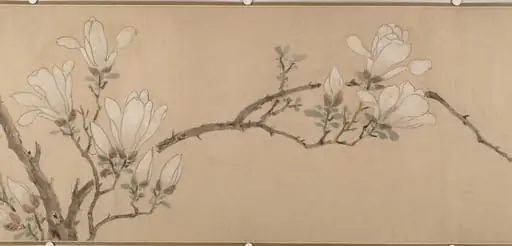
- Plums, Bamboo, and Orchid
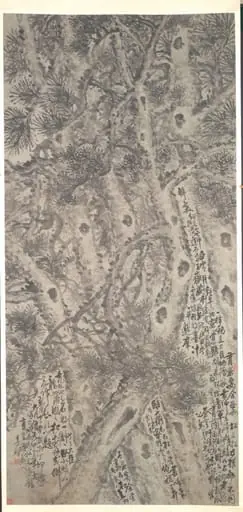 Five Pine Trees
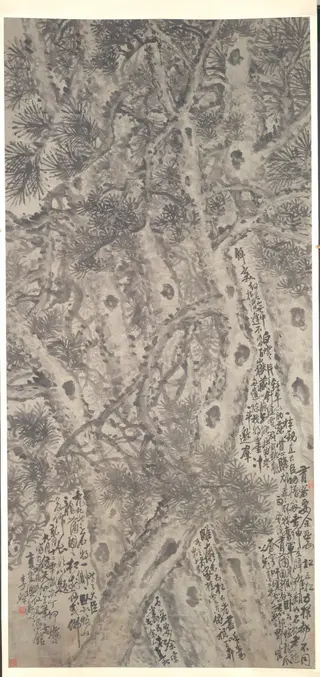 Five Pine Trees
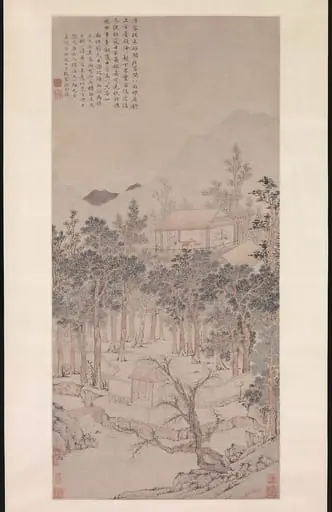
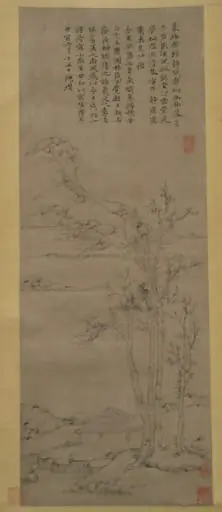 明/清 佚名 倣倪瓚 樂圃林居圖 軸|Landscape after Ni Zan (1306–1374)
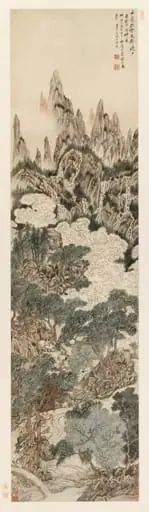 Morning Sun over Heavenly Citadel Peak
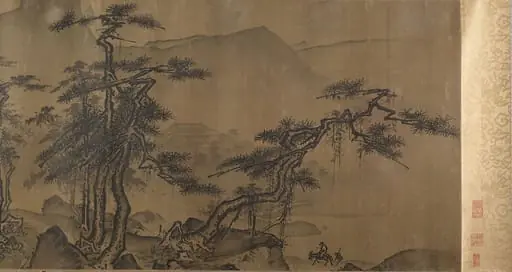 明/清 佚名 李遠(僞款) 仿夏珪江山清遠圖 卷|Landscape
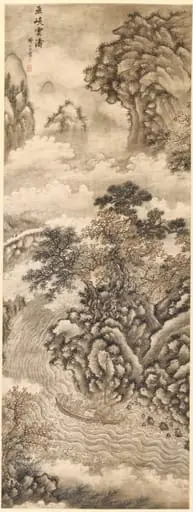 Clouds and Waves at the Wu Gorge
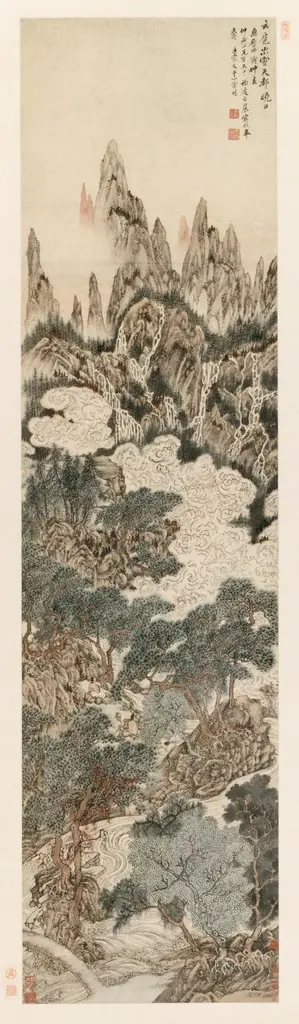 Morning Sun over Heavenly Citadel Peak
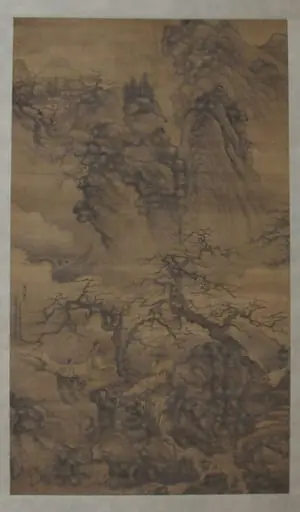 Untitled
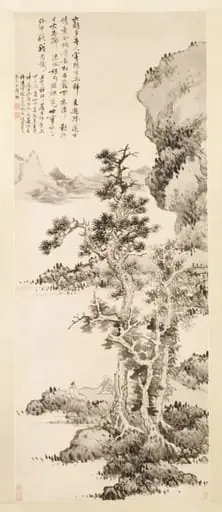 Zhi and Xu's Pure Conversation
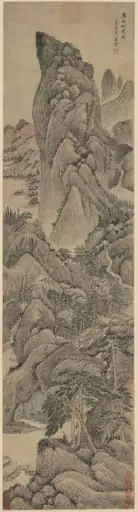 Pine Wind from Myriad Villages
 明/清 佚名 舊傳方從義 三學士圖 軸|The Three Scholars