Artwork
Pierrot
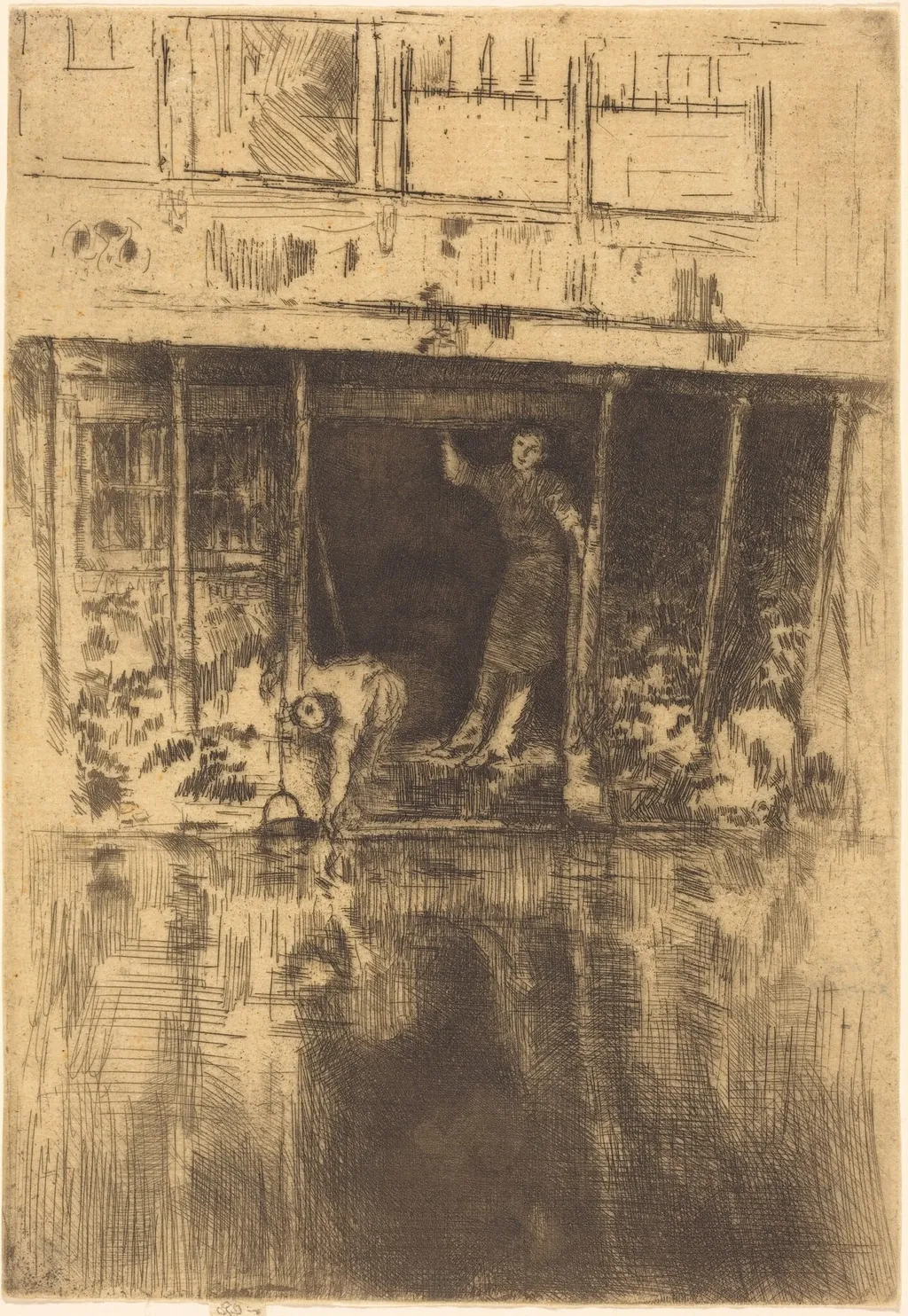
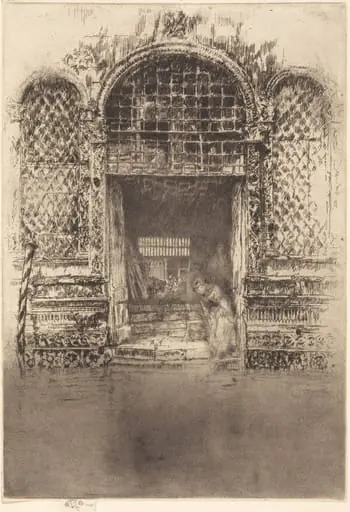
Pierrot is an ink print by the Impressionist artist James McNeill Whistler. It dates from 1889 and is held in the collection of the National Gallery of Art.
- Inscription
- Inscribed:[Whistler's butterfly signature] upper left composition, in plate, artist's hand. "[Whistler's butterfly signature] imp" lower left tab, graphite, artist's hand. Not dated. "c 270[illeg.]" verso, lower left sheet, graphite, unknown hand. "JHW / 32471 mk" verso, lower left sheet, graphite, unknown hand.
- Markings
- Marked:"LRJ" verso, black stamped ink. "National Gallery of Art" verso, black stamped ink. "J.H.W." verso, black stamped ink (Lugt 1475).
About this work
Overview
Created in 1889, Pierrot is an intaglio print that combines etching with drypoint on Asian laid paper. The work belongs to James McNeill Whistler, an American-born artist who spent most of his career in Britain. Executed as a single sheet, the image presents a dimly lit interior populated by a solitary figure and a dog, rendered with a network of fine, intersecting lines.
Subject & Meaning
In Whistler’s version, the performer stands beside an open wardrobe, hands clasped around an unseen object, while a dog watches from the floor.
The central figure is the commedia dell’arte character Pierrot, traditionally a melancholic clown. In Whistler’s version, the performer stands beside an open wardrobe, hands clasped around an unseen object, while a dog watches from the floor. The sparse setting and restrained gesture suggest an introspective mood rather than theatrical spectacle, aligning with Whistler’s preference for mood over narrative sentiment.
Technique & Style
Whistler employed both etching and drypoint, allowing him to vary line depth and texture. The drypoint burr creates velvety shadows, while the etched lines define the architecture of the room. The paper, Asian laid, with its subtle ribbing, enhances the tonal delicacy.
Quick, scratchy strokes outline the walls and furniture, giving the composition an unfinished, almost sketch‑like quality that emphasizes atmosphere over detail.
History & Provenance
The print emerged during Whistler’s mature period, when he concentrated on the autonomy of the print medium. It bears his distinctive butterfly signature, a motif he used to assert artistic identity. Pierrot has remained in private collections and occasional museum exhibitions, illustrating Whistler’s continued interest in theatrical subjects and his experimental approach to paper and intaglio processes.
Context
In the late nineteenth century, Whistler was part of a broader movement among expatriate artists who sought to separate visual art from literary sentiment. His focus on tonal harmony and subtle chiaroscuro placed him alongside contemporaries exploring the limits of printmaking. The choice of a commedia dell’arte figure reflects a fascination with European cultural icons, while the intimate interior setting mirrors the era’s interest in domestic, everyday scenes.
Own this work as a print
Artist & collection
Artist
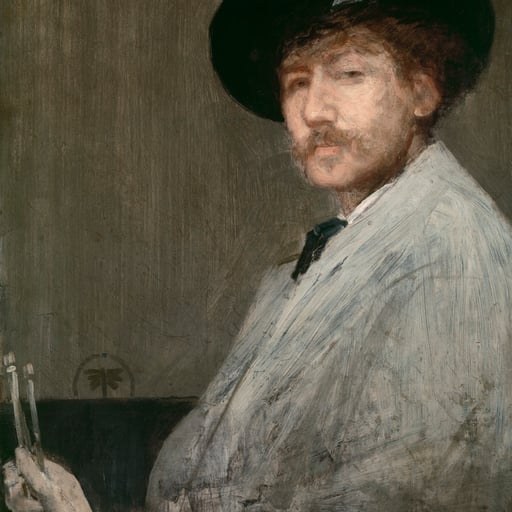
James Abbott McNeill Whistler (; July 10, 1834 – July 17, 1903) was an American painter in oils and watercolor, and printmaker, active during the American Gilded Age and based primarily in the United Kingdom.

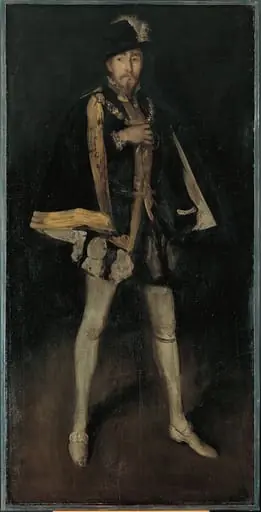 Arrangement in Black, No. 3: Sir Henry Irving as Philip II of Spain
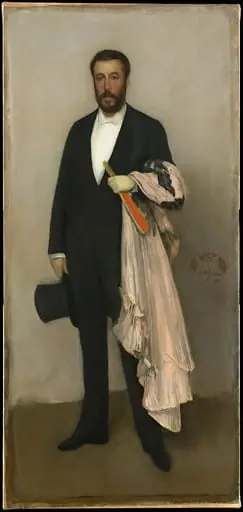 Arrangement in Flesh Colour and Black: Portrait of Theodore Duret
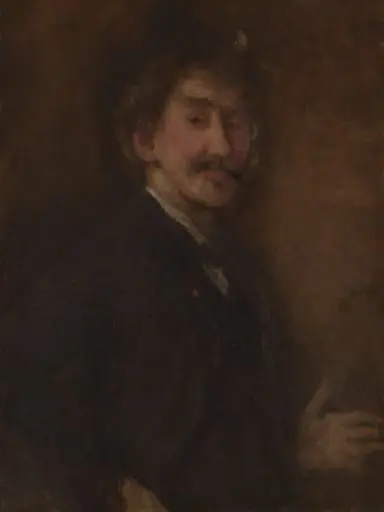 Gold and Brown: Self-Portrait
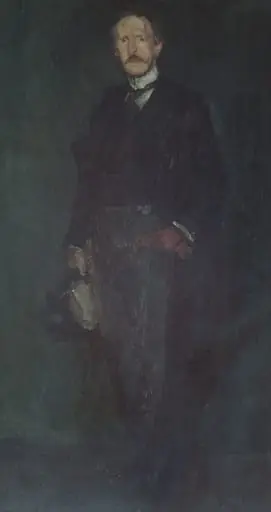 Edward Guthrie Kennedy
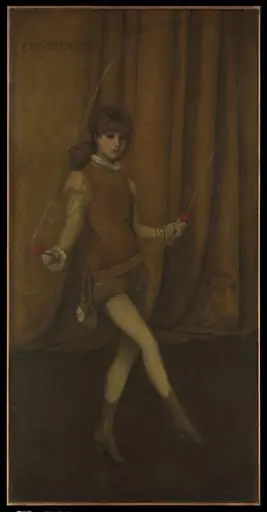 Harmony in Yellow and Gold: The Gold Girl—Connie Gilchrist
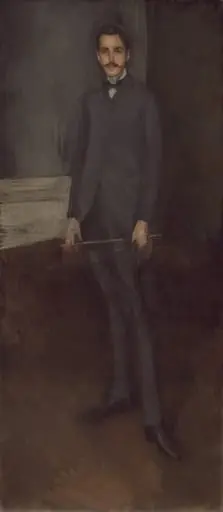 George W. Vanderbilt
 Symphony in White, No. 1: The White Girl
 Henry Irving as Philip II of Spain