Artwork
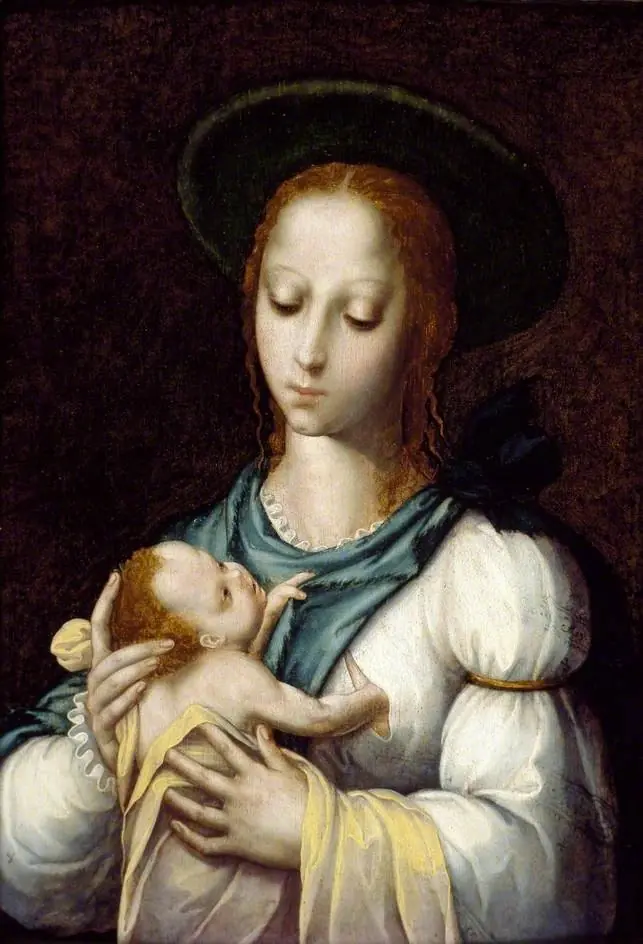
The Virgin and Child in Egypt
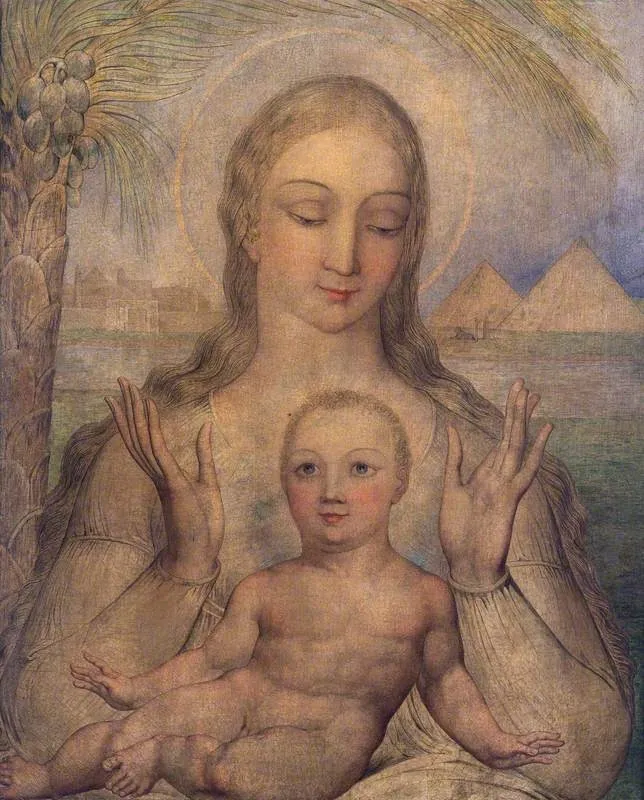
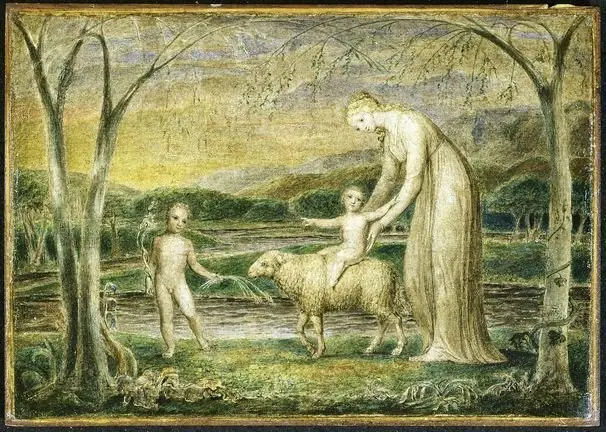
The Virgin and Child in Egypt is a tempera painting by William Blake. It dates from 1810 and is held in the collection of the Victoria and Albert Museum.
About this work
The artist's use of tempera paint creates a sense of depth and texture, with subtle gradations of color that add to the overall sense of calm.
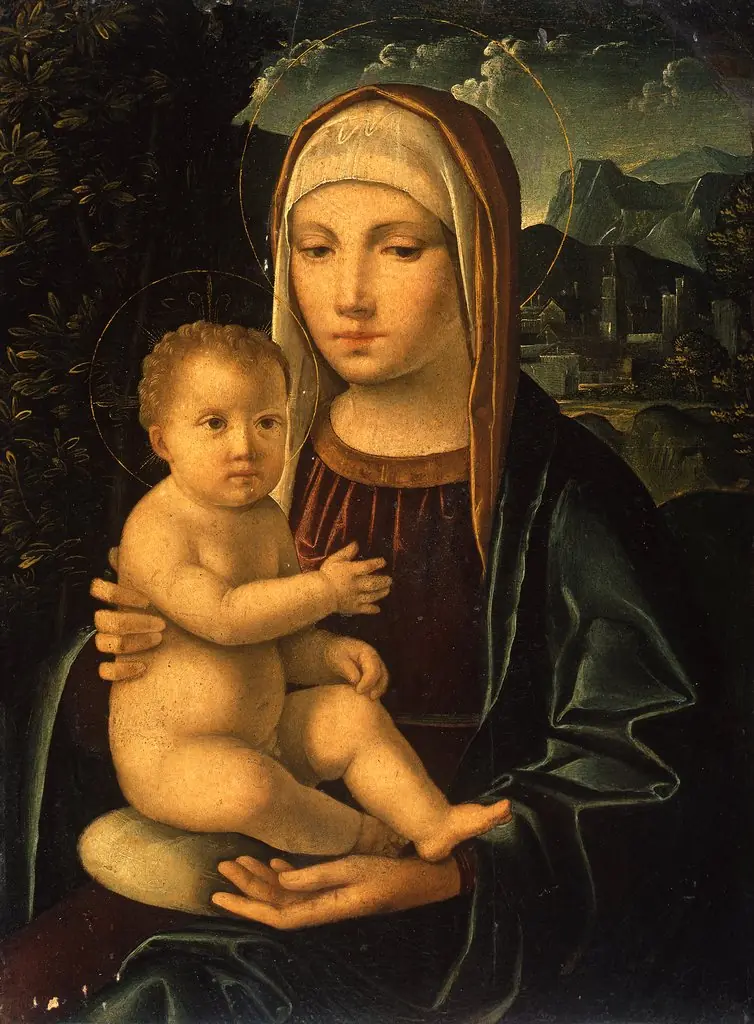
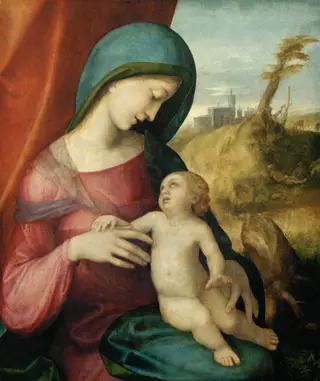
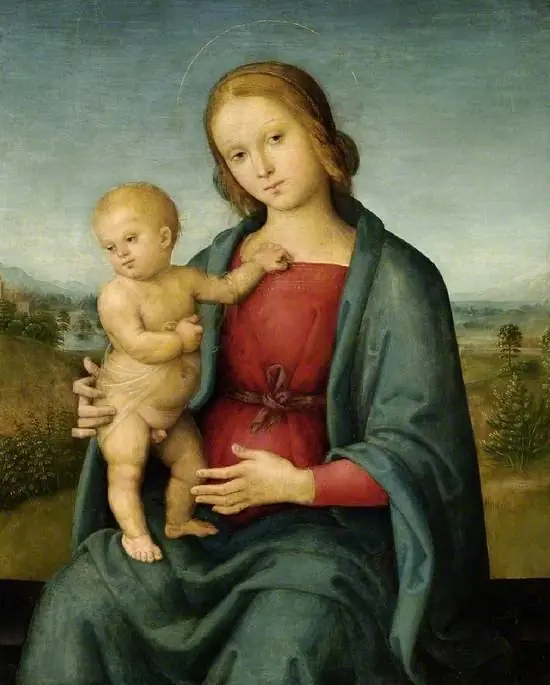
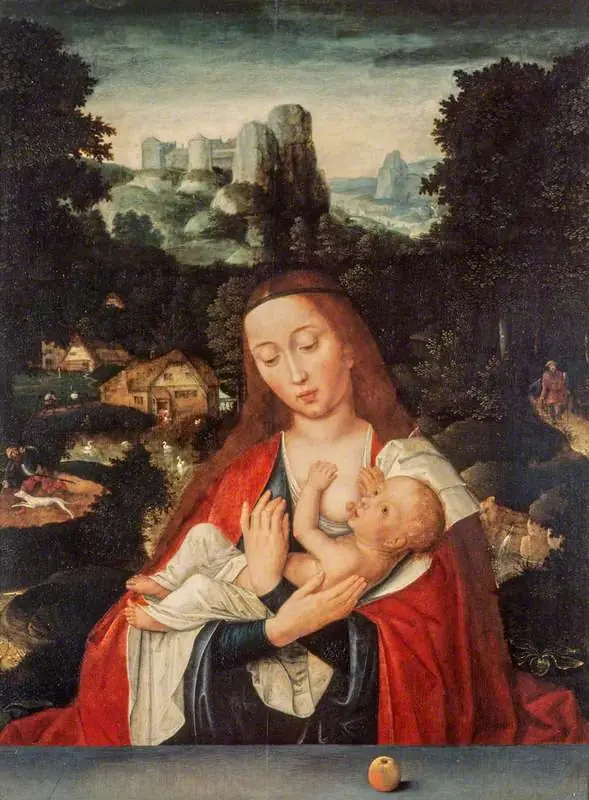
This painting depicts a serene scene of the Virgin Mary holding the infant Jesus. The Virgin's long, wavy hair frames her gentle face, while her hands are raised in a gesture of devotion. The baby Jesus sits on her lap, looking directly at the viewer. In the background, a palm tree and pyramids are visible, set against a soft, muted sky.
The artist's use of tempera paint creates a sense of depth and texture, with subtle gradations of color that add to the overall sense of calm.
If you're interested in learning more about the artist behind this work, you might want to look up William Blake (British, 1757–1827).
Overview
Created in 1810, The Virgin and Child in Egypt is a tempera painting by the English poet‑artist William Blake. The work presents the Virgin Mary cradling the infant Jesus, set against a distant landscape that includes a palm tree and pyramids beneath a muted sky. It is part of the Victoria and Albert Museum’s collection.
Subject & Meaning
The composition portrays a tranquil devotional scene: Mary’s long, wavy hair frames her serene expression, her hands are lifted in a gesture of reverence, while the child looks outward, engaging the viewer. The Egyptian backdrop, with its iconic palm and pyramids, situates the biblical narrative within an exotic, timeless setting.
Technique & Style
Blake employed tempera, a medium traditionally used for iconography, allowing for fine detail and layered color. His application yields subtle tonal shifts that give the figures a gentle three‑dimensionality. The painter’s characteristic symbolic imagination is evident in the stylized forms and the harmonious, muted palette.
History & Provenance
Blake, who lived most of his life in London, produced this work during the later phase of his career. After remaining in private hands for decades, the painting entered the Victoria and Albert Museum, where it is displayed as part of the museum’s holdings of 19th‑century British art.
Artist & collection
Artist
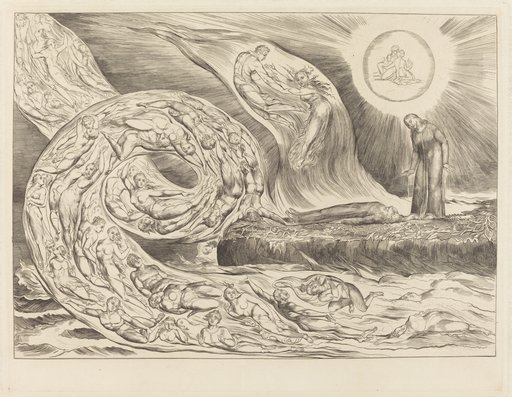
William Blake (28 November 1757 – 12 August 1827) was an English poet, painter and printmaker.