Artwork
City Watchman
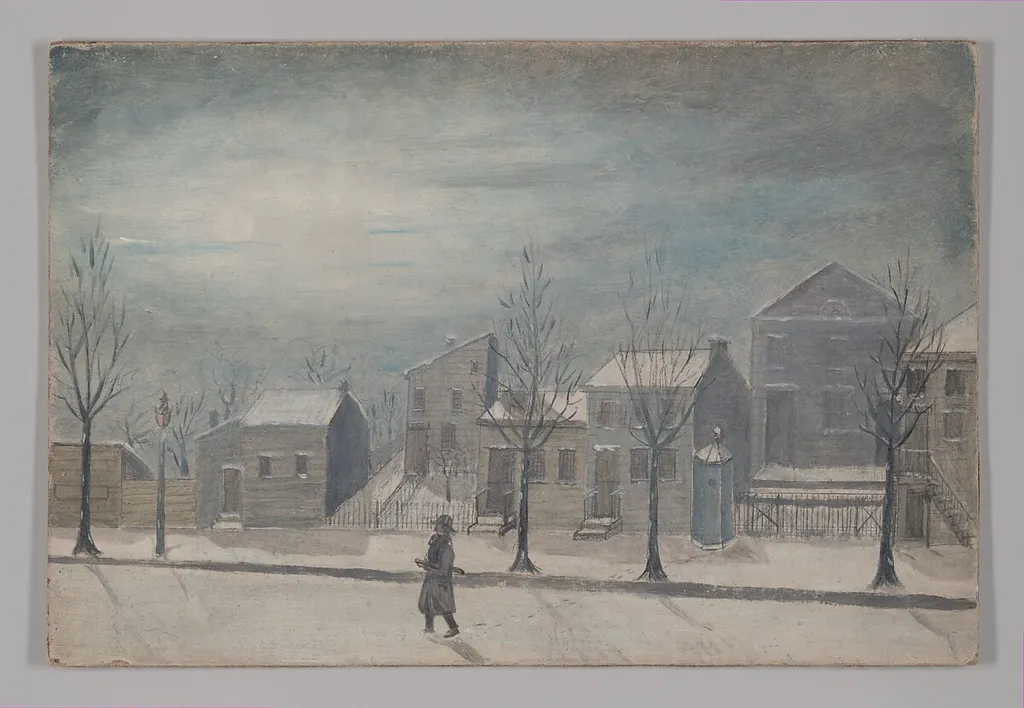
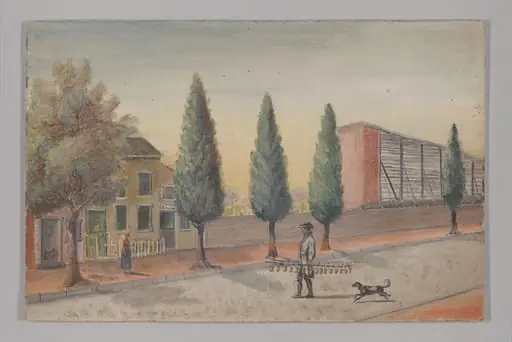
City Watchman is an oil painting by the American Folk Art artist William P. Chappel. It dates from 1874 and is held in the collection of the Metropolitan Museum of Art. William P.
- Accession no.
- 54.90.500
- Credit line
- The Edward W. C. Arnold Collection of New York Prints, Maps, and Pictures, Bequest of Edward W. C. Arnold, 1954
About this work
Subject & Meaning
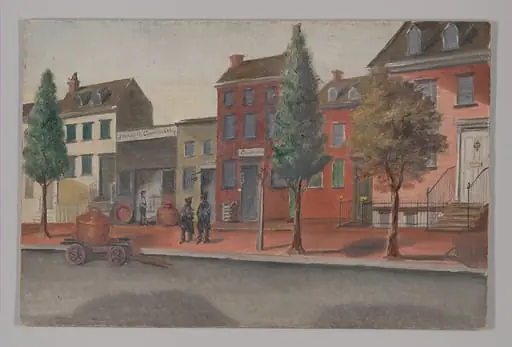
Chappel's 1874 oil painting City Watchman presents a genre scene focused on urban life.
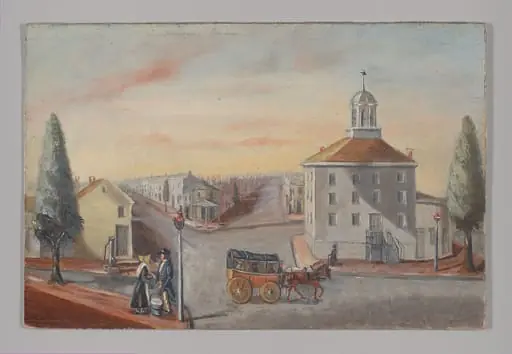
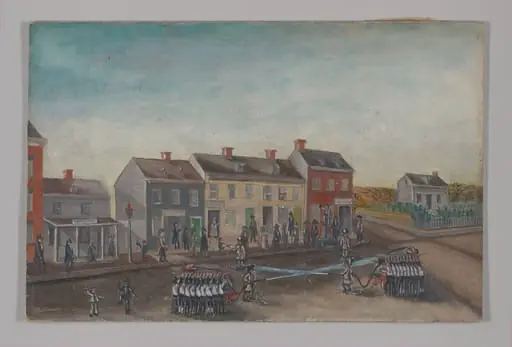
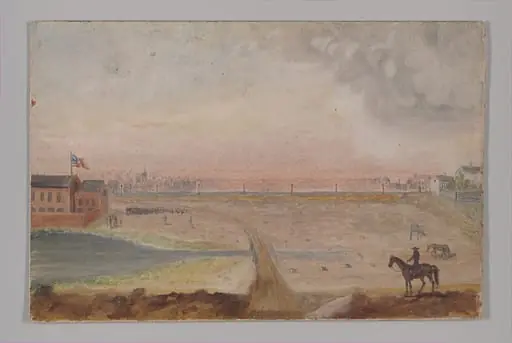
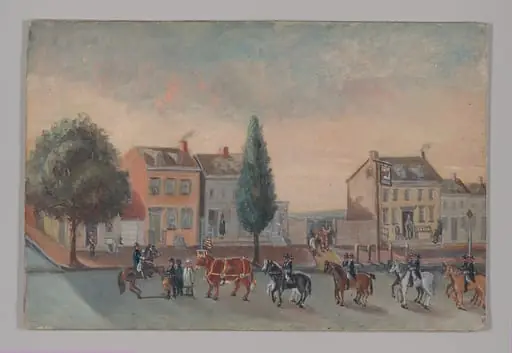
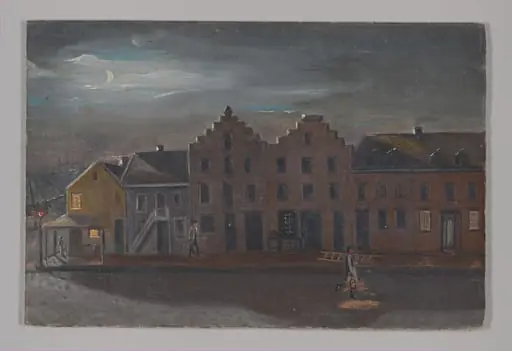
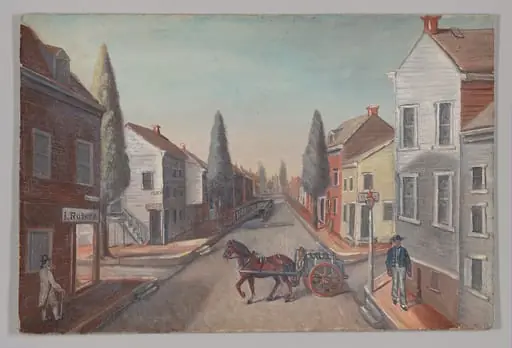
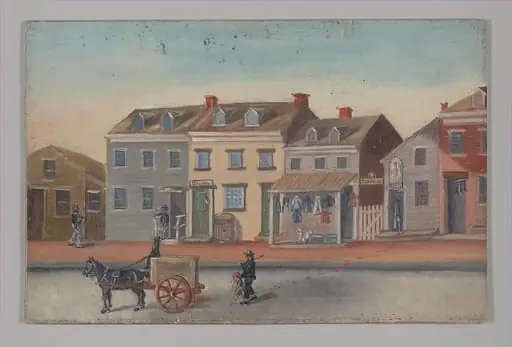
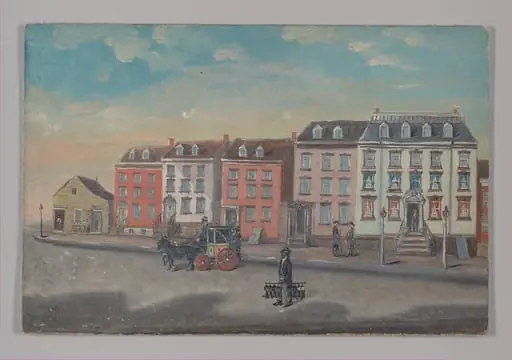
William P. Chappel's 1874 oil painting City Watchman presents a genre scene focused on urban life. The composition depicts a solitary man standing on a street, positioned before a house. As a genre work, the piece captures an everyday moment rather than a historical or mythological event, highlighting the figure of the watchman within his specific architectural and civic environment.
The imagery centers on the interaction between the individual and the built cityscape, representing a slice of domestic or neighborhood surveillance typical of the period.
Technique & Style
Executed in 1874, William P. Chappel's City Watchman is an oil painting applied onto a slate paper support. This specific combination of materials results in a work measuring approximately 15.6 by 23.2 cm. The piece is classified as a genre scene, visually depicting a street environment featuring a man and a house. The composition focuses on these narrative elements within an urban setting, characteristic of the artist's output during this period. The work is currently held within The American Wing of the Metropolitan Museum of Art.
History & Provenance
City Watchman is an 1874 oil on slate paper work by William P. Chappel that portrays a house, a man, and a street. The painting was created in 1874 and subsequently entered the collection of the Metropolitan Museum of Art, where it is catalogued as part of The American Wing. Its dimensions of approximately 15.6 × 23.2 cm and accession details are recorded in the museum's records, confirming its ongoing ownership by the institution.
Legacy
City Watchman is part of the American Wing of the Metropolitan Museum of Art, where it contributes to the museum's holdings of nineteenth-century American genre painting. Its depiction of an urban watchman reflects the period's interest in scenes of everyday working life and city environments.
Overview
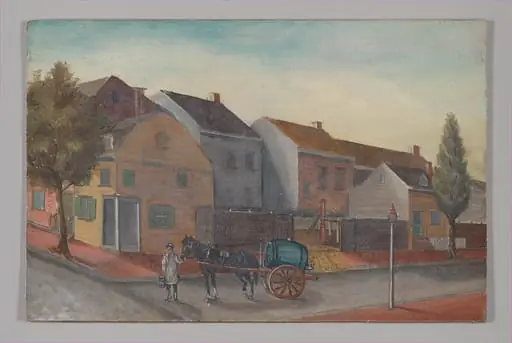
William P. Chappel’s City Watchman, created around 1874, is an oil on slate paper work housed in the American Wing. This genre scene captures an everyday moment on a street at dusk. It features a lone figure leaning against a lamppost, with warm light emanating from nearby houses and a horse-drawn cart passing by. The painting exemplifies Chappel's focus on urban life, offering a glimpse into a quiet evening.
Context
This particular work stands out among Chappel's known output, many of which depict New York City streets in brighter daylight. City Watchman distinguishes itself through its portrayal of evening light and the quiet solitude of its central figure. The Metropolitan Museum of Art holds a significant collection of Chappel's small street views, and this piece offers a distinct perspective on his recurring theme of urban observation.
Artist & collection