Artwork
Chimney Sweeps
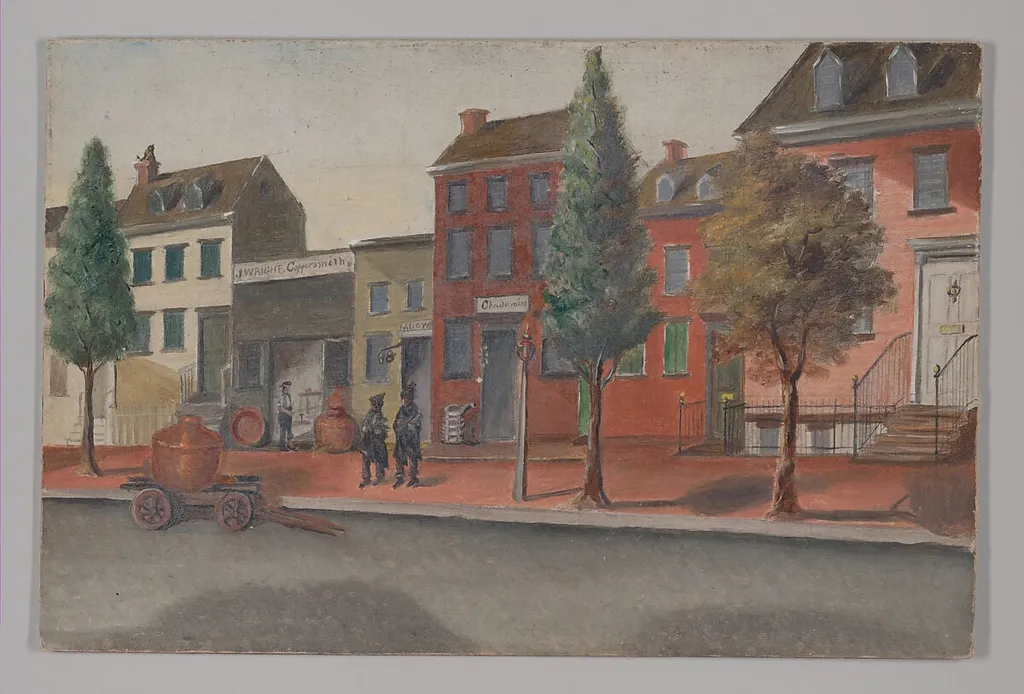
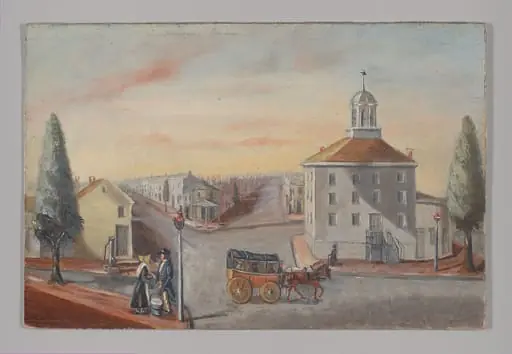
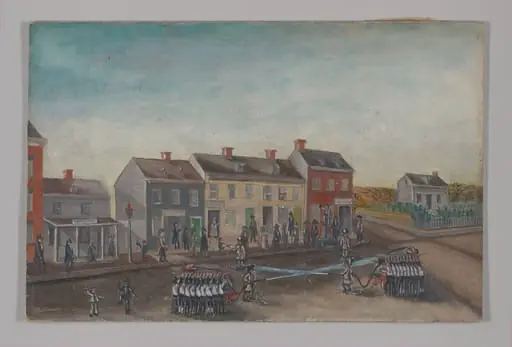
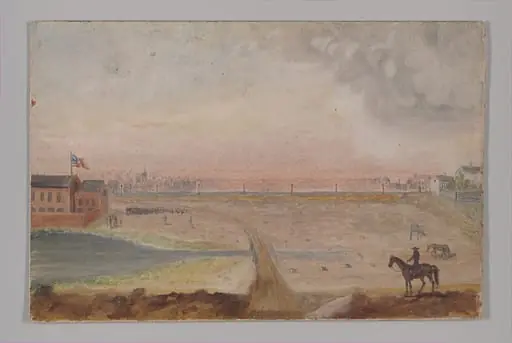
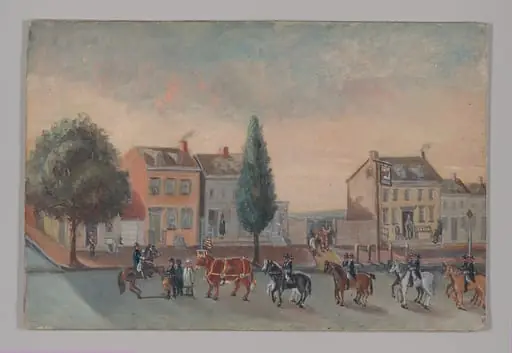
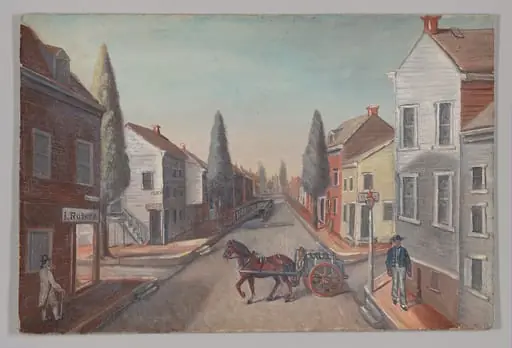
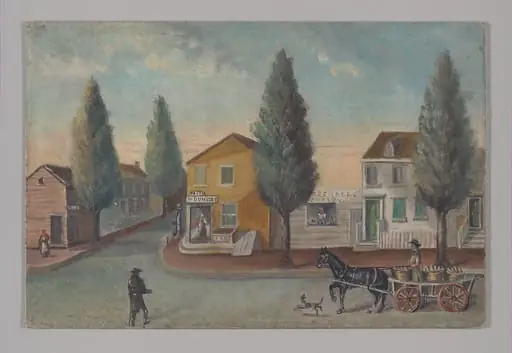
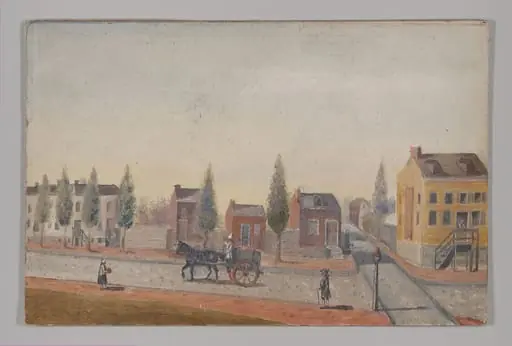
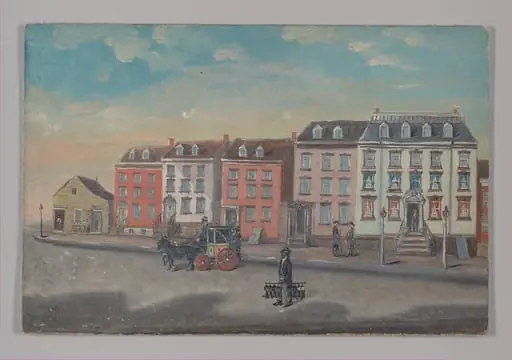
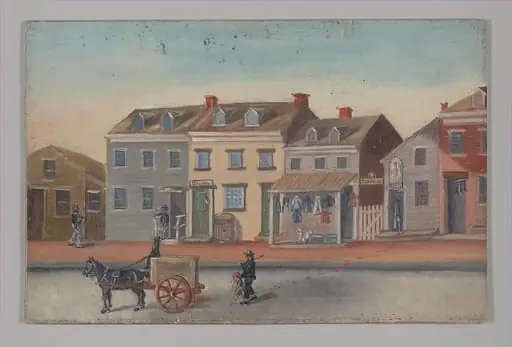
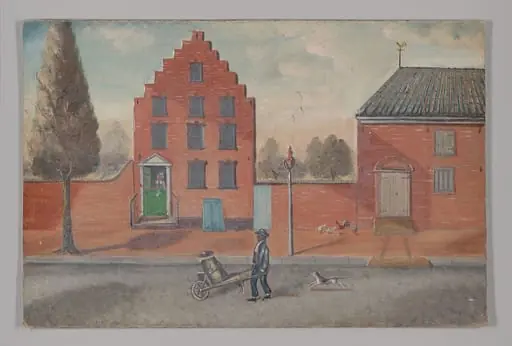
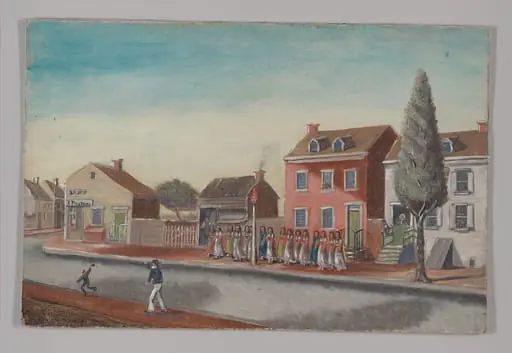
Chimney Sweeps is an oil painting by the American Folk Art artist William P. Chappel. It dates from 1874 and is held in the collection of the Metropolitan Museum of Art. Painted in 1874, William P.
About this work
Technique & Style
Handling is precise and linear, typical of mid-nineteenth-century American genre painting, with careful delineation of figures and architectural elements.
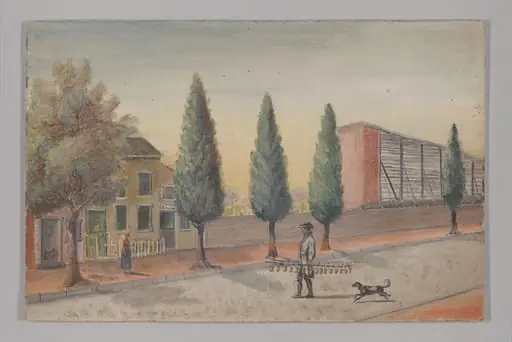
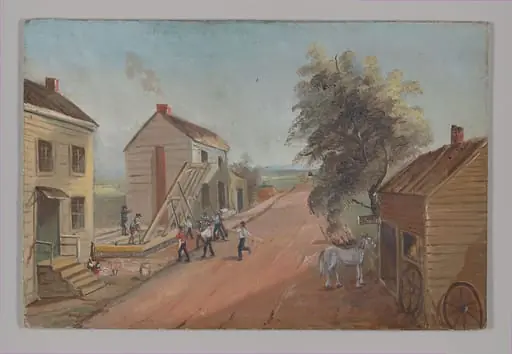
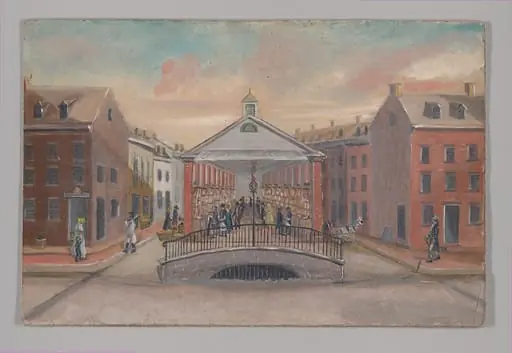
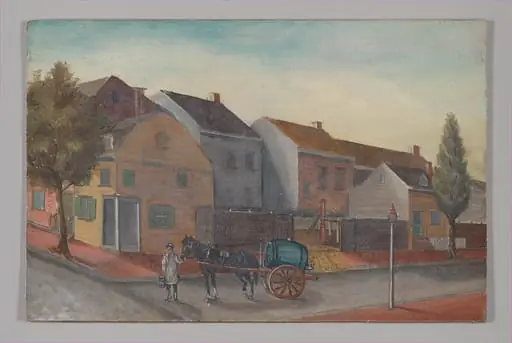
The work is an oil painting on slate paper, executed in 1870 by William P. Chappel. Handling is precise and linear, typical of mid-nineteenth-century American genre painting, with careful delineation of figures and architectural elements. The composition emphasizes flatness and decorative pattern, subordinating volume to rhythmic contours.
Color is restrained, relying on earth tones and muted highlights to articulate form. Formal qualities include a symmetrical street scene framed by a central tree and flanking buildings, with the chimney sweeps positioned as repoussoir figures at the picture’s edge. The support’s dark tone modulates the overall palette, while the oil medium allows for crisp edges and matte finish.
History & Provenance
The painting Chimney Sweeps by William P. Chappel is dated to 1870, aligning with the artist’s period of activity during the late 19th century. The work was created as a genre scene depicting street life, specifically portraying figures engaged in chimney-sweeping activities. Chappel, known for his genre paintings of American urban and rural scenes, likely executed the work in New York, where he was active.
The painting entered the collection of the Metropolitan Museum of Art, where it has been held as part of their holdings in The American Wing.
The painting is held by the Metropolitan Museum of Art, New York, where it is catalogued as part of the institution’s holdings. Its dimensions are recorded as 15.4 cm in height and 23.7 cm in width. The work has no separately documented exhibition history listed in the provided sources.
Overview
Painted in 1874, William P. Chappel's Chimney Sweeps depicts two young boys in soot-stained garments ascending a ladder propped against a brick wall at dusk. Executed in oil on slate paper, a thin stone support rather than traditional canvas, the work utilizes the dark, non-absorbent ground to create a distinct atmospheric effect. The unprimed slate surface allows the artist to render the street scene with a luminous quality, simulating the glow of a single gas lamp against the encroaching evening shadows.
Chappel focuses on the physical exertion and fatigue of the subjects; their faces are rendered with smudged, indistinct features, directing the viewer's attention to their posture and the labor of their climb. This genre scene reflects the artist's engagement with social realism and the depiction of urban childhood labor in late 19th-century America. The choice of slate paper is a notable technical deviation for the period, offering a unique textural contrast that enhances the somber mood of the composition.
The work stands as a specific example of Chappel's contribution to American genre painting, capturing a fleeting moment of daily struggle with a restrained, observational approach.
Subject & Meaning
The painting portrays two small figures, identifiable as chimney sweeps by their sooty attire, ascending a ladder against a brick wall as evening descends. The dim light suggests the close of day, emphasizing the boys' fatigue. Chappel minimizes facial details, instead drawing attention to their weary hands gripping the ladder rungs, thereby highlighting the physical demands of their work rather than individual identities.
Context
Chimney Sweeps aligns with a broader tradition of American genre painting from the 19th century, which often depicted scenes from everyday life. Chappel's focus on a quiet urban moment, particularly the working class, places it within a category of "American street" scenes. These works frequently offered viewers a window into the social fabric of the era, observing ordinary individuals in their daily routines.
Artist & collection