Artwork
Fly Market
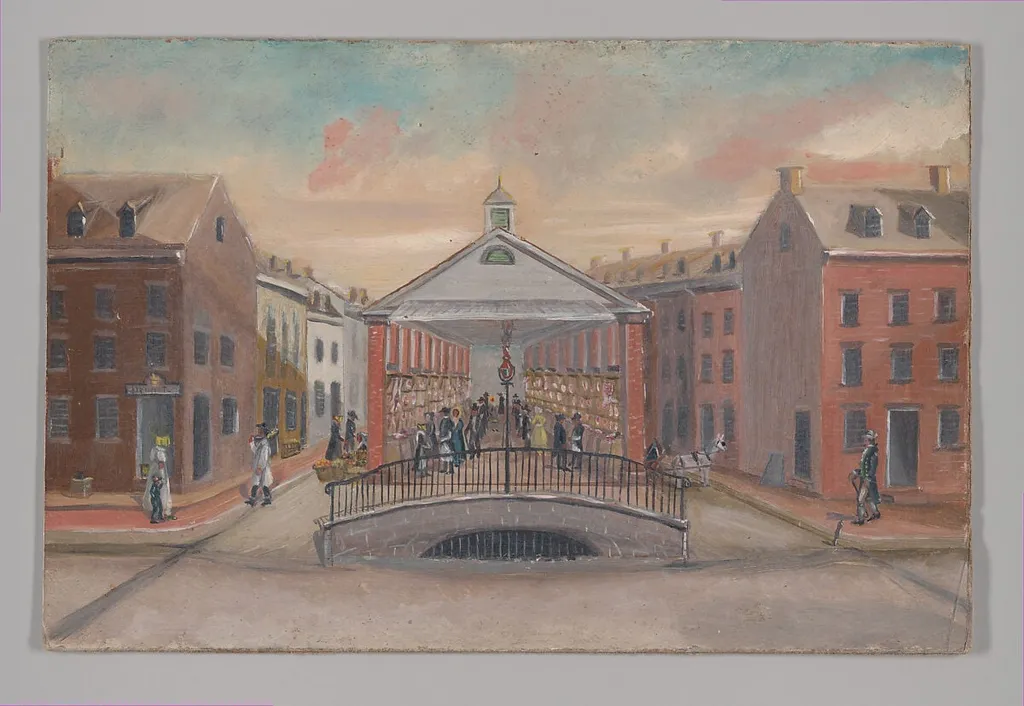
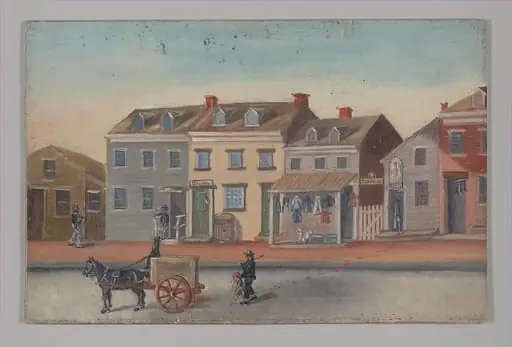
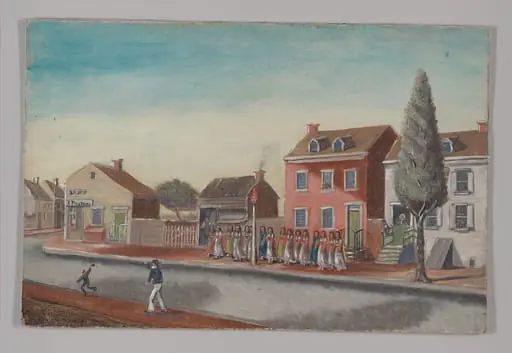
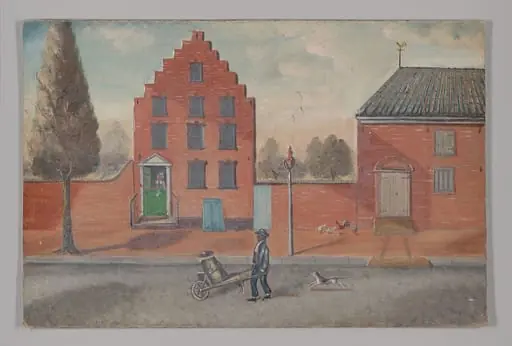
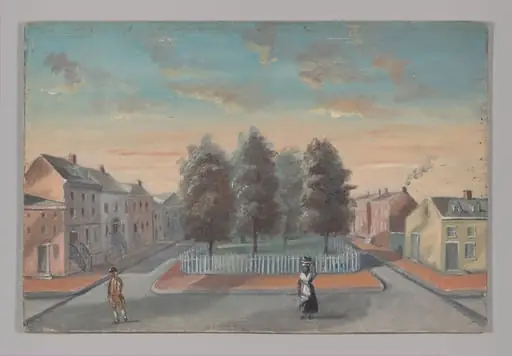
Fly Market is an oil painting by the American Folk Art artist William P. Chappel. It dates from 1874 and is held in the collection of the Metropolitan Museum of Art.
About this work
Subject & Meaning
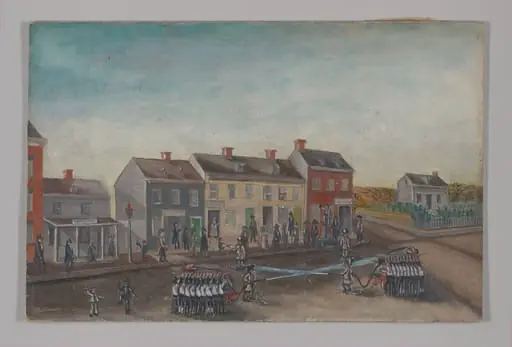
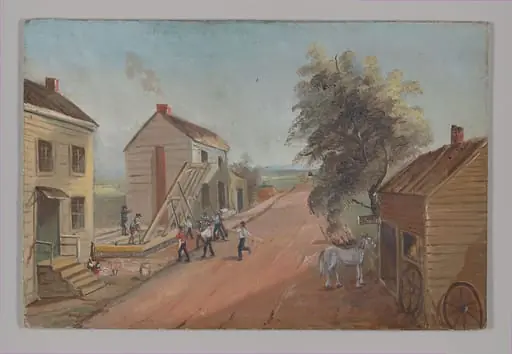
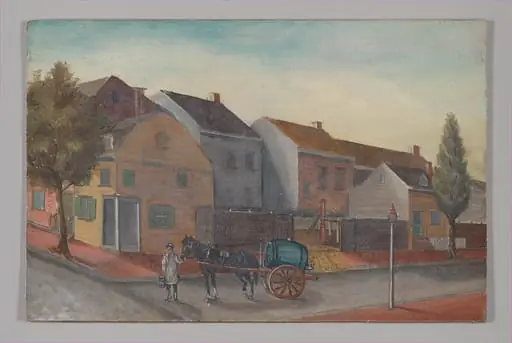
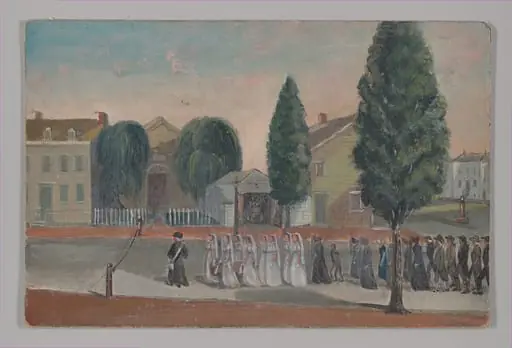
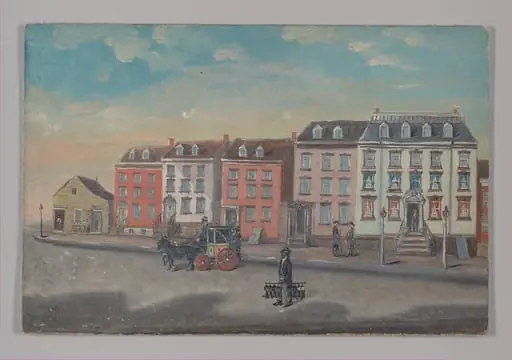
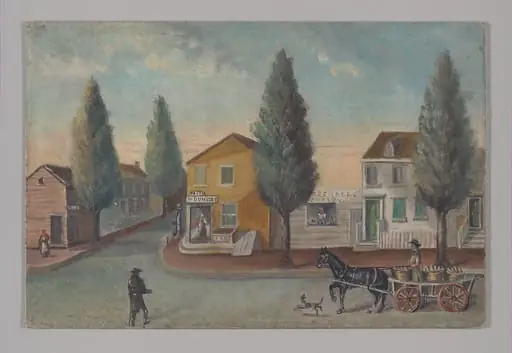
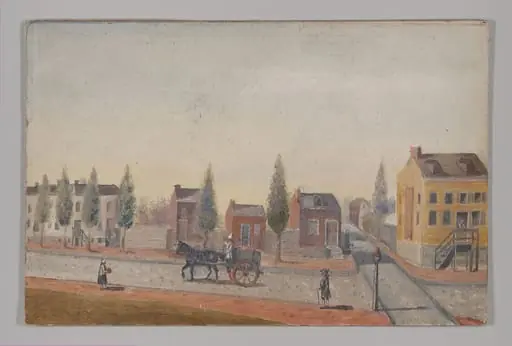
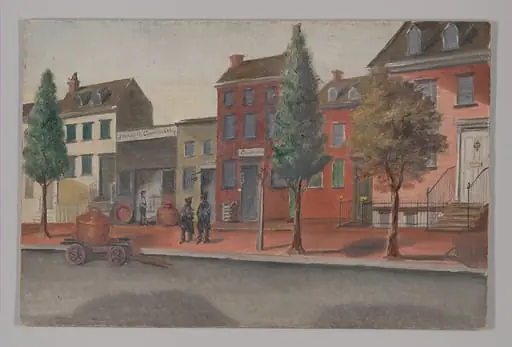
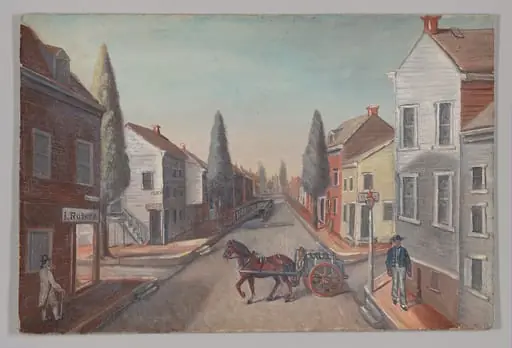
Fly Market presents a bustling street scene set in mid‑19th‑century New York, showing a commercial building surrounded by a lively market space.
Fly Market presents a bustling street scene set in mid‑19th‑century New York, showing a commercial building surrounded by a lively market space. The composition includes a man and a woman among other figures, emphasizing everyday commerce and public interaction. By focusing on this specific locale, Chappel documents a recognizable urban venue that served as a hub for trade, while the surrounding activity conveys the dynamism of city life.
The work thus functions as both a genre scene and a documentary record of a particular market, reflecting contemporary attitudes toward commerce and social exchange in the growing American city.
Technique & Style
William P. Chappel's Fly Market, executed in 1870, is an oil painting on slate paper. The work measures 15.2 centimeters in height and 23.2 centimeters in width, classifying it as a small-scale genre scene. As a genre painting, the composition focuses on the depiction of everyday life, specifically capturing the activity at the Fly Market.
The artist portrays figures, including men and women, situated among buildings within the market setting. The choice of slate paper as a support material distinguishes this piece, offering a distinct surface for the oil medium compared to traditional canvas or wood panel. The painting is currently held within the collection of the Metropolitan Museum of Art, where it is categorized under The American Wing.
Context
William P. Chappel’s 1870 painting Fly Market, an oil on slate paper housed in the Metropolitan Museum of Art’s American Wing, is classified as a genre scene that exemplifies mid‑nineteenth‑century American realism. The work depicts a bustling urban marketplace, capturing both commercial activity and social interaction. Scholars note its precise architectural rendering and subtle commentary on contemporary consumer culture, placing it within Chappel’s broader oeuvre of everyday life subjects.
As part of the museum’s collection, the painting contributes to narratives of American artistic development and reflects the period’s interest in documenting urbanization.
Overview
Fly Market captures a bustling outdoor scene from 1870s New York City, depicting the vibrant daily commerce of its inhabitants. This oil painting offers a rare glimpse into the ordinary activities of the period, focusing on the interactions between vendors, shoppers, and horses rather than heroic figures. It stands as a significant representation of American life within the museum's collection, providing insight into the era's urban landscape and social fabric.
Artist & collection