Artwork
The Baker's Wagon
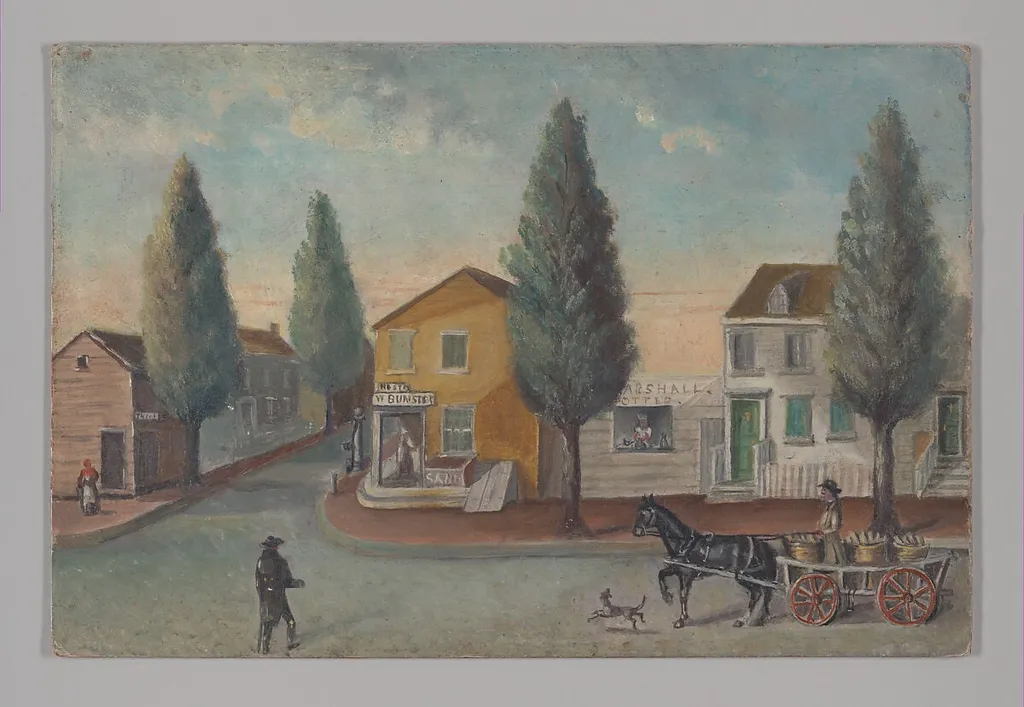
The Baker's Wagon is an oil painting by the American Folk Art artist William P. Chappel. It dates from 1874 and is held in the collection of the Metropolitan Museum of Art. William P.
About this work
Subject & Meaning
The composition includes a street view, a man, a house, and a tree, elements that together evoke everyday urban life in mid-19th-century America.
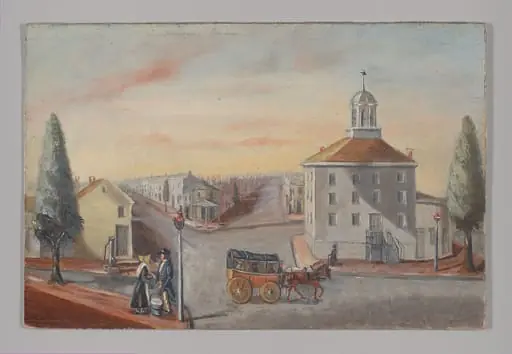
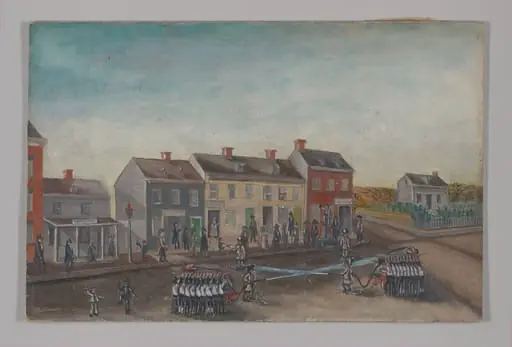
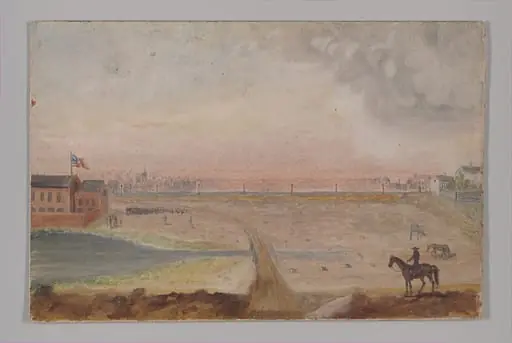
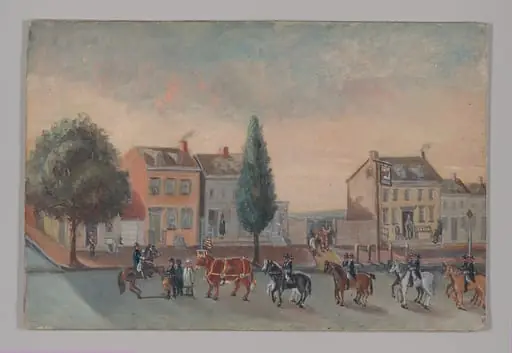
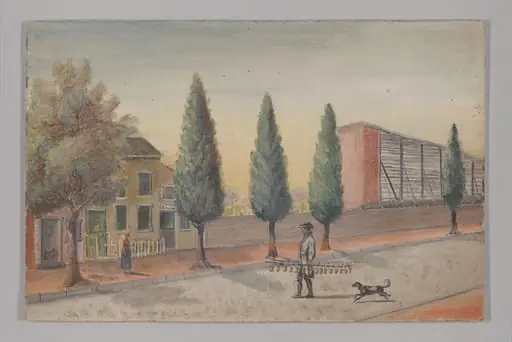
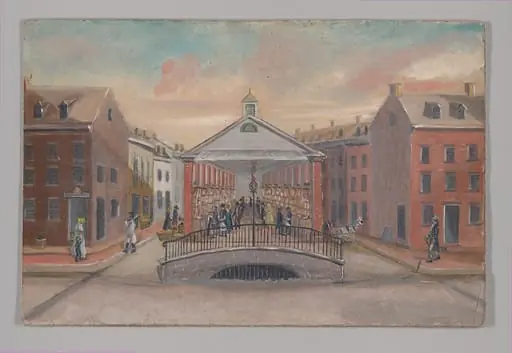
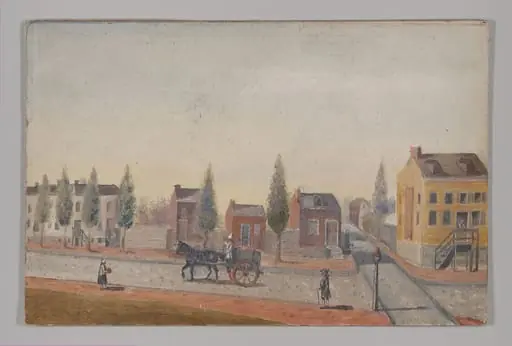
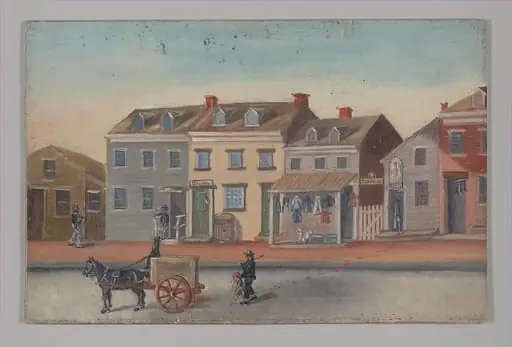
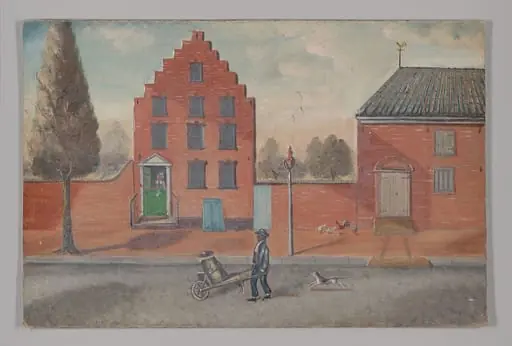
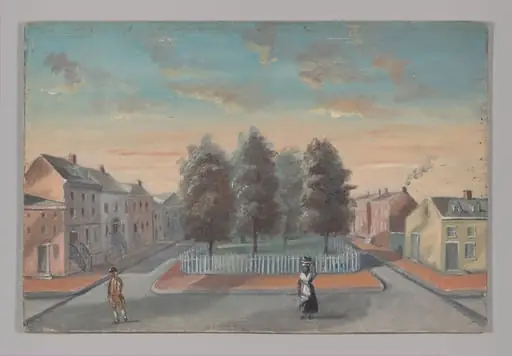
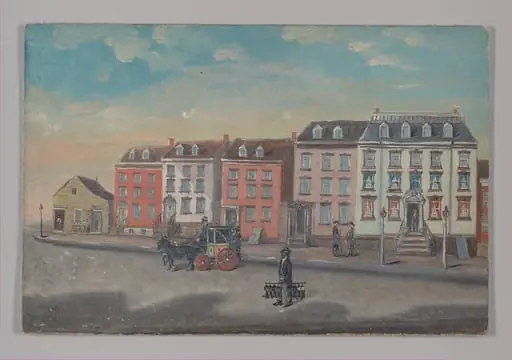
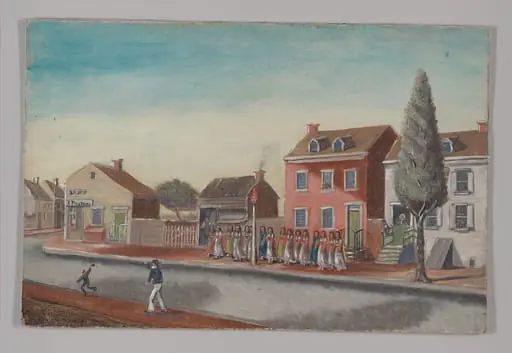
The painting shows a modest house set on a cobblestone street, with a man positioned beside a tree and a baker's wagon implied by the title, suggesting a domestic scene intertwined with street activity. The composition includes a street view, a man, a house, and a tree, elements that together evoke everyday urban life in mid-19th-century America. By placing a domestic interior within a public thoroughfare, Chappel highlights the intersection of private household concerns and communal street presence, a theme typical of genre scenes of the period.
The work, housed in the Metropolitan Museum of Art, exemplifies the American Wing's focus on realist depictions of contemporary life.
Technique & Style
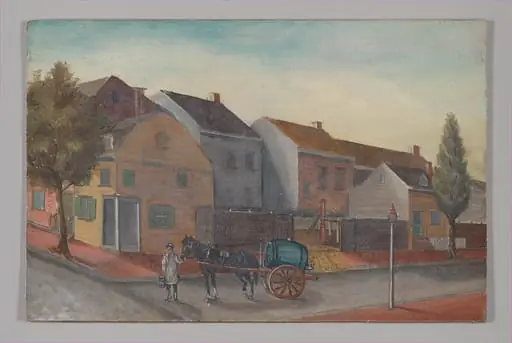
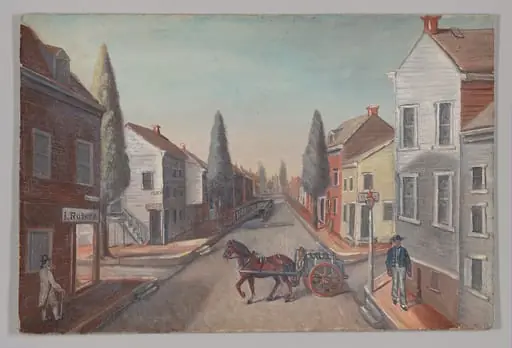
Executed in oil on slate paper, The Baker's Wagon (1874) by William P. Chappel employs a compact support measuring 15.6 × 23.5 cm. The handling is precise and linear, typical of mid-nineteenth-century American genre painting, with careful delineation of figures and architecture. The composition foregrounds a baker's wagon, rendered in muted earth tones against a backdrop of a narrow city street lined with houses and trees. The stylistic qualities emphasize anecdotal detail and unidealized urban life, characteristic of Chappel's documentary approach to genre scenes.
History & Provenance
The Baker's Wagon is held in the collection of the Metropolitan Museum of Art, classified within The American Wing. No specific inventory or accession number is recorded in the available documentation. The work, dated 1874, is catalogued as an oil on slate paper genre scene by William P. Chappel.
No exhibition history beyond its placement in the Metropolitan Museum of Art's collection is documented in the available sources.
Overview
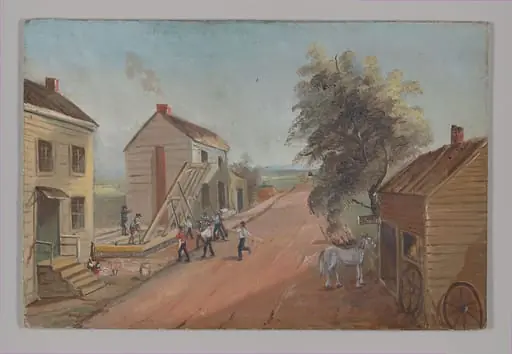
William P. Chappel's "The Baker's Wagon," created around 1874, is an oil painting on slate paper. This genre scene captures a quiet moment of daily life, depicting a horse-drawn wagon on a tree-lined dirt road in front of modest houses. The artwork offers a glimpse into the ordinary streetscapes of 1870s New York, reflecting the city's blend of urban development and rural elements.
Context
Created in the 1870s, "The Baker's Wagon" reflects a specific period in New York City's development. During this era, the metropolis was undergoing significant transformation, yet still retained areas where rural characteristics, such as unpaved roads and modest dwellings, coexisted with burgeoning urban expansion. Chappel's work documents these transitional street scenes and the daily rhythms of their inhabitants.
Artist & collection