Artwork
Tea water pump
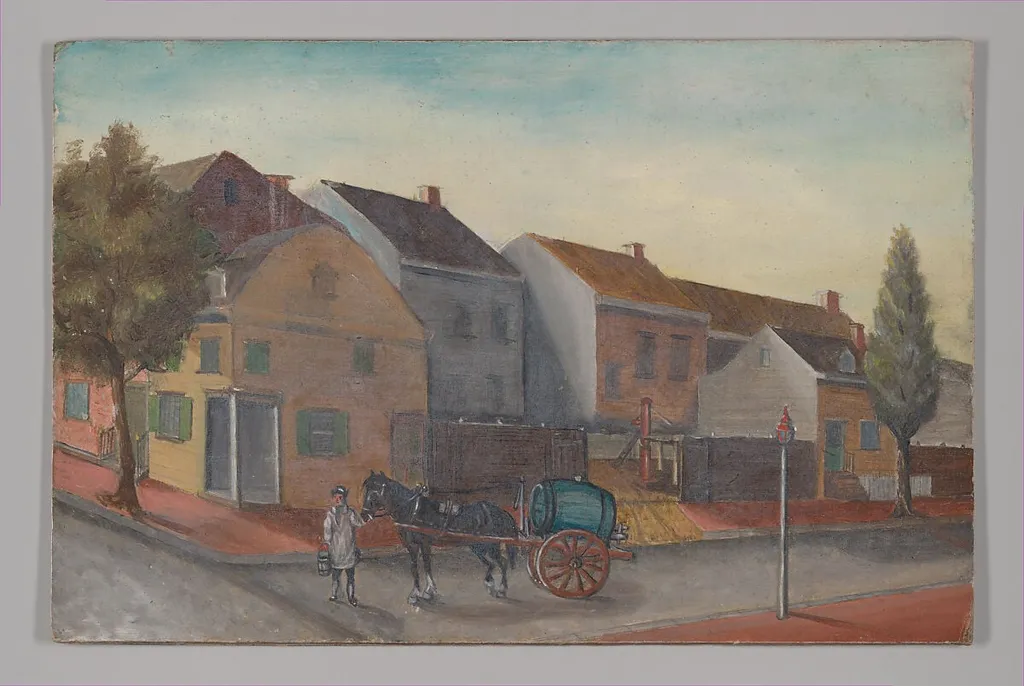
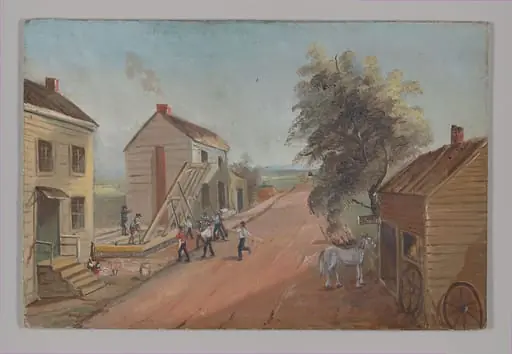
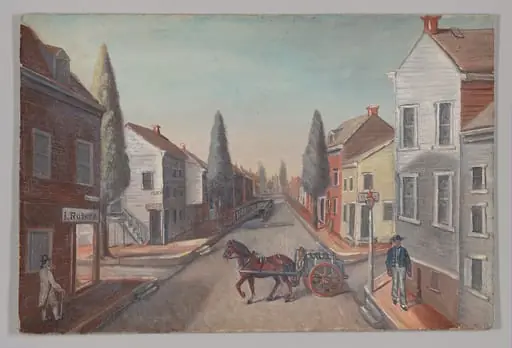
Tea water pump is an oil painting by the Impressionist artist William P. Chappel. It dates from 1874 and is held in the collection of the Metropolitan Museum of Art.
- Accession no.
- 54.90.504
- Credit line
- The Edward W. C. Arnold Collection of New York Prints, Maps, and Pictures, Bequest of Edward W. C. Arnold, 1954
About this work
Technique & Style
This specific medium choice distinguishes the work within the artist's oeuvre and the collection's genre scenes.
Created in 1870, William P. Chappel's Tea water pump is executed in oil paint applied to a slate paper support. This specific medium choice distinguishes the work within the artist's oeuvre and the collection's genre scenes. The painting measures 15.4 cm in height and 23.7 cm in width, presenting a compact format typical of the period's genre depictions.
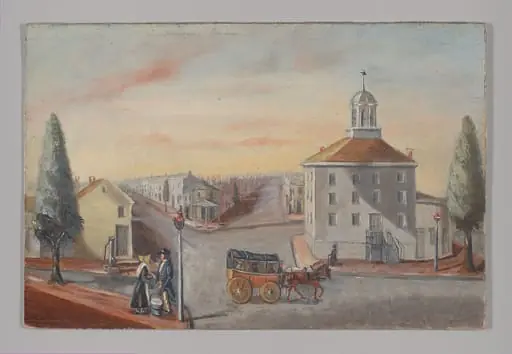
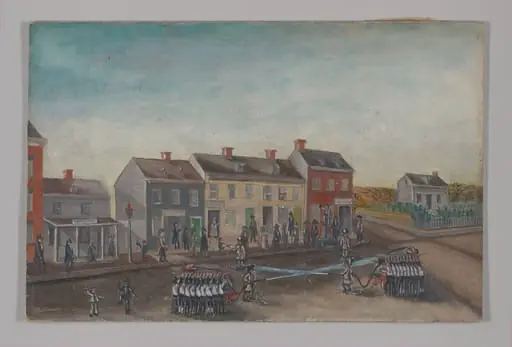
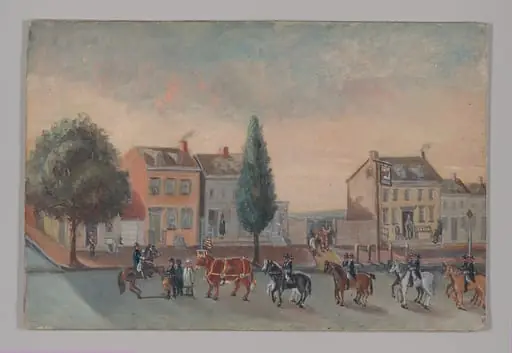
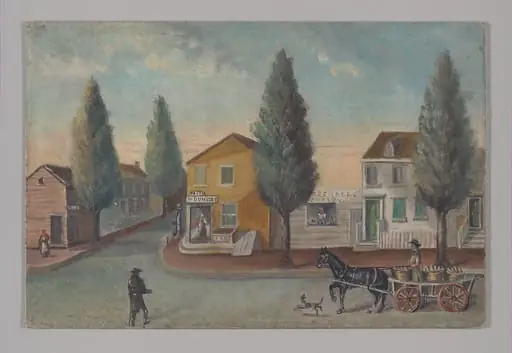
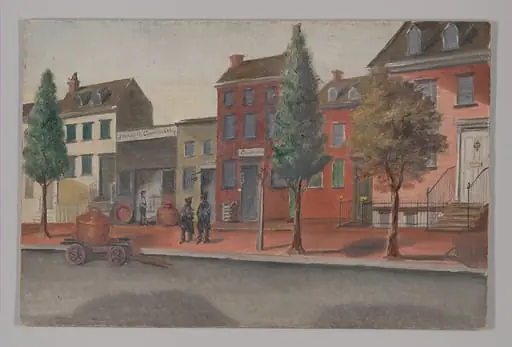
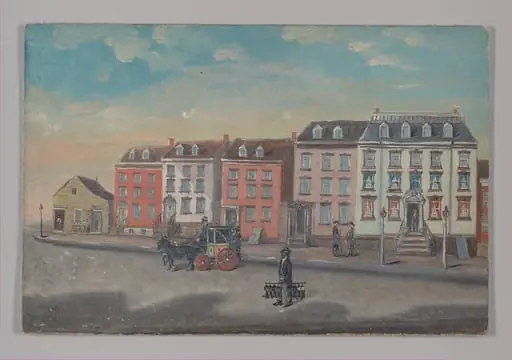
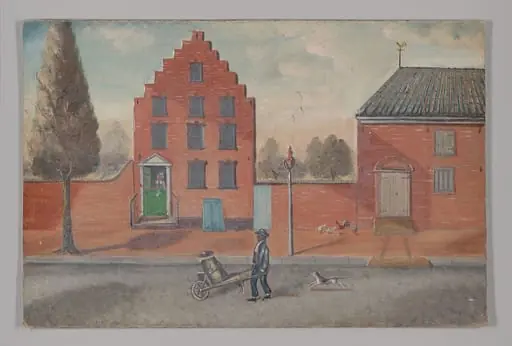
Stylistically, the work captures a domestic street scene featuring a man, horse, carriage, barrel, and house, rendered with the observational detail characteristic of American genre painting in the late nineteenth century. The composition focuses on the interaction between the figures and the titular water pump infrastructure, situating the subject within a specific urban or semi-urban environment. The piece is currently held in the American Wing of the Metropolitan Museum of Art, where its material condition and formal attributes remain subjects of study within the institution's collection.
History & Provenance
The Tea water pump is an oil on slate paper painting executed in 1870 by American artist William P. Chappel. It portrays a barrel, carriage, horse, house and man in a domestic scene typical of the genre. The work was created as part of Chappel’s late‑19th‑century oeuvre and later entered the collection of the Metropolitan Museum of Art, where it is displayed in The American Wing.
Its dimensions are 15.4 cm by 23.7 cm, and it remains in the museum’s custody as of the latest catalogue records.
Overview
“Tea water pump” captures a lively street corner in 1870s New York City. Executed in oil on slate paper, the work presents a common urban scene featuring a horse-drawn wagon, men engaged in conversation, and barrels awaiting transport, all centered around a public water pump. This piece belongs to the American Wing collection and exemplifies an artistic interest in documenting the ordinary activities of daily life rather than historical or allegorical narratives.
Subject & Meaning
The painting portrays a specific moment of urban activity, highlighting the mundane yet essential elements of 19th-century city existence. The gushing pump, the working horse, and the casual interactions of men on the street offer a candid view of a bustling corner. This focus on unheroic, everyday subjects distinguishes the work from more conventional artistic themes of the era, providing insight into the social fabric of the time.
Context
Created in the 1870s, “Tea water pump” reflects a broader artistic inclination to depict the realities of contemporary urban life. The scene serves as a historical document, illustrating the reliance on horse-drawn transportation and public water sources before the advent of modern infrastructure. It provides a valuable glimpse into the practicalities and rhythms of a pre-automobile city, inviting viewers to consider the daily experiences of people in a bygone era.
Artist & collection