Artwork
The Boot Black
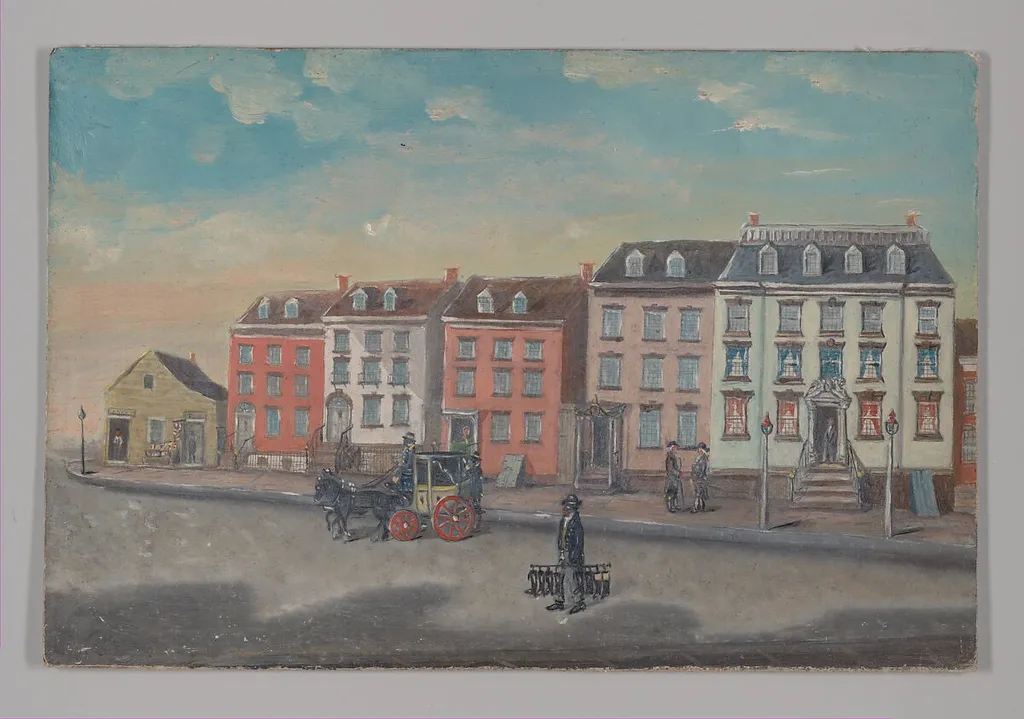
The Boot Black is an oil painting by the Impressionist artist William P. Chappel. It dates from 1874 and is held in the collection of the Metropolitan Museum of Art. William P.
About this work
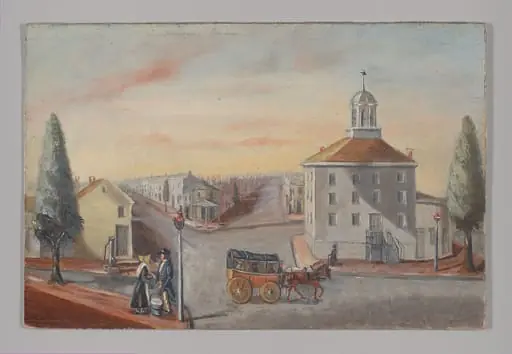
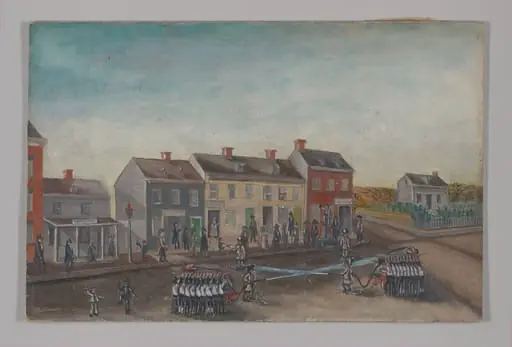
A boy in a patched coat polishes a man's boot on a New York sidewalk while a horse-drawn carriage waits and brownstones line the street. Chappel painted it on smooth slate paper in 1874, catching small details like the shine of the boot. A quiet slice of city life.
Technique & Style
The Boot Black is executed in oil on slate paper, a support choice that yields a small-scale, horizontally oriented composition measuring roughly 15.
The Boot Black is executed in oil on slate paper, a support choice that yields a small-scale, horizontally oriented composition measuring roughly 15.4 by 23.2 centimeters. The slate-paper ground would have provided a smooth, slightly absorbent surface that responds to oil paint with crisp detail and controlled tonal transitions, suiting the tightly observed genre subject of a streetside shoe-shiner. The handling is consistent with the small cabinet-picture tradition popular among American genre painters in the post-Civil War decades, in which enamel-like finish and meticulous draftsmanship are favored over visible brushwork.
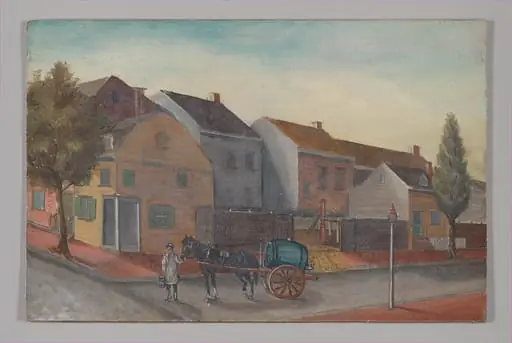
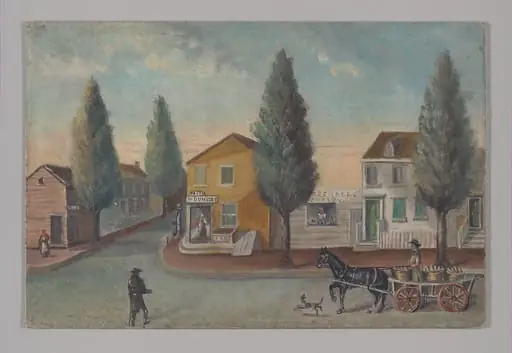
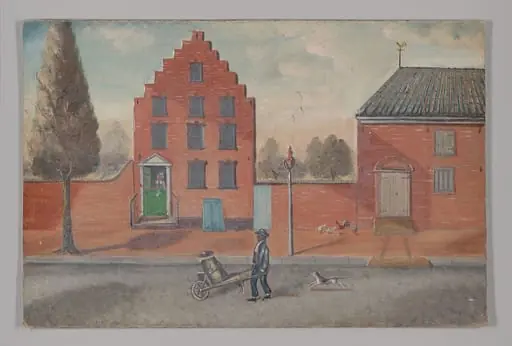
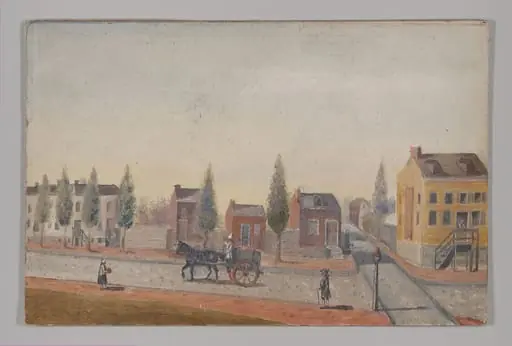
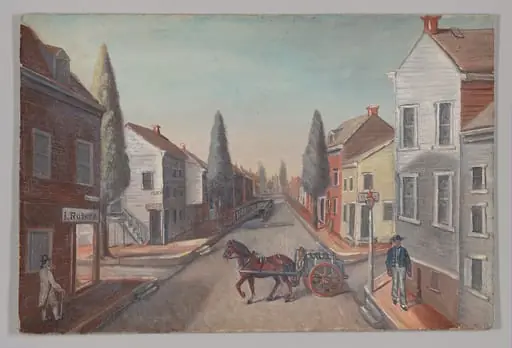
Stylistically, the work situates a single figure within an urban setting defined by a house facade and a carriage, deploying the everyday street scene as a vehicle for anecdotal realism rather than narrative drama.
History & Provenance
Created in 1874, The Boot Black is an oil painting on slate paper executed by William P. Chappel. The work depicts a genre scene featuring a man, a carriage, a house, and a street, and measures 15.4 by 23.2 cm. The painting is currently held in the collection of the Metropolitan Museum of Art, classified within the museum's American Wing. No specific details regarding its original commission or intermediate ownership history are provided in the available records.
Overview
William P. Chappel's The Boot Black, executed in 1874, is a genre scene depicting a young boy polishing a man's boot on a New York City sidewalk. The composition centers on the interaction between the two figures, with the boy wearing a patched coat that signals his economic status. Behind them, a horse-drawn carriage waits, while brownstone houses define the urban backdrop, grounding the narrative in a specific late-19th-century American setting.
Chappel painted this work on slate paper, a material chosen for its smooth, inexpensive surface which facilitated the rendering of minute details, such as the reflective shine on the leather boot and the texture of the cracked pavement. This piece reflects Chappel's continued engagement with genre painting during the Gilded Age, focusing on everyday social types and the visual textures of city life. The work exemplifies the artist's ability to combine narrative clarity with technical precision, capturing a fleeting moment of urban labor with observational rigor.
Subject & Meaning
The painting centers on a young boot black, dressed in a mended coat, diligently polishing a man's footwear. This modest interaction unfolds on a New York City sidewalk, framed by the presence of a horse-drawn carriage and characteristic brownstone residences. Chappel's focus on such an ordinary street scene elevates a common labor into a subject for art, providing a direct, unromanticized view of urban life in the 1870s.
Artist & collection