Artwork
Buttermilk Pedlar
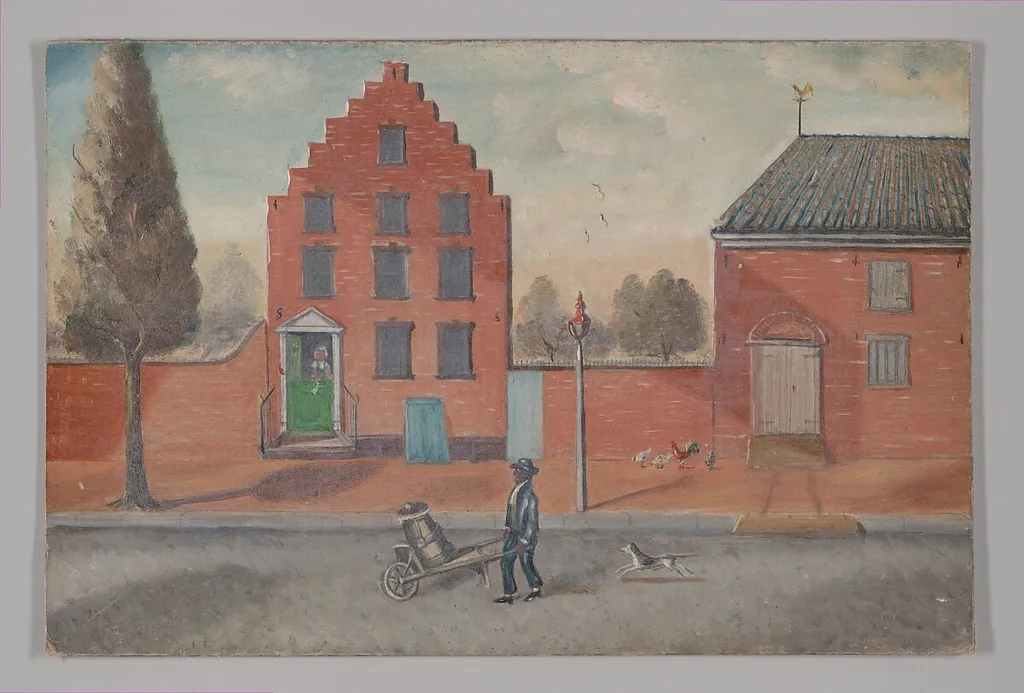
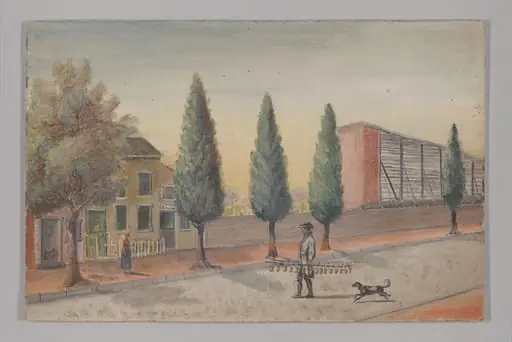
Buttermilk Pedlar is an oil painting by the Impressionist artist William P. Chappel. It dates from 1874 and is held in the collection of the Metropolitan Museum of Art.
About this work
Subject & Meaning
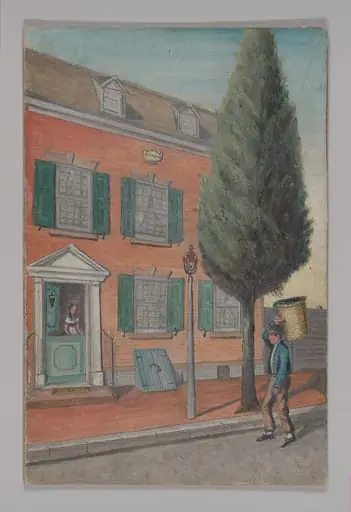
The setting is defined by natural and architectural elements, specifically a tree and a house, which establish a domestic or village context.
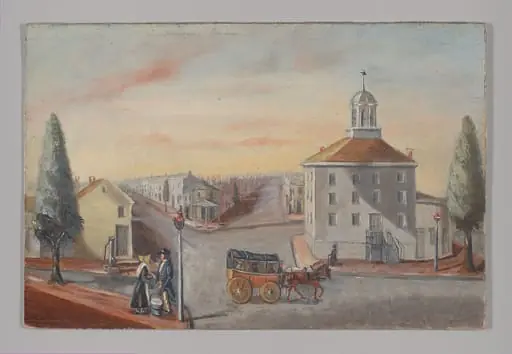
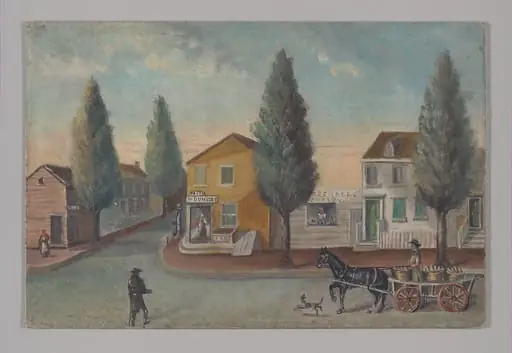
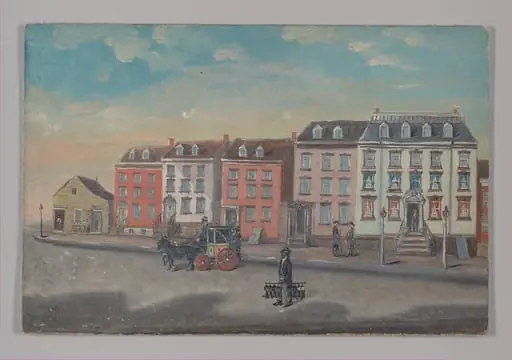
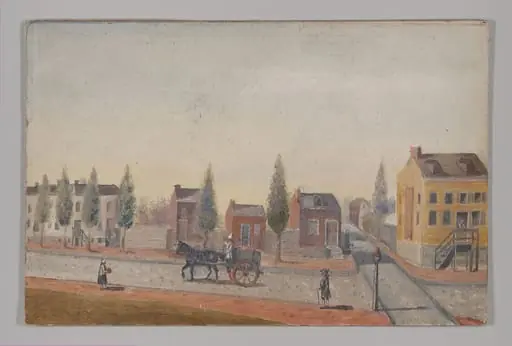
Created in 1870 by William P. Chappel, this oil on slate paper functions as a genre scene depicting a rural roadside encounter. The composition features a man, presumably the titular pedlar, situated on a road alongside a dog. The setting is defined by natural and architectural elements, specifically a tree and a house, which establish a domestic or village context.
As a work classified within the American Wing, the painting captures a slice of everyday life, focusing on the interaction between the traveler and his environment. The iconography relies on these straightforward representational elements, the figure, the animal, and the built landscape, to convey a narrative of local commerce or travel without overt allegorical complexity.
History & Provenance
William P. Chappel’s Buttermilk Pedlar was created in 1870, as consistently documented by both the Metropolitan Museum of Art and art-historical records. Painted in oil on slate paper, the work originated as a genre scene without evidence of a specific commission, suggesting it was likely produced independently by the artist. The painting has resided in the collection of the Metropolitan Museum of Art since its acquisition, with no publicly recorded changes in ownership prior to its institutional stewardship. Its dimensions, 15.7 by 23.6 centimeters, further confirm its identification within the museum’s holdings.
Overview
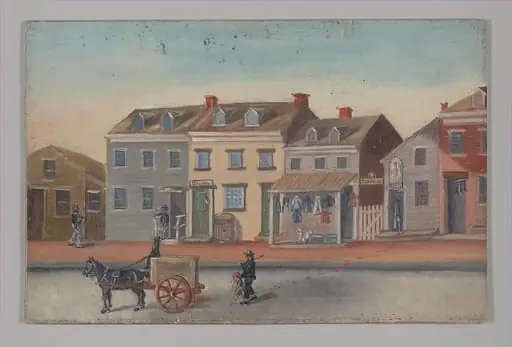
This oil painting on slate paper, titled Buttermilk Pedlar, offers a glimpse into American daily life during the 1870s. It portrays a man engaged in the common practice of selling buttermilk, traveling along a road. The scene, populated with nearby houses and dogs, evokes a sense of quiet rural existence. The artwork is housed within The American Wing, underscoring its cultural and historical significance.
Technique & Style
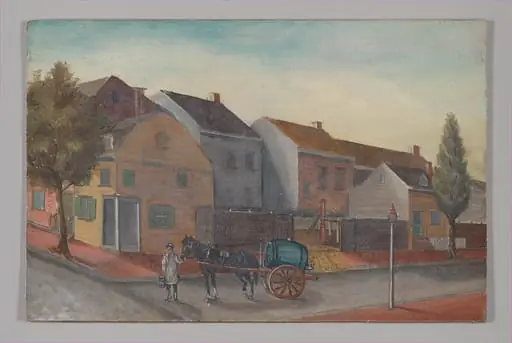
The artist employed oil paints on slate paper, a less conventional support than canvas or wood panel. This choice of medium may have contributed a distinct surface quality or textural effect to the finished work. The execution emphasizes descriptive detail, particularly evident in the pedlar's cart and the surrounding elements.
The painting's style prioritizes a clear, direct representation of its subject, aligning with a documentary approach to everyday scenes.
Context
Created in the 1870s, Buttermilk Pedlar belongs to a genre of American art that focused on depicting ordinary life. Such works served as visual records of contemporary society, often highlighting the routines and simplicity of rural or small-town existence in post-Civil War America. The painting functions as a historical document, illustrating aspects of local commerce and community life during a period of evolving social landscapes.
Artist & collection