Artwork
Flower Garden and Bungalow, Bermuda
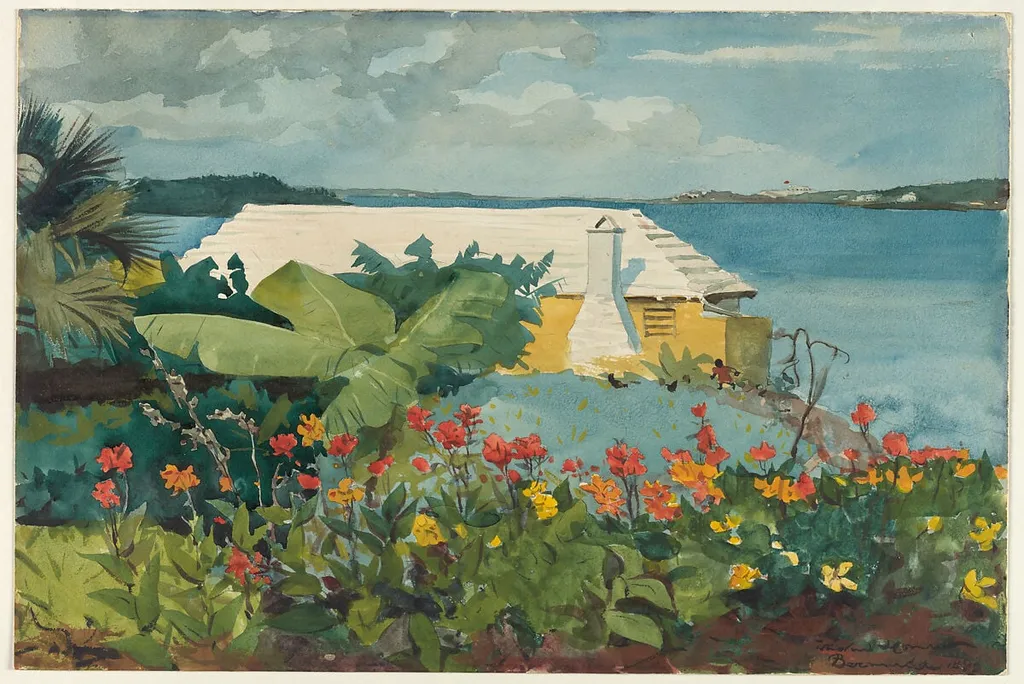
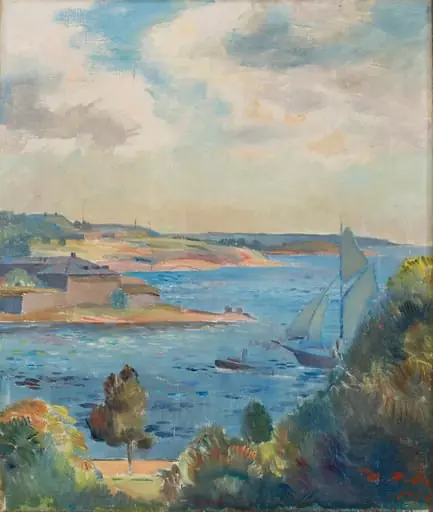
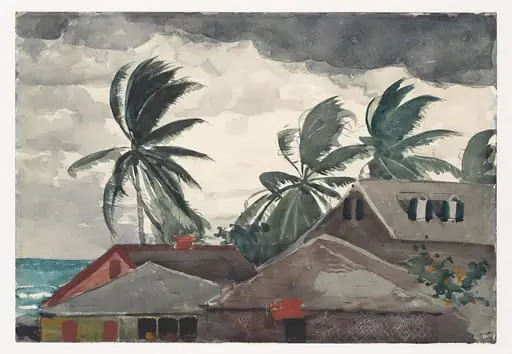
Flower Garden and Bungalow, Bermuda is a watercolor work on paper by the American Impressionist artist Winslow Homer. It dates from 1899 and is held in the collection of the Metropolitan Museum of Art.
About this work
Subject & Meaning
The work depicts a garden landscape featuring a bungalow, situated within the broader context of a Bermuda scene.
The work depicts a garden landscape featuring a bungalow, situated within the broader context of a Bermuda scene. As a landscape painting, the subject focuses on the natural and architectural elements of the setting, specifically the garden and the structure nestled within it. The piece is associated with the American Barbizon school movement, reflecting an artistic approach that emphasizes the beauty of rural and natural environments.
The composition captures the specific atmosphere of a garden setting, highlighting the interplay between the cultivated flora and the built environment of the bungalow.
Technique & Style
Winslow Homer executed Flower Garden and Bungalow, Bermuda in 1899 using watercolor and graphite applied to off-white wove paper. The work measures 35.4 cm in height by 53.2 cm in width. Stylistically, the piece is associated with the American Barbizon school and functions as a landscape painting.
The composition depicts a garden setting, utilizing the transparency of watercolor and the linear definition of graphite to render the scene on the paper support.
History & Provenance
Flower Garden and Bungalow, Bermuda is a watercolor and graphite work on off‑white wove paper executed in 1899 by Winslow Homer (American, 1836–1910). The piece belongs to the American Barbizon school and depicts a garden landscape. It entered the collection of the Metropolitan Museum of Art, where it is housed in The American Wing, and is catalogued as a landscape painting.
The work’s creation date is recorded as 1899, and its physical dimensions measure 35.4 cm by 53.2 cm. No record of a specific commission or subsequent ownership transfers beyond its acquisition by the museum is documented.
Flower Garden and Bungalow, Bermuda is held in the collection of the Metropolitan Museum of Art in New York. The work was created in 1899 and is classified within The American Wing of the museum. While the sources confirm its current location, artist, and creation date, no specific inventory or accession numbers are provided in the available records. Additionally, the provided sources do not contain any information regarding the painting's exhibition history.
Overview
Winslow Homer, a prominent American artist of the late 19th century, created Flower Garden and Bungalow, Bermuda in 1899. This watercolor and graphite work captures a vibrant garden scene in Bermuda, showcasing the artist's significant engagement with the medium during his later years. It represents a departure from the dramatic marine subjects for which he was widely recognized, instead offering a serene landscape.
Context
This work emerged from Winslow Homer's travels, offering a distinct contrast to the powerful seascapes that defined much of his career. Though primarily known for coastal scenes, his sojourns to places like Bermuda provided new subjects for his artistic exploration. Homer, a self-taught artist who began as a commercial illustrator, consistently documented his observations and experiences through both oil paintings and watercolors throughout his professional life.
Artist & collection
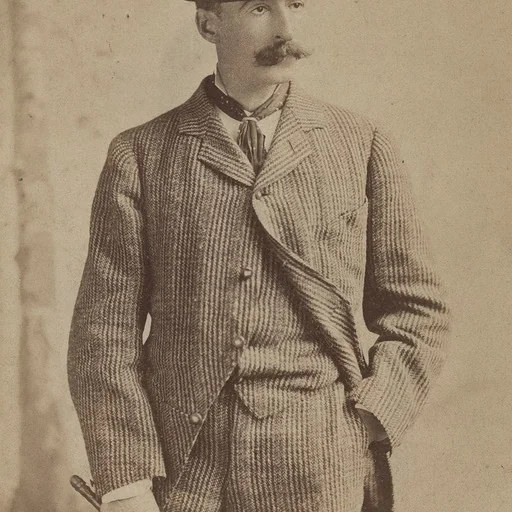
Artist
Winslow Homer (February 24, 1836 – September 29, 1910) was an American landscape painter and illustrator, best known for his marine subjects.