Artwork
Landscape in 'Mi' Style
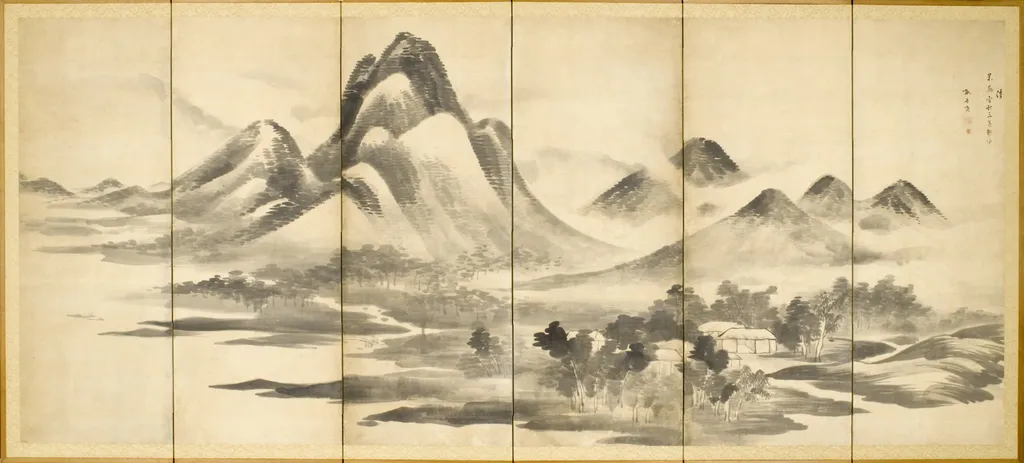
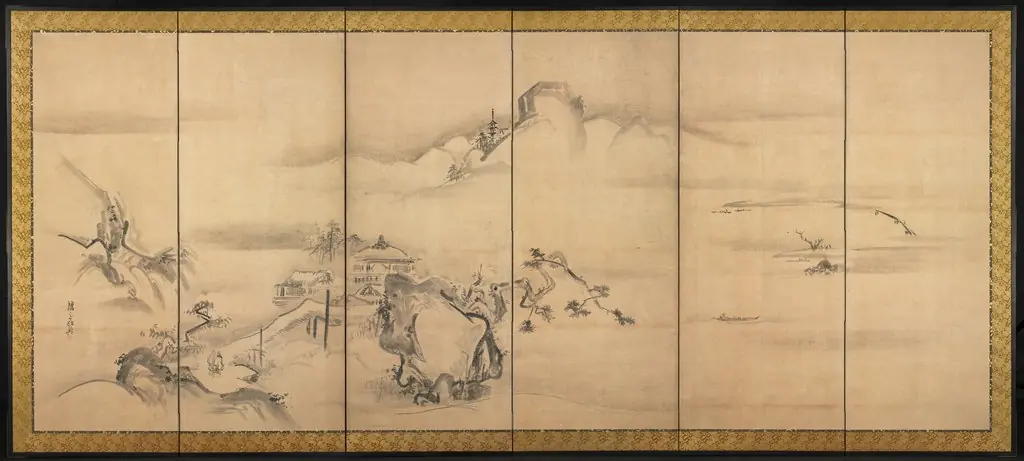
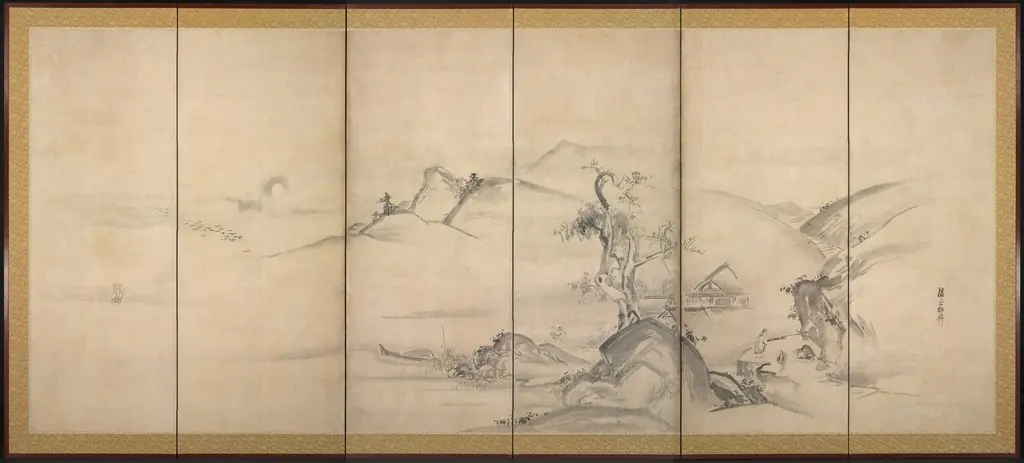
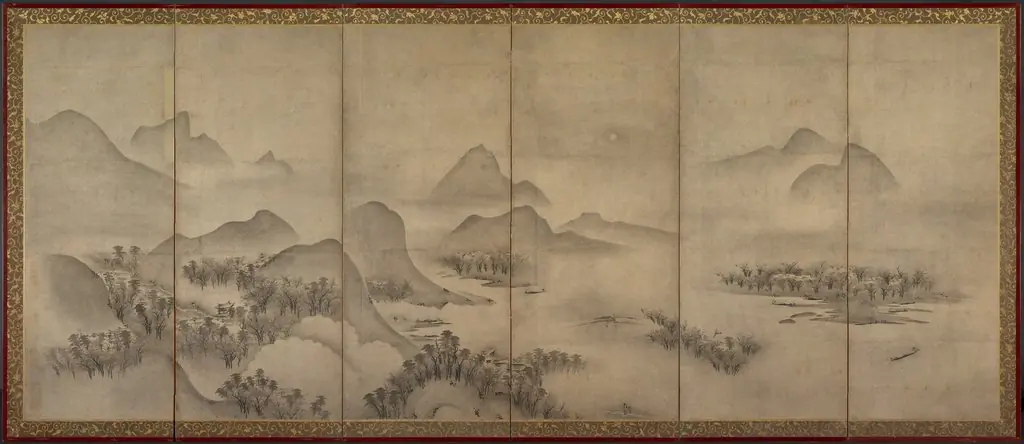
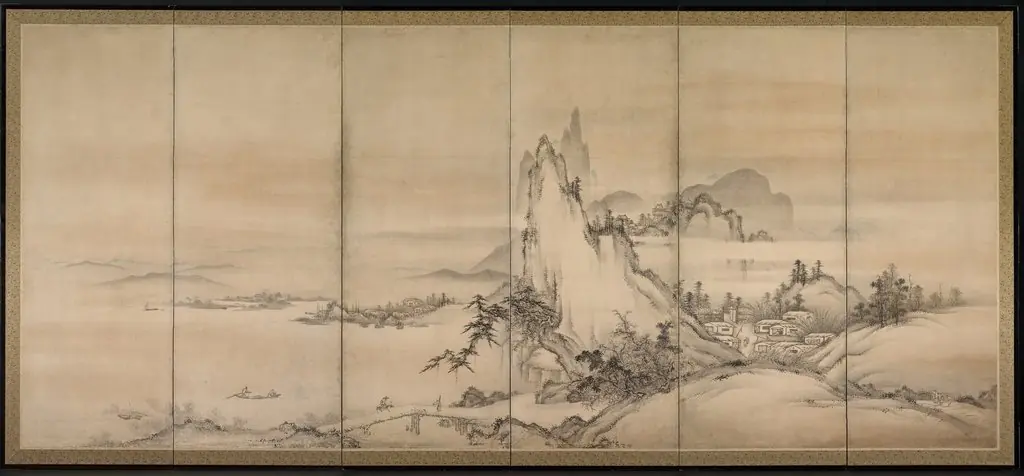
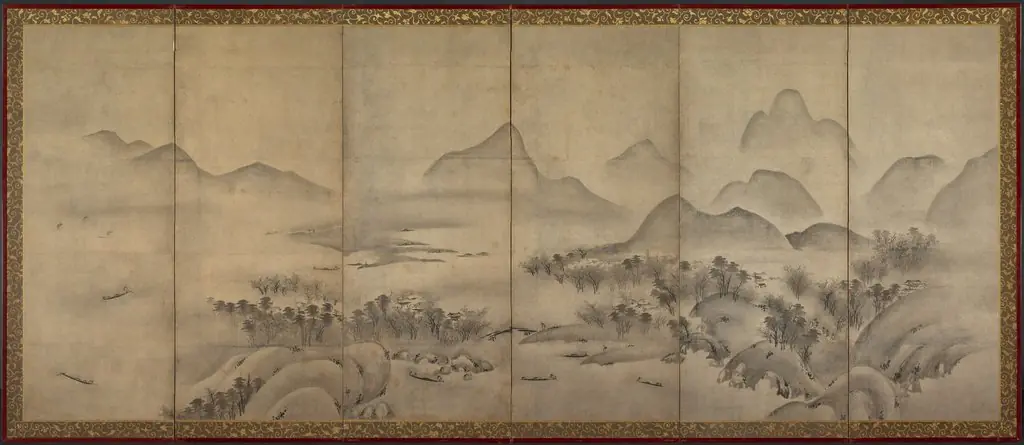
Landscape in 'Mi' Style is an unspecified painting by the Rinpa school artist Yosa Buson. It dates from 1750 and is held in the collection of the Los Angeles County Museum of Art.
About this work
Overview
Its restrained palette and delicate handling reflect Buson’s dual identity as a haiku master and visual artist, where poetic stillness informs pictorial space.
Created around 1750 by the Japanese poet-painter Yosa Buson, this ink landscape draws from the tradition of the Mi family’s brushwork, known for its atmospheric subtlety. Executed in monochrome ink on paper, the work presents a quiet rural scene with distant mountains, sparse trees, and implied water. Its restrained palette and delicate handling reflect Buson’s dual identity as a haiku master and visual artist, where poetic stillness informs pictorial space.
Subject & Meaning
The painting portrays a tranquil, unpopulated landscape, rolling hills, slender trees, and a hazy riverbed, evoking the quietude of seasonal change. No human figures appear; instead, nature itself becomes the subject, rendered with minimal strokes that suggest rather than describe. The composition invites contemplation, aligning with Zen-influenced aesthetics that value emptiness and impermanence, common themes in Buson’s literary and visual work.
Technique & Style
Buson employs wet-on-dry ink washes to achieve gradations of gray, using soft, feathered strokes for distant peaks and sharper, controlled lines for foreground elements. The texture of the mountains emerges through layered, almost translucent washes, while the trees are defined by concise, angular brushwork. The absence of color and the deliberate use of negative space emphasize the meditative quality of the scene, characteristic of literati painting traditions.
History & Provenance
The painting entered the collection of the Los Angeles County Museum of Art as part of a broader acquisition of Japanese ink paintings in the 20th century. Its origins trace to Buson’s active period in Kyoto, where he cultivated a personal style blending Chinese Song dynasty influences with Japanese sensibilities. While its exact early ownership is undocumented, its preservation reflects its recognition among collectors of Edo-period literati art.
Context
During the mid-18th century, Japanese artists like Buson revived classical Chinese ink painting styles as a form of cultural refinement, distinct from the more decorative Kano school. The 'Mi' style, named after the Southern Song painters Mi Fu and Mi Youren, was especially admired for its evocative, atmospheric landscapes. Buson’s work in this vein positioned him within a scholarly circle that valued poetry, calligraphy, and painting as interconnected arts.
Legacy
Buson’s landscape in 'Mi' style exemplifies the literati ideal of the artist as a cultivated amateur, where technical restraint conveys emotional depth. His integration of poetic sensibility into visual form influenced later generations of Japanese painters and reinforced the link between haiku and ink painting. Though not widely known outside specialist circles, his works remain touchstones in the study of Edo-period aesthetic philosophy.
Artist & collection


 Untitled
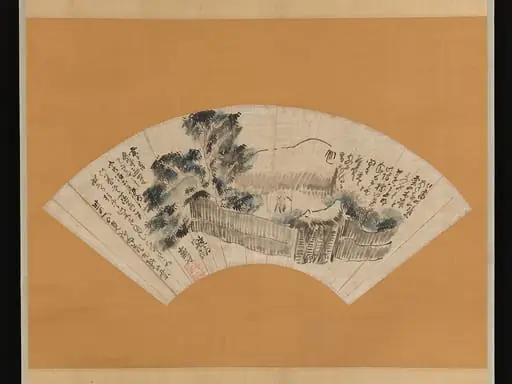 与謝蕪村筆 奥の細道図扇面|Scene from The Narrow Road to the Deep North
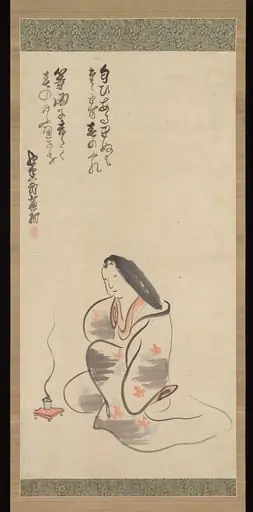 Untitled
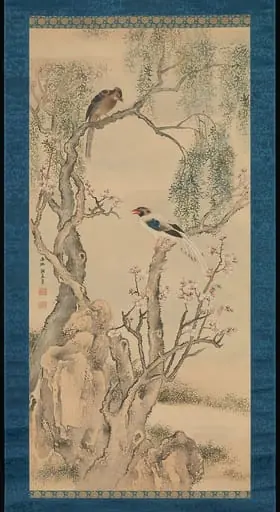 与謝蕪村筆 柳緑桃紅図|Birds in Willows and Blossoming Peach Tree
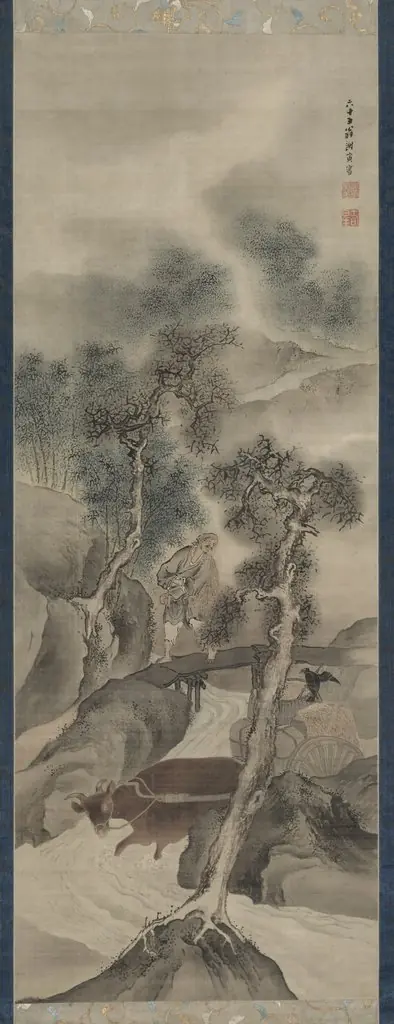 Water Buffalo Returning Home
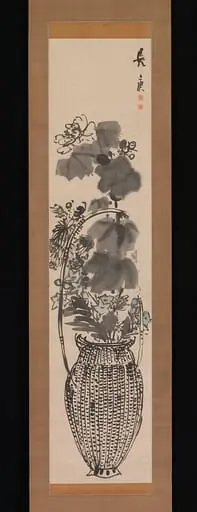 与謝蕪村筆秋草花竹籃図 |Autumn Flowers in a Bamboo Basket
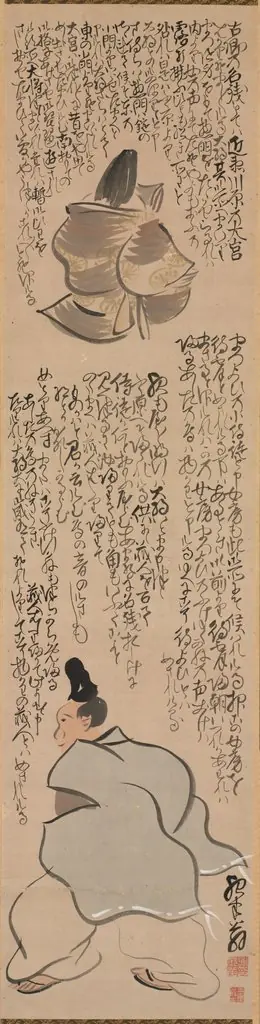 Figures with Calligraphy of a Passage from the "Heike Monogatari" ("The Tales of Heike")
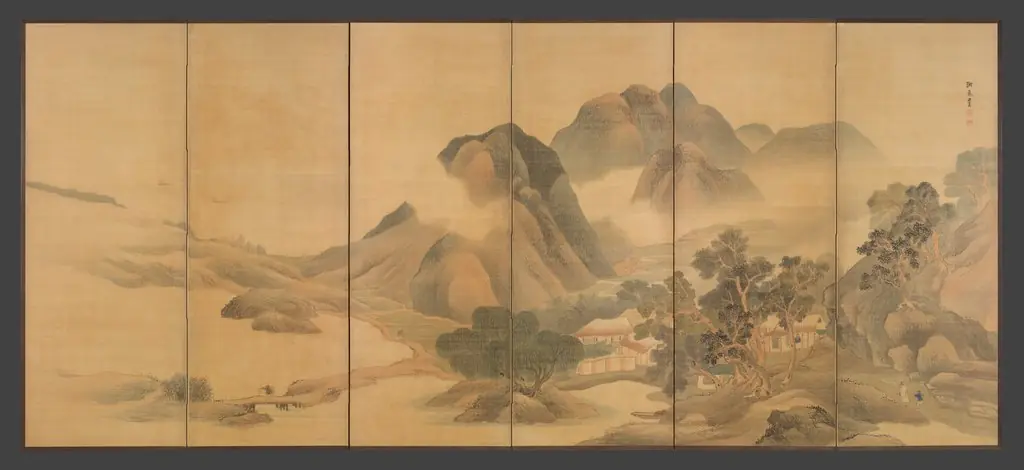 Travels through Mountains and Fields