
Subject
Bead
Bead is a subject in art. The gallery holds 37 works in this subject in art, including works by John Lewis Krimmel, Hrandt Avakian and Iosif Iser.
A bead is a small, decorative object that is formed in a variety of shapes and sizes of a material such as stone, bone, shell, glass, plastic, wood, or pearl and with a small hole for threading or stringing. Beads range in size from under 1 mm to over 1 cm in diameter.
Key artists

Overview
A bead is a small, decorative object, typically with a hole for threading or stringing, formed in various shapes and sizes from materials such as stone, bone, shell, glass, plastic, wood, or pearl. Beads range in size from under 1 mm to over 1 cm in diameter and represent some of the earliest forms of personal adornment. The word 'bead' derives from the Old English 'gebed,' originally meaning 'prayer,' reflecting the object's use in counting repetitions of prayers on rosaries and Pater Noster cords. Beadwork, the art or craft of making things with beads, involves weaving beads with specialized thread, stringing them onto thread or wire, or adhering them to surfaces such as fabric or clay. The collection contains 62 works that depict beads, spanning portraiture, still life, fashion illustration, and ethnographic subjects.
Iconography & meaning
Beads carry layered meanings across cultures and periods. As prayer counters, they symbolize devotion and spiritual discipline in Christian contexts. More broadly, they function as markers of status, wealth, and identity. In African tribal contexts, beads indicate marital status and social standing, with the quantity of beads reflecting a woman's attractiveness and the generosity of her suitors. In Midden- and South America, the Inca, Maya, and Aztec civilizations used large beads in complex accounting chains where both position and color carried administrative significance. Beads also served as grave goods, protective amulets, and mnemonic devices. The materials themselves, whether precious pearls, amber, coral, or humble bone and wood, encode hierarchies of value and access to trade networks. In colonial contexts, beads became instruments of exploitation, as European glass beads were traded for goods and even used to purchase enslaved people.
Across movements & periods
The treatment of beads in art and material culture shifts dramatically across periods. Prehistoric beads, such as the approximately 100,000-year-old Nassarius sea snail shell beads from Skhul Cave in Israel and Oued Djebbana in Algeria, represent humanity's earliest jewelry. European finds from the transition to the Upper Paleolithic, around 37,000 BCE, include animal teeth and bone pendants from La Quina, France. By the Aurignacian and Gravettian periods, new techniques allowed the working of mammoth ivory and fossil wood into beads with incised patterns. In Egypt, amethyst beads were in use by at least 2010 BCE. Glass beads appeared in the Near East around 3000 BCE, with Venetian millefiori beads later becoming global trade items. The Neolithic saw precision-drilled quartzite beads, while amber, copper, and gold beads appeared from 7000 BCE. Modern manufacturing introduced plastic beads in 1958 by Munkplast AB in Sweden, with fusible beads and pegboard systems developed by Gunnar Knutsson in the early 1960s. Contemporary beadmaking employs carving, casting, and specialized glassworking techniques including lead crystal and cloisonné.
Notable depictions
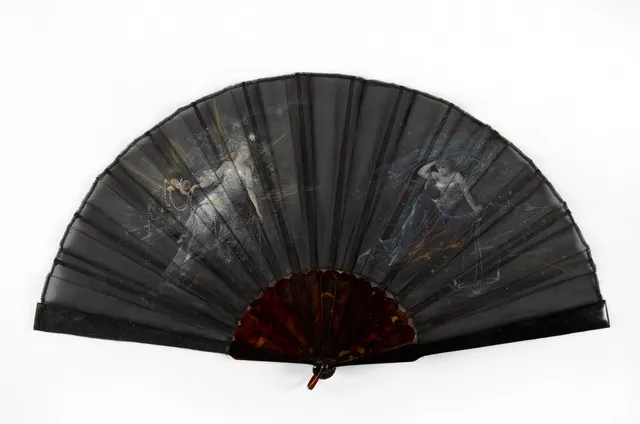
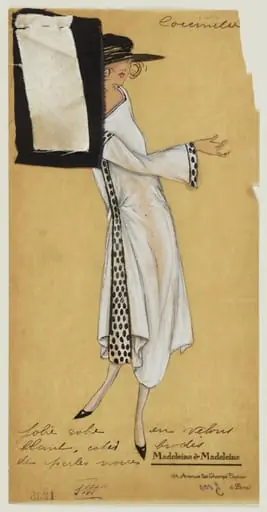
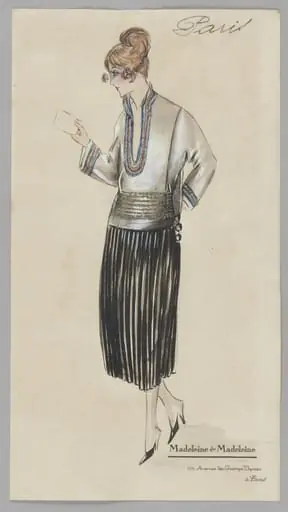
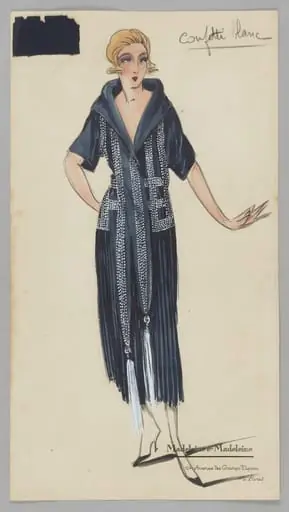
Within the collection, notable depictions include the fashion plates that document bead-embroidered haute couture, such as the emerald velvet evening gown and the black serge dress with black bead and gold embroidery. These works, likely from the early twentieth century, preserve the decorative vocabulary of French couture. The ethnographic subjects, including 'Tableau of Indian Faces' and 'Big Bowl' (A Crow Chief), represent beads as elements of Indigenous American regalia, reflecting both documentary interest and the romanticized conventions of the period. 'Portretul unei tinere' incorporates beads into European portraiture conventions, while 'Eventail plié' suggests their application on decorative objects. Archaeologically, the 23,000-year-old mammoth ivory beads from Sungir, Russia, sewn onto clothing, and the amber beads from around 20,000 years ago in present-day Ukraine, represent significant prehistoric achievements. The bead necklace from Barma Grande in southern France, composed of three chains of symmetrically arranged fish vertebrae, shells, and dog teeth, exemplifies the artistic sophistication of the late Upper Paleolithic.
Legacy
The bead's legacy extends from prehistoric adornment to contemporary craft and industrial manufacturing. The etymological connection between beads and prayer persists in the word's history, while the object's material range has expanded from natural organics and inorganics to synthetic plastics and specialized glasses. The archaeological record demonstrates beads as evidence of long-distance trade, with Atlantic and Mediterranean shells found in Germany indicating extensive exchange networks. Colonial encounters irrevocably associated beads with exploitation, as the phrase 'beads and trinkets' came to symbolize unequal exchange. In modern times, beads have become associated with childhood crafts through products like Hama, Perler, and IKEA Pyssla beads, while remaining significant in fine jewelry and fashion. The continued use of beads in contemporary art, craft, and design, alongside ongoing archaeological discoveries such as the 75,000-year-old Nassarius kraussianus beads from Blombos Cave, South Africa, attests to the form's remarkable persistence and adaptability across human cultures and time periods.
Works
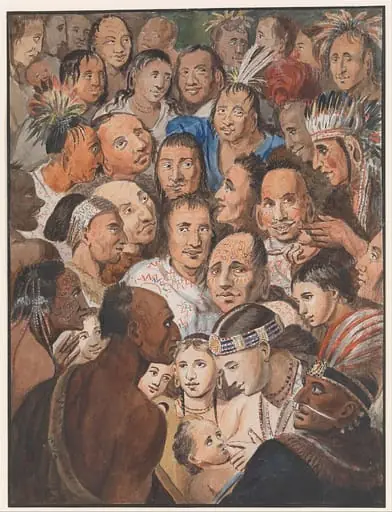 Tableau of Indian Faces
 Portretul unei tinere
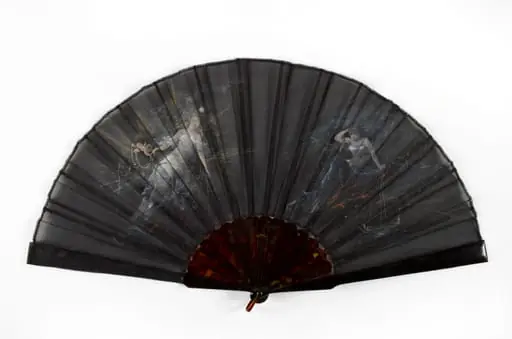 Eventail plié
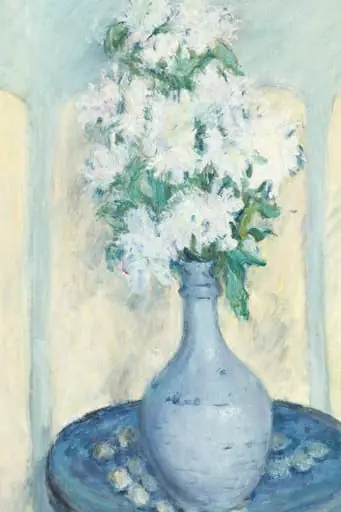 Flori albe în vas
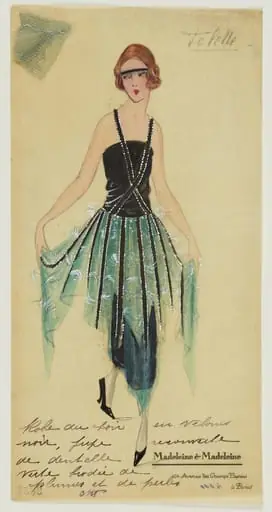 Folette
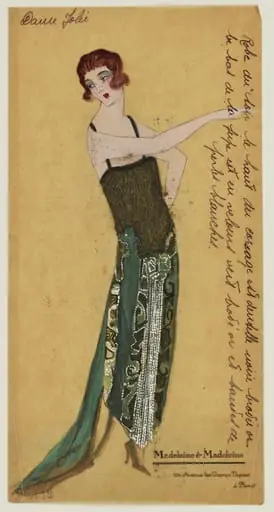 Dame Jolie
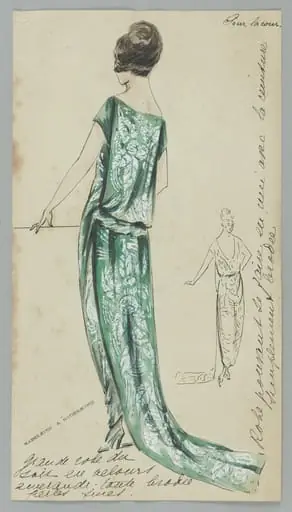 Pour la cour
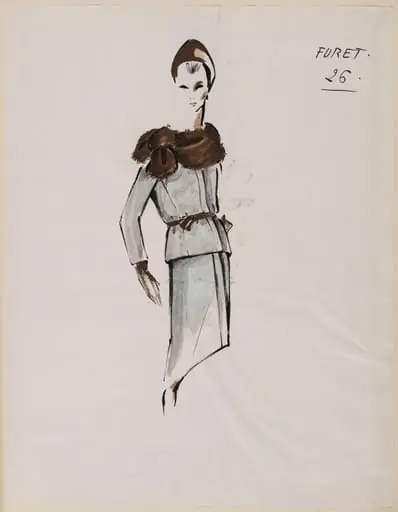 Furet
Furet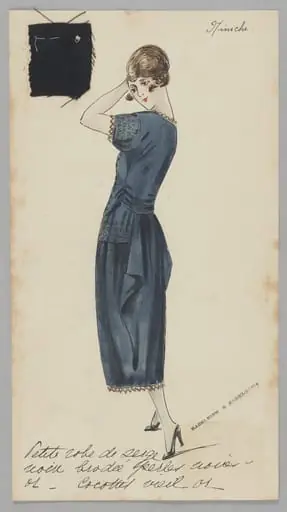 Miniche
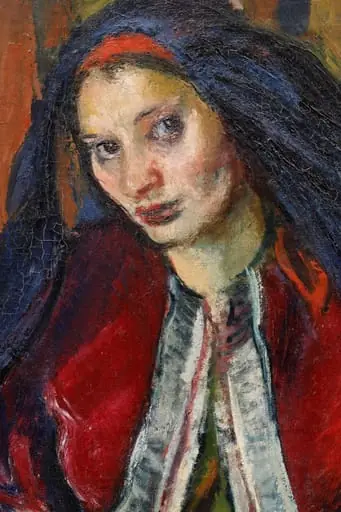 Tătăroaică cu mărgele
 Coccinelle
 Paris
Paris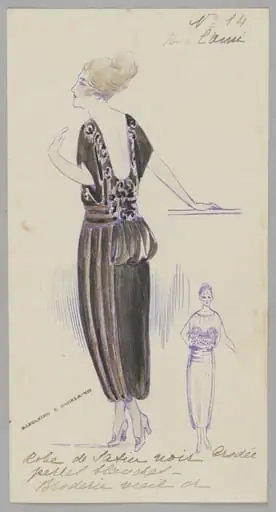 Pour l'ami
 Confetti blanc
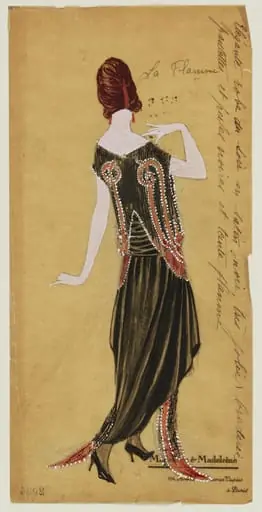 La Flamme
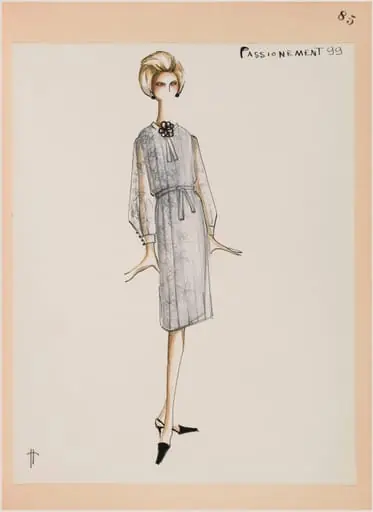 Passionement
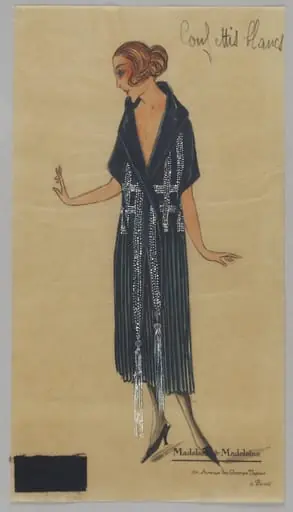 Confettis blancs
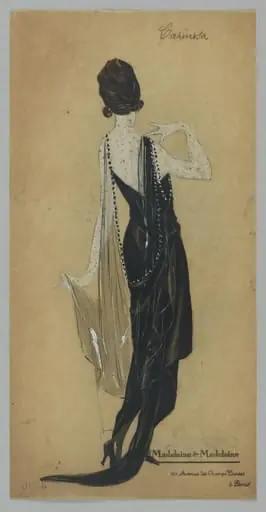 Carinosa
![[...]anour d'or](https://artifactworldgallery.com/img/madeleine-madeleine--anour-d-or--60b5322ff614b40b-w320.webp) [...]anour d'or
[...]anour d'or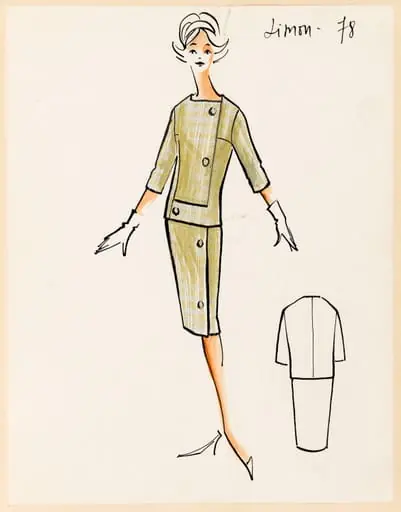 Limon
Limon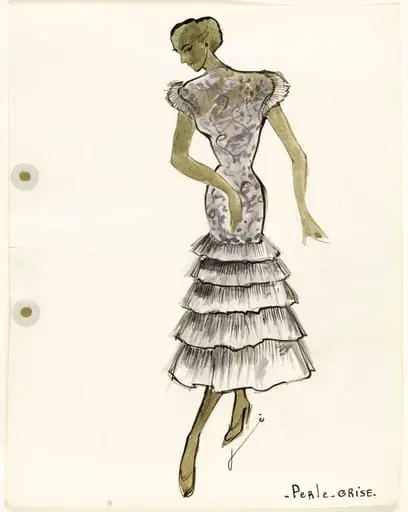 'perle Grise'
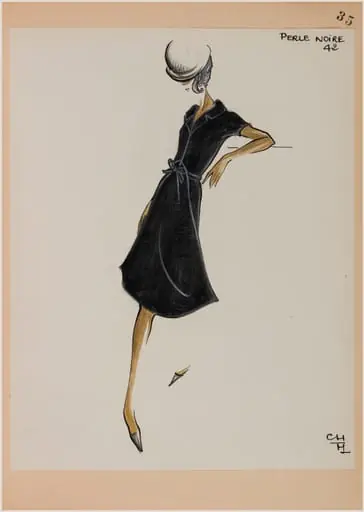 Perle noire
![[...]anou d'or](https://artifactworldgallery.com/img/madeleine-madeleine--anou-d-or--5e4d4a722f363347-w320.webp) [...]anou d'or
[...]anou d'or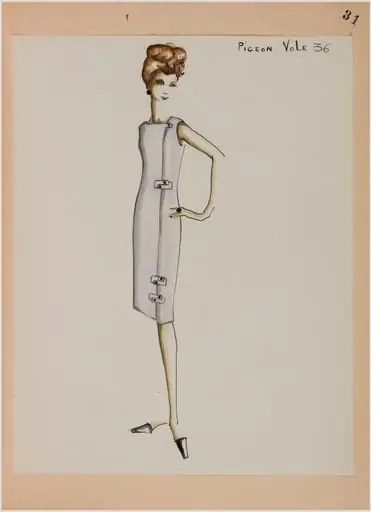 Pigeon-vole
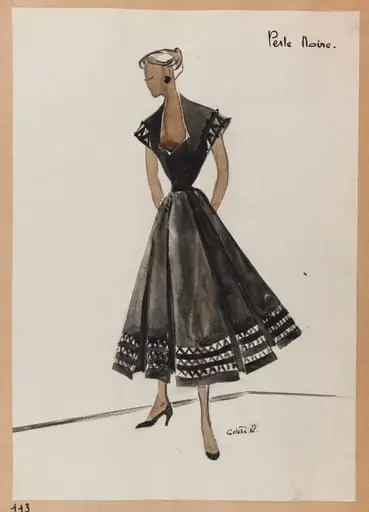 Perle noire
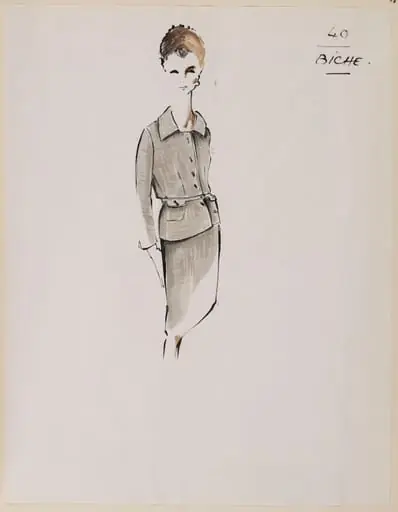 Biche
Biche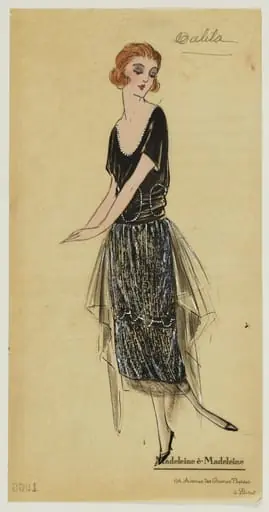 Dalila
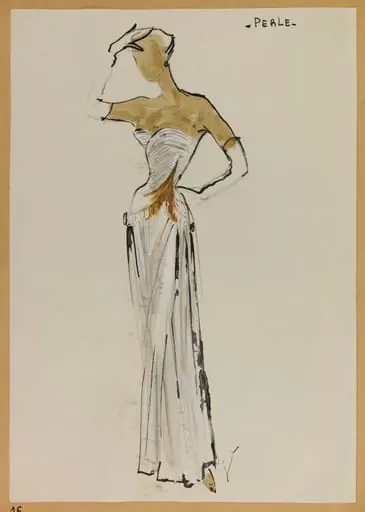 Perle
Perle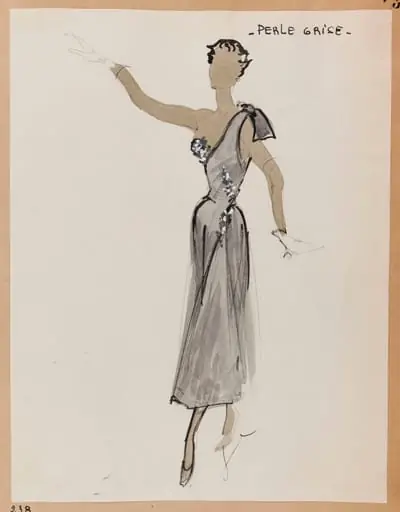 Perle grise
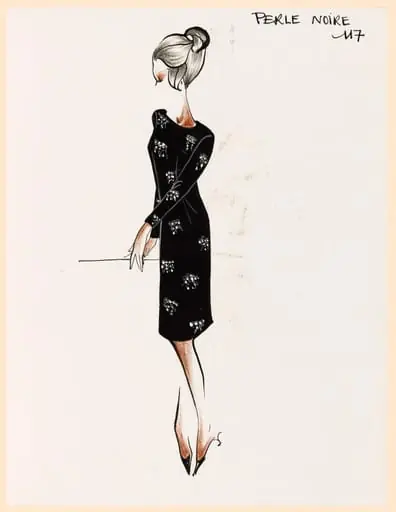 Perle noire
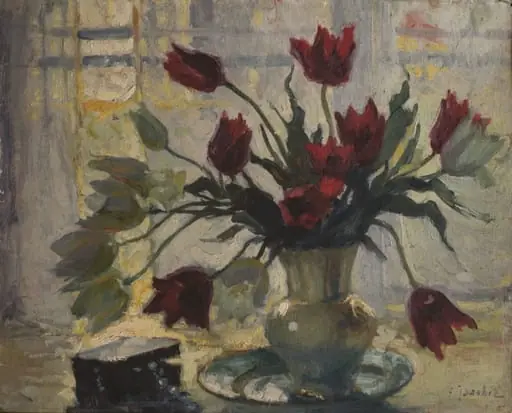 Flori (lalele)
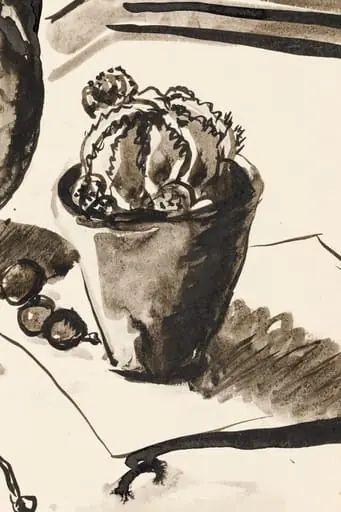 NATURĂ STATICĂ CU CACTUS, CANCEU ȘI MĂRGELE
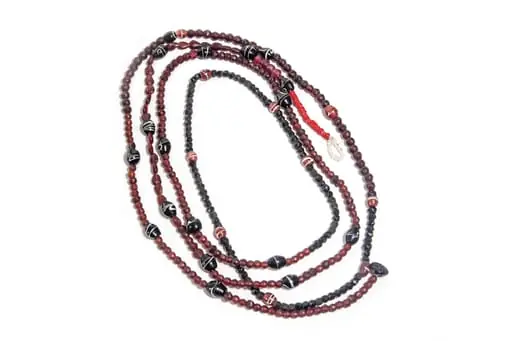 Purtata la gât de tinerele neveste, ca podoabă a costumului de sărbătoare piesa reprezintă atributul statusului marital al purtătoarei și al statutului său material. Piesa este compusă dintr-un singur șir de mărgele de sticlă, ce imită sticla de Murano, executate în „hutele” bihorene (manufacturi de sticlă). Având forme și mărimi diferite, mărgelele de culoare roșie și grena sunt intercalalte la distanțe egale cu alte mărgele mai mari pictate în alb cu diverse ornamente geometrice ce se detașează pe fondul de tonuri închise. Acestea crează un efect cu totul aparte completând într-un mod deosebit întreg ansamblu al costumului, purtându-se răsucite de mai multe ori în jurul gâtului. Piesa se închide la spate cu o mărgică aplatizată ce se introduce printr-un anou realizat din mici mărgele albe. La capătul cu anoul, pe o porțiune, probabil în urma unei restaurări, se distinge un alt tip de mărgele decât cele originale. Cromatică: grena, verde, roșu, albastru și alb.
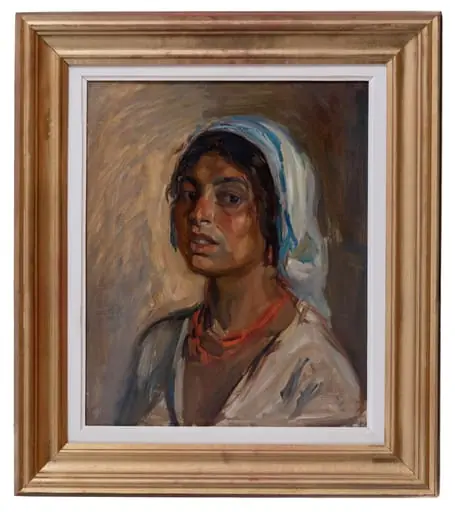 Cap de țigancă
 Portret de femeie pe fond galben
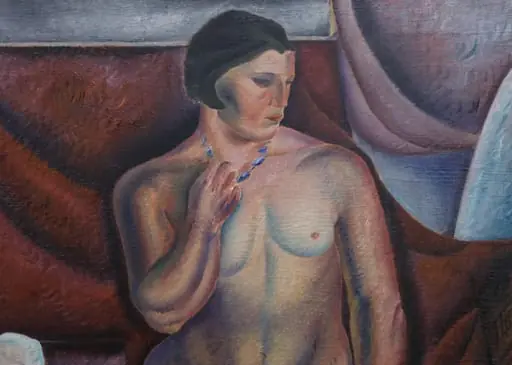 NUD
NUD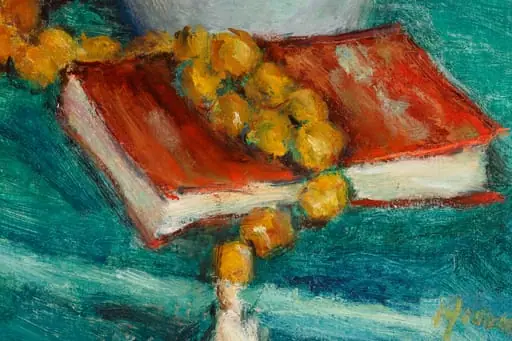 Vas gri cu carte
Frequently asked questions
What is Bead?
Bead is a subject in art. A bead is a small, decorative object that is formed in a variety of shapes and sizes of a material such as stone, bone, shell, glass, plastic, wood, or pearl and with a small hole for threading or stringing.
How many Bead works does Artifact World Gallery have?
Artifact World Gallery holds 37 public-domain Bead works, all free to view and download.
Who are the key Bead artists?
Key Bead artists in the collection include John Lewis Krimmel, Hrandt Avakian and Iosif Iser.
Where can I see Bead works?
Bead works in the collection are held by Palais Galliera - Musée de la Mode de la Ville de Paris, National Museum of Art of Romania and Moldova National Museum Complex.