Subject
Farmhouse
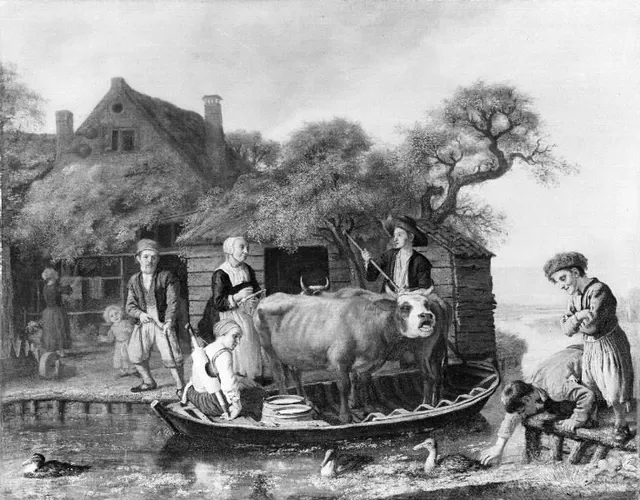
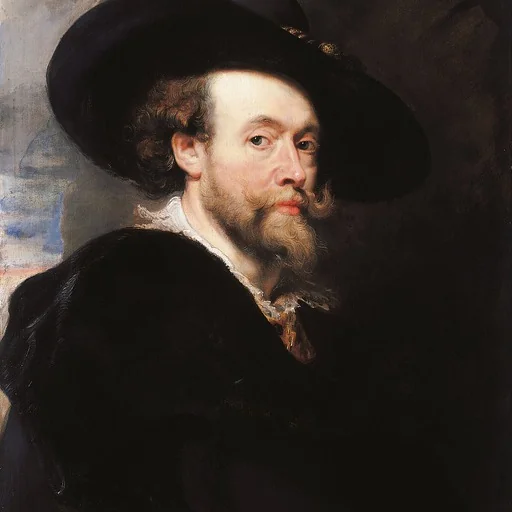
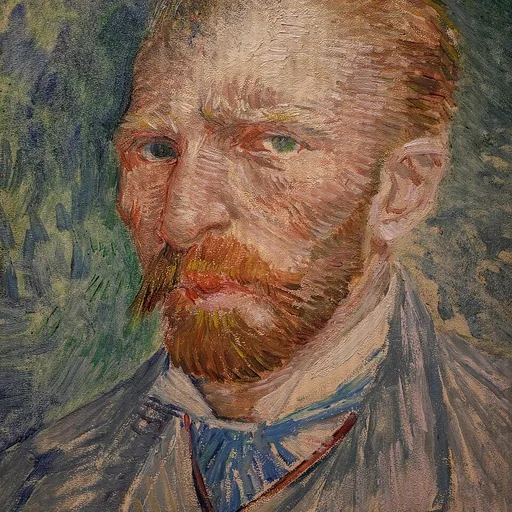
Farmhouse is a subject in art. The gallery holds 70 works in this subject in art, including works by Jean Baptiste Camille Corot, David Teniers the Younger and Peter Paul Rubens.
A farmhouse is a building that serves as the primary quarters in a rural or agricultural setting. Historically, farmhouses were often combined with space for animals called a housebarn.
Key artists
Overview
A farmhouse is the primary dwelling house attached to a farm, serving as the central living quarters within a rural or agricultural setting. In many European languages, the term encompasses not only the residential structure but also the surrounding agricultural enterprise, including barns, stables, and cultivated lands. The motif of the farmhouse recurs throughout art history as a symbol of rural life, agricultural labor, and the relationship between humans and the land. Within the collection under discussion, the farmhouse appears in 71 works, ranging from interior scenes of peasant celebration to expansive landscape views, reflecting its significance as both an architectural subject and a cultural emblem.
Iconography & meaning
The farmhouse carries multilayered meanings in visual art. As an architectural form, it represents the integration of domestic and productive spaces, historically often combining human residence with animal quarters in structures known as housebarns. This physical conflation of dwelling and workplace symbolizes the inseparability of family life and agricultural labor in pre-industrial societies. In iconographic terms, the farmhouse can signify self-sufficiency, traditional social order, or the rhythms of seasonal labor. When depicted from without, it anchors the landscape as a sign of human cultivation amid natural surroundings. When shown from within, as in interior scenes, it becomes a stage for communal rituals such as the Twelfth Night celebrations. The farmhouse also carries class connotations, distinguishing the peasant proprietor from the landless laborer or the estate owner. In French agricultural construction, the term rustique originally referred to the coarse materials employed, embedding the farmhouse within discourses of vernacular authenticity and unpretentious functionality.
Across movements & periods
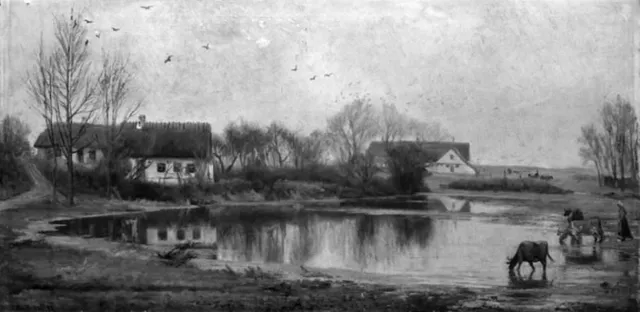
The treatment of the farmhouse in art evolved considerably across periods and cultures. In seventeenth-century Dutch Golden Age painting, the farmhouse typically appeared within realistic landscape and genre traditions, often emphasizing the material conditions of rural prosperity or the picturesque qualities of everyday life. Danish and broader Nordic depictions, as seen in works like Landskab ved Gyrstinge, frequently adopted a more topographical or atmospheric approach, situating the farmhouse within distinctive regional light and terrain. The nineteenth century saw increased romanticization of rural architecture, with farmhouses serving as emblems of national heritage and pre-industrial authenticity. Regional typologies also influenced representation: the long Bresse houses of France with their brick walls and wooden roofs, the timber-framed Low German houses with their sweeping roofs and internal halls, the courtyard-based Cascina a corte of Italy's Po Valley, and the limestone-built Razzett of Malta each carried distinctive formal characteristics that artists recorded or idealized. In North America, the farmhouse assumed particular significance as a symbol of westward expansion and self-sufficient settlement, with Canadian examples showing evolution from Gothic and Swiss-influenced forms through Victorian styles to kit-built uniformity by the early twentieth century. The later development of the ranch house in the United States, pioneered by Cliff May in the 1930s, represented a modernist adaptation of farmhouse principles to suburban contexts, though this architectural form lies outside the period of most artistic depictions in the collection.
Works
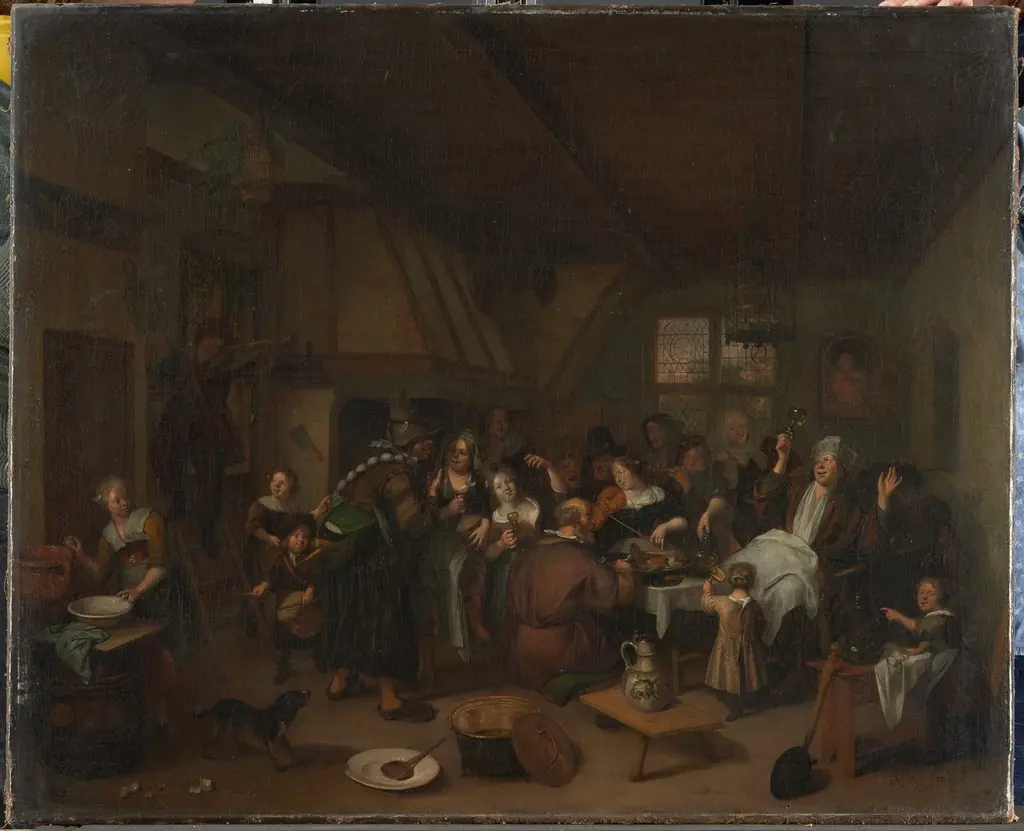 Interior with a company celebrating Twelfth Night, the Feast of Epiphany
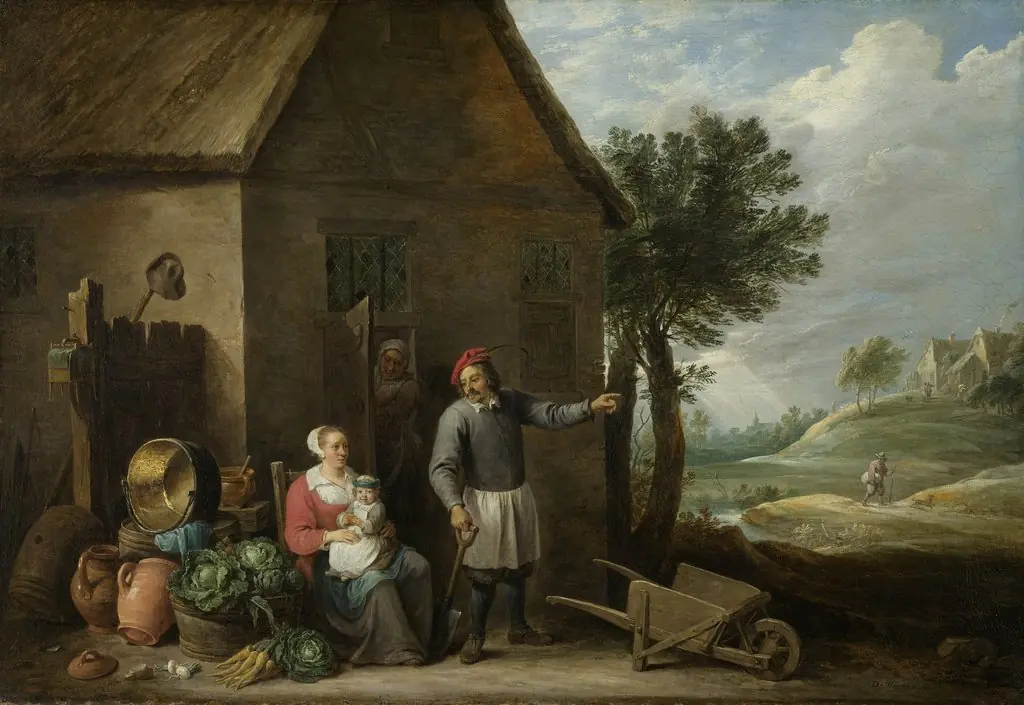 A peasant with his wife and child in front of the farmhouse
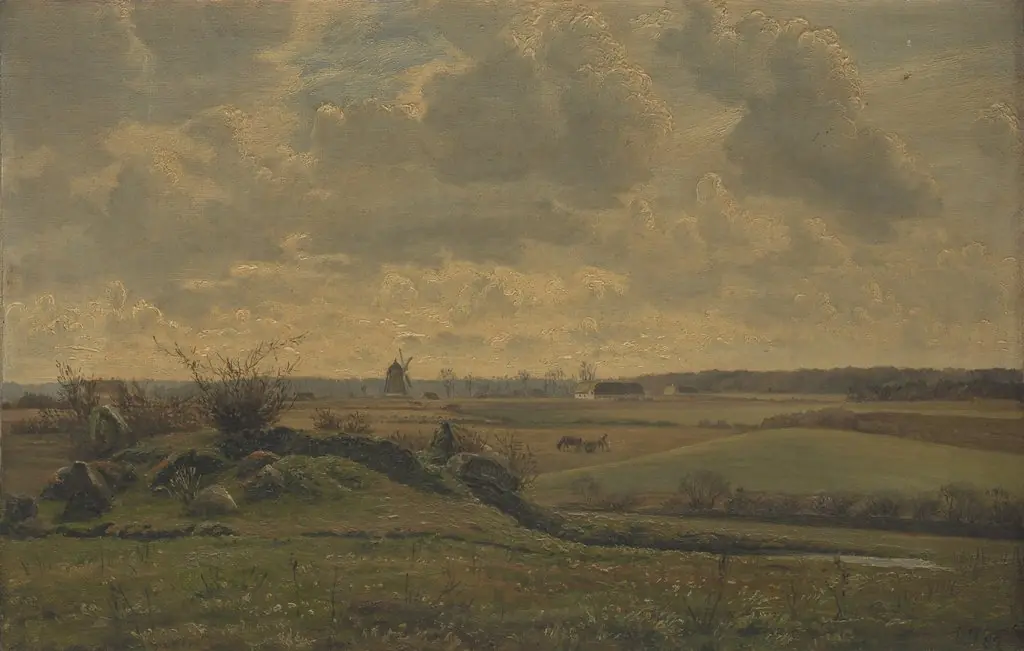 Landskab ved Gyrstinge
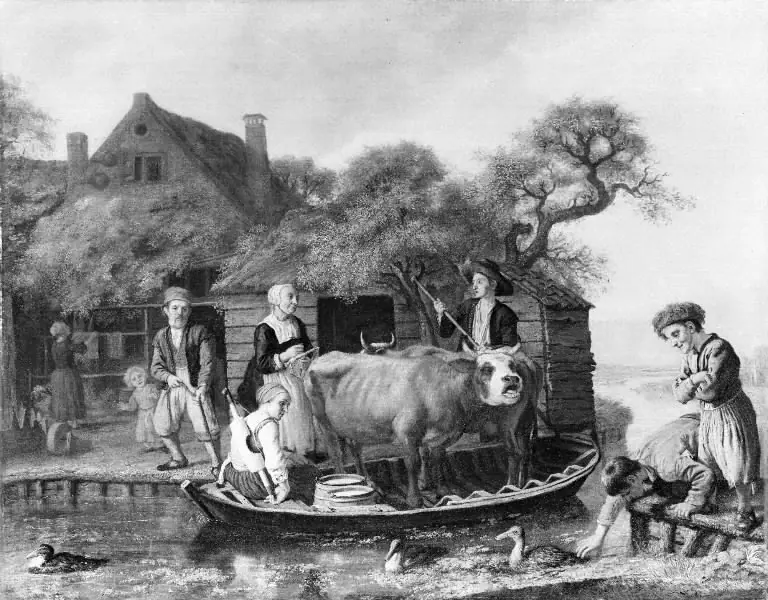 Scene outside a Dutch Farm
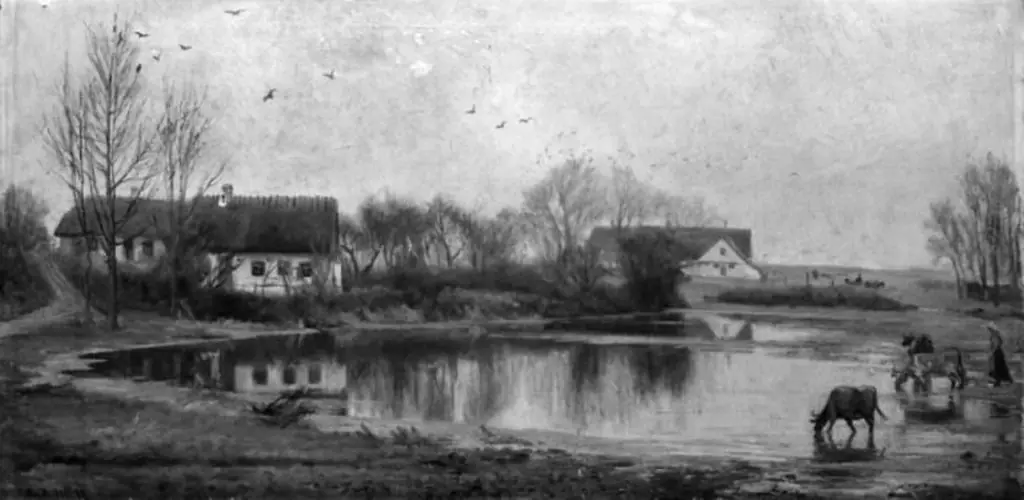 Gadekæret i Kajerød
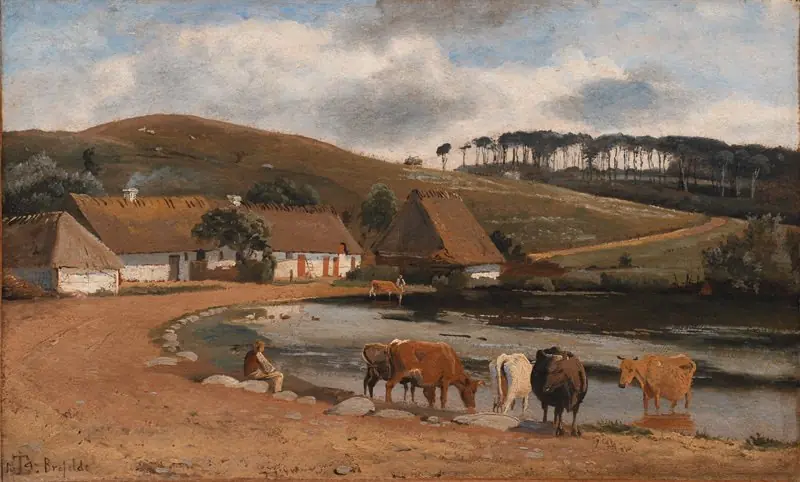 Cows being Watered at a Village Pond. Brofelde, Zealand
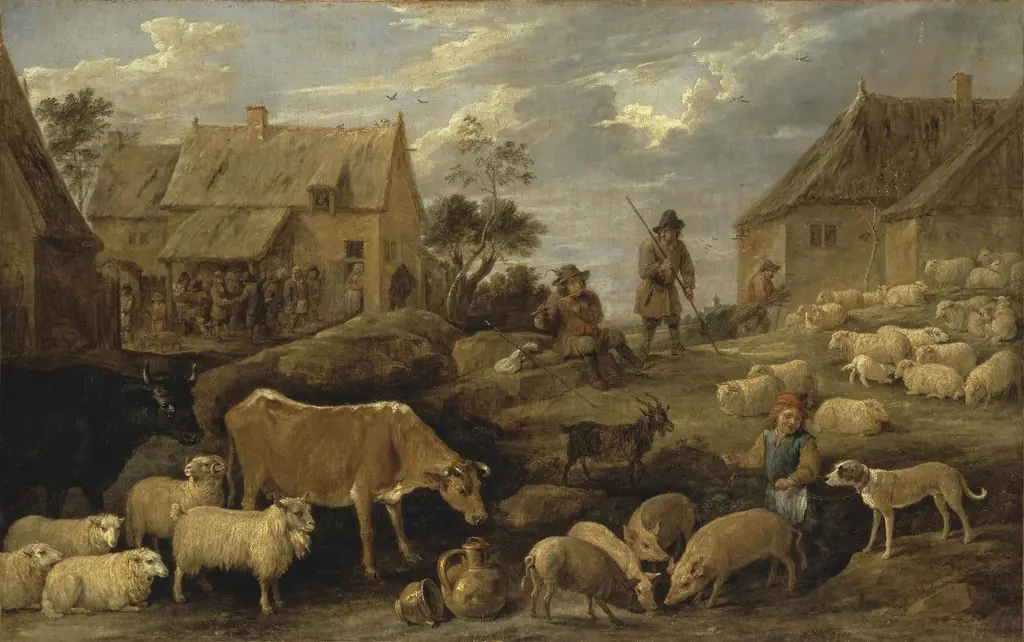 Landscape with shepherds and a flock
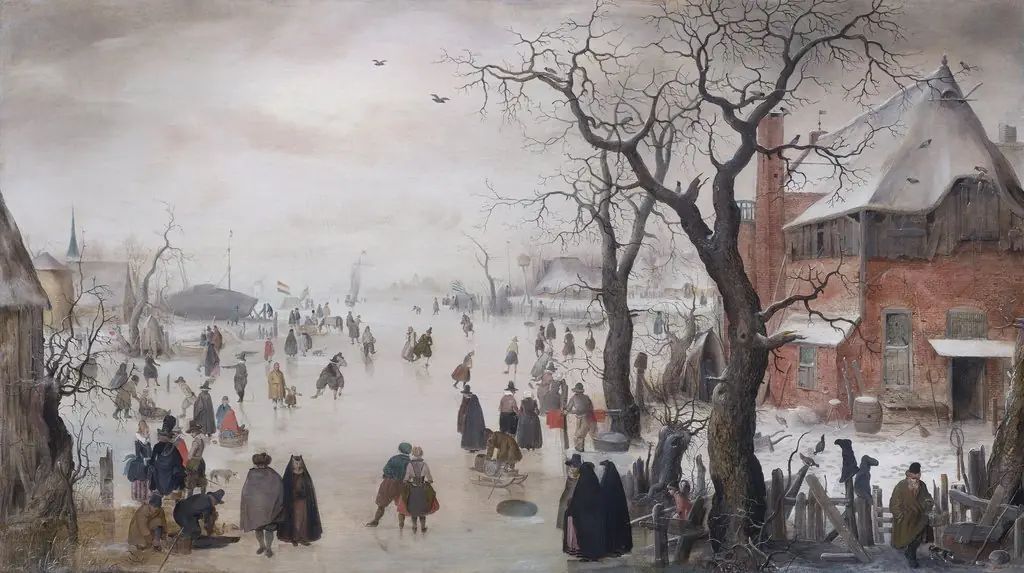 Winter Landscape with Skaters near a Village
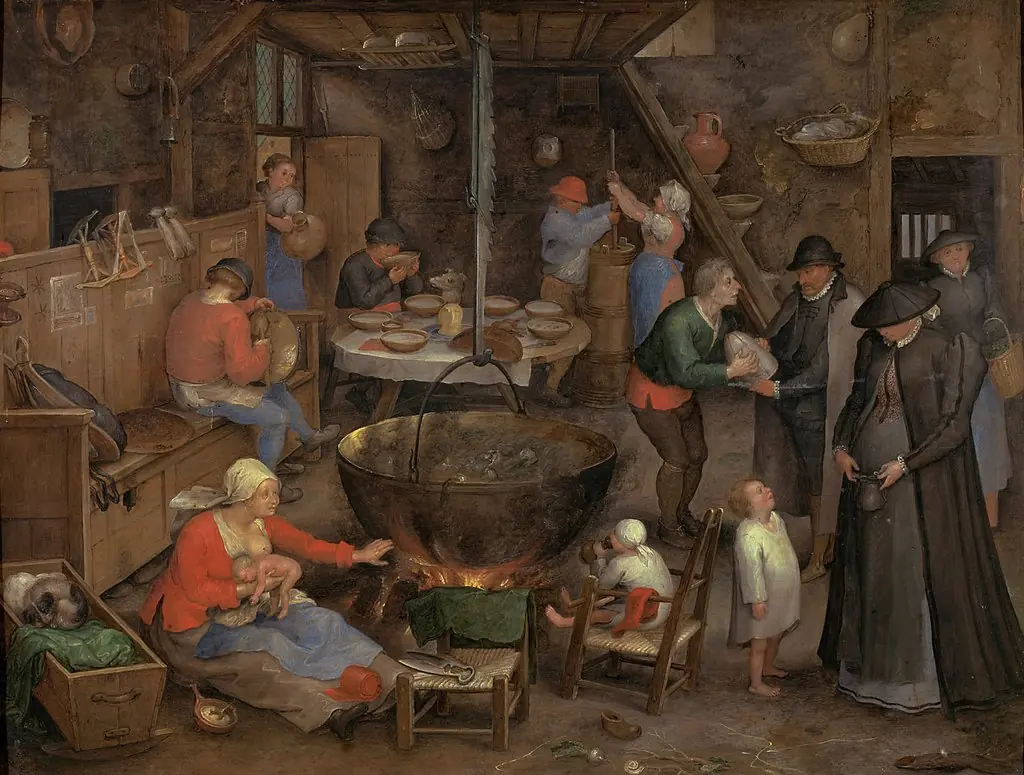 Visit to the Farm
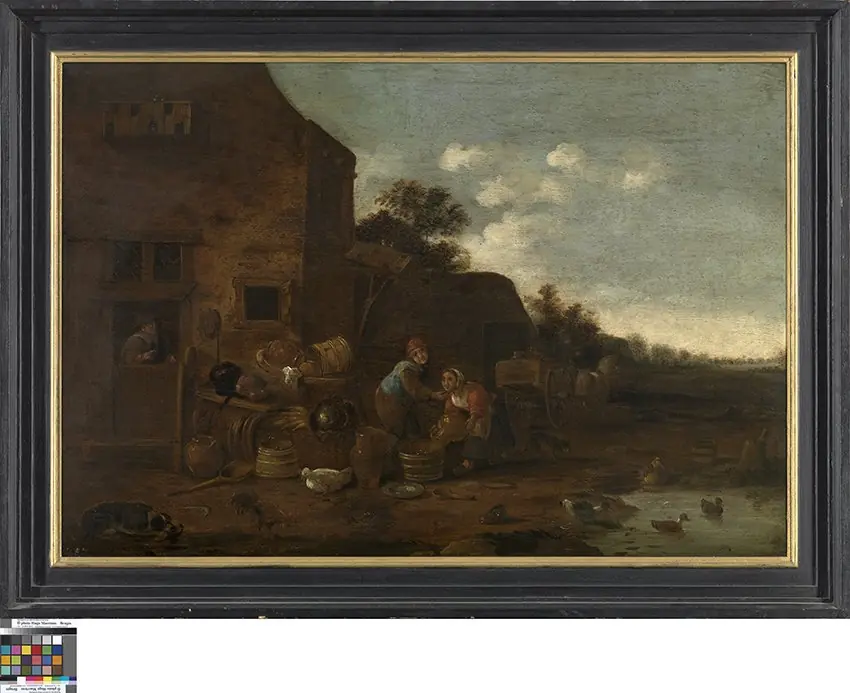 Boerenerf
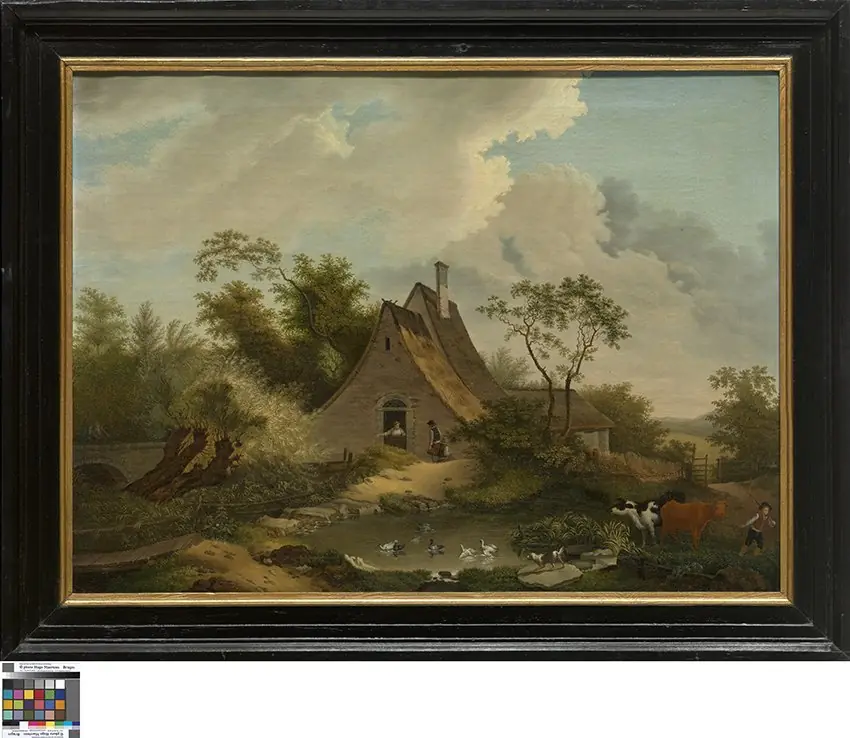 Landschap met hoeve
 Mater Purissima
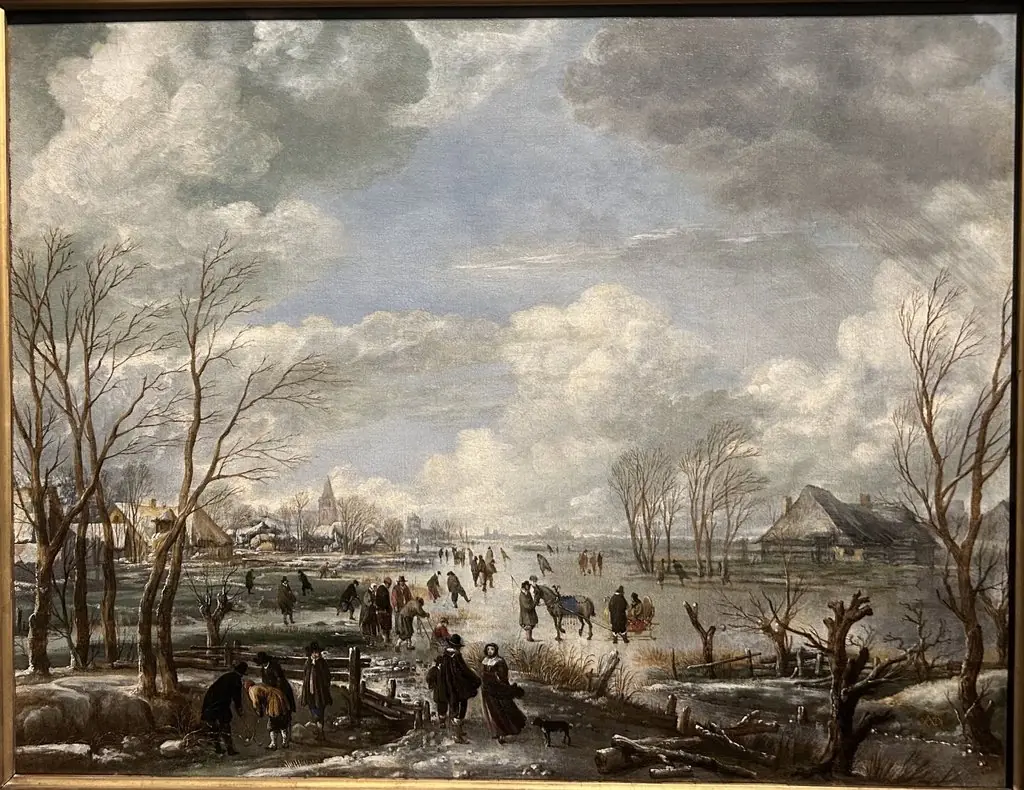 Winter pleasures
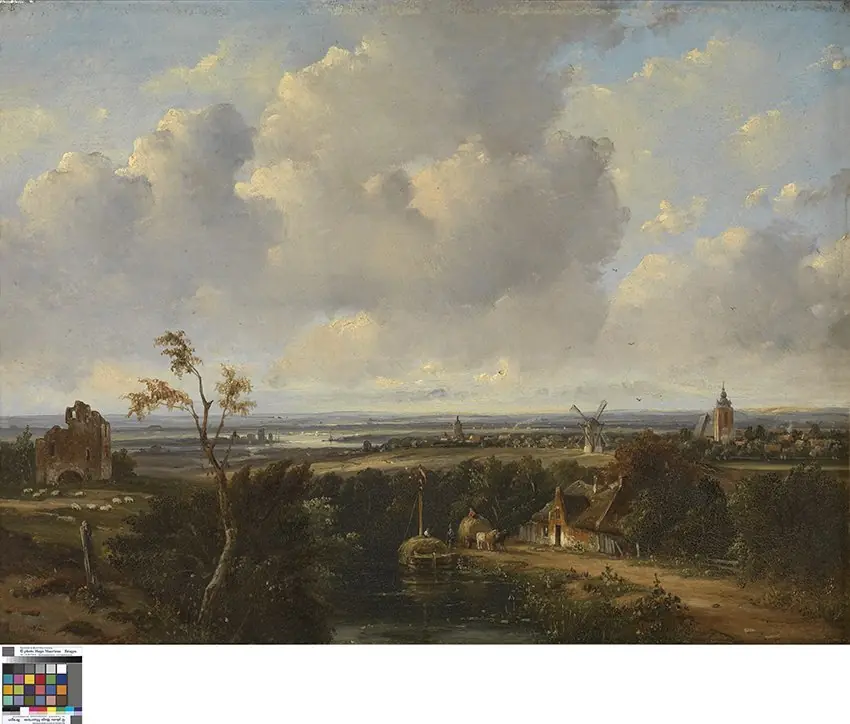 Landschap in Holland
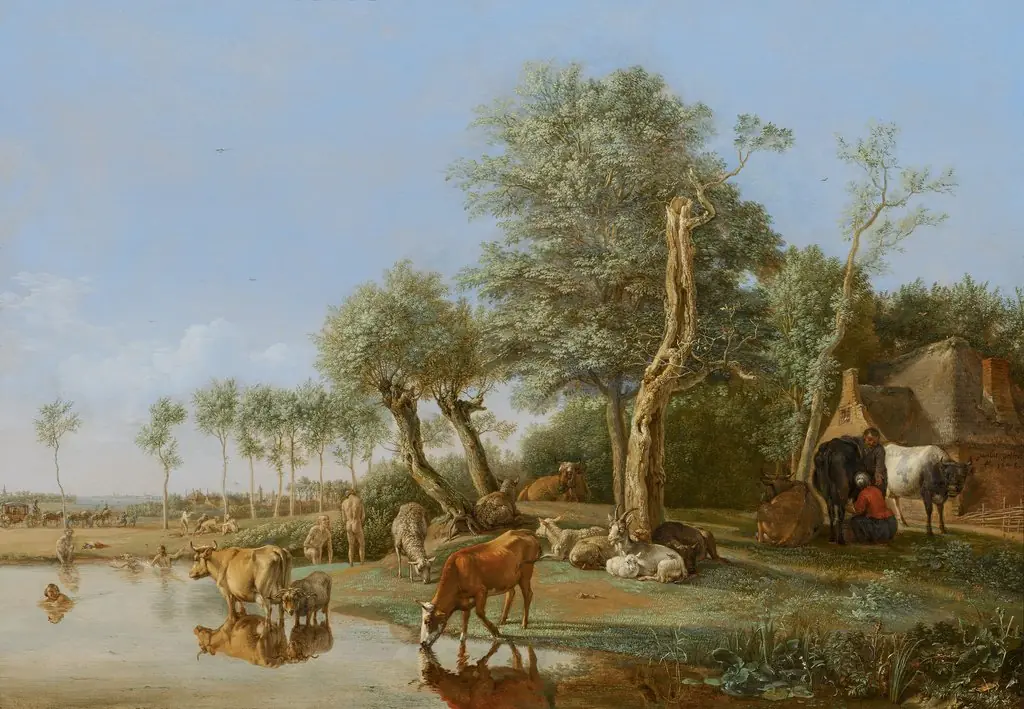 Cows reflected in the water
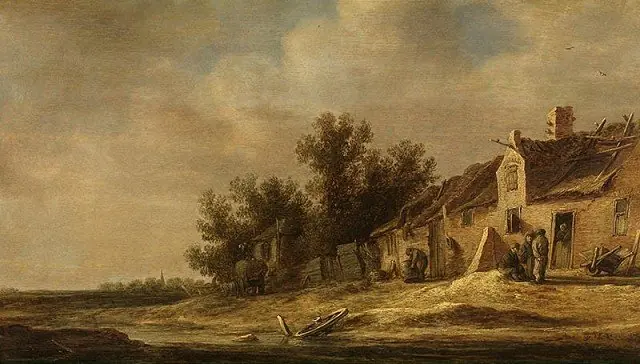 Landscape with Farmhouse
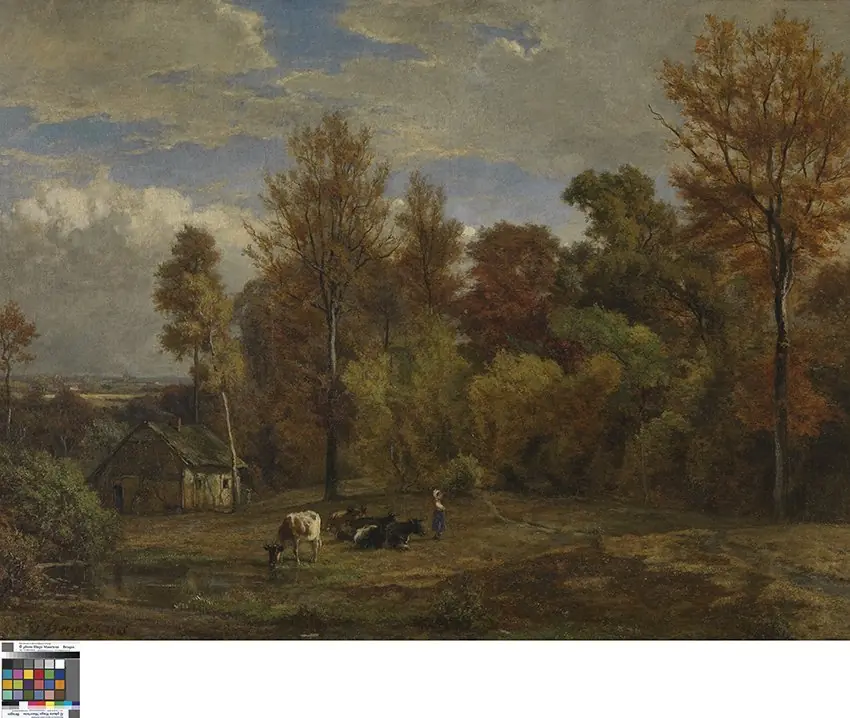 Boslandschap bij Presles
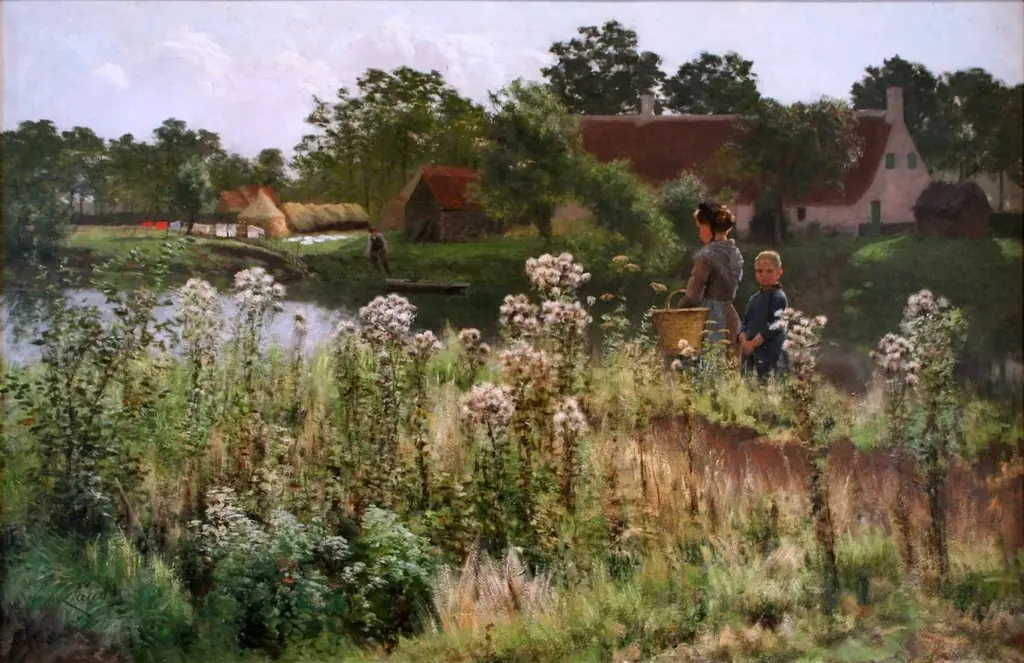 The river Lys at Astene
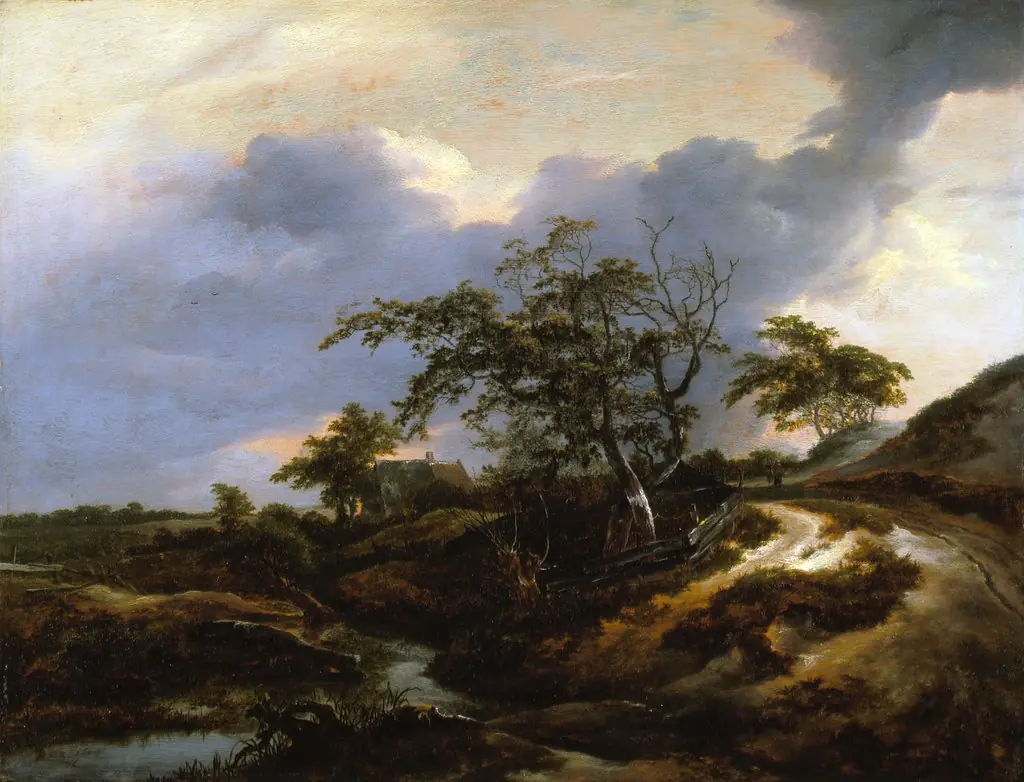 Landscape with Dunes
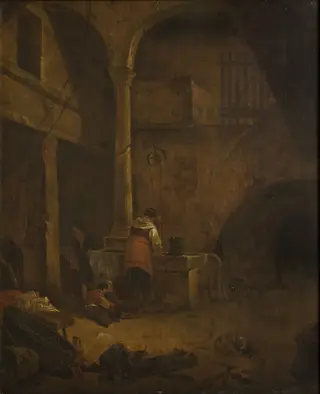 Woman at a Well in an Italian Farmhouse
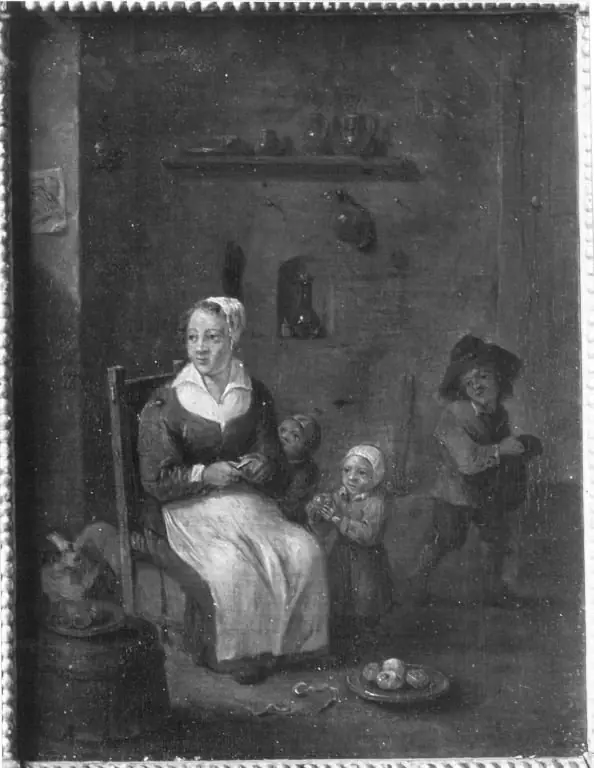 Farmhouse Parlor
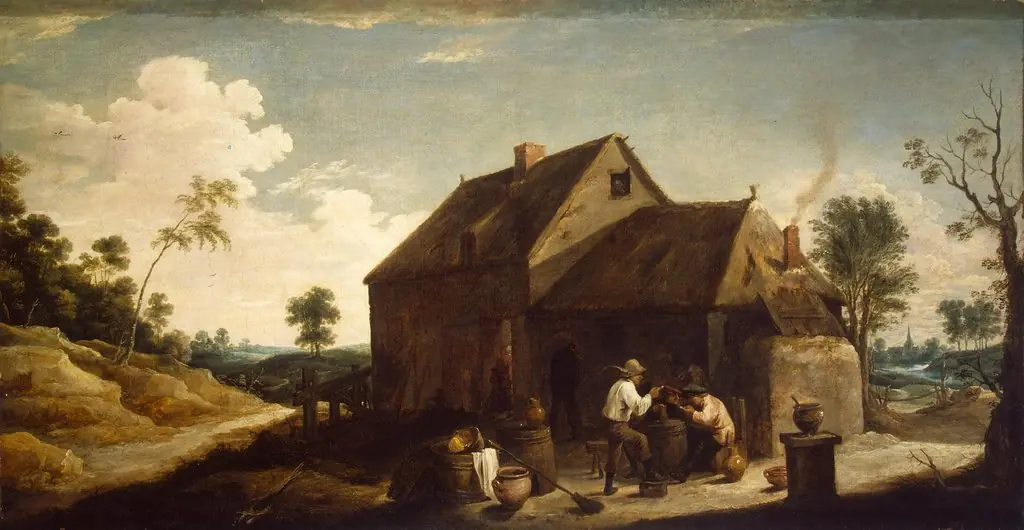 Landscape with Peasants before an Inn
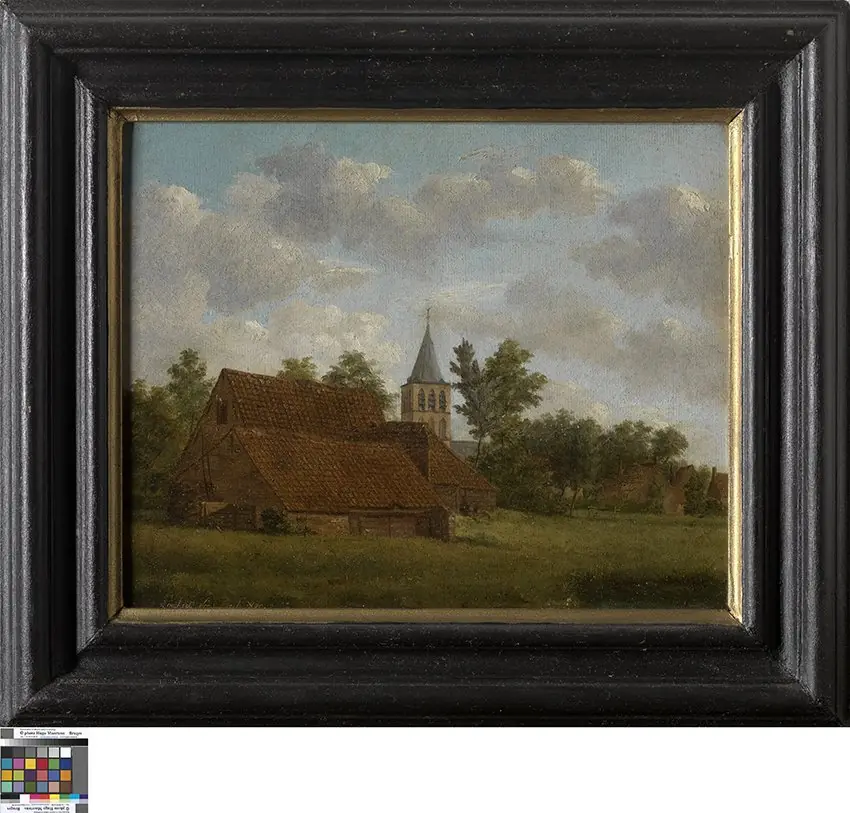 De Sint-Gilliskerk in Brugge
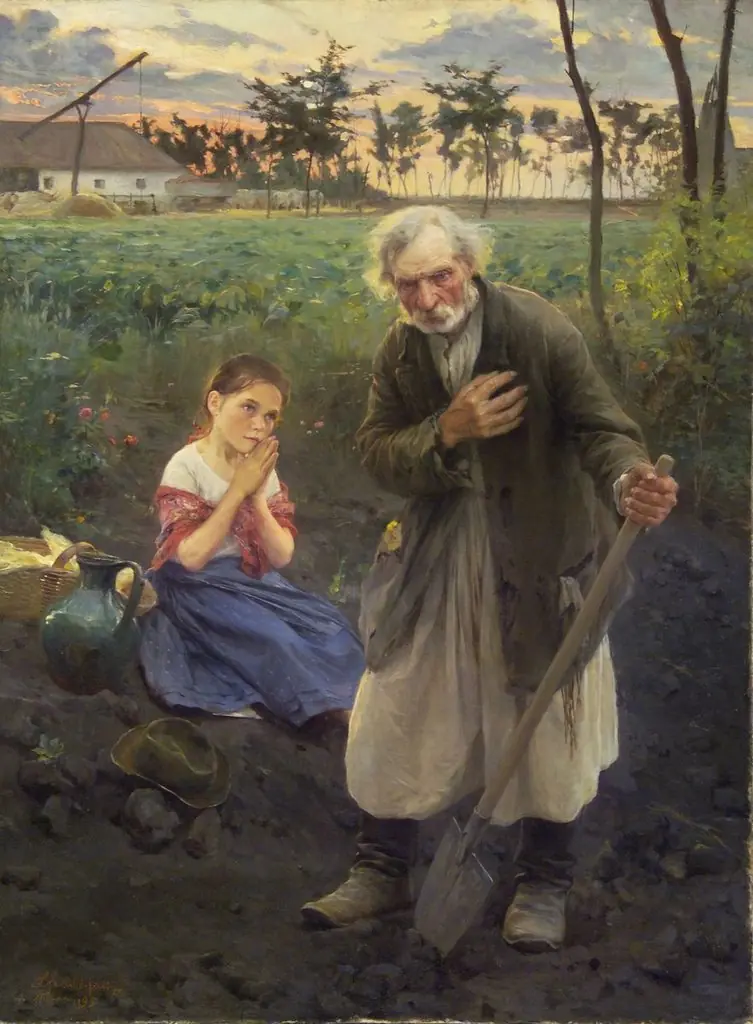 At Vesper Bell
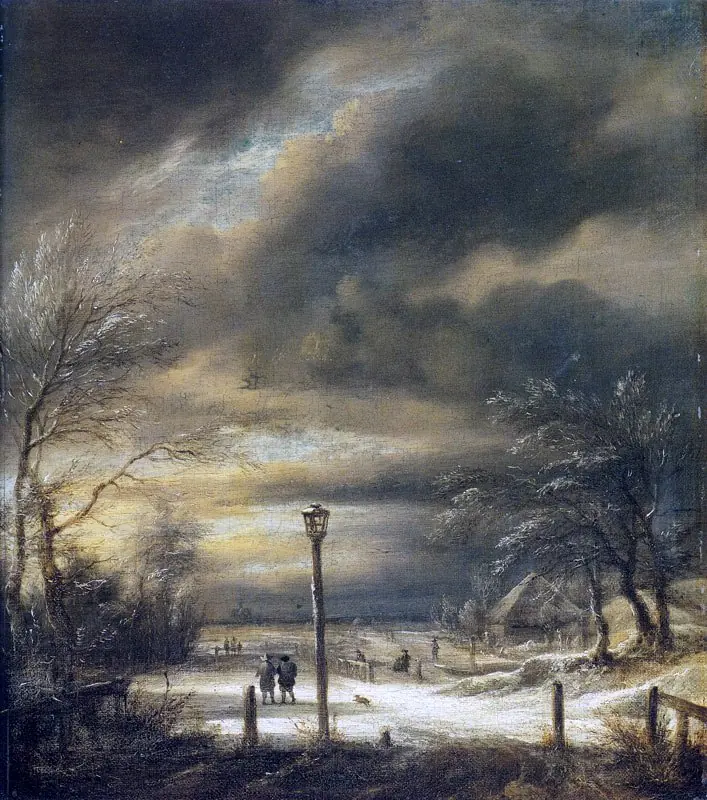 Winter Landscape near Haarlem
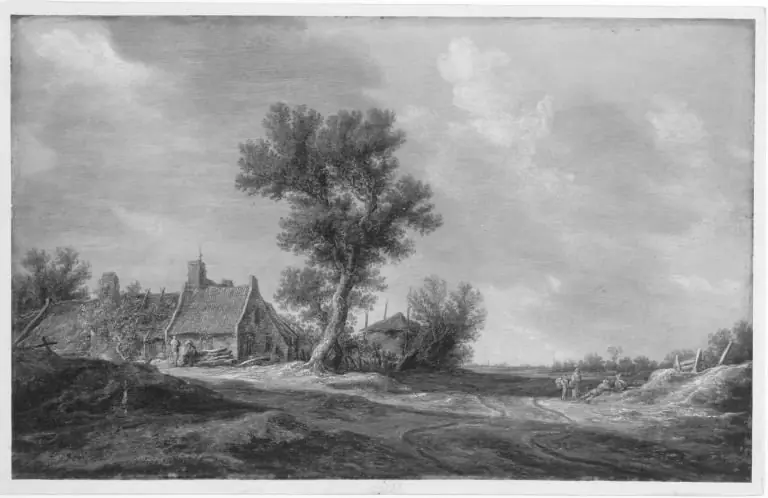 Flachlandschaft mit Bauernhof
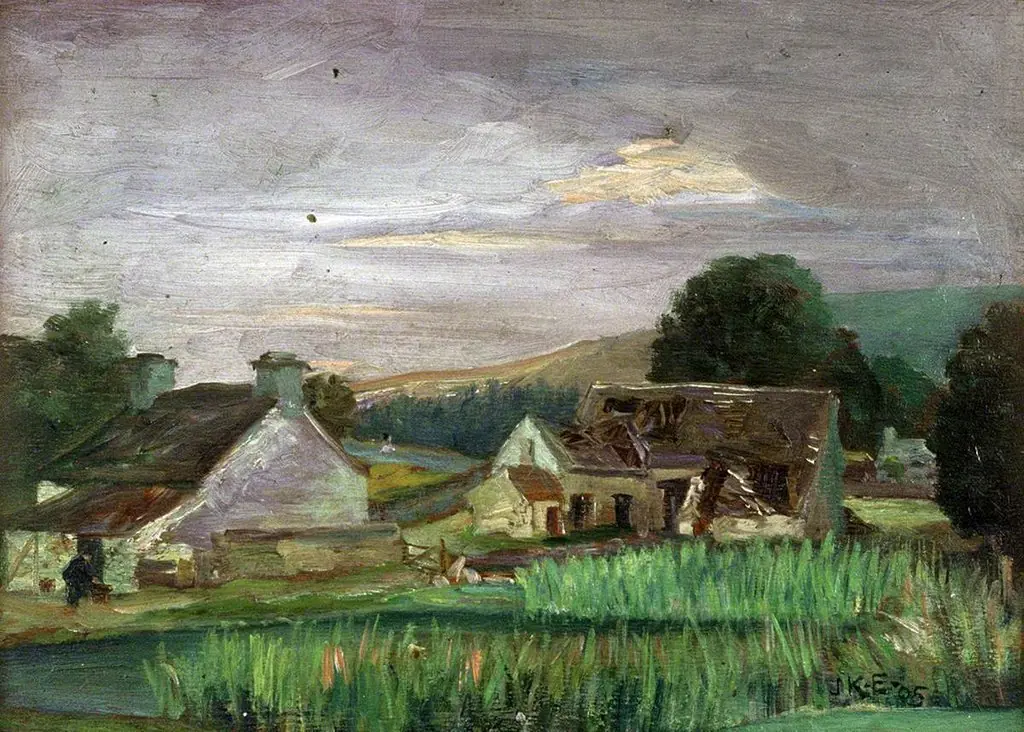 Farm Buildings
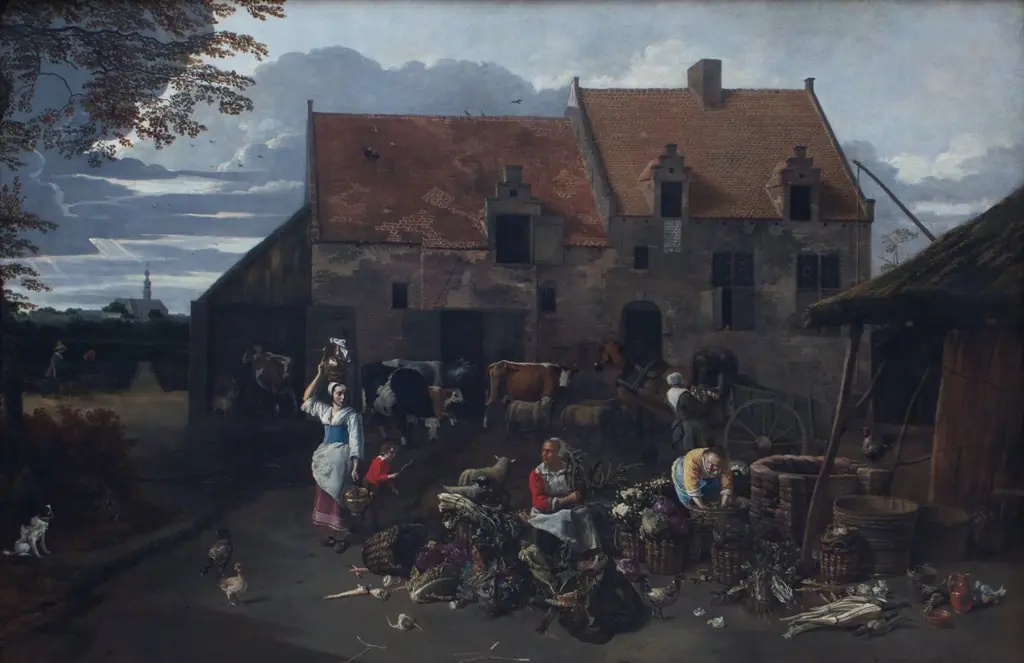 The Courtyard of the Market Gardener
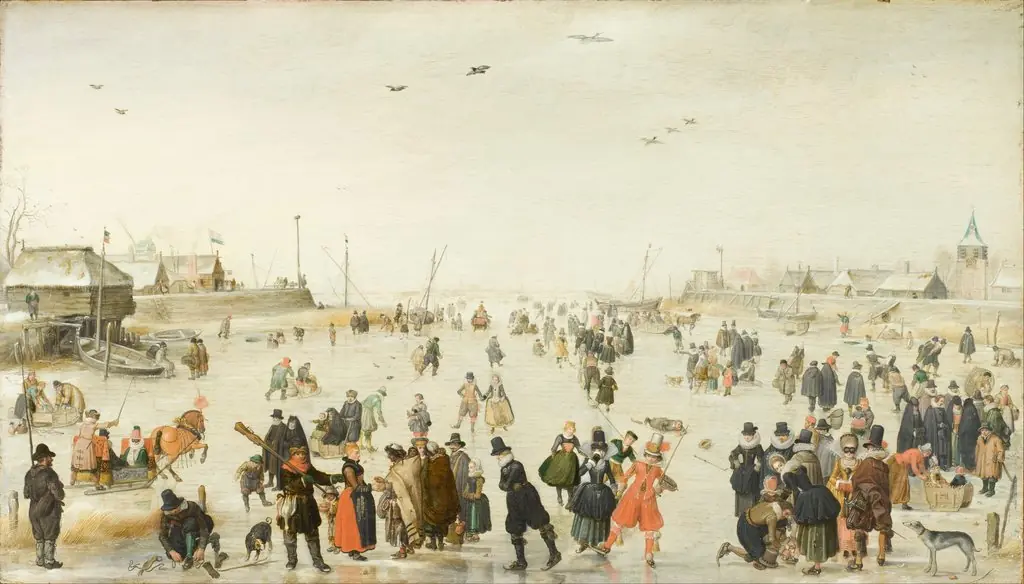 Winter Scene on a Frozen Canal
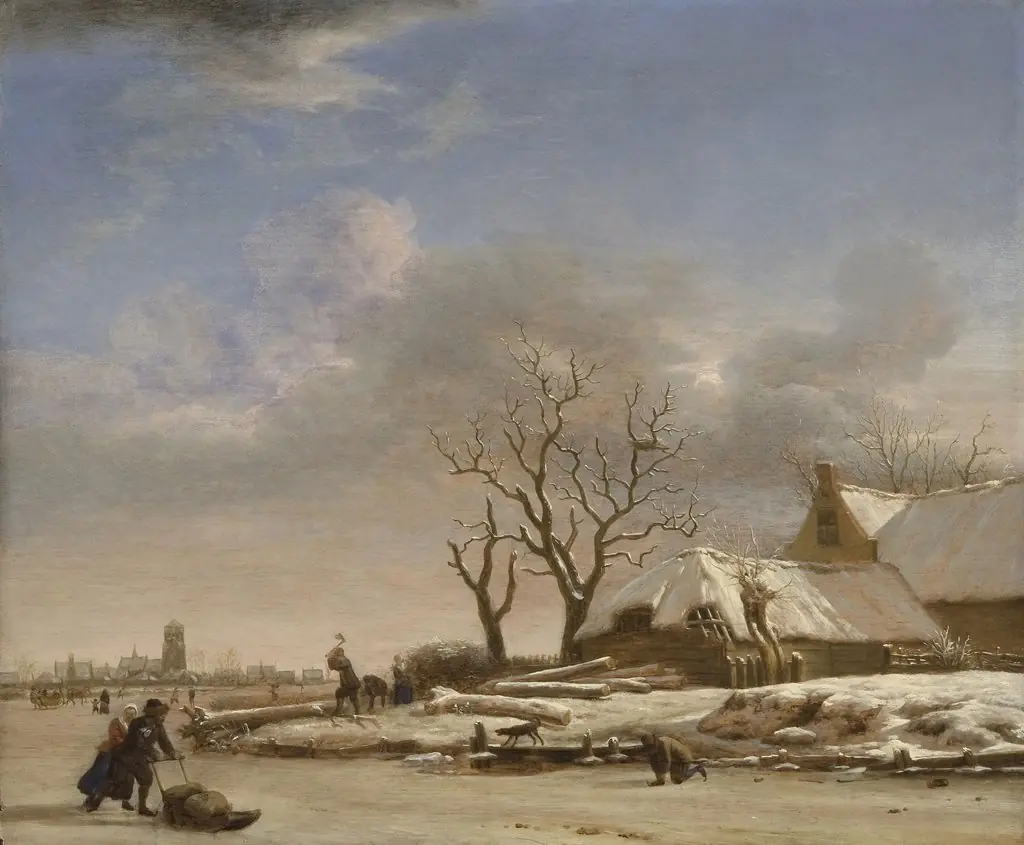 Winter Landscape
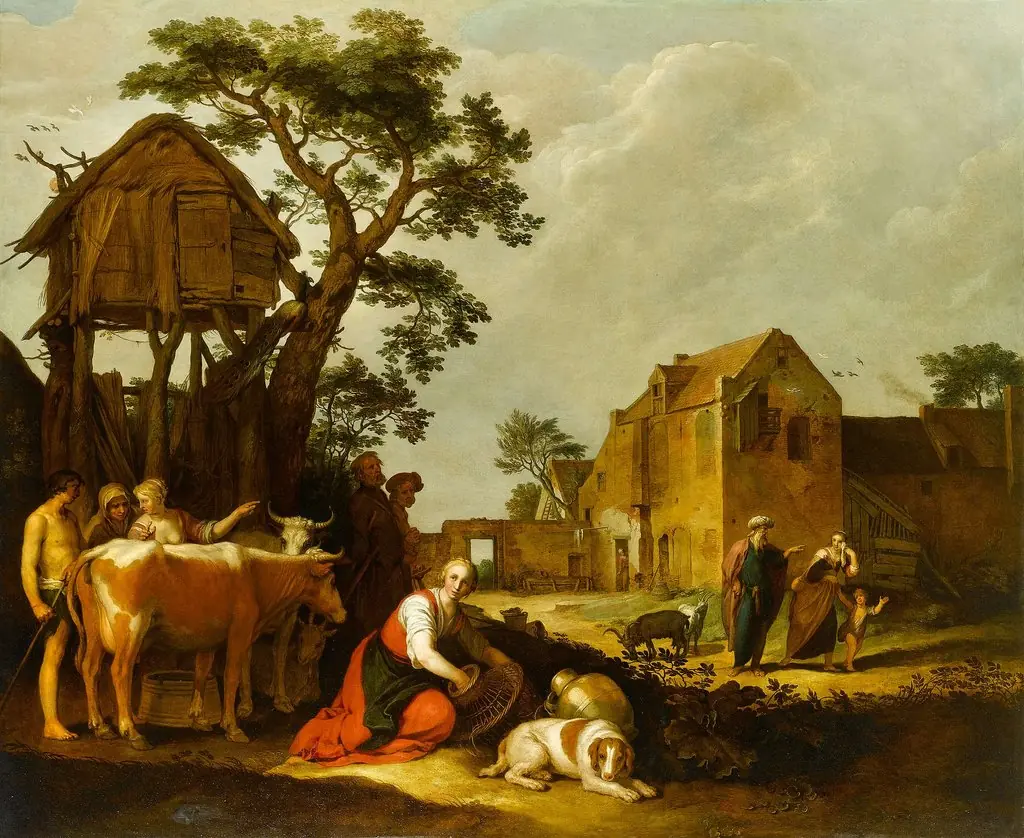 Rural landscape with the expulsion of Hagar and Ishmael (Genesis 21:14-21)
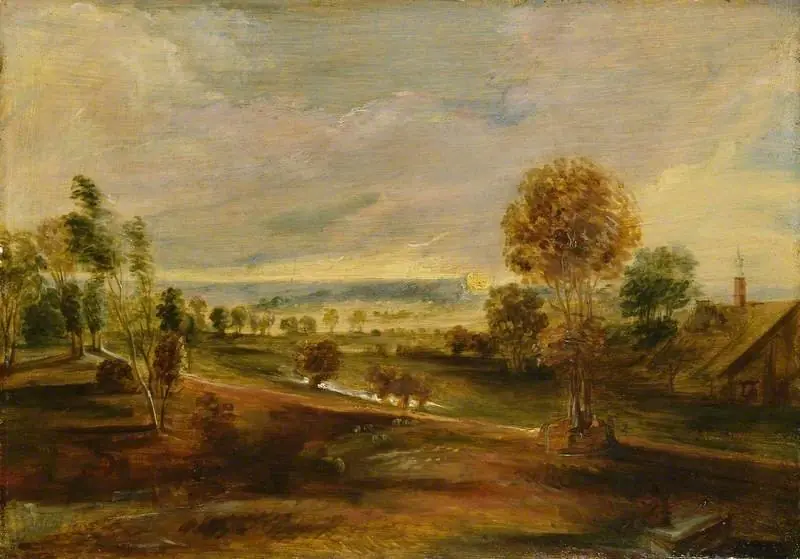 Landscape with Farm Buildings at Sunset
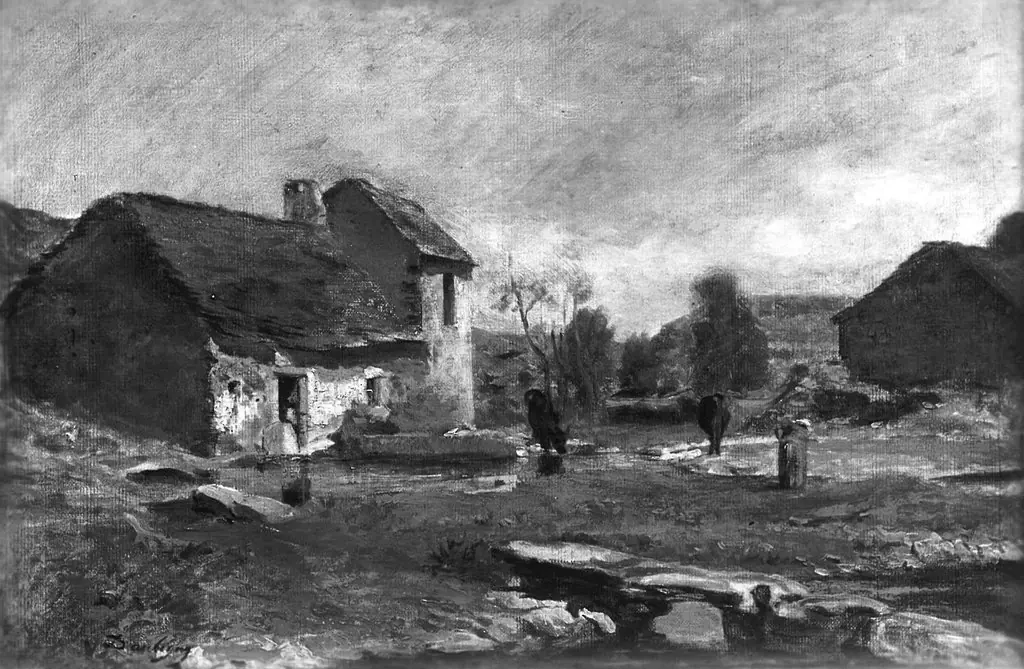 Houses in Optevoz, France
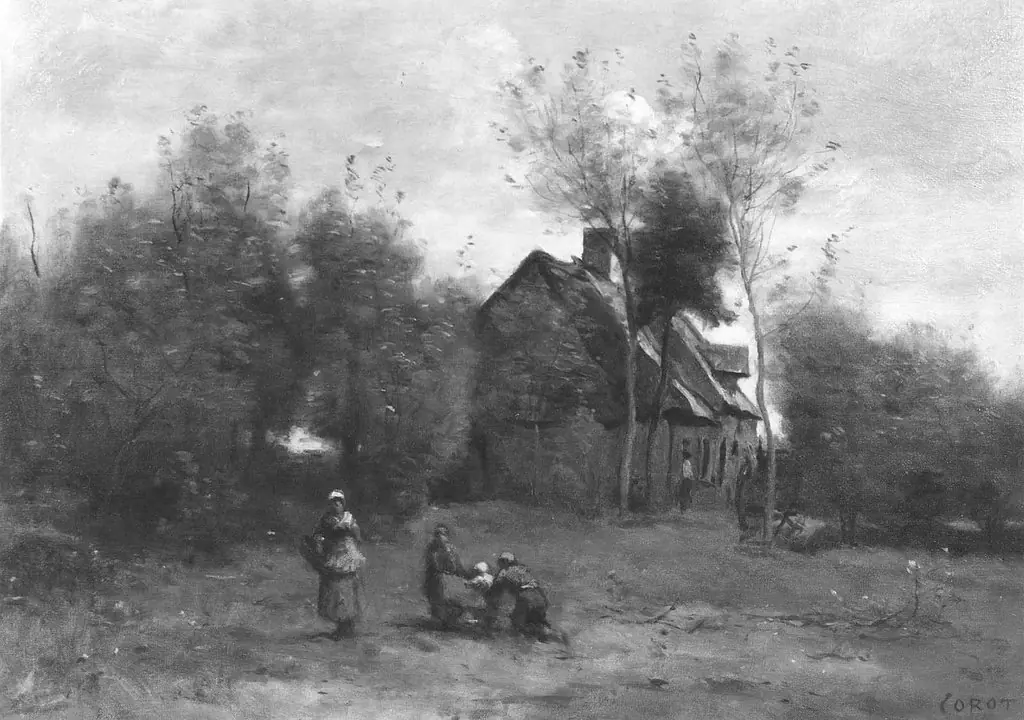 Farmyard at Sin, near Douai, with Children at Play
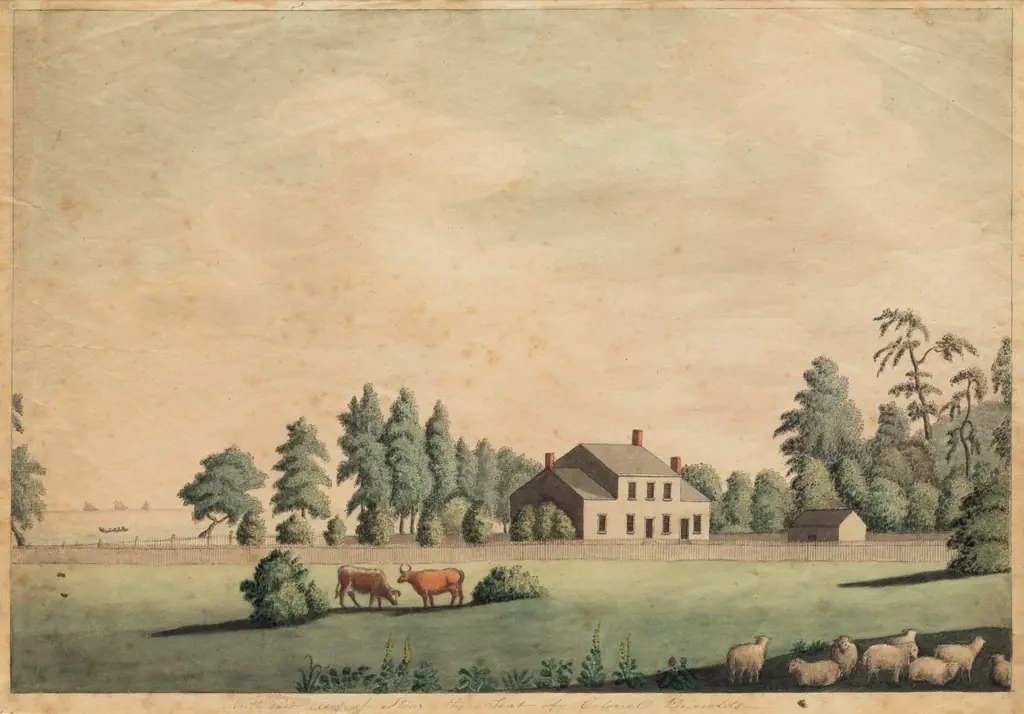 Northeast View of Stowe, the Seat of Colonel Reynolds
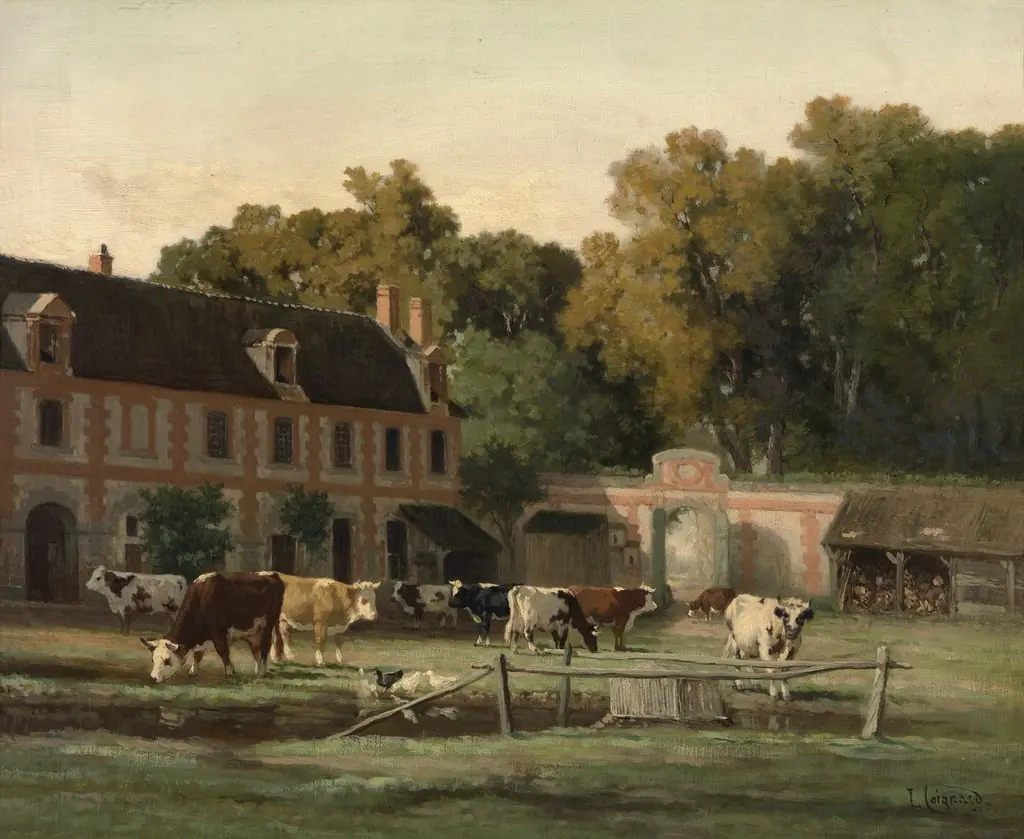 Farm in the Valley of the Auge
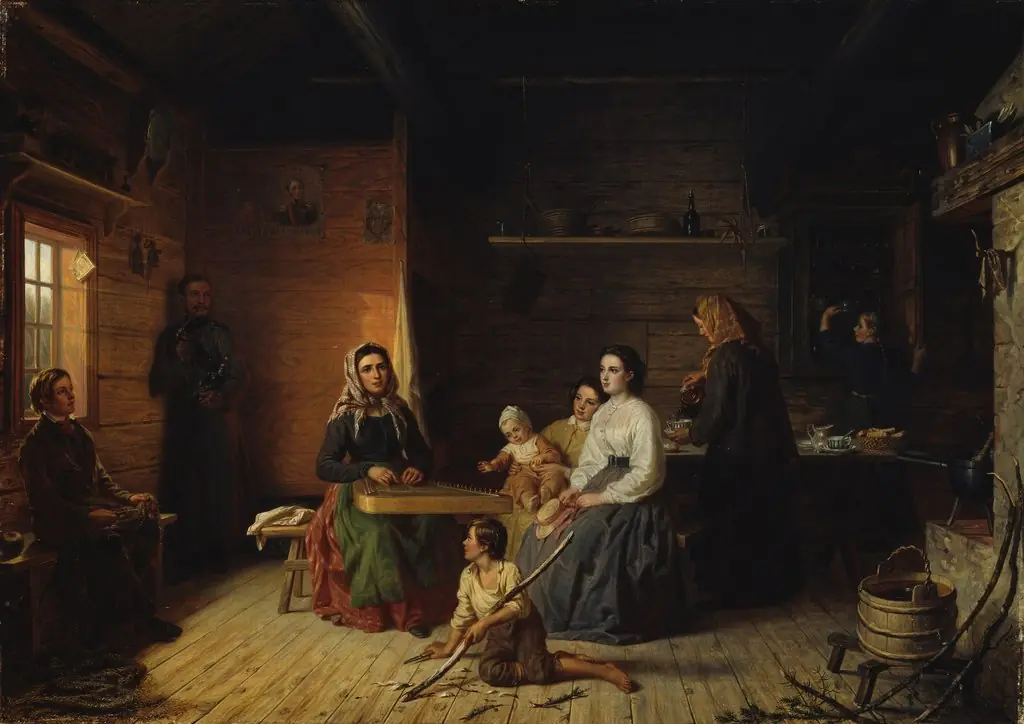 Kreeta Haapasalo Playing the Kantele in a Peasant Cottage
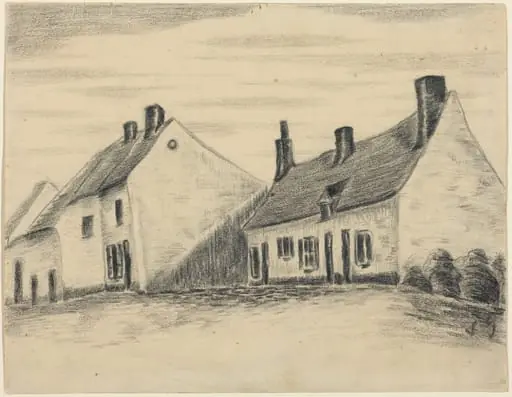 The Zandmennik House
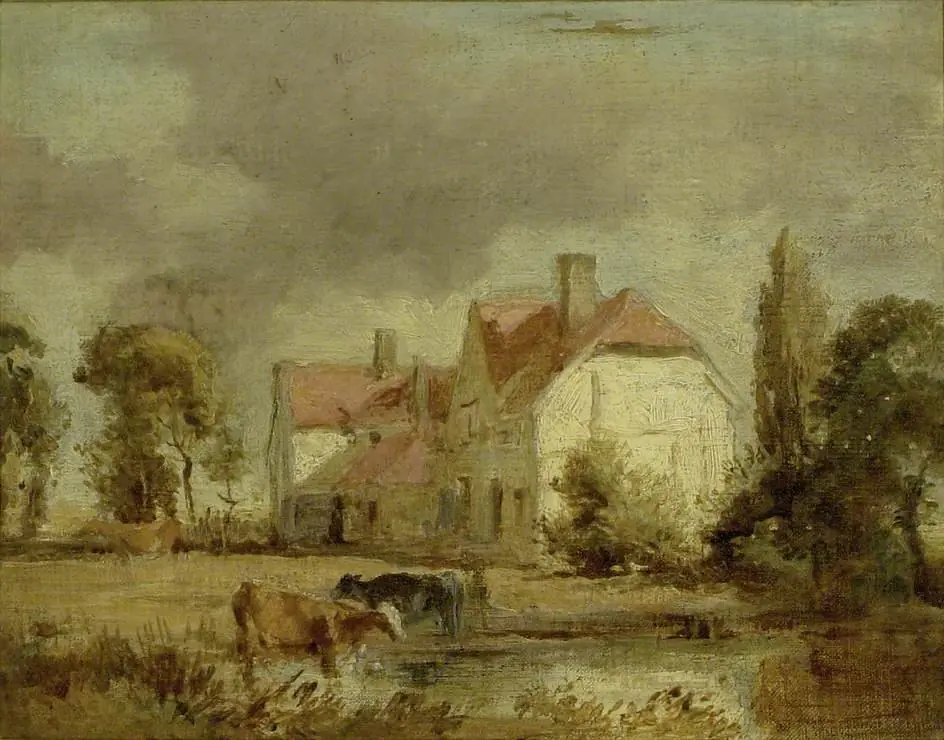 A Farm House
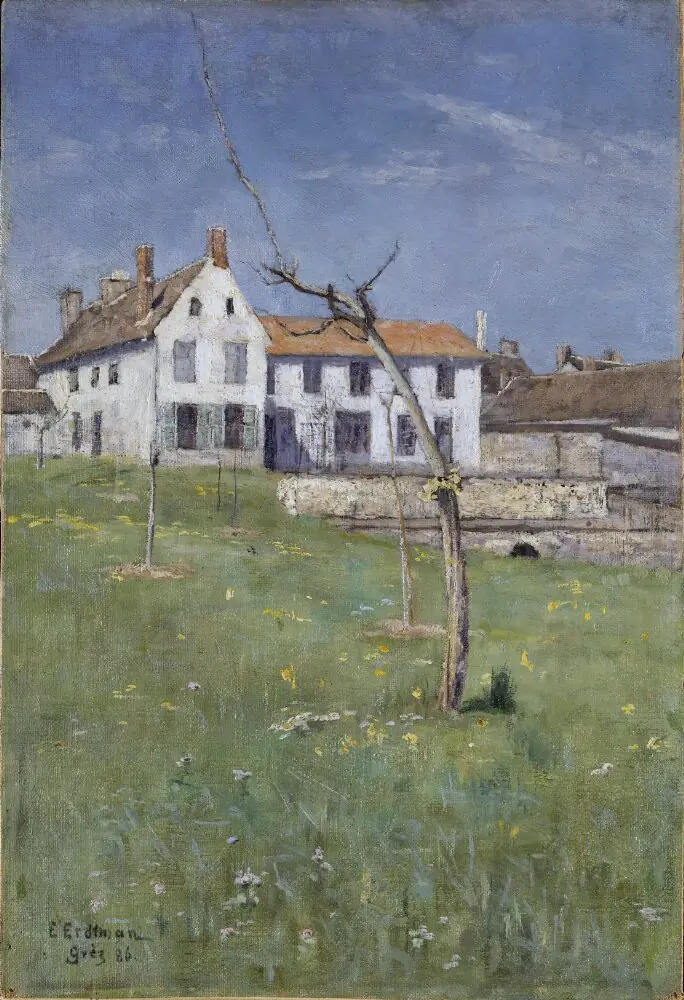 The Laurent Boarding House, Grez-sur-Loing
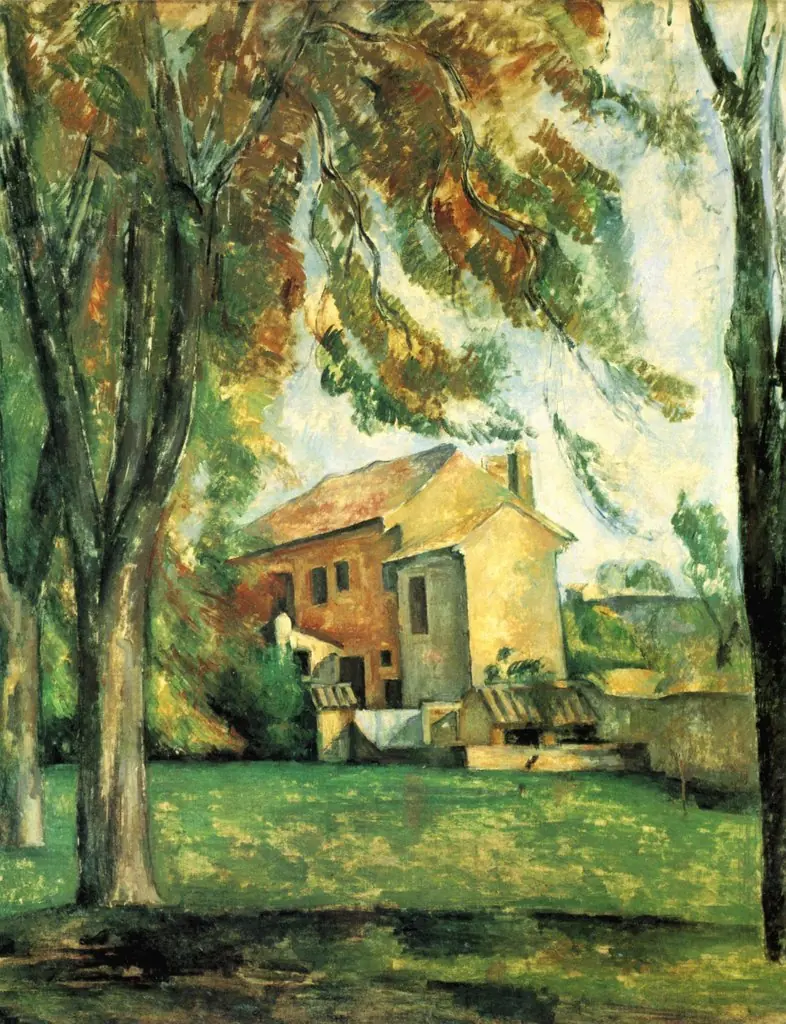 Farmhouse and Chestnut Trees at Jas de Bouffan
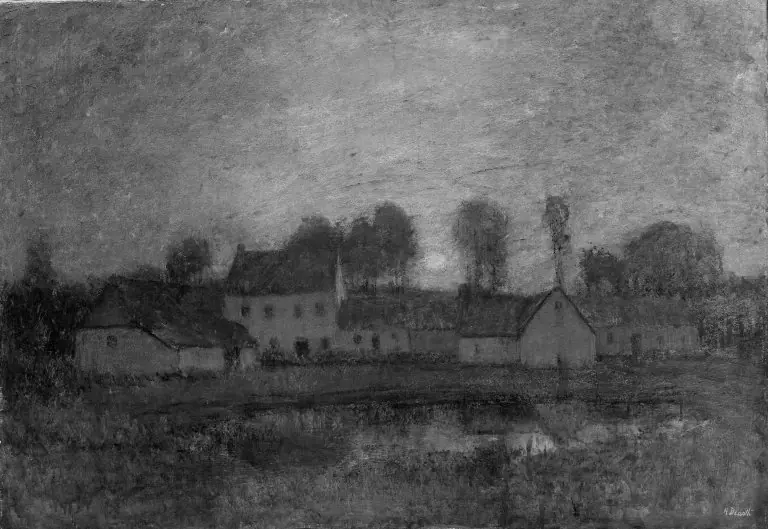 Golden Sunset
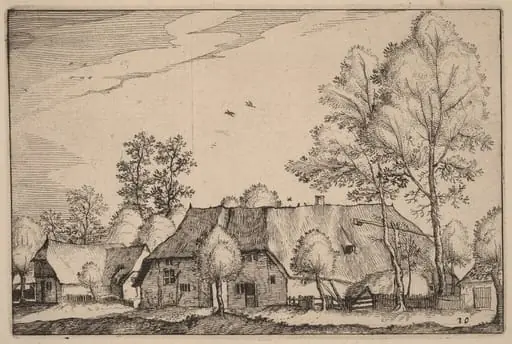 Large Farm
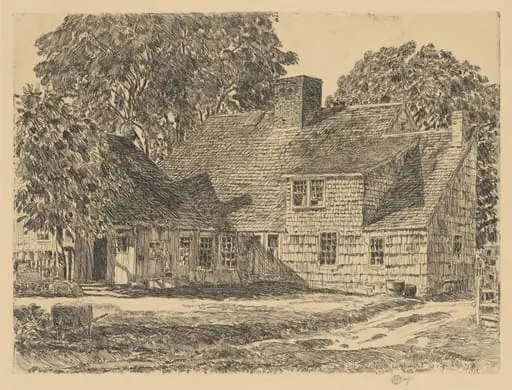 Old Dominy House
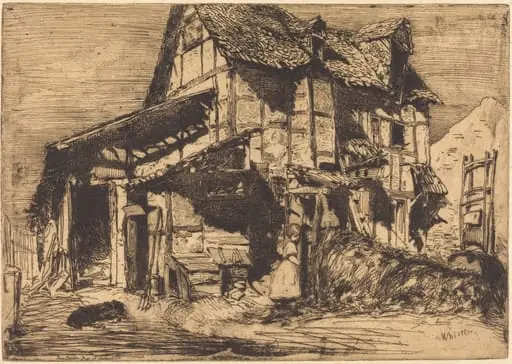 The Unsafe Tenement
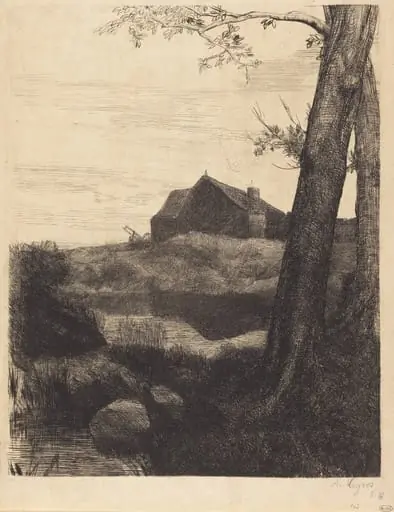 Farm with Large Tree (La ferme au grand arbre)
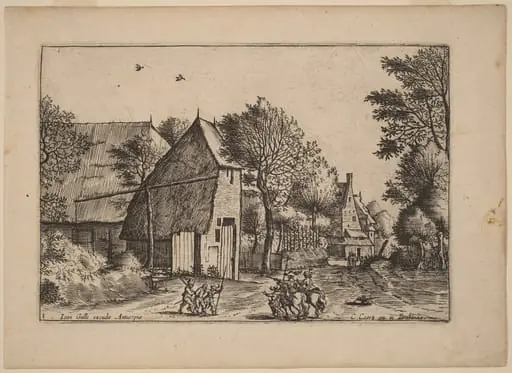 Village Road with Draw Well
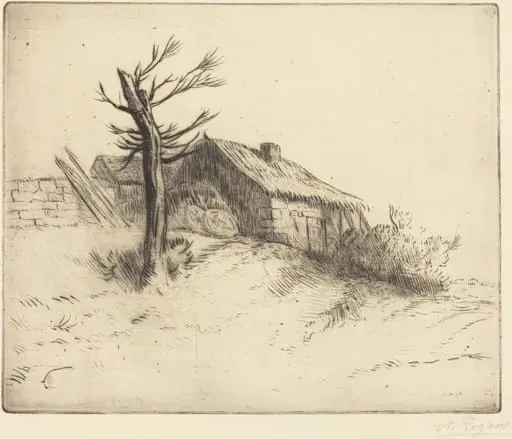 Thatched Cottage (Chaumiere)
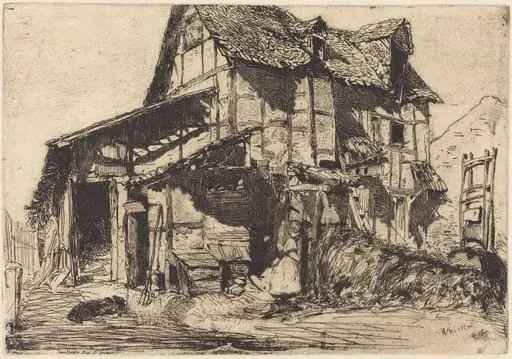 The Unsafe Tenement
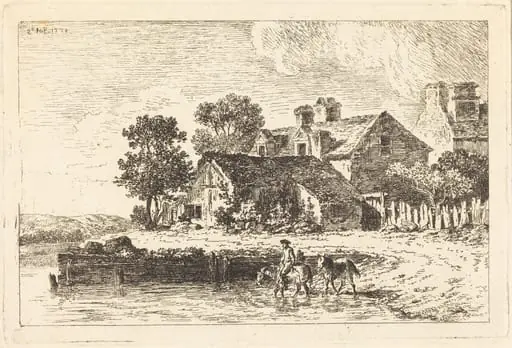 Horses Being Led to Water on a Winding Riverbank
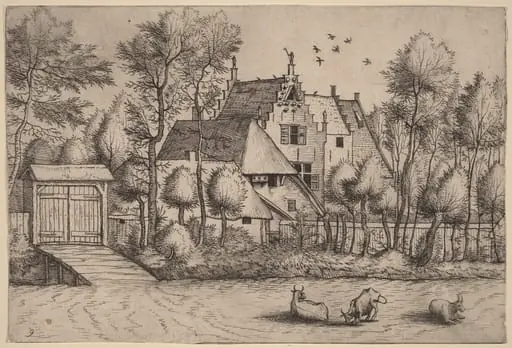 Country House with a Ditch
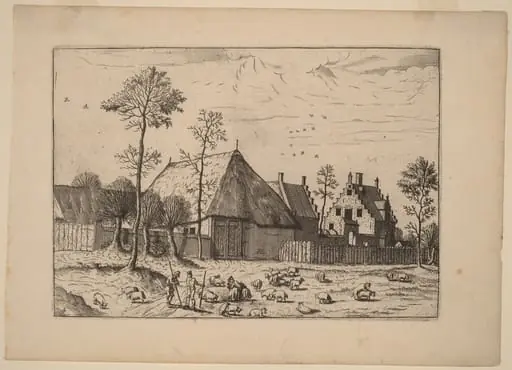 Shed with Cottage
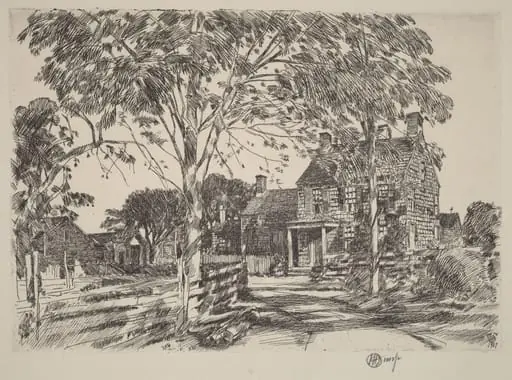 Walt Whitman's Birthplace
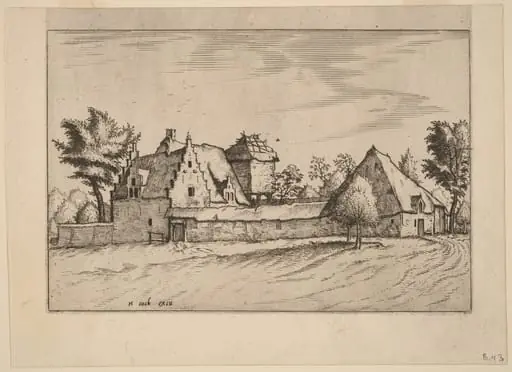 Farms in a Court
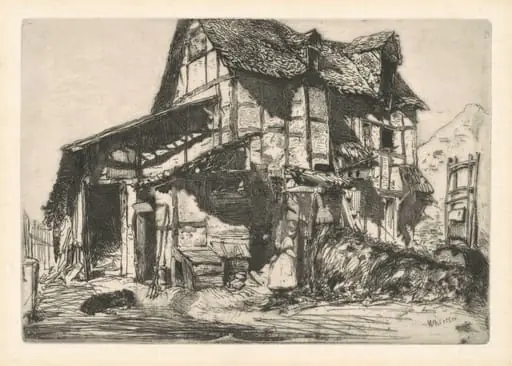 The Unsafe Tenement
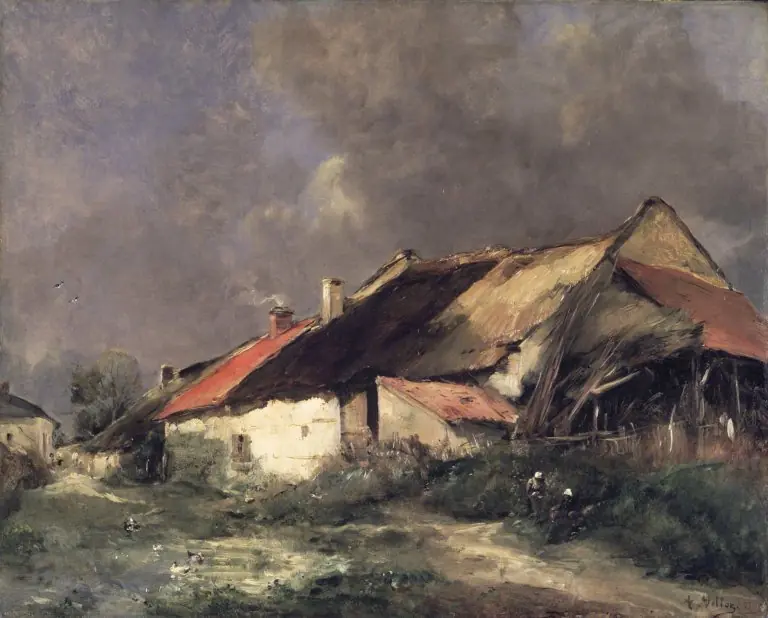 After the Storm
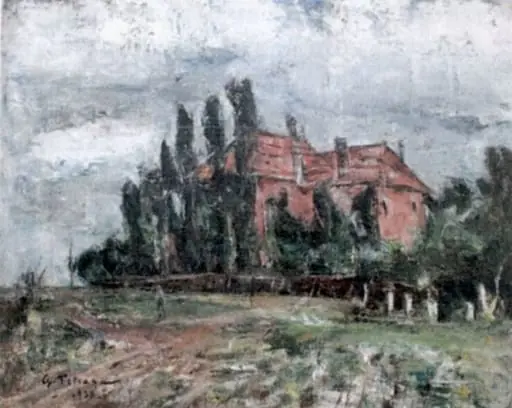 Casă la Eforie
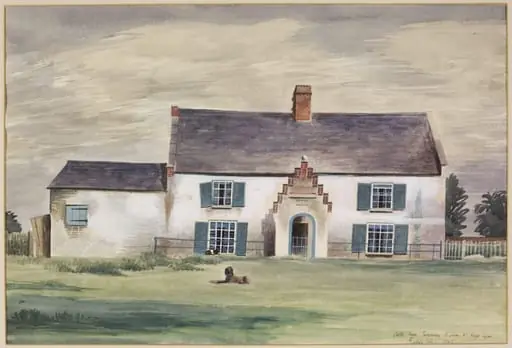 Castle Farm, Terrington St John, near King's Lynn
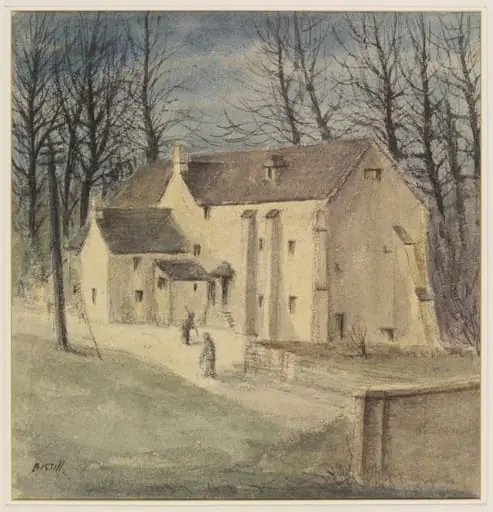 Arlington Mill
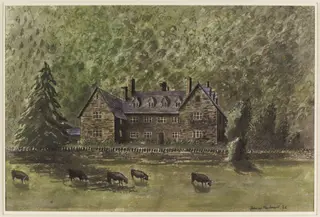 House at Dol-y-moch, Maentwrog Valley, Merionethshire
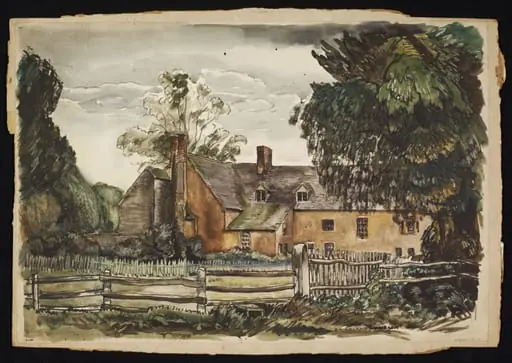 Wilcote Manor
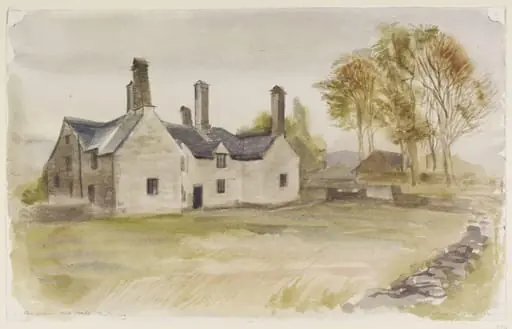 Pengwern Old Hall, Festiniog, Merionethshire
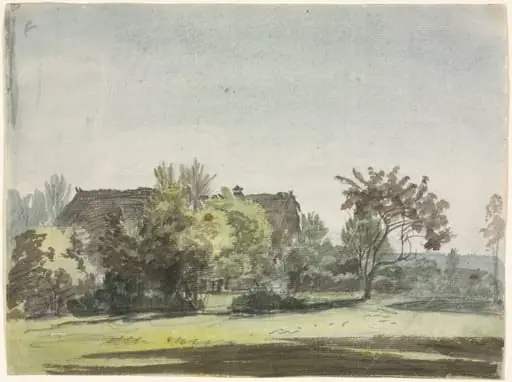 Farmhouse behind Trees
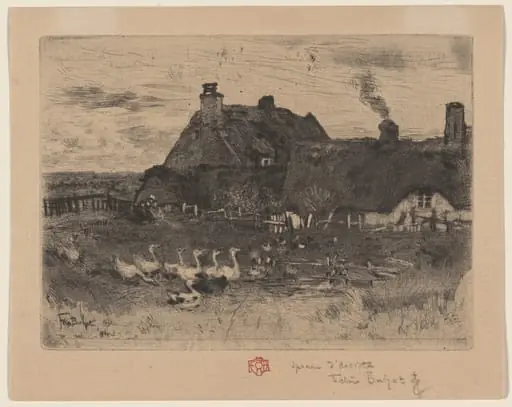 Les Petites Chaumieres (Thatched Cottages -- Small Plate)
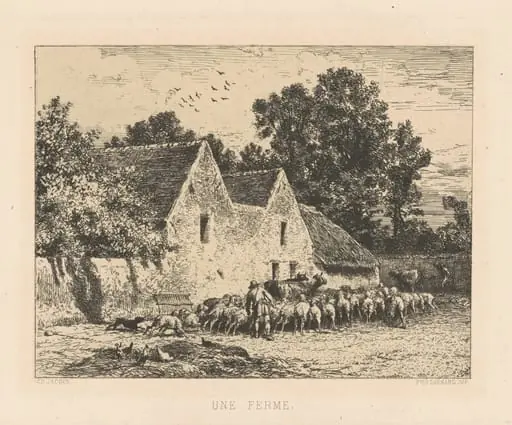 Une Ferme
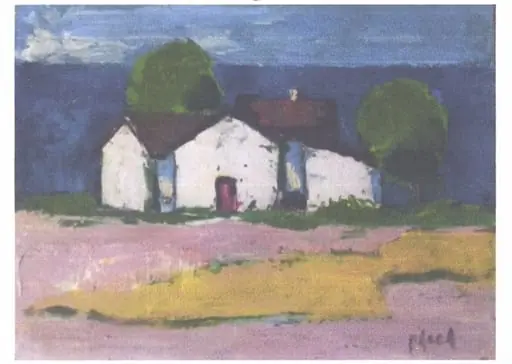 Peisaj cu case la malul mării
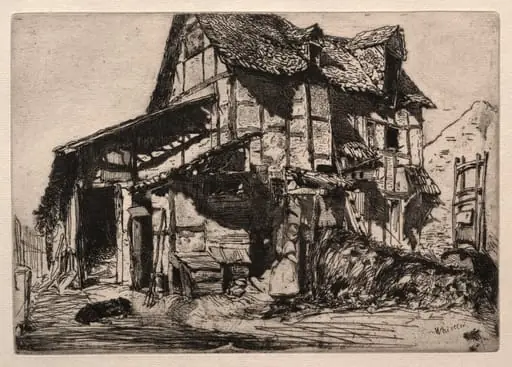 An Unsafe Tenement
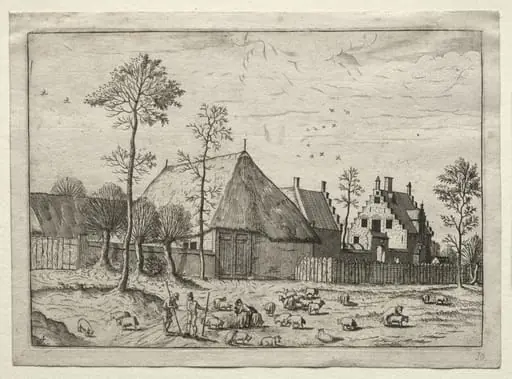 View of Villages in Brabant and Campine: Shepherds with Flock
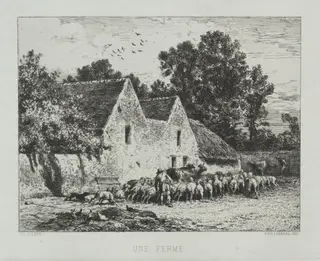 A Farmhouse
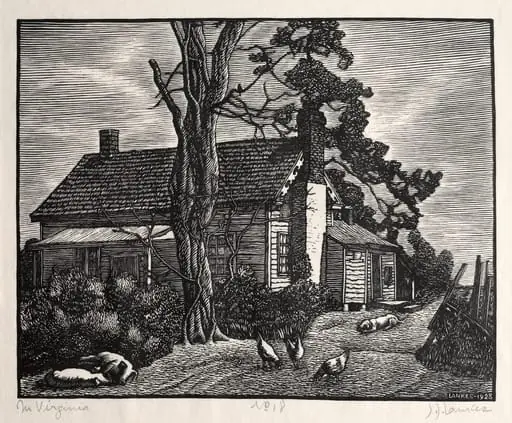 In Virginia
Frequently asked questions
What is Farmhouse?
Farmhouse is a subject in art. A farmhouse is a building that serves as the primary quarters in a rural or agricultural setting.
How many Farmhouse works does Artifact World Gallery have?
Artifact World Gallery holds 70 public-domain Farmhouse works, all free to view and download.
Who are the key Farmhouse artists?
Key Farmhouse artists in the collection include Jean Baptiste Camille Corot, David Teniers the Younger and Peter Paul Rubens.
Where can I see Farmhouse works?
Farmhouse works in the collection are held by National Gallery of Art, Groeningemuseum and Cleveland Museum of Art.