Subject
Tulipa
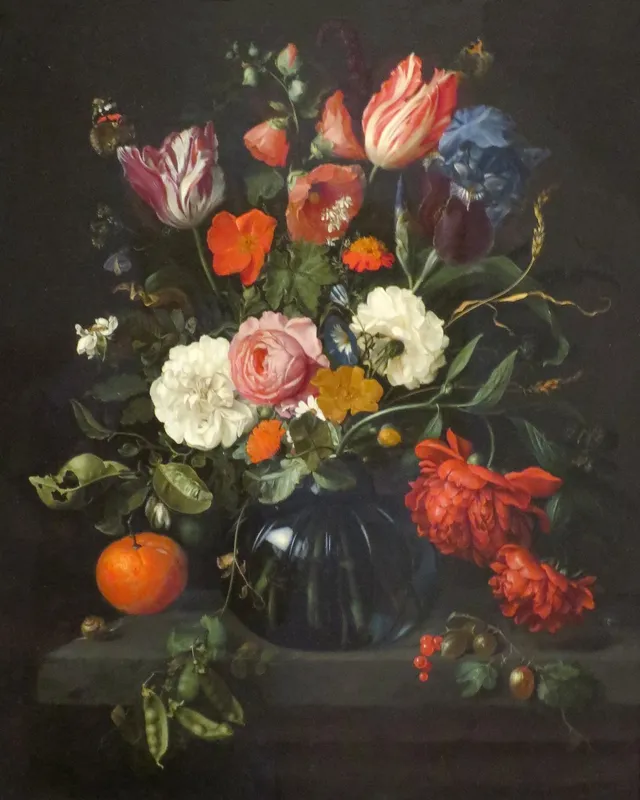
Tulipa is a subject in art. The gallery holds 140 works in this subject in art, including works by Jan Davidsz. de Heem, Ambrosius Bosschaert and Giuseppe Recco.
The tulip (genus *Tulipa*) is a spring-blooming bulbous perennial whose large, showy, cup-shaped blooms—in saturated reds, oranges, pinks, yellows, and whites—made it one of the most consequential flowers in the history of art. Though indelibly linked with the Netherlands, the tulip is native to the steppes and mountains of Central Asia and was cultivated by the Ottomans, who prized the *lale* in their court gardens. Its Western name derives from a misunderstanding: the Persian-Turkish word for turban (*dulband*), applied to the flower's fancied resemblance. Bulbs reached Western Europe in the mid-sixteenth century—sent, by tradition, from Constantinople by the Habsburg ambassador Ogier Ghiselin de Busbecq—and the botanist Carolus Clusius established the tulip in the Low Countries after becoming the first professor of botany at Leiden in 1593, planting bulbs in the university's Hortus Botanicus.
The flower's rise coincided with the financial frenzy known as tulip mania (c. 1634–1637), which peaked before collapsing in February 1637 and is often called the first recorded speculative bubble. The most coveted blooms were "broken" tulips—those with flame-like streaks of contrasting colour, an effect now known to be caused by the aphid-borne tulip breaking virus. Their rarity gave rise to lavish watercolour sales catalogues, the *tulpenboeken*, of which the Utrecht-trained painter and bulb dealer Jacob Marrel produced several, recording named cultivars such as the legendarily expensive Semper Augustus.
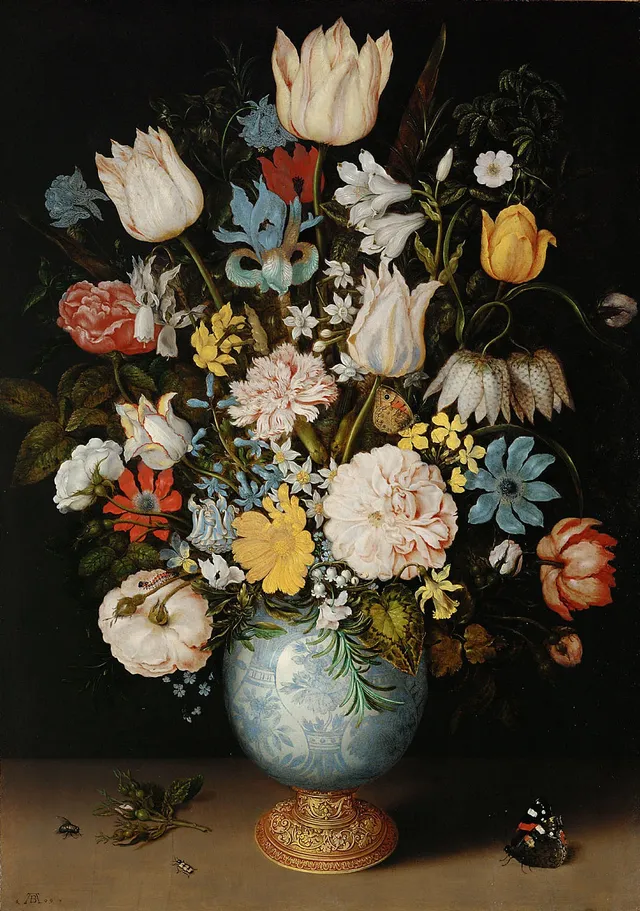
In oil, the tulip became a cornerstone of the new genre of Dutch and Flemish flower still life. Ambrosius Bosschaert the Elder (1573–1621), working in Middelburg, founded a dynasty of flower painters and assembled jewel-like, near-symmetrical bouquets from individual studies—uniting flowers that could never bloom simultaneously, as in our *Flowers in a blue and white porcelain vase*. His followers, including Balthasar van der Ast and Jan Davidsz. de Heem (1606–1684), enriched the form toward the opulent *pronkstilleven*; de Heem's *Vase of Flowers* exemplifies its abundance.
These paintings carried a moral charge. The tulip's brief glory, often shown with a wilting petal, a fallen blossom, or a crawling insect—a caterpillar and grasshopper appear in Marrel's *Tulips in a vase*—made it a natural emblem of *vanitas*, the transience of earthly wealth and beauty, a meaning sharpened by mania's excesses. The tradition flowered on through Jan van Huysum and Rachel Ruysch into the eighteenth century, and the tulip's striped beauty survives in the "Rembrandt" cultivars that still bear a painter's name.
Key artists
Overview
The tulip (Tulipa) is a genus of spring-blooming perennial herbaceous bulbiferous geophytes whose large, showy, brightly coloured flowers have made it one of the most frequently depicted botanical subjects in Western art. Native to a band stretching from Southern Europe to Central Asia, with the greatest diversity in the mountains of Central Asia, tulips were first cultivated in 10th-century Persia and became symbols of Ottoman power before arriving in Northern Europe in the 16th century. Their introduction into the Netherlands in the final decades of the 1500s sparked both a horticultural revolution and an artistic obsession that has persisted for over four centuries. The flower's distinctive cup-shaped bloom, its wide chromatic range from red, orange, pink, and yellow to white and near-black, and its association with wealth, status, and speculative excess have ensured its recurring presence across painting traditions from Dutch Golden Age still lifes to Impressionist landscapes and beyond.
Iconography & meaning
In art, the tulip carries layered meanings that shifted with historical context. During the Dutch Golden Age, tulips became primary symbols of wealth and status, their depiction in still-life paintings reflecting the prosperity of the merchant class and the specific phenomenon of Tulipomania (1634-1637), when bulbs commanded prices exceeding ten times a skilled artisan's annual income. The Semper Augustus, the most expensive cultivar, sold for 10,000 guilders at the height of the mania. The Dutch distinguished broken tulips, streaked or flamed with contrasting colours, into three categories: Bijbloemens (purple on white), Roses (red to pink on white), and Bizarres (brown, purple, or red on yellow). These broken patterns, later identified in 1928 as caused by aphid-borne mosaic virus, were particularly prized and became associated with transience and the vanity of earthly riches, a common vanitas theme in Dutch still-life painting. The tulip's Persian and Ottoman origins also lent it connotations of exotic luxury and eastern opulence, while its spring blooming connected it to themes of renewal and the fleeting nature of beauty.
Across movements & periods
The treatment of tulips in art evolved significantly across periods and cultures. In Ottoman culture, tulips were cultivated as early as the 10th century and became emblematic of the later Ottoman sultans, who reportedly wore the flower on their turbans. Northern European awareness came only in the 16th century through diplomatic reports from the Ottoman court. The Dutch Golden Age (roughly 1588-1702) marked the flower's artistic apogee, when painters such as Ambrosius Bosschaert the Elder, Hans Gillisz. Bollongier, Jan van Huysum, and Margaretha Haverman produced meticulously detailed still lifes that celebrated tulip varieties as luxury commodities. The 19th century saw a shift in treatment: Vincent van Gogh's Bulb Fields (1883) employed a low vantage point and bold colour to capture commercial cultivation, while Claude Monet's 1886 Dutch sojourn produced impressionistic landscapes, Tulips in Holland and Tulip Fields near The Hague, that prioritised atmospheric light over botanical precision. Paul Cézanne's The Vase of Tulips (1888-1890) applied post-impressionist structural concerns to the traditional subject. Contemporary practice, exemplified by Yayoi Kusama's installations, has continued to exploit the tulip's formal and chromatic possibilities.
Notable depictions
Several canonical depictions of tulips anchor the flower's artistic history. Ambrosius Bosschaert the Elder's Still-Life with Flowers, now in the National Gallery, London, exemplifies early Dutch floral precision with its carefully arranged bouquet of tulips, roses, and lilies. His Bouquet of Flowers in a Stone Niche further demonstrates his mastery of botanical detail and three-dimensional composition. Hans Gillisz. Bollongier's Tulips in a Vase, held at the Rijksmuseum, Amsterdam, showcases vibrant red, pink, yellow, and white tulips with intricate vase patterns and dramatic light effects. Jan van Huysum's Stilleven met bloemen renders a colourful bouquet surrounded by insects and small animals with meticulous realism. Margaretha Haverman's A Vase of Flowers demonstrates the participation of women artists in the Dutch Golden Age floral tradition. Vincent van Gogh's Bulb Fields (1883), his first garden painting, presents rectangular plots of hyacinths and tulips from a low panoramic viewpoint; it is now at the National Gallery of Art, Washington, DC. Claude Monet painted two significant tulip landscapes in 1886: Tulips in Holland and Tulip Fields near The Hague, the latter sold through the dealer Boussod, Valadon & Cie where Theo van Gogh worked. Paul Cézanne's The Vase of Tulips (1888-1890) features red, yellow, and pink tulips against a blue background in an earthenware vase, demonstrating his distinctive brushwork and compositional innovation.
Legacy
The tulip's cultural afterlife extends beyond painting into institutional commemoration and contemporary practice. The Amsterdam Tulip Museum, established in 2004 in a canal house on Prinsengracht, traces the flower's history from Himalayan origins through Ottoman cultivation to Dutch commercial dominance, including exhibits on Tulipmania and Ottoman-style tulip art. The phenomenon of Tulipmania itself, though contested in its economic severity by modern scholars, has become a foundational metaphor for speculative bubbles and irrational market behaviour. Living heritage collections of historic cultivars, such as those dating from 1595 to 1915 including the Zomerschoon (1620) and various Duc van Tol varieties, continue to be cultivated specifically as source material for understanding period paintings. The virus-induced broken tulips, once destroyed by commercial growers after the viral cause was understood, survive only in specialty collections and have been approximated by virus-free Rembrandt tulips. Contemporary artists worldwide maintain the tulip as a favoured subject, bridging historical traditions with present-day concerns.
Works
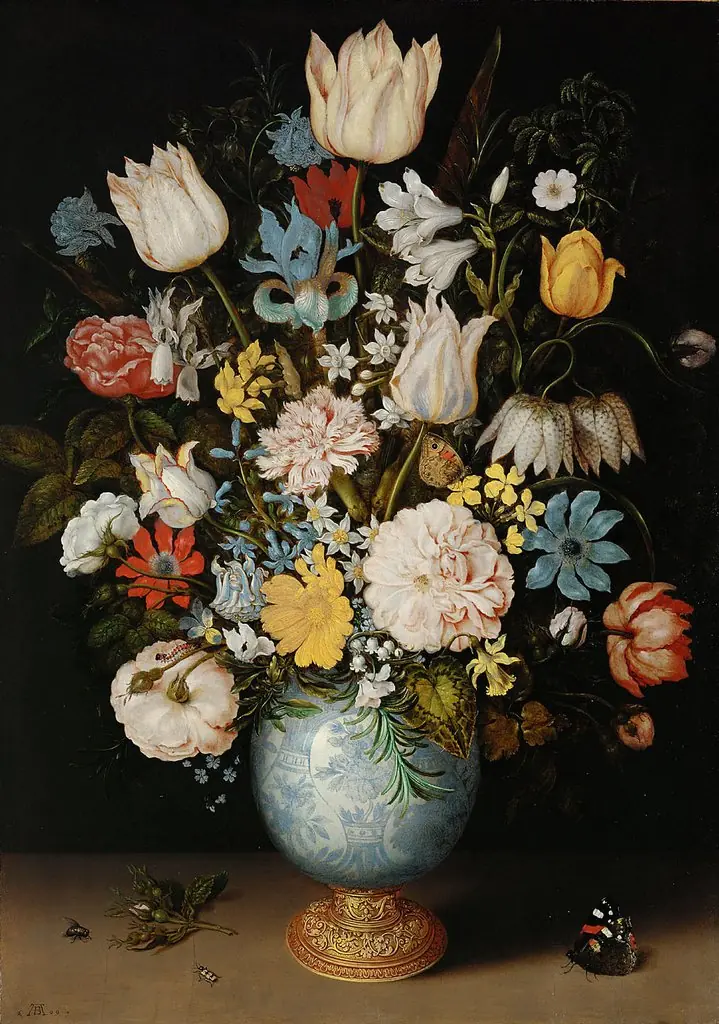 Flowers in a blue and white porcelain vase
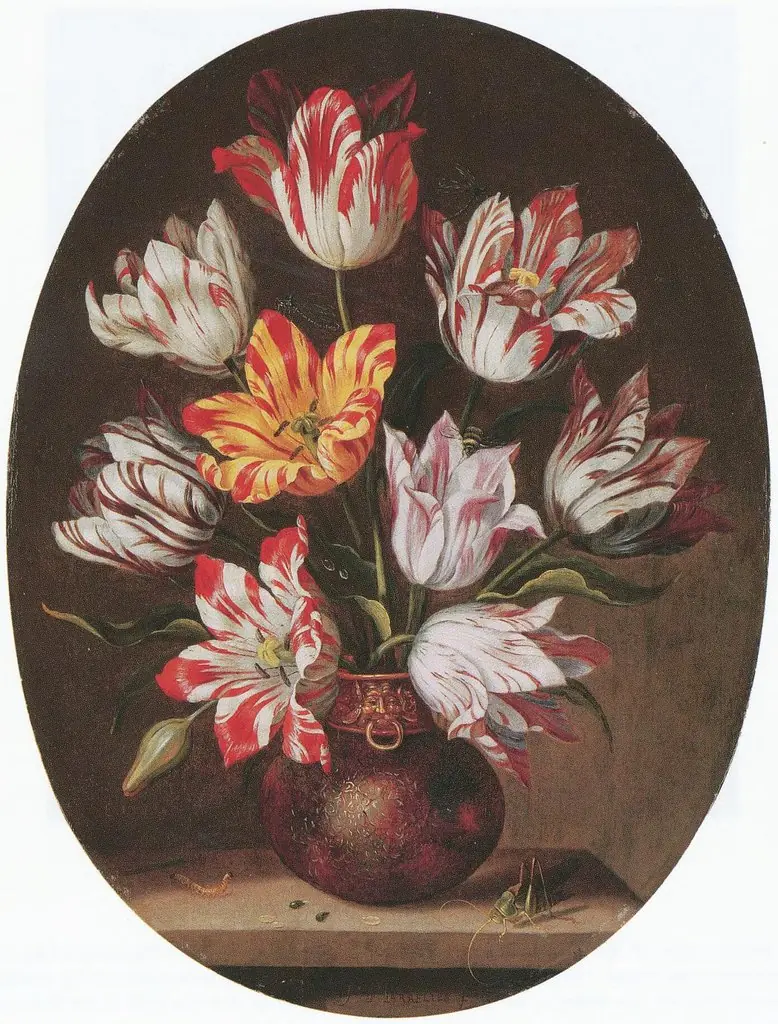 Tulips in a vase with a caterpillar and a grasshopper on a stone ledge
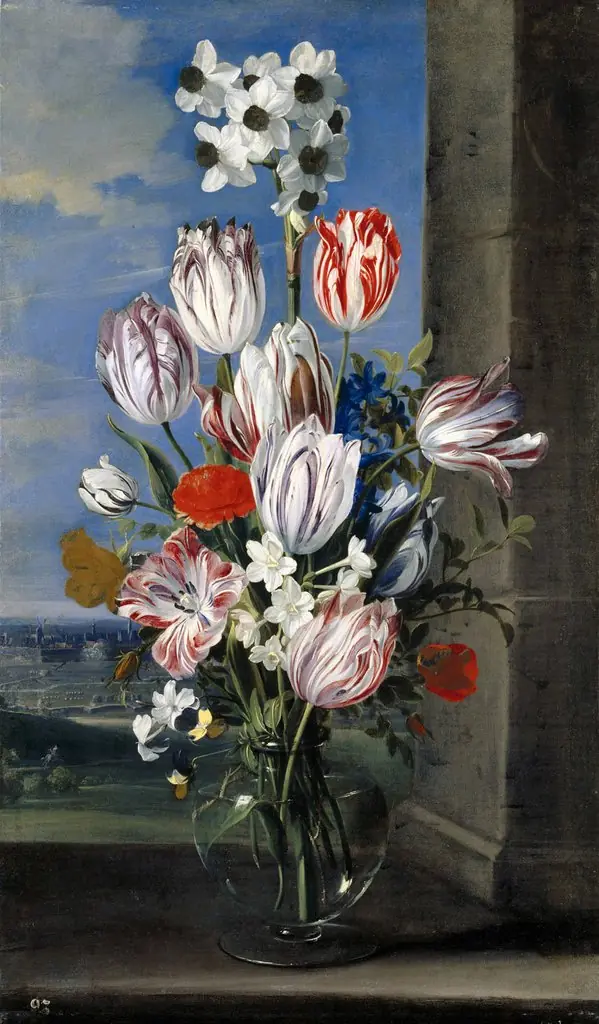 Flowers in a Vase with the Siege of Gravelingen
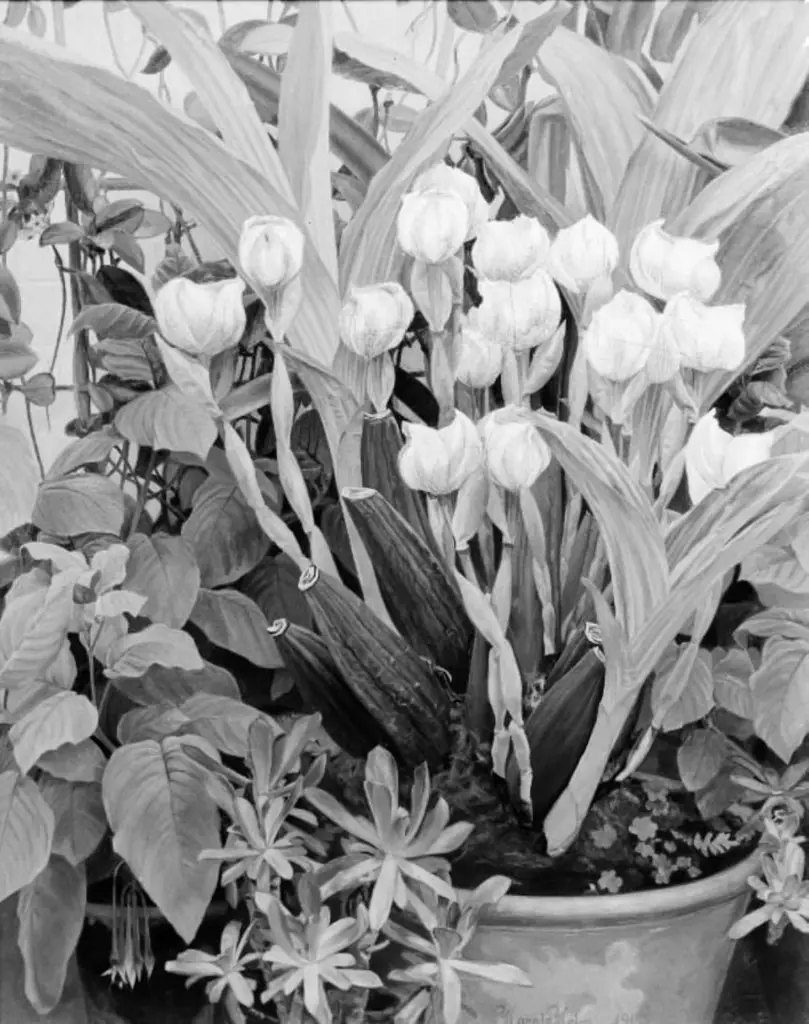 Orchids
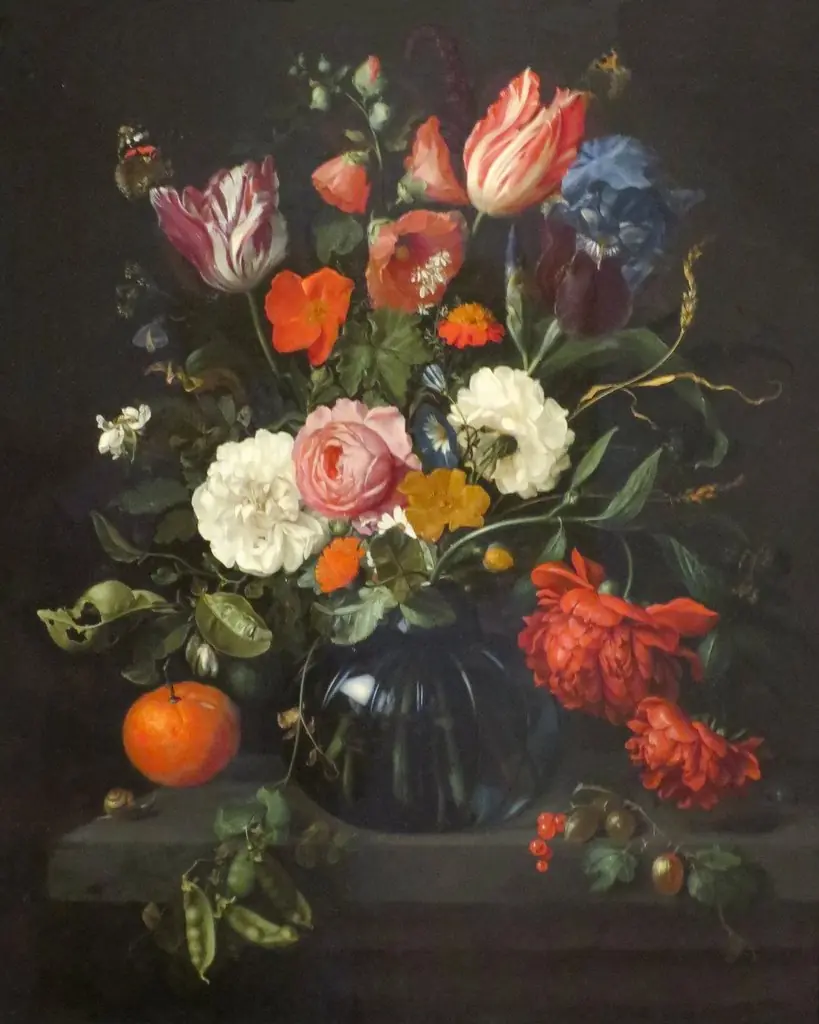 Vase of Flowers
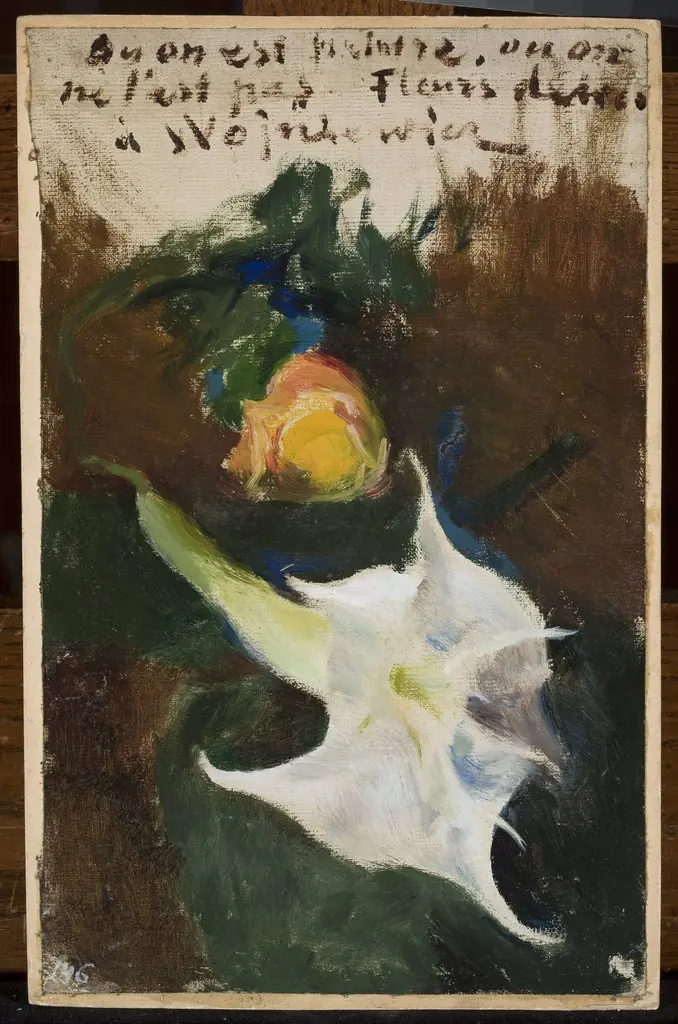 Flowers
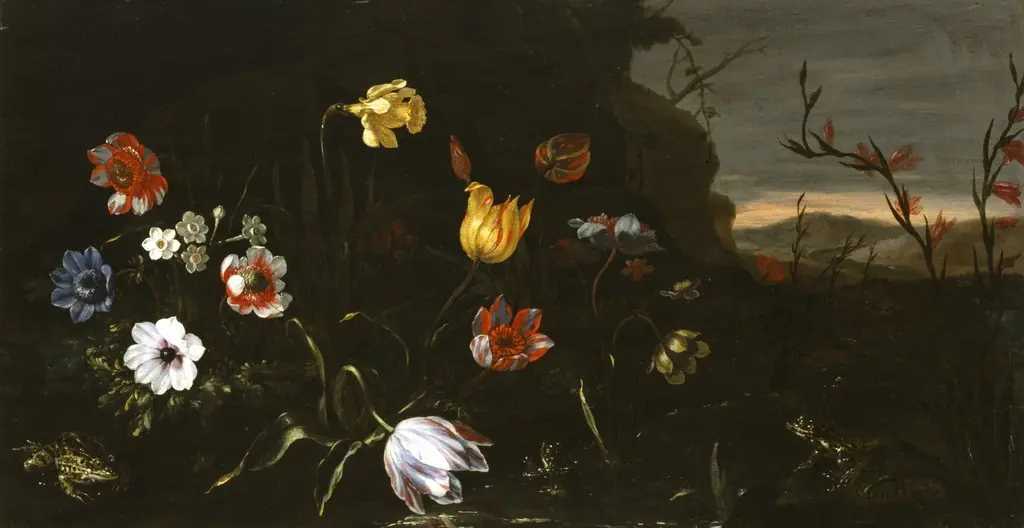 Flowers by a Pond with Frogs
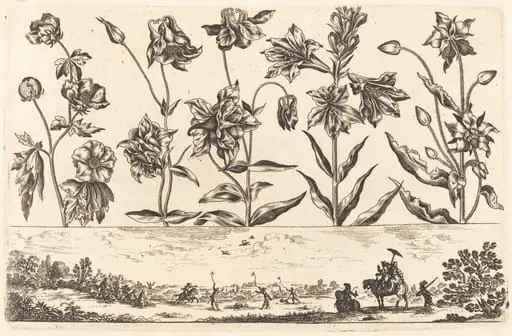 Flower Print no.6
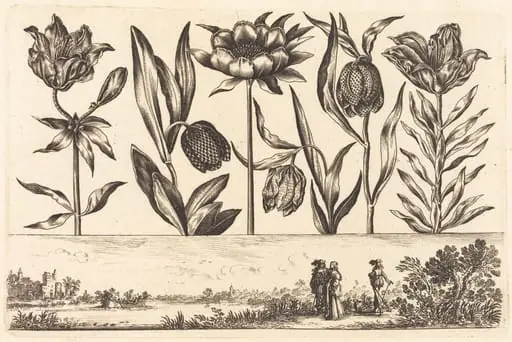 Flower Print no.11
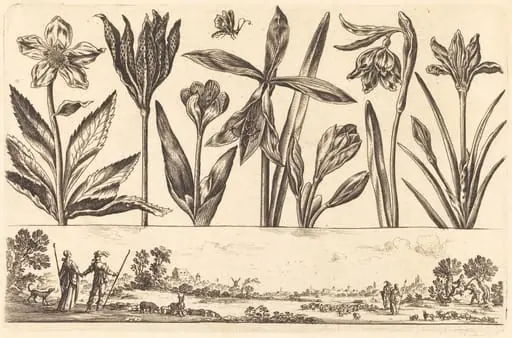 Flower Print no.4
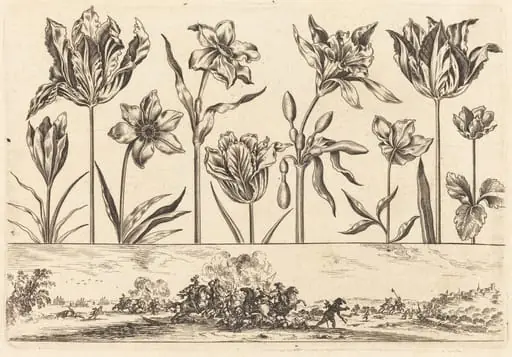 Flower Print no.2
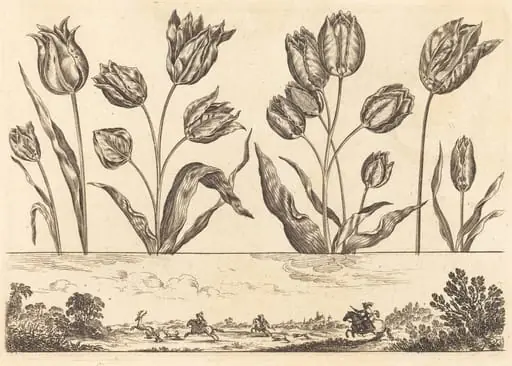 Flower Print no.12
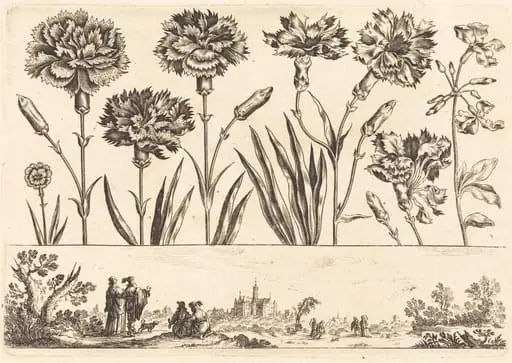 Flower Print no.9
 Natură statică
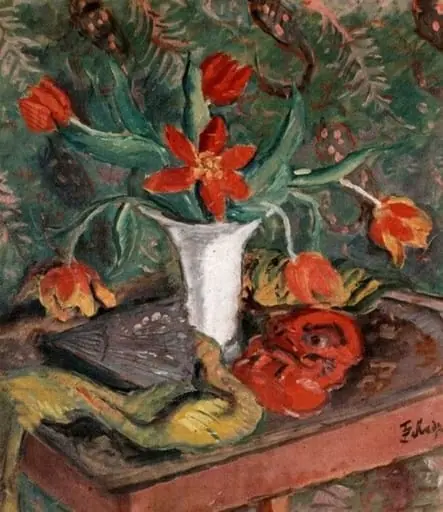 Natură moartă cu lalele, evantai și mască roșie
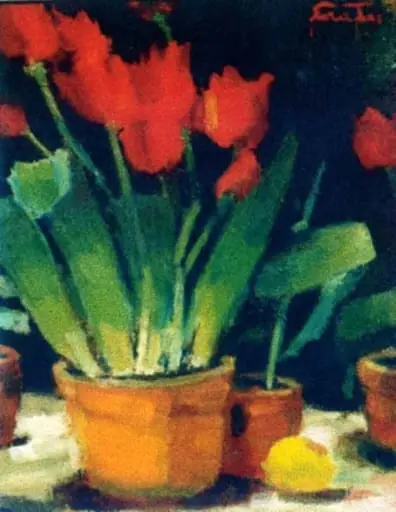 Lalele
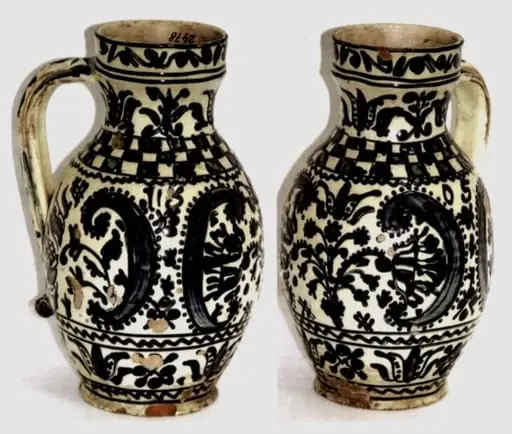 cană de vin
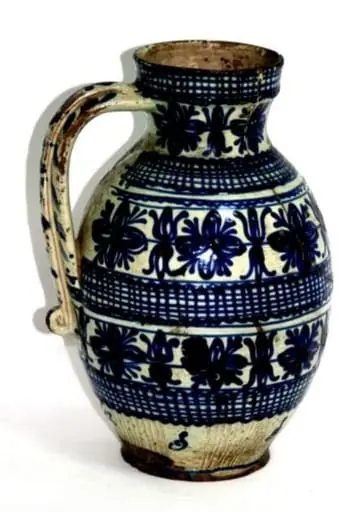 cană de vin
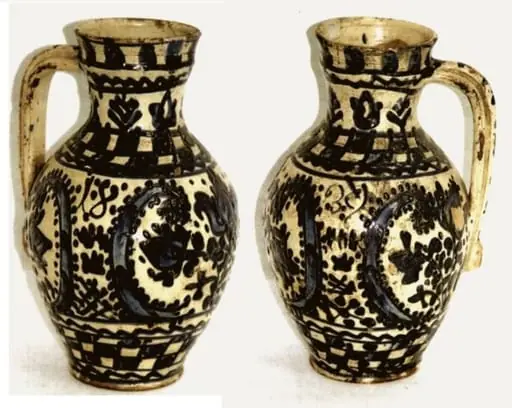 cană de bere
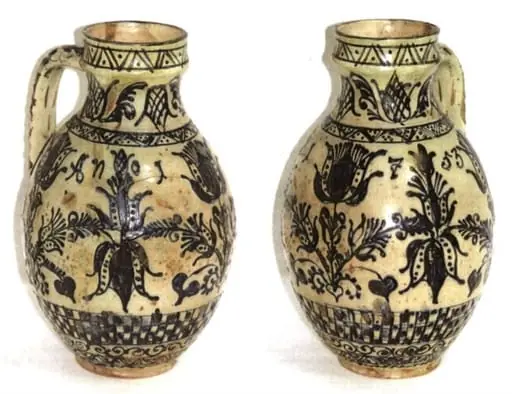 cană de vin
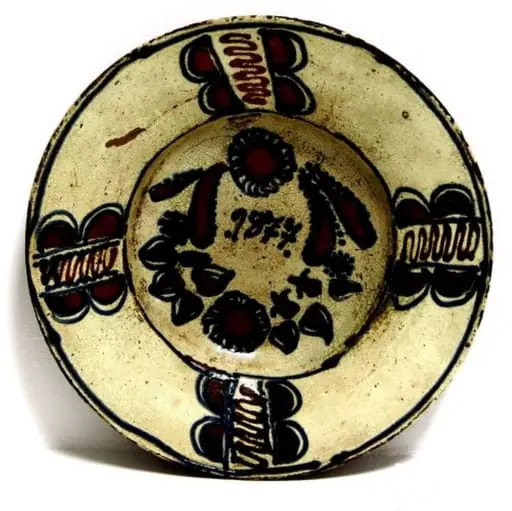 blid
blid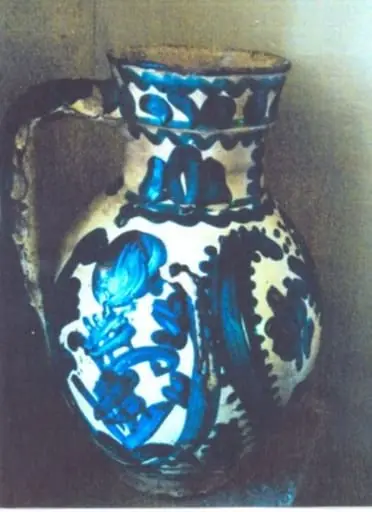 cană de vin
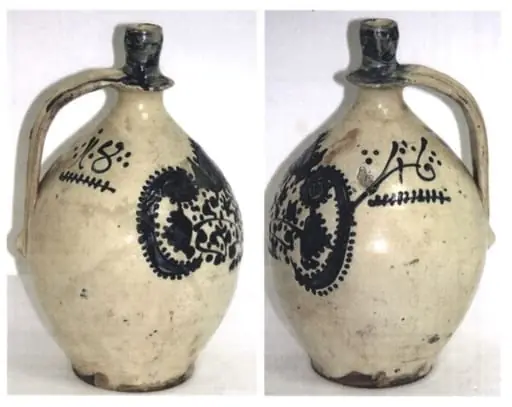 ulcior
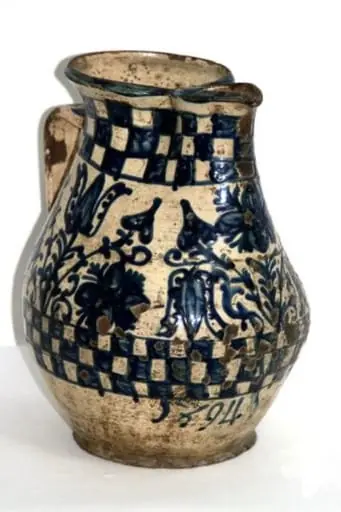 cană cu cioc
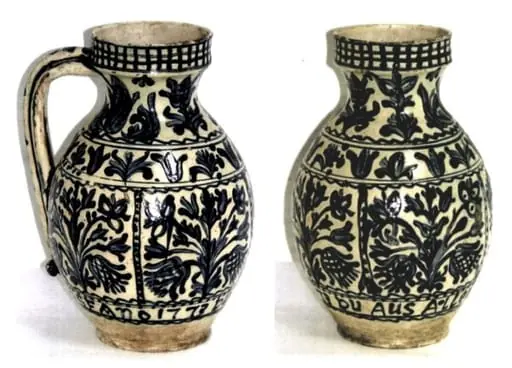 cană de vin
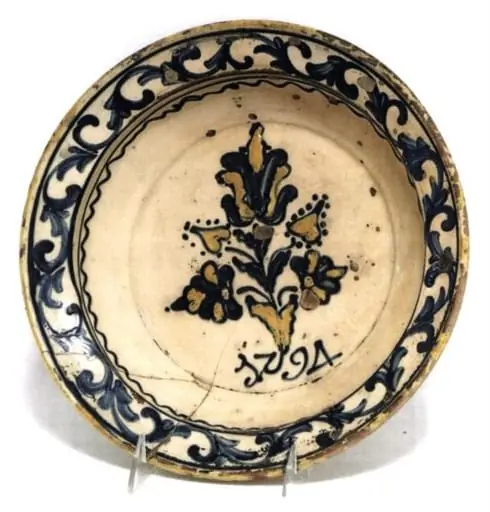 blid
blid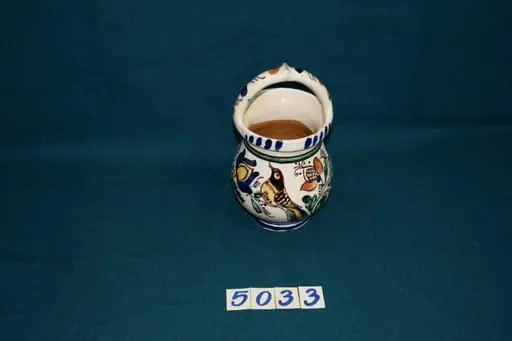 Oală cu mănușă
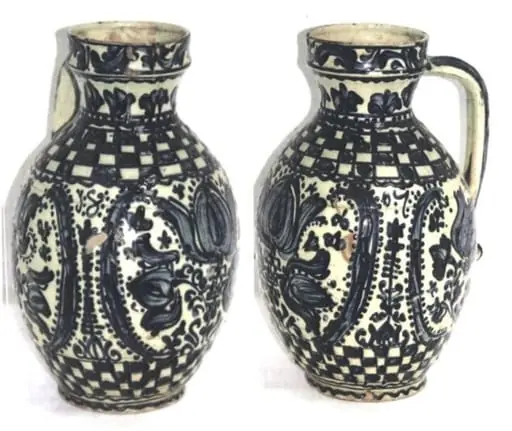 cană de vin
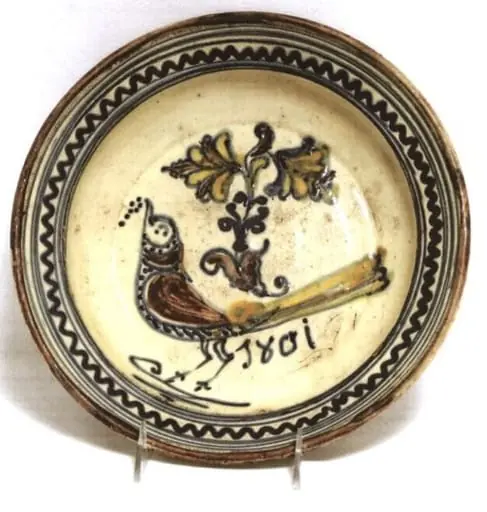 farfurie
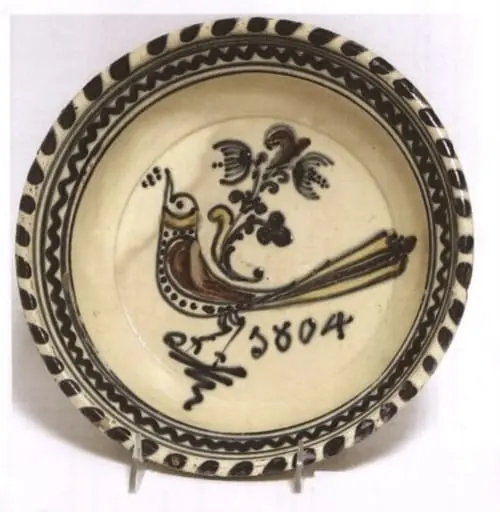 farfurie
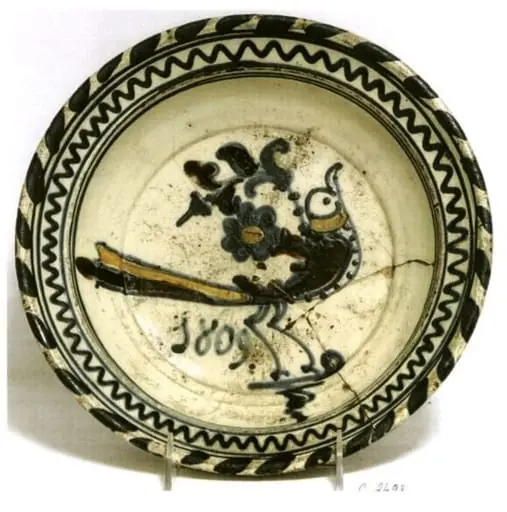 farfurie
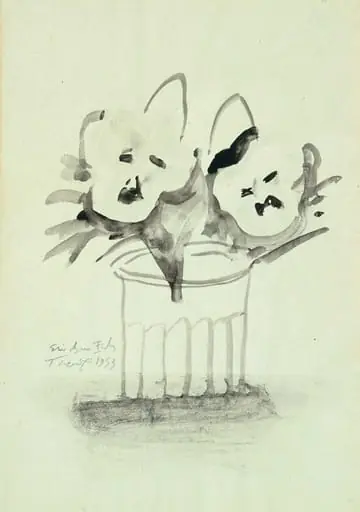 Πανσέδες
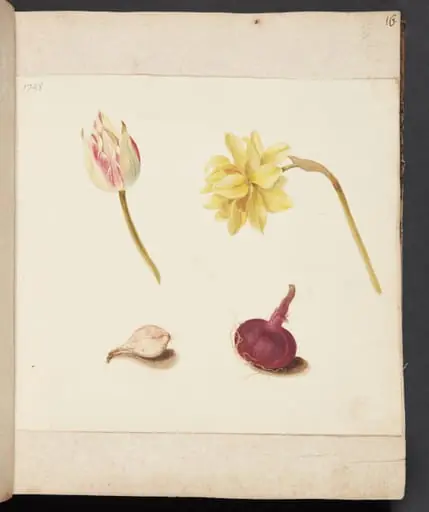 Studie af blomster og løg
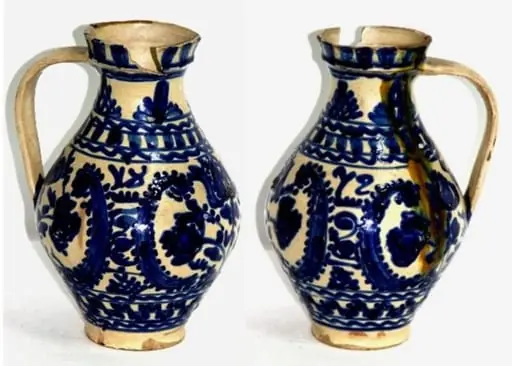 cană de vin
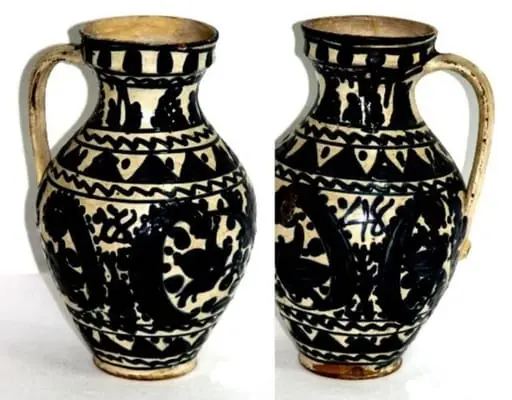 cană de vin
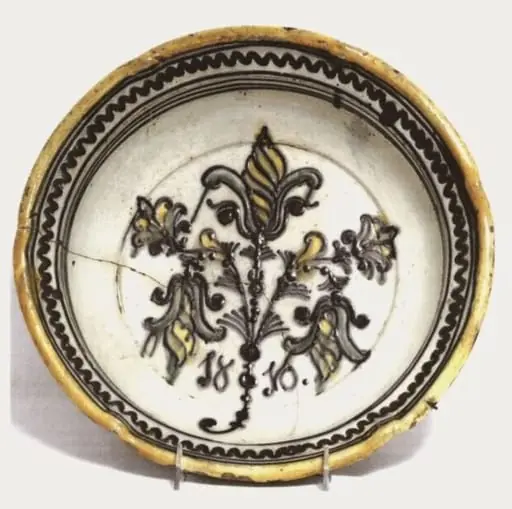 farfurie
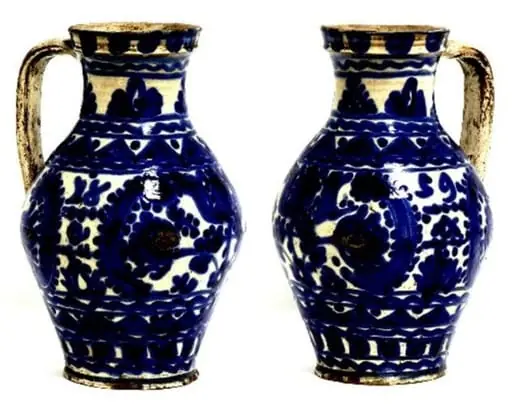 cană de vin
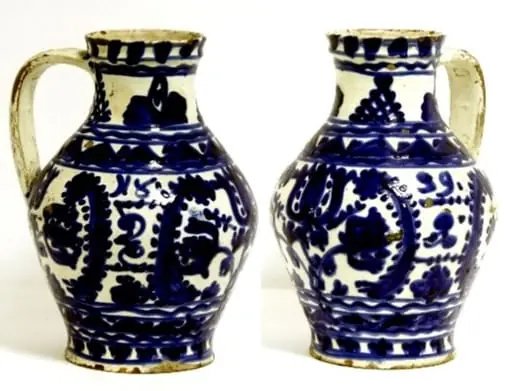 cană de vin
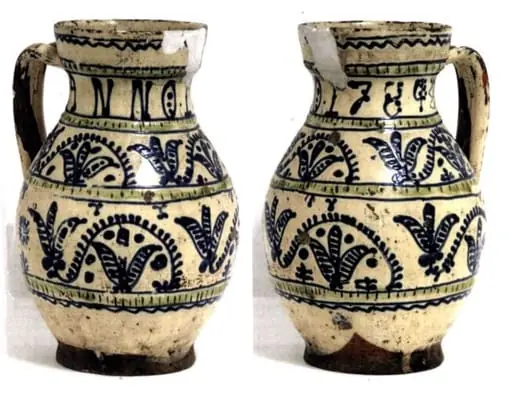 canceu
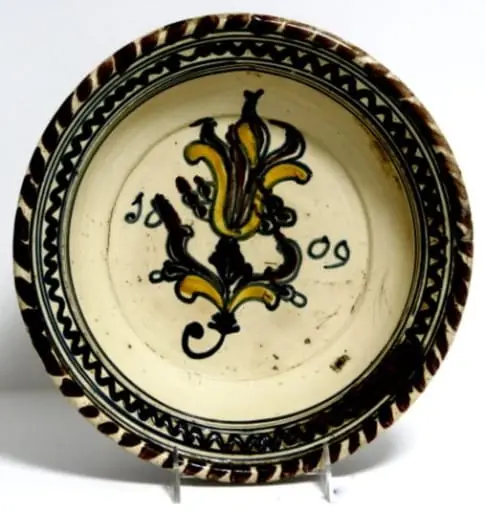 castron
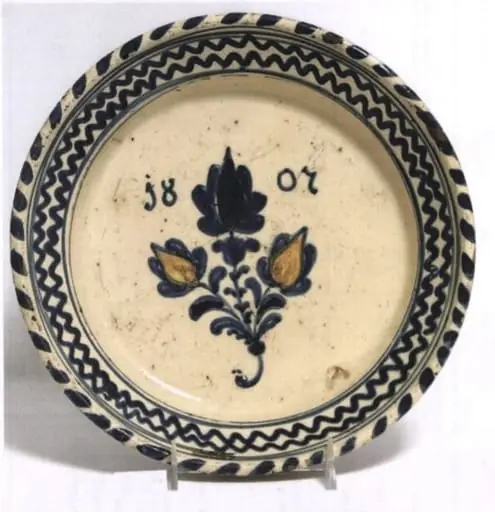 castron
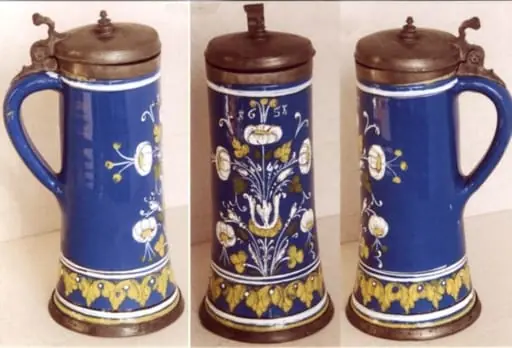 halbă
halbă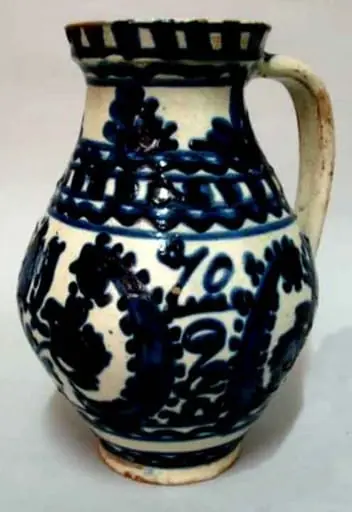 cană de vin
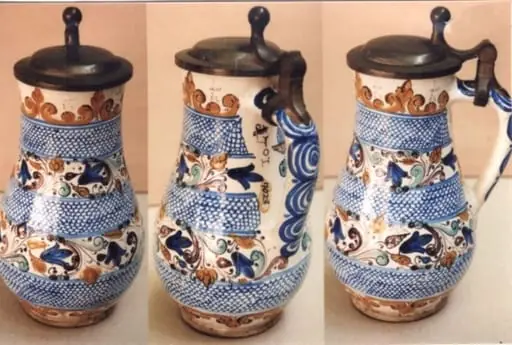 canceu
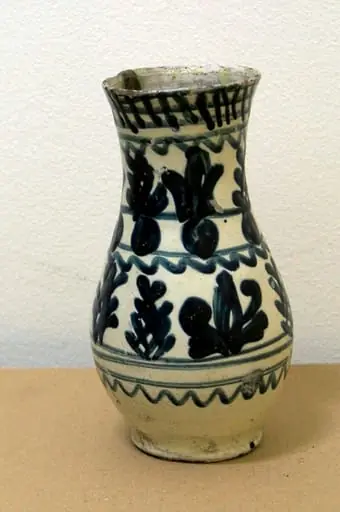 canceu
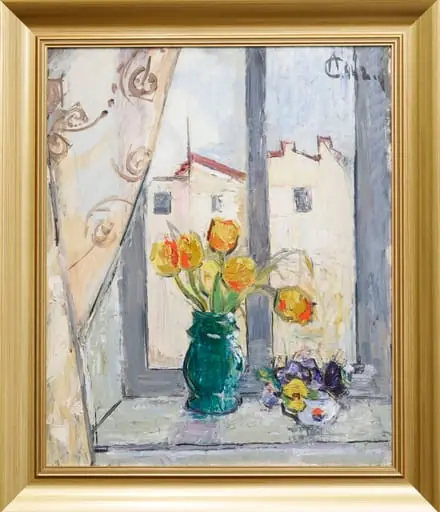 Fereastră
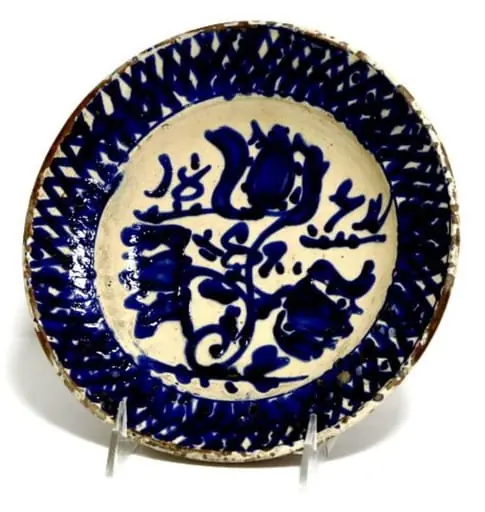 blid
blid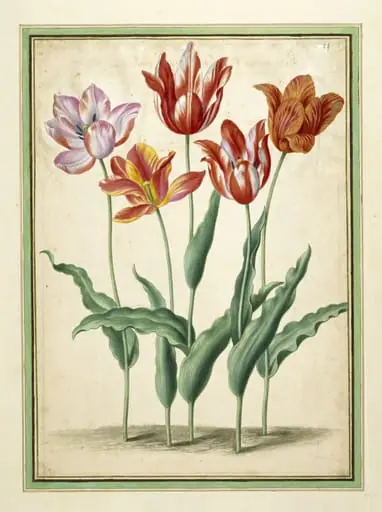 Tulips
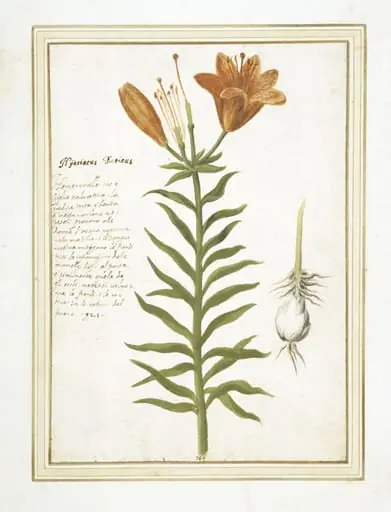 Day Lily
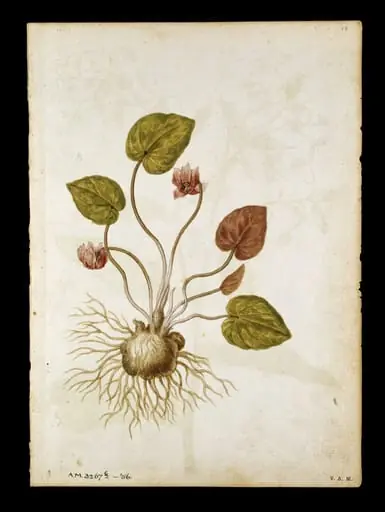 Cyclamen; Borage
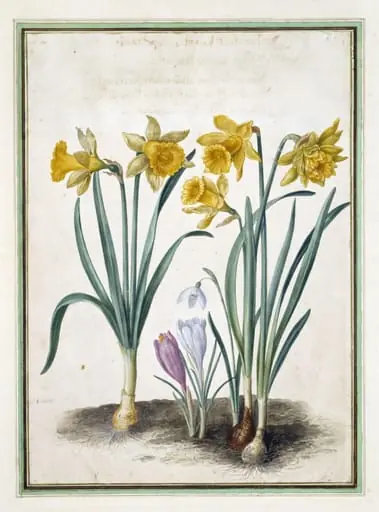 Untitled
 Simulacrum Scenographicum Celeberrimi Horti Itzsteinensis
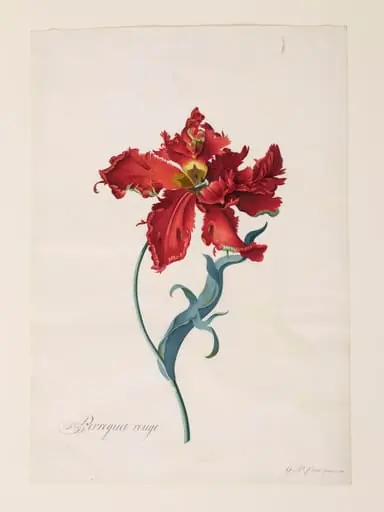 Perroquet Rouge
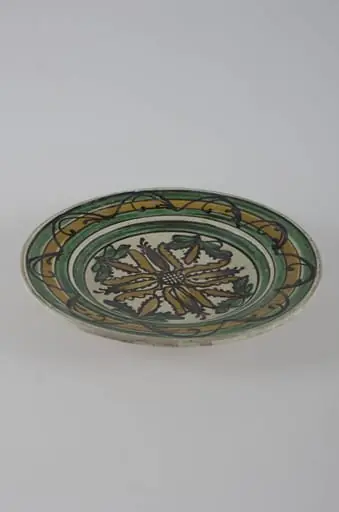 Vas de formă tronconică aplatizat cu decor amplasat pe toată suprafața; ordonat în registre; decor geometrizant; motive geometrice propriu-zise: cercul, semicercul; motive fitomorfe: frunza; motive florale: lalea stilizată. Cromatică: fond: alb; motive: verde; portocaliu.
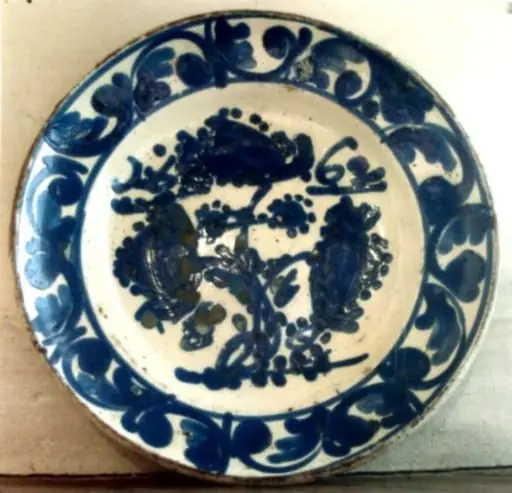 farfurie
 Garoafe și lalele pe fond brun
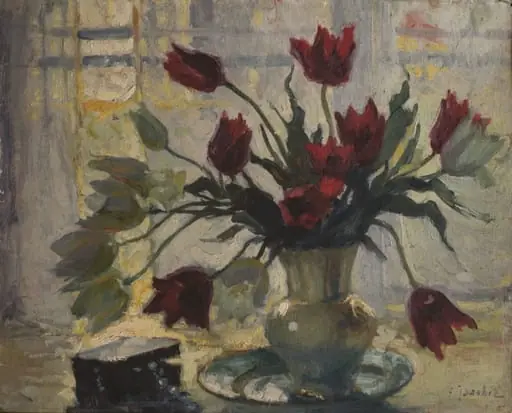 Flori (lalele)
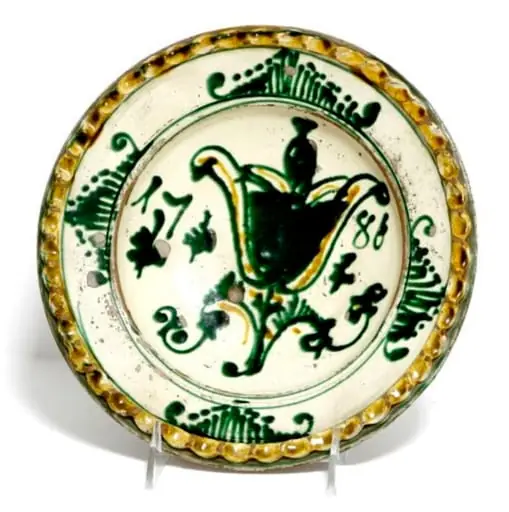 farfurie
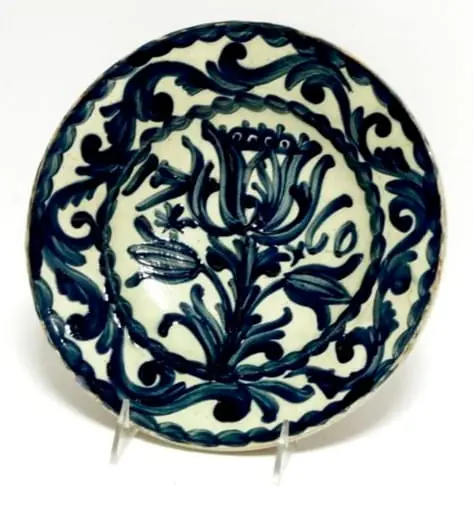 blid
blid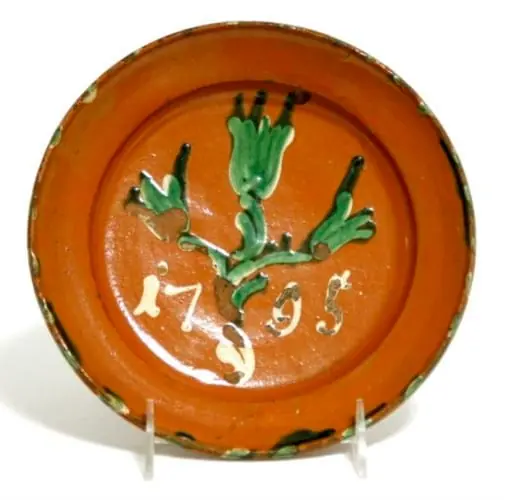 farfurie
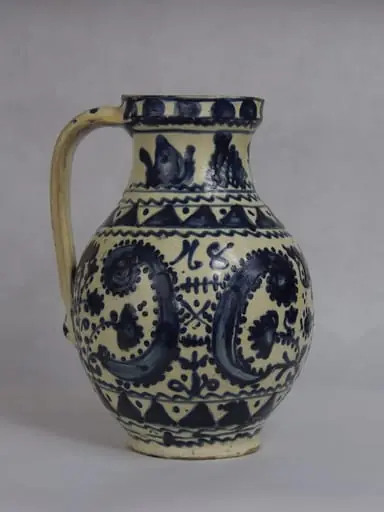 cană
cană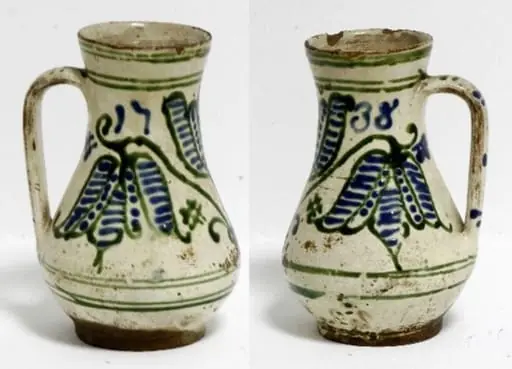 canceu
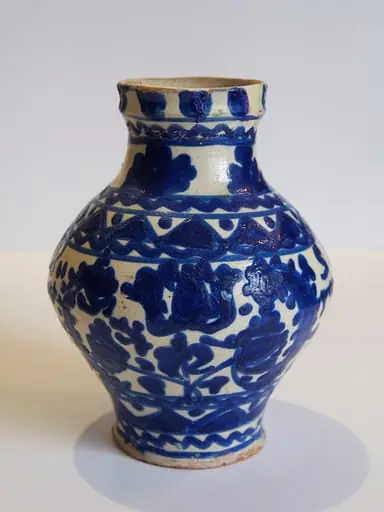 canceu
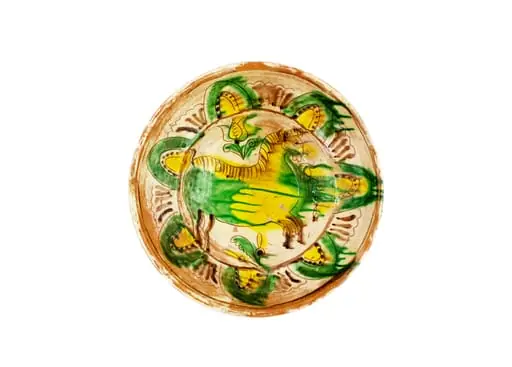 Strachină lucrată în manieră Kuty, de formă tronconică, modelată la roată; decor geometrizat și naturalist amplasat pe toată suprafața vasului organizat în două registre despărțite de linii circulare realizate cu cornul: central prezintă un motiv zoomorf: animal, înconjurat de motive fitomorfe: flori de lalea și frunze; spre marginea vasului un registru cu motive geometrice semiovoidale realizate cu linii curbe și puncte, despărțite de grupuri de liniuțe; cromatică: fond alb dat de angobă, decor realizat cu verde, galben și brun. Pe exterior este imprimată ștampila cu numele meșterului scris cu majusculă și caractere italice: Colibaba.
 Strachină lucrată în manieră Kuty, de formă tronconică, modelată la roată; decor geometrizant și naturalist amplasat pe toată suprafața vasului organizat în două registre despărțite de linii circulare realizate cu cornul: central prezintă un motiv fitomorf: plantă în ghiveci cu trei inflorescențe: lalea și floarea soarelui; spre marginea vasului un registru cu motive geometrice unghiulare, despărțite de grupuri de liniuțe; cromatică: fond alb dat de angobă, decor realizat cu verde, galben, negru și cărămiziu. Pe exterior este imprimată ștampila cu numele meșterului scris cu majusculă și caractere italice: Colibaba.
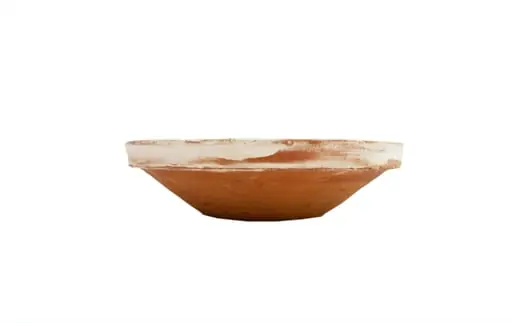
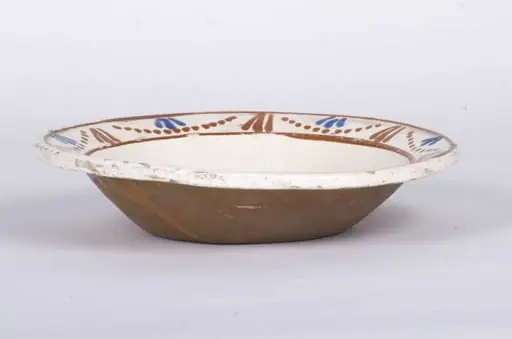 Vas de formă tronconică, adâncit, cu buza lată și evazată. Smălțuit în interior. Este decorat în centru cu motive florale: 8 lalele încercuiesc o floare dispusă central. Pe margini este decorată cu motive geometrice: șiruri arcuite de puncte și grupuri de câte trei linii încadrate de două cercuri concentrice. Cromatică: fond alb în interior; cărămiziu în exterior; motive: maro; albastru; verde.
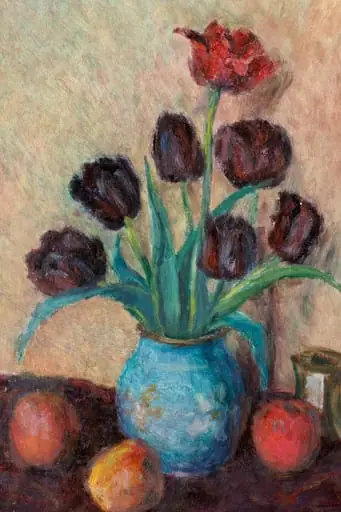 Lalele
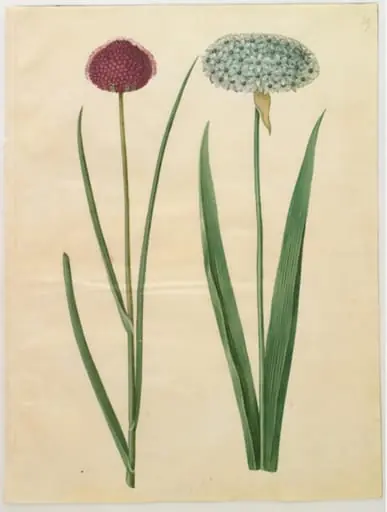 Allium sphaerocephalon (middelhavs-prydløg); Allium nigrum (sort løg)
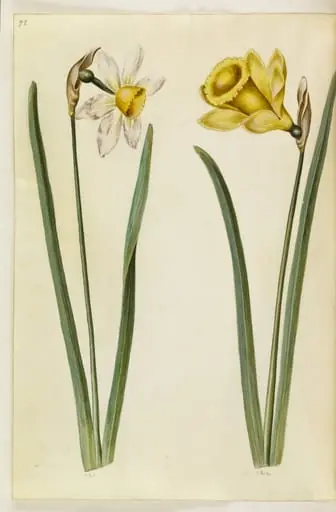 Narcissus ×incomparabilis (have-narcis); Narcissus pseudonarcissus (påskelilje)
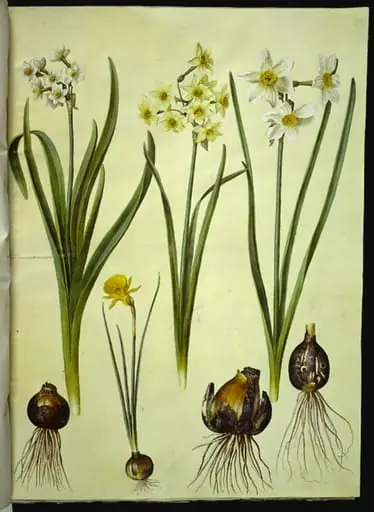 Narcissus tazetta (tazet); Narcissus ×medioluteus (toblomstret narcis); Narcissus bulbocodium (krinoline-narcis)
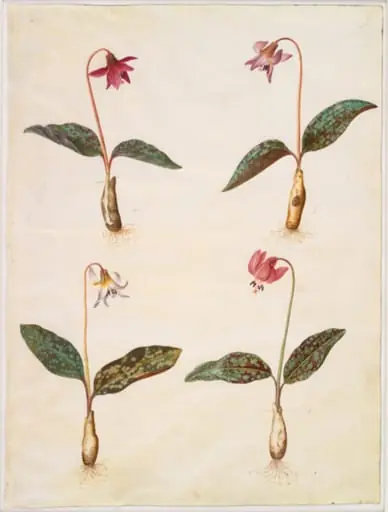 Erythronium dens-canis (ægte hundetand)
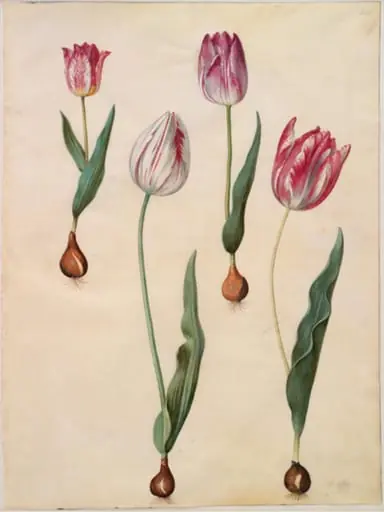 Tulipa gesneriana (have-tulipan)
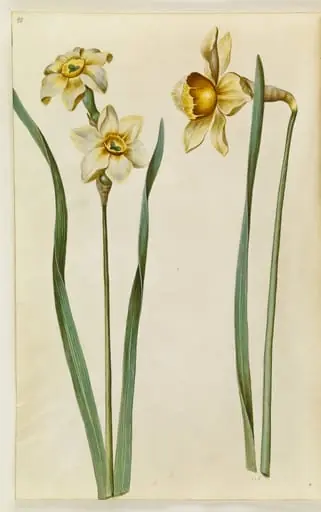 Narcissus ×medioluteus (toblomstret narcis); Narcissus ×incomparabilis (have-narcis)
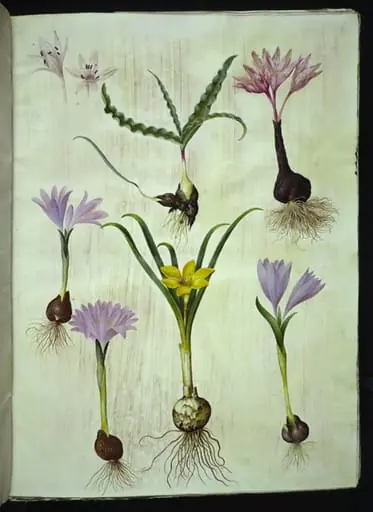 Colchicum variegatum (plettet tidløs); Bulbocodium vernum (vår-lysblomst); Sternbergia lutea (almindelig sternbergia)
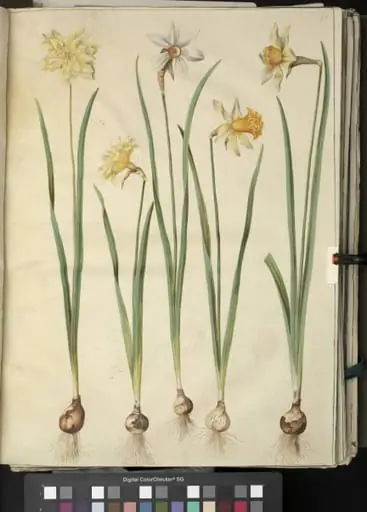 Narcissus pseudonarcissus; Narcissus poeticus (pinselilje); Narcissus ×incomparabilis (have-narcis)
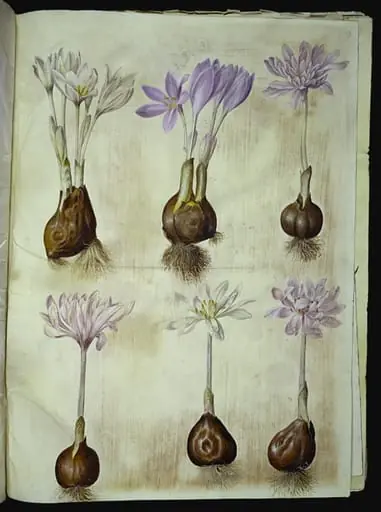 Colchicum autumnale (høst-tidløs)
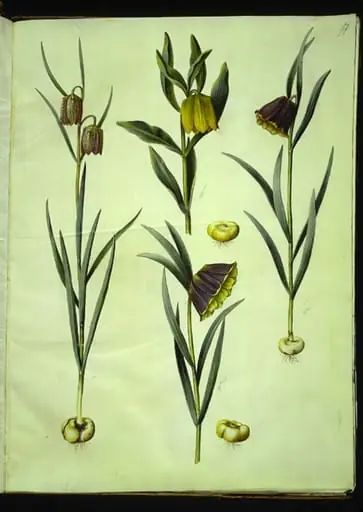 Fritillaria meleagris (almindelig vibeæg); Fritillaria aurea eller Fritillaria tubiformis & moggridgei (vibeæg); Fritillaria montana
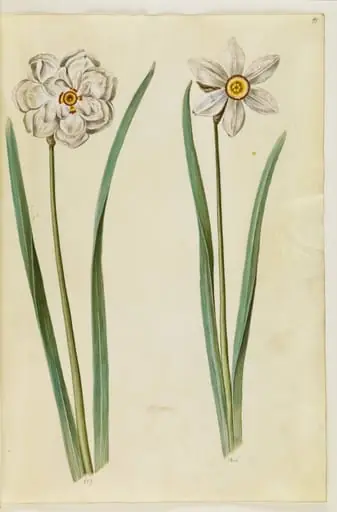 Narcissus poeticus (pinselilje)
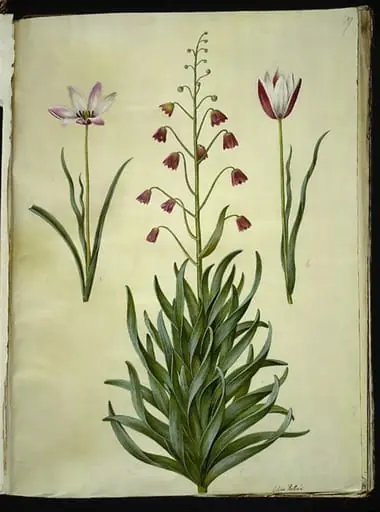 Tulipa clusiana (clusius-tulipan); Fritillaria persica (persisk fritillaria)
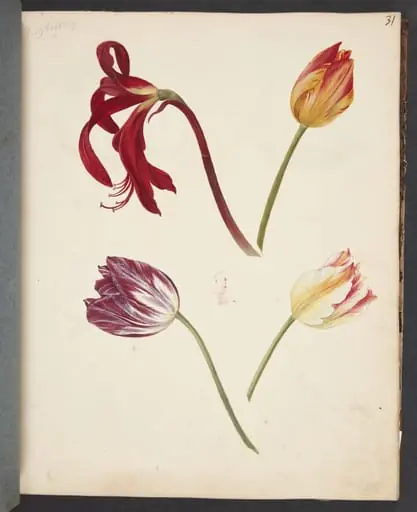 Studie af tulipaner
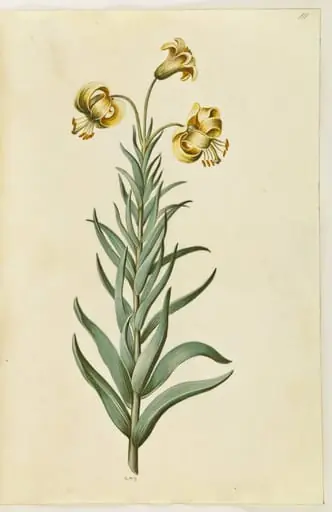 Lilium pyrenaicum (pyrenæisk lilje)
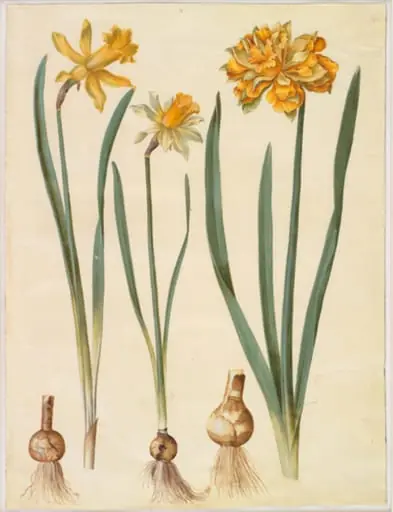 Narcissus pseudonarcissus major (stor påskelilje); Narcissus pseudonarcissus bicolor (tofarvet påskelilje); Narcissus pseudonarcissus
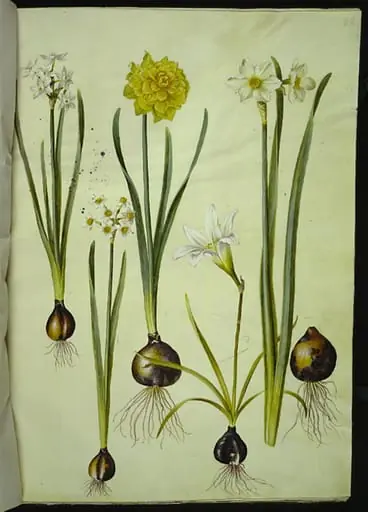 Narcissus tazetta (tazet); Narcissus pseudonarcissus (påskelilje); Zephyranthes atamasca (zefyrblomst); Narcissus ? ×incomparabilis (have-narcis)
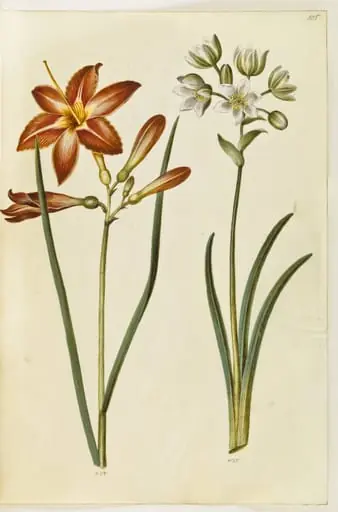 Hemerocallis fulva (brun daglilje); Ornithogalum arabicum (mælkestjerne)
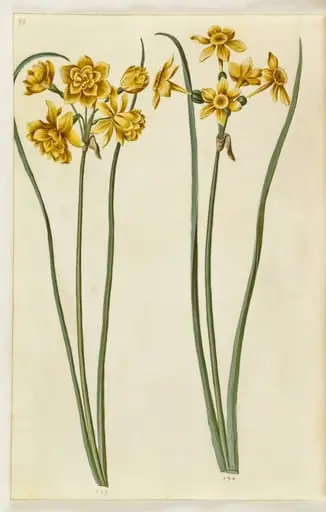 Narcissus jonquilla (siv-narcis)
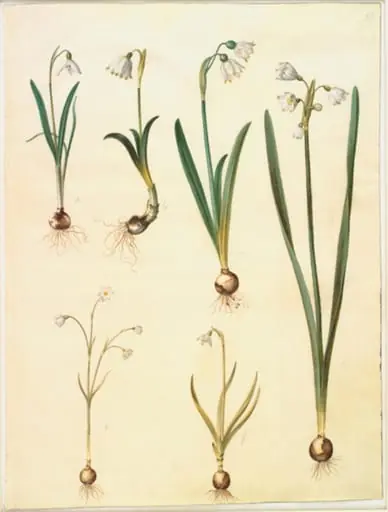 Galanthus nivalis (almindelig vintergæk); Leucojum vernum (dorotealilje); Leucojum aestivum (sommer-hvidblomme); Leucojum autumnale (høst-hvidblomme)
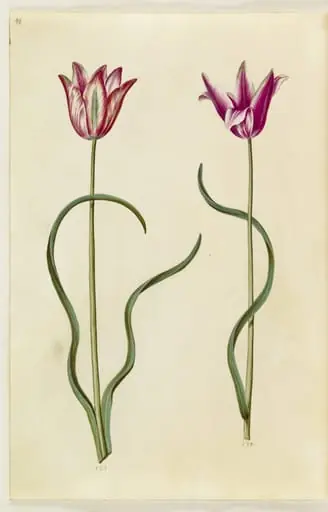 Tulipa clusiana (clusius-tulipan)
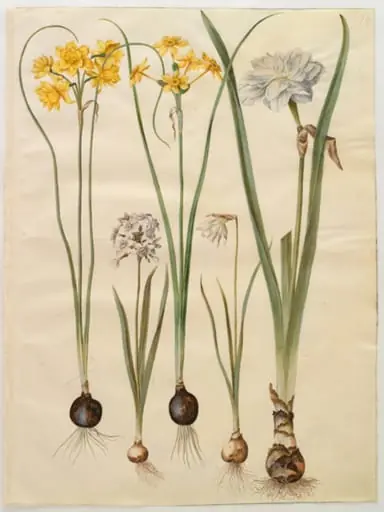 Narcissus jonquilla (siv-narcis); Narcissus tazetta (tazet); Narcissus pseudonarcissus moschatus (moskus-narcis); Narcissus poeticus (pinselilje)
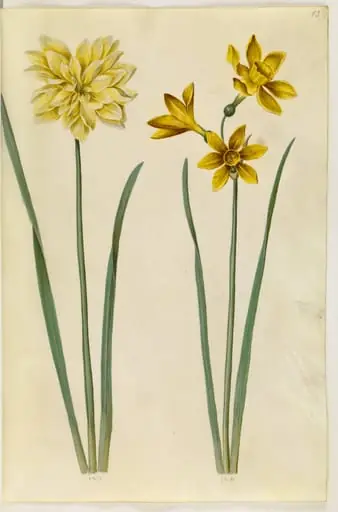 Narcissus pseudonarcissus (påskelilje); Narcissus tazetta aureus (guld-tazet)
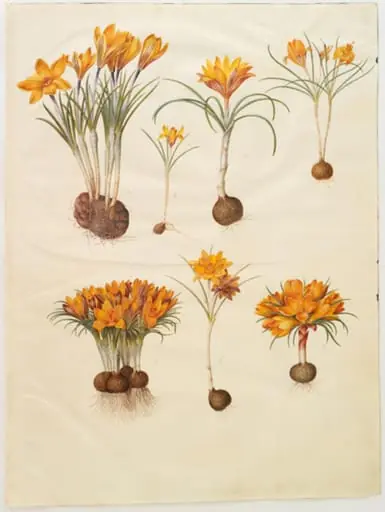 Crocus angustifolius (balkan-krokus)
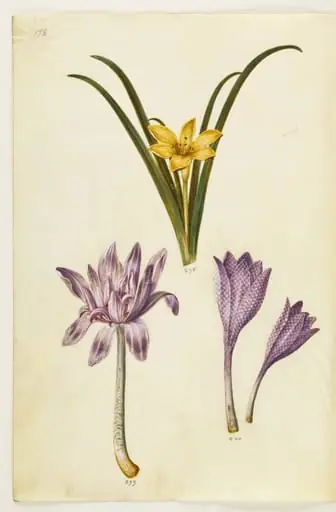 Sternbergia lutea (almindelig sternbergia); Colchicum autumnale (høst-tidløs); Colchicum variegatum (plettet tidløs)
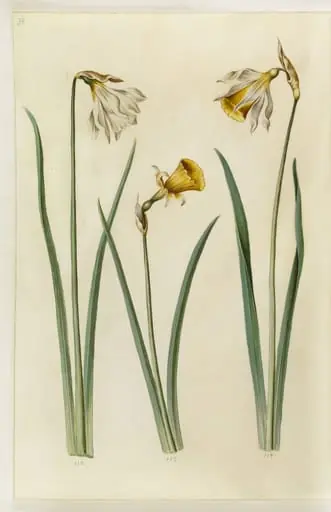 Narcissus pseudonarcissus moschatus (moskus-narcis); Narcissus bulbocodium (krinoline-narcis); Narcissus pseudonarcissus (påskelilje)
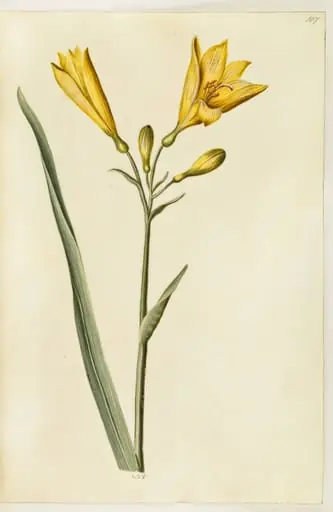 Hemerocallis lilioasphodelus (gul daglilje)
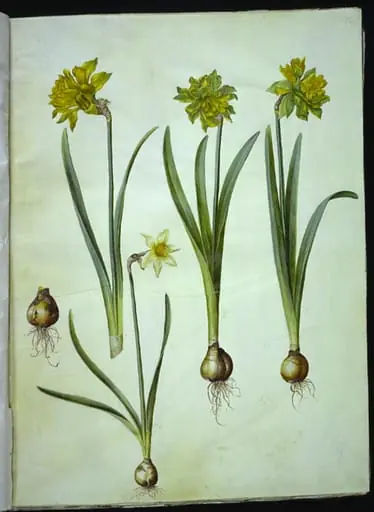 Narcissus pseudonarcissus; Narcissus ? ×incomparabilis (have-narcis)
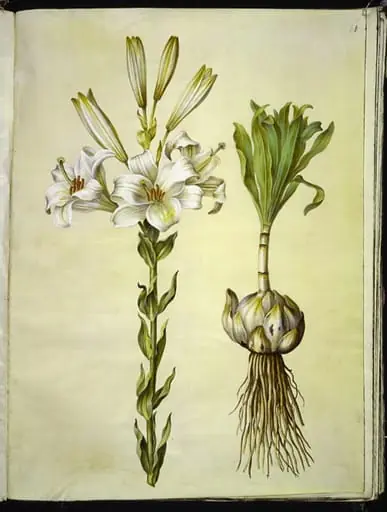 Lilium candidum (madonna-lilje)
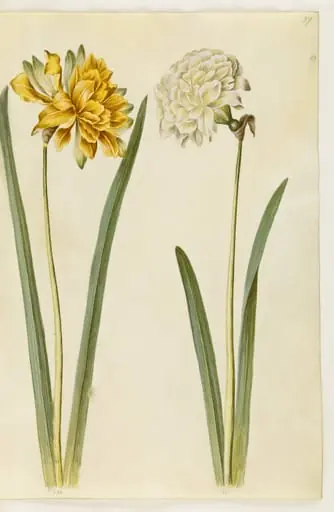 Narcissus pseudonarcissus (påskelilje)
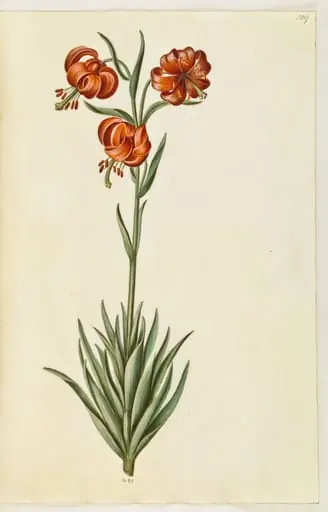 Lilium pomponium (pompon-lilje)
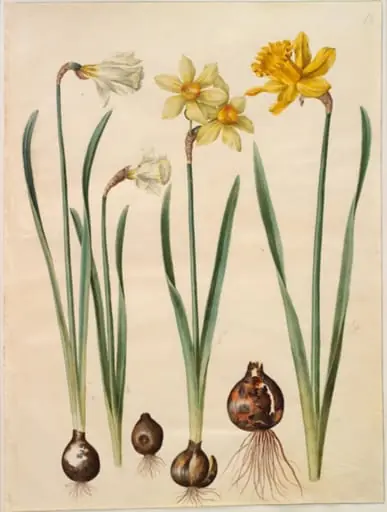 Narcissus pseudonarcissus moschatus (moskus-narcis); Narcissus ×medioluteus (toblomstret narcis); Narcissus pseudonarcissus major (stor påskelilje)
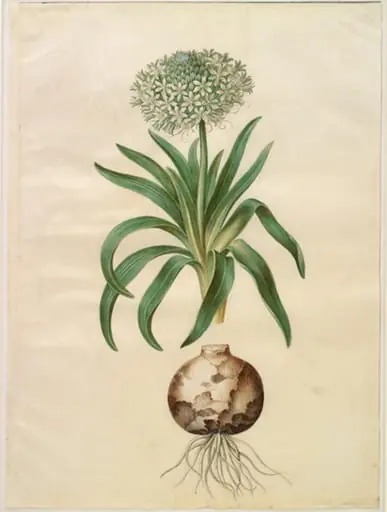 Scilla peruviana (kæmpe-skilla)
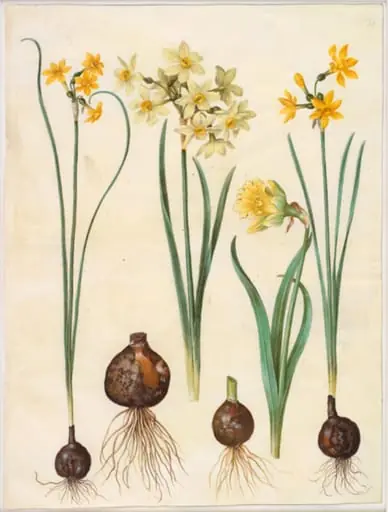 Narcissus jonquilla (siv-narcis); Narcissus tazetta aureus (guld-tazet); Narcissus pseudonarcissus bicolor (tofarvet påskelilje)
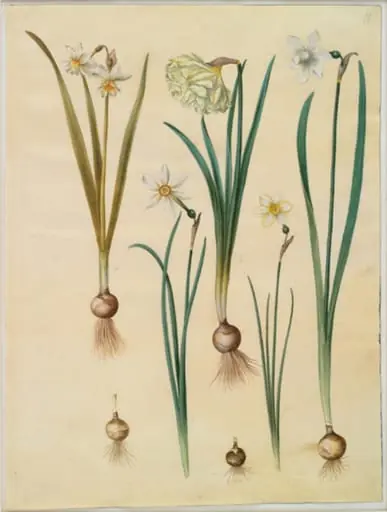 Narcissus ×medioluteus (toblomstret narcis); Narcissus pseudonarcissus; Narcissus (narcis); Narcissus poeticus (pinselilje); Narcissus ×tenuior
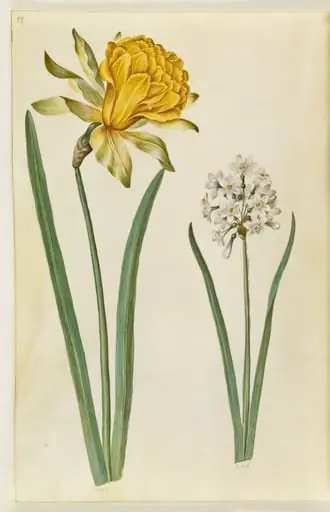 Narcissus pseudonarcissus (påskelilje); Narcissus tazetta (tazet)
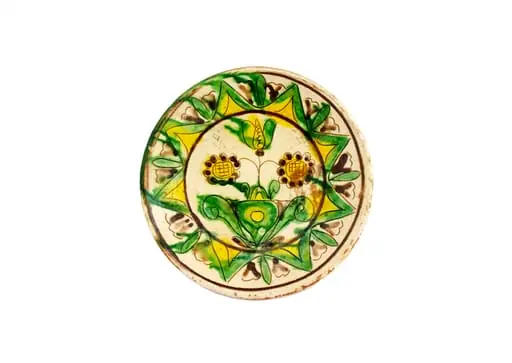 Farfurie lucrată în manieră Kuty, de formă tronconică, modelată la roată; decor geometrizat amplasat pe toată suprafața vasului organizat în două registre despărțite de linii circulare concentrice realizate cu cornul; central prezintă un motiv fitomorf: lalea într-un ghiveci cu trei inflorescențe; în registrul de la extremitatea vasului sunt desenate motive geometrice unghiulare realizate cu linii drepte despărțite de grupuri de liniuțe; cromatică: fond alb dat de angobă, decor cu galben, verde, brun. Pe exterior este imprimată ștampila cu numele meșterului scris cu majusculă și caractere italice: Colibaba.
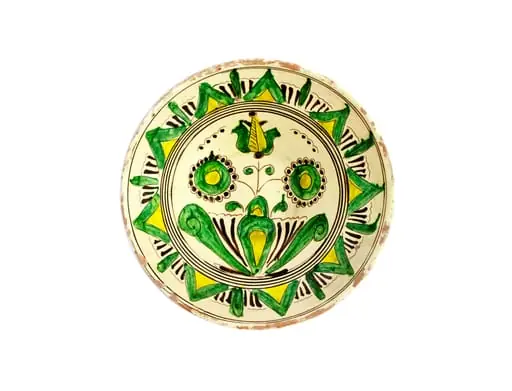 Strachină lucrată în manieră Kuty, de formă tronconică, modelată la roată; decor geometrizat și naturalist organizat în două registre despărțite de linii circulare realizate cu cornul; central prezintă un motiv fitomorf: lalea cu trei inflorescențe așezată într-un ghiveci; spre marginea vasului motive geometrice unghiulare realizate cu linii drepte, despărțite de grupuri de liniuțe; cromatică: fond alb dat de angobă, decor realizat cu verde, brun și galben. Pe exterior este imprimată ștampila cu numele meșterului scris cu majusculă și caractere italice: Colibaba.
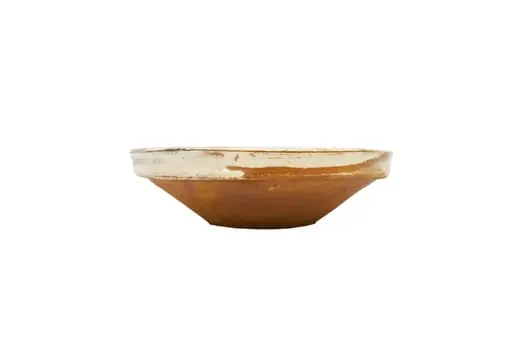 Strachină lucrată în manieră Kuty, de formă tronconică, modelată la roată; decor naturalist amplasat pe toată suprafața vasului organizat în două registre despărțite de linii circulare concentrice realizate cu cornul; central prezintă un motiv zoomorf: animal fantastic; în registrul de la extremitatea vasului sunt desenate motive fitomorfe: flori de lalea despărțite de grupuri de liniuțe; cromatică: fond alb dat de angobă, decor cu galben, verde și brun. Pe exterior este ștampilat numele meșterului cu majusculă și caractere italice: Colibaba.
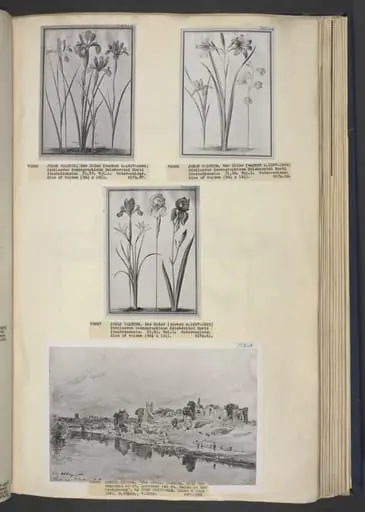 Untitled
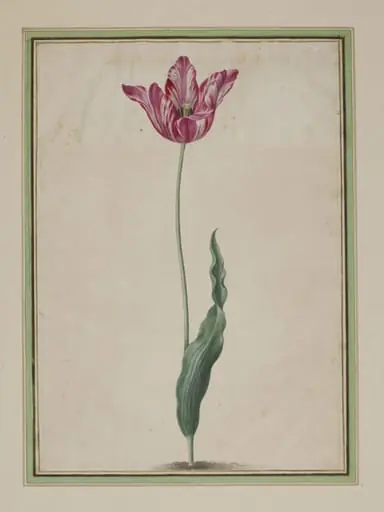
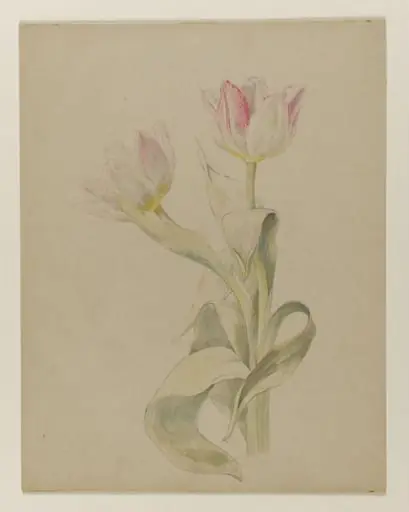 Pink and white tulips
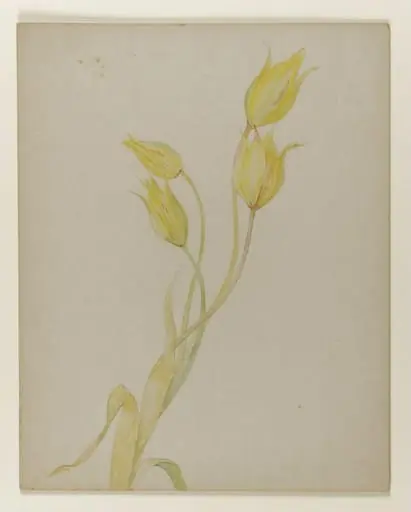 Yellow tulips
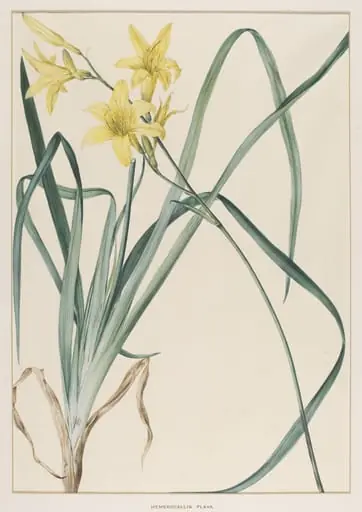 Hemerocallis Flava
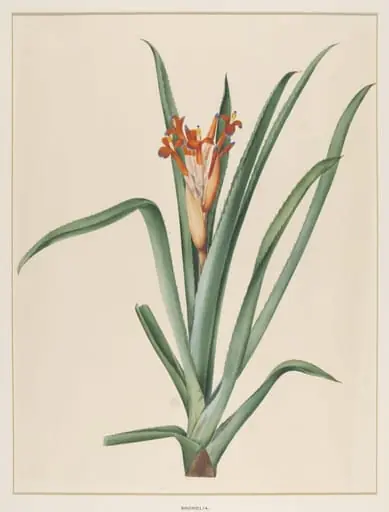 Bromelia
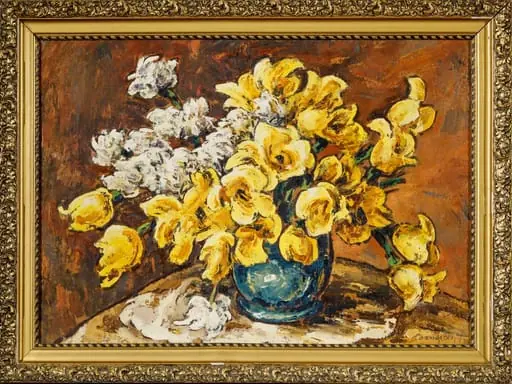 Vas cu flori
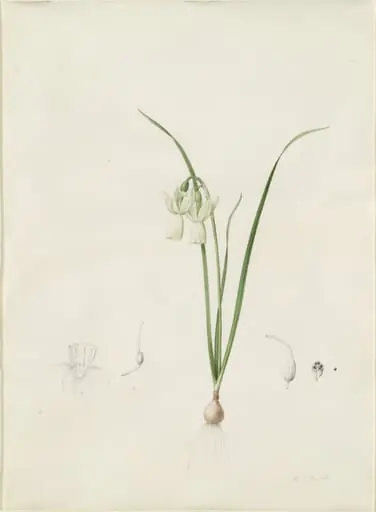 Narcissus calathinus
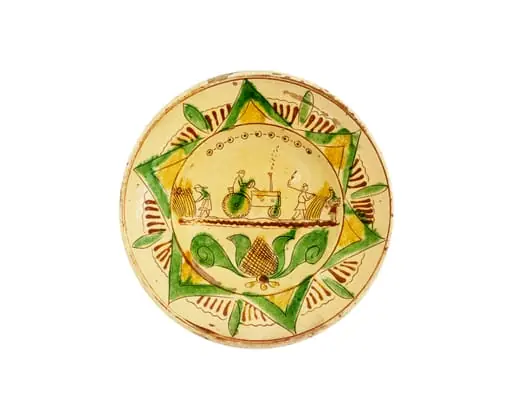 Farfurie lucrată în manieră Kuty, de formă tronconică, modelată la roată; decor geometrizat și naturalist amplasat pe toată suprafața vasului organizat în două registre despărțite de linii circulare realizate cu cornul: central prezintă la partea superioară motive antropomorfe: personaje în diferite ipostaze la muncile agrare și un tractor, la partea inferioară un motiv fitomorf: lalea realizată cu linii curbe și hașuri; spre marginea vasului un registru cu motive geometrice unghiulare despărțite de grupuri de liniuțe; cromatică: fond alb dat de angobă, decor realizat cu verde, galben și cărămiziu.
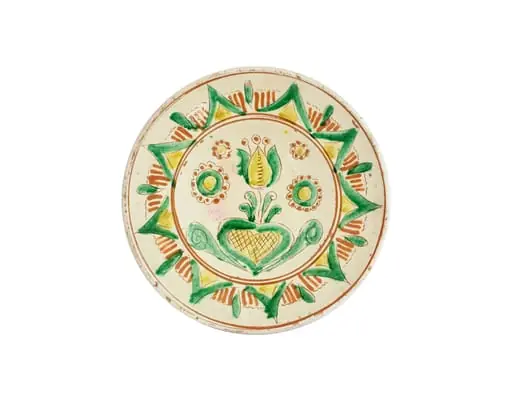 Farfurie lucrată în manieră Kuty, de formă tronconică, modelată la roată; decor geometrizant și naturalist amplasat pe toată suprafața vasului organizat în două registre despărțite de linii circulare realizate cu cornul: central prezintă un motiv fitomorf: lalea în ghiveci și motive astrale: soare realizate cu cercuri, linii curbe și puncte de culoare; spre marginea vasului un registru cu motive geometrice unghiulare, despărțite de grupuri de liniuțe; cromatică: fond alb dat de angobă, decor realizat cu verde, galben și cărămiziu.
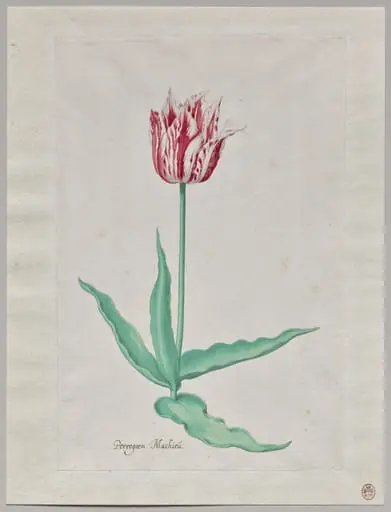 Study of a Tulip (Perregoen Machieu)
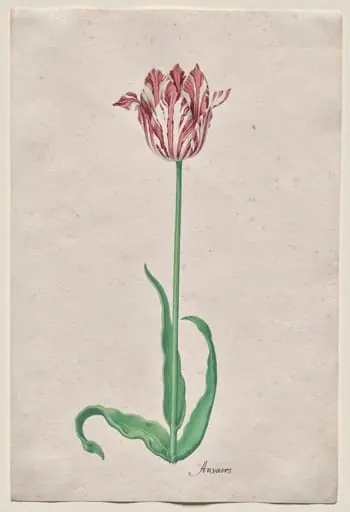 Study of a Tulip (Anvaers)
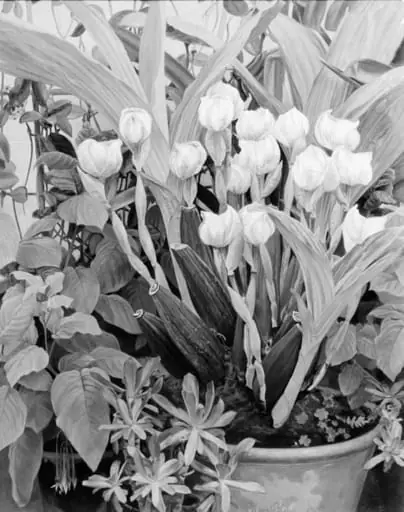 Orkidéer
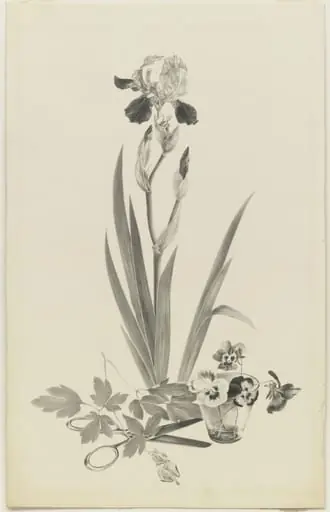 Untitled
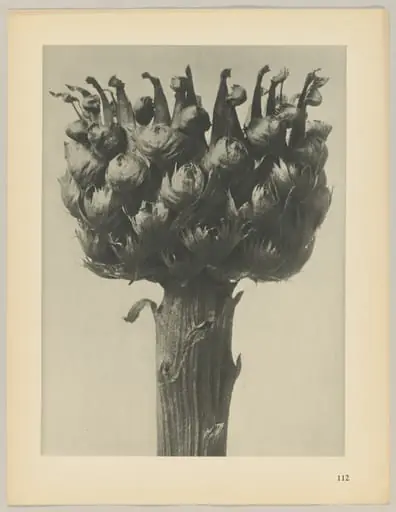 Centaurea macrocephala
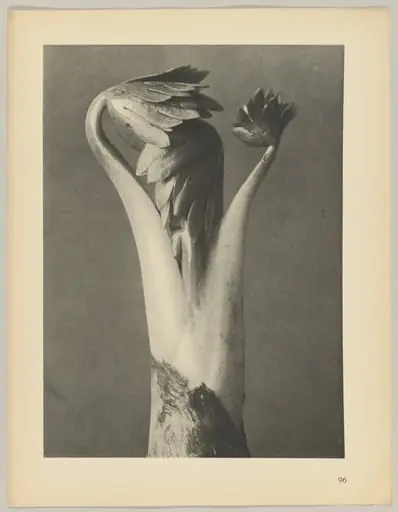 Aconitum
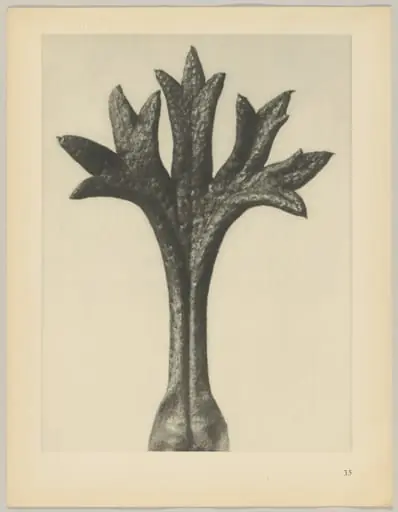 Saxifraga Willkommniana
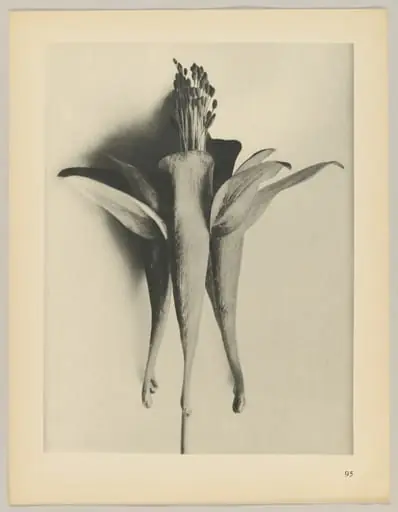 Aquilegia chrysantha
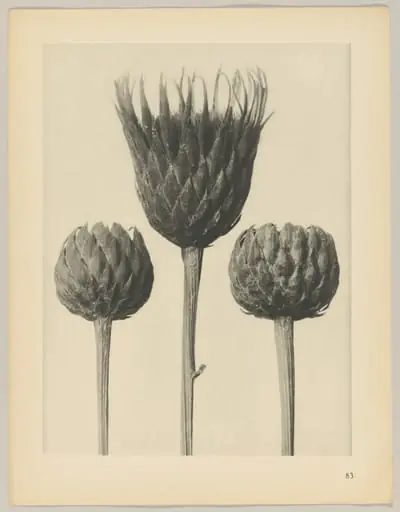 Serratula nudicaulis
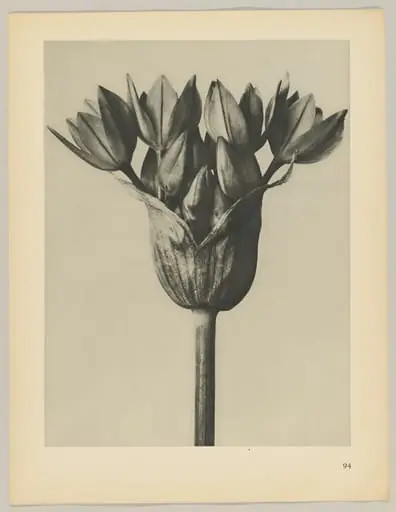 Allium Ostronoskianum
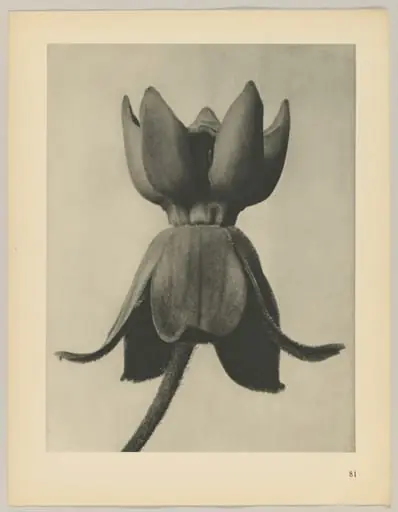 Asclepias syriaca
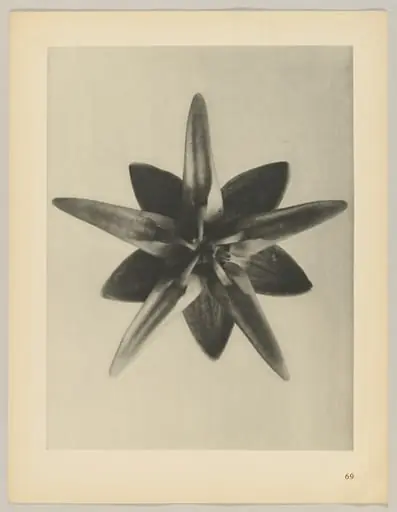 Asclepias speciosa
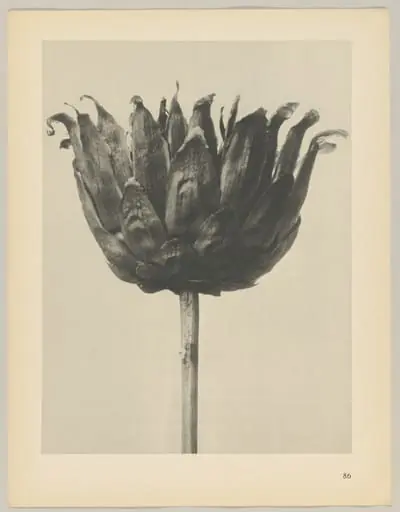 Centaurea ruthenica
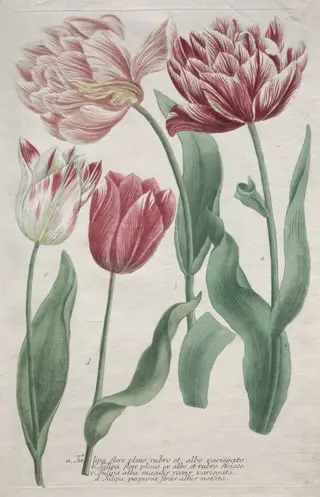 Tulips
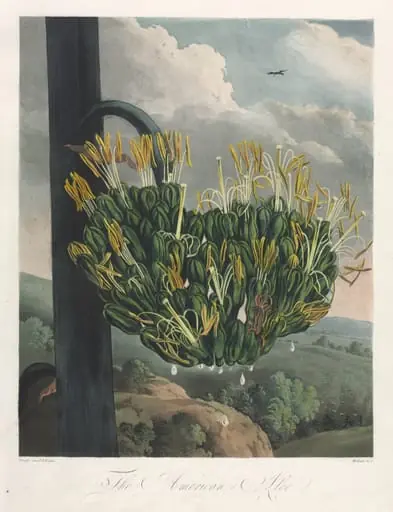 The Temple of Flora, or Garden of Nature: The American Aloe
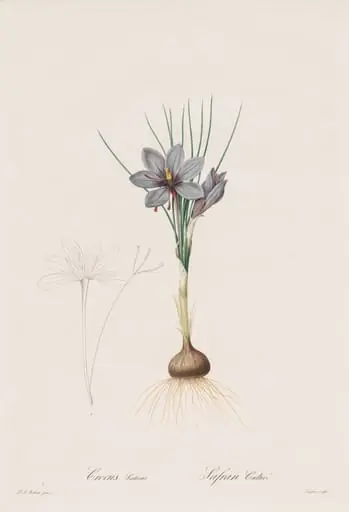 Les Liliacées: Crocus Sativus
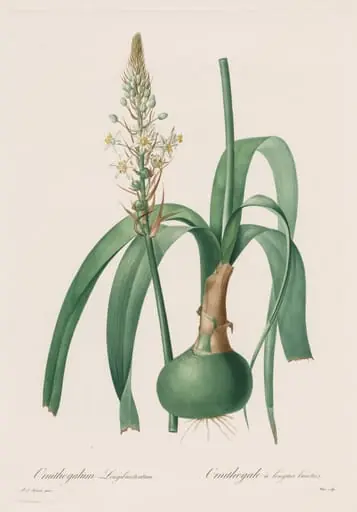 Les Liliacées: Ornithogalum longibracteatum
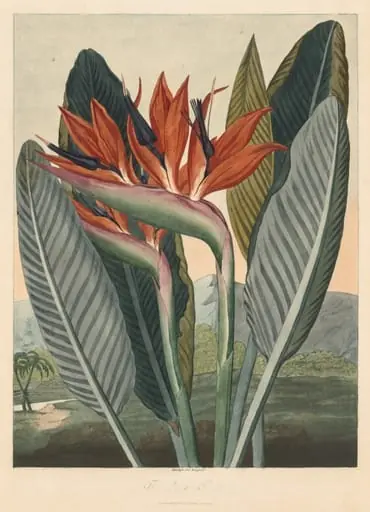 The Temple of Flora; or Garden of Nature: The Queen Flower
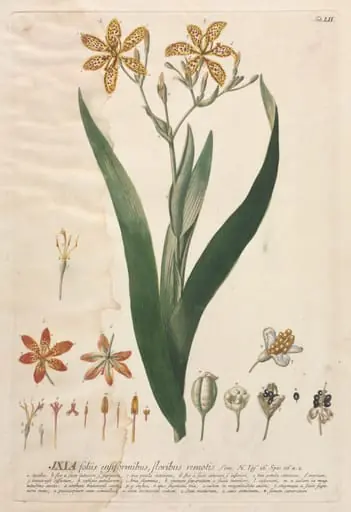 Plantae Selectae: No. 52 - Ixia
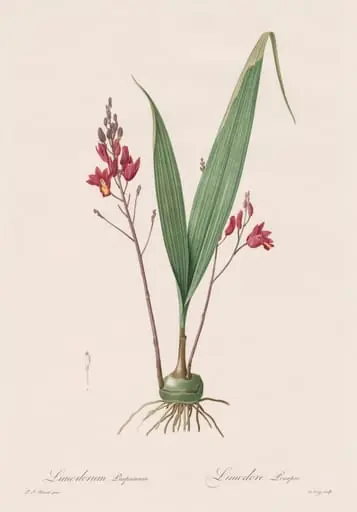 Les Liliacées: Limodorum purpureum
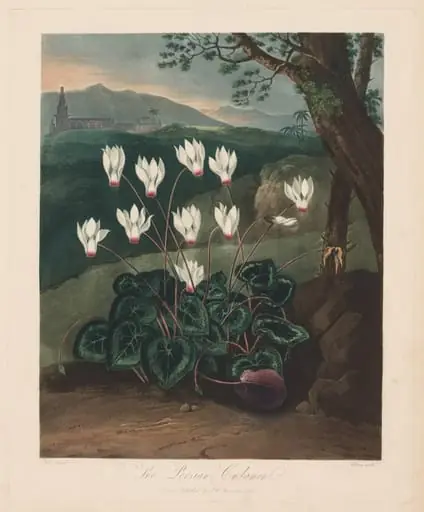 The Temple of Flora, or Garden of Nature: The Persian Cyclamen
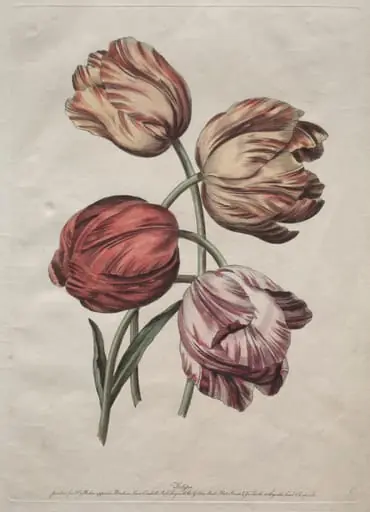 Eight Beautiful Groups of Natural Flowers in Outlines by de la Cour: Tulips
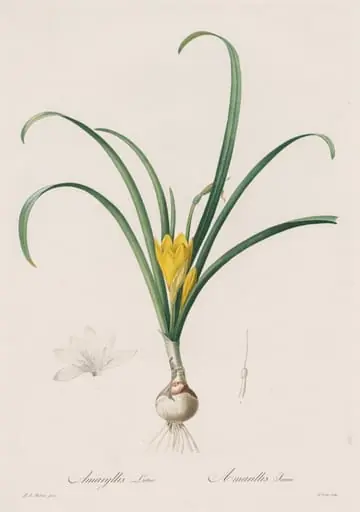 Les Liliacées: Amaryllis Lutes
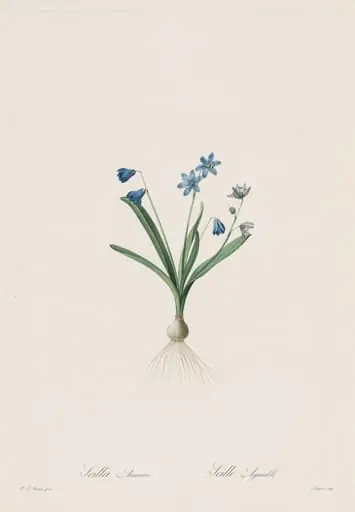 Les Liliacées: Scilla amaena
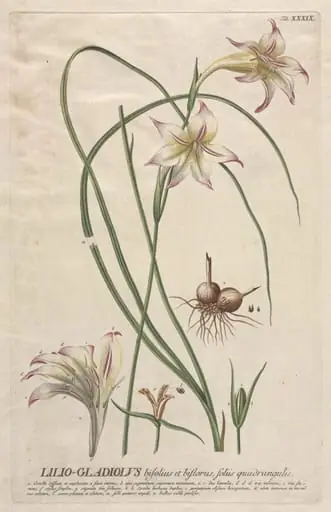 Plantae Selectae: No. 39 - Lilio-Gladiolus
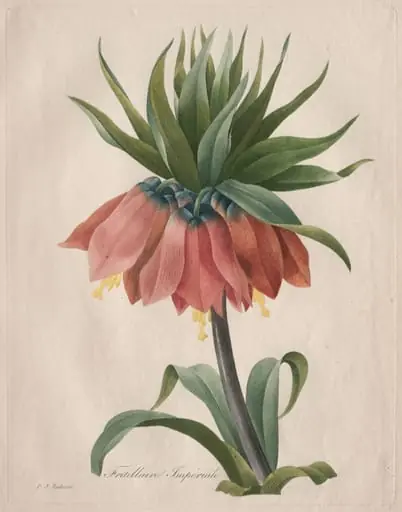 Crown Imperial Fritillary
Frequently asked questions
What is Tulipa?
Tulipa is a subject in art. Tulips are spring-blooming perennial herbaceous bulbiferous geophytes in the Tulipa genus.
How many Tulipa works does Artifact World Gallery have?
Artifact World Gallery holds 140 public-domain Tulipa works, all free to view and download.
Who are the key Tulipa artists?
Key Tulipa artists in the collection include Jan Davidsz. de Heem, Ambrosius Bosschaert and Giuseppe Recco.
Where can I see Tulipa works?
Tulipa works in the collection are held by Statens Museum for Kunst, Romanian Peasant Museum and National Gallery of Art.