Artist
Paul Sérusier
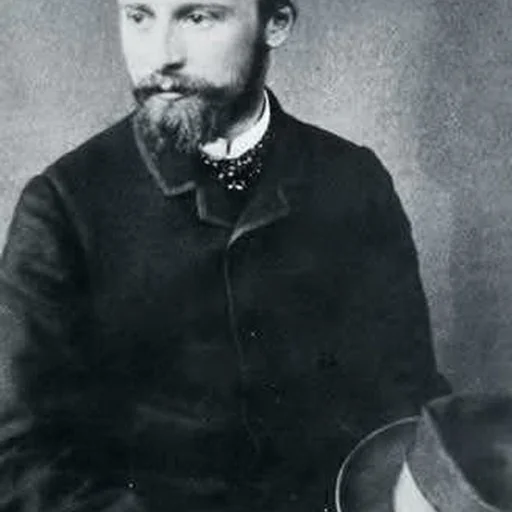
French, 1864–1927
Paul Sérusier was a French Cloisonnism artist. 25 works are cataloged here, principally at National Gallery of Art. Paul Sérusier was born in Paris.
Paul Sérusier was a French painter who was a pioneer of abstract art and an inspiration for the avant-garde Nabis movement, Synthetism and Cloisonnism.
Overview
Paul Sérusier (1864-1927) was a French Post-Impressionist painter, theorist, and a founding figure of the Nabis, one of the most influential avant-garde groups of late nineteenth-century France. Born in Paris into a prosperous middle-class family, he abandoned a commercial career to pursue art, studying at the Académie Julian before his decisive encounter with Paul Gauguin at Pont-Aven in 1888. That summer, under Gauguin's direct guidance, he painted Le Talisman, a small landscape that abandoned naturalistic representation for flat planes of arbitrary colour and became the foundational work of Nabi aesthetics. Sérusier's significance lies in his role as both practitioner and propagandist: he transmitted Gauguin's synthetist principles to a younger generation of artists, helped name and organise the Nabis, and later developed elaborate theories of colour and composition that he set down in his 1921 treatise ABC de la peinture. His career moved from early Breton subjects through increasingly hieratic and calculated works influenced by the Beuron school, toward a late style marked by geometric order and muted palettes.
Biography & dates
Sérusier was born Louis-Paul-Henri Sérusier on 9 November 1864 in Paris. His father worked in the perfume industry, and the family was sufficiently wealthy to provide him with a classical education. He attended the Lycée Condorcet from 1875, graduating in 1883 with baccalaureates in philosophy and mathematics, or alternatively philosophy and the sciences according to some accounts. After a brief period working in commerce, he entered the Académie Julian in 1885, where he became a monitor in the mid-1880s and formed a lifelong friendship with Maurice Denis. The turning point of his career came in the summer of 1888, when he travelled to Pont-Aven in Brittany. There he met Émile Bernard and Paul Gauguin, receiving direct instruction from the latter. Gauguin encouraged him to abandon imitative painting, to use pure and arbitrary colour, and to impose his own decorative and symbolic logic upon youthful impressions. The result was Bois d'Amour de Pont-Aven, later known as Le Talisman, painted on the lid of a cigar box or a small wooden panel. Sérusier returned to Paris and showed this work to his fellow students at the Académie Julian, sparking intense debate and the formation of the group that would become Les Nabis. He spent the summers of 1889 and 1890 in Brittany, working alongside Gauguin. After Gauguin's departure for Tahiti in 1891, Sérusier established himself more permanently in the region, first at Huelgoat in 1891-1892, then at Châteauneuf-du-Faou from 1893, which became his principal residence from 1906 until his death. He continued to-formally and informally-to spend winters in Paris, where he collaborated with Lugné-Poe at the Théâtre de l'Œuvre and exhibited with his Nabi colleagues. In 1895, at the invitation of Jan Verkade, he visited the Benedictine monastery of Beuron in Germany, where he encountered the theories of Desiderius Lenz on sacred proportion and divine measurement. This encounter profoundly redirected his artistic research. He married Marguerite Gabriel-Claude, one of his students from the Académie Ranson, on 22 February 1912. From 1908 he taught regularly at the Académie Ranson. He published ABC de la peinture in 1921, a concise treatise summarising his aesthetic investigations into colour theory, simple shapes, and compositional geometry. He died in Morlaix, Brittany, on 6 or 7 October 1927.
Style & movement
Sérusier's artistic trajectory moved through several distinct phases, each tied to broader movements in French art. His early work at the Académie Julian and his first Breton landscapes of 1887 were naturalist in character, executed in dark tones. The Pont-Aven period of 1888 marked a radical break: under Gauguin's influence, he adopted Synthetism and Cloisonnism, flattening space, eliminating traditional perspective, and replacing modulated colour with bold, unblended areas of arbitrary hue. Le Talisman exemplifies this approach, with its yellow trees and orange ground reducing landscape to emotional essence. As a founder of Les Nabis in 1888-1889, Sérusier helped shape a movement that sought liberation from the imitation of visible reality. The Nabis privileged subjective sensation over optical fidelity, employing decorative pattern, symbolic colour, and stylised contour. Sérusier's own contribution to Nabi theory emphasised the translation of feeling into form: the artist first drew from nature, then painted from memory in the studio, adjusting images for aesthetic harmony through what he termed subjective distortion (stemming from emotion) and objective distortion (required by pictorial order). After 1895, the Beuron school introduced him to hieratic theories of sacred proportion and geometric composition. He developed increasingly systematic colour theories, separating warm and cold tones and limiting palettes to dominant colours with controlled dissonances. His late work moved toward calculated, decorative compositions influenced by Egyptian art, Italian primitives, and medieval tapestries, with monumental, simplified figures and muted, grey-toned palettes replacing the brilliant colours of his Nabi period.
Major works
Le Talisman (Landscape at the Bois d'Amour at Pont-Aven), painted in 1888, remains Sérusier's most celebrated work. Created under Gauguin's supervision on a cigar-box lid or small wooden panel, this extreme exercise in Cloisonnism approximates pure abstraction through flat planes of non-naturalistic colour. It is held at the Musée d'Orsay, Paris, and is widely considered the first Nabi painting, serving as the group's emblematic guide.
His Breton subjects of the 1890s, including paintings of monumental peasant figures and scenes of everyday life in Huelgoat and Châteauneuf-du-Faou, marked his sustained engagement with regional themes. These works drew upon Japanese prints and Gauguin's cloisonnism, though his palette shifted from pure colours to grey-toned harmonies after 1891.
From around 1904, he produced more religious and allegorical subjects, including decorative panels with esoteric and pagan themes for his house, Duchenn Glas, in Châteauneuf-du-Faou. In 1908, he painted the three-panel Bacchanales, including Cortège de Pan, where he depicted his friend Albert Clouard as the god of shepherds. His theoretical writings, particularly ABC de la peinture (1921), constitute a significant intellectual achievement, developing theories of curves, simple shapes, and colour research.
His works are held in numerous international collections, including the Museum of Modern Art and the Metropolitan Museum of Art in New York, the Art Institute of Chicago, the National Gallery of Art in Washington, D.C., the Los Angeles County Museum of Art, the Norton Simon Museum in Pasadena, the Museo Nacional Thyssen-Bornemisza in Madrid, the Musée d'Orsay and Musée Maurice Denis in France, and the Tate in London.
Influences & students
Sérusier's most decisive influence was Paul Gauguin, whom he met at Pont-Aven in 1888. Gauguin's instruction to abandon three-dimensional effects and use simplified, arbitrary colour directly shaped Le Talisman and, by extension, the entire Nabi movement. Émile Bernard, also present at Pont-Aven, contributed to the theoretical climate from which Synthetism emerged. Earlier Post-Impressionist and Symbolist currents, including the work of Puvis de Chavannes, provided broader context for Sérusier's break with naturalism. The Dutch artist Jan Verkade introduced him to the Beuron school and its theories of sacred proportion, while Desiderius Lenz became his direct teacher in hieratic and geometric principles during his 1895 and subsequent visits to Germany.
As a teacher, Sérusier exerted considerable influence through the Académie Ranson, where he began teaching colour theory in 1908. His students included the British-Italian painter Daphne Maugham-Casorati, Suzanne Roger, and Gaston-Louis Roux. His wife, Marguerite Gabriel-Claude, whom he married in 1912, was also his pupil. The Nabi circle itself constituted a network of mutual influence: Maurice Denis, Pierre Bonnard, Paul Ranson, Henri-Gabriel Ibels, Édouard Vuillard, Armand Seguin, and Ker-Xavier Roussel all participated in the group's theoretical discussions and collaborative projects, including theatre work with Lugné-Poe at the Théâtre de l'Œuvre.
Legacy
Sérusier's legacy rests primarily on his role as a conduit and theorist of early modernism. Le Talisman occupies a canonical position as the inaugural Nabi work, demonstrating the possibilities of non-naturalistic colour and near-abstract form at a moment when French painting was moving beyond Impressionism. By transmitting Gauguin's principles to the Académie Julian circle, he helped catalyse one of the most significant avant-garde movements of the 1890s, whose emphasis on subjective expression, decorative flatness, and symbolic colour influenced the development of twentieth-century abstraction.
His theoretical writings, particularly ABC de la peinture, preserved and systematised his aesthetic research for subsequent generations, though his later emphasis on calculation and sacred geometry found less widespread acceptance among his former Nabi colleagues. The Comité Paul Sérusier continues to authenticate and document his work, maintaining an online catalogue raisonné that permits ongoing scholarly updating.
In the art market and museum context, his works are represented in major international collections, testament to his recognised place within Post-Impressionism and Symbolism. While his individual paintings may be less widely known than those of Gauguin or the more commercially successful Nabis such as Bonnard and Vuillard, his historical importance as a founder, theorist, and teacher of the movement remains secure.
Works by Paul Sérusier
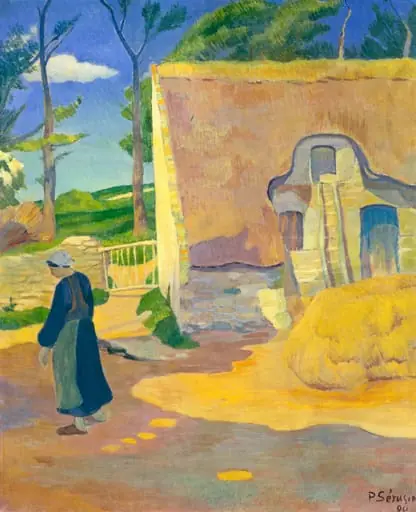 Farmhouse at Le Pouldu
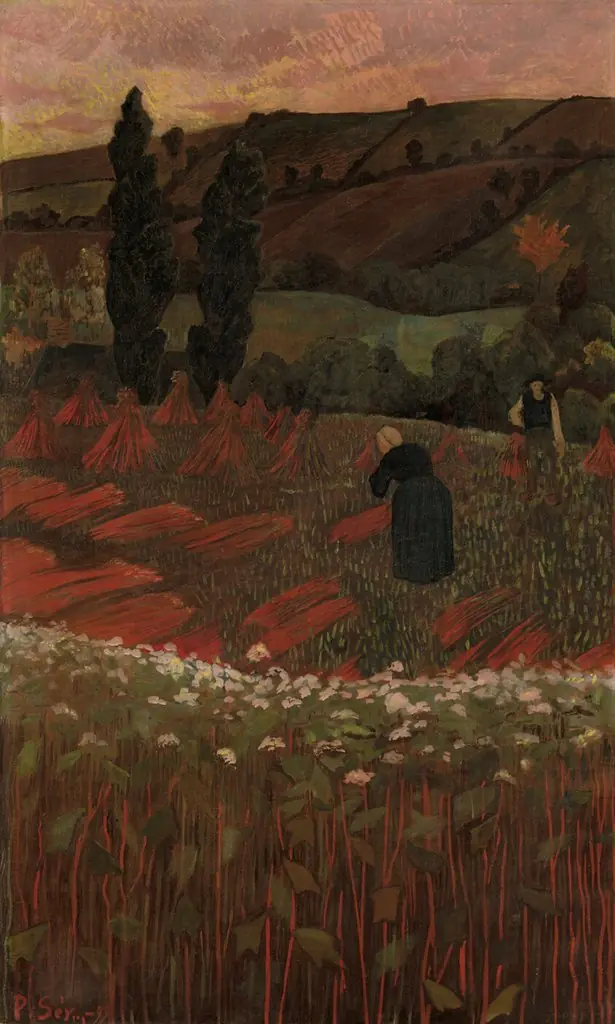 The Harvest of Buckwheat
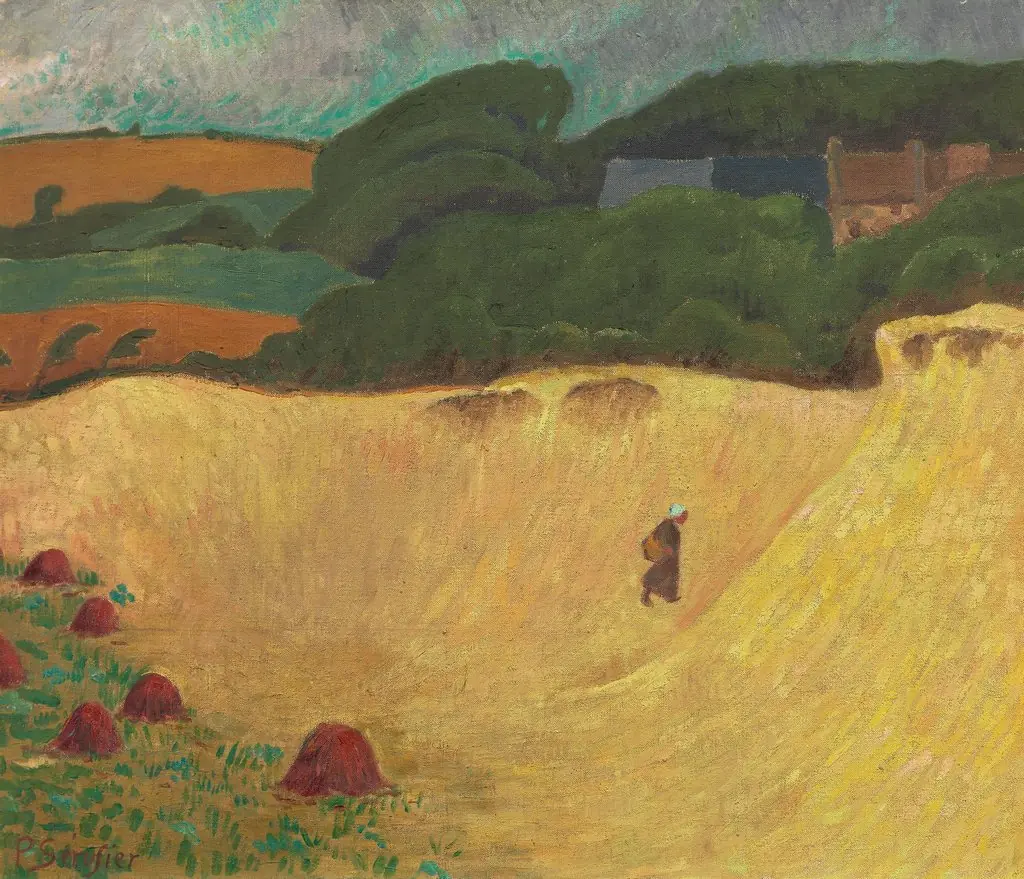 The Beach of Les Grands Sables at Le Pouldu
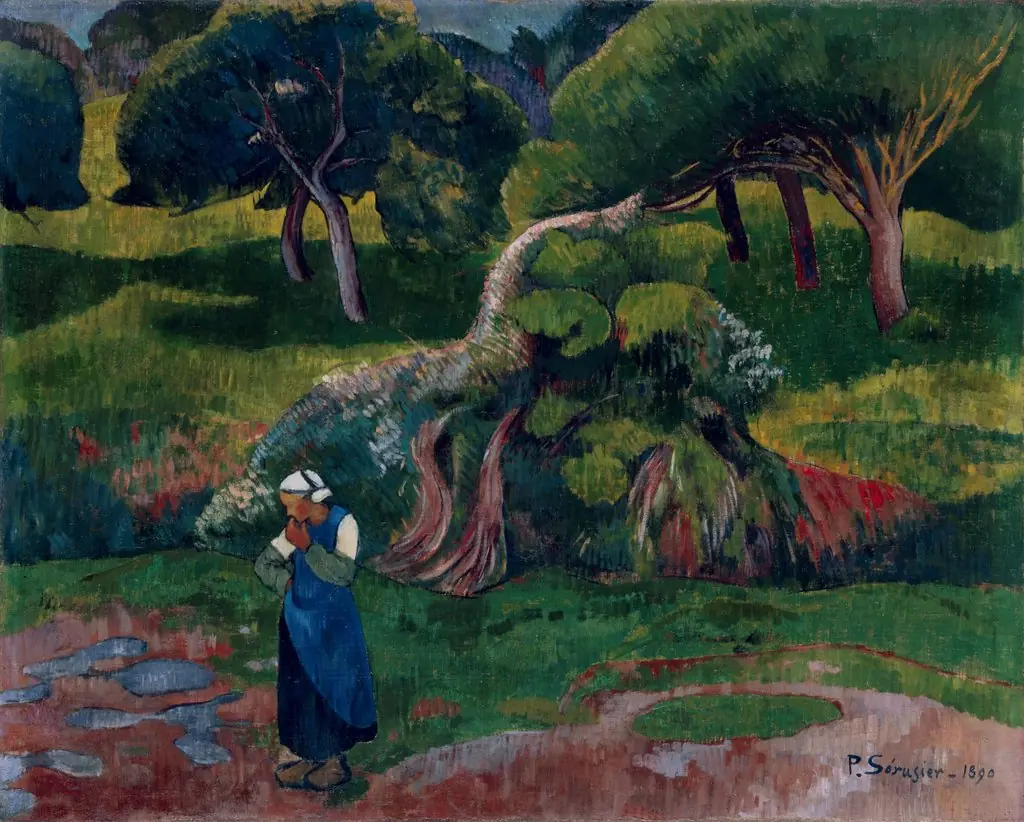 Landscape at Le Pouldu
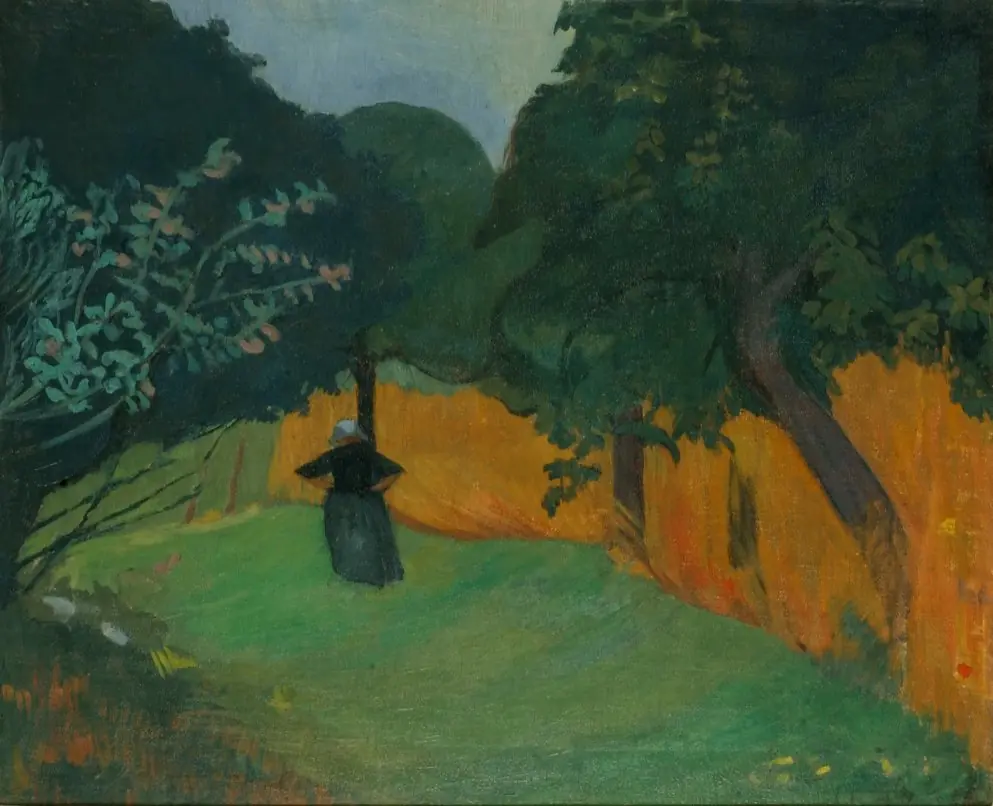 Bretonne au Champ de Blé (Breton Woman in Meadow)
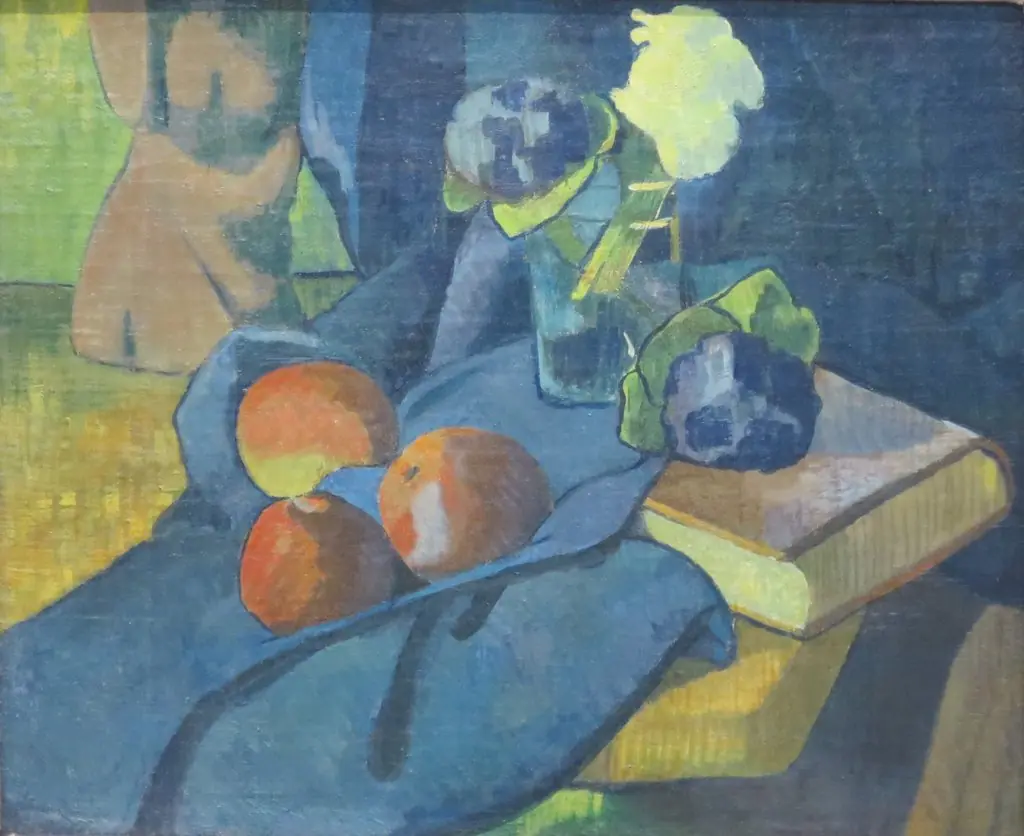 Still Life with Apples and Violets
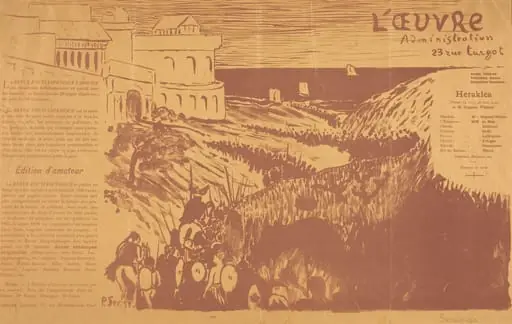 Hérakléa
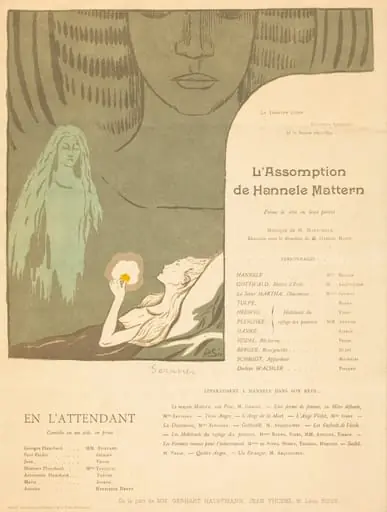 L'Assomption de Hannele Mattern; En l'attendant
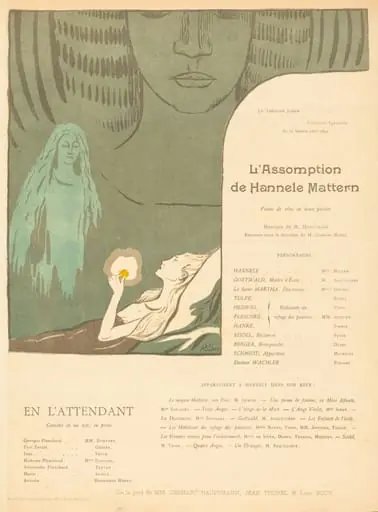 L'Assomption de Hannele Mattern; En l'attendant
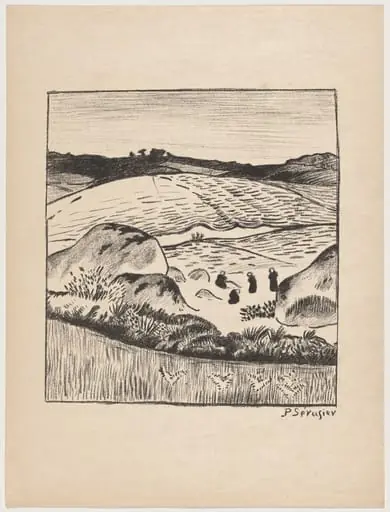 Paysage (Landscape)
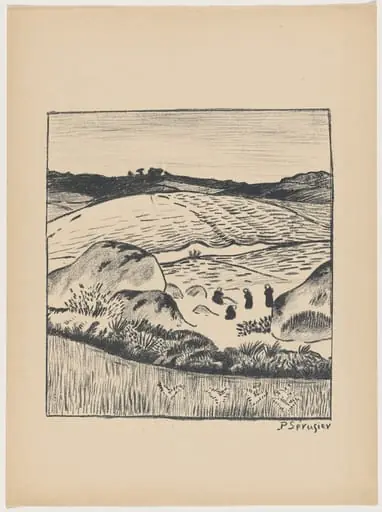 Paysage (Landscape)
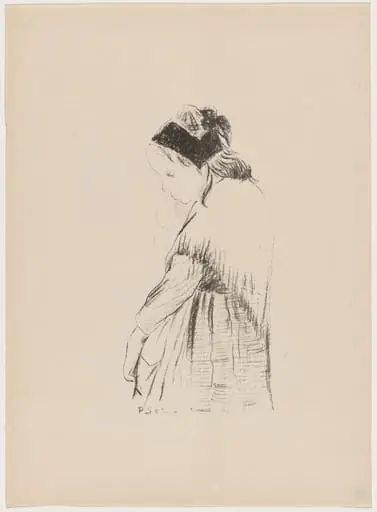 Souvenir de Bretagne
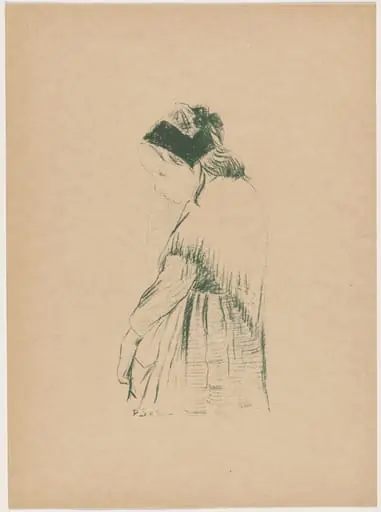 Souvenir de Bretagne
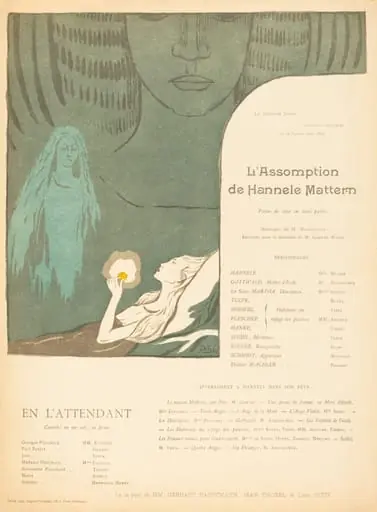 L'Assomption de Hannele Mattern; En l'attendant
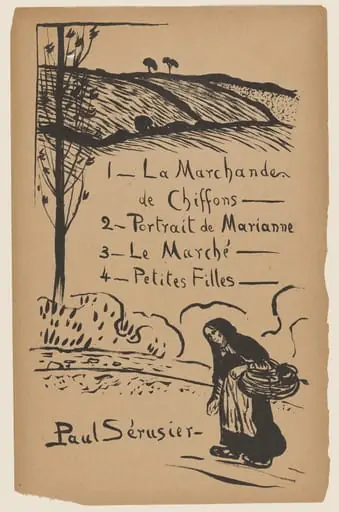 Landscape
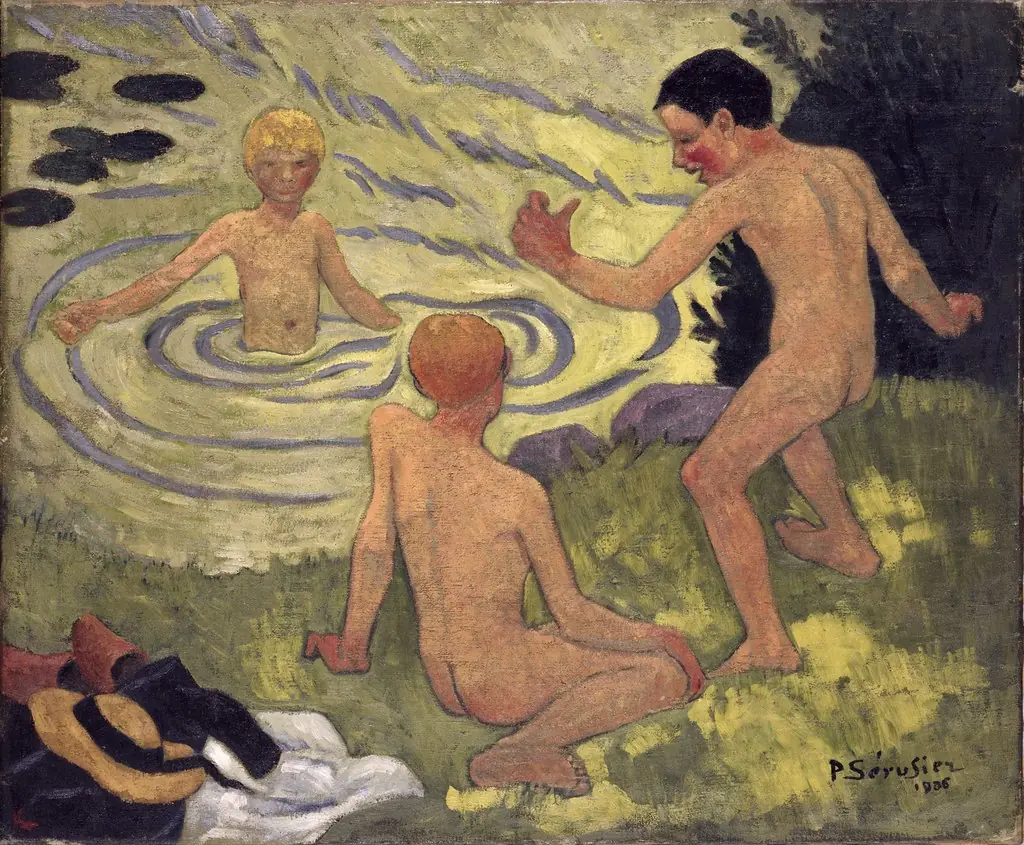 Boys on a river bank
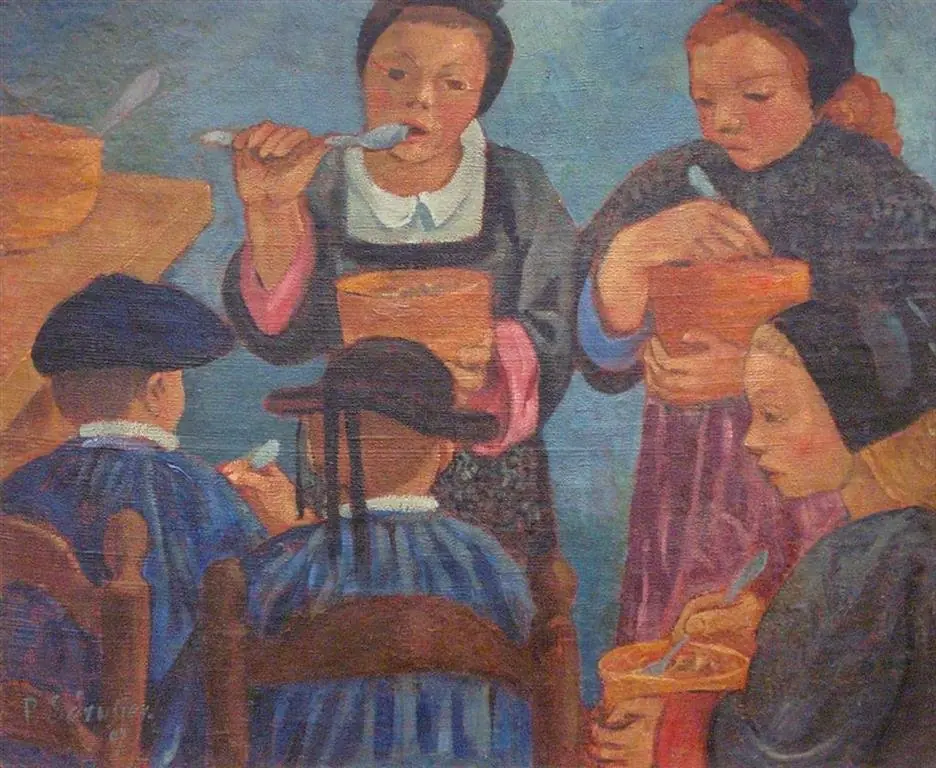 The Children's Supper
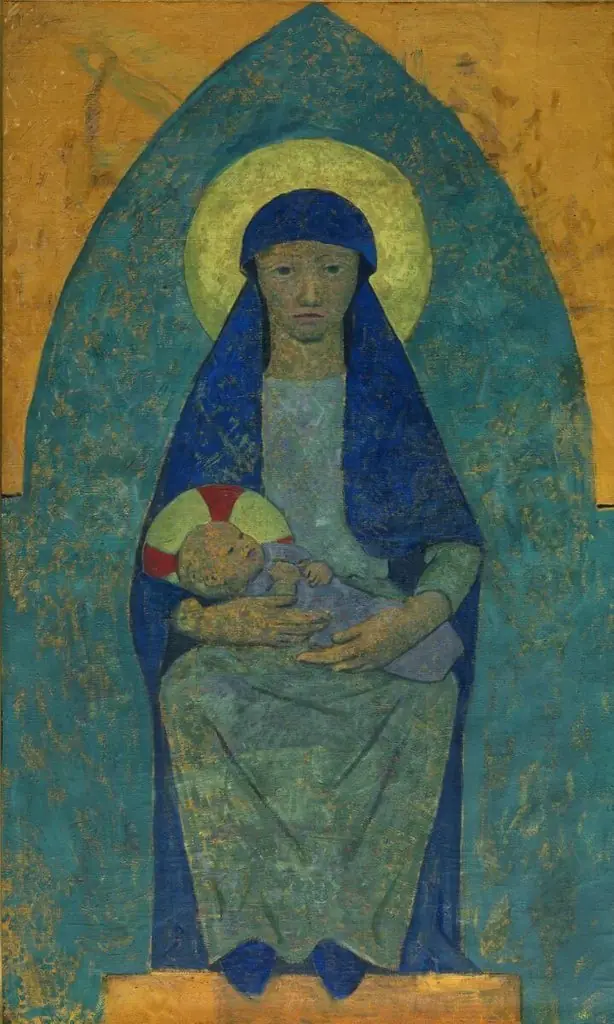 Vierge à l'Enfant
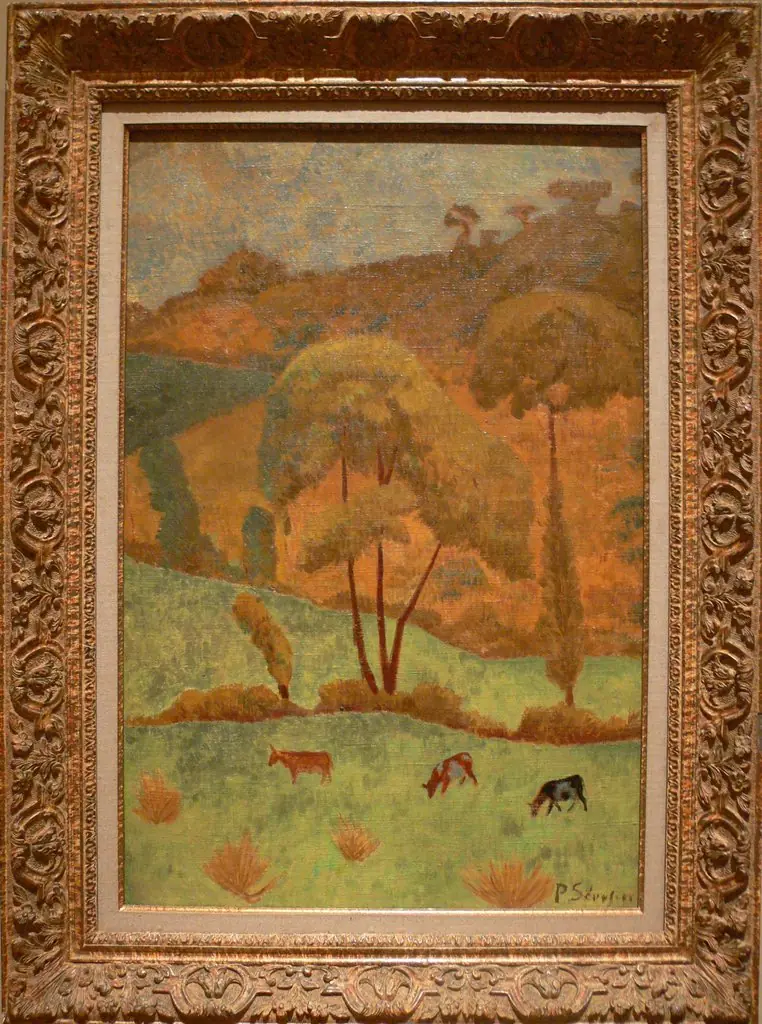 Synchromy in Yellow
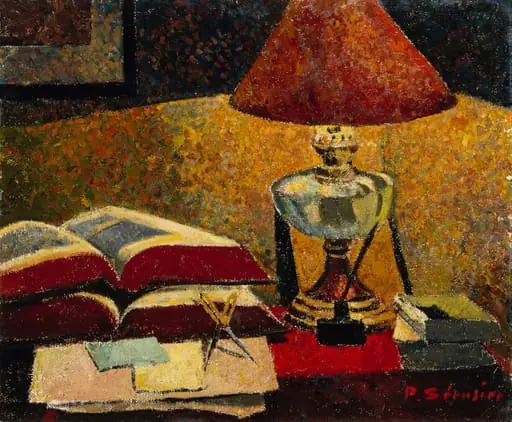 Lampun alla
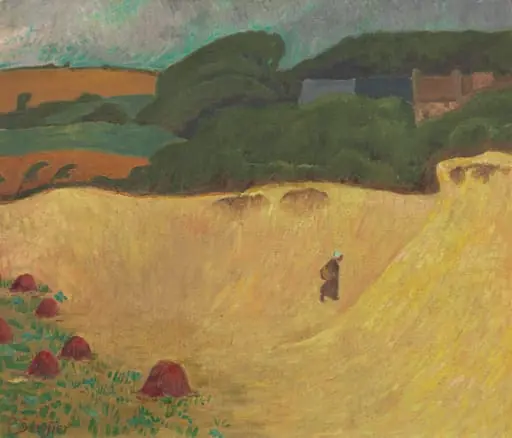 The Beach of Les Grands Sables at Le Pouldu
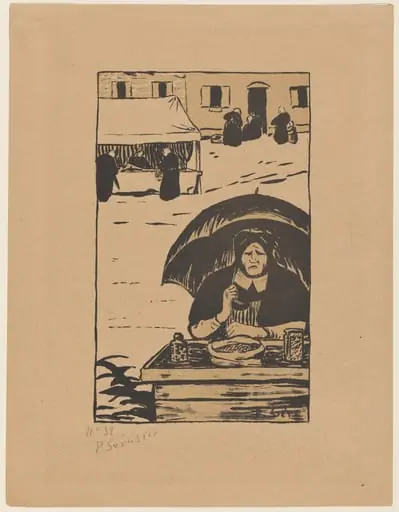 The Street Vendor (La Marchande ambulante)
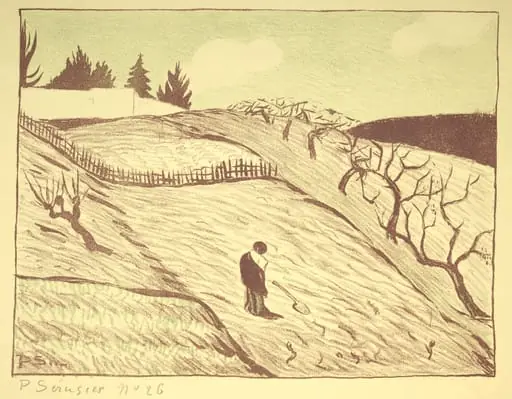 Landscape
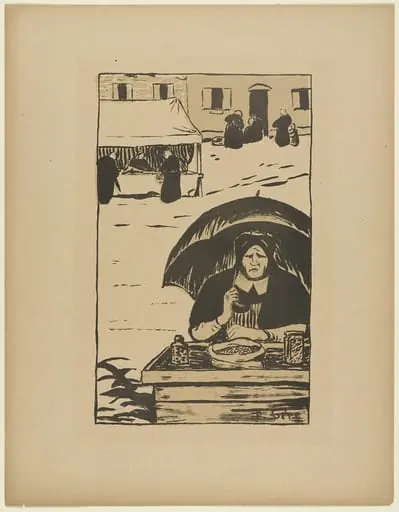 Untitled
25 works in the catalog · 24 shown
Collections represented


Artists in a similar vein