Artwork
Efterårslandskab
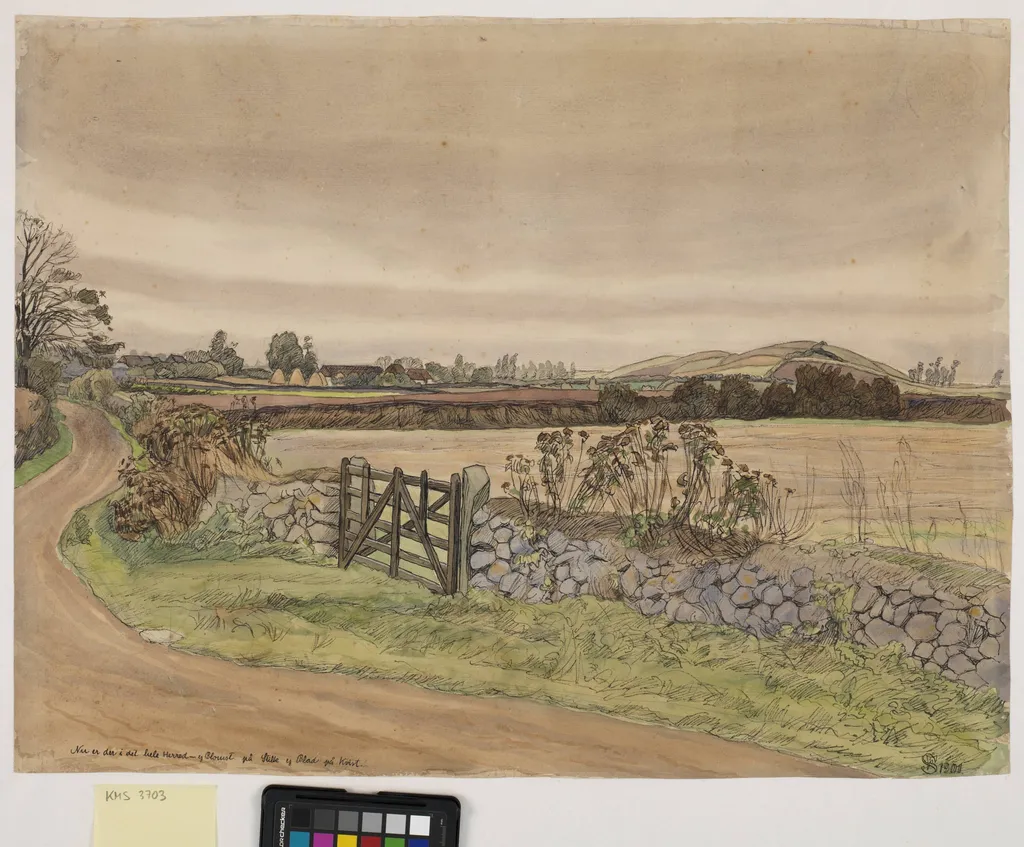
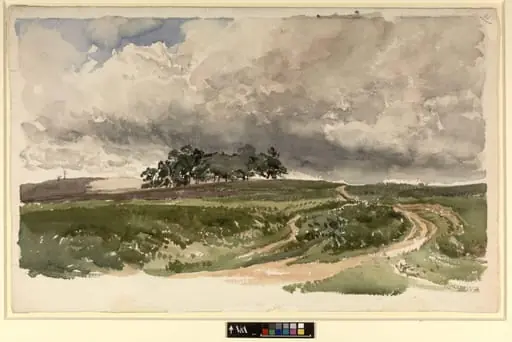
Efterårslandskab is an unspecified painting by the Post-Impressionist artist Unknown. It dates from 1901 and is held in the collection of the Statens Museum for Kunst.
About this work
Overview
Created in 1901, Efterårslandskab is a landscape sketch by 1021_person, currently held in the collection of the Museum of Ethnography. Executed with a spontaneous, observational approach, the work captures a quiet rural scene in Denmark during autumn. Its informal quality suggests it was made outdoors, reflecting the artist’s interest in everyday natural environments rather than idealized vistas.
Subject & Meaning
The painting depicts a modest Danish countryside: a winding dirt path, a low wooden fence, and patches of tall vegetation with pale yellow blooms.
The painting depicts a modest Danish countryside: a winding dirt path, a low wooden fence, and patches of tall vegetation with pale yellow blooms. Distant trees and rolling hills frame a narrow waterway, all under a soft, overcast sky. There is no human presence, emphasizing solitude and the quiet rhythm of seasonal change. The scene conveys a sense of stillness, rooted in the ordinary rather than the dramatic.
Technique & Style
The artist employed loose, rapid brushwork to suggest texture and motion, grass sways with minimal strokes, water flows in thin washes. Color is restrained, dominated by earth tones: ochres, olive greens, and muted grays. Detail is avoided; forms are implied rather than defined. This approach aligns with late 19th-century tendencies toward immediacy and atmospheric effect, prioritizing mood over precision.
History & Provenance
The work entered the Museum of Ethnography’s collection following its creation in 1901. While its early ownership is undocumented, its inclusion in an ethnographic institution suggests it was valued for its representation of local rural life. Unlike grand historical or religious works, it was preserved as a record of everyday Danish landscape and artistic practice of the period.
Context
In early 20th-century Denmark, artists increasingly turned to rural scenes as national identity became tied to land and tradition. Efterårslandskab reflects this trend, aligning with the broader Nordic interest in naturalism and plein-air painting. Its modest scale and unadorned subject matter contrast with academic traditions, signaling a shift toward personal, intimate observation.
Legacy
Though not widely exhibited outside its home institution, the work remains a representative example of Danish landscape sketching from the turn of the century. It contributes to understanding how artists documented regional environments with sensitivity and restraint. Its preservation in an ethnographic context underscores its role as cultural documentation rather than fine art spectacle.
Artist & collection









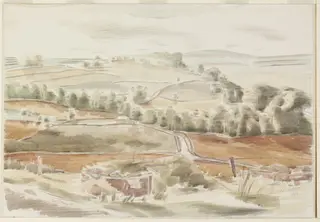
- The Porter Valley, No.1
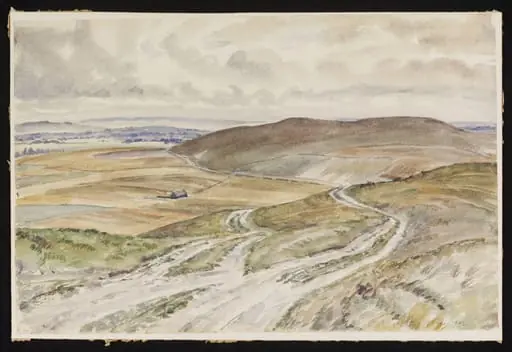 View from the Wansdyke in Stanton St. Bernard
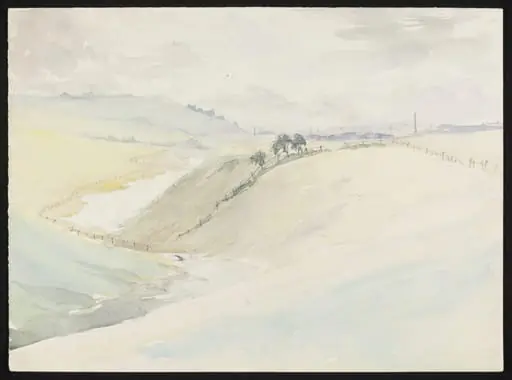 Looking towards Bury from the North of the city
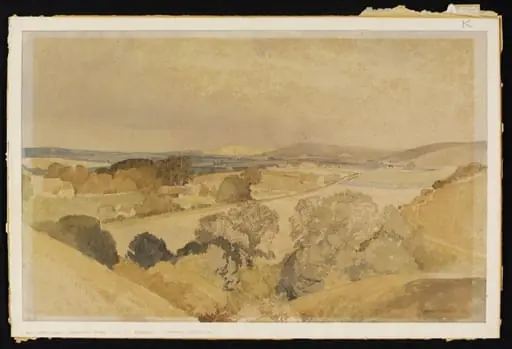 The Southdown, Underhill Road; Edburton, and the Road Eastwards
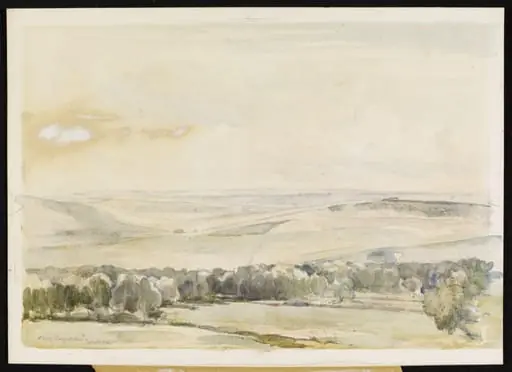 The Downs from Friston
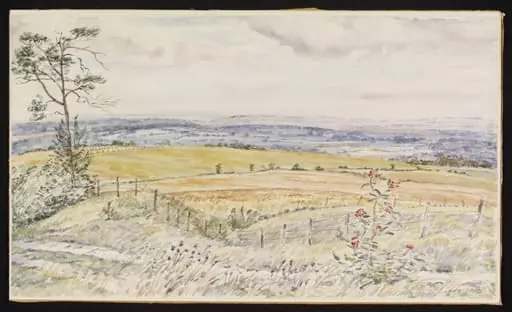 View from Calne Golf Course near Heddington
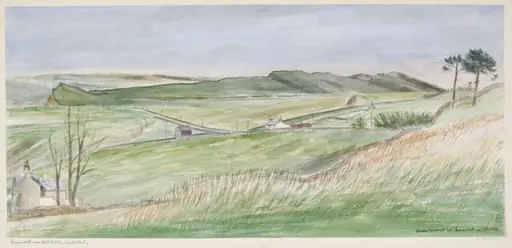 Roman Wall near Haltwhistle, Cumberland
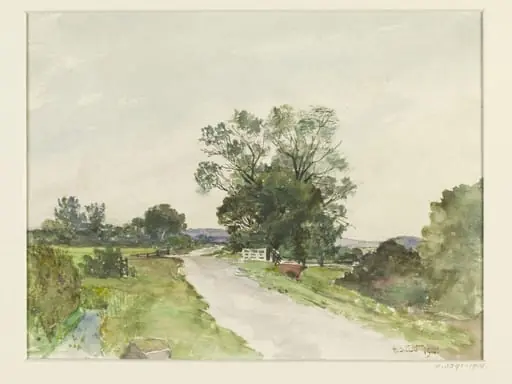 Landscape with road in flat country
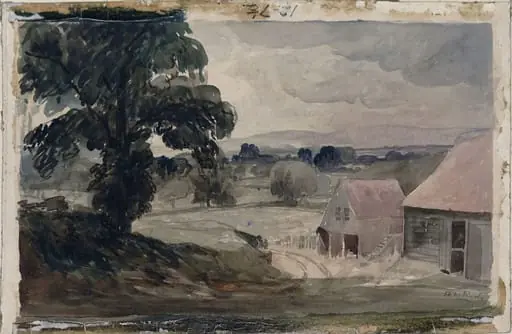 In Danny Park, near Hassocks, Sussex
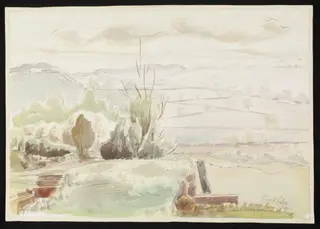 Porter Valley, No.2
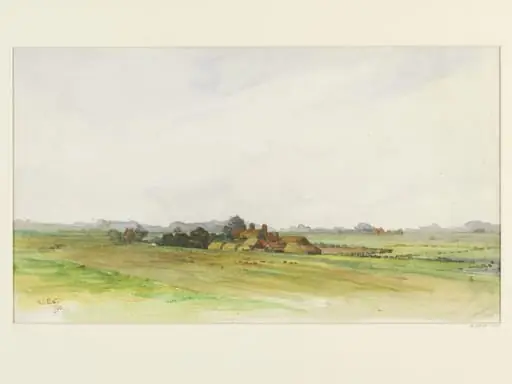 Landscape with Farm and Fields in Flat Country
 A Heath Scene